
Turntable Talk #42 – Going Out on a High Note

It is time once again for a new Turntable Talk topic from Dave at A Sound Day. Each month he offers up a musical topic for us to write about. This month we are Going out on a High Note. Dave’s instructions to us:

We all have seen artists (not to mention athletes, politicians…) who stick around long after they should have exited gracefully. For this round, pick a musical artist who you think ended their career on a high note, a great final album, or triumphant concert tour before they grew stale.

I had a difficult time with this one. As I began to think of artists, I kept coming up with artists who are still recording and touring. Willie Nelson, for example, is still making music and hitting the stage. Has he stayed around “too long?” Some say yes, while other say no. So my search continued. Then I remembered Bill Withers.
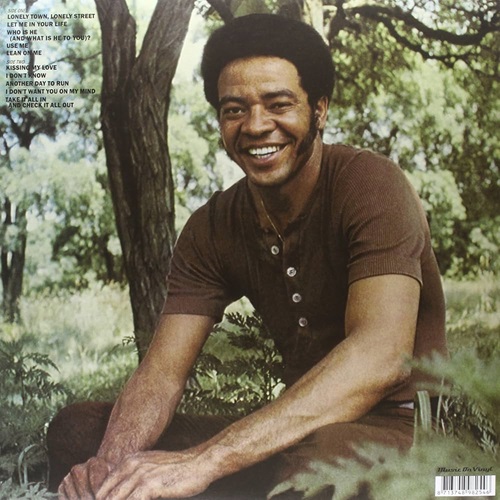
Bill served in the US Navy for almost 10 years. It was while he served our country that he began writing songs and became interested in singing. After he left the Navy, he decided to relocate to California in hopes of starting a career in music.

He found work as a mechanical assembler for several different companies including IBM, Ford, and the Douglas Aircraft Corporation. He used the money from his job to record demo tracks that he could take to record companies. He also began to play his songs in nightclubs in the area, hoping someone might discover him.

In 1967, he had his first official release – “Three Nights and a Morning.” It was a song that got little recognition. Three years later, he was signed to Sussex Records and Booker T Jones was assigned to produce Bill’s first album. That album, Just As I Am, included his first hit – “Ain’t No Sunshine.”
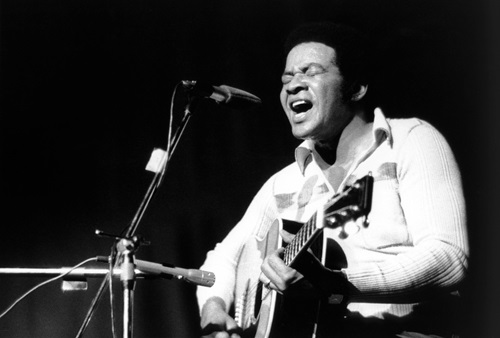
The album was a huge success and Withers rounded up a band and went out on tour. “Ain’t No Sunshine” was a Top 10 song and went on to win the Grammy for Best R&B Song in 1972. It also got him noticed by Johnny Carson’s Tonight Show, who sent him a letter inviting him to appear on the show.

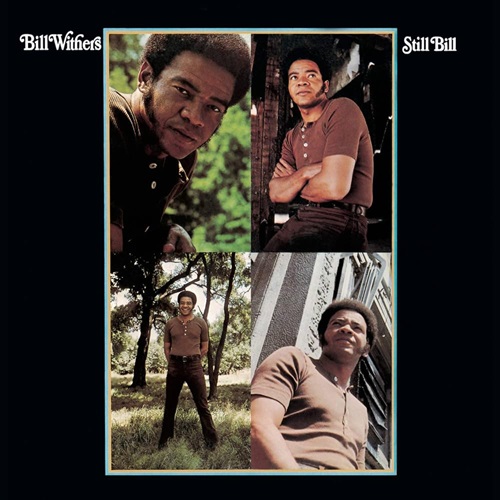
When his tour wrapped up, he used the time off to write and record songs for his second album entitled Still Bill. This album included Bill’s first #1 song – “Lean On Me,” which hit the top of the charts in July of 1972. This was followed up with his third million selling record – “Use Me.”
Bill’s relationship with Sussex record eventually went sour. He said of Sussex Records “They weren’t paying me.” He claims to have erased an entire album that he had recorded for the label in a fit of pique. “I could probably have handled that differently,” he said. There was an ongoing legal dispute with the Sussex company, and because of that Withers was unable to record for some time thereafter.

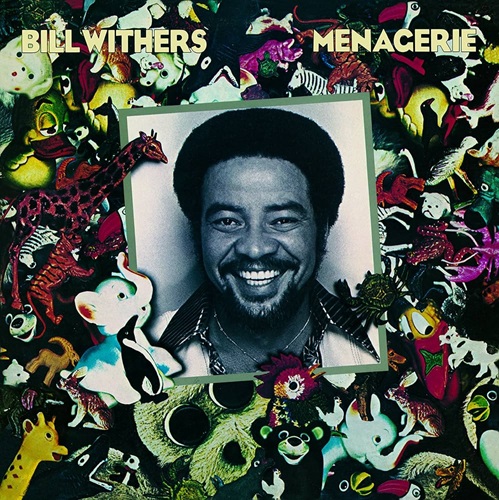
Sussex Records eventually went out of business and Bill had to find a new label. He wound up at Columbia Records in 1975. His first album on Columbia included the song “She’s Lonely,” which was featured in the movie Looking For Mr. Goodbar (which starred Richard Gere and Diane Keaton). He released an album every year afterward, including the 1977 album Menagerie which contained the hit “Lovely Day.”
Bill began to have trouble with Columbia. Apparently he was unable to get songs approved for his album. The label kept passing on the songs he wanted to record. Because of this, he decided to focus on joint projects beginning in 1977. He worked with the Crusaders, percussionist Ralph MacDonald, and jazz saxophonist Grover Washington Jr.

“Just The Two of Us” appeared on Washington’s 1980 album Winelight. It was released as a single in February of 1981 and went on to win a Grammy for Best R&B Song. In 1985, Withers released his final studio album, Watching You, Watching me. It was at this point that Bill decided to “go out on a high note.”

Withers was quoted in interviews that “a lot of the songs approved for the album—in particular, two of the first three singles released—were the same songs that had been rejected in 1982.” This played a big part in the eight-year hiatus between albums. Bill also stated how frustrating it was to see his record label release an album by actor Mr. T, when they were preventing him, an actual songwriter, from releasing his own.

With Columbia trying to exert control over his sound to sell more albums played a part in his decision to not record or re-sign with a record label after 1985. I would imagine the Mr. T thing played a part, too. This effectively ended his performing career, though remixes of his previously recorded music were released well after his “retirement.”

Withers was an artist who found musical success later in life. He was in his early 30’s when he began his career. Now at 47, he said he was socialized as a “regular guy” who had “a life before the music, so he did not feel an inherent need to keep recording once he fell out of love with the industry.” Bill felt he made the right decision. After leaving the music industry, he said that he did not miss touring and performing live and did not regret leaving music behind.

Accolades continued after his “retirement.” In 1988, he won another Grammy, this time as a songwriter for the cover of his “Lean on Me” by Club Nouveau. It won the Grammy for Best Rhythm and Blues Song. In 2005 he was inducted into the Songwriters Hall of Fame, followed in 2015 with his induction into the Rock and Roll Hall of Fame. He said:

“What few songs I wrote during my brief career, there ain’t a genre that somebody didn’t record them in. I’m not a virtuoso, but I was able to write songs that people could identify with. I don’t think I’ve done bad for a guy from Slab Fork, West Virginia.”

Bill passed away in March of 2020 in a Los Angeles hospital due to cardiac complications.

He is still receiving accolades in 2025. Last month, he was selected to be inducted into the National Rhythm and Blues Hall of Fame. The induction ceremony usually takes place in October.

Thanks to Dave for once again hosting Turntable Talk. I am already looking forward to what next month’s topic will be.

The Music of My Life – 1977

Welcome back to The Music of My Life, where I feature ten songs from each year of my life.  In most cases, the ten songs I choose will be ones I like personally (unless I explain otherwise). The songs will be selected from Billboard’s Year-end Hot 100 Chart, Acclaimed Music, and will all be released in the featured year. May 15, 1977, I turned a whopping 7 years old. I have some really great memories of 1977 and I think you’ll get to read about them and how they tie into some of these songs.

I love stories where a radio DJ plays a significant role in the creation of a song. Released in January of ’77, I’m Your Boogie Man is one of those songs.

Written by KC & The Sunshine Band bassist-producer Richard Finch and frontman Harry Wayne Casey, The “boogie” of the title is in the sense of dancing, shaking your booty, and getting down, not with the scary kind of “boogie man.” Harry Wayne Casey tells the story:

“‘I’m Your Boogie Man,’ in the initial writing of it I called it ‘I’ll Be A Son Of A Gun’:

I’ll be a son of a gun
Look what you’ve done

Then I went back and ‘I’m Your Boogie Man’ came into my head because I was thinking about how disc jockeys were always there on the radio. Like it says:

Early morning
Late afternoon
Or at midnight
It’s never too soon
I’m your Boogie Man

It’s taking the theme of the disc jockey being the one that’s there for you all the time, no matter when. So it was as if I was a disc jockey, I’m the Boogie Man. Like if you call in and want to hear a certain song, or talk about what was going on in your life, I’m your Boogie Man. And of course I put in ‘turn me on,’ but that could also mean turned on the radio.”

A specific DJ who influenced this song was Robert W. Walker at Y-100 in Miami, Florida, who was the first to give the group’s hit single “Get Down Tonight” airplay. So Walker “was the Boogie Man that brought all the funk and the good feeling and the vibes to the people every morning,” according to Richard Finch.

I’m Your Boogie Man

Bob Seger had a couple big songs in 1977. Mainstreet was released in April of that year, while an anthem was released in June – Rock and Roll Never Forgets.

According to Seger, he wrote this song after attending a high school reunion. “I wanted to just write an honest appraisal of where I was at that moment in time,” he said. “I was 31 years old and I was damn glad to be here.” He goes on, “A song like “Rock ‘n’ Roll Never Forgets” is just slammin’. When we play that song live people go nuts. At that point in my life I was 31 years old. And the first 10 or 11 years in my career I was making six, eight grand a year and just doin’ it because I loved the music. So I’m writing for Night Moves and I just felt grateful; here I am and I’m starting to make it. You know, rock ’n’ roll never forgets. You build up goodwill over 10 years and you set the stage. “Rock ‘n’ Roll Never Forgets” is a grateful song. I’m grateful to all the people I played for in those small clubs, on the top of cafeteria tables, in gymnasiums and in hockey rinks. Suddenly all those people came out and bought my records and said: “I remember him. I saw him at the high school or hockey rink.”

The song is about aging and the ongoing power of rock music. The song advises the 31 year old listener to return to the rock ‘n’ roll she loved when he/she was 16. The line, “All Chuck’s children are out there playing his licks” is a reference (and tribute) to Chuck Berry, the rock pioneer whose sound is in the DNA of many musicians how followed.

Rock and Roll Never Forgets

The very last single that Elvis ever released before his death was Way Down in June of 1977. It was recorded in the famous Jungle Room at Graceland. It was also a song that had a very interesting chart performance. The song peaked at number 31 on the Billboard Hot 100 Chart at the beginning of August, fell to number 52 by the end of August, and after his death, it climbed back up to number 18 before falling again.

Way Down

In July of 1977, Foreigner released Cold As Ice. It was one of the many songs I remember buying on 45 and spinning on my little record player. It was written by Lou Gramm and Mick Jones.

According to Wiki, “Cold as Ice” was a replacement for a song that was intended for Foreigner but which producer Gary Lyons didn’t feel fit the album. According to Mick Jones “I went home after Gary said this, sat down at my piano and out came the riff for Cold As Ice. And the rest of the song flowed from there.” Lyons said that “When I got back, they played me Cold As Ice and it worked for me. So we went into Atlantic Studios one night to cut it.” According to Ian McDonald, “Gary and I were in there all night working on the vocals. And when we got out of the studio we discovered that a blizzard had been raging. Everywhere was covered in snow, and we heard on the radio that it had been coldest night in New York on record! Somehow that seemed to be a good omen for the song.”

Cold As Ice

One of the biggest movies of 1977 was Star Wars. It comes as no surprise to me that the main title theme was a Top 10 hit!

What can you say about composer John Williams? He conducted this score with the London Symphony Orchestra, but his main orchestra was the Boston Pops Orchestra, with which he conducted other famous film themes. This theme won him a simultaneous Oscar, Golden Globe, BAFTA, Saturn, and Grammy award. THAT is amazing!!

Star Wars Main Title

The next song was released in August of 1977 and people STILL dance to it today! Brick House epitomizes the funky side of the Commodores, who could switch between uptempo R&B and easy listening by swapping singers. “Brick House” was sung by their drummer Walter Orange, with Lionel Richie on saxophone.

In a way, the Commodores recorded it as a “radio edit.” This disco classic is about a woman with a great body. She is “Built like a Brick House.” Lionel Richie says that this is a play on the original phrase, “She’s built like a brick s–thouse.” That’s the reason for the pause with the horn fill between the words “brick” and “house.”

Brick House

A few songs ago, I mentioned the last single Elvis released before his death. For those who have been following this blog a while, you know where I was the night Elvis died. My family was at a drive-in movie theater waiting for the sun to go down when the radio broke the news that he had passed away. The movie we were there to see? Smokey and the Bandit.

The song’s lyrics tell the basic plot of the movie (leaving out the runaway bride element) of making a 28-hour round-trip run from Atlanta, Georgia, to Texarkana, Texas and back to illegally transport 400 cases of Coors beer for an after-race celebration put on by Big and Little Enos.

Back when Max from the PowerPop Blog was hosting a song draft, East Bound and Down was my pick. Here is that blog if you would like to read it:

East Bound and Down

In October of 1977, Johnny Paycheck released a David Allen Coe song that expressed what many a worker felt about their employer/employment. Take This Job and Shove It was a number one country hit for Paycheck and the phrase took on a life of its own in pop culture.

This was one of the songs that was on Paycheck’s Greatest Hits Volume 2 that my grandfather and dad always played up north.

Take This Job and Shove It

The next song makes the list because I became familiar with it not by Billy Joel, but by the wedding band my dad played in. I can’t tell you how many times my brother and I sat and watched TV while the band practiced new songs. Just The Way You Are was one of them.

According to Joel, some listeners missed the point and thought the song was misogynistic because he was telling a woman she wasn’t “allowed” to change. “No, no, no. Don’t go changing to try and please me,” he told SiriusXM in 2016. “People forget these things. If they don’t like what I do, they’ll go, ‘Oh yeah, he hates women. Look at this. Don’t change, stay the way you are, the same old someone that he knew. Wow, he really doesn’t like her. ‘Don’t change for me. You wanna change for yourself, fine. But you don’t have to change for me because I’m happy exactly the way you are. That’s why I love you in the first place.”

Billy wrote this song about his first wife, Elizabeth. A pure expression of unconditional love, he gave it to her as a birthday present. Sadly, after nine years of marriage, Joel and Elizabeth divorced in 1982. Joel’s next two marriages didn’t work out either: he was married to Christie Brinkley from 1985-1994, and to Katie Lee from 2004-2010. “Every time I wrote a song for a person I was in a relationship with, it didn’t last,” Joel said. “It was kind of like the curse. Here’s your song – we might as well say goodbye now.”

Just The Way You Are

The last song was bigger in 1978 because it was released in December of 1977. It is simply an amazing song. Lovely Day was written for Bill Withers’ Menagerie album.

Skip Scarborough was a songwriter and producer who worked with Earth, Wind & Fire, Patti Labelle, LTD, and many other R&B stars before his death in 2003. He wrote the music for this song, and was also the inspiration for the lyrics Withers came up with. In a Songfacts interview, Bill explained: “Skip was a very nice, gentle man. The way Skip was, every day was just a lovely day. He was an optimist. We’re all sponges in a sense. You put us around very nice people, and the nice things come out in us. You put us around some jerks, and we practice being jerks. We all adjust. Did you ever notice the difference in the way you speak to your grandmother or your best contemporary friend? If I had sat down with the same music and my collaborator had been somebody else with a different personality, it probably would have caused something else to cross my mind lyrically. It was a combination of the music and the person and the ambiance in the room.”

One of the highlights of the song is Bill holding a note for about 18 seconds at the end of the song! It may be one of the longest notes held by a singer on a pop song.

Lovely Day

So there you have it – 10 great songs from 1977. I’m sure there are plenty others I’ve missed. Can you name any? Next week, I will age another year and we’ll visit 1978. The sound of music will start to sound a bit different as we get closer and closer to the 1980’s.

See you then!