Movie Music Monday – The Godfather

Vocalist Jasper Cini was born on this day in 1927. Of course, the world knew him as the great Al Martino. He had his greatest success as a singer between the early 1950s and mid-1970s, being described as “one of the great Italian American pop crooners.”

In World War II, Al served in the US Navy. He took part in the invasion of Iwo Jima, where he was wounded. He took an interest in singing after the war and got some sage advice from a family friend. That friend was Alfredo Cocozza, who was better known as Mario Lanza. It was Mario who suggested that Jasper use the name “Al Martino.”

Al would land a deal at Capitol Records, where he would have hits with “Take My Heart,” “Rachel,” “When You Were Mine,” “I Love You Because,” “Daddy’s Little Girl,” and “Spanish Eyes.” His run of chart success began to fade after the mid-1960s, despite that many of his records continued to reach the U.S. Hot 100. So, he turned to acting.

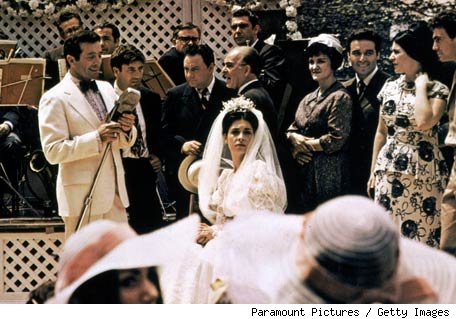
In 1972, he would play Johnny Fontane in The Godfather.

Al had been told about the character by a friend who had read Mario Puzo’s novel and felt Martino represented the character of Johnny Fontane. Martino contacted producer Albert Ruddy who initially gave him the part. When Francis Ford Coppola came on board to direct, the part was taken from him and given to Vic Damone.

Al went to Russell Bufalino, his godfather and a crime boss, who then orchestrated the publication of various news articles that claimed Coppola had been unaware of Ruddy having given Martino the part. Damone eventually dropped the role because he did not want to provoke the Bufalino family.

“The Godfather” Al Martino, Marlon Brando 1972 ** I.V.C.

In the novel, Johnny Fontane plays a much bigger part than he does in the movie. It was one story line that was stripped and edited down for the film. Al didn’t seem to mind, as he would continue to play the role of Johnny Fontane in the Godfather sequels.

The movie opens with the wedding of Don Corleone’s daughter, Connie. When Johnny shows up at the wedding, he is begged to sing. The song that he sings is the beautiful, “I Have But One Heart.” Coincidentally, the song was the first song ever released by … Vic Damone.

Happy Birthday to Al Martino!

Movie Music Monday – The Big Chill

The Big Chill was released to movie theaters this week back in 1983. The Lawrence Kasdan film featured an amazing ensemble cast that included Kevin Kline, Tom Berenger, Glenn Close, William Hurt, Jeff Goldblum, Mary Kay Place, JoBeth Williams and Meg Tilly. he plot focuses on a group of Baby Boomers who attended the University of Michigan, who reunite after 15 years when their friend Alex dies by suicide.

The soundtrack for the film featured some fantastic soul, R&B, and pop music from the 1960’s and 1970’s. Ten of the songs from the film were released on the soundtrack album; four additional songs not from the film were added to the original CD release as “additional classics from the era.” The rest of the film’s songs, as well as the “additional classics” from the original soundtrack CD were released in 1984 on a second soundtrack album, titled More Songs from the Big Chill.

One of the songs was the first big hit for a group called The Young Rascals. That song was Good Lovin’. Believe it or not, the group weren’t too happy with the song after the recorded it. According to songfacts.com:

Felix Cavaliere of The Young Rascals was listening to a New York soul station when he heard The Olympics’ version (from 1965). The Rascals liked it and played a sped-up version at their live performances with Cavaliere on lead vocals. They recorded the song for Atlantic Records, and although the group did not like the outcome, famed producer Tom Dowd loved the rawness of it and that version was released, becoming a huge hit. It went to #1 in April 1966.

Was it a surprise to the group? You bet! Felix Cavaliere admitted, “We weren’t too pleased with our performance. It was a shock to us when it went to the top of the charts.”

Felix says that the famous “One – Two – Three” countdown was each of the members saying one of the numbers. He told songfacts that the order was: Eddie Brigati (one), Gene Cornish (two), then Felix (three).

The song had a great false ending where there is about 1-2 seconds of nothing. Many DJ’s often played some silly movie drop in that space.

Ok, fellas …. count it off for us …

Movie Music Monday – Robin and the Seven Hoods

Yesterday, I posted about the premier of Columbo with Peter Falk.  Coincidentally, today is the anniversary of his birth.  He was born on this day in 1927, and is worthy of a two day celebration.

He stars as Guy Gisborne, alongside The Rat Pack in a spoof on Robin Hood.    Falk convincingly plays his gangster character to perfection! 

So, how does this tie in with my Movie Music Monday feature?  Well, the film is a musical and features songs written by Sammy Chan and Jimmy Van Heusen.  All the arrangements are done by the legendary Nelson Riddle. 

The soundtrack features Sinatra’s hit, My Kind of Town, as well as catchy songs like Mr. Booze, Bang Bang, and Style.  Each song was recorded for the film, but when it came time to release a soundtrack album, everything was re-recorded.  According to Frank Sinatra Jr., this was because of the better quality attainable in a recording studio as opposed to the process used for film soundtracks.

The song for today is a short one.  This may or may not be a good thing, depending on whether or not you think Peter Falk can sing.  Yes, he actually sings in the movie!

In the scene, Big Jim (the leader of the crime organization) is dead.  A group of gangsters is electing a new leader.  Conveniently, the only nomination is Guy Gisborne.  In true Robin Hood fashion, he talks of how things will now be “all for one and one for all.”

Check out the difference with the studio version…

Happy heavenly birthday, Peter Falk!

Movie Music Monday – Back To School

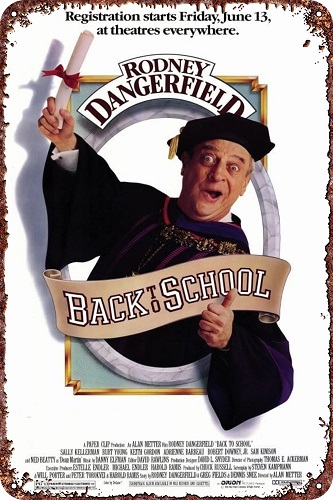
While many schools started before Labor Day, the majority of them will start their school year tomorrow. I thought it would be fitting to feature Rodney Dangerfield’s comedy Back to School. This ties in with this week’s Music of My Life post which will feature 1986, the year that the film was released.

The plot centers on a wealthy but uneducated father (Rodney Dangerfield) who goes to college to show solidarity with his discouraged son Jason (Keith Gordon) and learns that he cannot buy an education or happiness. The film also stars Sally Kellerman, Adrienne Barbeau, Sam Kinison, Ned Beatty, and a young Robert Downey Jr.

The Dean of the college that Rodney goes to is played by Ned Beatty. His last name is Martin. When Rodney comes in and calls him Dean Martin the first time, I belly laughed. This was probably a nod to the real Dean Martin who featured Rodney on some of his variety shows.

Those familiar with the movie will perhaps be disappointed that the song I have picked from the soundtrack is not from Oingo Boingo who appear in the film. (Fun Fact: Their frontman, Danny Elfman, wrote the musical score for the film. He went on to write music for the Simpsons, Batman, Tales from the Crypt and more!) Instead, I have picked one that is so obscure, you have to laugh at it!

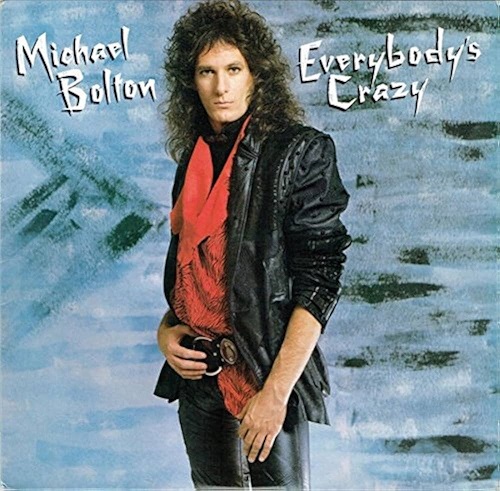
Michael Bolton really hit it big in 1989 with his Soul Provider album. It featured the hits: When I’m Back on My Feet Again, How Can We Be Lovers, and How Am I Supposed to Live Without You. Many are unaware that this album was actually his SIXTH album. His first was released in 1975 – 14 years earlier. That was when he was known as Michael Bolotin.

In 1985, Bolton released an album that didn’t even chart in the US (or anywhere else, unless you include Sweden, where it reached #45). Everybody’s Crazy was the title track from the album and was a minor hit on hard rock radio stations. Yes, you read that correctly – hard rock radio stations. What makes this even better is that MTV played the video for this song and a young Michael Bolton is rocking his best “hair band” look.

I have NO idea how this song made it into the soundtrack of the film, but it did. What I do know is that the songs from this “rock” album never really made it to any future compilations (except the title track which showed up on his Playlist compilation album). The reason for this was the contrast in musical style between this album and the majority of Bolton’s later (and more successful) musical output. Someone must have felt that those familiar with his Adult Contemporary stuff might not be able to handle his “rocker” side.

I anxiously away your comments on this one, especially my musical blogger friends…

Take it away, Michael…

Movie Music Monday – Grease

46 years ago today, the title song to the blockbuster movie Grease hit number one in America.  It was a huge smash for Frankie Valli, but did you know he almost didn’t record it?

The title song is one of four songs that were written specifically for the movie and obviously did not appear in the stage production.  It was also recorded later than any of the other songs.

Bee Gee Barry Gibb was asked to write the song.  At first, the thought was that Barry would sing it as well. However, it was felt that when people thought of Barry, they thought of disco.  The Disco genre was obviously not the vibe of the film.

With Gibb out as the lead singer, they began to think about someone who would better fit the 50’s/60’s feel of the film. Frankie Valli was approached because his vocal range was very similar to Gibb’s.  He also represented the “Pre-British Invasion” era that they were looking for.

The title song was the only song in the movie that was not sung by a cast member.  Valli was actually given the option of singing the theme or having a role in the film as the Teen Angel.  He opted for the theme song and Frankie Avalon was given the role as the Teen Angel.

Even though Barry Gibb didn’t sing lead on the song, he did sing background vocals.  Oh, and Barry had his friend Peter Frampton play guitar on the song.

Grease was is last top 40 record for Frankie Valli to date.

Movie Music Monday – Easy Money

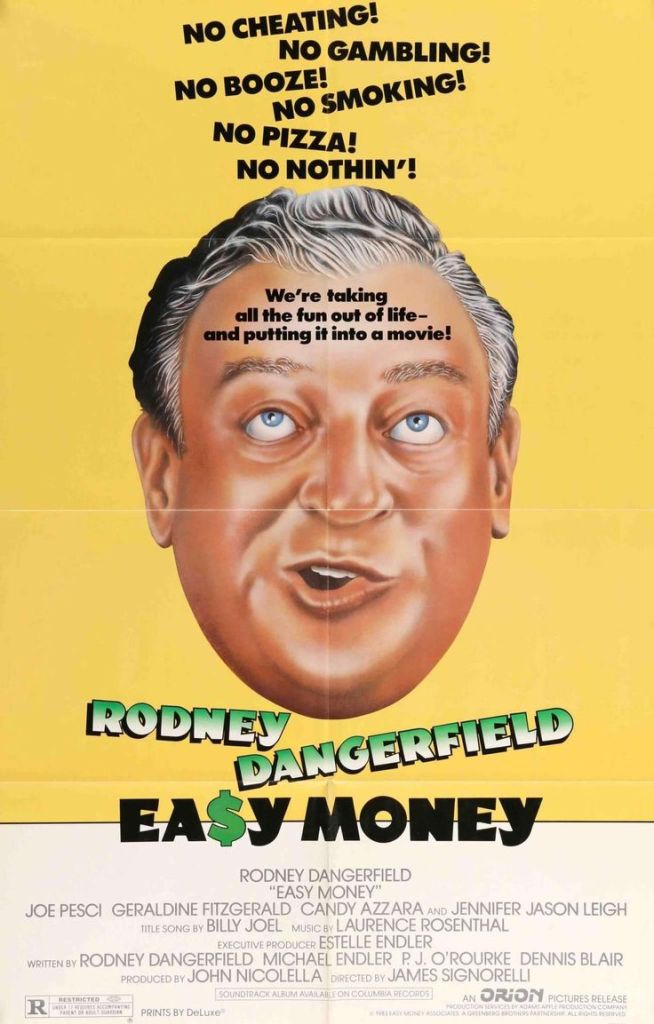
Last week the Music of My Life post focused on 1983, and coincidentally today’s Movie Music comes from a 1983 comedy.  Easy Money was released on this day back in ’83 and has one of the funniest last lines I’ve ever heard!

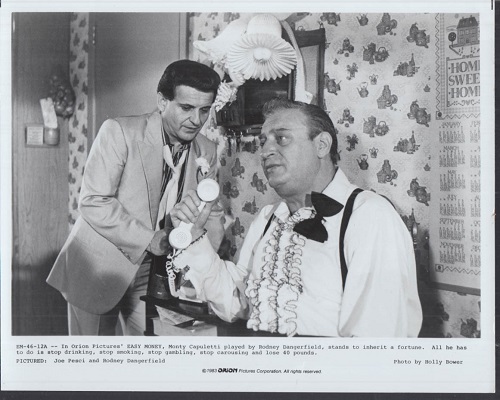
The film stars Rodney Dangerfield, Joe Pesci, and Jennifer Jason Leigh. Rodney plays Monty Capuletti who loves to drink, smoke and gamble.  When his rich mother-in-law dies his family is told that they will inherit $10 million.  There is one  condition – Monty has to give up drinking, smoking, gambling and live a healthy life for 365 days. 

The movie earned $5,844,974 in its opening weekend, ranking number one at the domestic box office, toppling the prior three-week #1 run of National Lampoon’s Vacation.

Gene Siskel wrote that “the big discovery in the comedy ‘Easy Money’ is that Rodney Dangerfield, unlike most stand-up comics, does not need dialogue to be funny. He is funny just standing still—or his version of standing still, which includes nervous twitching, profuse sweating, pained expressions and rolling of the eyes.” Rodney is indeed funny in this movie, but Pesci’s performance is just as funny! 

Billy Joel was asked to write a song for a new Rodney Dangerfield movie, also titled Easy Money, and he came up with “Easy Money.”  This triggered the retro approach to the rest of the songs his An Innocent Man album.  (Rodney later appeared in the music video for “Tell Her About It’.)

Easy Money is what one author called “a get-up-and-dance, snap-your-fingers, clap-your-hands song complete with a beefy horn section and Billy channeling the vocals of the king of soul, James Brown, or Wilson Pickett.” The lyrics are just as catchy as Billy keeps delivering clever metaphors (“I got a hot slot machine of a system ready to go”) only this time the song’s theme is looking for easy money, rather than trying to get a girl.  Billy was clearly having a good time as he is singing.

I always loved this one, sadly, it was never released as a single.  I really think this one could have been a huge hit.  It’s just too fun!

Movie Music Monday – Love At First Bite

Today the tannest man in show business celebrates his 85th birthday.  I am, of course, talking about George Hamilton.  He is no stranger to television and movies.  His film career started way back in 1959 when he started in Crime and Punishment USA

He played many serious roles both on television and in the movies.  In 1979, however, he starred in the hit Love at First Bite, where he showed that he could also do comedy.

Admittedly, the set up of the film is kind of silly: The Communist regime of Romania ejects the Count from his ancestral home, he and his manservant Renfield (Arte Johnson) go in search of the current incarnation of Mina Harker (Dracula’s true love). This incarnation is a fashion model named Cindy (Susan Saint James) who lives in New York City. The comedy ensues when the incurably romantic Count finds it difficult to adjust to life in the Big Apple in the late 1970s.

Hamilton as Dracula

Richard Benjamin is pretty funny as Cindy’s psychiatrist, Dick Shawn (who is always great) plays a NYPD Lieutenant, and there are funny appearances from Sherman Hemsley and Isabel Sanford. 

One of the best scenes in the movie is when Dracula and Cindy dance at a disco.  The song that they dance to is I Love the Nightlife (Disco Round) by Alicia Bridges.

The song was recorded in 1978 and  was released as the first single from her debut album. It went to number 2 on the Disco charts and became a crossover hit, peaking at number five on the Billboard Hot 100 Chart.

The song is forever connected to the movie.  Which is why I find it odd that the 2007 DVD release of the movie features a different song in the relevant scene!   I don’t even know what song they used or why Bridges song was cut.  Thankfully, the 2015 release by Shout Factory restores the original song to the scene.

The song is heard throughout the movie’s trailer as well….

Happy birthday, George Hamilton!!

Movie Music Monday – Risky Business

It was on this day in 1983 that Risky Business was released in theaters. It featured Tom Cruise is what many consider his “break out role.” It also starred Rebecca DeMornay, Curtis Anderson, Bronson Pinchot, and Megan Mullally. Cruise was picked for the role over some other famous actors who auditioned for it including, Tom Hanks, Kevin Bacon, Sean Penn, and John Cusack. Michelle Pfeiffer was actually offered the female lead role, but turned it down.

Roger Ebert enjoyed the film. He said that the film featured “New faces and inspired insights and genuine laughs… one of the smartest, funniest, most perceptive satires in a long time… not only invites comparison with The Graduate, it earns it.

The soundtrack of the film was done by Tangerine Dream. Their music makes up half of the movie’s soundtrack. Mixed in with their music are songs from Muddy Waters, Prince, Phil Collins, Journey, Jeff Beck, and the song I’m featuring in this blog. I’m sure I don’t even have to tell you what it is, because it is THE song that is forever connected with one of the films greatest scenes.

Old Time Rock and Roll by Bob Seger was released in 1979 and had all but gone away before it was featured in Risky Business. Thanks to the film and the iconic scene featuring Cruise’s character sliding across the floor, dancing in just his pink shirt, socks, and white briefs while lip synching to the song, it enjoyed renewed popularity.

As far as the influence on pop culture… the scene has been recreated in episodes of many television series, as well as in films, parodies, and advertisements.

So today, find a nice smooth wood floor, throw on a pink shirt, white socks and your tightie whiteys and sing along …

Old Time Rock and Roll

Just take those old records off the shelf
I’ll sit and listen to ’em by myself
Today’s music ain’t got the same soul
I like that old time rock ‘n’ roll
Don’t try to take me to a disco
You’ll never even get me out on the floor
In ten minutes I’ll be late for the door
I like that old time rock ‘n’ roll

Still like that old time rock ‘n’ roll
That kind of music just soothes the soul
I reminisce about the days of old
With that old time rock ‘n’ roll (oh)

Won’t go to hear ’em play a tango
I’d rather hear some blues or funky old soul
There’s only one sure way to get me to go
Start playing old time rock ‘n’ roll
Call me a relic, call me what you will
Say I’m old-fashioned, say I’m over the hill
Today’s music ain’t got the same soul
I like that old time rock ‘n’ roll

Still like that old time rock ‘n’ roll
That kind of music just soothes the soul
I reminisce about the days of old
With that old time rock ‘n’ roll (oh)

Still like that old time rock ‘n’ roll
That kind of music just soothes the soul
I reminisce about the days of old
With that old time rock ‘n’ roll

Still like that old time rock ‘n’ roll
That kind of music just soothes the soul
I reminisce about the days of old
With that old time rock ‘n’ roll (hey)

Still like that old time rock ‘n’ roll
That kind of music just soothes the soul
I reminisce about the days of old
With that old time rock ‘n’ roll

Still like that old time rock ‘n’ roll

Movie Music Monday – NUJV?

In 1965, The Beatles’ second feature film, Help! premiered at the London Pavilion Theatre in the West End of London. The musical comedy, which followed the success of A Hard Day’s Night, was a much larger production than its predecessor, finding the band and director Richard Lester shooting in a variety of international locations. The film’s soundtrack doubled as The Beatles’ fifth studio album.

Ok, before I go on, I need to clarify the title of this blog. Just what in the world is NUJV? Originally, the album cover showed The Beatles spelling out the word “Help” using the semaphore system of communicating with flags, which was usually used by ships. The photographer, Robert Freeman, didn’t like the pose because it looked unbalanced. Instead, he had them pose in a more “balanced” way – that in semaphore spells the letters NUJV.

Apparently, only those who knew semaphore saw the issue.

This movie played a big part in the way another group portrayed themselves. Help! was used by The Monkees to prepare for their TV series. The Beatles showed off their individual personalities in their movies, which The Monkees made sure to emulate. By not presenting all members of the band as identical, it made the Beatles even more popular, as many of their fans picked a favorite.

There certainly are some great tracks on the album: Ticket to Ride, Yesterday, The Night Before, Act Naturally, Dizzy Miss Lizzie, You’ve Got To Hide Your Love Away, I’ve Just Seen a Face, and the title track – Help! (Which is what I want to feature today.)

According to Lennon’s cousin and boyhood friend Stanley Parkes, “Help!” was written after Lennon “came in from the studio one night. ‘God,’ he said, ‘they’ve changed the title of the film: it’s going to be called ‘Help!’ now. So I’ve had to write a new song with the title called ‘Help!’.”

Fun Fact: The original title to the title song and the movie was “Eight Arms To Hold You,” and the first copies of the single said it was from the movie “Eight Arms to Hold You.”

Originally, John Lennon wanted this to be a much slower song. He was convinced, however, that by speeding it up, it would sound “more commercial” and would naturally sell more albums.

The song itself runs just 2:18, but packs in 267 words! This makes it one of the most lyrically dense hits of the era. It starts and ends on a vocal, and there are two vocal lines running throughout the song, as John Lennon sings lead while George Harrison and Paul McCartney do backgrounds, singing some of the same phrases either before or after Lennon. There are only a few seconds in the song where somebody isn’t singing.

Lennon admitted that the song truly was a “cry for help!” He has described this time of his life as his “fat Elvis period.” In a 1971 interview with Rolling Stone, Lennon said this is one of his favorite Beatles records, because, “I meant it – it’s real.” He added: “The lyric is as good now as it was then. It is no different, and it makes me feel secure to know that I was that aware of myself then. It was just me singing ‘Help’ and I meant it.” Paul McCartney helped Lennon write the song, but did not realize it was actually John calling for help until years later.

Writer Ian MacDonald describes the song as the first crack in the protective shell Lennon had built around his emotions during the Beatles’ rise to fame, and an important milestone in his songwriting style. In January of 1980, John told Playboy magazine, “The whole Beatles thing was just beyond comprehension. I was subconsciously crying out for help”.

As a bonus, here is the trailer for the film:

Movie Music Monday – Shrek

The Shrek movies were such a big part of my older boy’s childhood.  They loved them, and I did, too.  I am not ashamed to admit that I am a tad bit excited that they just announced a 5th installment to the series.  I can relate a bit to this ogre!

They’ve always seemed to work some classic tunes into the series.  Bad Reputation, Funkytown, On Top of the World, I’m On My Way, The Immigrant Song, Holding Out For a Hero, and so many others fit perfectly into the scenes of this fairy tale.

It was a Leonard Cohen song that struck a chord with me from the first movie – Hallelujah.  It was released on his Various Positions album and had little success.  However, when John Cale’s 1991 version appeared in the 2001 Shrek film it gained a whole new life.

I’m sure there are more now, but in 2008, someone estimated that there were at least 300-350 versions of the song that had been recorded.  Randy from Mostly Music Covers may have a more accurate and current number.

According to Cohen, he estimated that he had 80-180 versions of the song that he wrote, mainly because of the various renderings of the same line. After his death, his notebooks showed at least 150 versions.

Cohen was asked the meaning of the song many times and gave plenty of answers.  One of them was: “This world is full of conflicts and full of things that cannot be reconciled. But there are moments when we can reconcile and embrace the whole mess, and that’s what I mean by ‘Hallelujah.’

Another time he stated, “there is a religious hallelujah, but there are many other ones. When one looks at the world, there’s only one thing to say, and it’s hallelujah”. k.d. Lang, who also recorded the song said in an interview shortly after Cohen’s death that she considered the song to be about “the struggle between having human desire and searching for spiritual wisdom. It’s being caught between those two places.

Rufus Wainwright, who turns 51 today, recorded his version with an arrangement that was almost identical to John Cale’s version.  Wainwright’s version was the one that appeared on the Official Shrek Soundtrack, despite the fact that Cale’s version appears in the movie. The soundtrack went on to go 2 times platinum!

Happy birthday, Rufus Wainwright!