Tune Tuesday

Normally, I would steer clear of this song, but because it is his birthday, I will feature it today.

Happy 83rd Birthday to Bob Lind!

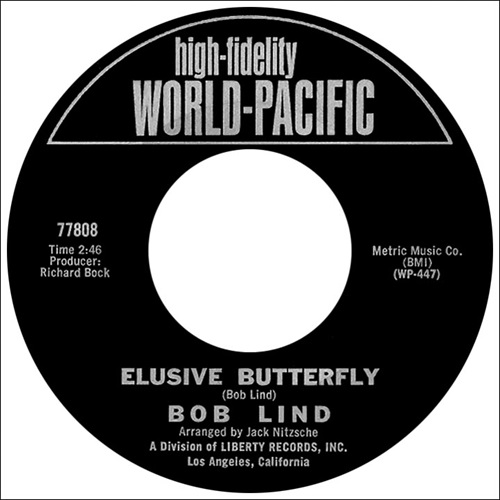
In 1965, Bob Lind signed a contract with World Pacific Records, which was a division of Liberty Records. It was there that he recorded his composition (and only hit) Elusive Butterfly.
From songfacts.com:

Bob Lind wrote this song, where he sees himself as a butterfly hunter. He is looking for romance, but he finds it as elusive as butterflies are to capture. It turned out to be the only hit for Lind, who did a lot of traveling as a kid and ended up playing folk music around Denver when he flunked out of Western State College. He wrote “Elusive Butterfly” as the sun was coming up after staying up all night. He says the song is about “The magic of the quest, the thrill of searching, even when that which is sought is hard to see.”

One of music’s greatest bass players, Carol Kaye, played on the song. She told songfacts.com:

“It was at Sunset Sound. It was kind of a boring tune. I think it was D-flat or something, and it stays a long time in that chord and then it moves in a funny way to the next chord, it’s like a sidebar phrase or something like that. I missed it and I went to go up to the G-flat or whatever and I missed it and I came right back down. I did a slide up and down. And they stopped and I thought, ‘Uh oh, he caught me.’ He said, ‘Do more of those!’ (laughing) So the slide was born, then. I’d stick that slide in here and there on the records I cut.”

I chuckled when I read her quote calling the song “boring.” When I was at WKSG in Detroit, this song would come up on the play list from time to time. Johnny Molson, who did the evening show before I came on the air, had the best description of the song. He told me that the song “sounds like someone ate a Hallmark card … and threw up.”

Happy Birthday to Johnny, by the way. Who knew he and Bob shared a birthday?

Plagued by drug and alcohol problems, Lind gained a reputation in the business for being “hard to work with.” He eventually left the music business for some time, but his music was recorded by over 200 artists. Those artists include: Cher, Glen Campbell, Dolly Parton, Eric Clapton, The Turtles, Johnny Mathis, Nancy Sinatra, The Four Tops, and Petula Clark!

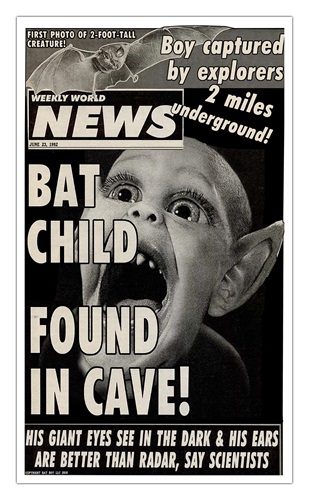
In 1988, he moved to Florida. He wrote five novels, an award-winning play, and a screenplay, Refuge, which won the Florida Screenwriters’ Competition in 1991. He also worked briefly for the Weekly World News and is credited with co-writing their famous “Bat Boy” story.
I’d say that he should stick to singing, but I’m not really keen on that either… So, Happy Birthday, Bob.

Turntable Talk #38 – It’s About Time

Dave just wrapped up another chapter of Turntable Talk. This was my contribution:

It is time once again for Turntable Talk hosted by Dave at A Sound Day. For over three years now, he has offered up a musical topic each month for me (and other participants) to write about. This month’s topic is “It’s About Time.”

Dave’s instructions are simple. “Tell us about a song about “time.” It could be one using the word “time” in the title … and there’s no shortage of them… or one that actually somehow explores the passage of, or idea of time.” While this is a topic that is fairly easy, I can’t help but wonder if there will be duplicate submissions.

For example, right off the top of my head I came up with Time in a Bottle from Jim Croce (which I have written about before. Then Time After Time from Cyndi Lauper came to mind. This was followed by Cher’s If I Could Turn Back Time and Huey Lewis’ Back in Time. Before I could shut my mind off Styx Too Much Time on My Hands and Semisonic’s Closing Time entered my mind.

I immediately discarded those, because I am sure that the other participants would choose one of those. So I dug a little deeper and tried to think of a song that might not be someone’s choice. I narrowed it down to No Time by the Guess Who, Just in Time by Dean Martin, Crying Time from Ray Charles, Time is Tight by Booker T and the MG’s, and my choice.

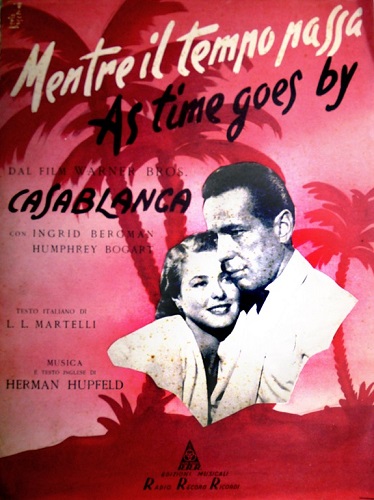
I chose a song written by Herman Hupfeld! Now everyone knows Herman, right? No. Not really, but I am sure you will know the song. It is a song that was written in 1931 for the Broadway show “Everybody’s Welcome.” It was first recorded by Rudy Vallee in July of 1931. It would be covered by Billie Holiday, Louis Armstrong, Frank and Nancy Sinatra, Natalie Cole, Carly Simon and Bob Dylan (Just to name a few).

While the song was recorded a few times after Vallee’s version, it was 11 years later when it would really get noticed. In 1942, the song was sung by the character “Sam” (portrayed by Dooley Wilson) in the classic film – Casablanca. As Time Goes by is heard throughout the film in short musical breaks.

RCA Victor wanted Dooley to record a version of it to be released to the public. However, a musician’s strike happened between 1942 and 1944, so he was not allowed to do so. Instead, the record label re-released the Rudy Vallee version, which went on to become a number one record (11 years after the original release).

Wiki states: Like many later singers, Wilson in Casablanca starts with “You must remember this, a kiss is still a kiss…”, singing only the verses and refrain (“As time goes by”). He entirely omits the intro that put those “fundamental things” into context: “This day and age we’re living in gives cause for apprehension, With speed and new invention and things like third dimension. Yet, we get a trifle weary with Mister Einsten’s theory, So we must get down to earth, at times relax, relieve the tension. No matter what the progress or what may yet be proved, The simple facts of life are such they cannot be removed.”

The song was voted No. 2 on the AFI’s 100 Years… 100 Songs special. The show commemorated the best songs in film.

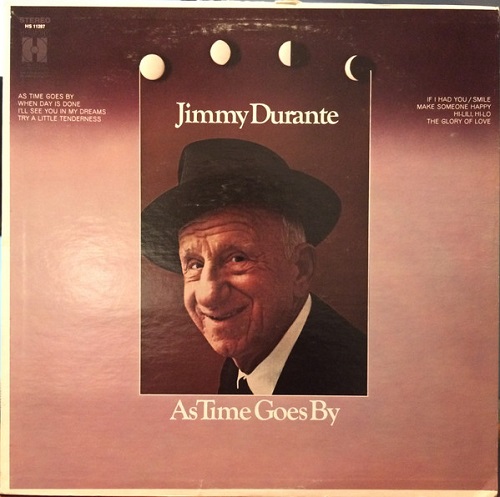
The version I chose to feature is by a multi-talented comedian, actor, pianist and singer. His voice was instantly recognizable on radio. He was a guest on many television shows and had some success as a singer. He is, however, probably best known for … his nose. His nickname was “the schnozzola.” I am, of course, talking about the great Jimmy Durante.

The song itself is beautiful. Every artist who has covered it brings their own special take on it. There is something that really hits me when I hear Durante’s version. Despite that raspy voice, there is a sincerity that makes it just a bit better than the other versions. I’m not trying to diss the other versions, but none of them give me goosebumps when I hear them. Jimmy’s version does. For some reason, his voice blends so well with the string arrangement.

Before I post the song, you know I have to say it – “Play it again, Sam!”

In a live version, Jimmy adds the intro that many leave out.

Thanks again to Dave for asking me to participate and for hosting this feature. I’m excited to see the choices of the other writers!

Thanks for reading and for listening!

Tune Tuesday – Ain’t No Sunshine

As summer quickly (and sadly) draws to a close, it got me to thinking about the one thing I’ll miss most about summer – sunshine. For those who live where the sun is always shining (or at least most of the time), you really cannot comprehend just how difficult the winter months in Michigan are. While I love Autumn, I miss the sunshine as we start to see it less and less.

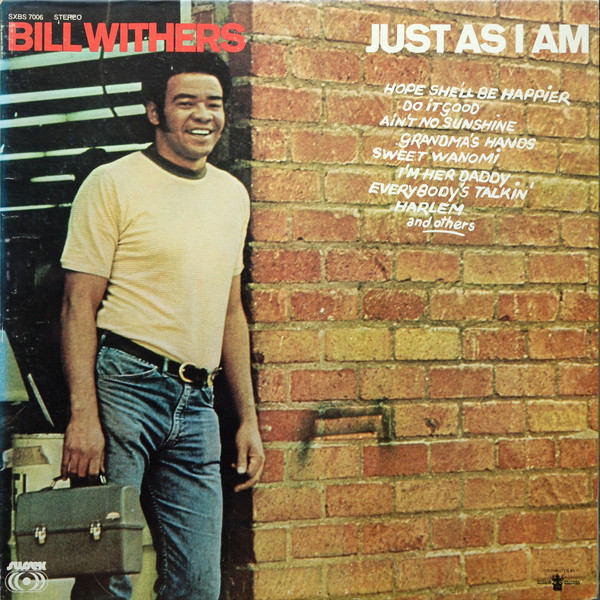
The lack of sunshine that is on the horizon in the months ahead, made me think of this great R&B song from Bill Withers. It’s been covered by SO many people including Nancy Sinatra, Paul McCartney, Michael Jackson, Wynonna Judd and many more, but Bill Wither’s version is the gold standard! It can be found on his 1971 album “Just As I Am.”

R-4746799-1550014522-8988_jpeg

Bill wrote the song after being inspired while watching the movie The Days of Wine and Roses with Lee Remick and Jack Lemmon. He said in an interview that the characters Remick and Lemmon played: “They were both alcoholics who were alternately weak and strong. It’s like going back for seconds on rat poison. Sometimes you miss things that weren’t particularly good for you. It’s just something that crossed my mind from watching that movie, and probably something else that happened in my life that I’m not aware of.”

This was his first hit. He was in the navy for 9 years and after getting out, he worked in a factory making parts for airplanes. It was during this time that he met Booker T. Jones (of Booker and the MG’s). Booker brought in some amazing musicians (Donald “Duck” Dunn, Stephen Stills, and himself) to play on the track. Jones also produced the album.

One of the most recognizable parts of the song is where he repeats the words “I know” over and over and over. That was not they way he intended the song to be. he had hoped to write a verse to go there. Withers explained in an interview: “I wasn’t going to do that, then Booker T. said, ‘No, leave it like that.’ I was going to write something there, but there was a general consensus in the studio. It was an interesting thing because I’ve got all these guys that were already established, and I was working in the factory at the time. Graham Nash was sitting right in front of me, just offering his support. Stephen Stills was playing and there was Booker T. and Al Jackson and Donald Dunn – all of the MGs except Steve Cropper. They were all these people with all this experience and all these reputations, and I was this factory worker just sort of puttering around. So when their general feeling was, ‘Leave it like that,’ I left it like that.”

(Keith story: The first time I played this record at WKSG in Detroit, I was in the bathroom peeing when the “I know” part started repeating. I was standing at the urinal listening to the song over the speaker and I thought “the record is skipping!” I was playing this off a cart (which meant that it was already recorded and there was no way the song was skipping, unless it was recorded that way!). I remember running out of the bathroom and through the halls anyway …. by the time I got to the studio, the song was continuing ….skip free!)

R-550007-1430066685-1670_jpeg

The song won the Grammy for Best R&B song in 1972 and went all the way to #3 on the charts. While English teachers must cringe when they hear the improper grammar (“ain’t no” instead of “isn’t any”), it worked in this song (and also Ain’t No Woman (Like the One I’ve Got” and “Ain’t No Mountain High Enough).

“Ain’t No Sunshine”

Ain’t no sunshine when she’s gone
It’s not warm when she’s away
Ain’t no sunshine when she’s gone
And she’s always gone too long
Anytime she goes away

Wonder this time where she’s gone
Wonder if she’s gone to stay
Ain’t no sunshine when she’s gone
And this house just ain’t no home
Anytime she goes away

And I know, I know, I know, I know
I know, I know, I know, I know, I know
I know, I know
Hey, I oughtta leave young thing alone
But ain’t no sunshine when she’s gone

Ain’t no sunshine when she’s gone
Only darkness every day
Ain’t no sunshine when she’s gone
And this house just ain’t no home
Anytime she goes away