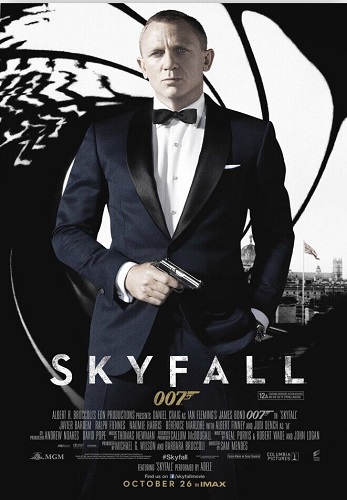
The last James Bond movie I saw starred Timothy Dalton. I think it was The Living Daylights, I might be wrong. I’ve honestly never seen a Bond film with Daniel Craig as 007. That being said, the music today comes from his movie Skyfall. The reason? Adele was born on this day in 1988.
Bond films are known for their amazing title songs. Live and Let Die from McCartney, Goldfinger from Shirley Bassey, and A View To a Kill from Duran Duran for example. So how did Adele get involved in the title song? Thanks to songfacts.com – here’s what happened.
Director Sam Mendes told Yahoo that at first, Adele wasn’t quite sure how to go about composing the movie theme. He explained: “She came in very early before we started shooting and her main concern was, ‘I write songs about myself, how can I make a ‘Bond’ song?’ My answer was, ‘Just write a personal song!'”
Adele teamed up with Paul Epworth to pen the sultry ballad. Said the singer: “I was a little hesitant at first to be involved with the theme song for Skyfall. There’s a lot of instant spotlight and pressure when it comes to a Bond song. But I fell in love with the script and Paul had some great ideas for the track and it ended up being a bit of a no-brainer to do it in the end. When we recorded the strings it was one of the proudest moments of my life.“
Paul Epworth said that finding the right sound for “Skyfall” was a particular challenge. “[The producers] said they wanted a dramatic ballad basically,” he explained. “With having read the script and trying to set the whole thing up in that context, where it happens in the film, there was really only one thing it could be. It was interesting to want to do something that was simultaneously dark and final, like a funeral, and to try and turn it into something that was not final. A sense of death and rebirth.”
After writing the piece of music that Epworth believed could be the tune for the Bond theme, the producer thought, “This could be the song.” Epworth told Hollywood.com that he then rang up Adele, “and said, ‘It might be too dark.’ And she said she loved it.” The pair immediately went into the studio and within 10 minutes she’d put down the first draft of the verse and chorus. “She had the lyrics ready in her head when she drove over. It was the most absurd thing. She’s fast, but it was really quite phenomenal,” he said.
Daniel Craig admitted to Yahoo that he found himself coming over a bit emotional when the song was first played to him: “I cried. From the opening bars I knew immediately, then the voice kicked in and it was exactly what I’d wanted from the beginning. It just got better and better because it fitted the movie. In fact the more of the movie we made, the more it fitted it.”
It was a top ten song in the US and it won Best Original Song at the 85th Academy Awards. It was the first Bond theme to win an Oscar.
Last week I wrapped up my Music of My Life feature. It focused on music from 1970-2025. I admit that it was fun to look back at the tunes that have special meaning to me, bring back a certain memory or a tune that I just really like.
When I got into the 2000’s it became more difficult for me to find songs. With the earlier years, however, I found it difficult to narrow my list down to just ten songs. So I sat down with my original lists and selected some songs that “bubbled under,” so to speak.
I figured a good way to present them was to focus on a decade. 10 years = 1 song per year = 10 songs. Let’s head back to the 70’s and check out a few “Decade Extras.”
1970
I wish I could find the recording of this so I could set it up better. My co-host, Steph, and I were in conversation with our newsman, Hal. Something came up about knocking and Hal says, “Knock three times on the ceiling if you want me.” This led to me asking why we were discussing Tony Orlando on a country station.
Steph walks out of the studio during commercials and I went on the hunt for the song. I found it and cued it up to the chorus. When she comes back to the studio, and she has to read a sponsorship for the weather forecast. I let her begin and out of nowhere I play the chorus of Knock Three Times. She was so thrown by this, she can’t stop laughing. She’s trying to do the sponsorship, but every 6th or 7th word, I’d fire the chorus again. She is down for the count in laughter (which was my intention), so I wound up reading it and apologizing to our listeners.
I think of Steph every time I hear it.
Knock Three Times
1971
I’ve always love the Jonathan Edwards song “Sunshine.” It was always one that I loved singing along with. Had it not been for a mistake, it may never have gotten recorded. According to songfacts.com, he recorded this out of necessity when one of the tracks he put down was accidentally erased. Instead of redoing that song, he did “Sunshine.” Pleased with the results, he and the engineer overdubbed bass and added the drums the next day.
Edwards was signed to Atco Records. They released “Sunshine” as his first single early in 1971, but it flopped. The song got some traction thanks to disc jockeys in New England who started playing it off the album. Six months after the Atco single was released, it was re-issued on the independent Capricorn label with a demo version on the B-side. This time, the song was a hit, shooting to #4 in the US.
He would often end live shows with the song, and Edwards said, “I often say, and it’s true, that if I had never done another song in my life, I’ll be happy to have come and gone with that.”
Sunshine
1972
For the longest time, I thought that Neil Diamond was singing Nice To Be With You. When I started working at my first radio gig, I found out I was wrong.
The song was actually one that had a local connection. Jim Gold formed the group Gallery in Detroit. They recorded quite a few songs, but none were as big as Nice To Be With You. It was also the title track of their debut album.
Nice to Be With You
1973
There was no shortage of Jim Croce songs in my original feature. My mom and dad listened to his music a lot. He was one of many artists who were a part of my childhood.
I love when songs have some basis or inspiration in real life. Bad, Bad Leroy Brown is one of them.
“Leroy Brown is a guy that he actually met,” said his widow Ingrid. “When he was in the service – The National Guard – this guy had gone AWOL. He was a guy that Jim kind of related to, he liked to sing with him. This guy had gone AWOL but he came back to get his paycheck, and he got caught. Jim just thought he was such a funny guy that he thought he’d include his name in the song, and it just worked. There really was a Leroy Brown, and sometimes having a name helps you to build a song around it.”
It’s one of the few songs I can sing at karaoke.
Bad, Bad Leroy Brown
1974
I was a big Beatles fan growing up. As a kid, I didn’t really understand why Paul McCartney was in another group (Wings) or why John Lennon was doing solo stuff. I do remember hearing Band on the Run, though, and liking it.
McCartney recorded the album in Lagos, Nigeria along with his wife Linda and guitarist Denny Laine. The other Wings decided not to make the trip, which worked out fine in the end: McCartney considers the album his best post-Beatles work. He told Word in 2005:
“I was on drums and guitar a lot, mainly because the drummer decided to leave the group the night before and one of the guitar players decided not to come! So we got that solo element into an otherwise ‘produced’ album.”
Band On the Run
1975
It’s a Long Way to the Top is an autobiographical song for AC/DC. It describes their struggles as they tried to make it big. Right from the start, they delivered a top notch live show night after night. Songfacts says: It was genuine: At the time, they were just getting started and playing some seedy venues with even seedier business associates. The hard work eventually paid off, and several years later the band was selling out arenas.
“It’s A Long Way To The Top” really summed us up as a band,” Angus Young told Rolling Stone. “It was the audience that really allowed us to even get near a studio.”
The song is a bit unusual because instead of a lengthy guitar solo it features Angus Young on lead and Bon Scott on the bagpipes in a Dueling Banjos sort of way. I remember the first time I heard the song. “Are those bagpipes?!” Yes. Yes, they are!
It’s a Long Way to the Top
1976
Turn the Page by Bob Seger is also a song about being out on the road and performing. This one focuses on the effects of touring on a performer. There is a lot of loneliness that they feel.
Bob says, “Our first headline shows ever in a large (twelve thousand seat) hall were the two shows at Detroit’s Cobo Arena, September 4th and 5th, 1975. I remember while I was singing this how nice it was to have such good on-stage monitors. I had never heard my voice so well while performing.” The version on Seger’s greatest hits album was taken from these shows.
The song is a classic rock staple here in Michigan. I got to see Bob perform one of his last shows and it was electrifying. I can’t even begin to explain the feel of the room when he performed this one.
Turn the Page
1977
“What’s Your Name” by Lynyrd Skynyrd is another song that is based on a true story. One night while they were on tour, the band was drinking at their hotel bar when one of the roadies got in a fight. They all got kicked out. So they went to a room, ordered champagne and continued the party.
Songfacts says: The incident in this song did not happen in Boise, Idaho. The first line was originally, “It’s 8 o’clock and boys it’s time to go,” but lead singer Ronnie Van Zant changed it when he found out his brother, Donnie, was opening his first national tour with his band .38 Special in Boise. The first line became “It’s 8 o’clock in Boise, Idaho.”
Three days after the album was released, Ronnie Van Zant, Steve Gaines, and Cassie Gaines died in a plane crash. The cover of the album was redone because the original cover had the band surrounded by flames.
What’s Your Name
1978
Hold the Line by Toto caught my ear the first time I heard it because of the piano open with the guitar riff intermingling with it. It was the debut single for the group who was made up primarily of session musicians.
From songfacts: “Hold the line” is an expression meaning to maintain your existing position, which in this case is the singer telling a girl to be patient and stay with their relationship.
The saying also has a more literal meaning, however, which is how David Paich came up with the title. “Hold the line” is what you tell someone on the phone if you want to put them on hold while you’re taking another call. This is typical in workplaces, but in the days before cell phones, some households (especially ones with teenagers) also had multiple phone lines coming in and could put callers on hold. Paich lived in one such household.
Paich said: “When I was in high school, all of a sudden the phone started ringing off the hook, and I had a situation where I was at the dinner table and I had three girls all call at the same time, so all the lights were flashing. I was kind of juggling girlfriends, and that’s how that came about.”
Toto’s video was a bit ahead of it’s time. MTV hadn’t even gone on the air yet when the song was released.
Hold the Line
1979
Don’t Stop Me Now by Queen is such a fun song to play at weddings and parties, especially after the audience has loosened up. So often I’d come out of a slow song and segue right into the smooth intro of Freddie Mercury. People would raise their hands and sway while singing along. Then, when the tempo changes, the dance floor was insane.
It’s a catchy song that has you singing along, even if you are just hearing it for the first time. In 2011, Queen fans voted the chorus of “Don’t Stop Me Now” as the band’s best ever lyric.
In an Absolute Radio interview, Brian May says, “I thought it was a lot of fun, but I did have an undercurrent feeling of, ‘aren’t we talking about danger here,’ because we were worried about Freddie at this point. That feeling lingers, but it’s become almost the most successful Queen track as regards to what people play in their car or at their weddings. It’s become a massive, massive track and an anthem to people who want to be hedonistic. It was kind of a stroke of genius from Freddie.”
Don’t Stop Me Now
So what do you think? I like this idea. A quick look back at a decade. There are plenty of songs to choose from that did not make the original run of this feature. Join me next week for more!
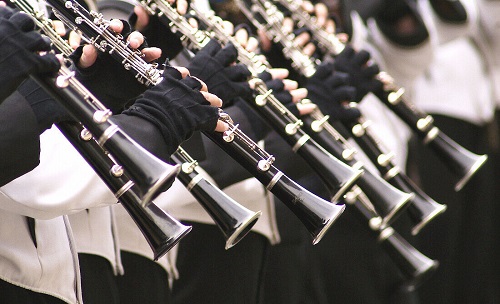
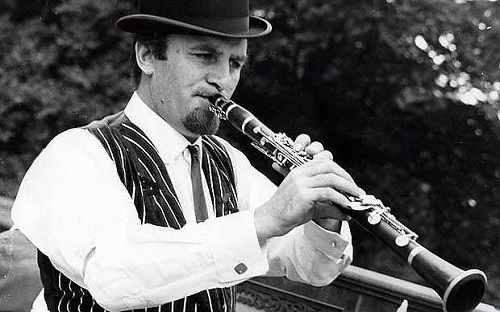
The clarinet celebrates birthday 335 today, and in honor of that, it is Clarinet Day!
January 14th is the day the clarinet was invented in Nuremberg, Germany in 1690. The instrument was created by German instrument maker Johann Christoph Denner, or possibly his son Jacob.
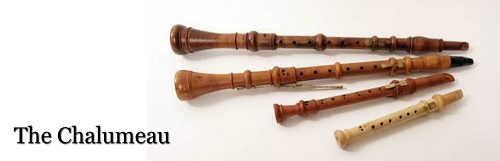
It had developed from much earlier reed instruments, going right back to Ancient Greece and Egypt. The chalumeauwas a Baroque single reed woodwind instrument originating in France where its use spread to Germany.
Denner developed the instrument. He equipped a chalumeau in the alto register with two keys, one of which enabled access to a higher register. This second register did not begin an octave above the first, as with other woodwind instruments. Instead, it started an octave and a perfect fifth higher than the first. A second key, at the top, extended the range of the first register to A4 and, together with the register key, to B♭4. Later, Denner lengthened the bell and provided it with a third key to extend the pitch range down to E3.
In the days of the Big Bands, there were plenty of well known clarinetists. Benny Goodman, Artie Shaw, and Woody Herman all played clarinet and had their own big bands. They also had hits that featured clarinet solos (Let’s Dance, Begin the Beguine, Woodchopper’s Ball).
As far as pop hits, there are a couple that spring to mind that feature the clarinet. The first was from Mr. Acker Bilk.
Bilk wrote Stranger on the Shore for his young daughter and originally named the song “Jenny” after her. The tune was written on a single scrap of paper by Bilk and handed over to arranger Leon Young. Young crafted the string arrangement, including the characteristic harmonic shifts at the very end.
The song was a number one in the UK and the biggest selling English single of 1962. In May of 1962 it became the first British recording to reach number one on the U.S Billboard Hot 100 Chart.
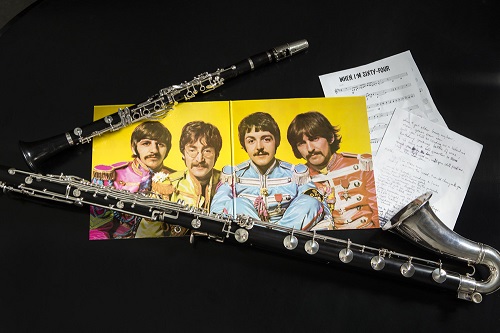
The other pop clarinet hit comes from the Fab Four. Paul McCartney wrote the melody for When I’m 64 when he was just 14 years old. It was one of the first songs he ever wrote.
The song features a clarinet trio – 2 B flat clarinets and a bass clarinet. The song was scored by George Martin, who said the clarinets were added at McCartney’s request. The reason for this was to “get around the lurking schmaltz factor” by using the clarinets “in a classical way.”
Paul McCartney suggested speeding up the track to raise the key by what musicians call a semitone. A semitone is about a half step. So speeding up the track took it from C major to D flat major. George Martin remembers that McCartney suggested this change to make his voice sound younger.
Musicologist Michael Hannon had this to say about the completed track:
“The rich timbres of the clarinets give the mix a fuller, fatter sound than many of the other tracks on the album.”
Welcome back to The Music of My Life, where I feature ten songs from each year of my life. In most cases, the ten songs I choose will be ones I like personally (unless I explain otherwise). The songs will be selected from Billboard’s Year-end Hot 100 Chart, Acclaimed Music, and will all be released in the featured year.
In 1999, I turned 29 years old. In September of that year, I would venture into a marriage that would fail years later. Two great sons came out of it though, and that was a great thing.
1999 was also the year that I began receiving monthly CDs with new music on them. It was a great was to always be sure to have clean edits of songs and be current. I received my first CD in May of that year and thankfully so!
I had been hired to DJ a prom. It was the first one I had ever done. I had been able to scrounge up some of the “newer” songs thanks to friends. However, a lot of the brand new stuff not in stores yet. (This is probably before I got my iPod and iTunes). Two days before the prom, that CD had the hottest song on the radio at the time. The song was Ricky Martin’s Livin’ La Vida Loca.
That night, I had requests for it and was surprised (and thankful) it was on the CD! I played it at least three times that night and knew my investment was a good one. Those CDs saved me plenty of times.
Frank Sinatra died on May 14, 1998, which was around the time this song was conceived. Co-writer Desmond Child told Songfacts that Sinatra’s music was a strong influence on this song. He said, “Frank Sinatra’s music was coming out of the airwaves, and we were all of a sudden into this Rat Pack idea, and also the Latin Elvis concept that we had for him. So we put that into the songs, as well – there was a swing aspect to it. So the verses were more like that, and then the choruses were all out rock anthems, with horns. Because horns had fallen out of favor, we brought horns back.”
Paul McCartney’s guitarist, Rusty Anderson, played on the song. Co-writer Robi Rosa asked him to put some guitar on some sections that were blank slates. He remembers: “I was thinking more of a James Bond vibe actually. But I kinda liked the way it counter-balanced the song.”
Anderson recorded his guitar work at his studio intending it to just be a demo. “I didn’t have a reverb to print that I was happy with so I figured the mixer would have the perfect reverb in mixdown,” he explained. “That recording turned into the single. When I heard it on the radio, I was shocked that they left it dry!”
Many years later, the song re-entered my life when I took my son to the movies. In Shrek 2, Puss in Boots (Antonio Banderas) and Donkey (Eddie Murphy) sing it as the credits roll.
Livin’ La Vida Loca
Next is a song that I always felt should have been a bigger hit. I Know How The River Feels was a song that was recorded first by country singer Ty Herndon in 1996. His version was never released. Diamond Rio recorded it for their Unbelievable album and it was their third single from it.
I liked it because it gave Diamond Rio a different sound. This was the first song of theirs to feature outside instruments as they added a string section to the arrangement. The song, however, was met with some negative reviews from critics. It only went to #33 on the Country charts.
I love the way the song uses a river with its twists and turns to describe the search for love. Finally, when it reaches the sea – the search, the twists, and the turns – you reach the final destination.
Now I know how the river feels When it reaches the sea And finally finds the place It was always meant to be Holding fast, home at last Knowing the journey’s through Lying here with you I know how the river feels
I Know How The River Feels
Hey Leonardo by Blessid Union of Souls is a song that I liked for a few reasons. First, the parenthetical title is “She likes me for me.” Isn’t that what love is about? It’s not about the physical things, the status and such. It is about loving a person because they are that person. Next, I like when a song tosses in some pop culture references.
Songfacts says: This song is written in the form of a letter to someone named Leonardo – a reference to actor Leonardo DiCaprio. In the song, the singer lists many celebrities and the qualities they possess making them attractive to women. He emphasizes that while he does not have the same qualities, his girlfriend loves him just the way he is.
The celebrities that are referenced include: Tyson Beckford, Robert Redford, Steve Buscemi and the movie Fargo. It also references opera singer Pavarotti, model Cindy Crawford, Clint Eastwood’s characterization of Dirty Harry, and Jim Carrey in the movie The Cable Guy.
Hey Leonardo
For the longest time I had only ever heard the clean edit of the next song. When I downloaded “Why Don’t You Get a Job” by the Offspring, it was the album version. It certainly was not edited. As I think of the words that are edited from it, I chuckle. They seem tame compared to what words are allowed on the radio today.
Offspring’s Americana album was a concept album. It examined the unpleasant side of life in America. Songfacts says, The song fits the concept by examining how so many people get by in the country without being productive and contributing to society.
If you listen closely, the melody might sound familiar. That is because it is based on The Beatles song “Ob-La-Di, Ob-La-Da,” with some elements of Simon & Garfunkel’s “Cecilia.”
Why Don’t You Get A Job
I’ve told this story before. When the Dixie Chicks first hit the radio, I did not think they would last. I felt that they had too much of a traditional sound and that listeners would not like it. I was wrong and I am glad that they went on to have radio success.
Their album Wide Open Spaces was full of hits. I came to really love the harmonies of the Dixie Chicks, especially on the last single from the album.
The Chicks’ version of “Tonight the Heartache’s on Me” was released in April of 1999. It had been recorded in 1994 by singer/songwriter Joy Lynn White, whose version was much slower. The Chicks version has a tempo and attitude that conveys all the feelings of the lyrics.
I love the play on words in the title. “The next round’s on me” is something you might hear in bars all over the country. The story of the song takes place in a bar. A gal sees her ex walk in with another woman and “Boom” – the hurt is there. “Bartender, pour the wine, ’cause the hurtin’s all mine. Tonight, the heartache’s on me!”
The song is a guilty pleasure, I suppose.
Tonight The Heartache’s On Me
I hate to say that Sheryl Crow is a cover artist, because she is not. However, her cover songs are really good! Take for example, her cover of 1987’s Sweet Child ‘O Mine.
It was originally done, of course, by Guns N’ Roses. The lyrics came from a poem Axl Rose was working on. Songfacts says that “he wrote the song about his girlfriend, Erin Everly, the daughter of Don Everly of the Everly Brothers. After dating for four years, they got married at a quickie wedding in Las Vegas on April 28, 1990, but just nine months later, the marriage was annulled, with Everly claiming abuse.“
The Sheryl Crow version appeared in the Adam Sandler movie Big Daddy. It earned her the Grammy Award for Best Female Rock Vocal Performance in 2000. Her version appears near the middle of the movie right after they take the kid away. The Guns N’ Roses original is also played in the movie (at the end with the credits.)
I think her voice compliments this song very well. Her voice is much better than some of the folks who attempted to sing this when I hosted karaoke!
Sweet Child O’ Mine
The aforementioned green ogre, Shrek, ties in with my next song. I think this is the one that most people associate with the Shrek films. I’m talking, of course, about All Star by Smash Mouth.
Like most Smash Mouth originals, it was written by their guitarist, Greg Camp. He said in a Songfacts interview:
“When we were on tour for the first record, it’s still when people were writing fan mail, like, in the form of paper and pencils and typewriters and stuff,” said Camp. “We would get these big bags of fan mail and we would take them to the Laundromat and do our laundry and read all this mail while we were sitting around waiting for our clothes to get dry. And about 85-90 percent of the mail was from these kids who were being bullied or their brothers or older siblings were giving them s–t for liking Smash Mouth or liking whatever they’re doing or the way they dressed and stuff. So we were, like, ‘We should write a song for fans.’
Before I stopped DJing a couple years ago, this song was still being requested at high school dances.
All Star
It is always great to see an artist from the past make a come back. 1999 was a great year for Carlos Santana!
Most music people are aware of Clive Davis. He is a legendary record executive who has worked with many artists and even appeared on American Idol. He was the mastermind behind Santana’s Supernatural album.
Santana hadn’t had a hit since “Hold On” in 1982, so Davis teamed him with contemporary musicians like Wyclef Jean, Everlast and Lauryn Hill to make sure the younger generation took notice. The result was a wildly successful album that went over well with Santana’s old fans and created a legion of new ones. “Smooth” was the first single; it spent 12 weeks at #1 in the US.
Rob Thomas sang lead on “Smooth,” but that wasn’t the plan. He had never written a song for someone else before, so he jumped at the chance to write a song for Santana. When he finished it, Thomas suggested George Michael, one of his musical heroes, as the vocalist. Arista Records ended up asking Thomas to do the vocals, and when he did, it was in Michael’s style. “If you listen to the melody and the cadence, it’s an attempt to emulate his style in so many ways,” Rob said.
Smooth” won Song Of The Year and Record Of The Year at the 2000 Grammy Awards. Supernatural also won for Best Rock Album and Album Of The Year. Santana picked up a total of eight awards that night.
Fun fact: Santana has the distinction of waiting the longest between his first charting single and first #1 hit. In 1969, “Tango” hit #56 in the US, and 30 years later, “Smooth” was #1.
Smooth
The next song was probably THE ear worm of 1999. It was certainly one of those songs that got into your head. Believe it or not, Lou Bega’s “Mambo No 5” was a cover song! The song was originally done in 1952 by the Cuban-Mexican bandleader Perez Prado. Known as the “King of the Mambo,” Prado recorded numerous mambos. When he ran out of inspiration, he would simply number them. “Mambo No 5” was one of a series of eight.
The difference between the two versions? Perez Prado’s version was instrumental. In 1999, Lou Bega added lyrics to it. By doing so, he transformed it into a love song for several women. Those women: Angela, Pamela, Sandra, Rita, Monica, Erica, Tina, Mary and Jessica. It was reported that the girls he mentioned were all Lou’s former girlfriends. It is probably beyond coincidence that eight of the girls in the song have names that end in “A,” making them quite singable.
Why is it on my list? Because I will forever link it to Barbara Eden. Let me explain. My buddy Steve said to me one day, “Hey. Did you know that you can sing the I Dream of Jeannie Theme song to Mambo No 5 and it fits perfectly?” I looked at him like he was nuts…until I heard it.
So, when you give it a listen, when Lou says, “A little bit of (Girl’s name)…” when he says the girls name, start singing the theme song and watch how it fits. It’s uncanny and it is ridiculous! Now, every time I hear it, that is ALL I hear!
If you’d like me to punch my friend for you, I will.
Mambo #5
Finally, this week a song that I literally just mentioned because of a birth anniversary. Last Tuesday, I featured this for Tune Tuesday and Robert Goulet’s birthday. I didn’t realize that it would coincide with this week’s list. You can read about that here:
Alright, which one of your favorites did I miss from 1999? Tell me about it in the comments.
Next week, we enter a new decade with the year 2000. It was a year that seemed SO far away for many of us. We all breathed a sigh of relief when the world didn’t shut down at midnight on January 1st (the Y2K fiasco!). Remember that?
My list next week is straight forward, and has no cover songs on it (I may have to double check to be sure). There are a few songs that strike a chord with me, especially as I celebrated birthday #30. Another good mix comes your way in 7 days.
Welcome back to The Music of My Life, where I feature ten songs from each year of my life. In most cases, the ten songs I choose will be ones I like personally (unless I explain otherwise). The songs will be selected from Billboard’s Year-end Hot 100 Chart, Acclaimed Music, and will all be released in the featured year.
In 1995 a new form of media was invented – The DVD. 1995 was also the year I hit the quarter century mark, turning 25.
30 years ago this month, in 1994, my partner, Rob, and I lost our jobs at Honey Radio. We searched for other radio work, but no one was looking for a morning team. I kept searching and eventually found some part time radio work. I also ventured out and began to host Karaoke at a few places every now and then.
My full time gig was working in the mail room at EDS. I spent a lot of time in the car and listened to a lot of radio. Many of these songs accompanied me on my deliveries.
After seven years of touring and three previous albums, Blues Traveler finally broke through with the song Run-Around. John Popper had a crush on the band’s original bass player Felicia Lewis. She was actually classically trained as a violinist. She was just playing bass for fun.
Guitar player Chan Kinchla says that Felicia was a great student and eventually became a doctor. “Her calling was medicine, not music” . When Bobby Sheehan was ready to take over on bass, Felicia stepped aside. Kinchla says, “It’s a very amicable situation. John always had kind of a crush on her, but they were friends, as well. So that song’s from that whole affair. They’re still very close. It’s just an unrequited love song.”
The song won a Grammy for Best Rock Performance By A Duo Or Group With Vocal in 1995.
John Hopper could really blow the harp! His harmonica stuff is just fantastic. It is hard to to hear this one and not feel happy. I often found myself having to set the cruise control, as this one often made me want to drive fast.
If you are a fan of the Wizard of Oz, you’ll appreciate the nod to the classic film in the video.
Run-Around
Until researching for this blog, I had no idea the story behind the next song. I Believe was a top ten record for Blessid Union of Souls. The song is about the power of love and the belief that it can impact life for the better. It is a powerful message.
The song came about because of the end of a relationship. Eliot Sloan recalls writing this song after his girlfriend’s father coerced her into breaking up with him. Many sources say that it was because of his race. Her dad went as far as threatening to cut off her college tuition, if she didn’t leave him.
They did break up, but she obviously meant a lot to him. He placed a message in the liner notes of the Home album. It says, “Lisa, give me a call sometime just to say hello, my number is still the same.”
Sloan says, “I always tell people, and it’s the truth, ‘I Believe’ was written in the middle of the night at about three in the morning. I always used to live in downtown Cincinnati, a really cool spiral staircase up to my bedroom, which kind of ended up as my studio. I kept a piano there that my mother got me when I was nine. In the middle of the night I was hearing the melody and I thought, ‘this is pretty.’ I just had to get up and play it.”
That piano line is really beautiful, and I love the way it intermingles with the strings. I love the message, too:
‘Cause I believe, that love is the answer I believe, love will find the way
I Believe
There are many stories about how Better Than Ezra came up with their name. As far as I can tell, they’ve never really said. The one that I love is that they were playing at some event that featured many bands. The story goes that they followed a band called Ezra, and when asked what their name was they said, “Better Than Ezra.” I hope that is the real story, because I think that is hilarious!
We just heard I Believe about a break up. Better Than Ezra’s, Good, looks at a break up in a different way. As a matter of fact, I tend to look at my past break ups like this.
BTE’s Kevin Griffin wrote the song. In an interview with songfacts.com he said:
“I wanted to talk about the positive things that come from the end of a relationship. There’s always the hurt feelings and everyone’s guarded and it can be traumatic, but when the dust settles, it was about looking at the good things – no pun intended – that you got from that relationship. How did you grow? What did you learn emotionally? And to experience some stuff. And in this case it was just kind of reflecting on how this person changed.“
That isn’t always easy to do. I have to remind myself, for example, that while things with my ex-wife weren’t great, I have two amazing sons from that relationship.
As much as I heard this song, I find it hard to believe that it only reached #30 on the charts.
Good
A new Beatles song in 1995?! How can that even happen!? John Lennon had been dead for 15 years by then. Believe it or not, you can thank Yoko Ono for it. Yoko agreed to release a demo tape of John’s to the other Beatles the day after he was inducted into the Rock and Roll Hall of Fame.
In 1994 the three remaining Beatles recorded around his demo track to complete the song Free As a Bird. It was released as a single in 1995. Before their breakup, The Beatles won just four Grammy Awards. They picked up three more in 1997 when “Free As A Bird” won for Best Pop Performance By A Duo Or Group With Vocal and Best Music Video, Short Form.
It was Jeff Lynne of ELO who would produce the single. He The Daily Mail that of all the songs he’s produced, “Free as a Bird” is the one he’s most proud of. “I just had to improvise and come up with a few things to make it work,” Lynne recalled. “I did it late at night, 3 a.m. in the studio, just me and the engineer, because I didn’t want to do it in front of Paul and George. But I came in the next day and Paul gave me a hug and he said, ‘You’ve done it, well done!'”
My first records were Beatles songs. So it was so neat to hear all four of them together again for the first time in years!
Free As A Bird
Next is another song that I heard a lot while driving. It stood out for a few reasons. First, it was uptempo. I seem to remember a lot of ballads being played at the time. Driving while tired, uptempo is always good!
Second, it was short. It was very rare to have any song be under 3 and a half minutes on the radio. Many of them were 4 and 5 minutes. This one clocks in at just under 2 and a half minutes.
Finally, it reminds me of Run-Around by Blues Traveler. Ok, maybe it was Blues Traveler that reminds me of this one. I really don’t know.
The first time I saw the video, I laughed out loud. In it the guys from Del Amitri are being wheeled about in strollers by beautiful women. The band members’ heads were superimposed (badly) on the babies to create the effect.
Roll To Me
When I worked at W4 Country in Detroit, they used to host a huge summer festival. It was downtown in Hart Plaza and all kinds of country artists came to play. It was called the Downtown Hoedown. At this time in my career, I had really never done a lot of backstage stuff.
Looking back now, I could kick myself. So many of the singers were just walking around backstage and in the area that was reserved for our staff. I took my ex wife with me and we were just sitting at a table drinking water. This guy walked by with a cowboy hat on and he looked familiar. I couldn’t place him to save my life.
As he walked by, he nodded and said hello to us. I didn’t know if it was an artist, a manager, a roadie, or someone else. We said hello and he continued walking. What was weird was that as he approached us, he kind of slowed down like he expected us to start chatting him up. I know now that this was David Lee Murphy.
Dust on the Bottle was a big hit for him, but it almost didn’t make his album. He tells the story:
“I had the idea for that song, but I hadn’t ever done anything with it. I just remember being at my house the second day [of recording]. We started recording on Monday, and Tuesday morning, I was drinking coffee at my kitchen table. I started playing the opening chords on my guitar for ‘Dust on the Bottle.’ It just came out of nowhere. The song just fell out in like 15 minutes.
I called Tony Brown, who was producing my record, and I told him, ‘Man, I just wrote this new song!'” Murphy continued. “We had all the songs picked out already for the album. He told me to bring it in and play it for him that day. When he heard the song, he said, ‘Man, we’ve got to cut this.’ So we cut it, and what’s on the record is the first take of the song. A lot of the vocals on it were the first time I sang it. It was really a special song, and it still is to this day.”
Dust On The Bottle
I will apologize for the next song right now. I had to include it because it was such a big song when I was DJing. In the US, the Macarena was the biggest dance craze of the 1990s. It was played at weddings, office parties, cruise ships, and just about anywhere there was dancing. Like the earlier dance craze, the “Electric Slide,” it was easy to learn and was done in a group. This made it perfect for Americans who lacked rhythm. It would spawn other dance crazes in the years ahead.
The song was one that had many “mixes.” The meaning of the song changes depending on what mix you are listening to. In the original version, Macarena is upset because her boyfriend, Vitorino, has joined the army. She retaliates by going out on the town and carousing with other men. In the Bayside Boys mix, Macarena gets mad at her boyfriend and goes out to shake it while he’s out of town. In this version, she seems to be more promiscuous. The Bayside Boys also made it a first-person account, with the lyrics being the voice of Macarena.
Macarena
I never cared for the song that much, however two years later, there was a country mix. It sounded ridiculous. I went out and bought one of those hillbilly hats with the feather on it and a corn cob pipe. I would get out and dance with it on. It only made it more silly.
The next song was one that got played a lot on the radio with dedications to someone who passed away. It was played at weddings in remembrance of a loved one, too. When my mom passed away, this was another of those songs that made me think of her.
Mariah Carey wrote One Sweet Day with Boyz II Men. She said she wrote a song that was identical to a song Boyz II Men had written, so they combined the two.
Mariah was in the middle of writing the poignant ballad with her longtime collaborator Walter Afanasieff when she had the idea to bring in the R&B group.“I just thought the chorus was crying out for the vocals that they do,” she recalled in a 1999 interview. “We contacted them, we went through all the channels, this and that, and we finally got together, sang them the song and Nate had written a song that was basically identical to my song in the theme and melodically – he could actually sing it over my song and it was really bizarro, it was like fate, so we put the two songs together and came up with ‘One Sweet Day.'”
This was #1 on the US Billboard charts for 16 weeks! That is longer than any other song up to that time. It held that record until 2019 when Lil Nas X’s Old Town Road was #1 for 17 weeks.
One Sweet Day
Despite being a 1995 release, Give Me One Reason was a song that Tracy Chapman had been performing since 1988. She also performed it on a 1989 episode of Saturday Night Live.
The song would wind up on her fourth studio album, New Beginnings in 1995. In 2005, she said “This is autobiographical,” before performing the song. “I left it on someone’s answering machine, and it worked. I wrote it late one night hanging out with my dog, a mini dachshund.”
The song would be her first hit since 1988’s Fast Car. The charts had changed a bit in 1995. Songfacts.com explains: The mid-’90s were a tougher time for female singer-songwriters with stories to tell, but Melissa Etheridge, Alanis Morissette, Sheryl Crow and Jewel all got their piece of the pie even as the airwaves were dominated by R&B and dance singers, mostly guys. “Give Me One Reason” fell into this bucket, skewing to an older audience averse to hip-hop and modern rock.
I love this song because of the bluesy feel to it. That opening guitar lick and her voice are just so good!
Gimme One Reason
My final pick for 1995 comes from a gang member. Yes, you read that right. Lead singer Pauly Fuemana was a gang member in Auckland, New Zealand before achieving pop immortality with this song. He received his musical training in a New Zealand juvenile prison.
How Bizarre by OMC reached #1 in eight different countries, the first of which was New Zealand in early 1996. Others include Australia, Canada, and the US (on the Mainstream Top 40 chart). What is Bizarre is that it never entered the Billboard Hot 100 Chart. Why? It was released as a radio-only promo single. Therefore it was ineligible to chart on the Hot 100 according to rules in place at the time.
According to songfacts.com: OMC stands for Otara Millionaires Club, after the neighborhood in Auckland where Fuemana grew up. It’s a somewhat fanciful name, as the Auckland suburb of Otara is a ghetto/slum.
This was another one of those songs I would hear driving at work. Many of the drivers would come in to the mail room and if something unexpected happened they’d say “How Bizarre!” Some of my ex wife’s sisters would also say this a lot, but usually they’d say, “How Bizzaaaah.”
The song has a fun sound to it and it brings back some great memories.
How Bizarre
So that’s all for 1995. Did I miss one of your favorites? Let me know in the comments.
Next week, we move forward to 1996. My list includes movie music, a cover song or two, a couple artists I have had the chance to hang out with, and a few I’d like to hang out with. It also includes a song that was given to me by a girlfriend to express how she felt about us. Was it good or bad? Tune in next week!
Welcome back to The Music of My Life, where I feature ten songs from each year of my life. In most cases, the ten songs I choose will be ones I like personally (unless I explain otherwise). The songs will be selected from Billboard’s Year-end Hot 100 Chart, Acclaimed Music, and will all be released in the featured year.
In 1992, I turned 22 and would land a radio gig at WHND, Honey Radio. It was through my old radio partner that I would become all too familiar with karaoke bars. We spent a lot of time pretending to be singers at them. Believe it or not, it was listening to people try to sing that introduced me to many songs. Many of those songs, were ones I normally would have been unfamiliar with.
Let’s jump right into 1992!
The Spin Doctors are often referred to as an alternative band. I tend to think of them as a rock band, though. Two Princes sounds more like a rock song to me. I could easily hear the Stones covering it.
A buddy of mine used to sing this song all the time. From the opening drum kick and guitar lick, I was hooked. The content of the song was influenced by some classic literature. Chris Barron, said:
“I loved The Lord of the Rings and The Hobbit and Sir Gawain and the Green Knight. I was really into fantasy fiction and stuff like that. I wrote that song when I was 19, so I was still coming out of childhood, and as a child I loved wizards and kings and queens and princess and princesses and stuff like that. And I loved Shakespeare – I already was way into Shakespeare. So I gravitated towards that kind of imagery just because I liked books and poems from that period of time.”
Drummer Aaron Comess said that the song was almost a lot faster. “There are certain songs when you find the right tempo, all of a sudden the lyrics come out, it feels right and I think with ‘Two Princes’ we really lucked out. It’s one of those things, we got in the studio, found a good tempo, we recorded it, everything just really came together. It’s very simple, there’s not a lot of stuff on it, somehow the sound and feel we got, we just lucked out and found the perfect thing.”
Songfacts pointed out that it was songs like this one that were in high demand on radio in 1992-1993. There was an onslaught of hip-hop songs at the time and it was this “sound” that began pushing it back a bit.
Two Princes
Here is another example of how I came to learn of the original because of a parody. I was familiar with the cover of their Nevermind album, but unfamiliar with a lot of their songs. Enter once again, Weird Al.
When Al first heard Nirvana, he was very impressed but thought they wouldn’t catch on. He was thrilled when “Teen Spirit” became a huge hit, since that made the group a parody target.
Al is famous for asking for permission before doing any type of parody. He got permission from Nirvana’s lead singer Kurt Cobain while he was doing an episode of Saturday Night Live. Kurt initially thought the song would be about food. Instead, it was poking fun at how hard it was to understand their lyrics.
The video is a very close parody of Nirvana’s, and got almost as much airplay. For example, the same janitor used in Nirvana’s video also makes an appearance in Weird Al’s. This time donning a tutu and playing a tuba. Al dresses just as Cobain did, complete with wig. He plays a fake blowup guitar and makes fun of the hard-to-understand lyrics by gargling water and singing with marbles in his mouth.
FYI – Dick Van Patten was not in the Nirvana video.
This song is probably the one that really solidified my opinion of Weird Al as a musical genius!
Smells Like Nirvana
For comparison – the original video:
Ok, I admit that the next song was far from a hit. It only peaked at #92 in the US, however in the UK it hit #27. The original, of course, was a number one hit for Elvis Presley in 1957. Personally, I really like Billy Joel’s version of All Shook Up. I think it should have done better on the charts.
The song is one of many Elvis covers from the soundtrack to Honeymoon in Vegas. The movie starred Nicolas Cage, James Caan, and Sarah Jessica Parker. It also featured a whole lot of Elvis impersonators.
What I love about Billy’s version is that it retains the feel of the original, but there is enough “Billy” to make it his song. When I was DJing, I used to put on a cape, an Elvis Wig, Elvis glasses, and grab some random gal out of the audience and “lip synch” this to her. It was ridiculous, but it always got a laugh from the crowd (along with a lot of photos).
All Shook Up
Next, we have the only song that I will fast dance to. I say this, because I believe there is no real dancing necessary. Songfacts explains this perfectly:
House of Pain’s Jump Around earned relentless airplay on MTV and pop radio, and became a huge crowd pleaser in bars and dance clubs. It was great for getting people on the dance floor, as no real dancing is involved – just jumping around.
Exactly. I jump like a fool when this one is on! It’s hard to look bad. It brings the bounce with a steady, throbbing rhythm along with explicit instructions on when to jump. You can’t mess this one up!
Erik “Everlast” Schrody wrote the song. Songfacts explains that the lyrics on this track are very aggressive. It contains lines like “I bust him in the eye, and then I’ll take the punk’s ho.” Everlast was surprised when the song crossed over to a pop audience. He thought it was “too hardcore” to do so. The “pugnacious” lyrics, however, are tempered with comic relief. Listen for lines like “I got more rhymes than there’s cops at a Dunkin’ Donuts shop. ” They make it a lot less threatening.
If the horn flourish that opens this song sounds familiar, it is because it comes from Bob and Earl’s song, “Harlem Shuffle”.
Jump Around
Next a movie song that never made the movie’s soundtrack. In A League of Their Own, Madonna starred with Tom Hanks, Geena Davis and Rosie O’Donnell. The film was based on the true story of an all-women baseball team that was popular during World War II.
The song is about a woman who can’t and let go of her past, with the implication that her present circumstances aren’t so good. The lyrics fit well with the film’s premise, as the now-elderly women reunite and recall their glory days as baseball stars.
To a degree, I can relate to this as I tend to live in my nostalgia and memories, however, my present circumstances are actually good. I find myself thinking of those summers playing ball at our old elementary when I hear this song.
This made me laugh: The video for this song, which shows Madonna singing from the pages of a photo album, bears a strong resemblance to Boy George’s video for his 1987 song “To Be Reborn.” The similarities were not lost on the Culture Club singer, who angrily dubbed it “This Used to Be My Video” in his autobiography.
This Used To Be My Playground
What I love about country music is the honesty of it. There are a handful of songs that I can say really hit home for me. One of them is from Travis Tritt’s third album. For me, I could relate to the lyrics of Lord Have Mercy on the Working Man. After all, I was working on a DJ’s salary!
Truth be told, it doesn’t matter what job you hold, these lyrics hit home. While primarily focusing on the economical injustice to blue collar workers, it fits anyone who struggles financially.
Uncle Sam’s got his hands in my pockets And he helps himself each time he needs a dime
Why’s the rich man busy dancing While the poor man pays the band Oh they’re billing me for killing me Lord have mercy on the working man
The final verse features Tritt’s friends joining in. Listen for Brooks and Dunn, George Jones, Little Texas, Tanya Tucker, T. Graham Brown and Porter Wagoner.
Lord Have Mercy On The Workin’ Man
MTV’s Unplugged had been around since 1989. It featured Joe Walsh, The Cure, Paul McCartney, Sting, and Mariah Carey. Eric Clapton recorded an Unplugged performance at Bray Studios in London. He rearranged many of his classic songs for the acoustic context.
The resulting Unplugged album went on to become the best selling Unplugged album in the U.S. and worldwide with sales of 10 million in the U.S. and 26 million worldwide. He earned six Grammy Awards for the album. He earned Grammys for Record of the Year, Album of the Year, Song of the Year, Best Male Pop Vocal Performance, Best Rock Male Vocal Performance and Best Rock Song.
I have been a fan of acoustic shows for a long time. I loved when artists came in and played acoustically for us. It is raw and you really feel the song. When I heard the Unplugged version of Layla, I couldn’t get enough of it. I loved the entirely different feel to the song! It was so much more bluesy.
The Unplugged version also helped Eric do his vocal. According to Songfacts, “playing the “Layla” riff while singing is like juggling on a unicycle, so Clapton tries to avoid it. When he does the rock version live, he’ll play the riff until his vocals come in, then let one of his band members take over the riff.” With the slower version, it was a lot easier for him.
Layla (Unplugged)
When it comes to Disney, you cannot deny the amazing songs that have been featured in their films. It is truly hard to picture anyone other than Robin Williams as the Genie in Aladdin. He was just perfect. There were hours of audio that were not used in the film from Robin. If it were ever released to the public, I’d buy it in a heartbeat!
Prior to having children, I was not one to run out and watch a Disney movie. However, knowing that Williams was the Genie in this one, I had to go see it. I was not disappointed.
The Genie’s song, Friend Like Me was written by the amazing composer Alan Menken and lyricist Howard Ashman. Menken and Ashman didn’t write this with Robin Williams in mind, but the actor would make the number his own. Menken told Entertainment Weekly:
“We didn’t know who was going to play the genie when we wrote the song. We were looking at the character as black, a hipster, and I suggested a Fats Waller, Harlem stride-piano style from the ’40s. When Robin Williams was suggested, my first thought was, ‘Can he sing like Fats Waller?’ Robin learned every note. He was working on Hook at the time, and he would come in after being stuck in a harness all day and sit at the piano and learn. When we went into the studio, we got exactly the Fats Waller performance we wanted, and then everyone said, ‘Okay, but now can we let Robin do his thing?’ He was amazing. That trumpet wah-wah-wah was supposed to be from an instrument, and he made it vocal. He took ahold of the creative process, both on that and ‘Prince Ali’ especially. My God, he went crazy on ‘Prince Ali.’ He was doing the Thanksgiving Day Parade, Arab-style.”
One source says that the song was originally written as a Cab Calloway style big band number. Some elements of this concept remain (for instance, when the Genie scats, in typical Calloway moves), but after Robin Williams was cast it was expanded as a more comedic, pop-culture-filled song.
I miss Robin Williams. He could do comedy and drama and do them both well. This is what makes a great actor, in my opinion. He was truly one of the best ad-libbers and I always loved watching him on late night shows.
When we were picking songs for our alumni band one year, I picked this song for us. Not the best song to march to in a parade, but it was fun to play.
Friend Like Me
I was disappointed in the soundtrack version, as it seems like Robin’s vocals are a bit buried.
I just realized that my list has two Elvis covers on it. Technically, they are both movie songs, too.
When ZZ Top released their Greatest Hits album, they included a remake of Viva Las Vegas. ZZ Top took it up a notch. They took Elvis’ song and modernized it and gave it a real driving rock sound.
I remember my dad bringing home the 12 inch single of it and saying, “Keith, you’ve got to hear this!” He put it on the turntable and there was a downward swishy sound effect followed by Elvis saying, “Y’all still want me to come with ya?” Once the guitars kick in, it just jams!
It’s one of my guilty pleasure songs.
Viva Las Vegas
I had a meeting with a bride and groom once. We were going over songs for their wedding. When I asked them what their wedding song was, they told me “If I Had $1,000,000 by Barenaked Ladies.” I must have looked like an idiot. I thought they were joking. “Barenaked Ladies?! Really?!” I had never heard of them.
I had no idea what to expect when I went searching for the song. I’ve had my share of weird songs to play for the bridal dance, so I was ready for anything. I was finally able to get a copy of it, but it wasn’t easy. The couple enjoyed their dance and the crowd loved every second of it.
Even though it’s one of the group’s most popular songs, it was never a hit single in America. It wasn’t a hit in the UK either. A lot of it was timing: The group didn’t break through outside of their native Canada until their 1998 album Stunt. The song was even re-released in 1996, but didn’t chart then either.
This is a very important song for Barenaked Ladies. They have performed it at nearly every live show since 1988. Frontman Ed Robertson told Songfacts:
“It has become its own thing and people sing along and it represents a time and a place for so many people. It’s oddly a song I don’t get bored of. It brings such joy to the room that it’s hard to not enjoy it.”
He goes on to say, “That song, it was about being in love and being maybe a little bit extravagant but not losing hold of what’s important.” Ultimately it’s just about celebrating your good fortune with someone else, and I think I’ve stayed pretty true to that.”
The song was my introduction to the group. I have come to enjoy many of their future songs, too. Perhaps one or two may show up in the years to come.
If I Had $1,000,000
That’s a wrap on 1992. Did I miss one of your favorites? Drop it in the comments.
Next week, as we head to 1993, a few ballads with a lot of personal meaning to me, a couple fun dance songs, a spelling lesson, and more stories behind the songs.
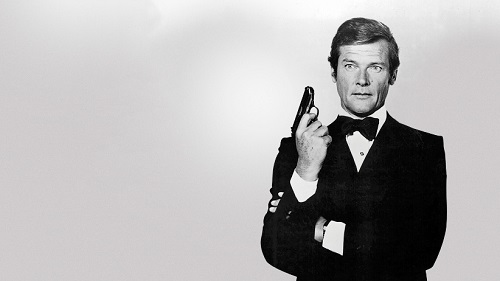
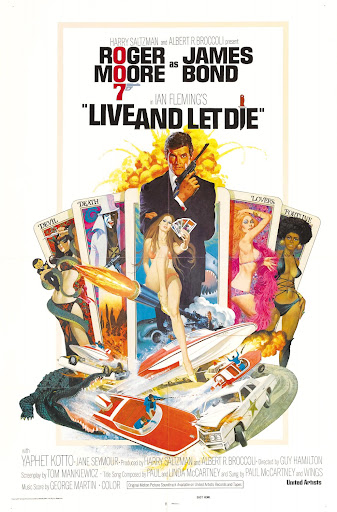
On this day in 1927, Sir Roger Moore was born. I was introduced to him by my mother, who loved watching James Bond movies. I am ashamed to admit that as a kid, Roger Moore was the only James Bond I knew. It was years later when I found out that Sean Connery was the previous 007!
Moore would play James Bond seven times in films. His first time was in Live and Let Die.
It was Paul McCartney who was approached to write the movie’s theme song for someone else to record. He agreed to write it only if his band Wings could perform it. He received a copy of the Ian Fleming novel. This was to give him an idea of what the film would be about. In 2010, Paul said:
“I got the book and it’s a very fast read. On the Sunday, I sat down and thought, OK, the hardest thing to do here is to work in that title. I mean, later I really pitied who had the job of writing Quantum Of Solace. So I thought, Live And Let Die, OK, really what they mean is live and let live and there’s the switch. So I came at it from the very obvious angle. I just thought, ‘When you were younger you used to say that, but now you say this.'”
Wings drummer, Denny Seiwell, remembers:
“We were up at the house one day and he had just read the book the night before, and he sat down at the piano and said, ‘James Bond… James Bond… da-da-dum!’, and he started screwing around at the piano. Within 10 minutes, he had that song written. It was awesome, really. Just to watch him get in there and write the song was really something I’ll remember the rest of my life.”
The song was voted the best Bond theme ever in a poll of BBC Radio 2 and 5 Live listeners conducted in 2012. The poll was done to coincide with the fiftieth anniversary of the release of Dr. No.
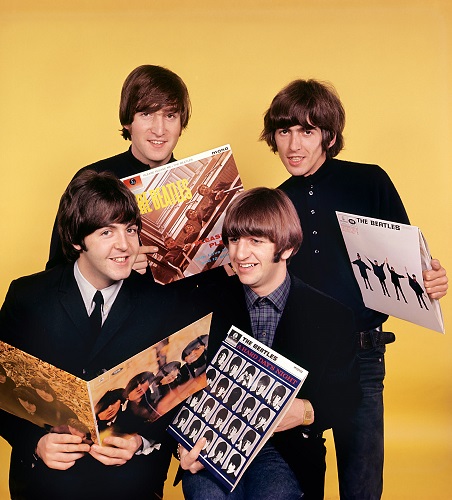
It’s time again for my contribution to Dave from A Sound Day’s monthly feature Turntable Talk. If you are keeping track, this is round #30! Way back when we started this, he asked us if the Beatles were still relevant. This time we circle back to the Fab Four and Dave wants us to write about our favorite Beatle. He is calling this round The Most Fab of Them All.
I have struggled in the past to narrow down what song or artist I am going to write about, but never like this. It shouldn’t be hard to pick one guy out of four, right? For me it is, believe it or not. Frankly, and I mean no disrespect to Dave, the topic is unfair. To me, a musical group or band is the coming together of people, each contributing something unique. Like a puzzle, when all the pieces come together, you have something amazing. To have to choose one is a daunting task.
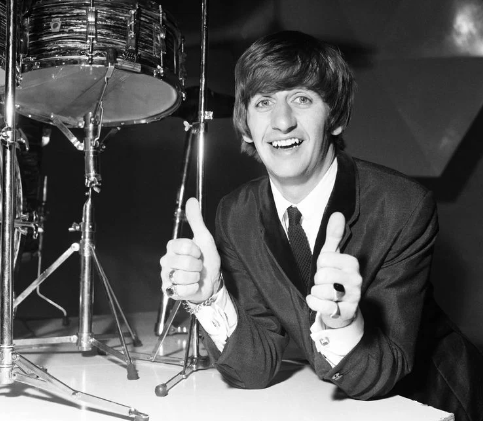
Let me start by saying that if you had asked me as a kid, without a pause, I would have chose Ringo. This may be because I was so familiar with the Beatles cartoon and Ringo always made me laugh. I also really enjoyed the almost all of the songs that he sang lead on. He went on to have some solo hits post-Beatles, too.
There are times I might have picked George Harrison, but probably not because of his Beatles stuff. Don’t get me wrong, he wrote the amazing song “Something,” which even Sinatra said was a beautiful love song. I also loved a lot of the early songs he sang on. Everybody’s Trying to Be My Baby is one of my favorites. George really gained my respect as a musician and songwriter post-Beatles.
John was a quick wit and always made me laugh when I saw him in those early interviews. You cannot deny the songwriting power that he had both solo and with Paul McCartney. He really wrote some deep songs. To me, it is interesting to look back and see how he put much of his hurt, suffering and confusion into a song.
John was also a guy who wasn’t afraid to take a stand for something. Many of his solo songs are still as relevant today as they were when they were released. If only the people would listen to the lyrics of Imagine, maybe we’d see a change? Every Christmas I hear War is Over, yet every day when I go to MSN, there is some new story about Putin and World War III. Obviously, Give Peace a Chance is not something any of the world powers wants to do.
Then, there is Paul. I don’t have to really say much about his songwriting abilities. As a matter of fact, if you look at the output of the Lennon-McCartney machine, you cannot help but be in awe of the volume of work they put out. As a musician, he really was the greatest talent of the group. Before you get up in arms, let me prove it to you.
We know that he was best known for playing bass guitar for the Beatles. Growing up, his first instrument was the trumpet (given to him by his dad). He also knew how to play the piano, and did so on Beatles songs like Slow Down and Ob La Di Ob La Da. While it is a simple tune, you can hear Paul’s drumming skills on The Ballad of John and Yoko. As a matter of fact, he can play over 40 instruments including mandolin, cello, harmonica, harpsichord, and the ukulele. Watch his video from 2020 for Find My Way and you will see him playing many (FYI – it’s not my favorite McCartney song, but it is a good illustration).
While many songs had both John and Paul listed as writers, many were “all Paul.” Yesterday, Hey Jude, Blackbird, and Here There and Everywhere, just to name a few. Paul said once that the last one was the only one that John had ever complimented him on. John said in an interview that it “was all his” and was “one of my favorite Beatles songs.”
So why am I picking Paul? Honestly, if it wasn’t Paul it would be Ringo for the simple fact that they are still around. Both are still touring and in the public eye. I love watching Paul do interviews. He is fun to watch, tells great stories and isn’t afraid to be a part of something a bit silly.
One of my favorite McCartney moments was when Chris Farley interviewed him on SNL for the Chris Farley Show bit. How Paul kept a straight face through that still amazes me. Farley asks him, “Remember when they said you were dead? That was a hoax, right?” and Paul simply says, “I wasn’t really dead!” That always makes me laugh. How Paul keeps a straight face through the bit is beyond me. I wish there was a better quality clip…
There’s another great SNL bit where he and Martin Short and doing something for a Christmas Pageant. Martin says that he and Paul are a team but he is the only singer because Paul “cannot sing.” Paul plays the triangle in the bit. He misses cues and Martin screams at him through the whole bit. Paul is hilarious. The bit ends with Martin leaving and Paul asking, “Can I sing now?” Walls move and Paul walks onto the stage to sing Wonderful Christmastime, as himself.
Paul was fantastic on the Letterman show reminiscing about being there on the Ed Sullivan show. During the interview Dave says that they have been trying to get him on the show for years. He asks why it took so long to get him there, to which Paul says with a straight face, “I don’t like the show, David.” But THE highlight for me was to watch him do a rooftop performance of Get Back. I want to say that he wound up doing about a 40 minute concert from up there that night.
Another great Paul bit is when he shows up on James Corden’s show and does his Carpool Karaoke. The first song they sing together is Drive My Car and he’s having a blast doing it. The conversation between the two of them as they drive around is moving at times. Paul and James stop at Paul’s boyhood home and shares some great stories. The kicker is that they go to a pub that McCartney used to play at and he and his band surprise the patrons of it with a concert. It is worth a watch on Youtube –
As I write this, I have no idea what Beatle the other contributors have chosen. I am guessing that many of the pieces will be very music related. While I feel mine is also a bit music related, I also feel that what made Paul stand out to me was Paul being Paul. Paul, years away from the Beatles, talking about those days, the music, the memories, and the rest of the band. Paul, looking back at those early days that influenced and brought him to where he is today.
Not too long ago, country singer George Strait said he was done touring. George is 72. Sir Paul is 82 and still out there playing for sold out crowds for hours at a time. He is an artist who is always trying something new, while never forgetting his roots. He has a passion for the music and for his fans. He just seems to be that guy who’d be fun to hang out with.
Thanks to Dave for asking me to be a part of Turntable Talk. Thanks for another great topic. I love writing for it and love to see the responses from the other music lovers. Until next month … Thanks for reading.
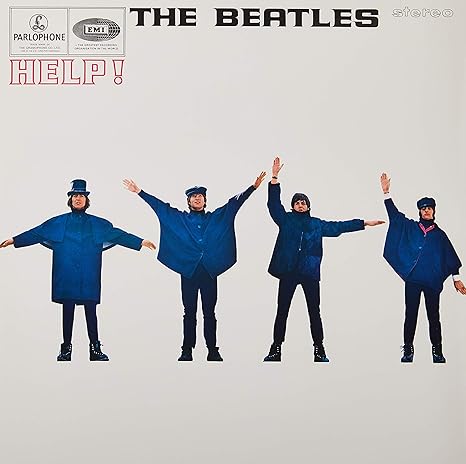
In 1965, The Beatles’ second feature film, Help! premiered at the London Pavilion Theatre in the West End of London. The musical comedy, which followed the success of A Hard Day’s Night, was a much larger production than its predecessor, finding the band and director Richard Lester shooting in a variety of international locations. The film’s soundtrack doubled as The Beatles’ fifth studio album.
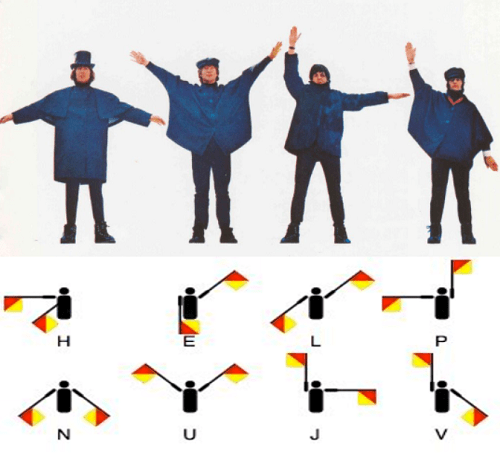
Ok, before I go on, I need to clarify the title of this blog. Just what in the world is NUJV? Originally, the album cover showed The Beatles spelling out the word “Help” using the semaphore system of communicating with flags, which was usually used by ships. The photographer, Robert Freeman, didn’t like the pose because it looked unbalanced. Instead, he had them pose in a more “balanced” way – that in semaphore spells the letters NUJV.
Apparently, only those who knew semaphore saw the issue.
This movie played a big part in the way another group portrayed themselves. Help! was used by The Monkees to prepare for their TV series. The Beatles showed off their individual personalities in their movies, which The Monkees made sure to emulate. By not presenting all members of the band as identical, it made the Beatles even more popular, as many of their fans picked a favorite.
There certainly are some great tracks on the album: Ticket to Ride, Yesterday, The Night Before, Act Naturally, Dizzy Miss Lizzie, You’ve Got To Hide Your Love Away, I’ve Just Seen a Face, and the title track – Help! (Which is what I want to feature today.)
According to Lennon’s cousin and boyhood friend Stanley Parkes, “Help!” was written after Lennon “came in from the studio one night. ‘God,’ he said, ‘they’ve changed the title of the film: it’s going to be called ‘Help!’ now. So I’ve had to write a new song with the title called ‘Help!’.”
Fun Fact: The original title to the title song and the movie was “Eight Arms To Hold You,” and the first copies of the single said it was from the movie “Eight Arms to Hold You.”
Originally, John Lennon wanted this to be a much slower song. He was convinced, however, that by speeding it up, it would sound “more commercial” and would naturally sell more albums.
The song itself runs just 2:18, but packs in 267 words! This makes it one of the most lyrically dense hits of the era. It starts and ends on a vocal, and there are two vocal lines running throughout the song, as John Lennon sings lead while George Harrison and Paul McCartney do backgrounds, singing some of the same phrases either before or after Lennon. There are only a few seconds in the song where somebody isn’t singing.
Lennon admitted that the song truly was a “cry for help!” He has described this time of his life as his “fat Elvis period.” In a 1971 interview with Rolling Stone, Lennon said this is one of his favorite Beatles records, because, “I meant it – it’s real.” He added: “The lyric is as good now as it was then. It is no different, and it makes me feel secure to know that I was that aware of myself then. It was just me singing ‘Help’ and I meant it.” Paul McCartney helped Lennon write the song, but did not realize it was actually John calling for help until years later.
Writer Ian MacDonald describes the song as the first crack in the protective shell Lennon had built around his emotions during the Beatles’ rise to fame, and an important milestone in his songwriting style. In January of 1980, John told Playboy magazine, “The whole Beatles thing was just beyond comprehension. I was subconsciously crying out for help”.
I was reminded by my friend Eddie Deezen that the Beatles song “Her Majesty” was recorded on this day- July 2, 1969.
Eddie posted:
“Her Majesty” was written by Paul McCartney. It was sung entirely by Paul, with no other Beatles featured. This makes Paul the only Beatle to record two songs completely alone, the other being his classic song “Yesterday” in 1965.
“Her Majesty” is also the shortest song ever released by The Beatles. It clocks in at just 23 seconds. It took Paul just three takes to record it.
As “Her Majesty” is the final song on the album “Abbey Road”, it is, technically, the last song on the last Beatles album.




 Various Ramblings of a Nostalgic Italian