*This is a reworking of a blog I originally wrote in 2018
For as long as I can remember, Christmas Eve was always spent with Grandma and Grandpa P. when we were kids. I don’t necessarily know that there was any particular reason for this, I only know that from a very young age, this was the tradition. (2025 – Over the past few years, I have discovered that many Italian families have their big celebration on Christmas Eve rather than Christmas Day.)
I also remember that dreaming of a White Christmas was hardly ever necessary. If my memory serves me right, as a kid, there was maybe one or two Christmases that were we didn’t have snow. It seems that there was a stretch of a few years recently where we were lucky to get a White Christmas. That never seemed to be an issue as a kid.
The excitement for Christmas Eve was a bit different from Christmas Day. Grandma and Grandpa always seemed to ask for our Christmas list early …. like July early! She obviously planned ahead and shopped throughout the year, which must have saved her a ton of hassles finding things. We usually were dressed and ready to go to Grandma’s house by 2 or 3pm. We would arrive knowing at least one thing we could expect to receive – a winter coat. She got us one every year (which we hated, because she’d take us out shopping for it as early as October!).
How about that 8-Track tape case, huh?!
Christmas Eve dinner was always the same with very little variance. Ravioli was the main dish. There would be a feast that included breaded steak, sausage or meatballs, dinner rolls, and just about every other things you could imagine. Grandma prided herself on being able to make dinner that could feed an army! She always made her Ammoglio (pronounced Ah-Moy-Gyoo) sauce to go on top of the steak. This was made up of olive oil, tomatoes, some seasonings and a WHOLE LOT of garlic! I never ate it as a kid, but as an adult – I love it! Everyone who ate it smelled like garlic for like a week!
Dad with the ammoglio sauce and bread. No doubt he was going to be dipping!
There was always a dish with olives (green and black), sweet pickles, and veggies. You would also find a big bowl with pistachios, and another one filled with nuts of all kinds. The nuts were still in the shells, so you had to crack them open with the old silver nutcracker that was probably older than my grandma! I can’t remember, but I think there was also a bowl or two of M&M’s and Hershey’s Kisses out to snack on, too.
For dessert – there were ALWAYS cannoli! Early on I think she made them from scratch (I may have her recipe somewhere), but I really remember her getting them from the Italian bakery. There were also always plenty of cookies! Grandma spent days baking them and by the time she was done, I think she had like 400 dozen! She used to store them in these big tin cans that Better Made Potato Chips used to come it. She always made chocolate chip for me, oatmeal for my brother, cut out sugar cookies and these little ice box cookies that none of us ate … well, I can’t say that … we fed them to the dogs and they seemed to like them a lot!
I recall the year that my grandmother bought my brother and I every Star Wars Figure that was available. There were one or two that were very difficult to find, but she found them. We each got a set! Then there was the year she bought us the Atari 2600! This was long before the fantastic graphics of Play Station or X-Box. The games on this thing were very primitive as far as graphics went! Oh, the hours I spent playing Sea Hunt, Pac-Man, and Pitfall!! Even after all of the gifts were open, there was always an envelope for us. For many years there would be a crisp $100 bill in it. $100 was a LOT of money and I was always amazed at how new the bill was – it was almost like she had printed it herself!
My brother and grandma with Star Wars figures
One Christmas Eve I remember particularly well. Unlike previous years, when we came in the house, we were ushered immediately downstairs. Usually, we went into the sun porch off the back of her house, where tables would be set for dinner and food would be out. This year, dinner was in the basement. We hardly EVER went in the basement, so I wasn’t sure what was happening. In the middle of dinner, we heard a noise from upstairs. Someone was walking (actually stomping, I think) around upstairs. I think she had my great Uncle Ralph come in and do it. My grandma said that Santa was probably up there leaving presents. It was well before midnight, and you know how kids are – we knew that Santa came at midnight and we questioned it. Grandma said she had called and “made special arrangements with Santa”. Looking back on it now, I can totally see Grandma like Don Corleone of the Godfather making “special arrangements” with Santa! At any rate, soon after the noise was gone, we were allowed to go upstairs and into the porch. I am sure I am over exaggerating when I say that the porch looked like Toys R Us! It was loaded with presents and a bike for both my bother and me. I don’t even know how we got the presents home!
Usually after dinner and presents, my brother and I would go watch movies, play the video games, or play with our toys, while the adults went back into the porch to smoke and play cards. Pinochle was what they usually played, although I seem to remember one year they also played gin rummy. Depending on the people who were present, sometimes dad will play his guitar, Uncle Sam would play his accordion, or grandma would sit on the old Hammond organ and sing songs and play. Grandma played by ear and had no sense of tempo (or time signature for you musical folks), so she was either hitting wrong notes or playing ahead or behind everyone else. From a child’s perspective, the music wasn’t very good, so my brother and I would go to another room.
My dad playing guitar after a few alcoholic beverages
When I had finally learned how to play pinochle, I was a welcome addition to the card table. My dad played, but he was usually done after a few games, so I gradually took his place as a “regular” at the table. I LOVED this! We could play forever! Grandpa and mom were always partners. He would often over bid my mom because he thought he had a good hand, then they would lose the hand. They would get so mad at each other. I can still hear my grandpa saying, “I had a good hand!”
Mom and Grandpa. I may have been mom’s partner for this game because Grandpa is next to her.
I remember before I started playing, they would play cards until well after midnight. My brother and I would be struggling to stay awake, our job was to remind mom and dad of how late it was getting – God forbid Santa not come because we weren’t home and in bed! Dad would constantly remind us that he paid for Santa to bring toys, and Santa would “circle the house” until we were home and in bed before delivering the toys.
When I began working in radio, it seemed that I was always on the air on Christmas Eve. One of the “on air” traditions that I started was to call grandma and ask her how the preparations for dinner were coming. She would go into detail about what was on the menu and what time dinner was. She would often razz me on the air and warned me not to be late. She was an instant hit. It was amazing how many people would call and ask if I was gonna check in with Grandma!
I can hear her laugh in this picture.
Over the years, the faces of Christmas Eve changed. Some years there were more relatives than others. Aunt Rose became a staple after Uncle Sam passed away. After Grandpa passed away, friends of the family often came by and the pinochle games continued. As the years passed, there seemed to be more reflecting on Christmas Eves of the past with laughter and sadness.
Over the last few years, Christmas and Christmas Eve has undergone many more changes. While many of the voices of Christmas Eve have been silenced, those wonderful memories warm my heart. I look back at the memories fondly, and I also look forward to the new memories that will be made.
This year (2018), my two amazing sons will be with us Christmas Eve morning to open presents with us. They are older, but still full of excitement. When they saw the gifts under the tree their reactions were typical for their age. Dimitri, 11, saw the big box and said “Whoa, is that for us?”, while Dante’, 16, said “Is this all of the presents, or will there be more?” (2025 – Dante’ is now 23 and Dimitri 18)
I sit writing this as everyone in the house is still asleep. Sam and I have joked around at what is in the big box under the tree more than once. The camera is ready to capture the moments from this Christmas Eve, ready to provide them both with memories to look back on themselves in years to come. I hope that someday, they will look back at Christmas Eve as one of their favorite holidays, just like I do.
One of many Christmas Eves at Grandma’s house. This was when we actually dressed up for holidays!
With the arrival of Ella in 2020, Christmas Eve with my boys continued. They would be with us until later afternoon and then they would return to their mom to prepare for Christmas day.
After that year, it sort of became a “What day can we all get together?” kind of thing. Dante’ was working and was spending more time with his friends. Dimitri didn’t come over much after Dante’ turned 18. When that happened, I began to look forward to the days that all of my kids were together with me.
2022 – My dad and Rose also came over that year.
We are still trying to work everything out for this year. I’m hoping that they can come Christmas Eve. My brother will be coming up that day and will be around for the last part of Christmas Eve and the early part of Christmas Day. I’m not sure when the last time the boys saw him. Fingers crossed for a wonderful Christmas Eve 2025!
“Marley was dead: to begin with” … so begins the Dickens classic A Christmas Carol. It was originally titled: A Christmas Carol. In Prose. Being a Ghost Story of Christmas. It was published on this day (December 19) in 1843. The first edition was completely sold out by Christmas Eve (that’s less than a week!). By the end of 1844 thirteen editions had been released!
This was not Dickens’ first Christmas story. As a matter of fact, he had written three before writing this one. He would go on to write four more afterward. The story of the transformation of Ebenezer Scrooge, however, remains his best known holiday story.
Backstory
By mid-1843 Dickens began to suffer from financial problems. The sales of his Martin Chuzzlewit were falling off. His wife, Catherine, was pregnant with their fifth child. To make matters worse, his publishers threatened to reduce his monthly income by £50 if sales dropped further! It has been said that the publishers knew that the Chuzzlewit stories were not gaining public interest. They begged Dickens for a Christmas book.
Dickens started writing the book in October of 1843. Michael Slater, Dickens’s biographer, describes the book as being “written at white heat.” It was completed in six weeks, the final pages being written in early December. He built much of the work in his head while taking night-time walks around London.
Slater says that A Christmas Carol was “intended to open its readers’ hearts towards those struggling to survive on the lower rungs of the economic ladder and to encourage practical benevolence, but also to warn of the terrible danger to society created by the toleration of widespread ignorance and actual want among the poor.”
Since its initial publication the book has been issued in numerous hardback and paperback editions, translated into several languages and has never been out of print
1982 – English Class – Lincoln Junior High
I was familiar, of course, with the story of Scrooge. I had even seen a few movie versions of this classic ghost story. Interestingly, I had never actually read the novella. However, in 7th grade, I was blessed with one of my all time favorite teachers – Mrs. Shirley Kellogg. She was a no-nonsense teacher who could even make diagramming sentences fun.
I remember one day I got caught daydreaming and looking out the window. She saw me and asked me a question, which I obviously did not hear. I was startled by her calling my name and I must have looked scared to death. She looked at me and said, “Well just don’t sit there like a Willie Lump Lump – answer the question.” I started laughing, because I was well aware of the Red Skelton character she was referring to! Even though I didn’t have an answer, I immediately connected with her! Rest assured, I saved my daydreaming for other classes!
I digress. Back to A Christmas Carol :
I remember that we would often read from this big blue book that had the word “Literature” in the title. It was a collection of modern stories, short stories, classic stories, and poems. Charles Dickens’ tale was in this book. In elementary school, we would often read stories aloud, with each student reading a chapter. What makes my first “reading” of this story unique is that Mrs. Kellogg read it to us – not live though…it was Memorex! She had spent time recording herself reading the entire story and played it back to us on a cassette tape. This allowed us to read along while she graded papers and such. Because of this, when I read the story today, I can still hear certain lines in her voice.
Stave One
Dickens divides his tale into 5 “staves” or chapters. The story opens on a miserable Christmas Eve, seven years after the death of Scrooge’s partner in business Jacob Marley. Dickens’ opening line stresses the importance of the fact that he was dead. In fact, he stated that this “must distinctly be understood or nothing wonderful can come of the story” that follows. Dickens’ description of Scrooge is something that I can still hear in Mrs. Kellogg’s voice – “a squeezing, wrenching, grasping, scraping, clutching, covetous old sinner!” Right from the start, we learn what a miserable man Scrooge truly is.
In this stave we are also introduced to Fred, Scrooge’s nephew. His visit only continues to illustrate Scrooge’s hate for the holiday and the season. Another main character is Bob Cratchit, Scrooge’s clerk. Dickens describes the poor working conditions and Cratchit’s measly salary. Jobs must have been scarce at the time. I say that because you have to wonder why this poor man is working for such a jerk like Scrooge. We are also introduced to two men collecting for charity, who are basically told by Scrooge to “get lost”. He tells them that he supports prisons and workhouses and those in need should go there for refuge.
Before the chapter is over, we follow Scrooge to his empty, damp, dark, and desolate home. It is there that we are introduced to his deceased business partner, Jacob Marley. It is here that we witness the beginnings of Scrooge’s transformation.
Marley’s ghost is a ghastly sight. He is wearing heavy chains and lock boxes. He tells of the misery and gloom that he suffers in the afterlife. He gives Scrooge a warning that his fate is far worse than his. This is because he has had additional years to labor on the chains he is forging. A doubtful Scrooge tells him he must be some sort of mirage or illusion. In response to this, Marley scares him into believing his presence. Marley sets the stage for what is to follow – the visits from three spirits. These visits are the only chance that Scrooge has to avoid Marley’s fate.
Stave Two – The Past
Scrooge’s second spiritual visit from the Ghost of Christmas Past. Scrooge then asks the spirit if it is the spirit of “long past”, and the spirit responds “your past”. The spirit whisks Scrooge away to Christmases where Scrooge was a boy, a young man, and a young adult. We begin to get a sense of why he is the way he is. As a boy, he spends Christmas at a boarding school. As a young man, we see him as an apprentice – an apprentice who loves Christmas. We also see him as a young adult. Here, we witness the love of his life leave him. She leaves because money has grown to be the most important thing in his life.
The older I get, the more this part of the story stays with me. Scrooge, as he witnesses all these past Christmases, is given a gift. He is allowed to see a younger self and those who he grew up with. We watch him call out the names of former school mates. He sees his beloved sister who died giving birth to his nephew. He also speaks highly of his fellow apprentice and former boss. Finally, he relives the pain of the loss of his love. These are among the many scenes that spark strong emotions with Scrooge.
Imagine, being able to go back in time to witness past Christmases! What I wouldn’t give to relive those childhood memories! I would love to see:
My grandfather’s face as I opened the cribbage board he gave me
The joy on me and my brother’s faces as we opened up the entire collection of Star War figures
The homemade Christmas ornaments mom made for our tree
My children’s first Christmases
A family pinochle game in the sun room at my grandparents
Dad putting together one of our toys with a gazillion stickers to place on it
Mom in good health, laughing at a gag gift I bought her
The adults playing guitars and the organ after having a few too many rum balls
The spread of Italian food we’d feast on every Christmas Eve
The list goes on and on. Oh to be able to hear the voices of loved ones who are no longer with us … wow. What a gift Scrooge is treated to.
Stave Three – The Present
The second spirit is the Ghost of Christmas Present. He is a jolly spirit who shows Scrooge what is to happen this Christmas. He is first given some enlightenment about his clerk as he visits their home. He learns first hand of the struggles that they face, financially and emotionally. He is shown the small feast that the entire family is to eat. It is here that Scrooge (and the reader) is introduced to the Cratchit’s lame boy, Tiny Tim.
We really see the events of the past and present working in old Scrooge here. At one point, he very uncharacteristically asks the spirit if Tiny Tim will live. The spirit informs him that if the present course remains, Tiny Tim will die. The amazing change that is beginning in Scrooge is seen clearly here. There is a glimpse of compassion and worry as he asks the question of Tiny Tim’s fate. This is followed by the hanging of his head in grief when he hears the answer.
Ever wonder what people are saying about you when you are not there? In some cases, it’s better that you not know. Scrooge visits his nephews home next and is shown the dinner that he was invited to. What he sees is the guests making fun of him. He sees his nephew telling everyone in disbelief about his uncle’s abhorrence of the holiday. The more he sees the angrier he gets. He is so angry that he tells the spirit to take him away from the scene he is watching.
As the spirit’s time grows short, Scrooge notices something. He spies what looks like a claw coming out from underneath the spirit’s robe. When asked about it, the spirit reveals two children – a boy and a girl who are anything but pretty. They were children, but they looked terrible. Scrooge asks the spirit if they belong to him. The spirit answers that they are “Man’s”. Scrooge learns that the boy is Ignorance and the girl is Want. He is then told to “Beware them both, and all their degree”. 181 years later – these words are still true! Beware ignorance and want!
There is nothing that is more embarrassing and humbling than to have your own words thrown back at you. Especially when those words are applied the way the ghost does. As the ghost’s time expires on earth, he answers Scrooge’s question about finding the children some sort of refuge. His powerful reply consists of Scrooge’s words to the men collecting for charity “Are there no prisons? Are there no workhouses?” With that, the spirit is gone…
Stave Four – Christmas Yet To Come
Fear can be a very good motivator. Imagine the fear that now engulfs Scrooge as he sees his final spiritual visitor! The Phantom which is described as being “draped and hooded” is now coming toward Scrooge. He is approaching ”slowly, gravely” and “silently – like a mist on the ground.” Rather than run away in a panic, Scrooge faces the spirit who speaks not a word. Words can be scary – silence can be scarier! How he realizes that he is in the presence of the ghost of the future I do not know. It must have be based on his knowledge of his previous two visitors. He confirms this by asking the spirit if that is who he is. The reply that he gets is a slow and deliberate nod.
Scrooge’s fear is no secret. As a matter of fact, he tells the ghost that he fears him. He fears him “more than any other spectre I have seen.” The change that continues in Scrooge is apparent here. He states that he knows that his “purpose is to do me good, and as I hope to live to be another man from what I was. I am prepared to bear you company”.
No surprise that the topic everyone shown to Scrooge is discussing is death. The death of one nameless man in particular. He sees business men standing on the street talking about an “old scratch” who “got his own at last”. Then he is taken to a sort of pawn shop. There three people meet up to sell stuff they took from a dead man’s home! One of the items was the shirt off the man’s dead corpse. He is then in a dark empty room where a dead man lays on a bed under a sheet. The spirit points to the head of the body – he wants Scrooge to look at the man. Scrooge says that he cannot do it. Every situation the spirit showed Scrooge was one where the man’s death brought pleasure.
Scrooge begs the spirit to show him some “tenderness connected with death”. He is taken through town to the home of his clerk, Bob Cratchit. The mood is somber there as they continue to deal with the death of Tiny Tim. There is much hurt and many tears in the house. Scrooge then has the realization that the time with the spirit is almost gone. But he has to know something. He asks to know who the man was that had died. He is taken to a church yard that is overrun with weeds and has not been tended to. The spirit stands with nothing but a hand pointing to a gravestone.
The culmination of all that he has seen is now coming to a head. Scrooge must have some sort of inkling of who is buried in this terrible place. I say this because he now becomes frantic. He asks if the things he was shown are things that “will be” or things that “may be.” He begs to know whether or not they can be changed. Upon reading his own name on the gravestone, Scrooge breaks. He begs the spirit to wipe his name from the stone. He insists that he is not the man he was and that he will live an altered life. He makes promises to honor Christmas and live by the lessons taught by all the spirits. He grabs the spirit and continues to plead, but the spirit disappears and turns into his bedpost.
Remember the classic It’s a Wonderful Life? In it George Bailey is shown what life would be like if he was never born. George is frightened by so many things that he sees. He understands just how many things would have been different if he were never born. With A Christmas Carol, Ebenezer Scrooge sees things a bit differently. He sees the product of the present and future because of his life and how he currently lives it.
Stave Five – The End of It
The climax of the story – the miracle of the story – all culminates here. Scrooge is now a changed man! He awakens on Christmas day and he is filled with joy and happiness. These are emotions which have eluded him for many many years. His first order of business is to buy the prize turkey and send it to his clerk anonymously. He even splurges for a cab to send it there. He then dresses in his best and heads out.
He see’s the men who were collecting for charity the day before. He calls one of them over, apologizes for the day before and whispers a huge sum of money to them. They marvel at what is happening, and Scrooge assures them that there are many back payments included in that amount. He goes to church for the first time in years. Finally, he heads over to his nephew’s house, not knowing what will happen. Fred is surprised and welcomes him with open arms.
The one man who is unaware of the change in Scrooge is Bob Cratchit. When he arrives at work a few minutes late, Scrooge is waiting for him. This is exactly what Scrooge had hoped for. As soon as he walks in, Scrooge lays into him. He demands to know why he is coming in late. Scrooge continues his charade and stresses how he is not going to stand this behavior anymore! Quickly, he changes his demeanor and announces he is giving Bob a raise! He then vows to help his family in all ways possible.
Dickens ends by telling the reader that he was better than his word. He was a great man and second father to Tiny Tim. He explains that there were plenty of naysayers who still laughed at the transformation in Scrooge. The old man said it didn’t bother him one bit. We are told that there is no more spiritual intervention and that he “knew how to keep Christmas well”.
Closing Thoughts
I have been reading Dickens’ A Christmas Carol every year for 42 years now. Each and every year I am grateful for the start of the tradition. I was lucky enough to have had Mrs. Kellogg for English Class in 7th and 8th grade and she read it to us both years. Every holiday, I think of her fondly as I read those opening words.
I have seen almost every film and TV adaptation of this story. Honestly, it is hard for me to pick a favorite. What holds true for all of them is the amazing transformation of Ebenezer Scrooge. There is also a renewed appreciation for the Christmas season. During the holidays, just like Scrooge, people tend to give more to those in need. They tend to be kinder, and they tend to be happier. Here’s a thought – why not do this all year round?
Elvis Presley had a song on his Christmas CD which stated my feelings perfectly:
Why can’t every day be like Christmas? Why can’t that feeling go on endlessly? For if every day could be just like Christmas, what a wonderful world this would be.
The legendary Tony Bennett passed away yesterday at age 96. Sadly, I never had the chance to see him perform live. I never had the chance to meet him. I also never had the chance to interview him on the radio. Yet, despite those things, I still have a Tony Bennett story that may make you laugh.
Whenever a Tony Bennett song comes on the radio, or his name comes up in conversation, there is one person who immediately comes to mind. My Italian grandmother.
This is a story that had I ever had the chance to talk to Tony, I wouldn’t share. You will soon see why.
“Everybody loved Tony” is a phrase that popped up in many celebrity tweets and videos today as they reflected on the man. Alec Baldwin, who did a fantastic Tony Bennett impression on Saturday Night Live, posted a video on his Instagram saying that exact phrase today. “Everybody loved Tony. Everybody loved him.” Well, not everyone ….
One day, we were all playing pinochle at my grandma’s house. Earlier that year, I had found a picture of Dean Martin (her favorite singer) and had it blown up into a poster. She framed it and at one point actually hung it in her garage so she could see him when they pulled in the car. Anyway, we began discussing singers. It was during this discussion that I learned of her feelings for Tony.
If memory serves me correct, we were playing cards and had the radio on a station that was playing “The Music of Your Life” stuff. It would be similar to the Sinatra channel on Sirius XM. “Sinatra was ok, but Dean Martin was better!” she told us. That was how the discussion began. This led to me asking about other singers.
“I’ll tell you one guy that I just can’t stand! That short, pimple faced one!” I had no idea who she was talking about. The more she tried to remember, the angrier she got. I finally asked her is she could think of one of his songs. She came up with “Rags to Riches” or “I Left My Heart In San Francisco” (I think. It was definitely one of his bigger hits)
“Oh! Tony Bennett?!” I said.
“Yeah!” she said, “Oh, I hate him!!”
This made me laugh and I asked her why. She never really had any type of concrete answer, but the fact that she disliked him could not have been more obvious.
This led to my dad, my brother, my friends, and me all finding ways to work Tony into conversation every time we visited. It also led to one of my favorite pranks to play on my grandma.
I was out shopping one day looking for a CD that I needed for an upcoming wedding I was to DJ. It was an older album, so I went to one of my favorite used record stores. After I found what I needed, an old LP caught my eye.
The big red letters shouting “TONY BENNETT” called me to it. I purchased it and wrapped it up for my grandma’s birthday or Christmas or something (I really don’t remember). I do remember her face when she opened it! She said, “Oh no! Not this pimple face! I hate him!” and threw it across the room – laughing, of course.
Now my grandmother could have easily just thrown the album away. She didn’t. She kept it on a shelf in both her house and eventually in her condo. Naturally, I had to have some fun with it. Every Sunday when we would visit, I would find a reason to slip away and get the album. I would then hide it somewhere in the house for her to find.
Many times it would be in a place she’d see right away. I’d put it behind the coffee pot, up on the chandelier, under a decorative pillow, on the chimney mantle, in place of an old 8X10 photo, under her pillow on her bed, in between the toilet seat and the lid, etc… It was every where! When she’d find it, she’d laugh and shout, “I HATE him!”
On second thought, maybe I would have told Tony that story if I met him. He might like to know that he was such a big part of my relationship with my grandma. Who knows…
Today’s blog stems from a Daily Writing Prompt and something my oldest son told me over the weekend. My sons and my ex are moving into a new place. It has a basement and my son was excited because he and his brother were told that they could make it into their very own man cave. The prompt that was in my email today reads, “If money were not an object, and you could build your own man cave, what would it contain?”
Oh, The Possibilities!
As I contemplated this, my first thought was, “I’m gonna need a big space!” I’ve read articles on the internet about “Great Man Caves” and also seen some of those home improvement shows where the builders give the guy a man cave. I admit some of my ideas are stolen from those, but many are just things that I would love to have.
A Good Sound System
This is a MUST! It would be something that I where could incorporate audio and video. I’d want to be able to play vinyl records, CD’s, cassettes, reel to real and digital audio through it. With the video aspect, I’d want to be able to watch stuff on live TV, streaming, and of course DVD/Blue Ray.
I love the idea of a home theater with comfy chairs, maybe recliners, and stadium-type seating.
While I don’t do a whole lot of drinking anymore, the above photo suggests that a bar with bar stools would certainly look cool.
I’ve always loved playing pool, even though I was never very good at it. I think a nice pool table would have to be a part of the design. One photo I stumbled on also had a golf simulator in it! This would be excellent! I don’t get out on the course enough, and during the Michigan winters, I could just tee off in the man cave!
Speaking of golf, the only golfing I am doing lately is on the Xbox. I usually shoot a round before I turn in for the night. That being said, having a gaming area would be neat to have. If money was not an object, I could buy every system and people could play whatever system they wanted to.
I’d also like a way to be able to switch whatever system I am playing onto the main TV and sound through the sound system!
If I had my own man cave, I’d have to invite the gang over to play pinochle or poker. I’d want to have a good card table to do that.
I’d have to have something on the walls – maybe some framed Detroit sports jerseys?
Or some movie posters?
Or maybe a display of various action figures?
Pinball games or arcade games are also a possibility
Now that I think about it, if I have the space, having a bowling alley in my man cave would be pretty cool too!
Speaking of bowling, there was something else we used to do at the bowling alley. After we were done for the day, we would all head into the bar area and play shuffle board. I was never any good at it, but it was certainly a lot of fun to play. A shuffle board game would also be great to add.
The above picture has another cool idea – a train that runs above the space! That Railroad Crossing sign is pretty sweet, too!
Somewhere in the man cave, I would like to have three private areas – first a restroom. It’s important to have one of those readily available. I’m sure it would have a theme – classic movies, classic comedy, or just something “manly”
Second, I would like an office area. It could be somewhere I could work, read or just relax.
Finally, I would love to have a private recording studio. With it I could do voice over work. I’d still love to do commercials, or maybe narrate an audio book, do a podcast, and it has always been a dream to have a home studio.
A personal space – a man cave – is nice to think about. Perhaps one day ….
It is time for another installment of my Friday Photo Flashback. This week – a picture I didn’t even know I had.
It certainly is not a great picture of me, but it does bring back memories. The background seems dark and things behind us are hard to make out, but the people in it stir up good memories.
From left to right front row: me, Karen, and Joe. Back row: Margaret and Steve
The photo was taken at my high school graduation party. I only know this because of the clothes we are wearing (thanks to other photos from the party). It is a snapshot of an ending and new beginning for us – the end of school and the start of “real life.”
1988. The people in the photo were my best friends. Jeff would also be included in that group, and there is another photo of all of us together somewhere. The only thing that would make this a perfect snapshot of my life at that time would be Jeff in it.
I spent so much time with all of these people in high school. We always seemed to be together. it wasn’t always all of us, but you could almost be that I’d be with at least one of them!
Steve and I were practically inseparable. We spent hours in the car driving and listening to tapes I had made to “cruise” with. I’ve always said we were like Jackie Gleason and Art Carney – Ralph and Norton. I think we drove each other nuts at times, but we truly were great friends … And still are. The day was bittersweet for us because I believe the day after this photo was taken, Steve left for basic training.
Joe and I hung out almost as much, but he was always the better student and actually did his homework. A lot of the time he’d be doing that so it was just Steve and I out causing trouble. There were many times, however, that we’d all hope in the car and drive around wasting gas. I think of the three of us as the Three Amigos, or maybe the Three Stooges is more accurate. We all played cards (Pinochle) together for hours on end. Now we try to find time between our work schedules to schedule a golf outing together…
Margaret and I were as close as Steve and me. I love that she has her arm around me in this picture. We never dated – even though our folks wanted us to – but it was almost like we did. We loved each other, but never in a romantic kind of way We went to movies, dances, and dinner together and our friendship continues to this day. She is Aunt Margaret to my kids and they love her just as much as I do.
Margaret and I used to talk for hours on the phone when were in school. We still do. Both of us have long drives to work and we often chat while driving. We still vent, laugh and cry with each other. Ours truly is an amazing friendship.
Karen and I had probably just started dating when this picture was taken. She was the same age as my brother and a Freshman when I was a Senior. For some reason, she stood next to me in parade formation in marching band. It was weird because I played trumpet and she was a flute player. Not sure why we were next to each other, but it led to our relationship.
I always tried to make her laugh when we were in marching band. I usually did. As prom approached, I kind of jokingly asked if she’d want to go. She surprised me and said yes. I remember Joe and I got a limo and I think we both had top hats. I think both Karen and Joe’s date wore blue dresses. All my prom pictures are gone now, so it is hard to remember. I do have vivid memories of that night, but that is really all.
We dated for about 5 years total with a short break in there somewhere. Karen was my first love. She wasn’t my first girlfriend, but my first serious one. We had a lot of wonderful memories. She’s married now and a wonderful mother. She works hard in the medical field and I still hear from her sisters and also am friends with some of her family on Facebook. I recently DJ’d her sister’s wedding and saw her briefly. I was glad to get to say hello.
I have some wonderful memories of that graduation party. My dad gathered up members of the wedding band he had played with and they all set up and played music at the party. My Uncle Tom played drums on some songs and did some singing of old blues tunes. My cousins also joined in and played drums and guitar. It was so cool. Steve, Joe, Jeff and I all got up and sang Weird Al’s parody of La Bamba (Lasagna) like a bunch of fools.
Of course, I think of the many folks who were there, who are no longer here. My mom, my grandparents, my great grandma, my great Aunt, Steve’s dad, Joe’s mom, and so many others. Thankfully they live on in photos and memories.
It seems to me as I look at this picture that we are posing for someone else’s photo. I wonder who might have been taking it. I would certainly love to see that one. Maybe I’m wrong, though. We all don’t seem to be looking the same way. Perhaps this is just an excellent candid picture. It’s a nice candid picture where I still have hair, big glasses, and am surrounded by some of the best people I’ve ever or will ever know.
33 years ago today (June 9, 1988) I walked the stage and was handed my diploma (ok, it was actually the diploma case) at my high school graduation. Exactly 25 years later, I would walk the stage again and receive my college degree in Sleep Medicine.
On my way into work tonight, I saw a car driving on Woodward that belonged to a high school senior. With all the driving I do, I am really surprised that this is the first car I have seen painted up, even though this wasn’t all decked out. On the back window was painted “Class of 2021 and #done.” I believe the students last name was also painted on the side window and perhaps his schools mascot. I didn’t get a real good look at it, but it reminded me of the fun I had painting my 1984 Ford Escort as a high school senior.
My car looked nothing like the one pictured above. We certainly didn’t have the florescent colors and such to do something that detailed. My car consisted of quotes from the friends and relatives, references to some of my favorite celebrities, and of course, inside jokes.
I am sure that somewhere at home I have pictures of just the car, but tonight I was only able to find this picture of my brother and I before I left for graduation. From this picture, I can see a reference to my Uncle Tom (Rozmo), a nod to Dr. Demento (the radio host who played novelty songs), “Do the Hucklebuck” (which is a song from a Honeymooners episode that my buddy Steve and I laughed at), and D.A.K. (which is a reference to my government teacher – Mr. Kuisel. All of his shirts had his initials on it.). I can also barely make out “rippin'” on the hood, which was a phrase our buddy Kenny (also known as the Old Stoner) used to say.
Not seen in the above picture, and the only ones that I can recall off the top of my head, is a nod to the great Soupy Sales, a reference to the song Rag Mop (which is a song by the Ames Brothers that my buddy Steve and I performed in a lip synch show), “Double Pinochle” (which was something we always hoped for when we played cards, BTI (a reference to a nickname we used to call a teacher), and “Bite the Bag!” which was a quote my Uncle used to say from some game they played. I am sure there were more silly inside jokes, but until I find the pictures, I am not going to be able to remember them.
33 years later, when I look at my senior picture, I laugh at the cheesy mustache, marvel at the amount of hair I still had, and wonder just what I would tell that kid if I was staring him in the face today!
I’m still trying to process the loss of my friend, Tom Shaner. He passed away just before Christmas. He was my high school band director. He was more than just a friend to me (and many others). He was a mentor, a leader, a counselor, a cheerleader, a boss, a role model, an advisor, and at times, was like a second father to me.
I received word that he was in the hospital the week before Christmas. Due to Covid, no visitors were allowed. I found out afterward that he had been in ICU. Then his family announced that he was coming home to hospice care. Word came very quickly after that he had passed away. I am still in shock, as are many of his former students.
I had been watching the mailbox for a letter from him. He and I had exchanged e-mails recently and he said he was going to drop a note in the mail. I assumed that the note might be stuffed in the annual Christmas card from him. It never arrived.
My Facebook was filled with other band students remembering him. There were pictures of him and many stories, some I had heard before, some I had been in band to witness, and some I had never heard before. Those various memories from band students younger and older than me, were proof that we all shared many of the same wonderful experiences with him. They also were illustrations of the great impact that this one man had on students throughout his teaching career and far beyond.
From a previous blog:
One of the first blogs I wrote here was about the impact of teachers. I listed some of mine. Here is what I wrote about Mr. Shaner almost 3 years ago:
Mr. Shaner was my band director. If you are looking for my stance on Music Education in schools – here it is. “I LEARNED MORE TO PREPARE ME FOR LIFE FROM BAND CLASS THAN ANY OTHER CLASS IN SCHOOL”. There. I said it. I learned the importance of preparation. I learned the importance of punctuality. I learned the importance of practice. I learned the importance of team work. I learned the importance of organization. I learned the importance of patience. All of my time management skills came directly from band class. I learned about discipline and work ethic. I learned the importance of cooperation and respect. The list goes on and on. The lessons that I took from band class in itself can be an entire blog. (I can also add the importance of dedication, responsibility, self worth, dignity, and honor to this list!)
I recall one day in 9th grade, I was running late for school. I grabbed a pair of khaki pants from a basket that was in the laundry room. I walked into school and TS said “Hey, man, you know an iron can get those wrinkles out of your slacks”. Now some people might think this was mean. I didn’t take it that way. Instead, it made me aware of little things like looking good. It was a simple nudge to take an extra minute to dress right.
It was not odd for him to call someone in the office and ask if everything was ok if they looked like something was bothering them. Sometimes he would get wind of a situation someone was dealing with and he would be aware that there was a lesson in it for everyone. He would just tell some story in class with the lesson at the end and it did two things – it helped the person in the situation AND it helped the rest of us in case that situation ever popped up in our lives.
I remember one time Steve and I were goofing off during a rehearsal. It was the day before festival, so it was not the time to be fooling around. He stopped the band and asked us what was so funny. Because we did not have an answer he pointed to the door and said “Bye. I’ll see you after rehearsal”. We sat at the end of the hall and pondered how much trouble we were going to get into not only with him but with our folks. He sent Kelly, the band president down to the end of the hall to get us. He looked at us dead in the eye and said “I did not want you to go with us to festival tomorrow, but the band as a whole voted and said you should come”. He proceeded with the rehearsal. The following day, I was the first to arrive in the band room. He greeted me with a smile and I was completely confused. He was SO angry the day before. I asked if he had a second and he said to follow him to his office. He sat down and looked at me, like he had no idea why I was there. I apologized for my behavior the previous day and told him it would never happen again. He stared at me for a few seconds and got up quickly (which scared the hell out of me). He extended his hand and said, “It takes a lot of guts to admit when you are wrong. It takes a real man to apologize. Thank you for taking responsibility for your actions. I have a lot of respect for you.” He took it a step further and made sure the entire band knew what happened. He said he thought that they should know that I cared enough about them to apologize for my actions. Talk about respect? I have the utmost respect for that man and all of the lessons I still carry with me to this day. I am glad that we have remained in contact all these years later. He was a major influence in my life and in the lives of many students.
His Own Hashtag!
The one thing that showed up in almost every post about him on Facebook was how strict he was about being punctual. “If you’re on time – you’re late!” He always told us that! In other words, if rehearsal started at 4pm, you had better be in your seat with your instrument ready to play at 3:59pm (or earlier!). SO many people mentioned this in their posts. I chuckled and thought he would think it was great that the hashtag #ifyoureontimeyourelate was in almost all of these posts!
The Band Room
The band room represented a safe haven for most of us. It was like a family gathering place. Almost everyone hung out there before and after school. Most of us ate lunch there, too. We did homework there, we talked about life there, we laughed there, and we cried there. Many of us never used our lockers because we kept most of our stuff in the band room!
Mr. Shaner always had something playing over the speakers in the band room in the morning. Sometimes it was just the classical music station, while other times it was an album featuring artists like Maynard Ferguson and Doc Severinsen. I was introduced to so many great albums by hearing them in the band room.
Many student’s first stop was the band room every day. We’d drop our instruments off in the instrument storage room and walk over the the white grease board where Mr. Shaner wrote all the announcements. At the bottom of that board, he always had some quote. The one I remember most hits me a bit hard with his passing: “Live every day as if it were your last – someday, you’ll be right.”
In my senior year, I was the Band President. All the officers had mailboxes in his office. He would often write notes for all of us on Post It notes and stick them in our mailbox. Mine often read simply “See me”. Sometimes, the sticky note was stuck to some flyer or something and it would read “See me on this!” Every now and then, an officer would find a page from the Far Side calendar in their mailbox, just because.
I had a typing class my senior year. I hated it. I would get my work done early and I would sit there for the rest of the hour doing nothing. Eventually I’d as the teacher for a pass to go to the band room to work on stuff I needed to get done. This became a habit and one day I walked to his desk and before I could ask he said, “No. You may not have a pass to the band room.” I looked at him and said, “I was hoping you could give me a pass to the IMRC.” The teacher looked at me puzzled and I continued, “The Instrumental Music Rehearsal Center” (which was something Mr. Shaner had said in class that week). He wrote the pass and told me to beat it!
Band Class
While in school, I have many wonderful memories of band class and Mr. Shaner. I remember how he would tell us stories about the little old lady that he went to church with, which always made us laugh. Whenever one of his kids had a baby, he’d announce how his wife, Carol, “became a grandma again.” I remember how if there was a part of a song that didn’t sound right, he’d pull out the grade book and go down the line and make us all play individually – for a test grade. Then there was “the parting of the stands”, when he would step off the podium and go directly to whoever he needed to yell at.
When I was a junior, I wanted to be a band director (until I stumbled into radio). Mr. Shaner ran an after school Conducting Class for whoever wanted to be in it. It was part music theory and part conducting. Each of us in the class got to lead the band in a warm up chorale every day. I really enjoyed that. One class he asked each of us to bring a song to the class and explain why we liked it. I remember there being a lot of different types of music and his reaction to each was always enlightening.
The above picture was taken of him conducting the Jazz Band. We rehearsed after school and we got to play at Pep assemblies. Jazz Band was so much fun. It was just a small group of us, and he seemed to really have more fun with us. I remember one of the songs we played was Delta Dawn (the Tanya Tucker song). The sax section had the melody and the harmonies were just fantastic. I was given the solo on a song called “In a Sentimental Mood”. I was scared to play it but he was so encouraging and I remember not being so nervous after he talked to me.
At Christmas time, he would invite the band officers over for dinner or a movie. I remember how strange it felt to be at his house at first, but we were welcomed as friends and family. I can’t remember how many times we drove by his house honking our horns after graduation.
The “Radio” Preview?
At the end of my sophomore year, he had put an announcement on the grease board asking if someone wanted to help take songs from vinyl and transfer them to cassette so he could listen to them in the car. All the music publishing companies would send out record albums with demos of their music for the upcoming season. Band directors would listen to them and then order whatever songs they wanted. He needed someone to announce the title of the song before it played on the tape. That way, when he heard something he liked, he knew what the song title was. I volunteered to do it.
Naturally, before each song, I played DJ and if I knew something about the artist, I’d ad-lib something. I told jokes, and was just silly on them. He must have enjoyed it, because I did it for him the next two years. If we were recording something in class he’s say something like, “Hey, Golden Tones, why don’t you announce this for me.” I remember announcing Duke Ellington’s Mood Indigo by saying, “Here’s a swinging little number called Mood Indigo.” Without missing a beat, he said “Shirley is gonna go around now saying ‘Hi! I’m Mood Indigo!”
He was so encouraging about my radio career. He’d listen when he could. He was always so supportive and interested in my radio job. He often talked about things he’d heard other DJ’s say. In an email he sent last year, he told me: “saw you in front of the microphone on Facebook this morning. I’m always pleased to see you doing what you always do so well.”
Open To All Ideas
He always seemed to want our ideas to come to fruition. It was tradition for the band officers to do a skit in front of the rest of the band. For our sketch, I thought it would be funny to have each officer step into the spotlight and lip sync to songs (this was long before lip sync battles were a thing). He gave the green light and we had a blast!
The skit that year led to us doing a lip sync contest. I asked Mr. Shaner if we could do it as a fund raiser. He was not really sure it would work, and he asked me many questions about it and how we were going to handle things before giving it the go ahead. He was willing to let me throw it together.
He called it Puttin’ On The Hits! We opened it up for everyone, but they had to audition. Someone did Time Warp from Rocky Horror (that won), someone else did Going Back to Cali, and me and my buddy, Steve, did the Ames Brothers Rag Mop. Prior to the show, ticket sales were low. We thought we were gonna cancel it because of that. However, the sales at the door that night sold out the show. We had a full house that night and it was a huge success.
Band Banquet Imitations
My Junior year, the officers were discussing the agenda for the annual Band Banquet. We needed one more speech, so I said I’d get up and do an imitation of Mr. Shaner. That night I was nervous. I got up and started my speech by saying “The longer you’re in band, the more Mr. Shaner starts to grow on you…” with that I ducked under the podium and threw on a bald cap. I then put a baton in the back of my shirt collar like he did. I “yelled” about how nobody practiced, talked about retiring and some other things. As the laughter died down, I realized I hadn’t written an “out”. I went on to thank Mr. Shaner for the many times he opened his office to listen to me talk about life, and issues I was dealing with. I don’t recall all I said, but I got pretty emotional and ended by telling him I loved him. He got up and we hugged. Somewhere I have a picture of that moment.
Remember, that happened my Junior year ….. so when my senior year arrived, he got me back good! I used to have the video of it, but I am not sure what happened to it …. so from memory, here’s what happened:
He always had a spot on the agenda to speak at the Band Banquet. So when it came time for his speech, I introduced him and sat down. He stood up and reached into a paper bag. He pulled out a wig and put it on. The entire hall erupted in laughter. He ran around the hall doing all kinds of gestures that I really hoped I had never done. At one point, he stopped at pointed to the custodian who cleaned our band room and yelled “Get outta here, Bill!” which was something we all yelled at him. By the time he got to the microphone, I was crying from laughing so hard. But he was far from done…..
He began to tell silly stories as me. One of them was “You know, Margaret is always asking me to come over and go to dinner or to the movies, but I tell her I’d rather play pinochle than do that!” (The guys and I would always play cards together, and Margaret was one of my best friends.) As the stories and laughs continued, he paused, said something about a costume change and turned with his back to the audience.
NOTE: Now, if you’ve read any of my previous blogs, you know that we did a lot of TPing when I was in school. We had a group that went out called the TP Bandits……
He reached into his jacket pocket and pulled out a piece of toilet paper that he made into a mask and the laughter became ten times louder!
He looked absolutely ridiculous! It was the funniest thing I have ever sat through! My sides ached from laughing so hard!
The thing about Mr. Shaner was, he could take you from laughing like crazy to crying like a baby. Immediately after he took off the TP mask and wig, he spoke to us about the achievements of the year and offered up wisdom. I remember he mentioned how after graduation, friends will go separate ways. He said that you could go 30 years and when you met back up, could pick right up where you left off. Looking back at that now, I am lucky to have had his friendship 30 years after that night!
After his speech, I told him that was the worst impression of me I had ever seen!
After Graduation
I’m not going to lie, I hated graduating. I didn’t want to head out into the real world! I was comfortable in the band room. There was talk about an Alumni Band, and I was asked to head it up. I gathered all the addresses and we got it up and running. It, in itself, became a great way for all of us band “kids” to come back and hang out with Mr. Shaner. We marched in the homecoming parade every year and even played on the field once or twice. He was very supportive of the group. When he retired, there was an attempt to get folks together, but it was less successful. I truly believe that this had to do with the fact that he was not there to run rehearsals and chat with. There was always so much laughter and fun when we all got together, but without him, it was not the same.
I remember stopping by the band room one summer and he had lost a bunch of weight. He said he had been doing Weight Watchers. I had been struggling with weight for some time and I asked him about it. He was very encouraging and suggested I go. I remember losing 85 pounds and he cheered me all along the way!
One day, my girlfriend at the time and I went to see the Community Band play at one of the colleges. I was surprised to see Mr. Shaner playing his cornet in the band. There were many other concerts I attended and saw him play. It was always a treat for me. We often bumped into each other at shows. I remember seeing him at the Detroit Symphony Orchestra show, and at a Doc Severinsen show (among others).
Don’t Break Anything …
I can’t recall if it was before or after Christmas, but my son was about 1 or 2 years old. We had stopped by his house just to say hello. Their house was full of things on shelves that were breakable. I was so nervous with my son. Mrs. Shaner told my son to pick a gift from under the tree. He picked a book that came with a CD that he listened to often growing up. Mr. Shaner and I sat at his kitchen table talking. I kept wanting to get up because Mrs. Shaner was “entertaining” my son. He kept telling me, “Carol is keeping an eye on him. He’s fine.” Come to find out he was in their room jumping up and down on their bed ….. LOL
Hot Chocolate
I’d always mention getting together for coffee when we’d talk on the phone. He’d always say, I don’t do coffee, but I’ll meet you for hot chocolate. We did that often. In those times we were together, we’d talk about life, family, and the various things going on in our lives. There were so many times I’d walk into his office at school and say, “Do you have a minute?”, and we’d talk just like this. I always enjoyed his insights to things. He was so helpful when I was going through my divorce, offering some sage advice. He always helped me to see things just a bit differently.
Even in his last email to me he offered up encouraging words. He spoke of how much he enjoyed seeing my daughter in pictures on Facebook. He suggested a few books he thought I would enjoy and offered support about my bible classes. He was such a wonderful friend.
Some Closing Thoughts
Every once in a while, you meet someone who makes a huge impression on you. Tom Shaner was that man for me. He was more than just a teacher. As I stated, he was a mentor, a counselor, a leader, and a true friend. He taught me and so many other students life lessons that we have carried with us throughout our lives.
He led by example. He was almost always the first one to arrive to things and the last to leave. He was firm, yet caring. He was serious, yet funny. He showed us the importance of hard work. He showed us the importance of humor. He instilled in us pride for our organization and in our accomplishments. He made music and making music fun! The list goes on and on …
What an influence he was to hundreds of students over the years! I commented on someone’s Facebook post this week by saying that “no matter what year you graduated, no matter what section you played in, no matter what you ended up doing for a living, or where you ended up, we all had one common thread – Tom Shaner.”
He has been such a big part of my life, I am not sure where I would be without his guidance. I am forever grateful for the moments that I shared with him. I don’t know that I could ever put into words what a blessing he was to me. I am so thankful to have had him in my life.
He always said “If you’re on time, you’re late,” so I am going to assume that he was right on time for the heavenly concert that God needed an extra cornet for.
My grandparents had nicknames for everybody! In all honestly, I think my whole family had nicknames for everybody. For example, my dad and grandfather worked with a guy they called “Buckets”. My dad said something about how he had to fill buckets with parts or something at work, which led to that nickname. There was a family friend who we met while my parents where big into the CB radio craze. My grandma called him “Three Days”. He had gone over to visit once and then it had been a while between visits. My grandma asked where he had been and reminded him that “they bury the dead in three days” and the nickname stuck. We had a cousin they called “Flookie”. I don’t know the story behind that name. There was an aunt called “Harpo” because of a picture we saw of her with this Harpo Marx perm. There was an uncle called “Pif”. The list of nicknames goes on and on.
They also had nicknames for my friends. My best friend, Jeff, used to help when my grandpa drove us around delivering newspapers. We’d always be making noises and laughing. It probably annoyed my grandpa more than he let us know. Whenever he asked about Jeff, he’d call him “the crazy one.” When they talked about my Polish friend, Joe, they called him “the Polack.” My friend Steve had a variety of nicknames. Because he always seemed to have the Ace of clubs when we played pinochle, they’d call him “the Ace of Clubs.” He always ate a ton of Long John coffee cake when he was at their house, so “Long John” was another. One time he went into their fridge without asking and it pissed my grandpa off, so he became “the rude one.”
My Uncle Tom, my Godfather, had a few nicknames. The one I always used was “Rozmo.”. I am not even sure I know how he got that one. One of the Vietnam Vet guys used to call him “Rufus.” He will always be Rozmo to me.
My friends and I used nicknames, too. Many I can’t remember, but a few I do. I called my friend Margaret “M&M” because her last name started with M. This was LONG before Marshall Mathers (who went to our high school) decided to call himself Eminem. My friend Warren I called “JJ” and he called me “Victor” (characters from Cannonball Run). Steve went by a few nicknames – Srgt. PIN, Smokey the Bear, and a few others. Joe and I called each other cavemen names (maybe because of a cartoon or cereal or something) – Gronk and Ugma. Our friend Ron was called “Boom Boom” because it rhymed with his last name. I am sure my friends can remind me of others.
I don’t remember many of the ones I was called. In elementary school I ran for student council. I did my campaign speech in a blue denim cowboy hat and wore a blue suit. Although his suit was white and mine was blue, many called me “Boss Hogg.” In high school, when we were TPing houses, Steve called me “Hucklebuck” which eventually turned into “Hucklebuck DeValier!”
Baby Nicknames
It got me thinking about all the names parents call their babies. I used to call Dante’ “bubba” and Dimitri “buddy” among other silly ones. Ella is a nickname, as you know. Her real name is Pamela and we call her Ella. Both Sam and I have many names we call her:
Scooter Butt
Scooter
Ella Bella
Ellie Bellie
Pammie Poo
Poo Poo Pants
Stinker
Stinker Butt
Cootie
Scoots
Boo Boo
Toots
Tooter
Baby Goo
Smiley
Smiley Miley
El
Ginger Snap
She has so many names, she probably doesn’t even know her real name! At any rate, I was picking her up yesterday and I was talking to her. My Google Assistant on my phone went off and picked up me talking to her. It then beeped back at me and I had to laugh when I looked at my phone.
“Sorry, I don’t understand.” Hilarious! I am sure that when I am out in public with her (when all these restrictions are lifted), I am going to be talking baby talk to her and people will be staring at me like I am crazy.
Did you have a nickname? Did it stick with you? Tell me about it!
All writers get writer’s block. I am hardly a “writer”, but sometimes stare at the blank page and wonder what to write about. Since I began blogging, I have stumbled on blogs written by others who share some of the same interests as me. I have followed blogs that feature movies, TV, music, nostalgia, positive thoughts & quotes, and more. There have been many instances where I read another blog and an idea will pop into my head. My friend Max and I tend to “borrow” ideas from each other often.
Many ideas I adapt from those blogs. For this blog I am literally stealing the idea, and giving credit, and creating some rules for it. The Anxious Teacher wrote a blog after watching Back to the Future III. You can read it here:
What a great idea for a blog! If you had a time machine – where would you travel? As I thought about this, I wanted to limit myself to a few things. First of all, because I have watched the Back to the Future movies, I know that if you go back and change something in the past – it will affect the future. So Limit #1: If I go back, I am simply there to observe. Many of the things I thought I would like to go back and witness happened over a period of time, so Limit #2 – no real time limit. Limit #3 – wherever I go, I will be dressed appropriately as to not raise suspicion. I know, it’s silly, but it’s my blog and my rules.
I actually thought about adding what I would call the “Ebenezer Scrooge” element to this. What is that? Well, remember when Scrooge was transported into the past, present & future? He could witness everything, but he could not interact with anyone. Those events happened and the people were not aware he was even there. Perhaps that would be the best thing, right? That way, if I went back in time, I would not be tempted to change things.
General times and places
As my blogger friend said, I think it would be very cool to visit the old west. I have watched many westerns on TV and in the movies. I have read many books set in the old west. I think it would be pretty cool to walk through one of those western towns. How cool would it be to visit the saloons, or the general store? I think it would be cool to don a cool cowboy hat, boots & spurs and ride a horse to get from place to place.
I also think it would be cool to visit the ancient times and watch the building of the pyramids, or buildings like the coliseum. Those historic buildings are still standing. How awesome would it be to see just how they put them together?
As someone who has been a huge fan of the 1950’s, I would love to live a year or two in this decade. It’s fun to see how the ’50s are portrayed in movies like Back to the Future, and I would love to see it in person. I would love to hear the old radio stations playing those early rock and roll songs. I would love to see those classic films in a theater. I would love to have a meal at a real 50’s diner or drive a classic car!
I would love to visit the 1940’s, too! The music of the great band leaders, the early music of Sinatra, and of course, those great old radio shows! Of course, World War II was going on, but it would be interesting to see how life in America was at that time.
Everyone wants to visit the future … that peaks my interest, but is it something I would do? I don’t know. I’d be tempted to come back to the present and use the information for personal gain, or to alter outcomes. I’m not sure visiting the future would be something I’d want to do – unless I knew it was something specific I wouldn’t be able to see.
General People of Interest
I would love to watch Beethoven or Bach (or any composer, really) writing and composing a piece of their music.
I would love to watch someone like Edgar Allen Poe or William Shakespeare writing a poem or story.
I would love to sit on a set and watch them shooting a Three Stooges or Laurel and Hardy film.
I would love to be in the room where the First Continental Congress held meetings and watch men like George Washington, Thomas Jefferson, and others in action.
I would love to attend a taping of an old episode of The Tonight Show with Johnny Carson or a taping of the Dean Martin Show.
I would love to be in the audience at a Rat Pack show in Chicago or Las Vegas. Come on! Dean, Frank and Sammy!!
I would love to be an extra in one of my favorite movies.
I would love to watch Elvis in the recording studio.
I would love to watch Thomas Edison working on the phonograph or the electric light.
Specific Events
I would love to watch the moon landing (on TV or from space).
I would love to watch the first flight with the Wright Brothers.
I would love to see JFK’s inauguration.
I would love to see a Beatles concert.
I would love to see Lincoln deliver his Gettysburg Address.
I would love to witness the resurrection of Jesus Christ.
I would love to witness the launch of Titanic on her maiden voyage.
I would love to be in the stands at Tiger Stadium at the final game of the 1984 World Series.
I would love to be in the crowd at 1985’s Live Aid concert.
Personal Things
I know I put some limits on what can or cannot happen if I went back in time, but if there were no limits there are a few things I would like to do with that time machine.
I would love one more conversation with my mom.
I would love one more pinochle game with grandma and grandpa.
I would love one more Christmas Eve with grandma and grandpa.
I would love one more radio show with Rob.
I would love one more cribbage game with my grandpa.
I would love to play my trumpet in one more high school band concert.
Just One Day
For whatever reason, writing this blog made me think of the Nat King Cole song, “That Sunday, That Summer”. The lyrics of the song say:
“If I had to chose just one day, to last my whole life through, it would surely be that Sunday, the day that I met you.”
With a time machine, you could go back to one day. You could pick the day. You could relive whatever happened that day. What day would that be?
I don’t know that I could pick just one.
What I do know is that there are plenty of days that I am looking forward to that haven’t happened yet – the birth of my daughter, the graduations of my sons, etc…. I am perfectly content moving forward and experiencing the days to come.
Here is sit, remembering the past – loving the present – and looking forward to the future.
Today I would like to salute three of my closest friends. I guess, in a way, I am taking the easy way out by including all three of them in one blog. I am doing it this way because they all celebrate birthdays this month. So here are some thoughts on three great guys.
Joe – October 15
Joe is my Polish brother. He says that I am his Italian brother. The great Red Buttons used to joke that “there is only one difference between the Polish and the Italians – One year of high school!” We truly are like brothers. Joe and I met in junior high school. We had band 1st hour. It was in this class that I also met Steve K, who you will hear about shortly. We all hit it off immediately, and have been friends ever since.
In high school, I used to pick Joe up and drive him to school. He used to run out of the house with a bowl of cereal in his hand. I remember that cereal was Fruit Islands. They don’t make it anymore, but the commercials had some guy saying “Ayumma yumma”. Not sure why, but I will always remember that.
All of the guys I am talking about were in band. Steve K, Joe, and I all graduated the same year. Steve M, graduated before us. Joe and I were band officers. We were both librarians. That meant we were responsible for all the music. We copied it and made sure the parts were placed in the right folders for band members. Our senior year, Joe was head librarian and I was band president. We spent many hours after school working on music and hanging with the band director and custodian. We were probably more of an annoyance than anything!
Bill, the custodian, was such a cool guy! He invited us to his wedding! We used to pick a day and he would make sure not to bring lunch that day. We’d order a pizza from Sorrento’s and eat it in the band room. We’d sit around telling stories and laughing. Such fun times!
There was a brief period where I switched from trumpet to tuba. Joe was the lone tuba player. I played tuba at the commencement ceremonies for the class of 87, and then played it briefly for marching band. I was asked by the band director to switch back to trumpet. He said we needed more trumpets – but now that I think about it, maybe I was just a real crappy tuba player!
It seems like Joe and I have been golfing and bowling together for as long as I can remember. I remember bowling at this little hole in the wall dump in St. Clair Shores with Joe. It was always such fun there, and we are still friends with many of the folks we met there. Eventually we joined a league at Pastime Lanes. It was there we made more friendships, and I watched him bowl a 300 game. Pastime is long gone, but we still have many memories there.
Steve K, Joe and I all golfed for Senior Skip Day. Steve borrowed our buddy Wayne’s golf clubs. On the first tee, he hit the ball, but the club head broke off the driver. The club head went farther than the damn golf ball! Joe and I laughed like hell! One time Joe and I were golfing in Lapeer and there was an electrical wire that went across the fairway. What are the odds that one of us would hit that? Joe did. He teed off – it hit the wire and dropped like a stone in the fairway.
We used to play pinochle over at Joe’s parents house till all hours of the night. Their house was just one of many houses that hosted pinochle nights. Eventually, he and his sister moved into their own place and the card games moved there. We’d sit around drinking Bud Light listening to 580 CKWW or WCXI and play cards all night. So many nights of crazy conversations about music, movies, and TV.
Steve M – October 19
Steve and I had probably met before, but we really got to know each other because of Alumni Band. I remembered that alumni had played once or twice at homecoming while I was still in school. When I graduated, I wanted to make sure that the tradition continued. So I bugged the band director and we threw it together. The first year was a small group. The second year it was a little bigger. It was a way for us to get together and play and have fun.
Steve and I hit it off immediately. We both were trumpet players. I knew his younger brother, Jeff, because he was my brother’s age. He was also a DJ and did weddings and we loved to talk music. He hosted some alumni band BBQ’s and was a key part in the success of the group.
I am not sure exactly how we ended up DJing together. I think it was because he had a light show and I didn’t. I brought him along and we ended up having so much fun, we kept doing it. Little by little we added things to the gigs we did. We both did this stupid Blues Brothers intro to kick off dancing. I had this bad Elvis wig and would go out and sing to a female wedding guest (story about the wig in a sec). We had blow up instruments and silly cardboard things we’d hold up while we danced. We had a friggin blast!!
One time, Steve had his truck backed into the garage. He had the tailgate glass up and I went inside to comb the Elvis wig down. I used to put it on my head and comb it down before I put it on this stupid Styrofoam head I had. I was in his bathroom combing and I heard the truck start and all of a sudden a huge crash. I walked to the door of the garage and saw that the tailgate glass had caught the garage door and shattered all over the place. I stood there, wearing that dumb wig, and asked what happened. At the time, it wasn’t funny (It was raining, we were running late, when we got the gig, Steve had forgotten his shoes, so I went to Kmart to buy him a pair, it was a mess!). We look back now and Steve will still laugh, “You were standing there wearing the King’s hair!” After weddings, it was tradition to grab White Castle hamburgers! Some of my favorite gigs were DJing for cancer benefits or VFW steak outs. When Steve M was living in his apartment, his crazy neighbor (who we called Fruit Loops) used to always come out when we were loading or unloading for DJ gigs. I wonder what happened to her….LOL
Steve M, Steve K, Joe, and I spent many nights singing karaoke. We used to have so much fun. We’d go to these two dive bars – McGee’s and Grady’s. We’d drink, sing songs and laugh like hell. We all had specific songs we used to do. We used to have these guys who’d get up and sing that we’d make fun of. There was a guy who looked and sounded like Bela Lugosi! He’d sing Let Me Call You Sweetheart with that accent! Then there was “Opera Man”. We called him that because every song he sang, he’d sing it like he was one of the Three Tenors! I would sing harmony for Steve M on Losing My Religion a lot. We’d have such a fun time! Now, he is actually hosting karaoke every week at a few places. I’m over due to get out and sing!
Steve K – October 28
Steve and I became friends in junior high, in the same class as Joe. Here’s the thing – we almost didn’t stay friends. Admittedly, we all kind of picked on Steve. We razzed him – a lot. Steve and I both played trumpet. Now I am not sure why he found my trumpet to be better than his. I do know that he would often switch his with mine. Well, one day he was walking in the band room and he dropped “his” horn and bent the bell. I laughed. We all did. I probably said something like “You idiot! Nice job!” or something like that. He looked at me sheepishly while I laughed and said, “Uh, Keith….this is YOUR trumpet.” My laughter stopped and I grabbed him by the throat! Our band director, Mr. Mest, came running over and pulled us both into the office.
Steve and I were in 2nd hour with each other. After the “incident” we went to the next class. I was still upset about the whole thing and kept egging him on throughout the class. I was calling him names, and just being an ass. He finally got up and walked over to me as I was talking to our buddy Warren. He grabbed the desk I was sitting in and literally flipped it over – with me still in it! It totally took me by surprise! Needless to say, we both were sent to the office. I don’t know if detention was given or not, but I know we both got “yellow slips”. This was bad, I just don’t know or remember how bad.
I think our dad’s ended up having to talk to each other about the incident and arrangements were made to take care of the horn. I think we both got a “talking to” by our dads and we stayed friends. We always seemed to be together. We sat next to each other in band for as long as I can remember. I often call Steve “Norton” because he reminded me so much to Ed Norton on the Honeymooners. He’d say some of the silliest things. We’d laugh all the time. That Senior Skip Day, he even golfed like Norton did in that episode of the Honeymooners!
The only real time I got in trouble in band class was with Steve. The other trumpets always waited for us to bring up our horns. They never seemed to count the rests. So Steve and I were talking and saying “Let’s bring up our horns early and fool those guys.” Well, we were rehearsing for band festival and the band director was in no mood for jokes. He stopped the music and asked what we were talking about. When I told him he simply pointed to the door and said “Bye.” We were told to wait until after rehearsal and then talk to him afterward. We both felt like crap. You just didn’t tick off the band director – not when festival was the next day! We were allowed back to rehearsal shortly afterward, but we both still felt stupid!
We’d spend hours in the car driving around. I would make “driving tapes” and we’d pile in and spend the night driving around the neighborhood. We’d cruise Gratiot and look at girls. We’d drive with the windows down, jamming to our favorite songs and singing at the top of our lungs. We’d harmonize to Huey Lewis & the News, Jerry Lee Lewis, Frankie Ford, and so many other artists. It was what we did!
He was with me when I got my first speeding ticket (on my way to Sam’s Jams) and he was with me when I had my first car accident. I was driving in my ’79 Caprice Classic (ok, my dad’s ’79 Caprice Classic) and it had rained. I was going to his house to drop him off. I made the left turn and the roads were wet. I began to go into a skid (rear wheel drive). I remembered Driver’s Ed class “turn into the skid”, and I did. Too bad I was literally in front of a parked car when I turned into the skid. I slammed into the front of this car! Steve’s mom called my dad. I was in shock. I knew I was a dead man. My dad drove over and walked right past me and looked at the car. I heard him mumble under his breath “There’s about $1500 worth of damage here.” I later said, “You didn’t ask about me at all!” to which my dad replied, “I saw you standing there – I knew you were ok!”
I don’t recall if it was our senior year or not, but we had a band trip to Cedar Point. I am not a ride person. Steve, me and Chris walked around most of the day probably looking at girls. We stumbled on this “You Be the Star” booth. This was LONG before karaoke was a thing. You went into a sound booth, put headphones on and sang to an instrumental track of a song. Then, you got a cassette tape of your recording. I think we did Twist and Shout, Steve did Mack the Knife (which would become his karaoke theme song), and we all did Hip to Be Square by Huey Lewis. The song had just come out and he said he knew it, so he sang lead on it. Chris and I sang the “Hip. Hip. So Hip to be Square” lines in the background. I think I may still have that tape!
At my graduation party, my dad and some of his band buddies set up and played music at the party. My dad had typed up the lyrics to Weird Al’s parody of La Bamba (Lasagna) and his band played it while me, Joe and Steve all sang it. Steve was leaving to go to basic training soon after we graduated. It was sad to know my buddy was going to be leaving. I’m not sure what happened, but he never ended up staying in the navy. He did, however, move to one of the Carolinas for awhile. I’d get in trouble for long distance calls to him talking about stupidity…LOL. He would tell me all about these silly sweepers he’d hear on a station called The Frog out there!
When he moved back to Michigan, Steve also used to DJ with me. He would bring these crazy songs I had never heard before and want me to play them. Sometimes they’d work, sometimes they didn’t. One day, Steve M and I were DJing at the VFW right by Steve K’s house. He came to the event. He was dancing like crazy on the dance floor. I think his wife wanted to go home and he wanted to stay. She left and went home. He had to call her later to come pick him back up because while he was out on the floor dancing he split his pants! Typical Steve. Stuff like that happened to him all the time! That is one of my favorite Steve stories.
He was always my pinochle partner when we played with my grandparents (and when we played with Tonya, Michelle and the gang). You could always count on him having the Ace of Clubs! A trickless is when you and your partner take every possible trick in the hand. Steve and I pulled one against my grandparents once. It pissed my grandpa (who was very competitive) off! The next hand, we pulled another one! That was the end of the card playing that night! Grandpa was done! Somewhere, I still have the yellow legal pad with those back to back trickless hands written on it!
One day, we were all playing cards at Tonya’s house and the “F You’s” were flying around the table. Steve meant to say, “F You and the horse you rode in on”, but instead said “the horse you rode on in.” I am not sure why that made us all laugh so hard, but it did. To this day, I say it wrong – because of Steve! I am sure I could devote an entire blog to some of the silly things Steve has said.
He recently had a stroke. That being said, he is recovering well. I have to tell you though, when I heard the news I was scared! This is my buddy and I can’t imagine not having him around. When I went to the hospital to see him, I was like all emotional. I hid it very well, but here is a guy, one of my closest friends, who was my age (not even 50!) and this happened to him. I was happy that he was ok, and that the prognosis was good, but just knowing that it could have been a very different outcome freaked me out. It was an eye opening experience. I guess that’s why I am writing this blog.
I want these three guys to know how glad I am to have their friendship. We all share a love of music. We all have the same taste in movies. We all love a funny joke or pun. We have all shared silly conversations, as well as deep serious conversations. I have one blood brother, but I am blessed to have these guys as brothers and friends. In 30+ years, I have been lucky enough to share laughter and tears with these guys. All of them stood up in my first wedding and I stood up in Joe’s and Steve K’s weddings. We can go months without chatting and then pick right up where we left off. Conversations always include laughter, movie quotes, and a whole lot of love.
Even though two of them have already celebrated theirs, and one is a few days away – Happy Birthday, Boys. I love you guys! Thank you for being such amazing friends for so many years!
Joe, my brother Chris, Me, Steve M. Jeff, and Steve K at my first wedding.

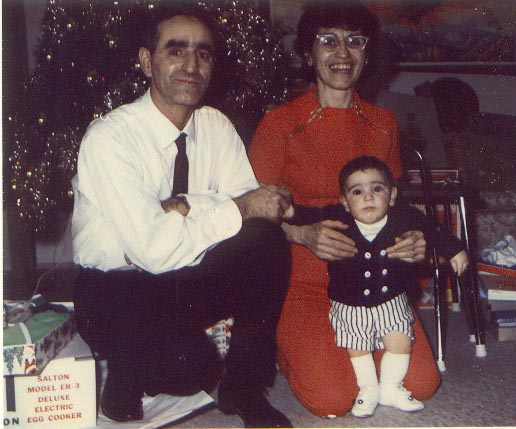
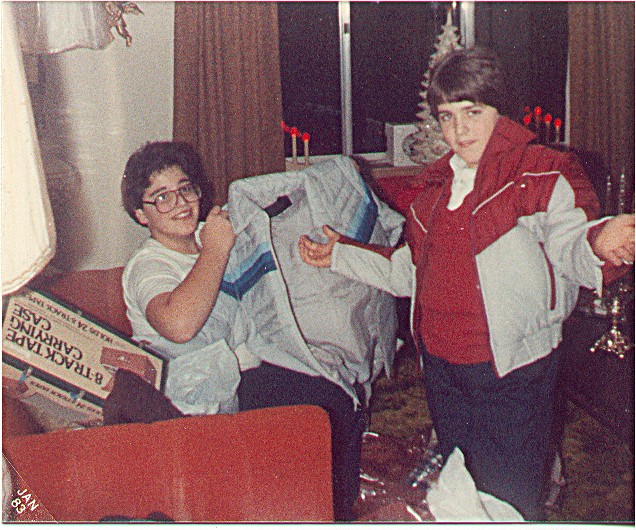
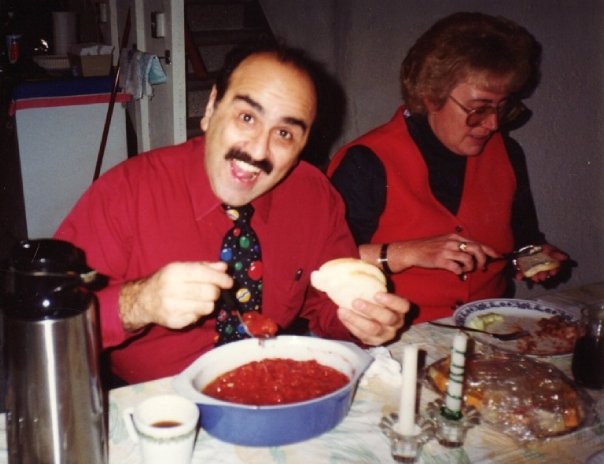
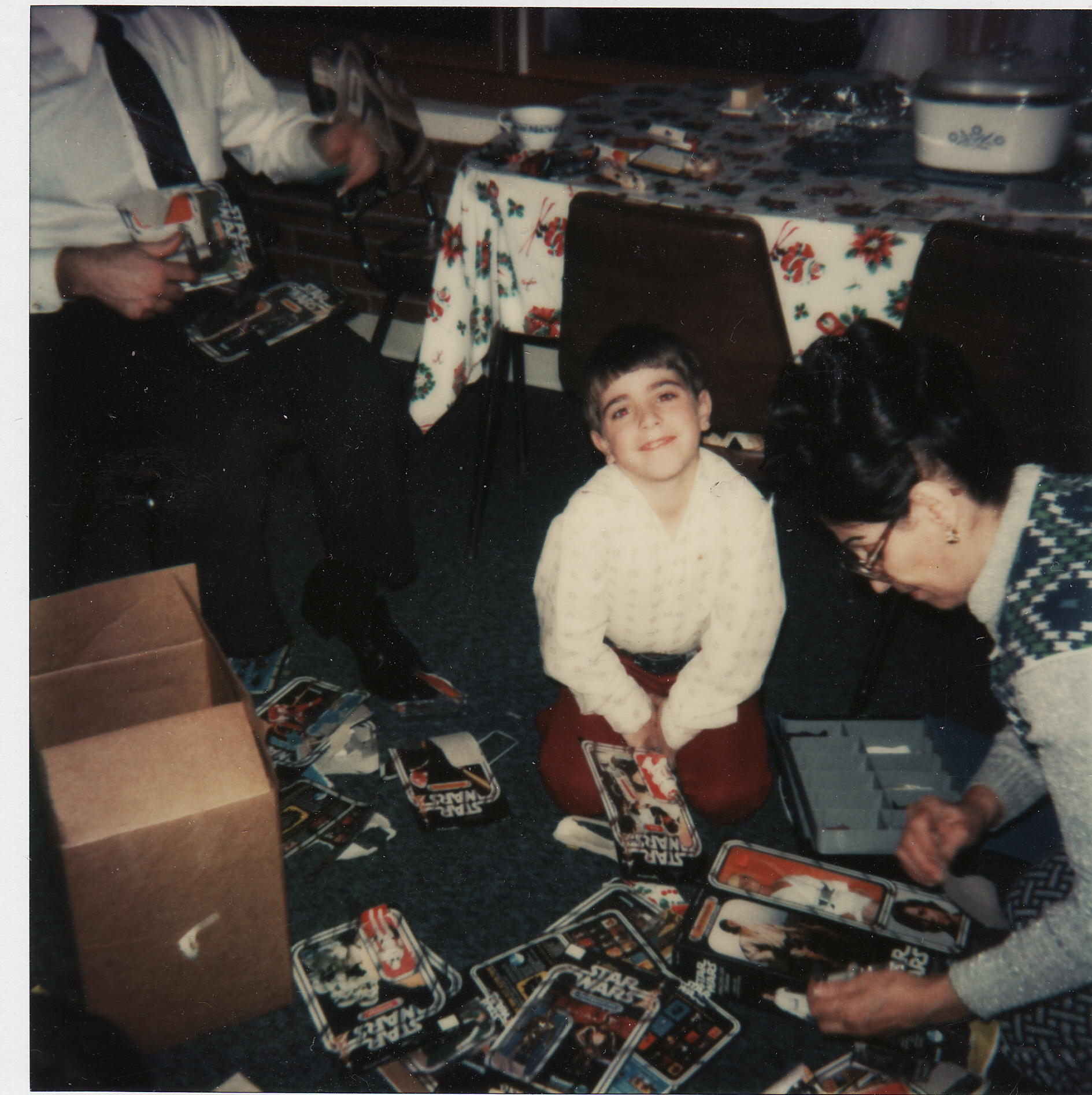
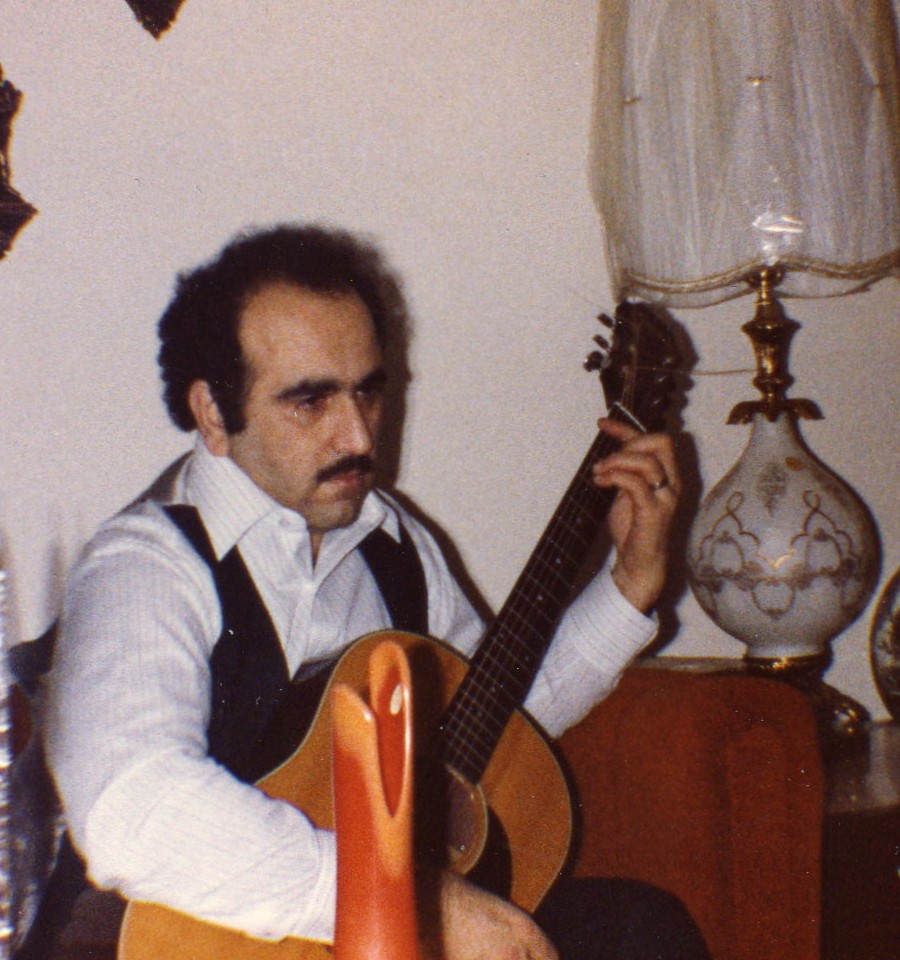

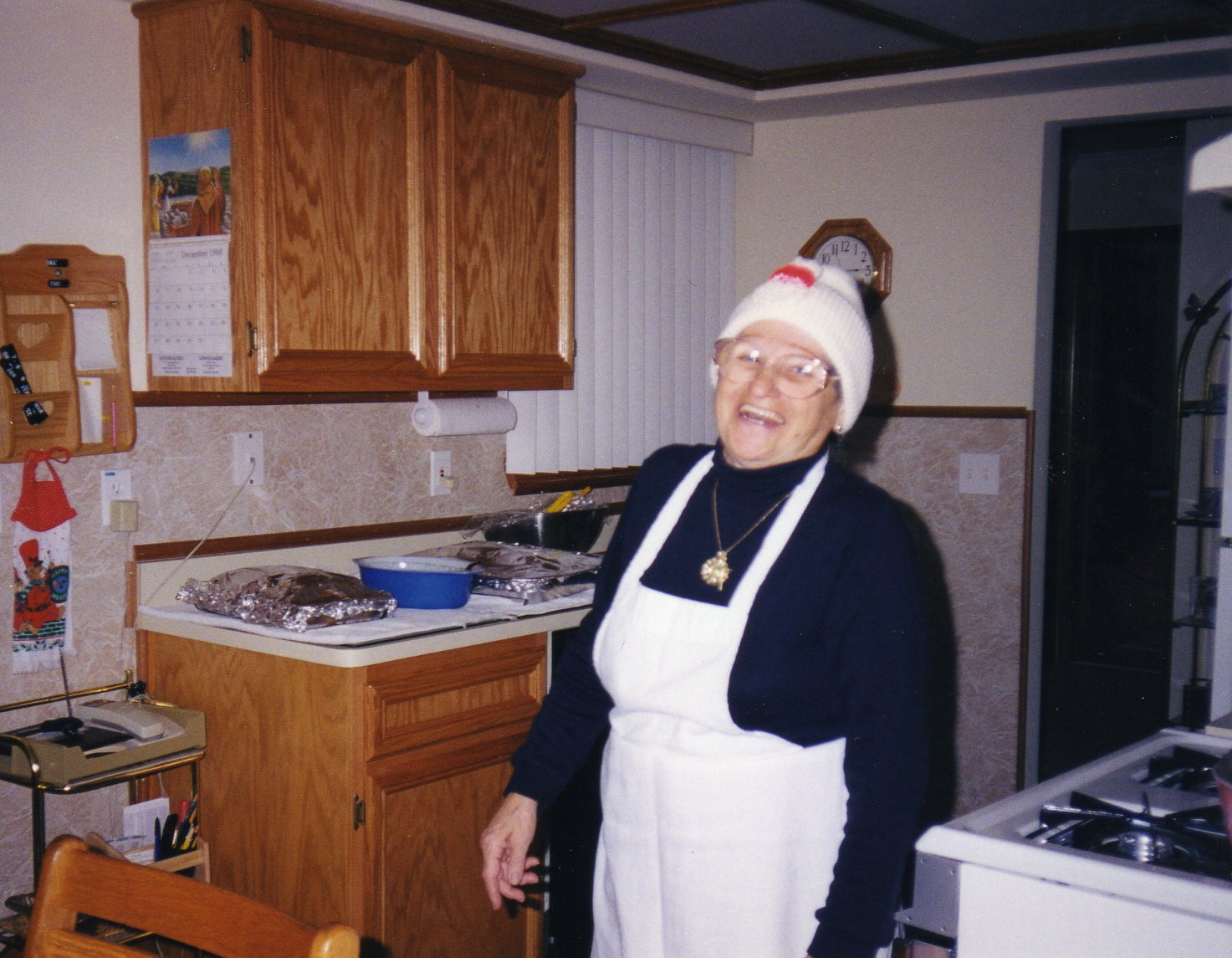
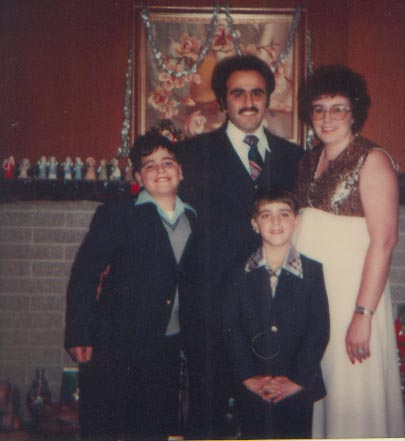



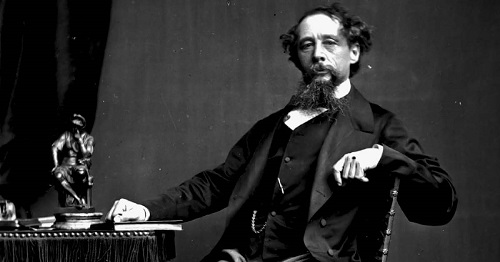
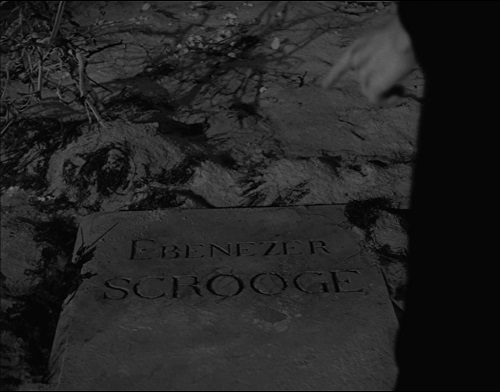
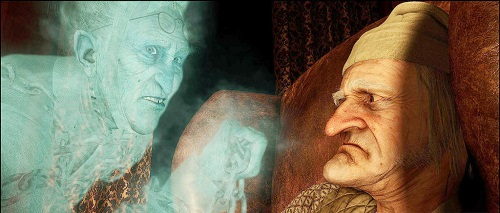
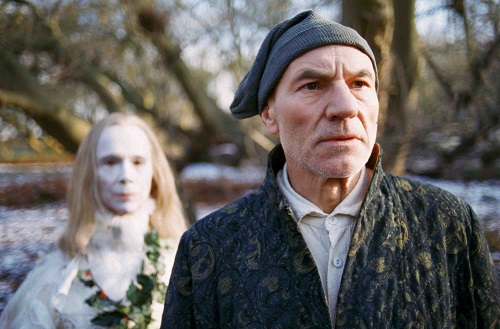
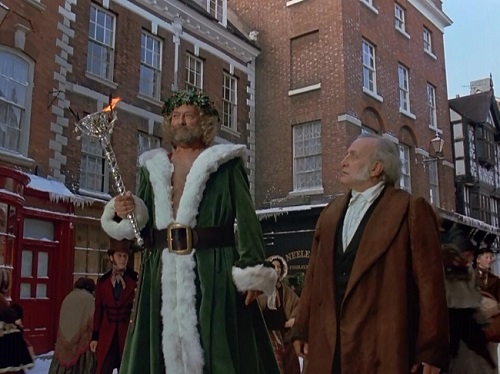
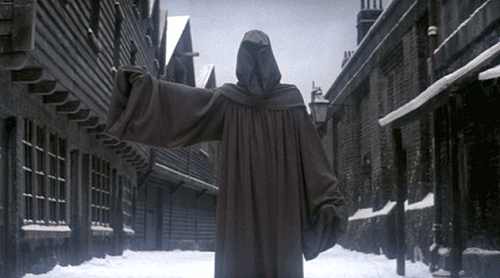
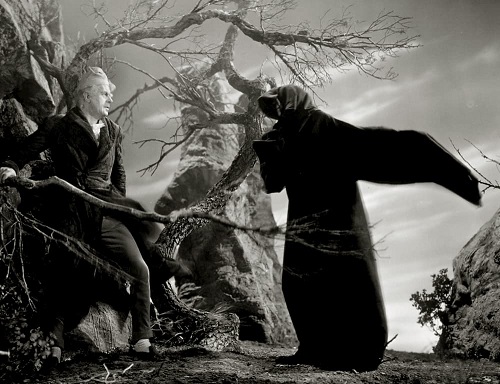
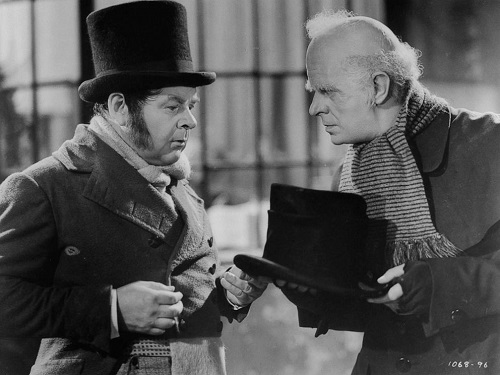
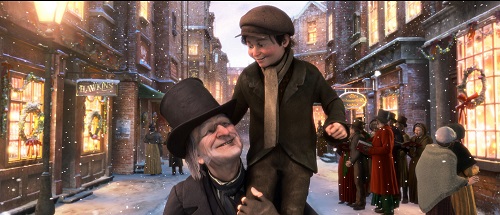



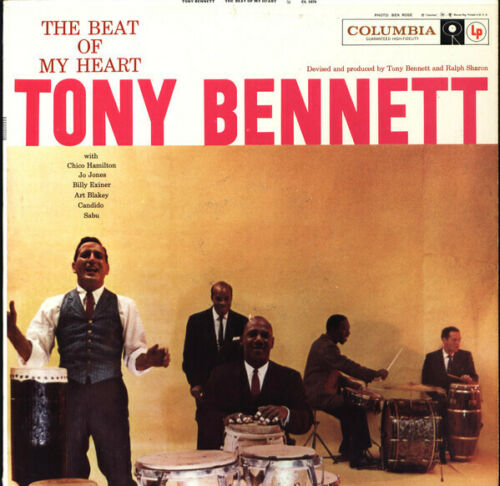







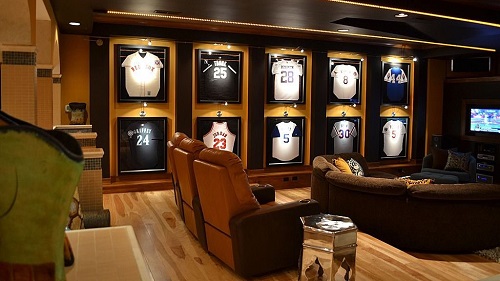

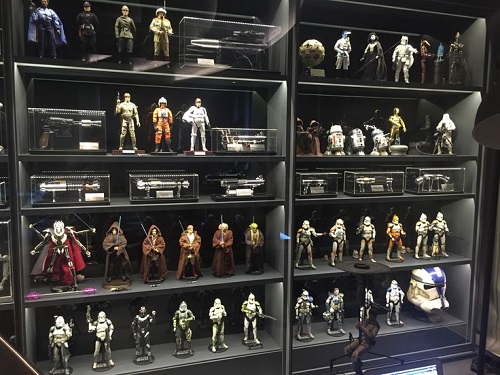
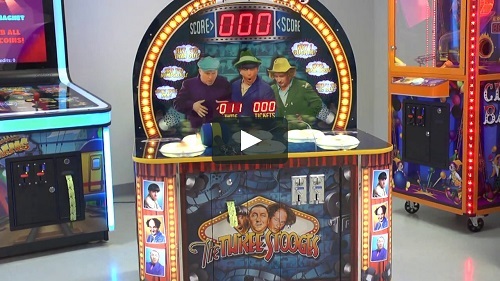
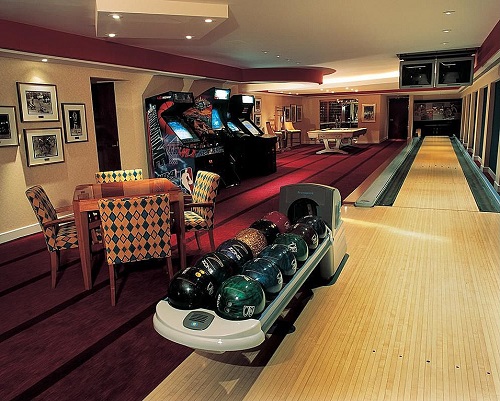

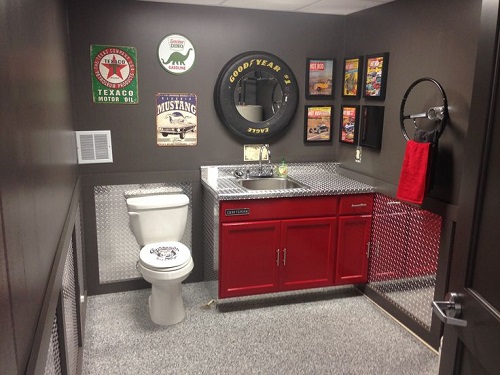
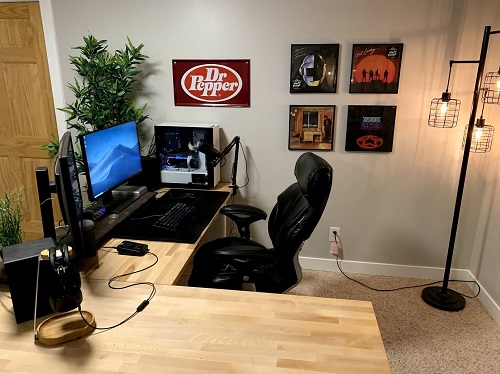



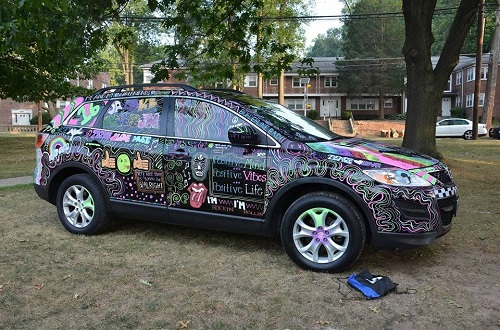
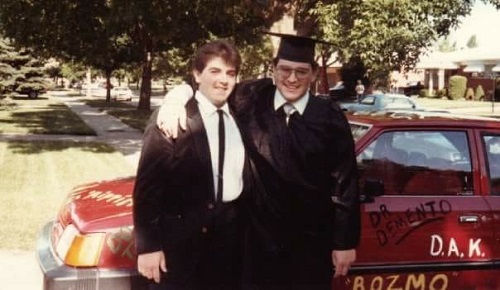
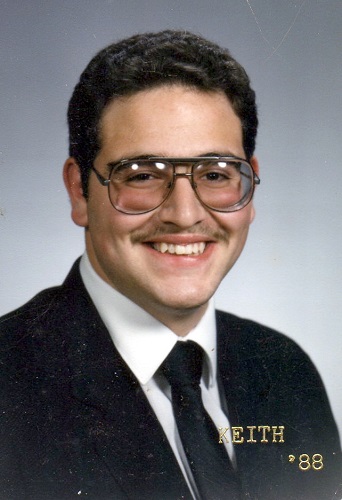
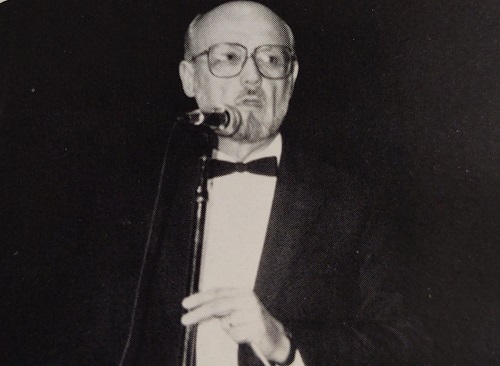
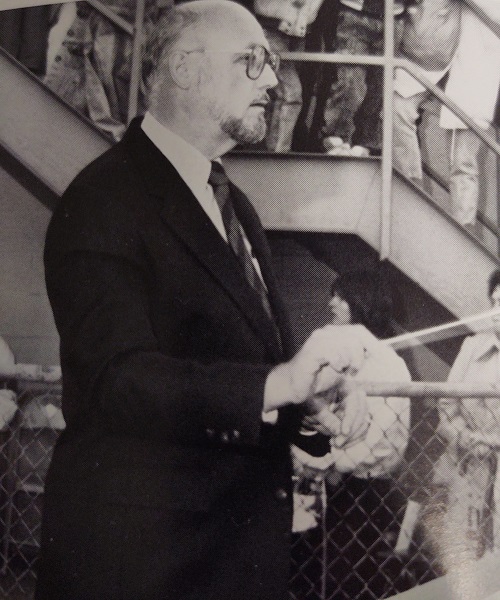
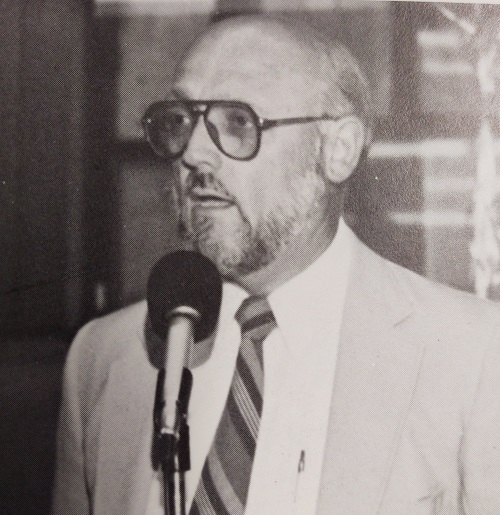
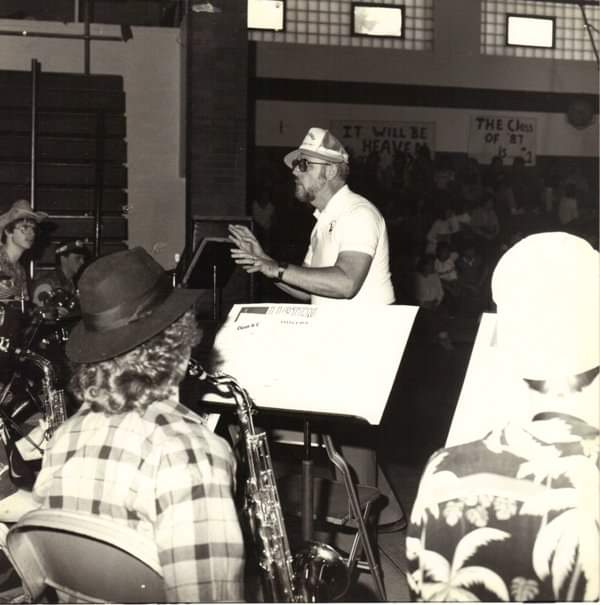
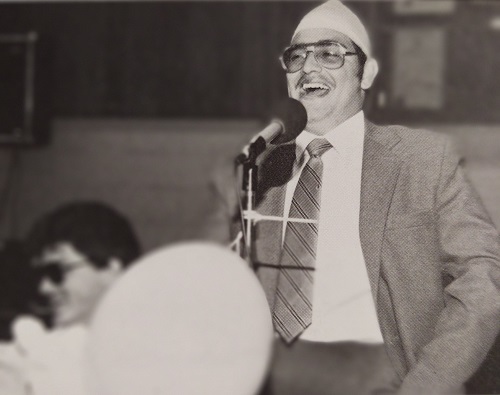
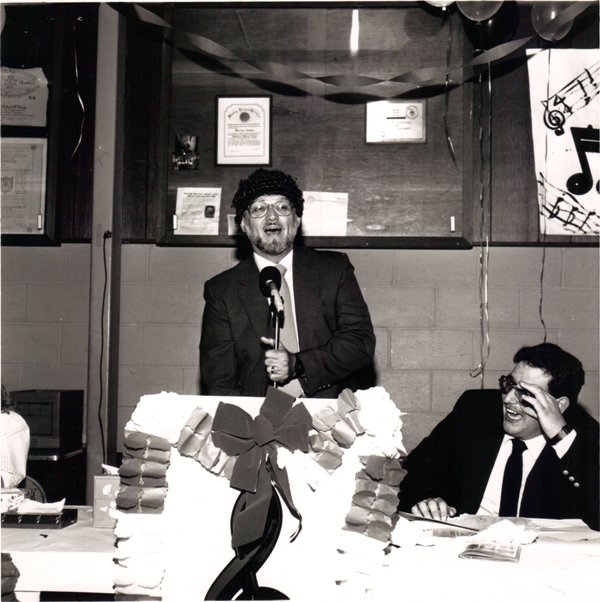
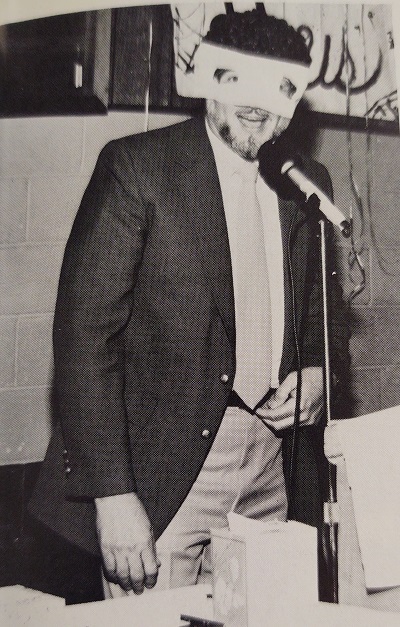
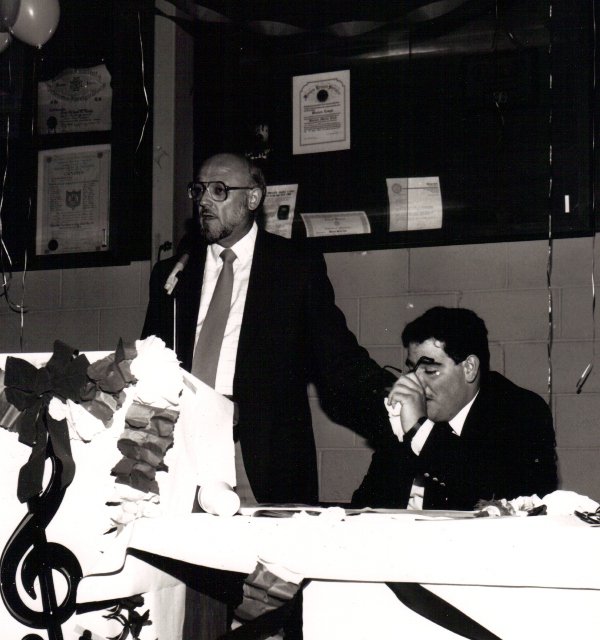
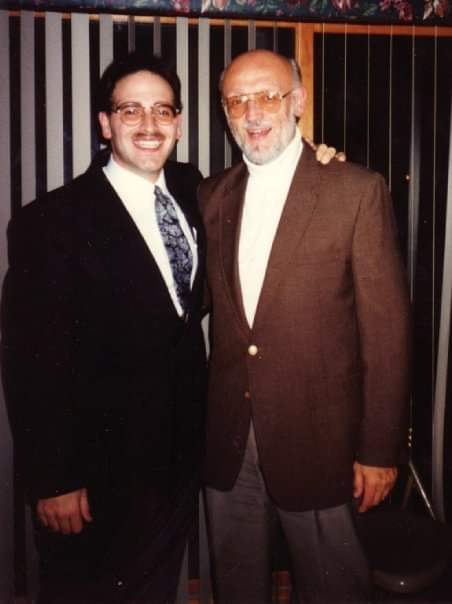

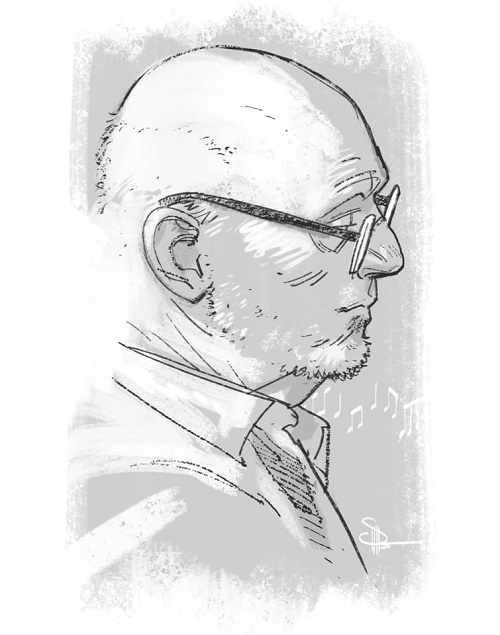

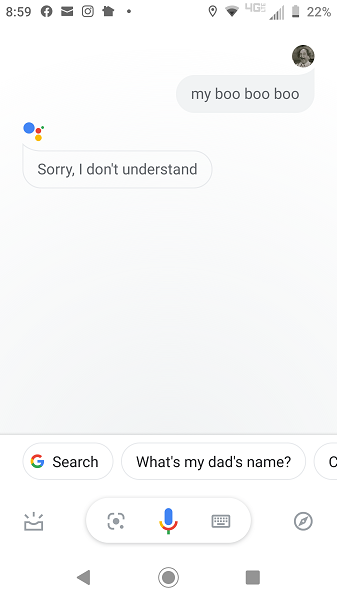



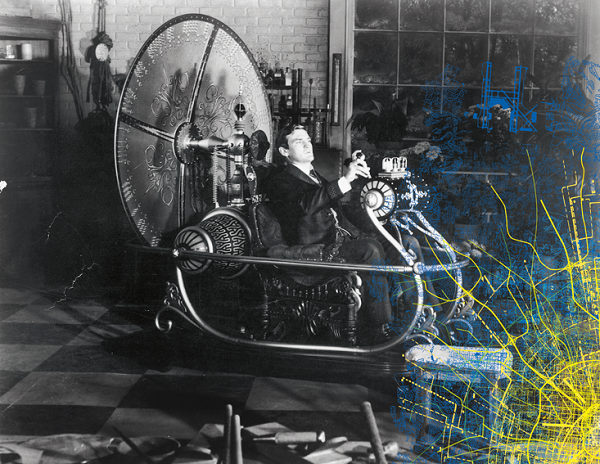


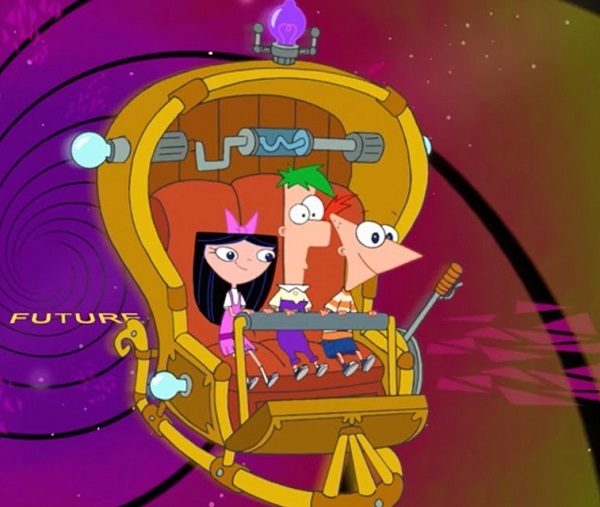

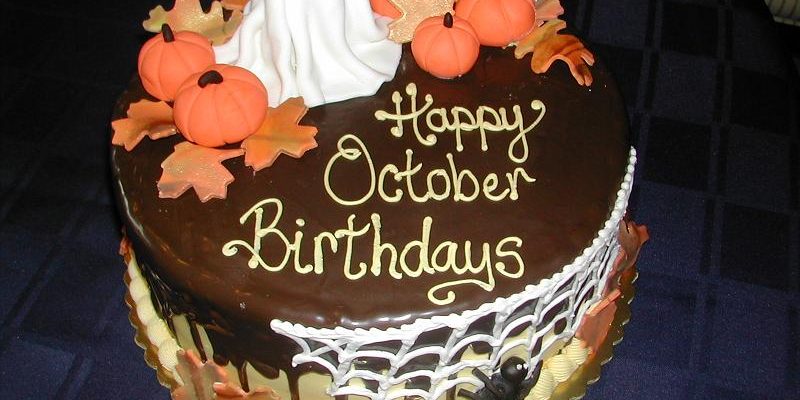
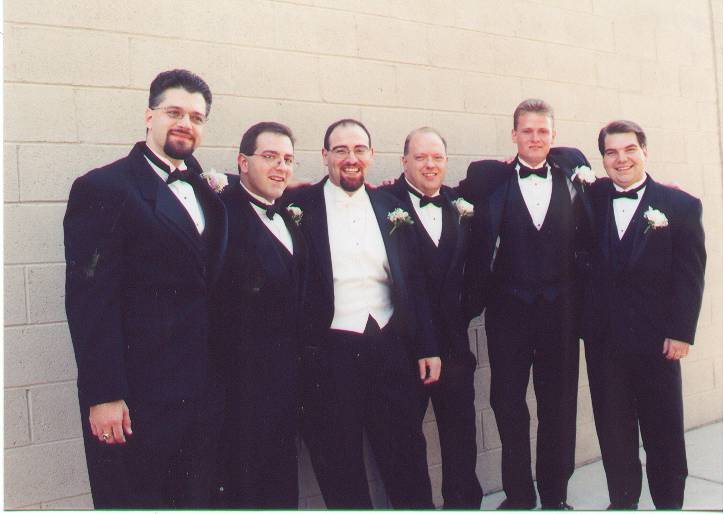

 Various Ramblings of a Nostalgic Italian