Movie Music Monday – The Girl Can’t Help It.

It was on this day in 1956 that “The Girl Can’t Help It” starring Jayne Mansfield, Tom Ewell and Edmund O’Brien opened in theaters.
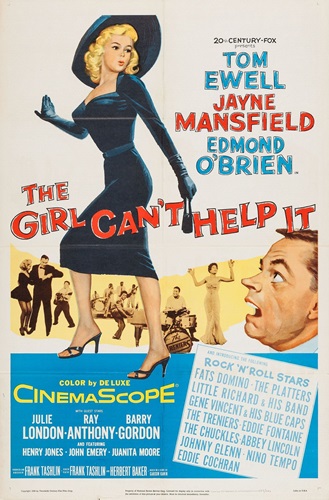
The movie was originally conceived as a way to build Mansfield’s celebrity, but it took on a life of its own and became a rallying point for young people, helping propel rock and roll into its unofficial “first Golden Age.” The unintended result has been called the “most potent” celebration of rock music ever captured on film. No doubt the cameos by Fats Domino, The Platters, Gene Vincent, Eddie Cochran, Julie London and Ray Anthony helped with that.

The film was based on “Do Re Mi”, a short story by Garson Kanin. After seeing the adapted screenplay, Kanin did not approve of the new take on his story and requested his name be removed from the credits. Subsequently, director Frank Tashlin came up with the new title, The Girl Can’t Help It.
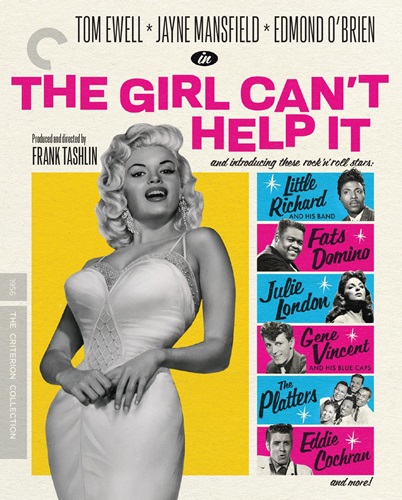
FUN FACT: The film the heavily inspired young, pre-Beatle John Lennon to be a rocker. The impact was so significant that, 12 years later, the Beatles took a break from recording “Birthday” to watch the film premiere on British television (Lennon had seen it in theaters).

The Girl Can’t Help It is the title song to the film, and was written by Bobby Troup. Little Richard recorded it and it was released in 1956. Fats Domino was originally supposed to record the song for the film, but the sessions fell through. The song has been covered by The Everly Brothers, The Animals, Led Zeppelin, and many others.

In the US, the song peaked at No. 49 on the Billboard Top 100 singles chart and No. 7 on the R&B Best Sellers Chart.
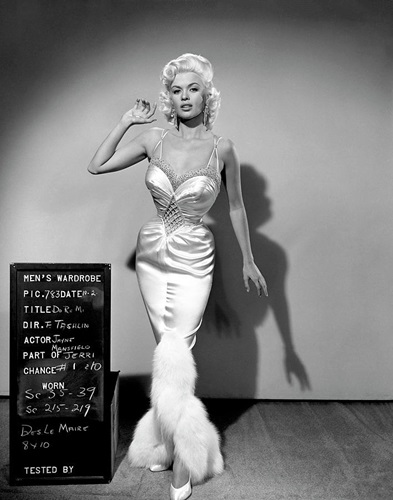
Songfacts.com sums up the song in this way:

“The Girl Can’t Help It” is about a young woman so attractive that she unwittingly captures the attention of every guy she passes. In addition to her siren-like sex appeal, there’s a distinctly incendiary element to her superpowers. She turns bread to toast with a wink of an eye and makes “beefsteak become well done” with a smile. She can’t be held responsible for the potentially dangerous effects of her fiery presence. The poor girl just can’t help it.

Accompanied by scenes from the film:
Movie Music Monday – Dragnet

Nine notes. Nine notes that are still recognizable today. Broken into two parts – 4 notes, then 5 notes. “Dum da dum dum” (Pause) “Dum da dum dum da.” Those notes were immediately followed by a stern narrator who informed listeners, “Ladies and gentlemen. The story you are about to hear is true. Only the names have been changed to protect the innocent.”

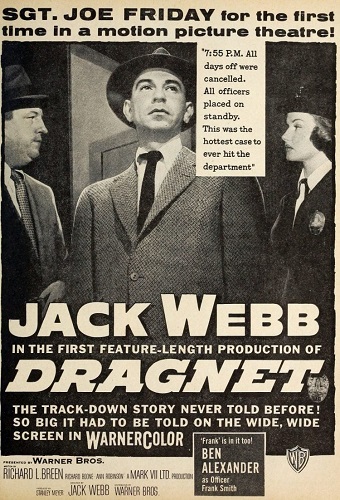
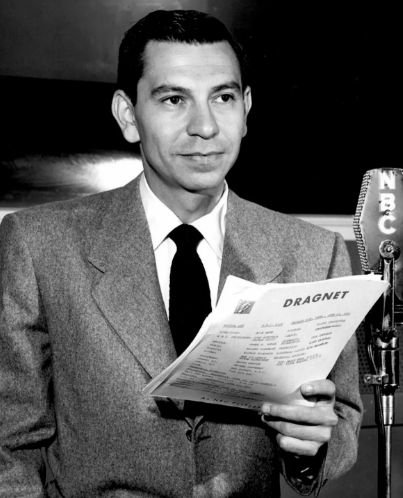
On this day in 1949, Jack Webb debuted on radio as Sergeant Joe Friday in Dragnet. He created and produced the show as well. Wiki states that “Dragnet is perhaps the most famous and influential police procedural crime drama in American media history. Webb’s aims in Dragnet were for unpretentious acting and a realistic depiction of policing. The series portrayed police work as dangerous and heroic, and helped shape public perception of law enforcement in the 20th century, improving the public’s opinion of police officers.”

The radio show was so popular that it made the transition to television. It ran on NBC from 1951 to 1959. NBC brought the show back to television from 1967 to 1970. It first appeared as a feature film in 1954. It became the first theatrical film to be based on a TV show.

Check out this trailer!

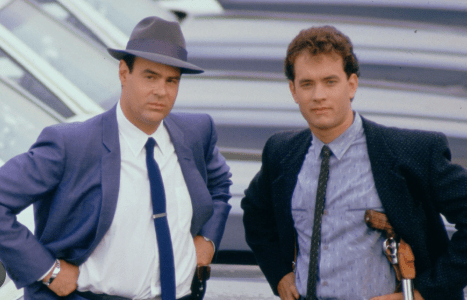
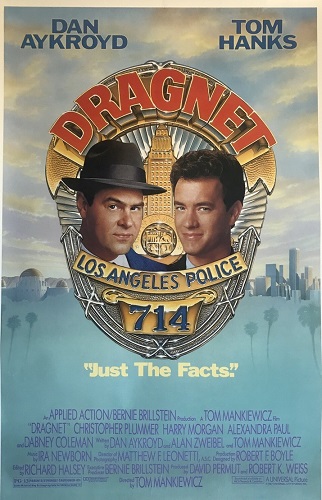
A TV movie was produced in 1966 with the intention of it launching the return of the show to TV. It didn’t air until 1969 for some reason. The final film version made Dragnet a comedy starring Dan Aykroyd and Tom Hanks.

Wiki says “The film contrasted the terse, clipped character of Friday, a hero from an earlier age, with the “real world” of Los Angeles in 1987 to broad comedic effect. Apart from Aykroyd’s spot-on imitation of Webb’s Joe Friday and Harry Morgan reprising his role of Bill Gannon (now Captain), the film version has few similarities with previous incarnations. This Dragnet parody was a hit with audiences.”

Dragnet was no stranger to parodies. It was parodied by Looney Tunes, Woody Woodpecker, Sesame Street, The Three Stooges, Rocky and Bullwinkle, and a series of audio parodies by Stan Freberg. Jack Webb loaned Stan the actual band/orchestra he used on radio for his parodies.

As I mentioned, the theme is instantly recognized today. For the 1987 film, producers got the British band The Art of Noise to perform it. The them is actually two songs merged together. The opening is entitled Danger Ahead, and what follows is the Dragnet March. The Art of Noise version is very …. 80’s.

The first “hit version” was done by Ray Anthony and His Orchestra in 1953. It starts very familiar and gets a bit “jazzy.”

And to start your Monday with a laugh or two, here are a couple of Stan Freberg’s Dragnet parodies. Notice how the music “stabs” were used to enhance the story, just like on the radio.

Happy Birthday, Dragnet!!