
Turntable Talk #39 – Bands? We Don’t Need No Stinkin’ Bands!

Dave at A Sound Day just wrapped up his monthly feature Turntable Talk. It was an interesting topic this time around and there were a lot of surprises as to who everyone chose to write about. This was my entry to the feature, which originally posted on Dave’s site on Monday:

It is time once again for Dave’s feature Turntable Talk. Dave features this every month on his site A Sound Day. This is the 39th edition, and he continues to come up with fantastic topics. This month is a fun one: Bands? We Don’t Need No Stinkin’ Bands!  Dave’s instructions were simple: This time around, we’re looking for artists who left popular bands to go solo and did well (either commercially or else in your own critical assessment.)

I am sure that I did exactly what the other participants did when the topic was presented – I Googled. I was actually surprised at just how many artists moved from a group to become a solo artist. Off the top of my head I can list Diana Ross, Sting, Lionel Richie, Eric Clapton, Gwen Stefani, Ricky Martin, Peter Gabriel, Rob Thomas, Steve Perry, Lou Gramm, and Justin Timberlake. There are SO many.

In all honesty, I had my choice almost immediately. However, as I began to write about him, there was another artist connected with him that became more interesting to me. It was an artist who had solo success for a short time, and then a sad ending.

If I mention The Drifters I am sure you can name a few of their big hits. Under The Boardwalk, This Magic Moment, and Up On The Roof are just some of them. The Drifters were formed by my choice artist in 1953. His name was Clyde McPhatter. Let’s go back a couple years to see how it all came together.
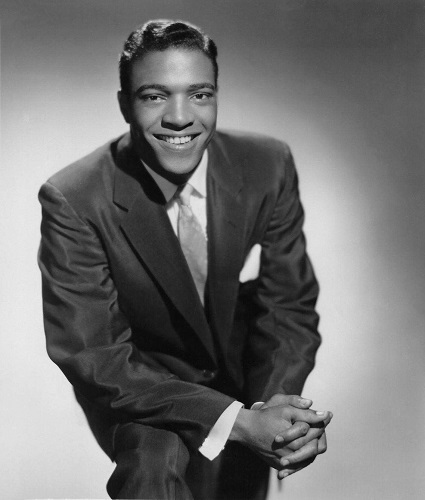
Like many artists, Clyde McPhatter began singing in the church choir at his father’s church. In 1950, he was working at a grocery store. He entered the Amateur Night contest at Harlem’s Apollo Theater – and won! Afterward, he went back to working in the store.

One Sunday, Billy Ward of Billy Ward and the Dominoes heard Clyde singing in the choir of Holiness Baptist Church of New York City. He was immediately recruited to join the group. Clyde was there for the recording of their hit “Sixty Minute Man,” which was a number one song on the R&B chart for 14 weeks in 1951.

My original pick for this round was Jackie Wilson. Jackie was hired by Billy Ward in 1953 to join The Dominoes. That same year, Clyde left the group. He coached Wilson while they were out touring together. Wilson would leave in 1957. Apparently, Ward was not pleasant to work with. Wilson said, “Billy Ward was not an easy man to work for. He played piano and organ, could arrange, and he was a fine director and coach. He knew what he wanted, and you had to give it to him. And he was a strict disciplinarian. You better believe it! You paid a fine if you stepped out of line.”

Atlantic Records saw a Dominoes show and noticed that Clyde was not with the group, so they searched for him, found him and wanted to sign him to a record deal. Clyde agreed to sign on one condition – they allow him to form his own group. That group was the Drifters. While known as Clyde McPhatter and the Drifters, they released songs like Money Honey.

Elvis Presley covered Money Honey in 1956. In researching for this piece I was surprised to find that McPhatter and the Drifters did the original of another Elvis hit – Such a Night.

In late 1954, McPhatter was inducted into the U.S. Army. He assigned to Special Services in the continental United States. This allowed him to continue recording. After his tour of duty, he left the Drifters and launched a solo career. The Drifters continued as a successful group, but with many changes in personnel, and the group assembled by McPhatter was long gone by the time their greatest successes were released after he left the group.
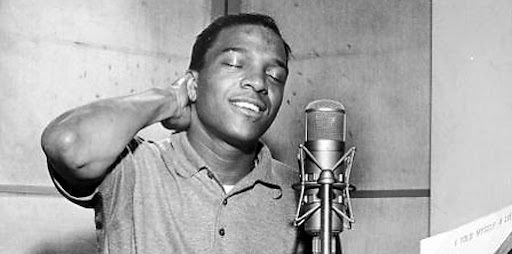
It would take two years, but Clyde would finally get his first solo #1 R&B hit when he released “Treasure of Love” in 1956. It would top out at #16 on the US Pop Chart. I love his vocal on this one.

His biggest solo hit would come in 1958 when he recorded and released a song written by Brook Benton. A Lover’s Question would reach #6 on the Pop Chart. If I had to pick my favorite Clyde song, it would be this one. There is so much to love about this song. That acapella bass line being sung throughout the song is very catchy.

McPhatter would leave Atlantic Records and bounce from label to label recording many songs, but not having much success. His last top ten record would come in 1962 with a song written by Billy Swan. Lover Please was first recorded by the Rhythm Steppers in 1960. It was the title track from Clyde’s 1962 album of the same name. It would reach #7 on the Pop Chart.

Clyde did manage to have a top 30 hit in 1964 with “Crying Won’t Help You Now,” but when it fell of the chart, he turned to alcohol for comfort. He would record every so often, but nothing ever really did well on the charts. He always had a decent following in the UK, so in 1968 he moved to England.

He wouldn’t return to the US until 1970. Outside of performing on a few Rock and Roll Revival shows, he lived a very private and reclusive life. In 1972, Decca Records signed him and they were planning a a big comeback. That never materialized as Clyde passed away on June 13, 1972 of complications from liver, heart and kidney disease. This was brought on by his alcohol abuse years earlier. He was only 39 years old.

His legacy consists of over 22 years of recording history. Clyde was the first artist to be inducted twice into the Rock and Roll Hall of Fame, first as a solo artist and later as a member of the Drifters.

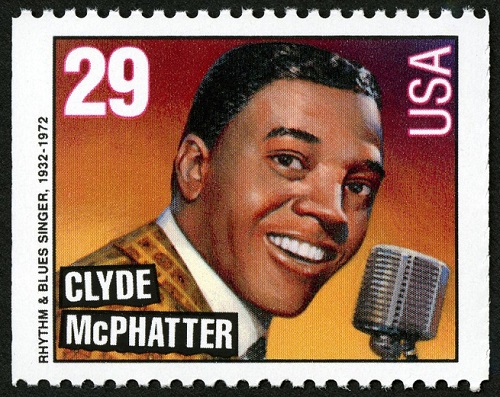
In 1993, Clyde was honored with his own stamp by the US Postal Service.
His career had ups and downs, and his hit songs were an important part of Rock and Roll history. Vocalists like Marv Johnson, Smokey Robinson and Ben E. King are all said to have patterned their vocal styles on Clyde’s. Others have cited him as a major influence as well. In the book “The Drifters” by Bill Millar, he says:

“McPhatter took hold of the Ink Spots’ simple major chord harmonies, drenched them in call-and-response patterns, and sang as if he were back in church. In doing so, he created a revolutionary musical style from which—thankfully—popular music will never recover.”
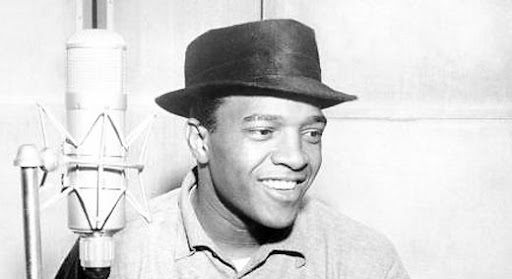
Thanks again to Dave for hosting another great round of Turntable Talk. I cannot wait to see who the other writers have picked and look forward to Round #40 next month.

Thanks for reading and thanks for listening!

The Music of My Life – 1999

Welcome back to The Music of My Life, where I feature ten songs from each year of my life.  In most cases, the ten songs I choose will be ones I like personally (unless I explain otherwise). The songs will be selected from Billboard’s Year-end Hot 100 Chart, Acclaimed Music, and will all be released in the featured year.

In 1999, I turned 29 years old. In September of that year, I would venture into a marriage that would fail years later. Two great sons came out of it though, and that was a great thing.

1999 was also the year that I began receiving monthly CDs with new music on them. It was a great was to always be sure to have clean edits of songs and be current. I received my first CD in May of that year and thankfully so!

I had been hired to DJ a prom. It was the first one I had ever done. I had been able to scrounge up some of the “newer” songs thanks to friends. However, a lot of the brand new stuff not in stores yet. (This is probably before I got my iPod and iTunes). Two days before the prom, that CD had the hottest song on the radio at the time. The song was Ricky Martin’s Livin’ La Vida Loca.

That night, I had requests for it and was surprised (and thankful) it was on the CD! I played it at least three times that night and knew my investment was a good one. Those CDs saved me plenty of times.

Frank Sinatra died on May 14, 1998, which was around the time this song was conceived. Co-writer Desmond Child told Songfacts that Sinatra’s music was a strong influence on this song. He said, “Frank Sinatra’s music was coming out of the airwaves, and we were all of a sudden into this Rat Pack idea, and also the Latin Elvis concept that we had for him. So we put that into the songs, as well – there was a swing aspect to it. So the verses were more like that, and then the choruses were all out rock anthems, with horns. Because horns had fallen out of favor, we brought horns back.”

Paul McCartney’s guitarist, Rusty Anderson, played on the song. Co-writer Robi Rosa asked him to put some guitar on some sections that were blank slates. He remembers: “I was thinking more of a James Bond vibe actually. But I kinda liked the way it counter-balanced the song.”

Anderson recorded his guitar work at his studio intending it to just be a demo. “I didn’t have a reverb to print that I was happy with so I figured the mixer would have the perfect reverb in mixdown,” he explained. “That recording turned into the single. When I heard it on the radio, I was shocked that they left it dry!”

Many years later, the song re-entered my life when I took my son to the movies. In Shrek 2, Puss in Boots (Antonio Banderas) and Donkey (Eddie Murphy) sing it as the credits roll.

Livin’ La Vida Loca

Next is a song that I always felt should have been a bigger hit. I Know How The River Feels was a song that was recorded first by country singer Ty Herndon in 1996. His version was never released. Diamond Rio recorded it for their Unbelievable album and it was their third single from it.

I liked it because it gave Diamond Rio a different sound. This was the first song of theirs to feature outside instruments as they added a string section to the arrangement. The song, however, was met with some negative reviews from critics. It only went to #33 on the Country charts.

I love the way the song uses a river with its twists and turns to describe the search for love. Finally, when it reaches the sea – the search, the twists, and the turns – you reach the final destination.

Now I know how the river feels
When it reaches the sea
And finally finds the place
It was always meant to be
Holding fast, home at last
Knowing the journey’s through
Lying here with you
I know how the river feels

I Know How The River Feels

Hey Leonardo by Blessid Union of Souls is a song that I liked for a few reasons. First, the parenthetical title is “She likes me for me.” Isn’t that what love is about? It’s not about the physical things, the status and such. It is about loving a person because they are that person. Next, I like when a song tosses in some pop culture references.

Songfacts says: This song is written in the form of a letter to someone named Leonardo – a reference to actor Leonardo DiCaprio. In the song, the singer lists many celebrities and the qualities they possess making them attractive to women. He emphasizes that while he does not have the same qualities, his girlfriend loves him just the way he is.

The celebrities that are referenced include: Tyson Beckford, Robert Redford, Steve Buscemi and the movie Fargo. It also references opera singer Pavarotti, model Cindy Crawford, Clint Eastwood’s characterization of Dirty Harry, and Jim Carrey in the movie The Cable Guy.

Hey Leonardo

For the longest time I had only ever heard the clean edit of the next song. When I downloaded “Why Don’t You Get a Job” by the Offspring, it was the album version. It certainly was not edited. As I think of the words that are edited from it, I chuckle. They seem tame compared to what words are allowed on the radio today.

Offspring’s Americana album was a concept album. It examined the unpleasant side of life in America. Songfacts says, The song fits the concept by examining how so many people get by in the country without being productive and contributing to society.

If you listen closely, the melody might sound familiar. That is because it is based on The Beatles song “Ob-La-Di, Ob-La-Da,” with some elements of Simon & Garfunkel’s “Cecilia.”

Why Don’t You Get A Job

I’ve told this story before. When the Dixie Chicks first hit the radio, I did not think they would last. I felt that they had too much of a traditional sound and that listeners would not like it. I was wrong and I am glad that they went on to have radio success.

Their album Wide Open Spaces was full of hits. I came to really love the harmonies of the Dixie Chicks, especially on the last single from the album.

The Chicks’ version of “Tonight the Heartache’s on Me” was released in April of 1999. It had been recorded in 1994 by singer/songwriter Joy Lynn White, whose version was much slower. The Chicks version has a tempo and attitude that conveys all the feelings of the lyrics.

I love the play on words in the title. “The next round’s on me” is something you might hear in bars all over the country. The story of the song takes place in a bar. A gal sees her ex walk in with another woman and “Boom” – the hurt is there. “Bartender, pour the wine, ’cause the hurtin’s all mine. Tonight, the heartache’s on me!”

The song is a guilty pleasure, I suppose.

Tonight The Heartache’s On Me

I hate to say that Sheryl Crow is a cover artist, because she is not. However, her cover songs are really good! Take for example, her cover of 1987’s Sweet Child ‘O Mine.

It was originally done, of course, by Guns N’ Roses. The lyrics came from a poem Axl Rose was working on. Songfacts says that “he wrote the song about his girlfriend, Erin Everly, the daughter of Don Everly of the Everly Brothers. After dating for four years, they got married at a quickie wedding in Las Vegas on April 28, 1990, but just nine months later, the marriage was annulled, with Everly claiming abuse.

The Sheryl Crow version appeared in the Adam Sandler movie Big Daddy. It earned her the Grammy Award for Best Female Rock Vocal Performance in 2000. Her version appears near the middle of the movie right after they take the kid away. The Guns N’ Roses original is also played in the movie (at the end with the credits.)

I think her voice compliments this song very well. Her voice is much better than some of the folks who attempted to sing this when I hosted karaoke!

Sweet Child O’ Mine

The aforementioned green ogre, Shrek, ties in with my next song. I think this is the one that most people associate with the Shrek films. I’m talking, of course, about All Star by Smash Mouth.

Like most Smash Mouth originals, it was written by their guitarist, Greg Camp. He said in a Songfacts interview:

“When we were on tour for the first record, it’s still when people were writing fan mail, like, in the form of paper and pencils and typewriters and stuff,” said Camp. “We would get these big bags of fan mail and we would take them to the Laundromat and do our laundry and read all this mail while we were sitting around waiting for our clothes to get dry. And about 85-90 percent of the mail was from these kids who were being bullied or their brothers or older siblings were giving them s–t for liking Smash Mouth or liking whatever they’re doing or the way they dressed and stuff. So we were, like, ‘We should write a song for fans.’

Before I stopped DJing a couple years ago, this song was still being requested at high school dances.

All Star

It is always great to see an artist from the past make a come back. 1999 was a great year for Carlos Santana!

Most music people are aware of Clive Davis. He is a legendary record executive who has worked with many artists and even appeared on American Idol. He was the mastermind behind Santana’s Supernatural album.

Santana hadn’t had a hit since “Hold On” in 1982, so Davis teamed him with contemporary musicians like Wyclef Jean, Everlast and Lauryn Hill to make sure the younger generation took notice. The result was a wildly successful album that went over well with Santana’s old fans and created a legion of new ones. “Smooth” was the first single; it spent 12 weeks at #1 in the US.

Rob Thomas sang lead on “Smooth,” but that wasn’t the plan. He had never written a song for someone else before, so he jumped at the chance to write a song for Santana. When he finished it, Thomas suggested George Michael, one of his musical heroes, as the vocalist. Arista Records ended up asking Thomas to do the vocals, and when he did, it was in Michael’s style. “If you listen to the melody and the cadence, it’s an attempt to emulate his style in so many ways,” Rob said.

Smooth” won Song Of The Year and Record Of The Year at the 2000 Grammy Awards. Supernatural also won for Best Rock Album and Album Of The Year. Santana picked up a total of eight awards that night.

Fun fact: Santana has the distinction of waiting the longest between his first charting single and first #1 hit. In 1969, “Tango” hit #56 in the US, and 30 years later, “Smooth” was #1.

Smooth

The next song was probably THE ear worm of 1999. It was certainly one of those songs that got into your head. Believe it or not, Lou Bega’s “Mambo No 5” was a cover song! The song was originally done in 1952 by the Cuban-Mexican bandleader Perez Prado. Known as the “King of the Mambo,” Prado recorded numerous mambos. When he ran out of inspiration, he would simply number them. “Mambo No 5” was one of a series of eight.

The difference between the two versions? Perez Prado’s version was instrumental. In 1999, Lou Bega added lyrics to it. By doing so, he transformed it into a love song for several women. Those women: Angela, Pamela, Sandra, Rita, Monica, Erica, Tina, Mary and Jessica. It was reported that the girls he mentioned were all Lou’s former girlfriends. It is probably beyond coincidence that eight of the girls in the song have names that end in “A,” making them quite singable.

Why is it on my list? Because I will forever link it to Barbara Eden. Let me explain. My buddy Steve said to me one day, “Hey. Did you know that you can sing the I Dream of Jeannie Theme song to Mambo No 5 and it fits perfectly?” I looked at him like he was nuts…until I heard it.

So, when you give it a listen, when Lou says, “A little bit of (Girl’s name)…” when he says the girls name, start singing the theme song and watch how it fits. It’s uncanny and it is ridiculous! Now, every time I hear it, that is ALL I hear!

If you’d like me to punch my friend for you, I will.

Mambo #5

Finally, this week a song that I literally just mentioned because of a birth anniversary. Last Tuesday, I featured this for Tune Tuesday and Robert Goulet’s birthday. I didn’t realize that it would coincide with this week’s list. You can read about that here:

…or you can just listen to it here.

You’ve Got A Friend In Me

Alright, which one of your favorites did I miss from 1999? Tell me about it in the comments.

Next week, we enter a new decade with the year 2000. It was a year that seemed SO far away for many of us. We all breathed a sigh of relief when the world didn’t shut down at midnight on January 1st (the Y2K fiasco!). Remember that?

My list next week is straight forward, and has no cover songs on it (I may have to double check to be sure). There are a few songs that strike a chord with me, especially as I celebrated birthday #30. Another good mix comes your way in 7 days.

Thanks for reading.