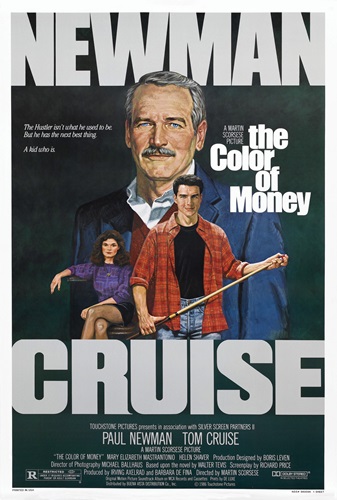
Born today in 1925, the legendary Paul Newman. He was in so many great movies. One of my favorites was the 1961 film The Hustler. Newman played “Fast Eddie” Felson who is a small time pool hustler who challenges Minnesota Fats played by Jackie Gleason. He would reprise that role again 25 years later in The Color of Money.
In the sequel, “Fast Eddie” isn’t as fast as he used to be. He has given up the game and is now a liquor salesman. He comes across a guy who is a skillful pool player and approaches him and his girlfriend and tells them they’d be pretty good at hustling. The trio then head out for six weeks of travel and hustling.
The soundtrack of the film is filled with great music from Willie Dixon, Robert Palmer, BB King, Don Henley, Robbie Robertson, Mark Knopfler and Eric Clapton. It has a very bluesy feel to it which fits the feel of the film. One of my favorite tracks is It’s In the Way That You Use It by Clapton.
(From Songfacts.com) Clapton wrote this with Robbie Robertson, whose work with The Band in the ’60s encouraged Clapton to get away from the long, heavy solos he was playing with Cream. Robertson was in charge of the music for The Color Of Money, but because he was not finished with his first solo album, his record company would not let him sing on any of the songs. He got around it by contributing instrumental songs to the soundtrack.
Billboard magazine called the tune a “neatly executed rocker [that] strongly recalls his mid-’70s.”
Here is the song, with some clips from the film featuring birthday boy, Paul Newman:
Welcome back to The Music of My Life, where I feature ten songs from each year of my life. In most cases, the ten songs I choose will be ones I like personally (unless I explain otherwise). The songs will be selected from Billboard’s Year-end Hot 100 Chart, Acclaimed Music, and will all be released in the featured year.
A brand new decade has dawned and I will turn 20 in 1990. It was a time of change for me, as well. I had been working at WKSG for a little over 2 years. I truly believed that I’d have that job for years, but had yet to learn how unstable radio jobs were. When I was fired, I called my old boss (now at another station in Detroit) and cried like a baby. He brought me in part time at WMXD.
As I looked through the music from 1990 and 1991, there were many songs that I played while at WMXD. When I started there, the music was a mix of Adult Contemporary and Urban songs. Eventually, they would go all Urban Contemporary and I was let go again.
One of the songs I played, I wrote about recently, but it still makes my list here. If you want to know more about Elton John’s Club at the End of the Street, you can read the earlier post here:
Next on the list is a song that was released on my 20th birthday, May 15, 1990. “Vision Of Love” was Mariah Carey’s first single. The song debuted at #73 in America, but two months later, in August, spent four weeks at the #1 spot. I remember playing this one on WMXD, as well. It was a song that really showcased her outrageous vocal range! The first time I heard her belt out that high note, I couldn’t believe it!
The original demo of the song was described as a 1950’s shuffle, but that didn’t matter. The song was good enough. Songfacts says, The original version was included on Mariah’s demo tape for Columbia. It was one of the songs that caught the ear of Tommy Mottola, her future husband and, more importantly, the head of the label’s parent company, CBS Records. At the time, Mariah was working as a backup singer for Brenda K. Starr, who invited her to a label party in Manhattan where the demo tape made its way into Mottola’s hands. After listening to the tape in his limo on the way home, he went back to the party to track down the singer. Mariah had already left and no one knew who she was. Days later, she found a message on her answering machine inviting her to sign with the label. Mottola then sent her to Los Angeles to re-record “Vision Of Love.”
Let me be honest right here. After her second album, there were not too many songs by Mariah that I cared for. I don’t know this for sure, but I feel the “business” changed her. There were a couple of songs later that were good. I felt, however, her strongest stuff was on those first two albums.
Vision of Love
The Godfather trilogy will always be my number one, but my second favorite trilogy would be Back to the Future. In 1990, Back to the Future Part III was released in theaters. I couldn’t wait to see how it all wrapped up.
ZZ Top released their Recycler album in 1990. The lead single from the album was a song from Back to the Future Part III called Doubleback. The group made a cameo appearance in the movie playing an acoustic version. That version is on the soundtrack of the movie.
Doubleback
But wait, there’s more! Consider this a Double Shot of ZZ Top. From the same album, My Head’s In Mississippi sounded like classic ZZ Top to me. I just loved the shuffle and the vocals. Billy Gibbons said:
“My buddy Walter Baldwin spoke in the most poetic way. Every sentence was a visual awakening. His dad was the editor of the Houston Post. We grew up in a neighborhood where the last thing you would say is, ‘These teenagers know what blues is.’ But our appreciation dragged us in. Years later, we were sitting in a tavern in Memphis called Sleep Out Louie’s — you could see the Mississippi River. Walter said, ‘We didn’t grow up pickin’ cotton. We weren’t field hands in Mississippi. But my head’s there.’ Our platform, in ZZ Top, was we’d be the Salvador Dalí of the Delta. It was a surrealist take. This song was not a big radio hit. But we still play it live, even if it’s just the opening bit.”
In 2008, Gibbons stated, “‘My Head’s in Mississippi,’ which was one of the first completed tracks on the album, is a great example of how we mixed the new with the old. Initially, it was a straight-ahead boogie-woogie. Then Frank stepped in and threw in those highly gated electronic drum fills, which modernized the track.”
My Head’s in Mississippi
I have never owned a pair of parachute pants. They do look comfortable, however, and it looks like you have a lot of freedom in them.
As much as I didn’t really want to include this one, I did play it a lot while DJing. It always got folks out dancing, then again, so did Super Freak by Rick James. Believe it or not, James did NOT give Hammer permission to use the song.
Songfacts explains: Rick James tried to keep rappers from sampling his music, turning down any requests. According to James, his lawyers authorized the “Super Freak” sample without his permission. He heard about it when a friend told him about “U Can’t Touch This” and the song came on the radio they were listening to in the car. James said he was irate, but somewhat appeased when he found out how much money it was making for him. Still, he claimed he wouldn’t have done the deal if he was asked.
James had another beef as well: he wanted to be listed as a songwriter on “U Can’t Touch This.” He sued MC Hammer for credit. The case was settled out of court, with James getting listed as a co-writer on the track along with Hammer and Alonzo Miller. Miller was a disc jockey who wrote some lyrics on “Super Freak.”
He recorded the song at Capitol Records, where Frank Sinatra, Nat King Cole, and Dean Martin recorded, The label ran an innovative marketing campaign to promote this song. They mailed out free cassette singles of the track to 100,000 kids. The cassettes came with a letter from Hammer asking them to call MTV and request the video. The ploy worked, and the video became the most-played of 1990 on the network.
U Can’t Touch This
I don’t remember when my ex-girlfriend had sent this song to me. It was probably after we broke up the first time. I say that because I believe that this song is what led us to getting back together eventually. I remember being pretty messed up after the break up. I did end up dating someone else.
I don’t recall how my ex and I began chatting again, but it led to her giving me this song. I really loved and cared about my ex. I broke it off with the gal I had been dating to get back together with my ex. It was really unfair to her, but I was 20, almost 21, and didn’t really know any better.
While we enjoyed some very good times the second time around, it didn’t last. She broke up with me again, which led to me always wondering what I did to cause he to leave. Anyway, I tell you all that to play Cuts Both Ways.
Cuts Both Ways
In 1967, Otis Redding wrote and recorded his version of Hard to Handle. He wrote it with Allen Jones and Al Bell and the track was produced by the legendary Steve Cropper. It was released in 1968 (after his death) as the B-side to his song “Amen.”
The song was first covered in 1968 by Patti Drew. The Black Crowes covered the song on their debut album, Shake Your Money Maker. Two versions of the song exist. First, the original album version and the hit single remixed with an overdubbed brass section. The latter is available on the 30th Anniversary edition of Shake Your Money Maker.
Songfacts says: This was The Black Crowes’ third single, following “Twice As Hard” and “Jealous Again.” It made #45 in the US in December 1990, as the group was rapidly gaining momentum. After “She Talks To Angels” hit #30 in May 1991 – over a year after the album was released – “Hard To Handle” was reissued, this time going to #26 and becoming the highest-charting single for the band on the Hot 100.
This has always been a song that I love to crank up. It’s funky and fun!
Hard To Handle
My next song is another one that I played while at WMXD. I was familiar with James Ingram before I worked there and always liked his voice. I Don’t Have The Heart was his only solo number one song. The song won him a Grammy Award for Best Male Pop Vocal Performance in 1991.
The song was written by the duo of Allan Rich and Jud Friedman. It was the first song they wrote together. Speaking about Rich’s lyrics, Friedman told Songwriting Magazine, “Allan says he’s not a poetic lyricist, and he’s not a flowery lyricist. He is very conversational, but in a good way, and that has its own poetry. It’s the poetry of reality and the poetry of life and interactions. And the thing about I Don’t Have The Heart, among many brilliant things about Allan’s idea for the song, is it’s an example of taking a phrase that’s very well known, ‘I don’t have the heart,’ and flipping it. ‘I don’t have the heart to hurt you but I don’t have the heart to love you.’ He used it in two different ways, and that was poetic. We’ve all been there, sometimes wearing one of the shoes and sometimes wearing the other.”
That was the thing that caught me, too. The flip. I love when a lyric does that.
I Don’t Have the Heart
Whitney Houston hadn’t been on the radio since 1988. While she had her fair share of uptempo songs, but I feel like radio played more of her ballads. So the first time I played I’m Your Baby Tonight, I was wowed by it.
According to Songfacts:
By the time Houston released her third album, I’m Your Baby Tonight, she was coming off of a three-year hiatus. Prior to this, she had a record-breaking string of seven consecutive #1 singles on the Billboard Hot 100. The problem was, her record label felt she was losing touch with her black audience. Houston balked at the claim, telling USA Today, “I don’t sing music thinking this is black, or this is white… I sing songs that everybody’s going to like.”
But producers L.A. Reid and Babyface agreed with the assertion. Reid told Billboard: “We wanted to come up with something that was different than anything Whitney had sung. So we approached it from that angle. We wanted to give her a new direction, and pick up where we felt she was lacking. We felt like she needed more of a black base.”
It definitely was a fresh sound for her, but I don’t know hear it as “more black” or “more white.” To me, it is just a great song!
The Julien Temple-directed music video shows Houston in the guise of different pop culture figures. They include silver screen siren Marlene Dietrich, Audrey Hepburn, and all three of The Supremes.
I’m Your Baby Tonight
Allow me just one more song from my WMXD days. Let me set this up for you. When I was at WKSG, these two sweet old ladies always called to request songs. They were sisters named Virginia and Dorothy. They always seemed to call toward the end of my overnight shift.
Virginia suffered with respiratory issues, so it took her a bit to say what she wanted. She would get a couple words out and have to take a breath. She had emphysema and really struggled to breathe.
Dorothy, on the other hand, was always on the go. She was always talking about where she was over the weekend. She was always at a party or something, even though she didn’t drive. She took a bus or Your Ride where she needed to go.
When I told them that I was leaving the station, Dorothy gave me her address to keep in touch. When I moved to Ludington, she and Virginia wrote me often. Eventually, communication was over the phone. When I moved back home, we actually ran into each other at a Weight Watchers. meeting.
I was closer to Dorothy, and she would invite me to stop by for coffee. She always had some sort of baked good ready. She was born the same day as Frank Sinatra. She was such a sweet friend. I am sure that I lost touch with her after I married my ex, and was sad to hear that she (and her sister) had passed away.
She once told me that she didn’t like all of the music we played at WMXD. One song she loved was The First Time by Surface. This song went to number one on the Billboard Hot 100. Whenever I hear it, I think about my friend and am grateful to have known her.
The First Time
Robert Palmer’s Don’t Explain album was very different. It contains 18 tracks and a variety of styles. There is R&B, Rock, Jazz, and more. It also includes some cover songs. I love the track “Top 40” because it swings a bit with a great sax line. It, however, wasn’t released as a single.
The song that is closest to what he had success with in the 80’s is You’re Amazing. I love the guitar line in the song. Billboard said, “Palmer’s reliably strong soul stylings added to headbanger guitar riffs and sweet background harmonies proves to be a quirky, but potent, combination.”
I don’t know that I would call the guitars “headbangers,” but I suppose they are a bit harder than Palmer usually presents. Now, the background harmonies – yeah, I dig those!
You’re Amazing
1990 Bonus Song
I just can’t pass up one song. It is a song that my best friend, Jeff, and I still laugh about. I can’t be sure who heard this first, but I know we laughed about it for years. The idea of taking the voice from a 1970’s instructional dance record and incorporating it into this is brilliant. The Bingo Boys did just that!
It is this vocal part from that record that makes us laugh so much. I cannot even being to picture a couple in their living room trying to learn a dance to that guy! It is so absurd that after a few of his lines, Princessa jumps in to shut him up. “Act like the end of a record and fade out …” is the lyric. I think that’s an awesome line.
The Bingo Boys were a trio from Austria. The song was actually released in the US first. It was released in the UK in 1991. It went to number one on the Hot Dance Club Play chart and reached number 25 on the Hot 100.
The song borrows heavily from a number of earlier recordings, including “Dance, Dance, Dance (Yowsah, Yowsah, Yowsah)” by Chic, “Dance (Disco Heat) by Sylvester, “Kiss” by the Art of Noise and Tom Jones, the popular James Brown “Yeah! Woo!” sample loop, the bassline motif from Mantronix’s single “Got to Have Your Love”, and a synth motif from The Whispers’ “And The Beat Goes On”. See if you can catch them all ….
How To Dance
That’s a wrap on 1990. Next week, we’ll check out 1991. That was the year I turned 21 and moved out for the first time. What kind of surprises will pop up?
Did I miss any big 1990 songs from your list?? Drop them in the comments!
Welcome back to The Music of My Life, where I feature ten songs from each year of my life. In most cases, the ten songs I choose will be ones I like personally (unless I explain otherwise). The songs will be selected from Billboard’s Year-end Hot 100 Chart, Acclaimed Music, and will all be released in the featured year.
1988 was a very big year for me. It was the year I graduated from high school. It was also the year that I landed my first radio job. As graduation day grew closer, I began counting all of the “lasts.” The last marching band performance. The last band concert. The last final exam. To say that I was an emotional wreck would be an understatement.
After graduation, I had a full time radio gig (making a whopping $12 an hour) and so I gave up thinking about doing anything else. I was that clueless to think that I’d have this radio gig until I retired. Can you imagine? Typical 18 year-old!
I mentioned last week that 1988’s list would present some songs that may or may not seem out of place. I suppose that those who know me well will not be surprised by the songs I picked, and there certainly is a variety! Well, I suppose I should get right into the tunes …
I have to remind myself that it is not Movie Music Monday, because my list includes not one, but two songs from the soundtrack to Tom Cruise’s film, Cocktail. My buddy Steve and I cruised a lot our senior year. He was always bringing new music for me to listen to. I am almost positive that he was the one who told me about the Georgia Satellites’ version of the Hippy Hippy Shake.
The version I was familiar with was done by the Swinging Blue Jeans, and was a song we played at my first radio station. I had no idea that the song was written and recorded first by Chan Romero in 1959. Anyway, when I hear the Satellites’ version really rocks and it was a great song to cruise to.
Hippy Hippy Shake
In 1987, the song La Bamba was a hit again. This time it was Los Lobos from the soundtrack to the hit movie starring Lou Diamond Phillips. It made for the perfect parody song for Weird Al Yankovic. His version was called, Lasagna. Now, what Italian wouldn’t like this song?!
It is on my list because when my dad booked my graduation party, he also gathered up a few of his band friends. He had the sax guy, keyboard guy, and bass guy come. It was either my cousin or my uncle who brought their drum kit, and my dad brought his guitar. No rehearsal, all they had was some lyric sheets with chords on them and they jammed through the whole party. It was awesome!
My dad played so many great blues songs. Everyone seemed to take turns singing something. My dad called me, and my friends Steve and Joe up to the stage and handed us the lyrics to Weird Al’s Lasagna. I’m guessing it didn’t take much coaxing for us to sing, and it was probably awful. However, it is a great memory of me and my pals.
Lasagna
If it ain’t broke, don’t fix it, they say. Robert Palmer had great success with his Addicted to Love video. So he brought back the models from the previous music video for this one. Only this time they’ve multiplied! Five of them do choreographed dance moves, but another eight stand behind Palmer looking bored. It worked, though, as Palmer won the 1988 Grammy Award for Best Rock Vocal Performance, Male for this song. It was the same award he won two years earlier for “Addicted To Love.”
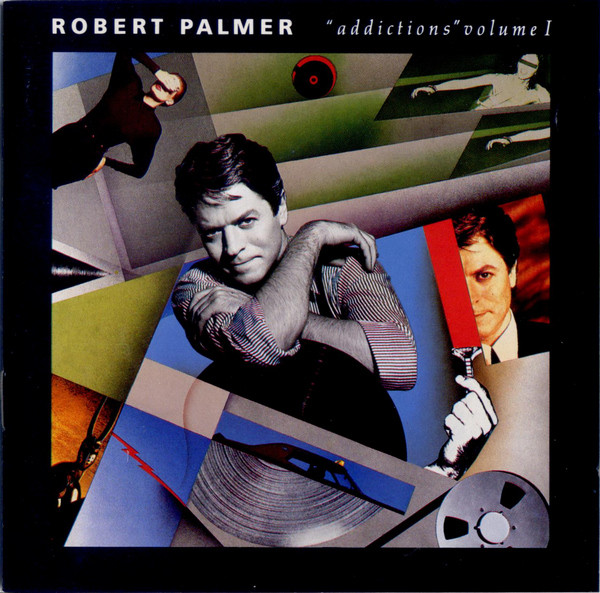
Songfacts.com says: The big, sexy hook in this song is the pause after Palmer sings, “Now I find her.” After some drumbeats, he comes back with “…simply irresistible.” The song was in the works for three years before Palmer came up with this part, making the song complete. “A little thing like that makes the difference between an idea and the complete song,” he wrote in his Addictions: Volume 1 liner notes, adding, “I like the manic military rhythm and the strong counter melody.”
This was yet another song that made it to our “cruising cassettes.” It was another great sing along song for us.
Simply Irresistible
My next song is one that I always thought was very creative. I Hate Myself for Loving You is such a great line. I relate to in in a few ways. As a young punk, I kinda fell for gals pretty hard. I let many of them treat me bad and I just kept hanging on with them. I always felt that I would just keep on loving them through it all. Yeah, I was an idiot. Today, that title makes me smile and makes me think of young Keith, who just wanted to make someone happy.
Thanks to Songfacts, I learned that that wasn’t originally the title: Joan Jett’s producer Kenny Laguna told us that Joan came up with the guitar riff for this song and wrote it as “I Hate Myself Because I Can’t Get Laid.” She took it to the writer/producer Desmond Child, who thought the title would never fly and convinced Joan to change it to something with “Love” in the title. Child, who got a co-writing credit on the song.
I Hate Myself For Loving You
The next song is the only country song on my list. I am guessing that I never really heard this when it was released, and became familiar with it a year or so after when I had my first stint at a country station.
I was familiar with the Oak Ridge Boys, of course. I mean, who wasn’t? Elvira was all over the radio when it was out. They guys had great harmonies and when I first heard Gonna Take a Lot of River, that is what stood out to me. This would have been sometime in 1991, when my girlfriend had broken up with me.
That being said, the lyrics now really hit home. I spent a lot of time at the beach and on the pier watching the waves during that time. So the lines “Because my baby’s long gone and nothings going my way. I’m gonna let this muddy water just wash away my blues.” resonated with me.
Today, when I hear it I just love listening to the harmonies and fumble every time I try to say, “Monongahela.”
Gonna Take a Lot of River
The variety of songs continues …
1988 brought us the only acapella song to go to number one in the United States. It is the second song from the Cocktail soundtrack. Don’t Worry, Be Happy by Bobby McFerrin was unlike anything on the radio at the time. Bobby recorded it using only his body to make all the sounds. The simple message and unusual sound made it a surprise hit.
The inspiration for the song came from a poster that Bobby saw featuring the Indian guru Meher Baba. It simply said, “Don’t Worry, Be Happy.” Bobby says that when he saw it he thought it was “a pretty neat philosophy in four words.” If I had a dollar for every time I heard someone say, Don’t Worry, Be Happy in 1988 alone, I’d be financially set for life.
The video was a silly one and a received lots of airplay on MTV. It featured Robin Williams and the lesser-known comedian Bill Irwin (who plays Mr. Noodle on Sesame Street). It is interesting to note that the video is a bit shorter than the single.
I always think of my best friend, Jeff, when I hear this one. He would always say the line, “I’ll give you my phone number, when you worry, call me, I’ll make you happy.” We found that line hilarious for some reason.
Don’t Worry, Be Happy
The next song was something I heard while cruising with my girlfriend. I’m sure we were listening to that Love Song show (Pillow Talk). It grabbed me from the intro. It was a smooth groove that reminded me of some old Atlantic or Stax soul songs. I was surprised to learn it was Glenn Frey.
Glenn’s Soul Searching album was his third solo album. I picked up the album because of the song True Love. My feelings about the song were justified when I read the liner notes. Frey wrote of the song “For those of you who have my previous albums, I apologize. I just can’t shake my obsession with this Al Green-Memphis thing. Like Wilson Pickett says, ‘Don’t fight it’.” Cash Box magazine even called the song: “a classic R&B tune replete with hornbreaks and soul-tinged arrangement and production.”
My favorite part of the song is the fake ending. After a second or two, the drum kicks back in and the sax wails away at a solo. Love this song. I wish the video would have started with the song instead of the cheesy acting by the actors … LOL
True Love
Who would have thought that Tom Jones would have a career boost in 1988?! Tom enjoyed great success in the mid 60’s and the 1970’s. He never really stopped making records and was always on tour. In the early 1980s, Jones started to record country music. From 1980 to 1986, he had nine songs in the US country top 40, yet failed to crack the top 100 in the UK or the Billboard Hot 100.
Prince had recorded Kiss in 1986. The song was a big hit and continues to be played in a regular rotation on Adult Contemporary stations all over the country. I know that many will not agree with me when I say that Prince’s version sounds weak compared to the Tom Jones/Art of Noise version. Tom commands the song and I cannot love it more!
According to Songfacts, after his country songs, he “made a left-field decision to cover this song, and in doing so revived his career. He told the Observer Music Monthly December 2008 how this came about: “If I hear a song I like I’ll do it in the show, so when I heard this I sang it (Kiss) in an R&B style. Then I was due to go on Jonathan Ross’s program in 1987 to perform the ballad ‘A Boy From Nowhere,’ and he wanted something upbeat too. My philosophy has always been: when in doubt, do ‘Great Balls of Fire.’ But Jonathan asked if I had anything new. Art of Noise were watching and they asked if I’d do a version with them. When they sent me the finished version I thought: ‘If this isn’t a hit, I’ll bloody well pack it all in.’ It was a busting hit.”
Tom tells a great story about Prince. When he met Prince and thanked him for the song, but didn’t ask what his thought of his version, as he wasn’t sure he would like the answer. “I saw a movie once that Bette Midler did called The Rose,” Jones said in a Songfacts interview. “She goes to see Harry Dean Stanton, a country singer, because she’d recorded one of his songs. She says she’s a big fan of his, and just before she walks out the door he says, ‘Could I say one thing to you? Don’t you ever record one of my songs again. ‘That hit home. I thought, s–t, I’m never going to ask a songwriter what he or she thinks of my version. I’ll leave that to them. That always sticks in my mind. So I just thanked him for writing it.”
Fun fact: Prince and Tom Jones were both born on the same day, the 7th of June (Prince in 1958, Jones in 1940)
Kiss
I am sure that I have talked about the next song before. I am also sure that I talked about the album before. It was truly a monumental event!
From Songfacts: Handle With Care was the first single from The Traveling Wilburys, a supergroup created by George Harrison and Jeff Lynne. Initially an informal grouping with Roy Orbison and Tom Petty, they got together at Bob Dylan’s Santa Monica, California, studio to quickly record an additional track as a B-side for the single release of Harrison’s song “This Is Love.” “Handle With Care” was the song they came up with, which Harrison and his record company immediately realized was too good to be released as merely a B-side. The five superstars decided to form a band and make an entire album, recording nine more songs at Dave Stewart’s (of Eurythmics) house in Los Angeles in a 10-day window when they were all available.
This was the only video that included Roy Orbison. A short time after the album was released, he passed away of a heart attack. I was working at the radio station the morning that news of his passing came across the news wire. I will never forget that.
Handle With Care
When I was DJing parties and weddings, I would often find out about new dance songs from people who made requests. Many of the songs were line dances like the Cupid Shuffle or Cha Cha Slide. Over the years, I was introduced to The Biker Shuffle, The Turbo Hustle, The Dougie and many others that way. I was always surprised at how they would fill the dance floor.
I remember someone asking for a song called Da Butt and I laughed. It was from a Spike Lee movie, but I had never heard of it. That week, I stopped by a DJ supply store and there on one of the many compilation CD’s they made was Da Butt by a group called EU. I bought it, took it home and gave it a listen.
It certainly had a funkiness to it and I could see how this might be something that people could dance to. It didn’t take long to find out because I had a wedding the following weekend. Once I started the song, the crowd screamed and got on the dance floor. Before I knew it, everyone was shaking their rear end. I would use this song a lot over the years.
I always think of one of my college instructors when I hear this because I DJ’d a birthday party for one of her kids and SHE was the one who asked me to play it.
I would often get out on the dance floor with these poster board signs I had made for my gigs. I had one that said “Oh-We-Oh. Whoa-Oh” and I would hold it up for audience participation during that part of the song. While it is not the most family friendly song, it did give me a chance to have some fun at a lot of DJ gigs.
Da Butt
I couldn’t let this year pass without touching on one of the big controversies of the year. In June of 1988, Gail Brewer-Giorgio released a book called “Is Elvis Alive?” Along with the book, there was a cassette tape with alleged phone conversations that Elvis had with someone long after he was supposed to have died.
This played right into the rumor in the music industry was that Elvis had faked his death. In the years following his death, there were many sightings of him (including my home state of Michigan – at a Kalamazoo Burger King), and in late 1988 record label LS Records released “Spelling on the Stone” to capitalize on the popularity of the phenomenon. According to LS Records owner Lee Stoller, who produced the song, his daughter Tammy received the recording in August 1988 from an anonymous man who arrived at the label’s offices in a limousine. After obtaining distribution rights, LS Records released the song on radio by the end of 1988, with the single’s release not crediting an artist. The song’s title refers to the fact that Presley’s middle name, Aron, is misspelled as “Aaron” on his tombstone, which was a common argument against his death at the time. The song features an uncredited vocalist with a delivery similar to Presley’s; it tells a first-person narrative, purportedly from his perspective, to suggest that he had faked his death.
Some people claim that the impersonator is actually a guy named Dan Willis, who recorded at LS Records. Others think it really is Elvis. I say Balderdash …
Bonus Song: Spelling On the Stone
1988 had so many great songs. There have been times I wonder if I should pick 15 instead of 10. I know that in future years, I will struggle to pick 10, so I won’t. What one of your favorite 1988 hits did I miss? Mention it in the comments.
Next week we move to 1989. The list isn’t as all over the place like this one and includes some great songs. Join me next week and we’ll give them a listen….
Welcome back to The Music of My Life, where I feature ten songs from each year of my life. In most cases, the ten songs I choose will be ones I like personally (unless I explain otherwise). The songs will be selected from Billboard’s Year-end Hot 100 Chart, Acclaimed Music, and will all be released in the featured year.
I turned sweet sixteen in 1986. MTV was 5 years old and music videos were becoming more and more iconic. To make that point, we kick off my list with a video that is often listed as one of the best of the 1980’s.
Robert Palmer released Addicted to Love in January of 1986. It was accompanied by a video where he is singing in front of a “band” of beautiful women who look exactly alike. They wear lots of makeup and identical outfits as they pretend to play the instruments.
According to songfacts: the funny thing about the video is that the models posing as a band were selected precisely because they did NOT know how to play the instruments. As a result, each girl is keeping her own time and moving to a different beat. The video is constantly parodied, including in a Pepsi commercial with Britney Spears.
You might say the song came to Palmer in a dream. It all started with a guitar riff that came to him in a dream one night. He told Q magazine in 1988, “That noisy riff woke me up. I went downstairs, got out the tape recorder, then went back to bed. Next morning, I thought, Phew, caught one there!”
From the “What Might Have Been” file: Palmer wanted this song to be a duet with Chaka Khan, and he almost got his wish. He recorded it with her, but Chaka’s label, Warner Brothers Records, would not allow her voice to be used on the record, so Palmer had to erase her part and re-record her high notes before releasing it.
If you’re going to be addicted to something, love is a good thing, wouldn’t you say?
Addicted to Love
Next, we have a song whose video was like nothing that had been done before. Depending on the source, some say it was the 4th most played video on MTV. The video is so fun to watch, you may actually forget that the song is full of sexual innuendos.
Sledgehammer was a BIG number one song for Peter Gabriel. It was his first solo number one. It actually bumped his old band, Genesis, out of the number one spot.
The song was influenced by the ’60s soul music Gabriel listened to as a teenager, in particular Otis Redding, who Peter saw perform at the Ram Jam club in London in 1967. The horn section was typical of this sound. As a matter of fact, the horn section that he used was the legendary Memphis Horns, who played on several hits from Stax Records.
The wildly innovative video was directed by Stephen R. Johnson and featured stop-motion claymation techniques. It swept the MTV video music awards in 1987, and is considered a major breakthrough. It was a bit hard for Gabriel, though. He once remembered how he spent 16 hours lying beneath a heavy sheet of glass for the video, while each frame was shot, one after the other.
I’ve always felt that this song had at least some influence in the blues. It just sounds like a great blues song to me.
Sledgehammer
Songfacts says that this song has a lot of haters and has appeared on various “worst of” lists over the years. An example: it was listed #1 on VH1’s 40 Most Awesomely Bad Metal Songs. As a Michigan guy, I can tell you that they used this song as the Detroit Pistons theme song for years. Heck, they use this song at all kinds of sporting events.
Europe’s The Final Countdown is like an anthem. The iconic keyboard riff was composed by lead singer Joey Tempest five years before the song was recorded. The band’s keyboard player Mic Michaeli had lent him the instrument.
Despite writing the song, Tempest still cannot believe the success. He said, “It was quite a surprise that the song ‘The Final Countdown’ became such a big hit because it was written for the band, it was written for our concert, it was written to be the opening song in our concert. It was almost six-minutes long, it was never intended to be a short pop hit or anything, it was very much a surprise and its been used for all kinds of events, anything from Formula 1 to boxing. It’s been used a lot.”
I liked this song before Arrested Development aired on Fox, but came to love it even more because of the way they used it on the show. Will Arnett is a magician on the show and they often used the song as background music as he performed his “illusions.” The song only made a very funny scene, even funnier for me.
The Final Countdown
The next pick is not quite a duet, but it brought back a legendary voice and put her back in the spotlight. It almost didn’t happen, but Eddie Money stepped in and made it happen.
My favorite track on Eddie Money’s Can’t Hold Back album is Take Me Home Tonight. The song is based on The Ronettes’ 1963 hit “Be My Baby,” and features their lead singer, Ronnie Spector, on the chorus performing her famous line, “Be my little baby.”
At first, the song was going to be a duet with Martha Davis, lead singer of The Motels. Eddie, however, wanted “the real thing” (Ronnie) on the song, so he called her to ask, telling her, “This is a tribute to you. The song is all about you.” According to Spector, she got on board as soon as she heard the lyric, “Listen honey, just like Ronnie sang… be my little baby.”
“When they said that, I was sold,” she told Entertainment Weekly. Spector says Money was very excited when she showed up to record it. “He was a crazy person – freaking out in the studio, going, ‘I’ve got the real Ronnie Spector singing ‘Be My Baby’ on my record!,'” she said.
This cracks me up because I can see Eddie going crazy. He was a bundle of energy. Every time I interviewed him on the radio, it was hard to get a word in because he would just chat away with that “Eddie Money” energy!
Take Me Home Tonight
It must have been the summer of 1987 when our band took a trip to Cedar Point. I am not a ride person, so I hung out with guys who also didn’t ride them. As we walked the streets of the Point, we saw a “You Be The Star” booth. I suppose you would call it an early form of Karaoke.
There was a book that listed a bunch of songs that they had a music track from. They ushered you into this little recording booth with a microphone and headphones. I don’t remember if you got to rehearse the song first, but I thought that was the case. At the end of the session, they played your song on the speakers for all to hear and you got a cassette of the tune to take home. It cost a pretty penny to do and the music tracks were very cheap sounding.
I had some money and made a tape of Mack the Knife for my grandma (which was awful). I sounded so bad on it. Then, me and my three friends chose Hip To Be Square. I had heard the song before, but didn’t know it well enough to sing the lead. My buddy, Steve knew it and sang it like he had a record deal! Chris and I were satisfied enough to be the “Here, there and everywhere” guys.
The music video was directed by the team of Kevin Godley and Lol Creme, who made some of the most innovative videos of the ’80s. They got a distinctive look by using a medical camera – the kind doctors use to see inside the human body. They had the band perform the song a few times a few feet away from the camera, and did the heavy lifting in post production – the band loved it because it was so easy for them. The resulting video contained angles previously unseen on MTV, including one from the point of view of the drumsticks. It was nominated for Best Experimental Video at the 1987 Video Music Awards.
Hip To Be Square
The next pick is one that didn’t mean much to me in 1986, but two years later it sure did. I remember early in my senior year receiving a ballot in which I was to vote on our class song. Honestly, I don’t remember what songs we were picking from, but I do recall some of them being not very “class song-like.”
Our class chose Time to Remember by Billy Joel. It was the third single from his The Bridge album. The chorus is about looking back on the good times with appreciation and gratitude, making it a perfect song for proms, graduations, and just about any occasion where memories are shared:
This is the time to remember ‘Cause it will not last forever These are the days to hold on to ‘Cause we won’t, although we’ll want to
Our teachers told us that the high school years would fly by. We never really felt that, especially during some boring lecture. Of course, the senior years goes by the quickest. Those lyrics should have been posted somewhere for every one to see, because by the time I heard them, and the meaning sunk in, it was graduation day.
I’m reminded of a quote from Ed Helms’ character Andy on the final episode of NBC’s The Office:
“I wish there was a way to know you’re in the good old days before you’ve actually left them.”
I don’t have to tell you, especially if you are a regular reader, that those days are definitely a time I remember, and remember them fondly!
Time To Remember
The group Cameo was formed in 1974, however, it wasn’t until 12 years later that they had their first Top 40 Hit. Word Up was the title track from their 13th album! The song was written by band members Larry Blackmon and Tomi Jenkins.
“Word Up” is a saying that was popular in New York and other urban areas in the US that acted as an affirmation of what was said, kind of a hipper “you bet.” Blackmon said this about the song:
“It just sounded good, and it was before its time. You can play “Word Up” anyplace anywhere, and someone is going to be grooving and bobbing their head. Our sound was unique, as well. I haven’t heard another one like it, and we probably won’t hear another one like it in the future. It was that significant for us.“
This was one of those songs that everyone at school seemed to be singing as they walked down the hall to class. We all seemed to know the words.
It got a lot of radio airplay and MTV played the video a lot. I’ve seen the video many times before, but I had forgotten about a neat cameo. (LOL – a cameo in a Cameo video!) Watch for Star Trek: The Next Generation’s LeVar Burton as a policeman.
Word Up
I am almost 100% against remaking movies. I feel the same way about television shows. Music on the other hand is a bit different. When an artist covers a song, they bring to it their own interpretation of the song. Think of all the different versions of an old standard like “Georgia on My Mind.” Off the top of my head I can throw out 5-8 versions that I absolutely love.
I remember the first time I heard the Art of Noise doing Peter Gunn. I was in the car and I thought, “What in the world is this?” The more I listened the more intrigued I was. I was impressed with how close the guitar sounded like Duane Eddy. Of course, I was even more surprised to hear that it WAS Eddy!
It didn’t do much on the charts, but the sound was so different and unique that I had to go pick up the tune. The video was a private eye parody with comedian Rik Mayall as the detective. The song was a Grammy winner, as it took home the award for Best Rock Instrumental Performance.
Peter Gunn
I mentioned that Sledgehammer had a bit of a blues sound to it earlier, and so does this one. Take a little blues and mix in some rock and you get some good stuff from The Fabulous Thunderbirds.
The title track from their Tuff Enuff album was a top 10 record for the group in 1986. They are often considered to be a one hit wonder band, but their song Wrap It Up was a minor hit. Kim Wilson wrote it and sings lead on the song.
The song is about a guy who will do pretty much anything for his gal, including wrestling with a lion or a grizzly bear, swimming the sea, put out a fire, and fight Ali. He’d even walk ten miles on his hands and knees, which really isn’t walking I suppose, but walk sounds better than crawl.
There is so much I love about this song, the syncopated guitar lick, the lyrics and the attitude. It made for a perfect sing along driving song.
Tuff Enuff
My last pick is another cover song, and this one I think tops the original and most of the other versions. That is saying a lot, because I am not the biggest Beach Boys fan.
California Dreamin’ was a hit for the Mamas and the Papas. It was written by John and Michelle Phillips. Barry McGuire (who had a hit with Eve of Destruction in 1965) actually recorded it first with the Mamas and Papas singing backup. They, of course, recorded their own version of the song soon after.
The Beach Boys recorded it for their Greatest Hits album, Made in U.S.A. The song was produced by the great Terry Melcher and had Roger McGuinn of the Byrds playing the 12-string guitar on it. Naturally, there was a video which featured McGuinn along with every living member of The Beach Boys and the “California Dreamin'” songwriters, John and Michelle Phillips. This primed the group for a big comeback two years later with their #1 hit “Kokomo.”
There are so many things about this song that I just love. That opening 12-string is fantastic. With the opening line, you get it and an echo of it which I thought sounded cool. Even cooler, after the line “and the sky is grey” there is that rumble of thunder that makes you feel the chill of the wind and the anticipation of a storm. Then there is that fantastic harmony! It is perfect for this song. Finally, their version opts for a jamming sax solo and loses the wimpy flute solo used in the Mamas and Papas version. That sax aids in conveying a “haunted sounding ending” as the song begins to fade away.
The song never hit the Top 40 on the Hot 100 chart, but on the Adult Contemporary charts it went to number 8.
California Dreamin‘
Next week, we’ll take a look at 1987. I’ll feature two fantastic duets, we’ll shake, rock, and roll, and hear about 6 beautiful ladies … er, 5.
What was your favorite from 1986? Tell Me about it in the comments. See you next time….
Welcome back to The Music of My Life, where I feature ten songs from each year of my life. In most cases, the ten songs I choose will be ones I like personally (unless I explain otherwise). The songs will be selected from Billboard’s Year-end Hot 100 Chart, Acclaimed Music, and will all be released in the featured year. In the final year of the 70’s, I turned 9 years old.
1979 is a year where I was surprised to find many of the songs that wound up on my mom’s ballad 8-track tape. I could easily have posted all of those songs in this blog, but then you would fall asleep listening to them, just like my brother and I did on our way up north. Instead, I will list them at the end of this blog, and if you wish, you can search them on YouTube.
So let’s begin with the first of two “out of place” or “odd” songs….
The first song is part of the soundtrack of my summer of 1979. The song seemed to be playing in a very hot rotation and was always on the radio when we were up at my grandparents place.
Frank Mills wrote and recorded “Music Box Dancer” in 1974, but it did not become a Canadian single until December 1978. By Christmas of that year, it was in the top ten of many European and Asian pop music charts. It was released as a single in the United States in January 1979 and got up to number three on the Billboard Hot 100 Chart.
In 1974, Mills released an album that featured the song, but it was not initially a hit. When he re-signed with Polydor Records Canada in 1978, the label released a new song as a single, with “Music Box Dancer” on the B-side. Because of a mistake, a single of “Music Box Dancer” found its way into the hands of a pop station in Ottawa – the single was only supposed to go out to adult contemporary stations. The station’s program director listened to the A-side and wondered why it was sent to him. He played the B-side and liked what he heard anyway and began airing it in rotation. Next thing you know, the album’s gone gold in Canada.
Music Box Dancer
The next song makes the list because it was on the iPod of my ex. My oldest son used to take it and listen to it all the time and I can still hear him in his toddler voice singing the chorus of this one.
Hot Stuff is a single that was on Donna Summer’s 7th studio album, Bad Girls. The song is unique in that while many consider it disco, many others consider it rock. As a matter of fact, when the Best Female Rock Vocal Performance category was added at the Grammy Awards in 1980, Donna Summer won for “Hot Stuff.”
The song has ties to other music as well. It was written by Pete Bellotte, Harold Faltermeyer and Keith Forsey. Bellotte co-wrote a few other hits for Summer, including “Love To Love You Baby” and ” Heaven Knows.” Faltermeyer had a solo hit in 1984 with the theme from Beverly Hills Cop, “Axel F” and Forsey’s credits include “Don’t You Forget About Me” for Simple Minds and “Shakedown” for Bob Seger.
This was Summer’s second #1 hit on the Hot 100; her first was her disco cover of “MacArthur Park.”
Hot Stuff
Here is a song that is missing one of the things the band is known for. Don’t Bring Me Down was the first ELO song that did not use strings. According to Songfacts, after recording it, they fired their string section, leaving four members in the band.
ELO leader Jeff Lynne wrote this song late in the sessions for the “Discovery” album. He came up with the track by looping the drums from a song he recorded earlier in the session, then coming up with more music on the piano. The words came last, as Lynne put together some lyrics about a girl who thinks she’s too good for the guy she’s with.
Here’s a fun fact: Wanna know why Jeff Lynne repeatedly sings the word “groose” after the song’s title line? Apparently it was a made-up place-keeper word to fill a gap in the vocals when he was improvising the lyrics. When the German engineer Reinhold Mack heard the ELO frontman’s demo, he asked Lynne how he knew “gruss” means “greetings” in his country’s language. Upon learning the German meaning, Lynne decided to leave it in.
Don’t Bring Me Down
“Hey Ringo, play something hot!”
Those are the words that Rodney Dangerfield’s character in Caddyshack says to the band at the snobbish country club as he throws money at them. As the money falls, the band plays the opening 5 note stings from Boogie Wonderland from Earth Wind and Fire (With the Emotions). I’ve always loved that song because of the movie connection.
The song, while it is upbeat and happy sounding, it really isn’t. Songfacts calls it one of the more complex and misinterpreted songs of the disco era. Written by Jon Lind and Allee Willis, it was inspired by the movie Looking For Mr. Goodbar, which stars Diane Keaton as a lost soul who goes to clubs every night to dance away her misery.
Willis says, “When I saw Mr. Goodbar, I got kind of fascinated with people who did go to clubs every night, whose life was kind of falling apart, but they lived for the night life, though it didn’t seem to be advancing them as humans in the end. So if you really look at the lyrics of ‘Boogie Wonderland,’ unlike ‘September,’ it’s not a happy song at all. It’s really about someone on the brink of self destruction who goes to these clubs to try and find more, but is at least aware of the fact that if there’s something like true love, that is something that could kind of drag them out of the abyss. So ‘Boogie Wonderland’ for us was this state of mind that you entered when you were around music and when you danced, but hopefully it was an aware enough state of mind that you would want to feel as good during the day as you did at night.”
Boogie Wonderland
The second “out of place” or “odd” song is also a movie song. It may seem like a very simple kid song, but if you listen to what the songwriter says about it, the song is deeper than you can imagine.
This was written by songwriters Paul Williams and Kenny Ascher for The Muppet Movie, which came out in 1979. In the film, it is sung by Kermit The Frog as the Muppets set out to find adventure. In a interview Williams said: “Rainbow Connection was the first number in The Muppet Movie. It’s the one that establishes the lead character. We find Kermit sitting in the middle of the swamp. Kenny Ascher and I sat down to write these songs, and we thought… Kermit, he’s like ‘every frog.’ He’s the Jimmy Stewart of frogs. So how do we show that he’s a thinking frog, and that he has an introspective soul, and all that good stuff? We looked at his environment, and his environment is water and air – and light. And it just seemed like it would be a place where he would see a rainbow. But we also wanted to show that he would be on this spiritual path, examining life, and the meaning of life.
It tells you that he’s been exposed to culture: ‘Why are there so many songs about rainbows?’ Which means, obviously, he’s heard a lot of songs. This is a frog that’s been exposed to culture, whether it’s movies, or records, or whatever. And I also like the fact that it starts out with the negative: ‘Rainbows are only illusions, rainbows have nothing to hide.’ So the song actually starts out as if he’s going to pooh-pooh the whole idea, and then it turns: ‘So we’ve been told, and some choose to believe it. I know they’re wrong, wait and see.’ And again, he doesn’t have the answer: ‘Someday we’ll find it.'”
Now, with that in mind, give this masterpiece a listen!
Rainbow Connection
Next is my “go-to” Karaoke song. I’ve always loved the line, “You had me down 21 to zip, the smile of Judas on your lip.” What a great line. Bad Case of Loving you was written by Moon Martin who released the original version on his 1978 album Shots From a Cold Nightmare. Martin is a singer/guitarist/songwriter with his band Southwind. When the group broke up in 1971, he took on studio work. He paired up with Linda Ronstadt, and played on her self-titled album. He nearly joined some of Ronstadt’s other backing musicians in a little band called the Eagles, but ended up a solo artist and signed a deal with Capitol Records.
Martin’s album got some good reviews but went nowhere on the charts. A song called “Hot Nite In Dallas” was chosen as a single, but “Bad Case Of Loving You” was only given limited release in Europe. Enter Robert Palmer. He heard the song when he was being driven to one of his shows by a rep from his label, who played it for him. Palmer included it in his set and got a great response, so he recorded it for his Secrets album.
Bad Case of Loving You (Doctor, Doctor)
In 1989, Palmer released a remix of this song for his Addictions: Volume 1 greatest hits album. “Looking back at the 1978 original the performance was there but someone was asleep at the mixing desk,” he wrote in the liner notes. “The original mix in comparison sounded like a band rehearsing in a garage and this sounds like the finished song.” I can’t listen to the original cut much anymore. The remix is SO MUCH better!
I LOVE good harmonies. This song kicks right off with a cold open and the amazing a cappella harmony of The Little River Band. Most of the band’s hits were written by founding members Graham Goble, Beeb Birtles or Glenn Shorrock, but “Lonesome Loser” was written by guitarist David Briggs, who joined in 1976 after the band’s second album.
The lyric uses a lot of gambling imagery to tell the story of the lonesome loser, who staked his heart and lost. His adversary is the “Queen of Hearts,” who will always win this game of love. The same year this song was released (1979), Dave Edmunds had a UK hit with a song called “Queen of Hearts” that used the same metaphor. That song, of course, became an American hit when Juice Newton covered it in 1981.
Lonesome Loser
Speaking of great harmonies and the Eagles, the next song features both. Heartache Tonight was written by Don Henley and Glenn Frey with Bob Seger and J.D. Souther. Songfacts says: When Frey was a 19-year-old in Detroit, Seger took him under his wing and got his music career started. Souther, who is sometimes considered an “Unofficial Eagle,” was the first person Frey met when he moved to Los Angeles in the late-’60s. J.D. Souther, told us how this song started: “Glenn Frey and I had been listening to Sam Cooke records at my house. So we were just walking around clapping our hands and snapping fingers and singing the verses to those songs. The melody sounds very much like those Sam Cooke shuffles. There’s not much to it. I mean, it’s really just two long verses. But it felt really good.”
Bob Seger’s contribution to this song was the chorus. JD Souther says, “We didn’t get to a chorus that we liked within the first few days, and I think Glenn was on the phone with Seger, and he said, ‘I wanna run something by you,’ and sang it to him, and Seger just came right in with the chorus, just sang it and it was so good. Glen called me and said, ‘Is four writers okay on this?’ And I said, ‘Sure, if it’s good.’ And he said, ‘Yeah, it’s great. Seger just sang this to me,’ and he sang it to me and I said, ‘That’s fantastic.'”
According to Seger, he was in the room with Glenn Frey when he came up with the chorus. He told Entertainment Weekly: “Glenn had the verse: ‘Somebody’s gonna hurt someone before the night is through.’ We hadn’t been sitting down for more that five minutes and I just blurted out, ‘There’s gonna be a heartache tonight!’ His eyes lit up huge.”
Heartache Tonight
The next song is one that I used to hear on the way home from elementary school. I had a buddy who got a ride home every day and his mom would often give me a lift, too. Keep in mind the ride home was 5 to 7 minutes tops, but it always seemed to be on the radio when we were in the car.
Freddie Mercury wrote Crazy Little Thing Called Love while Queen was recording The Game in Germany. He wrote it while taking a bubble bath in his room at the Munich Hilton. Peter Hince, the head of Queen’s road crew, recalled to Mojo magazine September 2009: “The idea for the song came to him while he was in the bath. He emerged, wrapped in a towel, I handed him the guitar and he worked out the chords there and then. Fred had this knack of knowing a great pop song.”
Freddie acknowledged that perhaps his limited talent on the guitar helped shape the song:
On stage, this was an important part of the show. Brian May often used three different guitars during the song: the first verse was played by Freddie alone with his guitar, then Brian joined with another Ovation Acoustic; before the third verse he had already switched to a Telecaster on which he performed the solo. During the singalong part (famous for its “ready Freddie” line) Brian again changed instruments to his homemade Red Special. From 1984 onwards Mercury replaced the acoustic with another Telecaster.
Crazy Little Thing Called Love
The final selection comes from a band who was formed on Valentines Day of 1977 in Detroit. That is what inspired their name – the Romantics.
Believe it or not, the band have only two US Top 40 hits, and “What I Like About You,” now their best-known song, isn’t one of them. ( Their two Top 40 hits were “Talking In Your Sleep” and “One In A Million”). It attracted little attention and was only a minor hit when first released in 1980 on their debut album. This song’s resurgence had a lot to do with MTV. The band made a simple performance video for the song that MTV put in rotation when they launched in 1981. It fit the criteria the network was looking for: American band, rock, catchy song, acceptable production quality. Since few American artists made videos at the time, MTV made do with lots of European imports when they started.
Since then the song has also become a fixture at sporting events, bars and nightclubs, and parties and celebrations of all kinds, and has taken its place as one of the most popular rock anthems of all time. It’s nice to wrap up the last year of the decade with an uptempo, fun song!
What I Like About You
I’m sure I have missed a few favorites, and the more I look ahead, the more I wonder if I need to expand to more than ten songs. I’ll tackle that issue if I have to later on.
Next week, we ring in a new decade – 1980! The 80’s sound certainly can be heard in some of these late 70’s songs and from here on out, the sound progresses quickly!
This blog is my entry for Dave over at A Sound Day’s “Turntable Talk.” Kudo’s to Dave for picking some fantastic topics, and at the same time letting us participants “run” with it. The following are the instructions we were given:
We were told we ” …don’t have to write literally about the question, but we’re looking for your thoughts on all things music video – how much did MTV change the music of the ’80s? Since there were already British acts making videos regularly in the 70s, do you think it would have taken off in a big way even without the American MTV influence? Did it kill careers… or make careers that shouldn’t have happened? Do you have favorite ones you still like to watch? Do you miss the days when MTV (or Much Music in Canada, or European equivalents) ran music videos instead of reality TV and old reruns? Really, approach it how you like, but I’m curious to get thoughts on the Video Revolution.“
My Conundrum
There have been many people who truly believe that video killed the radio star. As a child of the 70’s and 80’s, I lived through the beginnings of MTV. When I think about music videos, there are so many that I will forever associate with the songs. For example:
Take On Me – a-ha
Sledgehammer – Peter Gabriel
Rhythm Nation – Janet Jackson
Bad, Billie Jean, Beat It, Black or White, and of course, Thriller – Michael Jackson
Vogue – Madonna
Smells Like Teen Spirit – Nirvana
Buddy Holly – Weezer
Weapon of Choice – Fatboy Slim
Dire Straits – Money For Nothing
Legs – ZZ Top
Land of Confusion – Genesis
Hot For Teacher – Van Halen
Simply Irresistible – Robert Palmer
Girls Just Wanna Have Fun – Cyndi Lauper
Run DMC and Aerosmith – Walk This Way
California Girls – David Lee Roth
Got My Mind Set on You – George Harrison
Stuck With You – Huey Lewis and the News
Faith – George Michael
White Wedding – Billy Idol
Opposites Attract – Paula Abdul
The list could go on and on! Those are just the ones that I pulled off the top of my head (and I am probably forgetting some big ones)!
The more I thought about it, I kept coming back to “Video killed the radio star.” Perhaps that is the case (as some proclaim), but I can think of one artist who made videos and it got him mainstream attention.
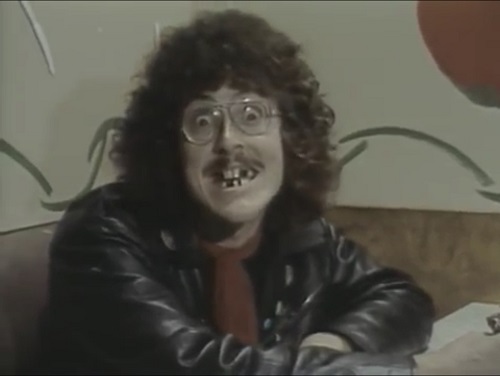
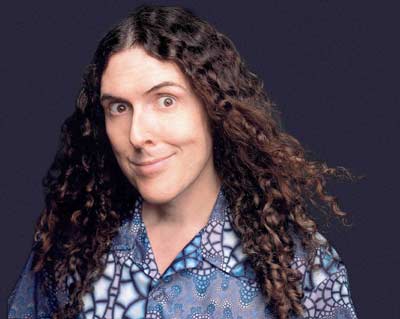
MTV Welcomes Weird Al Yankovic
According to Wikipedia, the discography of Mr. Yankovic consists of fourteen studio albums, nine compilation albums, eleven videos albums, two extended plays, two box sets, forty-six singles and fifty-four music videos.
Those fifty-four music videos helped to take Weird Al Yankovic to the mainstream world. Let’s face it, the only place you could hear him on the radio was on the Dr. Demento Show, which was often aired in the worst possible time slot because of the crazy content. When Al ventured into the video realm, more and more viewers wanted to see – and hear – more of him!
Parody songs have been around forever, and very rarely ever got radio play. Novelty records were big in the 50’s and 60’s, and there were a few here and there in the 70’s. When Al comes on the scene in 1983, he took it to a whole new level, using videos.
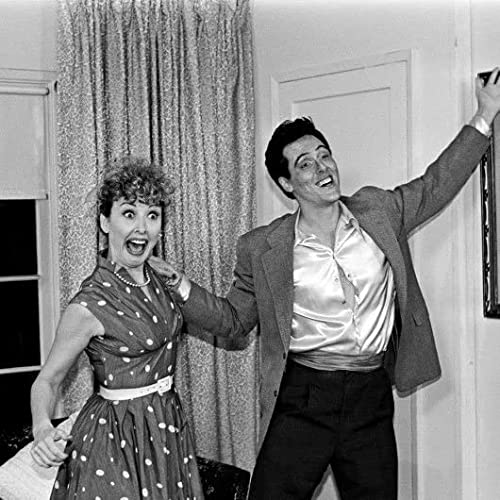
1983’s “Ricky” is credited as being his first video. It was a parody of Toni Basil’s “Micky.” It was a parody base on the TV show I Love Lucy. The video was shot in black and white and still looks great today.
From there, Al continued to use video to gain exposure on MTV. His next single was “I Love Rocky Road” which parodies Joan Jett’s “I Love Rock and Roll.” Instead of a greaser bar, it is set in … an ice cream parlor.
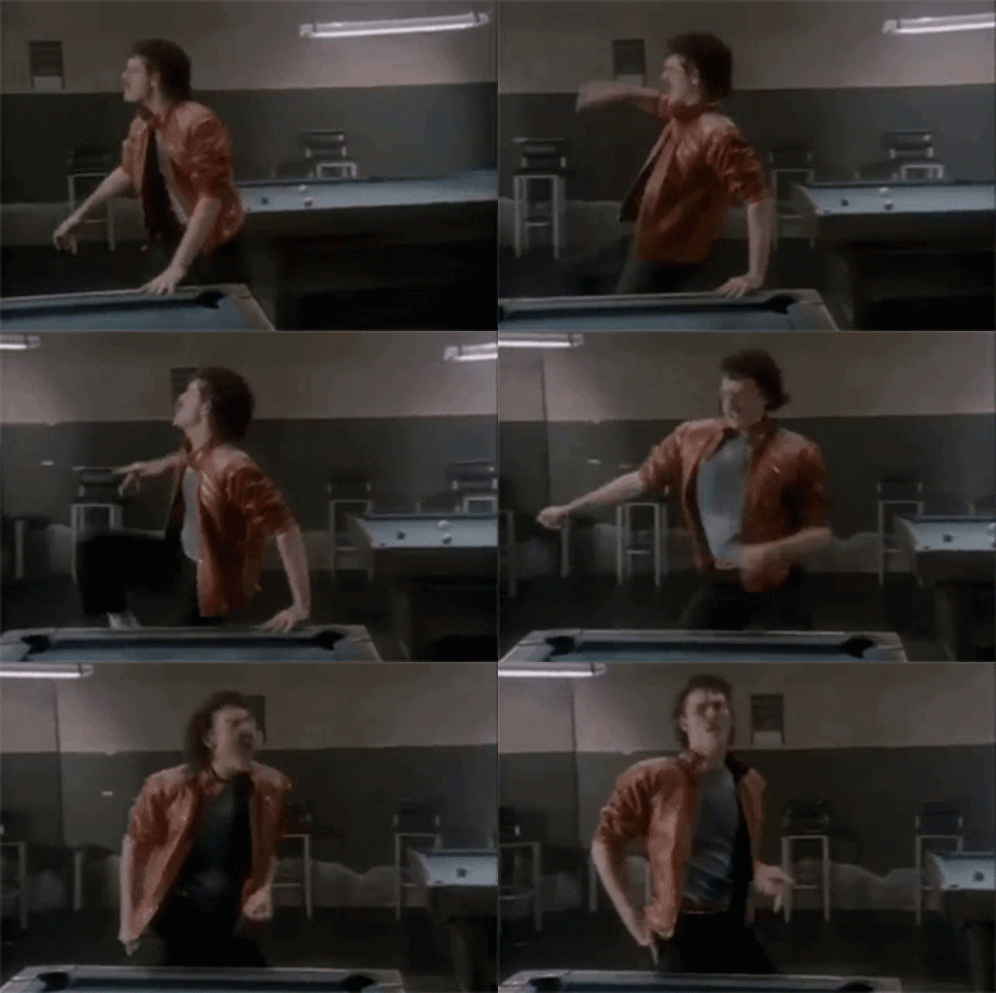
Al’s next video is really the one that really stands out as the one that moved him to a whole new level. Yes, he is a parody singer, but with the video for “Eat It” (a parody of Michael Jackson’s Beat It), not only is the song parodied, but so is the video. Al’s video is literally a shot for shot remake of Jackson’s. Throughout the video, instead of switchblades there are rubber chickens and kitchen utensils, and gags for almost everything in the Beat It video.
I can’t say whether or not the video is responsible for this, but the song won Al a Grammy Award for Best Comedy Recording in 1984. The video won for Best Male Performance at the 1984 American Video Awards!
From that point on, Al continued to make music videos for his singles. Art Fleming appeared in the “I Lost on Jeopardy” video, non-stop visual gags were plentiful in the “Like a Surgeon” video, and the James Brown “screams and shrieks” in “Living With a Hernia” were all more painful than soulful.
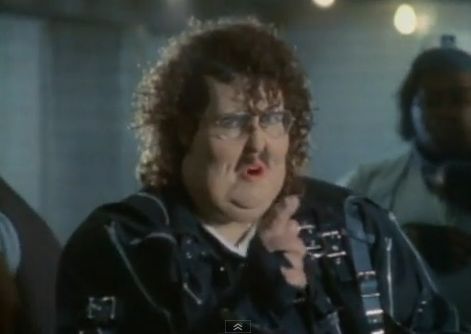
In 1988, Al once again parodied Michael Jackson. If I had to pick a “perfect” Weird Al parody video, it this would be one of two. Al won another Grammy Award for Best Concept Music Video for “Fat.” He even got permission from MJ to use the same set as the original video. Al’s makeup took three hours to apply every day and his fat suit weighed 40 pounds. Every time I hear the line, “Ding Dong, Yo!” I still crack up.
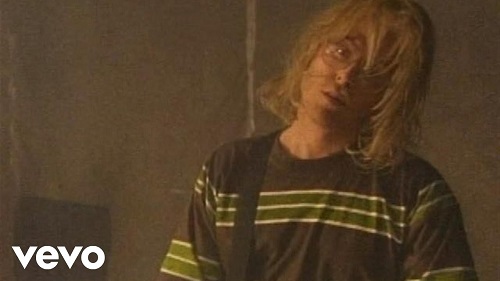
I mentioned that “Fat” is one of two “perfect” videos. The other would have to be the fantastic video for “Smells Like Nirvana” (a parody of Smells Like Teen Spirit). Al famously got permission for this parody from Kurt Cobain himself when he was performing on Saturday Night Live. In this Grammy-nominated video, Al satirizes Nirvana and the grunge movement, shooting on the same set as the original video and using the same actor who played the janitor (Rudy Larosa). Dick Van Patten has a cameo, which for whatever reason is extremely funny to me. Why Dick Van Patten??!! Someone said that Tony Hawk makes an appearance in the video, too. I’m not sure I know where.
Weird Al has certainly used music videos to his advantage. It takes a lot of creativity to write a good parody (I mean, come on, there are a lot of crap ones out there – just look on YouTube), but to take an already funny song and create a video that brings about even more humor, just enhances the song. I’ve said it before, and I will say it again, Weird Al is a musical genius.
There have been many other great videos that have followed. To name a few: Amish Paradise (featuring Florence Henderson), Headline News (featuring The People’s Court’s Doug Llewelyn), Gump (featuring Ruth Buzzi and Pat Boone), The Saga Begins (the fantastic Star Wars tribute), White and Nerdy (featuring Donny Osmond and Seth Green), and so many more.
Yes, video may have killed the radio star, but it certainly helped boost the career of Weird Al Yankovic.
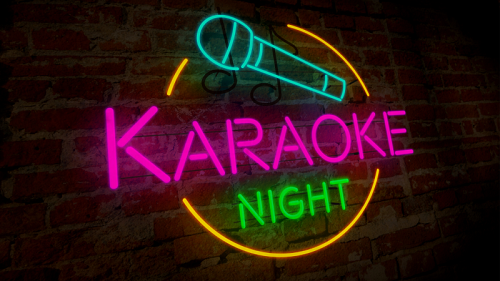
It has been some time since a “Daily Writing Prompt” moved me enough to use it as a blog idea. Today’s though, was definitely one I could use. The Prompt? “What is your ‘go to’ karaoke song?”
I have to admit, I have sung a lot of karaoke. I did this mainly when I was in my mid 20’s to early 30’s. My friends and I had a couple places that we’d go and sing at. Looking back at it, I have to laugh because they were all dive bars.
I started singing karaoke with my old morning show partner, who actually COULD sing. He had a great voice and often sang ballads from the Great American Song Book. It was always funny because you’d have these people up there singing Johnny Cash, The Rolling Stones, Queen, and Prince. Then he would get up and sing something from Robert Goulet!
At one point, between radio jobs, I actually hosted karaoke, which I thought would be fun, but it really wasn’t. It was then that I realized there were plenty of people who “thought” they could sing, but couldn’t. They come up to you with requests like, “Put some reverb on my voice” or “Pitch the song up or down” or “Give me more volume on my microphone” … It was crazy! These people are up there thinking their Shania Twain or John Lennon or something.
I have never claimed to be a good singer. I have a handful of songs that I can sing and sing them well. I know which songs my voice will never be able to handle. I stick with the ones I know I can do without embarrassing myself. In my repertoire were songs like: The Wonder of You (the Elvis version), Bad Bad Leroy Brown, Bad Case of Loving You (Robert Palmer), The Lady is a Tramp (Sinatra) , Mack The Knife (Bobby Darin), And I Love You So (lol – yes! The Perry Como song!), and That’s Amore (Gotta do some Dean Martin!).
If I had to pick the 3 karaoke songs that people would associate with me, they would be:
#3 – Tutti Fruiti by Little Richard
The reason for this is that back in the day, I used to change the lyrics to this. The lyrics were … well, not clean. People always laughed when I did this, however, today, I couldn’t do that any more. It’s just not who I am. I actually kind of cringe when I think of some of the lyrics I sang.
#2 Delilah – Tom Jones
I’m not going to lie, this was always a hard song to sing. Tom has such a great and powerful voice. The end of this song is tough. The night is fairly high – and you have to hold it for some time. That high and long note was nothing for my old morning show partner. He used to do this song a lot. I am not sure how or why I started singing it, but it became one I was always asked to sing.
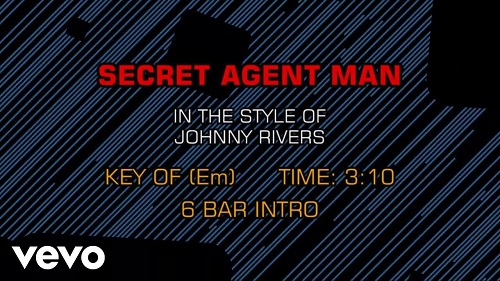
#1 – Secret Agent Man – Johnny Rivers
By far, one of my favorite songs to sing, and hence, my “go to” karaoke song. It was always a favorite of mine growing up. The Johnny Rivers single was recorded live (I think at the Whiskey A Go Go). I probably heard my dad play this hundreds of times on his guitar. It has such a great intro and awesome solo. I remember one time I brought a fedora and a trench coat to the place we were singing so I could wear them when I sang this. Yeah, I was quite the dork in my 20’s!
While I loved singing karaoke, eventually it got old. I felt like I was going out and wasting money on alcohol, and being forced to sing the same things every time. There were plenty of other songs I would have loved to try, but the people I was with always made me sing the ones they wanted to hear (“It’s my birthday! You HAVE to sing Bad Case of Loving You!” etc…) The karaoke “scene” just wasn’t were I wanted to be anymore.
If there was karaoke at a work party or back yard BBQ, would I get up and sing today? Yeah, probably, but I would leave the fedora at home!
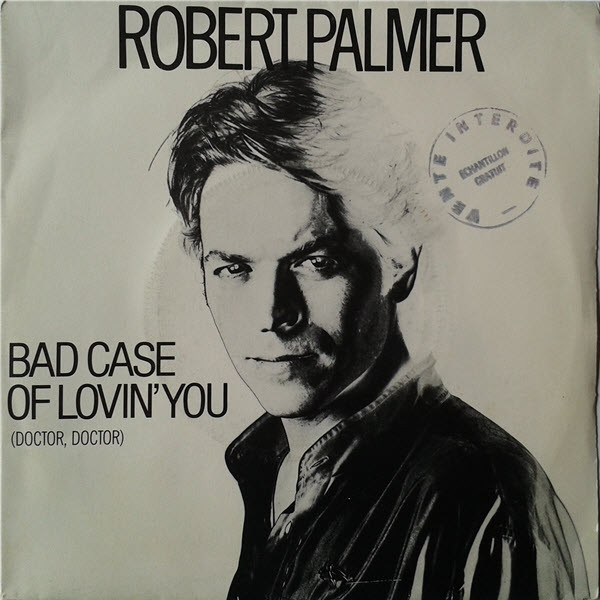
This has always been one of my favorite Robert Palmer songs. I remember hearing it on the radio in the late 70’s and I remember having the 45. As a radio/music guy, I am really ashamed to admit that I did not know that Robert Palmer’s version is NOT the original. As you can see by the artist credit above, the writer of the song was John Moon Martin.
Moon was a singer/songwriter who played guitar in a 60’s band called Southwind. When the band broke up in 1971, he became a studio musician. He played with Linda Ronstadt and almost became a member of the Eagles. He got a record deal with Capitol Records and released an album entitled Shots From a Cold Nightmare. Bad Case of Loving You was on the album and it was given a very small release in Europe. I will put a link to his original version at the end of this blog.
The story is that a record rep played Moon’s version of the song for Robert Palmer on the way to a show. Palmer liked it and began playing it at his shows. It was getting good reactions and so he recorded it and included it on his Secrets album. In September of 1979 (a year after Moon’s version was released), Bad Case of Loving You reached #14 on the US Hot 100 Chart.
In 1990, Palmer released a “greatest hits” compilation entitled “Addictions” Volume 1, in which he remixed some of his earlier hits.
I remember the first time I listened to “Bad Case” on this compilation. Immediately, I could tell it sounded more “full.” I started to read the liner notes. Despite an internet search, I was unable to find the actual liner notes, so pardon me while I paraphrase what I remember reading. Palmer said he never really felt like the song was “finished.” He added some heavier guitars and drums to the track and said that he felt like this version was more like the finished product.
I have come to like the remix version more than his original version, because I tend to agree with him. It sounds great! It sounds a bit more produced, and the original sounds weak in comparison. The one change that I absolutely love is right after the bridge of the song. There is a simple measure of just four bass drum beats before he starts the final verse. I just love it!
Here is the original Palmer version….
Here is the 1990 Remix …
Here is the Moon Martin version – recorded a year before Palmer’s original…
“Bad Case Of Loving You (Doctor, Doctor)”
A hot summer night fell like a net
I’ve gotta find my baby yet
I need you to soothe my head
Turn my blue heart to red
Doctor Doctor, gimme the news I got a
Bad case of lovin’ you
No pill’s gonna cure my ill I’ve got a
Bad case of lovin’ you
A pretty face don’t make no pretty heart
I learned that buddy from the start
You think I’m cute, a little bit shy
Mama, I ain’t that kind of guy
Doctor Doctor, gimme the news I got a
Bad case of lovin’ you
No pill’s gonna cure my ill I got a
Bad case of lovin’ you
I know you like it, you like it on top
Tell me mama, are you gonna stop?
You had me down twenty-one to zip
Smile of Judas on your lip
Shake my fist, knock on wood
I’ve got it bad, and I got it good
Doctor Doctor, gimme the news I’ve got a
Bad case of lovin’ you
No pill’s gonna cure my ill I got a
Bad case of lovin’ you
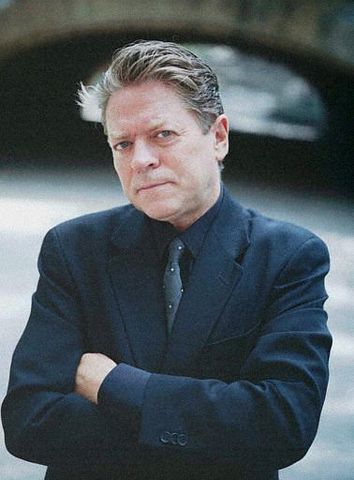
Robert Palmer died of a heart attack in September of 2003.




 Various Ramblings of a Nostalgic Italian