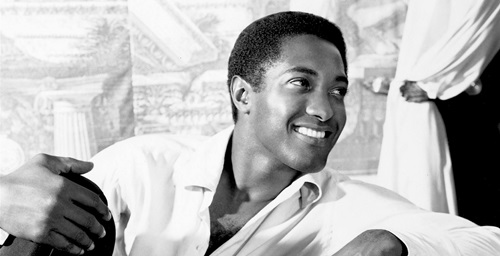
Sam Cooke recorded the song “You Send Me” in June of 1957. It was released in September of that year and would go all the way to #1. The song topped the charts for the first time on this day in 1957. Not bad for a debut single.
Cooke wrote “You Send Me” but gave the writing credit to his younger brother L.C. (who used the original family spelling “Cook”) because he did not want his own publisher to profit from the song. The B-side of the single was a cover of “Summertime.” That was supposed to be the A-side, but radio DJs favored You Send Me and played it instead.
The song almost didn’t get released. Songfacts.com says: Cooke was signed to Specialty Records, which was a gospel label. Cooke’s producer, Bumps Blackwell, brought this to Art Rupe, who owned the label. Rupe objected to the use of the choir on this track and was afraid it was too secular and would alienate the label’s gospel fans. He offered Cooke a release from his contract in exchange for outstanding royalties. The song was passed to the Keen label where it sold over 2 million copies.
Fun Fact: Aretha Franklin recorded a version of the song and it was the B-side to her hit “Think” in 1968.
The song was named as one of the 500 most important rock and roll songs by the Rock and Roll Hall of Fame. In 1998, it was inducted into the Grammy Hall of Fame.
Let’s give a listen to Sam’s only #1 song on the Hot 100:
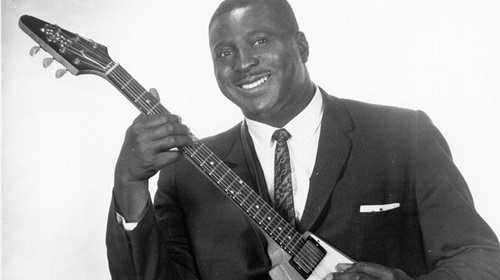
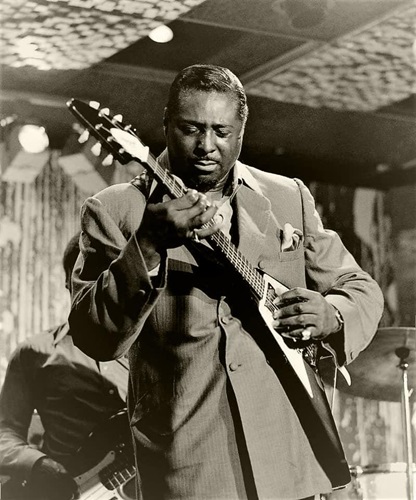
I heard this song while driving into work this week. When I am not listening to a book on tape or a sermon from a pastor friend, I am surfing through the channels on Sirius XM. Albert King’s tune, Born Under a Bad Sign was playing on BB King’s Bluesville. I had forgotten how much I liked it.
The song is considered a blues standard. Albert recorded it in 1967. In his book, Deep Blues, Robert Palmer said “the song also had strong crossover appeal to the rock audience with its synchronous bass and guitar lines and topical astrology reference.” It was recorded at Stax Records.
The song was written by Stax singer William Bell and Booker T. Jones. Bell said, “We needed a blues song for Albert King … I had this idea in the back of my mind that I was gonna do myself. Astrology and all that stuff was pretty big then. I got this idea that [it] might work.” Booker’s arrangement was unique in that it was dominated by an R&B-style bass/rhythm guitar line, which Bell claimed that he came up with “while fooling around on the guitar.”
The song was backed by Booker T and the MG’s and the Memphis Horns. Albert would jump in with vocals and guitar fills. Released in May of 1967, it would reach number 49 on the Billboard Top Selling R&B Singles chart.
Describing the song in an interview, Jones said, “At that time, my writing partner was William Bell. He came over to my house the night before the session. William wrote the words and I wrote the music in my den that night. That was one of my greatest moments in the studio as far as being thrilled with a piece of music. The feeling of it, it’s the real blues done by the real people. It was Albert King from East St. Louis, the left-handed guitar player who was just one of a kind and so electric and so intense and so serious about his music. He just lost himself in the music. He’s such a one of a kind character. I was there in the middle of it and it was exhilarating.”
The song is included on The Rock and Roll Hall of Fame’s list “500 Songs That Shaped Rock and Roll.” Rightfully so.
It is time once again for a new Turntable Talk topic from Dave at A Sound Day. Each month he offers up a musical topic for us to write about. This month we are Going out on a High Note. Dave’s instructions to us:
We all have seen artists (not to mention athletes, politicians…) who stick around long after they should have exited gracefully. For this round, pick a musical artist who you think ended their career on a high note, a great final album, or triumphant concert tour before they grew stale.
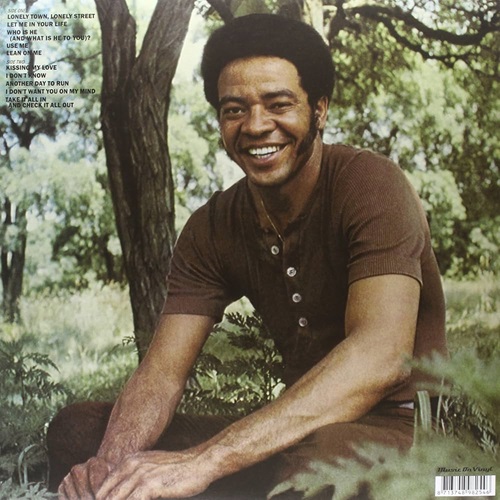
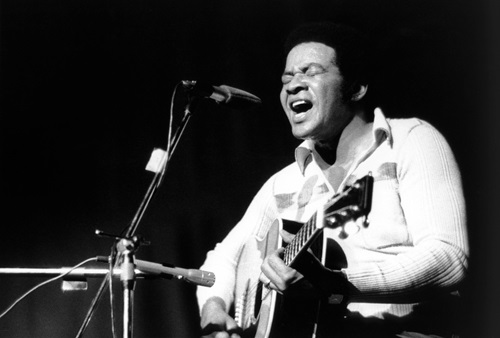
I had a difficult time with this one. As I began to think of artists, I kept coming up with artists who are still recording and touring. Willie Nelson, for example, is still making music and hitting the stage. Has he stayed around “too long?” Some say yes, while other say no. So my search continued. Then I remembered Bill Withers.
Bill served in the US Navy for almost 10 years. It was while he served our country that he began writing songs and became interested in singing. After he left the Navy, he decided to relocate to California in hopes of starting a career in music.
He found work as a mechanical assembler for several different companies including IBM, Ford, and the Douglas Aircraft Corporation. He used the money from his job to record demo tracks that he could take to record companies. He also began to play his songs in nightclubs in the area, hoping someone might discover him.
In 1967, he had his first official release – “Three Nights and a Morning.” It was a song that got little recognition. Three years later, he was signed to Sussex Records and Booker T Jones was assigned to produce Bill’s first album. That album, Just As I Am, included his first hit – “Ain’t No Sunshine.”
The album was a huge success and Withers rounded up a band and went out on tour. “Ain’t No Sunshine” was a Top 10 song and went on to win the Grammy for Best R&B Song in 1972. It also got him noticed by Johnny Carson’s Tonight Show, who sent him a letter inviting him to appear on the show.
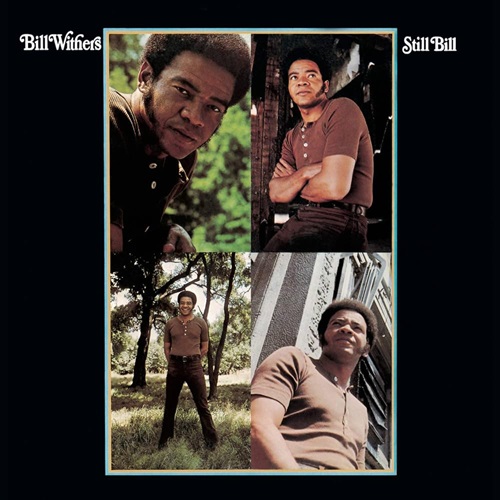
When his tour wrapped up, he used the time off to write and record songs for his second album entitled Still Bill. This album included Bill’s first #1 song – “Lean On Me,” which hit the top of the charts in July of 1972. This was followed up with his third million selling record – “Use Me.”
Bill’s relationship with Sussex record eventually went sour. He said of Sussex Records “They weren’t paying me.” He claims to have erased an entire album that he had recorded for the label in a fit of pique. “I could probably have handled that differently,” he said. There was an ongoing legal dispute with the Sussex company, and because of that Withers was unable to record for some time thereafter.
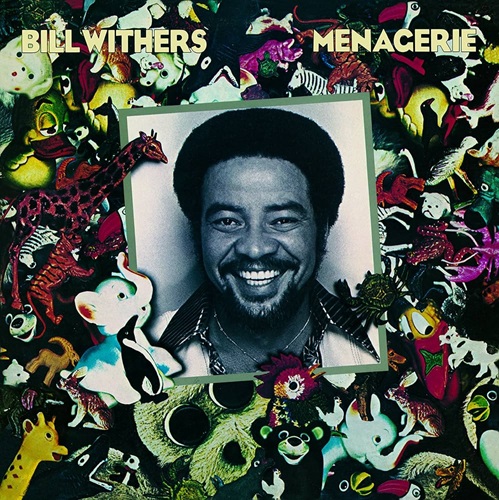
Sussex Records eventually went out of business and Bill had to find a new label. He wound up at Columbia Records in 1975. His first album on Columbia included the song “She’s Lonely,” which was featured in the movie Looking For Mr. Goodbar (which starred Richard Gere and Diane Keaton). He released an album every year afterward, including the 1977 album Menagerie which contained the hit “Lovely Day.”
Bill began to have trouble with Columbia. Apparently he was unable to get songs approved for his album. The label kept passing on the songs he wanted to record. Because of this, he decided to focus on joint projects beginning in 1977. He worked with the Crusaders, percussionist Ralph MacDonald, and jazz saxophonist Grover Washington Jr.
“Just The Two of Us” appeared on Washington’s 1980 album Winelight. It was released as a single in February of 1981 and went on to win a Grammy for Best R&B Song. In 1985, Withers released his final studio album, Watching You, Watching me. It was at this point that Bill decided to “go out on a high note.”
Withers was quoted in interviews that “a lot of the songs approved for the album—in particular, two of the first three singles released—were the same songs that had been rejected in 1982.” This played a big part in the eight-year hiatus between albums. Bill also stated how frustrating it was to see his record label release an album by actor Mr. T, when they were preventing him, an actual songwriter, from releasing his own.
With Columbia trying to exert control over his sound to sell more albums played a part in his decision to not record or re-sign with a record label after 1985. I would imagine the Mr. T thing played a part, too. This effectively ended his performing career, though remixes of his previously recorded music were released well after his “retirement.”
Withers was an artist who found musical success later in life. He was in his early 30’s when he began his career. Now at 47, he said he was socialized as a “regular guy” who had “a life before the music, so he did not feel an inherent need to keep recording once he fell out of love with the industry.” Bill felt he made the right decision. After leaving the music industry, he said that he did not miss touring and performing live and did not regret leaving music behind.
Accolades continued after his “retirement.” In 1988, he won another Grammy, this time as a songwriter for the cover of his “Lean on Me” by Club Nouveau. It won the Grammy for Best Rhythm and Blues Song. In 2005 he was inducted into the Songwriters Hall of Fame, followed in 2015 with his induction into the Rock and Roll Hall of Fame. He said:
“What few songs I wrote during my brief career, there ain’t a genre that somebody didn’t record them in. I’m not a virtuoso, but I was able to write songs that people could identify with. I don’t think I’ve done bad for a guy from Slab Fork, West Virginia.”
Bill passed away in March of 2020 in a Los Angeles hospital due to cardiac complications.
He is still receiving accolades in 2025. Last month, he was selected to be inducted into the National Rhythm and Blues Hall of Fame. The induction ceremony usually takes place in October.
Thanks to Dave for once again hosting Turntable Talk. I am already looking forward to what next month’s topic will be.
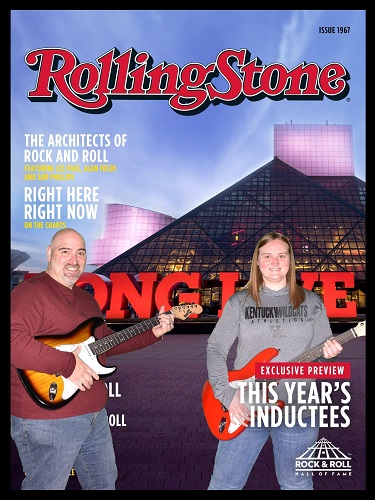
I was looking for something for a coworker yesterday and was going through a bunch of thumb drives. I actually found some photos that I had forgotten about. Look at this gem:
Sam and I took a trip down to Cleveland for our anniversary one year. We visited the Christmas Story House and the Rock and Roll Hall of Fame. The photo above was one of those green screen pictures they take when you first walk in. They used this ridiculous pose and put us on stage with a huge crowd in front of us in one picture. My favorite was this one.
This one made me think of the Dr. Hook song “On the Cover of the Rolling Stone.” Neither one of us thought that our pose was good, but it made us laugh, so we bought the pictures. When I found it I actually chuckled out loud remembering the first time we looked at it.
That was a fantastic trip! It reminds me that we are overdue for a getaway for the two of us!
There are plenty of “musical” birthdays that I could have tied into Tune Tuesday today. Billy Eckstine (1914), Jerry Vale (1931), Steve Lawrence (1935), Toby Keith (1961) and Joan Osborne (1962) were all born on this day. However, I decided not to pick any of them.
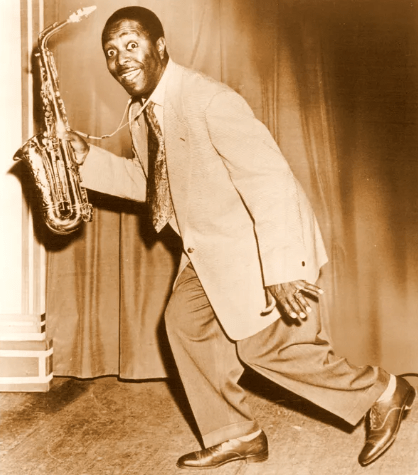
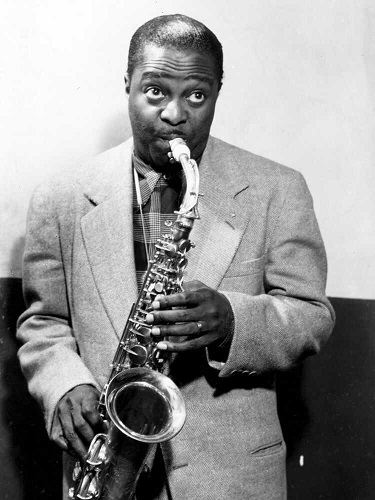
Instead, I wanted to feature one of the early influencers of Rock and Roll. As a matter of fact, he is in the Rock and Roll Hall of Fame. His music would not be considered Rock and Roll, but his “jump blues” and “rhythm and blues” sound certainly influenced many of those rock pioneers. I am talking about the amazing Louis Jordan.
Louis Jordan was born on this day in 1908. He was a saxophonist, multi-instrumentalist, songwriter and bandleader who was popular from the late 1930s to the early 1950s. Among his nicknames were “The King of the Jukebox,” “The Father of Rhythm and Blues,” and “The Grandfather of Rock and Roll.”
According to Wiki, “Jordan began his career in big band swing jazz in the 1930s.” He came to the public’s attention while he played in Chick Webb’s hard swinging band. As his career continued, he became better known as an “innovative popularizer of jump blues—a swinging, up-tempo, dance-oriented hybrid of jazz, blues, and boogie-woogie. Typically performed by smaller bands consisting of five or six players, jump music “featured shouted, highly syncopated vocals and earthy, comedic lyrics on contemporary urban themes. It strongly emphasized the rhythm section of piano, bass and drums; after the mid-1940s, this mix was often augmented by electric guitar.”
Louis Jordan, ca. 1950.
From 1942 to 1951, Jordan had 59 songs that charted! On the R&B charts, of those 59 songs the lowest charting song rose to #14. According to Joel Whitburn’s analysis of the Billboard magazine charts, Jordan ranks fifth among the most successful musicians of the period 1942–1995!
I’m staring at a list of his songs and it is hard to choose just one to feature. Memorable songs from Louis include: Five Guys Named Moe, Let the Good Times Roll, Is You Is or Is You Ain’t My Baby, Knock Me a Kiss, Beware, Caldonia, Open the Door Richard, and G.I. Jive. His songs were even referenced in cartoons. One example is Tom the Cat singing Is You Is or Is You Ain’t My Baby in a Tom & Jerry cartoon. Another is from a Bugs Bunny/Yosemite Sam cartoon where Sam is banging on a door and says, “Open the door!” He pauses, breaks the fourth wall by looking at the viewer and says, “Notice I didn’t say, ‘Richard?'”
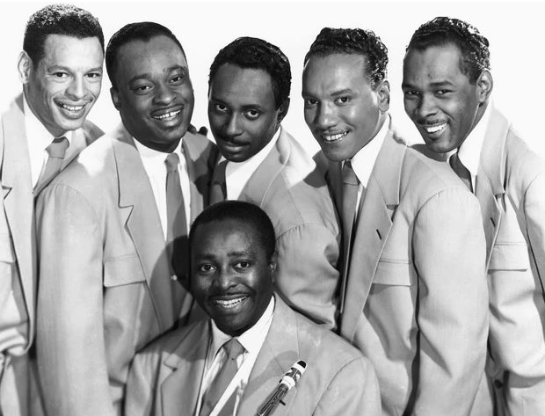
Louis Jordan and His Tympani Five
Here are a couple of my top Louis Jordan songs. First, a little boogie-woogie with Choo Choo Ch’Boogie:
My buddy used the chorus of this song as his answering machine outgoing message. There Ain’t Nobody Here But Us Chickens:
My best friend, Jeff, and I always laugh at this next one. Give it a listen all the way through once, and then go back and listen to it again and focus on the vocals by the Tympany Five in the back ground. Here is Beans and Cornbread:
The Rock and Roll Hall of Fame say that my final Louis Jordan pick is an “early example of rap.” I can totally see where they might thing that. It is one of those great “story” songs. From 1950, here is a Saturday Night Fish Fry:
Dave at A Sound Day just wrapped up his monthly feature Turntable Talk. It was an interesting topic this time around and there were a lot of surprises as to who everyone chose to write about. This was my entry to the feature, which originally posted on Dave’s site on Monday:
It is time once again for Dave’s feature Turntable Talk. Dave features this every month on his site A Sound Day. This is the 39th edition, and he continues to come up with fantastic topics. This month is a fun one: Bands? We Don’t Need No Stinkin’ Bands! Dave’s instructions were simple: This time around, we’re looking for artists who left popular bands to go solo and did well (either commercially or else in your own critical assessment.)
I am sure that I did exactly what the other participants did when the topic was presented – I Googled. I was actually surprised at just how many artists moved from a group to become a solo artist. Off the top of my head I can list Diana Ross, Sting, Lionel Richie, Eric Clapton, Gwen Stefani, Ricky Martin, Peter Gabriel, Rob Thomas, Steve Perry, Lou Gramm, and Justin Timberlake. There are SO many.
In all honesty, I had my choice almost immediately. However, as I began to write about him, there was another artist connected with him that became more interesting to me. It was an artist who had solo success for a short time, and then a sad ending.
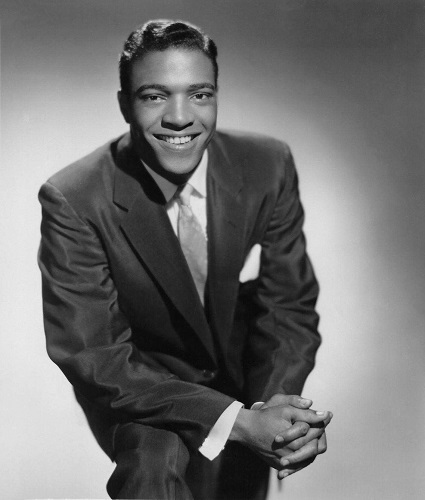
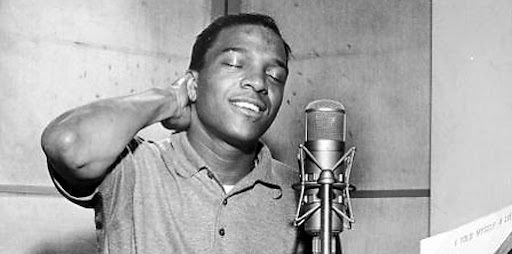
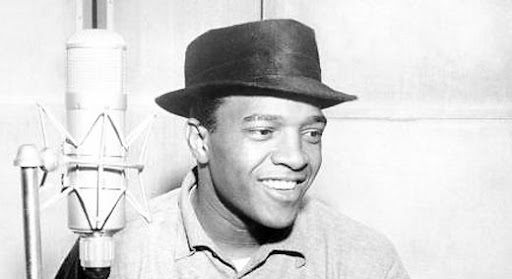
If I mention The Drifters I am sure you can name a few of their big hits. Under The Boardwalk, This Magic Moment, and Up On The Roof are just some of them. The Drifters were formed by my choice artist in 1953. His name was Clyde McPhatter. Let’s go back a couple years to see how it all came together.
Like many artists, Clyde McPhatter began singing in the church choir at his father’s church. In 1950, he was working at a grocery store. He entered the Amateur Night contest at Harlem’s Apollo Theater – and won! Afterward, he went back to working in the store.
One Sunday, Billy Ward of Billy Ward and the Dominoes heard Clyde singing in the choir of Holiness Baptist Church of New York City. He was immediately recruited to join the group. Clyde was there for the recording of their hit “Sixty Minute Man,” which was a number one song on the R&B chart for 14 weeks in 1951.
My original pick for this round was Jackie Wilson. Jackie was hired by Billy Ward in 1953 to join The Dominoes. That same year, Clyde left the group. He coached Wilson while they were out touring together. Wilson would leave in 1957. Apparently, Ward was not pleasant to work with. Wilson said, “Billy Ward was not an easy man to work for. He played piano and organ, could arrange, and he was a fine director and coach. He knew what he wanted, and you had to give it to him. And he was a strict disciplinarian. You better believe it! You paid a fine if you stepped out of line.”
Atlantic Records saw a Dominoes show and noticed that Clyde was not with the group, so they searched for him, found him and wanted to sign him to a record deal. Clyde agreed to sign on one condition – they allow him to form his own group. That group was the Drifters. While known as Clyde McPhatter and the Drifters, they released songs like Money Honey.
Elvis Presley covered Money Honey in 1956. In researching for this piece I was surprised to find that McPhatter and the Drifters did the original of another Elvis hit – Such a Night.
In late 1954, McPhatter was inducted into the U.S. Army. He assigned to Special Services in the continental United States. This allowed him to continue recording. After his tour of duty, he left the Drifters and launched a solo career. The Drifters continued as a successful group, but with many changes in personnel, and the group assembled by McPhatter was long gone by the time their greatest successes were released after he left the group.
It would take two years, but Clyde would finally get his first solo #1 R&B hit when he released “Treasure of Love” in 1956. It would top out at #16 on the US Pop Chart. I love his vocal on this one.
His biggest solo hit would come in 1958 when he recorded and released a song written by Brook Benton. A Lover’s Question would reach #6 on the Pop Chart. If I had to pick my favorite Clyde song, it would be this one. There is so much to love about this song. That acapella bass line being sung throughout the song is very catchy.
McPhatter would leave Atlantic Records and bounce from label to label recording many songs, but not having much success. His last top ten record would come in 1962 with a song written by Billy Swan. Lover Please was first recorded by the Rhythm Steppers in 1960. It was the title track from Clyde’s 1962 album of the same name. It would reach #7 on the Pop Chart.
Clyde did manage to have a top 30 hit in 1964 with “Crying Won’t Help You Now,” but when it fell of the chart, he turned to alcohol for comfort. He would record every so often, but nothing ever really did well on the charts. He always had a decent following in the UK, so in 1968 he moved to England.
He wouldn’t return to the US until 1970. Outside of performing on a few Rock and Roll Revival shows, he lived a very private and reclusive life. In 1972, Decca Records signed him and they were planning a a big comeback. That never materialized as Clyde passed away on June 13, 1972 of complications from liver, heart and kidney disease. This was brought on by his alcohol abuse years earlier. He was only 39 years old.
His legacy consists of over 22 years of recording history. Clyde was the first artist to be inducted twice into the Rock and Roll Hall of Fame, first as a solo artist and later as a member of the Drifters.
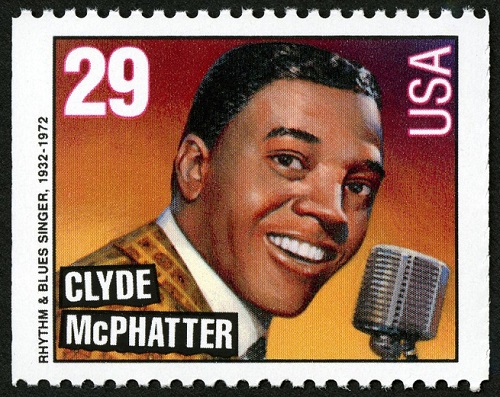
In 1993, Clyde was honored with his own stamp by the US Postal Service.
His career had ups and downs, and his hit songs were an important part of Rock and Roll history. Vocalists like Marv Johnson, Smokey Robinson and Ben E. King are all said to have patterned their vocal styles on Clyde’s. Others have cited him as a major influence as well. In the book “The Drifters” by Bill Millar, he says:
“McPhatter took hold of the Ink Spots’ simple major chord harmonies, drenched them in call-and-response patterns, and sang as if he were back in church. In doing so, he created a revolutionary musical style from which—thankfully—popular music will never recover.”
Thanks again to Dave for hosting another great round of Turntable Talk. I cannot wait to see who the other writers have picked and look forward to Round #40 next month.
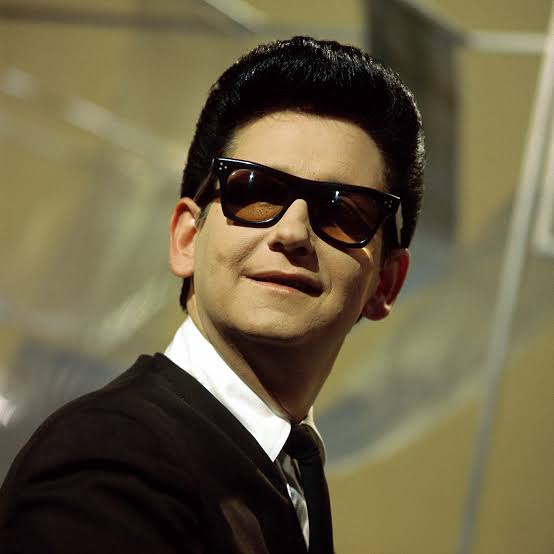
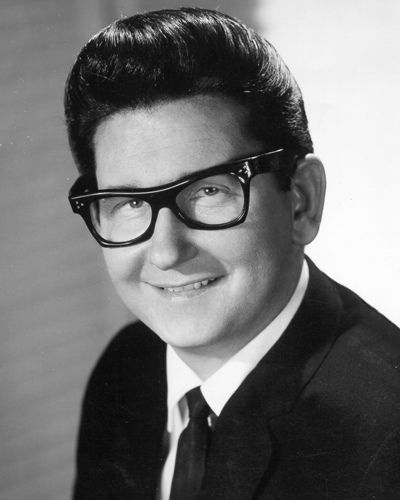
It was announced earlier this month in Variety that Roy Orbison is the latest artist to have their life turned into a movie. Roy is a five-time Grammy Award-winning singer, songwriter, and musician behind classic hits like “Oh, Pretty Woman” and “Only the Lonely.” Per Variety, Denis O’Sullivan, the producer behind the Oscar-winning Bohemian Rhapsody is set to produce the Orbison film.
Orbison was inducted into the Rock and Roll Hall of Fame in 1987, a year before he died of a heart attack at the age of 52 in December of 1988. He was just seeing a resurgence in his career thanks to his work in The Traveling Wilburys and his last album, Mystery Girl.
The Orbison family is partnering with Compelling Pictures, an independent production and financing company, to develop both the biopic as well as a long-form documentary on Orbison’s life. It is tentatively titled You Got It, after Orbison’s hit single from 1988 of the same name. The film reportedly will be “a romance more than a traditional biopic,” per the announcement, and will feature a look at Orbison’s relationship with his wife, Barbara, who also served as the singer’s manager and played a huge role in his comeback in the 1980s.
Bohemian Rhapsody’s O’Sullivan and Jeff Kalligheri will produce while Orbison’s children, Alex Orbison, Roy Orbison Jr., and Wesley Orbison will serve as executive producers with their Roys Boys production company.
“The Orbisons are elated to find the perfect partners in Compelling Pictures for the Roy Orbison biopic. Denis and Jeff’s vision for this journey through Roy’s life is incredible,” said Orbison’s sons in a joint statement. They also played a part in the albums made recently with rearranged Orbison hits with the Royal Philharmonic Orchestra.
Roy’s story is an interesting one and a tragic one. I hope that the movie addresses some of that. In 1966, his wife, Claudette, was killed in a motorcycle accident. Two years later, his two oldest sons died in a house fire when his Nashville-area home burned down. These tragedies weighed heavily on him and his songwriting.
He continued working, but his career wasn’t the same after those tragedies. He married his wife, Barbara Orbison, in 1969. She later became his manager and helped him reboot his career in the 1980s. In 1981, Orbison won his first Grammy Award for “That Lovin’ You Feeling Again,” a duet with Emmylou Harris.
Compelling Pictures said of the project in a joint statement, “Roy Orbison is a singular talent who holds a special place in our hearts, both as a favorite singer for ourselves and our loved ones, and also as a symbol for the incredible strength and resilience of the human spirit. It’s been an honor getting to know Wesley, Roy Jr., and Alex and their families, and we believe this unique love story between Roy and Barbara – rife with humor, tension, and emotion, all accentuated by these incredible songs – will reach the rafters like one of Roy’s impossible notes.”
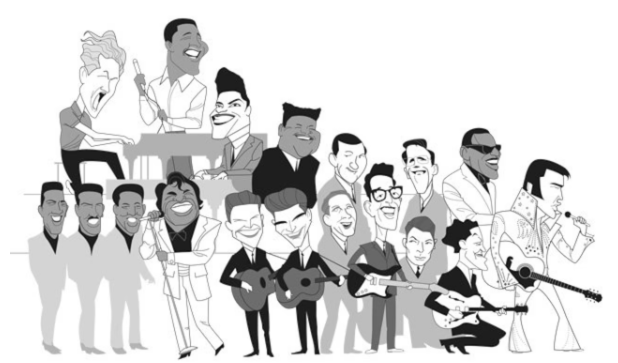
It was 39 years ago today that the Rock and Roll Hall of Fame inducted its inaugural class. When you look at the 10 inductees, you cannot help but be impressed. These artists are legends who were a part of the birth of Rock and Roll. The performers category is meant for recording artists and bands that have “influence and significance to the development and perpetuation of rock and roll.” Each of them did just that!
To honor this class of Rock and Roll pioneers, I thought I would feature a favorite song from each of them. Feel free to add your favorites in the comments.
Chuck Berry– No Particular Place To Go
The “Granddaddy of Rock and Roll”
James Brown – Please, Please, Please
“The Godfather of Soul”
Ray Charles – Hallelujah, I Love Her So
“The Genius”
Sam Cooke – Twisting The Night Away
“The King of Soul”
Fats Domino – I’m Walkin’
“The Father of Rock and Roll”
The Everly Brothers – Bye Bye Love
Buddy Holly – Rave On
Jerry Lee Lewis – Whole Lotta Shakin’ Goin’ On
“The Killer”
Little Richard – Rip It Up
“The Architect of Rock and Roll” (Also “The Bronze Liberace”)
Elvis Presley – Blue Suede Shoes
“The King of Rock and Roll”
I wish I could find out who the artist is on this amazing caricature! I love this and would love to get a print of it.
The amount of music that these ten performers put out in their lifetime is overwhelming! It is fitting that they make up the first class of Rock and Roll Hall of Fame inductees.
My wife and I took a trip to Cleveland for our anniversary one year. We visited the Hall of Fame and I was in awe walking amongst the pieces of history. If you have never been there, I highly recommend a visit!
Welcome back to The Music of My Life, where I feature ten songs from each year of my life. In most cases, the ten songs I choose will be ones I like personally (unless I explain otherwise). The songs will be selected from Billboard’s Year-end Hot 100 Chart, Acclaimed Music, and will all be released in the featured year.
In 1995 a new form of media was invented – The DVD. 1995 was also the year I hit the quarter century mark, turning 25.
30 years ago this month, in 1994, my partner, Rob, and I lost our jobs at Honey Radio. We searched for other radio work, but no one was looking for a morning team. I kept searching and eventually found some part time radio work. I also ventured out and began to host Karaoke at a few places every now and then.
My full time gig was working in the mail room at EDS. I spent a lot of time in the car and listened to a lot of radio. Many of these songs accompanied me on my deliveries.
After seven years of touring and three previous albums, Blues Traveler finally broke through with the song Run-Around. John Popper had a crush on the band’s original bass player Felicia Lewis. She was actually classically trained as a violinist. She was just playing bass for fun.
Guitar player Chan Kinchla says that Felicia was a great student and eventually became a doctor. “Her calling was medicine, not music” . When Bobby Sheehan was ready to take over on bass, Felicia stepped aside. Kinchla says, “It’s a very amicable situation. John always had kind of a crush on her, but they were friends, as well. So that song’s from that whole affair. They’re still very close. It’s just an unrequited love song.”
The song won a Grammy for Best Rock Performance By A Duo Or Group With Vocal in 1995.
John Hopper could really blow the harp! His harmonica stuff is just fantastic. It is hard to to hear this one and not feel happy. I often found myself having to set the cruise control, as this one often made me want to drive fast.
If you are a fan of the Wizard of Oz, you’ll appreciate the nod to the classic film in the video.
Run-Around
Until researching for this blog, I had no idea the story behind the next song. I Believe was a top ten record for Blessid Union of Souls. The song is about the power of love and the belief that it can impact life for the better. It is a powerful message.
The song came about because of the end of a relationship. Eliot Sloan recalls writing this song after his girlfriend’s father coerced her into breaking up with him. Many sources say that it was because of his race. Her dad went as far as threatening to cut off her college tuition, if she didn’t leave him.
They did break up, but she obviously meant a lot to him. He placed a message in the liner notes of the Home album. It says, “Lisa, give me a call sometime just to say hello, my number is still the same.”
Sloan says, “I always tell people, and it’s the truth, ‘I Believe’ was written in the middle of the night at about three in the morning. I always used to live in downtown Cincinnati, a really cool spiral staircase up to my bedroom, which kind of ended up as my studio. I kept a piano there that my mother got me when I was nine. In the middle of the night I was hearing the melody and I thought, ‘this is pretty.’ I just had to get up and play it.”
That piano line is really beautiful, and I love the way it intermingles with the strings. I love the message, too:
‘Cause I believe, that love is the answer I believe, love will find the way
I Believe
There are many stories about how Better Than Ezra came up with their name. As far as I can tell, they’ve never really said. The one that I love is that they were playing at some event that featured many bands. The story goes that they followed a band called Ezra, and when asked what their name was they said, “Better Than Ezra.” I hope that is the real story, because I think that is hilarious!
We just heard I Believe about a break up. Better Than Ezra’s, Good, looks at a break up in a different way. As a matter of fact, I tend to look at my past break ups like this.
BTE’s Kevin Griffin wrote the song. In an interview with songfacts.com he said:
“I wanted to talk about the positive things that come from the end of a relationship. There’s always the hurt feelings and everyone’s guarded and it can be traumatic, but when the dust settles, it was about looking at the good things – no pun intended – that you got from that relationship. How did you grow? What did you learn emotionally? And to experience some stuff. And in this case it was just kind of reflecting on how this person changed.“
That isn’t always easy to do. I have to remind myself, for example, that while things with my ex-wife weren’t great, I have two amazing sons from that relationship.
As much as I heard this song, I find it hard to believe that it only reached #30 on the charts.
Good
A new Beatles song in 1995?! How can that even happen!? John Lennon had been dead for 15 years by then. Believe it or not, you can thank Yoko Ono for it. Yoko agreed to release a demo tape of John’s to the other Beatles the day after he was inducted into the Rock and Roll Hall of Fame.
In 1994 the three remaining Beatles recorded around his demo track to complete the song Free As a Bird. It was released as a single in 1995. Before their breakup, The Beatles won just four Grammy Awards. They picked up three more in 1997 when “Free As A Bird” won for Best Pop Performance By A Duo Or Group With Vocal and Best Music Video, Short Form.
It was Jeff Lynne of ELO who would produce the single. He The Daily Mail that of all the songs he’s produced, “Free as a Bird” is the one he’s most proud of. “I just had to improvise and come up with a few things to make it work,” Lynne recalled. “I did it late at night, 3 a.m. in the studio, just me and the engineer, because I didn’t want to do it in front of Paul and George. But I came in the next day and Paul gave me a hug and he said, ‘You’ve done it, well done!'”
My first records were Beatles songs. So it was so neat to hear all four of them together again for the first time in years!
Free As A Bird
Next is another song that I heard a lot while driving. It stood out for a few reasons. First, it was uptempo. I seem to remember a lot of ballads being played at the time. Driving while tired, uptempo is always good!
Second, it was short. It was very rare to have any song be under 3 and a half minutes on the radio. Many of them were 4 and 5 minutes. This one clocks in at just under 2 and a half minutes.
Finally, it reminds me of Run-Around by Blues Traveler. Ok, maybe it was Blues Traveler that reminds me of this one. I really don’t know.
The first time I saw the video, I laughed out loud. In it the guys from Del Amitri are being wheeled about in strollers by beautiful women. The band members’ heads were superimposed (badly) on the babies to create the effect.
Roll To Me
When I worked at W4 Country in Detroit, they used to host a huge summer festival. It was downtown in Hart Plaza and all kinds of country artists came to play. It was called the Downtown Hoedown. At this time in my career, I had really never done a lot of backstage stuff.
Looking back now, I could kick myself. So many of the singers were just walking around backstage and in the area that was reserved for our staff. I took my ex wife with me and we were just sitting at a table drinking water. This guy walked by with a cowboy hat on and he looked familiar. I couldn’t place him to save my life.
As he walked by, he nodded and said hello to us. I didn’t know if it was an artist, a manager, a roadie, or someone else. We said hello and he continued walking. What was weird was that as he approached us, he kind of slowed down like he expected us to start chatting him up. I know now that this was David Lee Murphy.
Dust on the Bottle was a big hit for him, but it almost didn’t make his album. He tells the story:
“I had the idea for that song, but I hadn’t ever done anything with it. I just remember being at my house the second day [of recording]. We started recording on Monday, and Tuesday morning, I was drinking coffee at my kitchen table. I started playing the opening chords on my guitar for ‘Dust on the Bottle.’ It just came out of nowhere. The song just fell out in like 15 minutes.
I called Tony Brown, who was producing my record, and I told him, ‘Man, I just wrote this new song!'” Murphy continued. “We had all the songs picked out already for the album. He told me to bring it in and play it for him that day. When he heard the song, he said, ‘Man, we’ve got to cut this.’ So we cut it, and what’s on the record is the first take of the song. A lot of the vocals on it were the first time I sang it. It was really a special song, and it still is to this day.”
Dust On The Bottle
I will apologize for the next song right now. I had to include it because it was such a big song when I was DJing. In the US, the Macarena was the biggest dance craze of the 1990s. It was played at weddings, office parties, cruise ships, and just about anywhere there was dancing. Like the earlier dance craze, the “Electric Slide,” it was easy to learn and was done in a group. This made it perfect for Americans who lacked rhythm. It would spawn other dance crazes in the years ahead.
The song was one that had many “mixes.” The meaning of the song changes depending on what mix you are listening to. In the original version, Macarena is upset because her boyfriend, Vitorino, has joined the army. She retaliates by going out on the town and carousing with other men. In the Bayside Boys mix, Macarena gets mad at her boyfriend and goes out to shake it while he’s out of town. In this version, she seems to be more promiscuous. The Bayside Boys also made it a first-person account, with the lyrics being the voice of Macarena.
Macarena
I never cared for the song that much, however two years later, there was a country mix. It sounded ridiculous. I went out and bought one of those hillbilly hats with the feather on it and a corn cob pipe. I would get out and dance with it on. It only made it more silly.
The next song was one that got played a lot on the radio with dedications to someone who passed away. It was played at weddings in remembrance of a loved one, too. When my mom passed away, this was another of those songs that made me think of her.
Mariah Carey wrote One Sweet Day with Boyz II Men. She said she wrote a song that was identical to a song Boyz II Men had written, so they combined the two.
Mariah was in the middle of writing the poignant ballad with her longtime collaborator Walter Afanasieff when she had the idea to bring in the R&B group.“I just thought the chorus was crying out for the vocals that they do,” she recalled in a 1999 interview. “We contacted them, we went through all the channels, this and that, and we finally got together, sang them the song and Nate had written a song that was basically identical to my song in the theme and melodically – he could actually sing it over my song and it was really bizarro, it was like fate, so we put the two songs together and came up with ‘One Sweet Day.'”
This was #1 on the US Billboard charts for 16 weeks! That is longer than any other song up to that time. It held that record until 2019 when Lil Nas X’s Old Town Road was #1 for 17 weeks.
One Sweet Day
Despite being a 1995 release, Give Me One Reason was a song that Tracy Chapman had been performing since 1988. She also performed it on a 1989 episode of Saturday Night Live.
The song would wind up on her fourth studio album, New Beginnings in 1995. In 2005, she said “This is autobiographical,” before performing the song. “I left it on someone’s answering machine, and it worked. I wrote it late one night hanging out with my dog, a mini dachshund.”
The song would be her first hit since 1988’s Fast Car. The charts had changed a bit in 1995. Songfacts.com explains: The mid-’90s were a tougher time for female singer-songwriters with stories to tell, but Melissa Etheridge, Alanis Morissette, Sheryl Crow and Jewel all got their piece of the pie even as the airwaves were dominated by R&B and dance singers, mostly guys. “Give Me One Reason” fell into this bucket, skewing to an older audience averse to hip-hop and modern rock.
I love this song because of the bluesy feel to it. That opening guitar lick and her voice are just so good!
Gimme One Reason
My final pick for 1995 comes from a gang member. Yes, you read that right. Lead singer Pauly Fuemana was a gang member in Auckland, New Zealand before achieving pop immortality with this song. He received his musical training in a New Zealand juvenile prison.
How Bizarre by OMC reached #1 in eight different countries, the first of which was New Zealand in early 1996. Others include Australia, Canada, and the US (on the Mainstream Top 40 chart). What is Bizarre is that it never entered the Billboard Hot 100 Chart. Why? It was released as a radio-only promo single. Therefore it was ineligible to chart on the Hot 100 according to rules in place at the time.
According to songfacts.com: OMC stands for Otara Millionaires Club, after the neighborhood in Auckland where Fuemana grew up. It’s a somewhat fanciful name, as the Auckland suburb of Otara is a ghetto/slum.
This was another one of those songs I would hear driving at work. Many of the drivers would come in to the mail room and if something unexpected happened they’d say “How Bizarre!” Some of my ex wife’s sisters would also say this a lot, but usually they’d say, “How Bizzaaaah.”
The song has a fun sound to it and it brings back some great memories.
How Bizarre
So that’s all for 1995. Did I miss one of your favorites? Let me know in the comments.
Next week, we move forward to 1996. My list includes movie music, a cover song or two, a couple artists I have had the chance to hang out with, and a few I’d like to hang out with. It also includes a song that was given to me by a girlfriend to express how she felt about us. Was it good or bad? Tune in next week!
It is time for another edition of Turntable Talk, hosted by Dave from A Sound Day. There seems to be no shortage of music topics for him to present. This month the topic is a bit different. Here are his instructions:
It’s time to Hit the Road, Jack … you’re invited to take part in a sort of magical road trip… but with a few restrictions. You can go to any music location you’d like to see, and if it is long gone, we can assume it was still there for you to see (or that you could go back in time to see it). Studio, concert venue, house, record store, you name it! Wanna see Graceland (or see it again if you’ve been) – boom! You’re there.
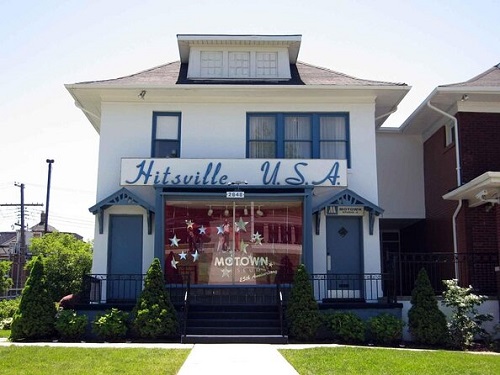
As I began to think on my musical place, I became depressed. This is because there are so many places that I have never been to. Yes, I have been to the Rock and Roll Hall of Fame. Yes I have been to Graceland. Sadly, despite the 90 minute drive from where I live, I have never visited the Motown Museum!
Next I began to think about concert venues. I looked up “Greatest Concert Venues” and it is quite a list. Surprisingly, Pine Knob Music Theater (in Clarkston, MI) is one I have been to numerous times! It’s a great place to see a show. I couldn’t believe that it was counted as one of the “greatest” among some of the others.
In the cartoons, it meant you had made it if you played The Hollywood Bowl in Los Angeles. It was always a big deal if an artist is playing Carnegie Hall, Radio City Music Hall or Madison Square Garden in New York. As many times as I have been to Nashville, I have never seen a show at the Ryman Auditorium. Outside of the US, it is big to play the Syndey Opera House in Australia or Royal Albert Hall in London.
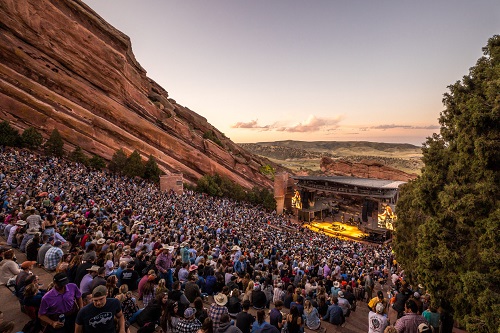
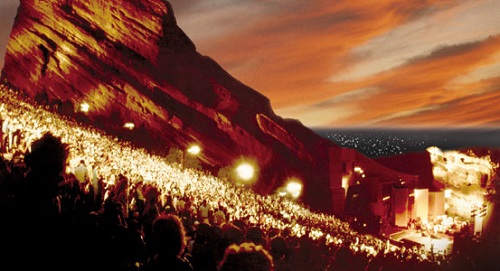
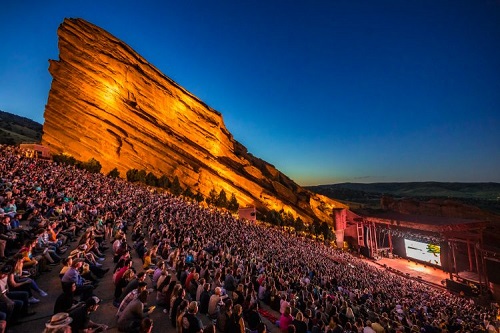
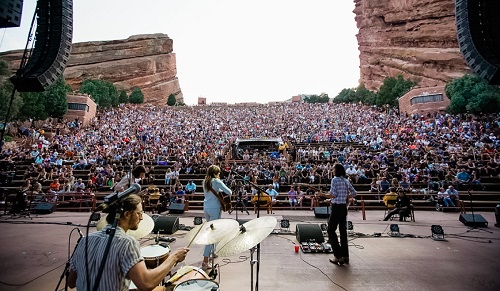
There are so many great places on the list, but one stood out. It is a venue that I truly hope to see a show at some day. Many artists have recorded albums or videos there. They include, the Grateful Dead, Joe Bonamassa, U2, Barenaked Ladies, Stevie Nicks, The Dave Matthews Band, and even John Tesh! That place is the Red Rocks Amphitheater in Morrison Colorado.
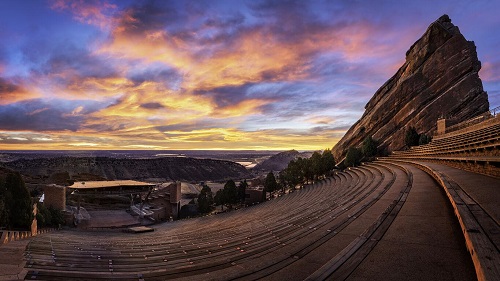
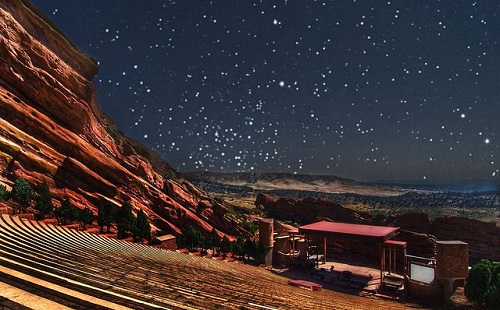
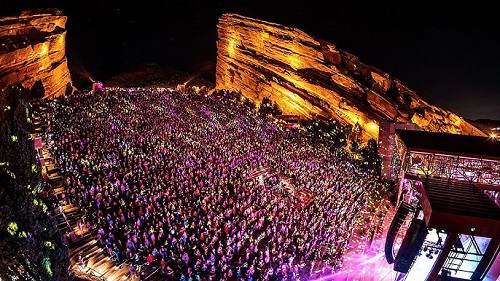
I am in awe of this truly amazing place. The venue is approximately ten miles southwest of Denver. The venue is best recognized by its two massive monoliths. They are named “Ship Rock” and “Creation Rock”. There is also the smaller “Stage Rock”. All of them together flank its 9,525 capacity seating area and naturally form the amphitheater.
Imagine seeing your favorite band on stage, while enjoying the breathtaking scenery! It is on my bucket list!
The experience that a concert viewer would have is incomprehensible to me. Go back to the first photo and scroll down. Think about the various changes in light, the beauty of the setting sun, the lights up on the rocks, and finally night fall. Wow!
I would think that this has to be an extraordinary experience for the artists, too. While their view is a bit different than the audience, it still is pretty amazing.
I believe that I am the last contribution before Dave wraps up this topic. I can’t help but wonder what the other bloggers have chosen. Did they chose a venue? A recording studio? A musical museum? By the time you read this, you will already know – and so will I. Right now, however, I am excited to find out what they chose.
Thanks again to Dave for asking me to participate in this feature. I would also like to thank him for his understanding. I chose to run my Share Your Nostalgia Feature right around the same time as Turntable Talk. He did some shuffling and made it work for all of the writers involved. Should I do another topic, I will check with Dave and make sure the schedules are good for everyone.





 Various Ramblings of a Nostalgic Italian