Moose and Squirrel

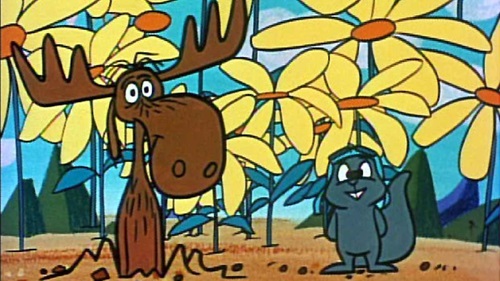
It was 66 years ago that we were first introduced to Rocky and His Friends. Rocky debuted on this day in 1959 along with his friend Bullwinkle, the evil Boris Badenov and Natasha Fatale, Dudley Do-Right, Mr. Peabody and Sherman, and even Aesop! They debuted on the ABC Network.

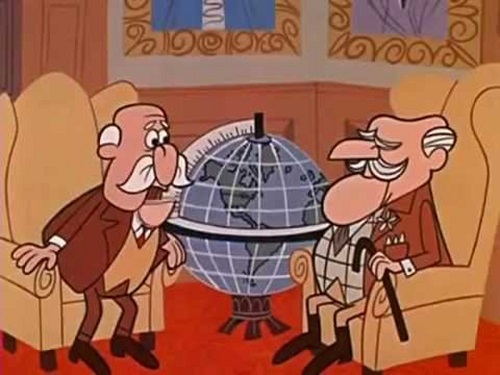
The show was sort of a variety show which featured Rocky and Bullwinkle on an adventure that always ended in a cliffhanger. Their portion of the show was surrounded by Fractured Fairy Tales (narrated by Edward Everett Horton), Peabody’s Improbable History, and the adventures of Dudley Do-Right. The show has been described as “a radio show with pictures” and I would tend to agree.
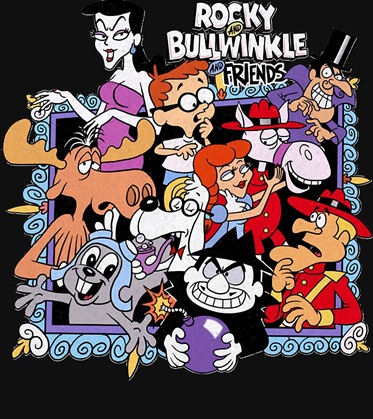
While the animation isn’t all that great (it was done by Gamma Productions in Mexico and there were plenty of mistakes), the series is still held in high esteem. The show was fun for kids and adults. The humor consisted of puns, satire, and characters poking fun at themselves.

Production on the show began in 1958 with voice work being done by the amazing June Foray, Bill Scott, Paul Frees, Hans Conried and William Conrad. Conrad acted as narrator for the show and his frantic narration was a highlight for me. Wiki says at the end of the episode (at the cliffhanger) he would announce two humorous titles for the next episode that typically were puns of each other (and usually related more to the current predicament than to the plot of the next episode). For example, during an adventure taking place in a mountain range, Conrad would say, “Be with us next time for ‘Avalanche Is Better Than None,’ or ‘Snow’s Your Old Man.'”

https://youtu.be/0yZ3hEpyaD8?si=Pll5MhjWc373v9QX

Here is Conrad and Paul Frees in a promo for the show:

https://youtu.be/uEzTYtzLRz0?si=2kGD-4ux_9rSbsuP

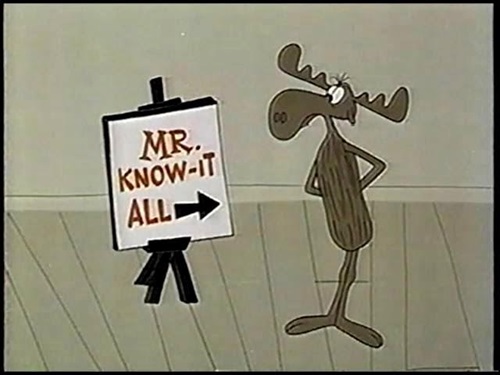
In between the various acts of the show, we’d be treated to Bullwinkle as Mr. Know It All. He would claim to be an authority on just about any topic. Things never seem to go his way in the segment.
Then there was a segment where Bullwinkle would tell Rocky he was going to pull a rabbit out of his hat. Often times it would be a rhino or a lion. Bullwinkle would then say, something about the hat.

https://youtu.be/kRW7pITY5Cg?si=3XBnbIYAPouEZbAU
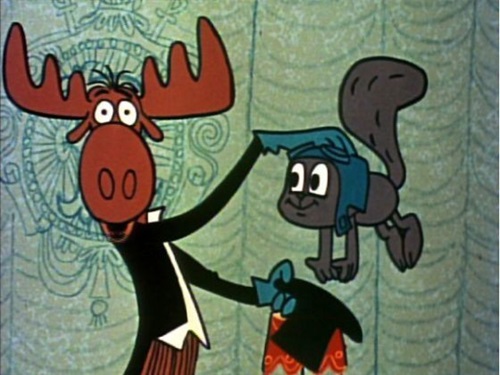
As a kid, I loved that the characters would break the fourth wall.  They either spoke to you, the viewer, or interacted with the narrator, which was always funny…

https://youtu.be/oUf7YR7gl64?si=CVioEoGyDwZlT99v

I used the music from Fractured Fairy Tails as an open to my radio show.  I had Richard D, my program director, do a hokey British accent and say, “WHND now cautions you that the following program may contain extreme silliness, ridiculous situations and partial nudity. Ladies and gentlemen, this is the Keith Allen Experience.”. The music made it sound even more ridiculous.

This was the version I used:

https://youtu.be/PcSpOonwsJo?si=TPpO6oBPZNi8eNZR

There were three other versions with different music:

https://youtu.be/H926TwAkhjM?si=G1dFH9Id9oReKhAB

Mr. Peabody and Sherman also had three different themes:

https://youtu.be/HWXEM2Qo1c0?si=tqaGo05-DiUyGpt4

I love how Dudley Do Right’s theme has that section with music that is so reminiscent of the old movie and radio melodramas.

https://youtu.be/Npfi0UZL2ow?si=n1cIMayF4lpWlNq8

The Rocky and Bullwinkle show was a groundbreaking. And though there have been many attempts at rebooting the cartoon, and movies based on the characters, nothing tops the original!
Movie Music Monday – Dragnet

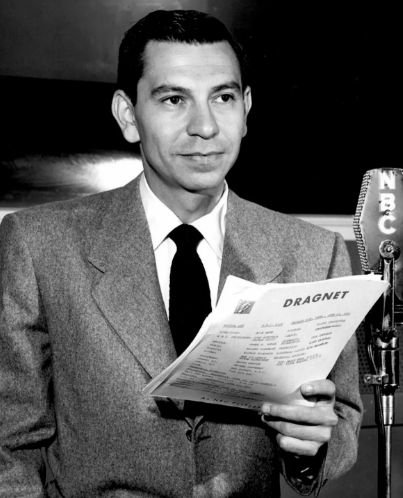
Nine notes. Nine notes that are still recognizable today. Broken into two parts – 4 notes, then 5 notes. “Dum da dum dum” (Pause) “Dum da dum dum da.” Those notes were immediately followed by a stern narrator who informed listeners, “Ladies and gentlemen. The story you are about to hear is true. Only the names have been changed to protect the innocent.”

On this day in 1949, Jack Webb debuted on radio as Sergeant Joe Friday in Dragnet. He created and produced the show as well. Wiki states that “Dragnet is perhaps the most famous and influential police procedural crime drama in American media history. Webb’s aims in Dragnet were for unpretentious acting and a realistic depiction of policing. The series portrayed police work as dangerous and heroic, and helped shape public perception of law enforcement in the 20th century, improving the public’s opinion of police officers.”

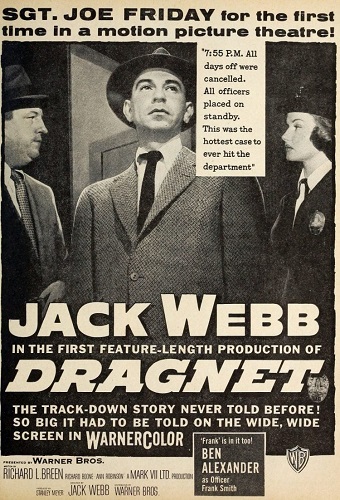
The radio show was so popular that it made the transition to television. It ran on NBC from 1951 to 1959. NBC brought the show back to television from 1967 to 1970. It first appeared as a feature film in 1954. It became the first theatrical film to be based on a TV show.

Check out this trailer!

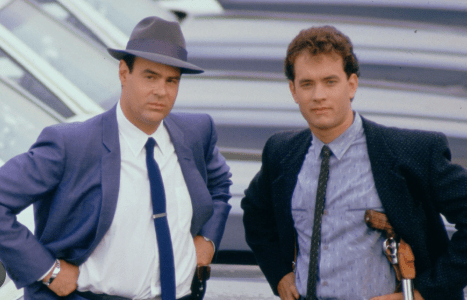
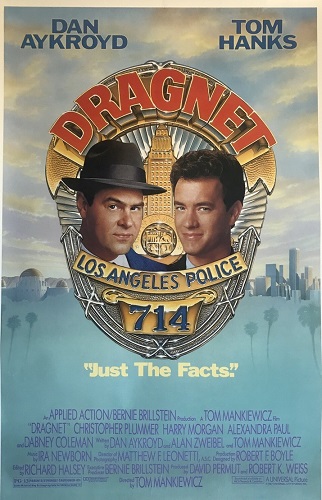
A TV movie was produced in 1966 with the intention of it launching the return of the show to TV. It didn’t air until 1969 for some reason. The final film version made Dragnet a comedy starring Dan Aykroyd and Tom Hanks.

Wiki says “The film contrasted the terse, clipped character of Friday, a hero from an earlier age, with the “real world” of Los Angeles in 1987 to broad comedic effect. Apart from Aykroyd’s spot-on imitation of Webb’s Joe Friday and Harry Morgan reprising his role of Bill Gannon (now Captain), the film version has few similarities with previous incarnations. This Dragnet parody was a hit with audiences.”

Dragnet was no stranger to parodies. It was parodied by Looney Tunes, Woody Woodpecker, Sesame Street, The Three Stooges, Rocky and Bullwinkle, and a series of audio parodies by Stan Freberg. Jack Webb loaned Stan the actual band/orchestra he used on radio for his parodies.

As I mentioned, the theme is instantly recognized today. For the 1987 film, producers got the British band The Art of Noise to perform it. The them is actually two songs merged together. The opening is entitled Danger Ahead, and what follows is the Dragnet March. The Art of Noise version is very …. 80’s.

The first “hit version” was done by Ray Anthony and His Orchestra in 1953. It starts very familiar and gets a bit “jazzy.”

And to start your Monday with a laugh or two, here are a couple of Stan Freberg’s Dragnet parodies. Notice how the music “stabs” were used to enhance the story, just like on the radio.

Happy Birthday, Dragnet!!

Share Your Nostalgia – Round 3

A while back, I asked some blogger friends if they’d want to write a piece for my Share Your Nostalgia feature. In the past we have looked at Favorite Childhood Toy and Favorite Childhood Book. Today, we go back to Saturday mornings. This was when we sat in front of the TV with our favorite cereal and watched hours of cartoons. So I asked my guests to write about their favorite cartoon or cartoon character growing up.

Today’s featured guest blogger is one of the first bloggers I connected with after starting this blog 7 years ago. I don’t recall who found who first, but I believe we connected talking about old toys. Since connecting, I’ve found him to be like an old friend. Max runs the Power Pop Blog and features some great music. Max and I have a lot in common and today proves it as he picked on of the characters on my list of favorites. Take it away, Max …

There’s no need to fear…Underdog is here!

Thanks, Keith, for hosting this and coming up with this great idea! I watched a few Underdog episodes for the first time in years, and it was worth it. 

When I was growing up, we kids had two prime times for cartoons. Saturday mornings were our Super Bowl, packed with classics from Warner Bros. and Hanna-Barbera. Even Land of the Lost—though live-action—was a can’t-miss favorite. But not all the best cartoons aired on Saturdays. Every weekday morning, from 6 to 7 a.m. before school, we had another dose of animated fun, with shows like Rocky and Bullwinkle and Courageous Cat and Minute Mouse keeping us entertained.

Underdog debuted October 3, 1964, on the NBC network under the primary sponsorship of General Mills, and continued in syndication until 1973 (although production of new episodes ceased in 1967, for a run of 124 episodes.

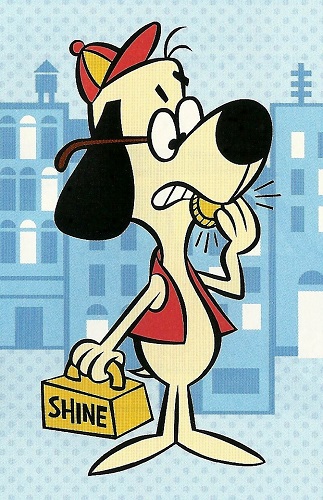
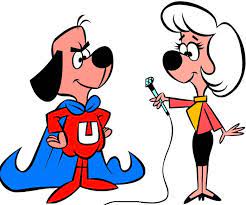
Underdog’s secret identity was Shoeshine Boy. He was in love with Sweet Polly Purebred, who was a news reporter. I would watch this cartoon before going to school in 1st and 2nd grade. Underdog would use his secret ring to conceal pills that he would take when he needed energy. NBC soon put an end to that.

For many years, starting with NBC’s last run in the mid-1970s, all references to Underdog swallowing his super energy pill were censored, most likely out of fear that kids would see medication that looked like the Underdog pills (red with a white “U”) and swallow them. Two instances that did not actually show Underdog swallowing the pills remained in the show. In one, he drops pills into water supplies; in the other, his ring is damaged, and he explains that it is where he keeps the pill—but the part where he actually swallows it was still deleted.

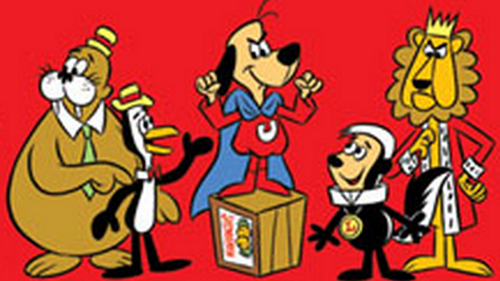
The shows introduced such characters as King Leonardo, Tennessee Tuxedo, Commander McBragg, Klondike Kat,  and more. Underdog was voiced by Wally Cox. Underdog always talked in rhyme and I’m a sucker for that in this and Dr Seuss. Two of the villains every week were Simon Bar Sinister and Riff Raff.

W. Watts Biggers teamed with Chet Stover, Treadwell D. Covington, and artist Joe Harris in the creation of television cartoon shows to sell breakfast cereals for General Mills. The shows introduced such characters as King Leonardo, Tennessee Tuxedo, and Underdog. Biggers and Stover contributed both scripts and songs to the series.

When Underdog became a success, Biggers and his partners left Dancer Fitzgerald Sample to form their own company, Total Television, with animation produced at Gamma Studios in Mexico. In 1969, Total Television folded when General Mills dropped out as the primary sponsor (but continued to retain the rights to the series until 1995; however, they still own TV distribution rights.

Underdog became a pop culture icon, with reruns airing for decades. The character was featured in toys, comics, and even a 2007 live-action film starring Jason Lee as the voice of Underdog. The theme song remains one of the most recognizable in cartoon history.