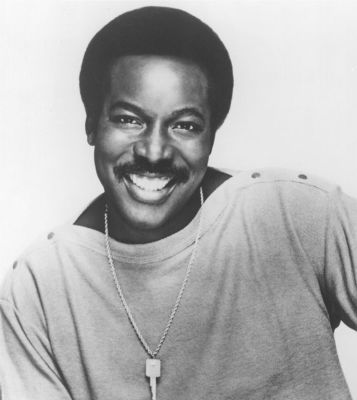
Happy Birthday to The Wicked Mr. (Wilson) Pickett who was born on this day in 1941.
He was born in Prattville, Alabama where he began singing in the Baptist church choir. He was the fourth of 11 children and eventually left to live with his father in Detroit in 1955. It was there that he joined a gospel group called The Violinaires. He toured with them for four years. He was lured by the success of gospel singers who had moved to the lucrative secular music market, joined the Falcons in 1959.
His work with the Falcons helped him to embark on a solo career. In 1965, he had his first hit “In the Midnight Hour,” which featured Steve Cropper and Donald “Duck” Dunn from Booker T & the MGs. Many hits followed including Land of 1000 Dances, Funky Broadway, and 634-5789.
It is hard for me to pick a favorite Wilson Pickett song, because they are all SO good. There is one song, however, that always sounds fresh to me. It is still a song that people dance to at parties and weddings. It always seems to be on the Top 200 list of songs that DJ’s get requests for, as well. That song? Mustang Sally!
According to Rolling Stone magazine’s Top 500 Songs, “Mustang Sally nearly ended up on the studio floor – literally. After Pickett finished his final take at FAME Studios in Muscle Shoals, Alabama, the tape suddenly flew off the reel and broke into pieces. But the session engineer, the legendary Tom Dowd, calmly cleared the room and told everyone to come back in half an hour. Dowd pieced the tape back together and saved what became one of the funkiest soul anthems of the ’60s.”
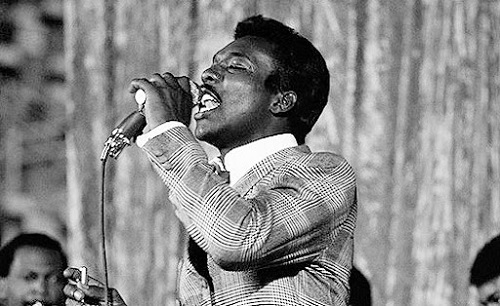
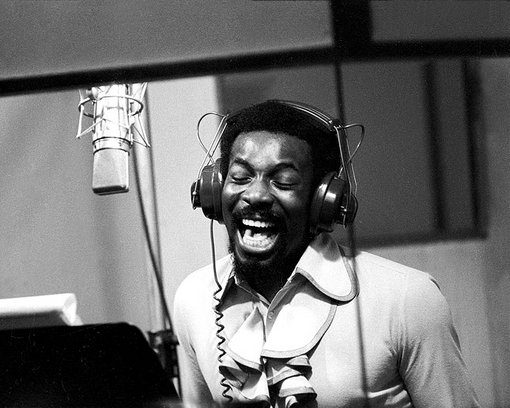
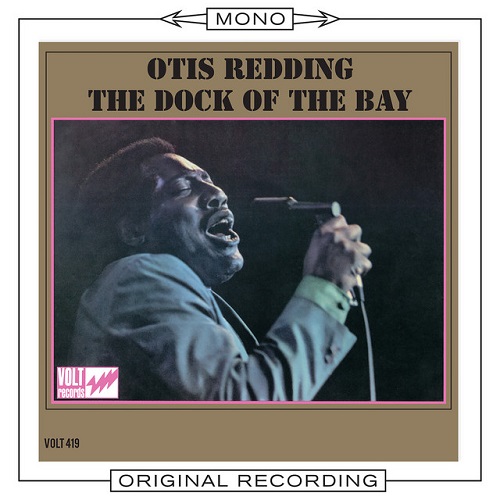
Music history was made on this day in 1968. Otis Redding’s Dock of the Bay reached #1 on the charts, making it the first ever posthumous single in the United States. Redding died in a plane crash just 3 months earlier in December of 1967. It was released on January 8, 1968.
The song was written by Otis and guitarist Steve Cropper (of Booker T & The MG’s). Otis started writing the lyrics in August 1967 while staying on a rented houseboat in California. It was there where Redding started writing the lines, “Sittin’ in the morning sun, I’ll be sittin’ when the evening comes” and the song’s first verse, under the abbreviated title “Dock of the Bay.” In November of 1967, he completed the song in Memphis with Cropper and recorded it.
Allmusic states: Redding’s restrained yet emotive delivery is backed by Cropper’s succinct guitar playing. The song is somewhat different in style from most of Redding’s recordings. While discussing it with his wife, Redding said that he wanted it to “be a little different”, to “change his style”.
There were concerns that the song had too much of a pop feel. There were discussions of contracting the Stax gospel group the Staple Singers to do some background vocals. This never did happen. Otis considered the song “unfinished” and planned to finish it, but he died before he could do so.
After Redding’s death, Cropper mixed “Dock of the Bay” at Stax Studios. He added the sound of seagulls and crashing waves. This was was Otis had requested. He did so because those were the sounds he had heard staying on the houseboat.
Today we celebrate two birthdays that have a movie tie-in. Both appeared in one of the greatest films of the 1980’s – The Blues Brothers.
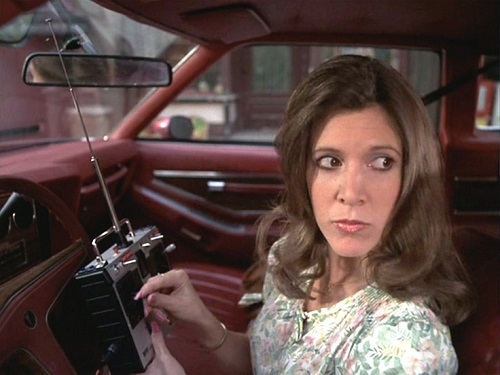
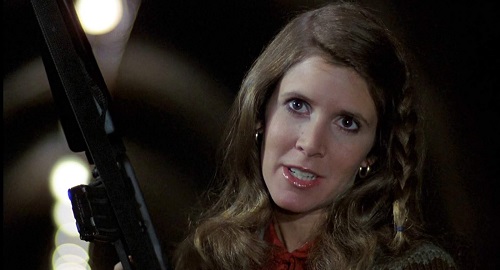
First, we remember the beautiful Carrie Fisher who was born on this day in 1956. While known for Star Wars and many other films, she appears as one of Jake Blues’ jilted girlfriends. Throughout the movie, she is hell bent on killing The Blues Brothers.
Despite having some pretty powerful and amazing weapons, she never seems to be able to get the job done. In one of the most “emotional” scenes in the film, she finally confronts Jake and Elwood. Up to this point in the film, she has been silent, but when she get’s the chance to speak, she let’s Jake have it!
Jake’s list of excuses is one of my favorite part of the film.
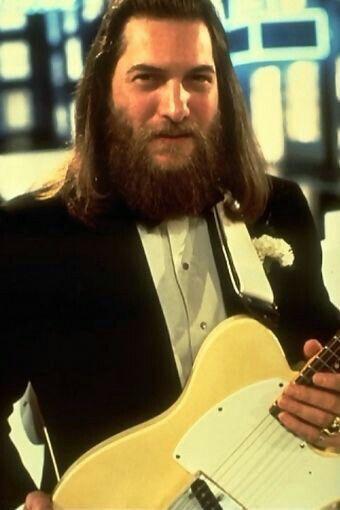
Steve “The Colonel” Cropper turns 83 today. He was a member of the Stax house band and a member of Booker T and the MG’s. He played on tracks by Otis Redding, Wilson Pickett, Sam and Dave (“Play it, Steve!”), Rufus Thomas, Johnnie Taylor and more.
He is one of the most respected guitar players in the business, and he is still making music! He was one of many amazing musicians who joined the Blues Brothers Band. So it is only appropriate to play a song from the movie. Originally done by the Spencer Davis Group, here is Gimme Some Lovin’
Welcome back to The Music of My Life, where I feature ten songs from each year of my life. In most cases, the ten songs I choose will be ones I like personally (unless I explain otherwise). The songs will be selected from Billboard’s Year-end Hot 100 Chart, Acclaimed Music, and will all be released in the featured year.
A brand new decade has dawned and I will turn 20 in 1990. It was a time of change for me, as well. I had been working at WKSG for a little over 2 years. I truly believed that I’d have that job for years, but had yet to learn how unstable radio jobs were. When I was fired, I called my old boss (now at another station in Detroit) and cried like a baby. He brought me in part time at WMXD.
As I looked through the music from 1990 and 1991, there were many songs that I played while at WMXD. When I started there, the music was a mix of Adult Contemporary and Urban songs. Eventually, they would go all Urban Contemporary and I was let go again.
One of the songs I played, I wrote about recently, but it still makes my list here. If you want to know more about Elton John’s Club at the End of the Street, you can read the earlier post here:
Next on the list is a song that was released on my 20th birthday, May 15, 1990. “Vision Of Love” was Mariah Carey’s first single. The song debuted at #73 in America, but two months later, in August, spent four weeks at the #1 spot. I remember playing this one on WMXD, as well. It was a song that really showcased her outrageous vocal range! The first time I heard her belt out that high note, I couldn’t believe it!
The original demo of the song was described as a 1950’s shuffle, but that didn’t matter. The song was good enough. Songfacts says, The original version was included on Mariah’s demo tape for Columbia. It was one of the songs that caught the ear of Tommy Mottola, her future husband and, more importantly, the head of the label’s parent company, CBS Records. At the time, Mariah was working as a backup singer for Brenda K. Starr, who invited her to a label party in Manhattan where the demo tape made its way into Mottola’s hands. After listening to the tape in his limo on the way home, he went back to the party to track down the singer. Mariah had already left and no one knew who she was. Days later, she found a message on her answering machine inviting her to sign with the label. Mottola then sent her to Los Angeles to re-record “Vision Of Love.”
Let me be honest right here. After her second album, there were not too many songs by Mariah that I cared for. I don’t know this for sure, but I feel the “business” changed her. There were a couple of songs later that were good. I felt, however, her strongest stuff was on those first two albums.
Vision of Love
The Godfather trilogy will always be my number one, but my second favorite trilogy would be Back to the Future. In 1990, Back to the Future Part III was released in theaters. I couldn’t wait to see how it all wrapped up.
ZZ Top released their Recycler album in 1990. The lead single from the album was a song from Back to the Future Part III called Doubleback. The group made a cameo appearance in the movie playing an acoustic version. That version is on the soundtrack of the movie.
Doubleback
But wait, there’s more! Consider this a Double Shot of ZZ Top. From the same album, My Head’s In Mississippi sounded like classic ZZ Top to me. I just loved the shuffle and the vocals. Billy Gibbons said:
“My buddy Walter Baldwin spoke in the most poetic way. Every sentence was a visual awakening. His dad was the editor of the Houston Post. We grew up in a neighborhood where the last thing you would say is, ‘These teenagers know what blues is.’ But our appreciation dragged us in. Years later, we were sitting in a tavern in Memphis called Sleep Out Louie’s — you could see the Mississippi River. Walter said, ‘We didn’t grow up pickin’ cotton. We weren’t field hands in Mississippi. But my head’s there.’ Our platform, in ZZ Top, was we’d be the Salvador Dalí of the Delta. It was a surrealist take. This song was not a big radio hit. But we still play it live, even if it’s just the opening bit.”
In 2008, Gibbons stated, “‘My Head’s in Mississippi,’ which was one of the first completed tracks on the album, is a great example of how we mixed the new with the old. Initially, it was a straight-ahead boogie-woogie. Then Frank stepped in and threw in those highly gated electronic drum fills, which modernized the track.”
My Head’s in Mississippi
I have never owned a pair of parachute pants. They do look comfortable, however, and it looks like you have a lot of freedom in them.
As much as I didn’t really want to include this one, I did play it a lot while DJing. It always got folks out dancing, then again, so did Super Freak by Rick James. Believe it or not, James did NOT give Hammer permission to use the song.
Songfacts explains: Rick James tried to keep rappers from sampling his music, turning down any requests. According to James, his lawyers authorized the “Super Freak” sample without his permission. He heard about it when a friend told him about “U Can’t Touch This” and the song came on the radio they were listening to in the car. James said he was irate, but somewhat appeased when he found out how much money it was making for him. Still, he claimed he wouldn’t have done the deal if he was asked.
James had another beef as well: he wanted to be listed as a songwriter on “U Can’t Touch This.” He sued MC Hammer for credit. The case was settled out of court, with James getting listed as a co-writer on the track along with Hammer and Alonzo Miller. Miller was a disc jockey who wrote some lyrics on “Super Freak.”
He recorded the song at Capitol Records, where Frank Sinatra, Nat King Cole, and Dean Martin recorded, The label ran an innovative marketing campaign to promote this song. They mailed out free cassette singles of the track to 100,000 kids. The cassettes came with a letter from Hammer asking them to call MTV and request the video. The ploy worked, and the video became the most-played of 1990 on the network.
U Can’t Touch This
I don’t remember when my ex-girlfriend had sent this song to me. It was probably after we broke up the first time. I say that because I believe that this song is what led us to getting back together eventually. I remember being pretty messed up after the break up. I did end up dating someone else.
I don’t recall how my ex and I began chatting again, but it led to her giving me this song. I really loved and cared about my ex. I broke it off with the gal I had been dating to get back together with my ex. It was really unfair to her, but I was 20, almost 21, and didn’t really know any better.
While we enjoyed some very good times the second time around, it didn’t last. She broke up with me again, which led to me always wondering what I did to cause he to leave. Anyway, I tell you all that to play Cuts Both Ways.
Cuts Both Ways
In 1967, Otis Redding wrote and recorded his version of Hard to Handle. He wrote it with Allen Jones and Al Bell and the track was produced by the legendary Steve Cropper. It was released in 1968 (after his death) as the B-side to his song “Amen.”
The song was first covered in 1968 by Patti Drew. The Black Crowes covered the song on their debut album, Shake Your Money Maker. Two versions of the song exist. First, the original album version and the hit single remixed with an overdubbed brass section. The latter is available on the 30th Anniversary edition of Shake Your Money Maker.
Songfacts says: This was The Black Crowes’ third single, following “Twice As Hard” and “Jealous Again.” It made #45 in the US in December 1990, as the group was rapidly gaining momentum. After “She Talks To Angels” hit #30 in May 1991 – over a year after the album was released – “Hard To Handle” was reissued, this time going to #26 and becoming the highest-charting single for the band on the Hot 100.
This has always been a song that I love to crank up. It’s funky and fun!
Hard To Handle
My next song is another one that I played while at WMXD. I was familiar with James Ingram before I worked there and always liked his voice. I Don’t Have The Heart was his only solo number one song. The song won him a Grammy Award for Best Male Pop Vocal Performance in 1991.
The song was written by the duo of Allan Rich and Jud Friedman. It was the first song they wrote together. Speaking about Rich’s lyrics, Friedman told Songwriting Magazine, “Allan says he’s not a poetic lyricist, and he’s not a flowery lyricist. He is very conversational, but in a good way, and that has its own poetry. It’s the poetry of reality and the poetry of life and interactions. And the thing about I Don’t Have The Heart, among many brilliant things about Allan’s idea for the song, is it’s an example of taking a phrase that’s very well known, ‘I don’t have the heart,’ and flipping it. ‘I don’t have the heart to hurt you but I don’t have the heart to love you.’ He used it in two different ways, and that was poetic. We’ve all been there, sometimes wearing one of the shoes and sometimes wearing the other.”
That was the thing that caught me, too. The flip. I love when a lyric does that.
I Don’t Have the Heart
Whitney Houston hadn’t been on the radio since 1988. While she had her fair share of uptempo songs, but I feel like radio played more of her ballads. So the first time I played I’m Your Baby Tonight, I was wowed by it.
According to Songfacts:
By the time Houston released her third album, I’m Your Baby Tonight, she was coming off of a three-year hiatus. Prior to this, she had a record-breaking string of seven consecutive #1 singles on the Billboard Hot 100. The problem was, her record label felt she was losing touch with her black audience. Houston balked at the claim, telling USA Today, “I don’t sing music thinking this is black, or this is white… I sing songs that everybody’s going to like.”
But producers L.A. Reid and Babyface agreed with the assertion. Reid told Billboard: “We wanted to come up with something that was different than anything Whitney had sung. So we approached it from that angle. We wanted to give her a new direction, and pick up where we felt she was lacking. We felt like she needed more of a black base.”
It definitely was a fresh sound for her, but I don’t know hear it as “more black” or “more white.” To me, it is just a great song!
The Julien Temple-directed music video shows Houston in the guise of different pop culture figures. They include silver screen siren Marlene Dietrich, Audrey Hepburn, and all three of The Supremes.
I’m Your Baby Tonight
Allow me just one more song from my WMXD days. Let me set this up for you. When I was at WKSG, these two sweet old ladies always called to request songs. They were sisters named Virginia and Dorothy. They always seemed to call toward the end of my overnight shift.
Virginia suffered with respiratory issues, so it took her a bit to say what she wanted. She would get a couple words out and have to take a breath. She had emphysema and really struggled to breathe.
Dorothy, on the other hand, was always on the go. She was always talking about where she was over the weekend. She was always at a party or something, even though she didn’t drive. She took a bus or Your Ride where she needed to go.
When I told them that I was leaving the station, Dorothy gave me her address to keep in touch. When I moved to Ludington, she and Virginia wrote me often. Eventually, communication was over the phone. When I moved back home, we actually ran into each other at a Weight Watchers. meeting.
I was closer to Dorothy, and she would invite me to stop by for coffee. She always had some sort of baked good ready. She was born the same day as Frank Sinatra. She was such a sweet friend. I am sure that I lost touch with her after I married my ex, and was sad to hear that she (and her sister) had passed away.
She once told me that she didn’t like all of the music we played at WMXD. One song she loved was The First Time by Surface. This song went to number one on the Billboard Hot 100. Whenever I hear it, I think about my friend and am grateful to have known her.
The First Time
Robert Palmer’s Don’t Explain album was very different. It contains 18 tracks and a variety of styles. There is R&B, Rock, Jazz, and more. It also includes some cover songs. I love the track “Top 40” because it swings a bit with a great sax line. It, however, wasn’t released as a single.
The song that is closest to what he had success with in the 80’s is You’re Amazing. I love the guitar line in the song. Billboard said, “Palmer’s reliably strong soul stylings added to headbanger guitar riffs and sweet background harmonies proves to be a quirky, but potent, combination.”
I don’t know that I would call the guitars “headbangers,” but I suppose they are a bit harder than Palmer usually presents. Now, the background harmonies – yeah, I dig those!
You’re Amazing
1990 Bonus Song
I just can’t pass up one song. It is a song that my best friend, Jeff, and I still laugh about. I can’t be sure who heard this first, but I know we laughed about it for years. The idea of taking the voice from a 1970’s instructional dance record and incorporating it into this is brilliant. The Bingo Boys did just that!
It is this vocal part from that record that makes us laugh so much. I cannot even being to picture a couple in their living room trying to learn a dance to that guy! It is so absurd that after a few of his lines, Princessa jumps in to shut him up. “Act like the end of a record and fade out …” is the lyric. I think that’s an awesome line.
The Bingo Boys were a trio from Austria. The song was actually released in the US first. It was released in the UK in 1991. It went to number one on the Hot Dance Club Play chart and reached number 25 on the Hot 100.
The song borrows heavily from a number of earlier recordings, including “Dance, Dance, Dance (Yowsah, Yowsah, Yowsah)” by Chic, “Dance (Disco Heat) by Sylvester, “Kiss” by the Art of Noise and Tom Jones, the popular James Brown “Yeah! Woo!” sample loop, the bassline motif from Mantronix’s single “Got to Have Your Love”, and a synth motif from The Whispers’ “And The Beat Goes On”. See if you can catch them all ….
How To Dance
That’s a wrap on 1990. Next week, we’ll check out 1991. That was the year I turned 21 and moved out for the first time. What kind of surprises will pop up?
Did I miss any big 1990 songs from your list?? Drop them in the comments!




 Various Ramblings of a Nostalgic Italian