While many attribute today’s song to Stevie Ray Vaughn (who does a fantastic cover), it was originally done by the great Elmore James. James wrote the song and recorded it in 1959.
Elmore James was an American blues guitarist, singer, songwriter, and bandleader. He was noted for his use of loud amplification and his stirring voice. His slide guitar technique earned him the nickname “King of the Slide Guitar”.
The song was written in Chicago after a downpour inspired him during a recording session. The songs features James’ prominent slide guitar and his vocals, accompanied by his longtime backing band, the Broomdusters.
The song itself brings about some questions. James’ unique slide guitar sound on the recording has generated great debate. Bass player, Homesick James, attributed it to a recording studio technique, while others have suggested a different amplifier or guitar setup. Songwriter and musician Ry Cooder felt that it was an altogether different guitar than James’ usual Kay acoustic with an attached pickup.
Artists who have covered the song include Albert King, Eric Clapton and George Thorogood. Elmore’s version reached #15 on the Billboard Hot R&B Sides chart in 1960. The song would be his last charted hit before his death in 1963.
James was inducted into the Rock and Roll Hall of Fame in 1992.
I recently found out that a gal I dated years back passed away. We remained friends long after the break up. We’d catch up on the phone when we could and often send each other text messages. Our last text exchange was on her birthday in June.
I’ve stated before that the older we get, the more we ponder our mortality. My friend was only 52 years old. When friends younger than me start to pass away, I wake up thankful for another day.
Doyle Bramhall wrote a song called “Life By The Drop.” It was recorded by Stevie Ray Vaughn and appeared on his last album “The Sky Is Crying.”. While some think the song was written because Bramhall was jealous of Vaughn’s success, Bramhall ‘s widow says otherwise. She states that it is about “living life one drop at a time.”
Stevie Ray and Doyle grew up together. They played music together in Dallas as well. They remained friends until Stevie’s tragic death. Bramhall also co-wrote Vaughn’s hits “The House Is Rockin'” and “Tightrope.”
I find myself today living every day as if it was my last. Living life “one drop at a time.”
I love the vocal on this, but also love the guitar sound. It’s one of my favorites from SRV.
Life By the Drop
Hello there, my old friend Not so long ago it was til the end We played outside in the pouring rain On our way up the road we started over again
You’re living our dream oh you on top my mind is aching, ‘ Lord it won’t stop That’s how it happens living life by the drop
Up and down the road in our worn down shoes Talking about good things and singing the blues you went your way and I stayed behind We both knew it was just a matter of time
You’re living our dream oh, you on top my mind is aching, ‘ Lord it won’t stop That’s how it happens living life by the drop
No wasted time, we’re alive today Churning up the past, there’s no easier way Time’s been between us, a means to an end God it’s good to be here walking together my friend
We’re living our dreams my mind’s stopped aching, ‘ That’s how it happened living life by the drop That’s how it happened living life by the drop That’s how it happened living life by the drop
This is sort of a continuation of the Music of My Life feature. It focused on music from 1970-2025. It featured tunes that have special meaning to me, brought back a certain memory or a tune that I just really like. I found that with the first three decades, there were songs that I didn’t feature. So I sat down with my original lists and selected some songs that “bubbled under,” so to speak.
I figured a good way to present them was to focus on a decade. 10 years = 1 song per year = 10 songs. Last week finished up the 70’s, and this week we’ll move on to the 80’s. So, let’s check out a few “Decade Extras.”
1980
Let’s kick off the decade with a country/pop crossover. Back when we first got cable TV, the movie channels would run movies a lot. They would schedule it in the morning, afternoon, evening, and overnight kind of rotating them so people had options on what time worked best. I remember 9 to 5 being on all the time. My mom always seemed to be watching it if it was on. I’m pretty sure she had them theme song memorized.
Dolly Parton wrote (and sang) this for the 1980 film of the same name. The film, which was her acting debut, stars Jane Fonda, Lily Tomlin, Parton, and Dabney Coleman. It dealt with life in an American office, where the workday was 9 a.m. to 5 p.m. She wrote the song while the movie was filming.
This song won the 1981 Grammys for Best Country Song and Best Country Vocal Performance, Female; it also received a Grammy nomination for Best Album Of Original Score Written For A Motion Picture Or Television Special and received Oscar and Golden Globe nominations. It also won the People’s Choice Award for Favorite Motion Picture Song.
Mojo magazine asked her what lyric she’s most proud of, Dolly Parton said: “One that I remember the very moment I wrote when I was working on ‘9 to 5,’ was ‘Pour myself a cup of ambition.’ I went, ‘Yeah that’s so good.’ That has really followed me oh through the years.”
She wrote the lyric in LA. “I would watch things going on, on the set,” she recalled to Mojo. “At night, I would go back to the hotel Bel-Air. I would get my guitar, and I would start putting pieces together. I would work on songs, clicking my nails on a typewriter.”
“I had just made myself some coffee, because I was going to spend two or three hours working on the song,” Parton continued. “I always drink coffee when I write. And I just remember saying, ‘Tumble out of bed, and stumble to the kitchen.’ What else you doing? I looked at my coffee cup and thought, ‘I pour myself a cup of ambition.'”
“Sometimes when those lines come, you just think, ‘Oh my goodness that is so good. I’m so proud of myself,” she concluded. “And then of course, many things spiritual based, I always look up and say, ‘Hey, thank you, Lord. I like that one.'”
As old as the song is, it still sounds good today.
9 to 5
1981
There are a handful of songs that “define” the 80’s for me. Your handful may or may not be different from mine. One of the greats that always seems to pop up on 80’s collections and as a “favorite” 80’s song was a phone number that everyone knows!
The opening guitar lick grabs your attention and that drum kick into the full band hooks you. This ode to a gal who doesn’t even know the singer soared up the charts to become a Top 5 single.
For years, Tommy Tutone (who isn’t the name of a person, just the name of the group) has used a story that there was a Jenny and she ran a recording studio. They have also said it was inspired by a real girl who band member Tommy Heath met in a nightclub and 867-5309 was the phone number of her parents. None of this is true, but it got them a lot more media attention, since it made a better story.
Alex Call, the songwriter, came up with it while sitting under a plum tree. He told Songfacts the story: “Despite all the mythology to the contrary, I actually just came up with the ‘Jenny,’ and the telephone number and the music and all that just sitting in my backyard. There was no Jenny. I don’t know where the number came from, I was just trying to write a 4-chord rock song and it just kind of came out.
This was back in 1981 when I wrote it, and I had at the time a little squirrel-powered 4-track in this industrial yard in California, and I went up there and made a tape of it. I had the guitar lick, I had the name and number, but I didn’t know what the song was about. This buddy of mine, Jim Keller, who’s the co-writer, was the lead guitar player in Tommy Tutone. He stopped by that afternoon and he said, ‘Al, it’s a girl’s number on a bathroom wall,’ and we had a good laugh. I said, ‘That’s exactly right, that’s exactly what it is.’
The rest is history.
867-5309
1982
I heard Foreigner for the first time while listening to Casey Kasem on American Top 40. I really liked their sound. Lou Gramm’s voice really stood out for me.
Juke Box Hero was a song that was in a good rotation when I was at the classic rock station. It has become a staple on classic rock playlists. The story behind the song is one that I love:
This song was written by Foreigner guitarist Mick Jones and lead singer Lou Gramm. In a Songfacts interview, Jones said: “That stemmed from an experience that we had, I think it was in Cincinnati. We’d gone to the arena for a sound check, and it was pouring down rain, and there were a bunch of fans waiting at the door when we went in. When we came back for the show later on, all that was left was one lonely fan, a young guy waiting out there in the rain, soaked to the skin. I thought, well, he’s waiting like five hours here, maybe we’ll take him in and give him a glimpse of what happens backstage at a show. And this kid was just mesmerized with everything. I saw this look in his eyes, and I thought, he’s seeing this for the first time, he’s having this experience. And I just imagined what was going through his mind. And I’d been toying with this title, ‘Juke Box Hero,’ I thought it was almost a satire on what we did and how it was perceived from an audience level, and public. That’s how it originated.”
How cool was that kid’s experience?! Kudos to the band for making this happen. As a bonus, they got a hit song out of it!
Jukebox Hero
1983
I was late to the Stevie Ray Vaughn party. Very late. I didn’t hear one of his songs until after his death. I had gotten together with a buddy I hadn’t seen in a while. He popped in a cassette of Stevie. I was blown away on so many levels. His voice, his playing … I’d never heard anything like it.
After a 1982 performance, Stevie and the Double Trouble band got the attention of Jackson Brown. He told the guys that they could use his personal studio to record a demo. They did just that over Thanksgiving weekend 1982. That demo was heard by a talent scout, who presented it to Epic Records, who signed Vaughn to a record deal. Epic remixed the demo, which would become his first album, Texas Flood.
While the song received heavy airplay, it didn’t get any love from the charts. The music video, the only one from this album, got heavy rotation on MTV in 1983. What he could have done if he was still around, one can only guess.
Love Struck Baby
1984
Marching band was one of my favorite things about high school. At football games and pep assemblies, we’d often play songs that were familiar to us. We Got The Beat was one they were still playing long after I graduated. Neutron Dance from the Pointer Sisters was one of those “pep songs.”
Allee Willis (who wrote Earth, Wind & Fire’s hits “September” and “Boogie Wonderland,” wrote the lyrics for this song. She sums up the song, saying: “That’s basically: if your life isn’t working, get up off your ass and change it. Because it’s really up to you.”
Fun Fact: This song was released at the high of the Cold War when there was a great deal of tension between the United States and Russia, as both had nuclear missiles aimed at each other. Willis Says: “The Russian government named me as one of the most dangerous people living in the United States, because they mis-translated it as ‘Neutron Bomb.’ The first verse they translated as ‘A powerful nuclear explosion is approaching, it will annihilate everyone; who cares if you have no car, no job, no money, just dance, dance, dance.’ And this was a huge article in Pravda, and I was supposed to be going to Russia with BMI, and I wasn’t let in the country. I mean, it was nuts.”
The song was featured in the film Beverly Hills Cop and the video includes scenes from the movie.
Neutron Dance
1985
Next is a song that I almost always played at weddings. If it wasn’t the bride and groom’s wedding song, it was one of the slow songs that packed the dance floor. The Search is Over by Survivor started as a title that was scribbled in Jim Peterik’s notebook.
He said, “It wasn’t about my life as much as a friend of mine who had a girlfriend – really a play pal throughout their growing up years – and never thought it could be anything more than that. It was looking him straight in the face that this was the girl of his destiny, and he looked everywhere to find that dream girl only to come back to the sandbox. This couple is still married and going strong. It became kind of an allegory to looking for what is obvious; having it in your hand and you being too close to even realize it.”
He told Songfacts, “Mechanically, the whole thing kind of started in my head driving down the street. I turned on my tape recorder and I sang the whole melody top to bottom into my tape recorder. The way it modulated into the chorus was very unique. When I got to the piano a few hours later, I had to find out where it was going and what it was. I brought it to rehearsal, showed it to the guys and worked with Frank (Sullivan) one on one on the song – he loved it. It was called The Search Is Over, but I still didn’t know exactly what the hook of the song was going to be. I thought of this couple, and when we came up with the line, ‘Then I touched your hand, I could hear you whisper, the search is over, love was right before my eyes,’ we looked at each other’s arms and we both had goose bumps. It was the magical turn of that phrase and realizing what this song was about. I think we discovered the song as we were writing it.”
It’s a beautiful song.
The Search Is Over
1986
I had heard Land of Confusion by Genesis on the radio long before I saw the video. It was odd to hear a “political” song from them. When I saw the video, I remember thinking that those puppets were a bit scary, not to mention ugly.
Songfacts says, “The very popular video was made using puppets created by Peter Fluck and Roger Law, who had a British TV series called The Spitting Image. The show would often make fun of Genesis, and by hiring their tormentors, the band proved that they could take a joke.
Genesis puppets had been used on the show before, but they made new ones for the video – not very flattering ones either. It was a way for the band to lighten their image from their days as earnest prog rockers. The video could go in the Cold War cultural time capsule: at the end, the Ronald Reagan puppet accidentally launches a nuclear missile.”
I guess the puppets didn’t freak everyone out, though. The video won the 1987 Grammy for Best Concept Music Video – it was the only Grammy Genesis ever won, and they weren’t even in the clip. At the MTV Video Music Awards, the video was nominated in six categories, but lost them all to Peter Gabriel’s “Sledgehammer.”
Land of Confusion
1987
The song Hot Hot Hot was first released by the group Arrow in 1982. Many cover songs followed, but the most recognizable was done by Buster Poindexter (aka David Johansen). It garnered extensive airplay through radio, MTV, and other television appearances.
For many years, people would request this at weddings and parties so they could do a conga line. It was a pretty popular tune . One venue would bring out their roast beef, which they would light on fire, and wanted us to play the song when they did it.
Over time, I was easily burned out on the song.
Hot Hot Hot
1988
I think every friend of mine had a copy of the Cocktail soundtrack in 1988. The Tom Cruise movie was what all the girls seemed to be talking about. I had been getting requests for Kokomo by the Beach Boys and it was the only place I could find it.
Mike Love of the Beach boys explained to Ssongfacts how it came together: “Terry (Melcher) was in the studio doing a track with a demo, because we were asked to do the song for the soundtrack of the movie Cocktail, featuring Tom Cruise. So we were asked by the director to come up with a song for this part of the movie where Tom Cruise goes from a bartender in New York to Jamaica. So that’s where I came up with the ‘Aruba, Jamaica’ idea, that part.
So Terry was in the studio doing the track and they didn’t have the chorus yet. They just had a certain amount of bars, but there was nothing going on there. I said, ‘Well, here’s what I want to do.’ And I remember I had told them about the part before. But he said, ‘Uh huh. How does it go again?’ So I literally, over the phone – he was in the studio and I was on the phone – sang [deadpan slow recitation]: ‘Aruba, Jamaica, ooo, I want to take you.’ So he’s writing that down, and I’m singing it in the scene, the notes, and the timing of it in tempo to the track.”
Regarding the composition of the song, Mike said: “The verses and the verse lyric was written by John Phillips of the Mamas and the Papas. He wrote ‘Off the Florida keys, there’s a place called Kokomo, that’s where we used to go to get away from it all.’ I said, ‘Hold on. We used to go sounds like an old guy lamenting his misspent youth.’ So I just changed the tense there. ‘That’s where you want to go to get away from it all.’ So that was the verse. And it was very lovely. But it didn’t have such a groove, I didn’t feel.
So I came up with the chorus part: ‘Aruba, Jamaica, ooo, I want to take you to Bermuda, Bahama, come on, pretty mama. Key Largo, Montego…’ That’s me, the chorus and the words to the chorus was Mike Love. The verse was John Phillips. The bridge, where it goes, ‘Ooo, I want to take you down to Kokomo, we’ll get there fast and we can take it slow. That’s where you want to go, down to Kokomo,’ that’s Terry Melcher. Terry Melcher produced the Byrds and Paul Revere & the Raiders, very successful producer. But he actually produced that song and he wrote that bridge part, which Carl Wilson sang beautifully. And I sang the rest of it. I sang the chorus and the verses on that particular song.
Before “Kokomo,” the last US #1 for The Beach Boys was “Good Vibrations in 1966. At 22 years, it was the longest any act had gone between US #1 hits until Cher topped the charts with “Believe” in 1999. Her previous #1 hit was “Dark Lady” in 1974, setting the new record at 25 years.
Kokomo
1989
When you think about “Super Groups,” a few come to mind: The Traveling Wilburys, Audioslave, Cream, Blind Faith, and Crosby, Stills, Nash, and Young for example. In 1989, there was another super group who had a monster hit.
Songfacts explains: Bad English was a supergroup comprised of lead singer John Waite, keyboard player Jonathan Cain, bass player Ricky Phillips, guitarist Neal Schon and drummer Deen Castronovo. Waite, Cain and Phillips had been in a popular British band called the Babys, while Schon, Castronovo and Cain were in Journey (Cain was in both groups). It was quite an assemblage of musical talent, and between them they wrote 11 of the 13 songs on their self-titled debut album. “When I See You Smile” wasn’t one of them.
The song was written by Diane Warren, who had a knack for supplying popular rock musicians with pop hits: she wrote “Nothing’s Gonna Stop Us Now” for Starship, “Who Will You Run To” for Heart, and “I Don’t Want To Miss a Thing” for Aerosmith. She had also written the song “Don’t Lose Any Sleep,” which appeared on Waite’s 1987 solo album Rover’s Return.
The band was signed to Epic Records, whose A&R man Don Grierson implored them to record a hit. They liked him, so when he suggested “When I See You Smile,” the band agreed to record it, since they knew it would supply Grierson with his hit.
This is by far the biggest hit for Bad English, but it’s not their only one. Their first single was “Forget Me Not,” which made #45 in the US. “When I See You Smile” was their next release, and “Price of Love” came next, charting at #5. They released one more album (Backlash, 1991) before terminating the project.
John Waite told Songfacts, “It was fun for a year. And then people reverted to type. I think the Journey guys wanted to be back in Journey and I wanted to be back solo. We had a very valiant attempt at making a (third) record, but we weren’t given enough time to write it. We tried, and we almost made it.”
It was (and still is) a great slow dance song!
When I See You Smile
So there you have it, a peak into some tunes that did not make my original list. If you’re an 80’s fan, we’ll visit the decade one more time next week before moving on to the 1990’s.
I want to thank Dave from A Sound Day once again for the invitation to participate in Turntable Talk. He continues to come up with great monthly topics for this feature. This round brings us to the three year mark for this feature. It continues to be one of the features that I love to write for.
This time around, Dave found inspiration for our topic from the reunion tour that Oasis announced recently. Our instructions were to “pick an inactive act, solo or group, that you’d like to see back. Tell us who, why and what…one last tour? New album? Both?” There were some limitations – you could not resurrect someone who passed away for example. I wanted a bit more clarification and asked it health issues would rule out a choice. In other words, if an artist is not active because of some health problem, are they available? He said that would be ok.
That was important to my choice, as they currently are unable to sing. However, I would love for her to be able to do one more thing. I am talking about Linda Ronstadt.
It was 2011 when Linda announced her retirement. Two year’s later, she announced that she had Parkinson’s and could “no longer sing a note.” According to the Washington Post, her diagnosis was subsequently re-evaluated as progressive supranuclear palsy. The illness brought about the end of her singing career.
Linda was one of those artists who could do almost any genre. She made her mark in rock, country, Latin, pop, adult contemporary, and even opera! Her music is not limited to a specific genre and she has had great success with all of them.
She has won eleven Grammy Awards, three American Music Awards, two Academy of Country Music Awards, an ALMA Award and an Emmy Award. In 2014, Linda was inducted into the Rock and Roll Hall of Fame. That same year, she she was awarded the National Medal of Arts and Humanities. She also won the Grammy Lifetime Achievement Award in 2016.
So to answer Dave’s question, I would love to hear another new album from her. At 78, I doubt a tour would be feasible. If I am allowed to ignore her voice issues and allow her the ability to sing again, I think an album that is a combination of all of her different styles would be an amazing send off.
The album could contain cover songs or originals. There have been some amazing songs that I could easily hear her singing. She could record some sweet ballads or songs with a little country flavor. I would love to hear a couple more from the Great American Songbook or a nice jazz piece. And if her voice is up to it, a few pop/rock songs.
If you have a problem with me healing her voice, I still think an album would be possible. She’s recorded over 30 albums. There has got to be some songs that she recorded that didn’t make the cut for them. I can only imagine the songs that are locked away in a vault somewhere just itching to be heard. The album could be like the one they did of Stevie Ray Vaughn’s “vault” music after he passed away.
When I listen to Linda’s recordings, I find myself getting lost in that voice. It could be angelic, sultry, fun, seductive, gentle, hypnotic and mellow. That voice remains one that forever captivates me. It saddens me that her voice has been silenced and I would love to hear just one more album from her.
Singer Linda Ronstadt.
Thanks again, Dave, for asking me to participate. I look forward to reading the other writer’s contributions. Until next month, I will quote Linda from her Cry Like a Rainstorm, Howl Like the Wind Album – “Adios.”
Today we go back to 1988 to the film Sports Illustrated magazine called the Greatest Sports Movie of All Time – Bull Durham.
The romantic comedy starred Kevin Costner, Susan Sarandon, and Tim Robbins. The soundtrack for the movie includes some great songs from Joe Cocker, Los Lobos, and The Fabulous Thunderbirds. It also includes some bluesy tracks from Bonnie Raitt, Dr. John, Stevie Ray Vaughn and George Thorogood. You can also find John Fogerty’s baseball anthem, Centerfield, on the soundtrack.
There is one thing about movie soundtracks that has always bugged me. I hate when a movie features a song and it never makes it on to the official soundtrack. That is the case with today’s Movie Music Monday song.
It was on this day in 1950 that Billy Ward and the Dominoes stepped into the National Studios recording studio. They recorded a song that is considered to be one of the earliest to shape and generate rock and roll. It was also one of the first R&B songs to cross over and become a pop hit. That song was Sixty Minute Man.
The song was written by group member Billy Ward and his collaborator/business partner Rose Marks. The song is rooted in Blues music, and the singer brags about his sexual prowess. (Hey, it fits a romantic comedy, right?) This song had more of an R&B sound and was an early influence on Rock music.
Songfacts says that this was one of the first ever double-entendre hits. Billy Ward and His Dominoes were a big deal in the 1950s. They were one of the best-selling acts of that decade. They had three Billboard Top-40 hits by the end of the decade.
It should be noted that the song is often referred to as a “dirty blues” song. Ok, it is. The content is pretty risque for 1950. However, songs of this type are known to go back as far as the 1930’s. There were plenty of them, but this one was important to rock and roll.
“Sixty Minute Man” was banned by many radio stations and was seen as more of a novelty record. (From Wiki) “In hindsight it was an important record in several respects: it crossed the boundaries between gospel and blues. The lyrics pushed the limits of what was deemed acceptable. It appealed to many white as well as black listeners, peaking at number 17 on the pop chart. Cover versions were made by several white artists. Bill Haley and the Comets sang the song in the mid-1950s during their live shows.”
Despite being banned, the song did very well. It was released in May of 1951. By the end of the month had reached number one on the R&B chart. It held that position for an almost unprecedented 14 weeks. The single also made it to number 17 on the pop singles chart and was voted “Song of the Year” for 1951.
I have a radio story about the song, but that will have to wait for another blog. For now, here are the Dominoes…
Welcome back to The Music of My Life, where I feature ten songs from each year of my life. In most cases, the ten songs I choose will be ones I like personally (unless I explain otherwise). The songs will be selected from Billboard’s Year-end Hot 100 Chart, Acclaimed Music, and will all be released in the featured year.
In 1998, I turned 28. I was still working in the mail room at EDS and spent a lot of time driving and making deliveries. Most of my radio listening was to the morning show on the alternative station or the rock station. The gal I was dating at the time would go on to become my first wife. She also listened to the same stations and we’d talk about stuff we heard on the shows. I will have to talk about her in more detail in a few. But only because it ties in with a song, that I suppose had to be on this list.
Let’s dive into the music.
If you are a regular reader to this blog, you are familiar with the Turntable Talk feature. Dave, from the A Sound Day blog hosts it and gives us a monthly topic. This month is was to write about a song that was based on a real event or a real person. My first song was almost my pick, but I knew this week it was on my list. Surprisingly, not one of the other bloggers chose it.
Here is the story from Songfacts:
The Way, by Fastball, is based on the true story of Lela and Raymond Howard. They were an elderly couple from Salado, Texas who drove to the annual Pioneer Day festival 10 miles away in Temple and didn’t return. She had Alzheimer’s disease and he was recovering from brain surgery.
When they disappeared, a reporter from the Austin American-Statesman wrote a series of articles about the missing couple. Fastball bassist Tony Scalzo came up with the idea for the song after reading the articles (the band is from Austin). “It’s a romanticized take on what happened,” he said. Scalzo pictured them “taking off to have fun, like they did when they first met.”
Thirteen days after the Howards went missing, they were found in Hot Springs, Arkansas, about 400 miles from their destination. They were still in the vehicle (an Oldsmobile Delta 88), which had veered off the side of the road and was hidden in brush. Scalzo had finished writing the song when he learned that the couple had died.
The song itself has a sort of retro feel to it. It also incorporates a lot of little sound effects into the mix. “There was this brief moment in time when people were having hits with really weird stuff,” Fastball’s Miles Zuniga said. “We got lucky that we came around at that time. Even two years later was too late.”
I think that is what I loved about the song. It starts off someone tuning a radio dial. It has a hollow sound to it. All of a sudden, you are hearing a full produced cut. That change in sound really grabbed me.
Songfacts puts it this way, The song opens with the sounds of an analog radio going up and down the dial, briefly tuning in stations amongst the static. When “The Way” starts, it’s as if the listener has found a song he likes and is going to give it a listen. For the first 40 seconds, the dynamics are restricted to simulate the limited frequency of a radio signal. At the line, “they drank up the wine,” the full range comes in.
Despite the sad story of the song, it is one of my favorite 90’s songs.
Listen carefully: The guitar solo was inspired by the song Secret Agent Man. Guitarist Mike Zuniga was a big fan of 50’s and 60’s songs.
The Way
Before you hear the next song. Here is a vocabulary lesson for you.
Jiggy. (adj.) (1) To be cool and trendy. (2) Often associated with a style of dress. (3) Dancing effectively. (4) Making a name for yourself. (noun) (1) sex.
Will Smith’s Gettin’ Jiggy Wit It was a monster hit. It was a song that packed the dance floor when it came out and for years afterward. It was often the song I played as the first fast dance when I was DJing weddings.
This song has so many different things piled into it. For example, This samples the beat from “He’s the Greatest Dancer” from Sister Sledge. Now add the “na-na-na-na-na-na-na-na” hook, which is from a song called “Sang and Dance” by the Bar-Kays. Finally it also incorporates some lyrical elements from the 1980 song “Love Rap” by Spoonie Gee and The Treacherous Three. (Who?!) Because of all of that, 12 different writers are credited as composers on the song!
I’m not really into rap music. While many consider this song rap, I think of it as more a pop/rock/dance/rap song. My favorite lines in the song, which make me laugh every time:
Women used to tease me Give it to me now, nice and easy Since I moved up like George and Weezie
Gettin’ Jiggy Wit It
Prior to 1998, I was spending a lot of time at the karaoke bar. It was a regular thing to close the bar for me. This song became the “Bar Closing Anthem” in 1998 and beyond. Many DJ’s used it at the end of the night, too.
Closing Time was Semisonic’s only American hit. Dan Wilson told The Hollywood Reporter how he wrote this song in 20 minutes:
“My bandmates were tired of ending our sets with the same song, so there was kind of an uprising where they demanded something different to end our nights with. So I thought, ‘OK, I’ll write a song to close out the set,’ and then boom, I wrote ‘Closing Time’ really fast.
There was one little adjustment later, which I credit to our A&R guy, Hans Haedelt. He said, ‘It’s too simple. You need to break up the rhythm of the verses.’ So that line, ‘Gather up your jackets, move it to the exits, I hope you have found a friend’ is the first time it deviates from the rhythmic pattern. He was right – it’s a great moment in the song.”
I used this for a while as my last song of the night, but it never felt right to me to end a DJ gig with a semi-upbeat song.
Closing Time
The next song is one that could be featured on my Movie Music Monday feature. The song appeared on the Can’t Hardly Wait soundtrack.
Can’t Get Enough of You Baby is a song that was written back in 1966! Denny Randell and Sandy Linzer wrote the song for the Toys. It was also recorded by The Four Seasons and Michigan’s ? and the Mysterians. ?’s version of the song was the more Rocking/Swinging version. When Smash Mouth recorded it, they copied that sound. Smash Mouth became the first group to bring it into the Top 40. They released it as the lead single from their Astro Lounge album.
This is one of those songs that immediately makes you feel good. Well, it does for me anyway. I mean, it’s a love song, but it rocks!
Fun Fact: Running just 2:29, this was the shortest Top 40 hit of 1998.
Can’t Get Enough of You Baby
Speaking of love songs, Diane Warren sure knows how to write them! I could write an entire blog about all of the hits that she has written! Maybe one day I will.
This is another song that could be a Movie Music Monday song. It appeared in the film, Armageddon, which starred Liv Tyler, the daughter of Steven Tyler of Aerosmith.
Originally, U2 was asked to perform I Don’t Want to Miss a Thing. The idea for Aerosmith performing it only came after Liv was cast in the film. The song was “A grand production featuring a 52-piece orchestra. This was by far Aerosmith’s biggest hit on the US Hot 100, and their only chart-topper. It was #1 US for four weeks in September 1998, becoming one of the most popular songs of the year.” – songfacts.com
Diane Warren found inspiration for this song after hearing about an interview with James Brolin. He said that when his wife Barbra Streisand was away, he missed her even when he was sleeping. When she set out to write a song for Armageddon, she thought this was a good sentiment to express, since the film deals with the impending destruction of all on Earth.
This was another one of those “pack the dance floor” songs. Most of the time, it was used as the bridal dance. When it wasn’t I often played it in my first slow song set. As the DJ, it was always heart warming to see couples dancing to a song like this. Staring into each others eyes, or singing the lyrics to each other. I played this one a lot!
I Don’t Want To Miss A Thing
My introduction to Barenaked Ladies was If I Had $1,000,000. The more I heard from them, the more impressed I became. I remember the first time I heard One Week on the radio. It really was something to hear them rattling off the lyrics.
Songfacts says: The band has said that this song is about a big fight in a relationship. The lyrics are essentially meaningless, but wildly entertaining. It showed off their clever wordplay in a rapid-fire interplay between their lead singers, Ed Robertson and Steven Page. Robertson wrote the song.
Robertson said, “I wrote the chorus structure of the song, but I couldn’t figure out the verses at all. I got together with Steve a bunch of times and said, ‘I have this idea for a song, and I couldn’t figure out where to go with it.’ And finally Steve said to me at some point, ‘Just freestyle it! Just do what you do onstage every night. It’s gonna be great.'”
The song One Week was a number one hit for the band – for one week.
One Week
Trivia Question: What was the most-played radio song in 1999 in 11 different countries, including Canada, UK, Australia, Japan and Israel? Answer: Kiss Me from Sixpence None The Richer.
Here in the US, the song got a lot of help and exposure from the media. Songfacts explains: It was used on the second season of the WB TV show Dawson’s Creek, first on November 11, 1998 and then on another episode that aired April 28, 1999. In between, it was used in the movie She’s All That, which premiered January 29, 1999. With just about every teenage girl in America hearing the song on the TV show, the movie, or the many radio stations that put the song in rotation, it cracked the Top-40 on February 27, 1999 and made it all the way to #2.
TV soundtracks helped a lot of songs in the 1990’s. Shows like Ally McBeal, Friends, Mad About You, and Party of Five were just a few that released soundtracks.
To me, I love the sound of the song. The guitar and the vocal of Leigh Nash blend so well together. It’s no wonder that Taylor Swift says it was the first song she learned how to play on the guitar.
Kiss Me
Last week, I mentioned the Swing Revival that was taking place and mentioned Zoot Suit Riot. The Cherry Poppin’ Daddies and Big Bad Voodoo Daddy were a part of that, but I believe that it was Brian Setzer who took it to a whole new level.
Brian Setzer had success with the Stray Cats in the 80’s. When he formed the Brian Setzer Orchestra and started covering jazz and swing songs, we saw a resurgence in his career.
The first album came out in 1994 and featured covers of Route 66 and Lady Luck. It also featured originals like the beautiful September Skies. The second album came out in 1996 and featured covers of Stevie Ray Vaughn, Roy Montrell, and Gene Pitney. In 1998, The BSO released the Dirty Boogie and the lead single was a Louis Prima classic.
Jump, Jive, an’ Wail originally appeared on a Louis Prima album called The Wildest. It was recorded live in Las Vegas in 1956. Setzer’s version went to #23 on the Hot 100 chart, but I always felt it was more popular than that. We used to get requests for it when we DJ’s so that people could swing dance to it.
I absolutely love this version. To me, Prima’s version sounds like the Demo and Setzer’s is the finished product! The song won Setzer a Grammy in 1999 for Best Pop Performance by a Duo or Group with Vocals.
Jump, Jive an’ Wail
The next song is hard to include on this list. I almost skipped it, but in a feature that is called The Music of My Life, how could I not list it? Let me explain.
When my ex and I decided to get married, we didn’t have a wedding song. I had some suggestions that were pretty much shot down immediately. Looking back at this now, I understand why. I was never really going to have a say in the song. I had a list of great songs. I was a wedding DJ for crying out loud, I had all kinds that we could make work.
For weeks, I attempted to suggest song after song. For each song I would be told why it was a bad choice. I finally accepted that anything I offered up was going to be turned down for some reason. So when she came to me with Edwin McCain’s I’ll Be, I listened to it and told her okay.
That being said, I have to admit that I never really felt like this was a wedding song. Not surprising that Edwin didn’t feel it was either! In a songfacts interview he said the track was not intended as a love song at all: “It was kind of a Hail Mary prayer for me, personally. And it’s been obviously linked as a romantic song. It’s one of those things that I hesitate to say too much, because sometimes songs become what they were supposed to be, and it’s not really up to the songwriter to determine what that is.”
He went on to say that a break-up prompted him to pen this song: “It was the end of a relationship for me, and it was also an admission of my inability to function in a relationship, hence the love suicide line. And it was the hope that I would be better, grow and be better as a person. I was struggling with some personal problems at the time, as well, so it was all of those things. It was this admission of failure and this prayer that I could be a better person, wrapped up as sort of the end of a relationship kind of thought. And it was something that I said to a girl that I’d been going out with. I knew that she was waiting, and I always said to her, ‘Don’t ever look back on this in any other way than I’ll be your biggest fan.’ You know, ‘I’ll always be a fan.'”
So my first wedding song was about a break up. Maybe it was prohetic?
I’ll Be
The final song brings us back to Barenaked Ladies. It wasn’t until I researched this for this feature that I realized it wasn’t really a hit. It only got up to #44 on the charts, which is surprising to me. I almost like this more than One Week. For what it is worth, it did go to #1 in Canada.
As you watch the video, keep in mind that the band was not happy with it. They had a concept of what they wanted. It was to be seen from the point of view of various household pets. (A cat, a dog, a goldfish, and a bird). The band was disappointed with the filming of the video while it was being shot, as they did not feel it was fitting their concept.
Many times, a video helped a band with their song. This was not one of those times, obviously. I have to wonder how the release date played into the song’s poor performance. It was released in late December. The charts are pretty much done at that time, and you’ve got two weeks where nothing really changes. The song could have been dead in the water the week it was released. Sorry, that’s my radio mind spewing out thoughts.
It’s All Been Done
Did I miss one of your favorites from 1998? Let me know in the comments.
Next week, we’ll party like it’s 1999! On my list is a song that was so popular I played it 4 times at a prom. The list also features one of the songs that was shot down by my ex, movie music from two big animated films, an artist who waited 30 years for his first #1, a song that makes me think of Barbara Eden, and one of my favorite cover songs.
Welcome back to The Music of My Life, where I feature ten songs from each year of my life. In most cases, the ten songs I choose will be ones I like personally (unless I explain otherwise). The songs will be selected from Billboard’s Year-end Hot 100 Chart, Acclaimed Music, and will all be released in the featured year.
Before we get into the music, I have to take a moment to mark a blogging milestone. This blog will be the 1400th blog I have written since the Nostalgic Italian site went live.
1400 posts and here you are still reading. For that, I thank you from the bottom of my heart. I am glad that you are here. Now, let’s celebrate by going back to 1989…. when I turned 19.
As I sorted through the singles from 1989, I noticed that there were a lot of duets recorded that year. After All from Peter Cetera and Cher, Don’t Know Much and All My Life from Linda Ronstadt and Aaron Neville, were just a few of them. No duets made my list, however, as I just didn’t feel any of them connected with me enough to bump the ten songs I picked.
I grew up listening to Roy Orbison. He was a favorite for a long time. I used to ask my dad to play his songs on the stereo all the time as a kid. In 1988, Roy saw his career take on new life. He recorded with George Harrison, Jeff Lynne, Tom Petty and Bob Dylan as part of the group The Traveling Wilburys (More on them in a moment) and had recorded a brand new album (Mystery Girl) in November of 1988.
On December 6, 1988, I was at the radio station when an “Urgent” Bulletin came across the AP Newswire stating that Roy had died after having a heart attack. I had never met Roy, but his music was such a big part of my life that seeing the story upset me quite a bit.
You Got It was the first single released from the Mystery Girl album in January of 1989. Orbison wrote the song with his Wilbury friends, Jeff Lynne and Tom Petty. Lynne produced the track and also played guitar, keyboards and bass; Petty played acoustic guitar and sang backup. It would reach #1 on the Adult Contemporary chart and #9 on the Top 40 chart.
Orbison performed this song just once: at the Diamond Awards Festival in Antwerp, Belgium on November 19, 1988. This performance was used as the song’s music video.
You Got It
Every interview I have seen with the guys from the Traveling Wilburys always has them saying how wowed they were by having Roy in their group. When Jeff Lynne was asked about the recording sessions, he said, “Everybody just sat there going, ‘Wow, it’s Roy Orbison!’ … Even though he’s become your pal and you’re hanging out and having a laugh and going to dinner, as soon as he gets behind that [microphone] and he’s doing his business, suddenly it’s shudder time.”
Roy was in the group’s first video (for Handle With Care), and was set to travel to London a couple days after he passed away. One of those videos was for The End of the Line. One of the reasons that I love this video is that the group gives a heartfelt tribute to their friend. When Roy’s vocal happens, we see Roy’s guitar in a rocking chair next to a framed photo of Roy.
The End of the Line
I have never seen the movie Road House. My mom liked it a lot, because she liked Patrick Swayze. Jeff Healey and his band were shooting scenes for the movie (and Jeff had many scenes with Swayze) and recording his See The Light album simultaneously. One of the cuts from this album was Angel Eyes.
I had never heard of Healey before this song. I had no idea that he was blind and marveled at the way he played his guitar (on his lap, like a piano). I was really blown away by his vocals and his guitar playing. He was discovered by two blues legends – Stevie Ray Vaughn and Albert Collins.
He toured and sat in with some fantastic people over the years including Buddy Guy, BB King, Eric Clapton, ZZ Top, The Allman Brothers and Bonnie Raitt (just to mention a few.) While he is mainly known for his bluesy style, by the year 2000 he actually was releasing many jazz albums.
He loved music and he was an avid record collector. He amassed a collection of well over 30,000 old 78 rpm records. Starting in 1990 he hosted a radio program of very early jazz on CIUT at the University of Toronto with Colin Bray. Later he went national on CBC Radio’s program entitled My Kind of Jazz, in which he played records from his vast vintage jazz collection.
Too many people write him off as a “One hit wonder” act. His music is fantastic and this song is so soulful … he was a talent taken too soon.
Angel Eyes
“Hey, man! Have you heard that new song by Marvin Young?” I can’t even imagine what type of music someone called Marvin Young would be singing! However, Young MC just screams rap music, right?! I’ve never been a big rap fan, but there was just something about the baseline and the catchy lyrics that made this a favorite for me.
Bust a Move was a song that whenever I played it, the crowd always new the words and sang along. The verse that every one knows is “Your best friend, Harry, has a brother Larry, in five days from now he’s gonna marry…” The whole rhythm of that verse and the baseline fit so well together. I also like the fact that while there is some sexual innuendo, there is no profanity in the song.
Interesting story from songfacts.com: Flea from The Red hot Chili Peppers played bass on this song and appears in the video, but he didn’t reap the rewards. He explained to Bass Player magazine: “I have a bitter taste in my mouth about that, because I feel as though I got ripped off. The bass line I wrote ended up being a major melody of the tune, and I felt I deserved songwriting credit and money because it was a #1 hit. They sold millions of records, and I got $200! Afterwards, my lawyer told them, ‘You should throw down Flea some cash,’ but the record company said, ‘We told him exactly what to play.’ No one was even in the room at the time but me and the engineer! It was ridiculous, but I learned from it.”
It was one of the first rap records to cross over to the mainstream charts. It went to #7! Young MC recalled to Rolling Stone: “People looked at rap and hard rock as the type of music that you slam your door after you argue with your parents, and bang your head in defiance. My record wasn’t necessarily rebellious, but it was clever enough to grab in a decent segment of people that didn’t listen to rap music.”
Bust a Move
The next song is one that I used to play for my prom date, Karen, after we started dating. This and Just You and I from Eddie Rabbit and Crystal Gayle were “our songs.” I remember the first time I heard Luther Vandross sing Here and Now. I remember how powerful the lyric was and just how perfect his voice was for the song.
Karen and I dated for a bit and broke up around 1990, only to get back together a year or so later before breaking up after another year or so. Somewhere during that time I had made her a mix tape of love songs. This was just one of many that made it to that tape.
It was hard for me after we broke up because I was DJing a lot of weddings and this was a very popular Bride and Groom song. I almost always had to put headphones on and listen to something else while it played. Today, I can listen to it and it doesn’t bother me, but at the time, it brought about a lot of pain.
Here and Now
My next tune is one that I have featured before and I wrote about how it was helpful to me post-divorce. You can read about it here:
I have said many times that Willie Nelson always seemed to have one song on each album that I connected with personally. Many times it was more than that. In 1989, he released a fantastic album entitled “A Horse Called Music.” On the album is a cut that was co-written by Mike Reid (who played five seasons with the Cincinnati Bengals and had a brief country singing career) called There You Are.
I had heard the song many times when listening to the album, but it wasn’t until after the final break up with Karen (see above) that the song really hit me hard. At the time, I was still wrapped up in feelings and hated that we were not together. I found myself thinking about her more than I should have been, especially since she had moved on with her life. Then I heard this song…
I could have written this song! It literally was exactly what was happening to me. For no reason, she’d pop into my head. It was never bad things, it was always some good memory of when we were together. The string arrangement and Willie’s vocal convey those feelings in such a magnificent way. It is beautifully sad …
I had never seen the video for this song until I searched for it today. Willie cleans up pretty good…
There You Are
When you make a list of great songwriters – Leiber and Stoller always are on that list. The next song was written by Oliver Leiber, the son of Jerry Leiber of that aforementioned team. Oliver had already written a couple songs for Paula Abdul (Forever Your Girl and The Way That You Love Me) when he got a call saying that the label needed one more song for her album. That song would be Opposite Attract.
From songfacts: This song evolved into a duet with a cartoon cat named MC Skat Kat, who was actually the duo The Wild Pair. Oliver Leiber explains: “I wrote it all from the perspective of one person singing it. It wasn’t initially a duet. It was saying, ‘I like this and you like that.’ It was basically: I like potatoes, and you like po-tah-toes, all from one singer’s perspective. But I had these two singers I had been working with – Marvin Gunn and Tony Christian. They’re the guys that sang on Prince’s “Kiss” and they were incredibly soulful funky singers that I had been using as part of my sound on the first two tracks I did with Paula, helping to preserve the Minneapolis sound, because they sounded very Prince-y and it really added something to Paula’s vocals.
Basically, he had the Wild Pair sing the entire song and then got Paula to cut her lines later. He wasn’t happy with the original mix, which is why the album and the single versions sound so different.
In the video, the real Paula interacted with the animated MC Skat Kat. The concept of Paula dueting with a cat came from Anchors Aweigh, a movie where Gene Kelly dances with the mouse from Tom & Jerry. The video was directed by Michael Patterson and his wife Candace Reckinger, who also created the MC Skat Kat character and animation. Patterson said: “Gene Kelly loved it; he was a friend of Paula’s. Gene was also an inspiration to Candace and I.”
Fun Fact: Patterson and Reckinger got their start in music videos when they created the iconic clip for a-ha’s Take On Me
I loved the Gene Kelly and Jerry Mouse dance, so naturally, I loved this video (and Paula) too!
Opposites Attract
Before I knew the song was about Elvis, I really loved the sound of Black Velvet by Alannah Miles. It was considered a power ballad, but to me it sounded more like a good blues song. Miles’ voice had that bluesy and sultry voice that fit with the groove of the song perfectly.
The story of how the song came to be is a good one. Co-writer Christopher Ward, who was Myles’ then-boyfriend, was inspired on a bus full of Elvis fans riding to Memphis attending the 10th Anniversary Vigil at Graceland, in 1987. Upon his return to Canada, he brought his idea to Myles and producer David Tyson, who wrote the chords for the bridge. The song was one of three in a demo Myles presented to Atlantic Records, which eventually got her signed to the label.
Songfacts provides a bit of lyric analysis:
“Black velvet and that little boy’s smile” – You can buy a black velvet Elvis painting at any respectable yard sale. Early female fans were drawn to his “Little boy smile.”
“Black velvet with that slow southern style” – Elvis delivered some of his songs with slow, undulating hips. Check out “Steamroller Blues” live.
“Up in Memphis the music’s like a heatwave” – Sun Studios. The epicenter of early rock music and where Elvis recorded.
“Love Me Tender leaves ’em cryin’ in the aisle” – Love Me Tender was a huge hit for Elvis in 1956.
“The way he moved, it was a sin, so sweet and true” – Elvis’ legendary hips swivel, the Pelvis.
“Every word of every song that he sang was for you. In a flash he was gone, it happened so soon, what could you do?” – Elvis died suddenly in 1977.
Black Velvet
For me, the last song for this week is something that I continue to work on in my personal life. In my first marriage and throughout that period of my life, I just found it easier to back down and make everyone happy. I did this even if it made me unhappy. It is challenging to stand your ground and not back down from what you believe in or what you feel is right.
Tom Petty’s song was helpful to him as well. Before recording his Full Moon Fever album, an arsonist burned down his house while he was in it with his family and their housekeeper. They escaped, but Petty was badly shaken and spent much of the next few months driving between hotel rooms and a rented house.
Songfacts says that: It was on these drives that he came up with many of the songs for the album; the fire was a huge influence, especially on this song. Petty felt grateful to be alive, but also traumatized – understandable considering someone had tried to kill him. “I Won’t Back Down” was his way of reclaiming his life and getting past the torment – he said that writing and recording the song had a calming effect on him.
The song was used as a patriotic anthem after the September 11th terrorist attacks. Regarding that, Tom said: “The song has also been adopted by nice people for good things, too. I just write them, I can’t control where it ends up.”
The song has a Wilburys connection. The video features Ringo Starr on drums, with Wilburys’ George Harrison and Jeff Lynne on guitar. Harrison did play on the track and contributed backing vocals, but Ringo had nothing to do with the song itself.
I Won’t Back Down
That’s it for the 1980’s! We’ll dive into a brand new decade next week. 1990 was a good year for music. Starting in the 1990’s my music choices tended to lean a bit more country as far as new stuff. In 1990 alone, I could have picked 10 country songs for the list. I didn’t, but I could have.
Next week’s list will feature and interesting mix of music, largely due to the radio station where I was working at the time … some classic rock, some soulful songs, and big pants ….
Did I miss a favorite of yours from 1989? Tell me all about it in the comments. See you next week.
Welcome back to The Music of My Life, where I feature ten songs from each year of my life. In most cases, the ten songs I choose will be ones I like personally (unless I explain otherwise). The songs will be selected from Billboard’s Year-end Hot 100 Chart, Acclaimed Music, and will all be released in the featured year.
I turned 15 in 1985. It was sophomore year and I had moved up from the Freshman band to the Concert/Marching band. It is the year that consisted of many of my favorite songs that I recently posted about in this week’s Turntable Talk blog. It was also the year that I went on my first date and my first dance. How did the music of 1985 play into my life? Let’s find out…
My first pick is a soulful tribute to two amazing singers who passed away in 1984. It is also the only hit that the Commodores had after Lionel Richie left the group. I am talking, of course, about Nightshift.
The song is a tribute to singers Marvin Gaye and Jackie Wilson. Marvin was 44 when he passed away, while Jackie was only 49. In 1974 the Righteous Brothers had a hit with Rock and Roll Heaven, where they picture fallen stars like Jimi Hendrix and Janis Joplin forming a band in heaven. This was supposed to be a soul version where Marvin Gaye and Jackie Wilson are on heaven’s nightshift, playing some sweet sounds.
I love how the intro starts with that percussion lick and the smooth bass line that works its way to the vocal. It is such a funky, soulful and loving tribute to Marvin and Jackie – two legends!
Nightshift
As a sophomore, I ventured out of my comfort zone a bit and decided it was ok to go to high school dances. Mostly, the guys just hung out at a table and talked. However, after my first official date, I began actually wanting to go to dances with a female date. While I cannot remember for certain, I am pretty sure that one of my first dances ever with a girl was to Crazy For You by Madonna.
Admittedly, I am not a huge fan of hers. My brother, on the other hand, loved her! There are a few songs that I do like by her, and this is one of them. What I remember most about dancing to this song was that she was singing “crazy for you” and I wasn’t sure what kind of message that may or may not have been sending to my date. I was also thinking about making sure I was swaying the same way she was and NOT stepping on her toes. It had to be a very uncomfortable dance for her.
Fun Fact: Madonna reportedly only took one take to record this song.
This was recorded for the soundtrack to the wrestling film Vision Quest, which also featured a guest appearance by Madonna herself, who played a singer at a local restaurant. After the success of this song, the film was renamed Crazy For You in some European countries to capitalize on the song’s popularity.
Crazy For You
How does that saying go? Everything old is new again? I don’t know. What I do know is that Netflix is currently airing the 4th installment of the Beverly Hills Cop Franchise and I hear it is doing well. It was back in 1984 that Eddie Murphy first played Detroit Cop Axel Foley. The character’s name is what led to the title of my next song, Axel F.
Before the title was settled on, it went by a different name. During production of the movie, it known as the “Banana Theme,” as it was slated for a scene where Axel Foley shoves a banana in the tailpipe of police officers intending to pursue him. The composer was German musician Harold Faltermeyer and truly, this song was all him.
According to Wikipedia, he recorded the tune using five instruments: a Roland Jupite-8 provided the distinctive saw lead, a Moog modular synthesizer 15 provided the bass, a Roland JX-3P provided chord stab brasses, a Yamaha DX7 was used for the marimba sound, and a LinnDrum was used for drum programming. Faltermeyer played every single instrument.
He was also the musical director on Beverly Hills Cop and did the score for the film. The soundtrack went to #1 in the US and won a Grammy for Best Album Of Original Score Written For A Motion Picture Or A Television Special. The song topped out at #3.
We played this at a concert one year in band, and though it sounds pretty easy, it was a bit tougher than I anticipated. It may have been in a weird key. It was one of many fun numbers we played.
Axel F
There are some songs that when you hear them, you cannot help but feel happy. My next pick is one of those songs. I have rarely played this at a party or wedding where it didn’t cause people to just get up and dance.
Remember the feeling you got when you first found out that someone truly loved you? There was that feeling of joy that just overflows from you! You can feel that joy and excitement in the vocals by Katrina Leskanich in Walking on Sunshine. It just makes you feel good!
The wife of one of my second cousins threw him a birthday party I DJ’d. The song was on the “must play” list. I remember having a conversation about the song and she said that it was the kid of song that you should play the minute you wake up in the morning. She said that it would just set the mood for the day. She always seemed to be in good mood when I saw her, so maybe she did just that!
Songfacts says, The video got a lot of airplay on MTV. It shows the band hanging around London, with Katrina very colorful and bouncy, and her bandmates more subdued. She had to make her own sunshine, as there was none in London – it was a typically cloudy and cold day.
Katrina’s look was anti-glam, with tennis shoes and the kind of fashions you’d find at the mall. In interviews from this time, she often took shots at singers like Madonna and Pat Benatar for adopting more suggestive looks.
Teen boys didn’t seem to mind….
Take four major country superstars, all who are friends with each other, pitch them an old song and tell them they should record it together and you get one really neat song. That’s the basic story of how Willie Nelson, Waylon Jennings, Kris Kristofferson, and Johnny Cash became The Highwaymen.
Country legend Jimmy Webb wrote the song about a soul with incarnations in four different places in time and history: as a highwayman, a sailor, a construction worker on the Hoover Dam, and finally as a captain of a starship. Webb released his version in 1977, it was covered in 1979 by Glen Campbell, who took the song to Johnny Cash, who was recording with Nelson, Jennings and Kristofferson.
The story goes that the four were all together in Switzerland doing a television special and decided that they should do a project together. While the four were recording their first album, Johnny’s friend Marty Stuart played the song for Cash, saying it would be perfect for them. It had four verses, four souls, and four of them.
The song led to the name of their supergroup, their album, and of course, their first single. Each of the four verses was sung by a different performer: first Nelson as the highwayman, then Kristofferson as the sailor, then Jennings as the dam builder, and finally Cash as the starship captain. Webb later observed, “I don’t know how they decided who would take which verse, but having Johnny last was like having God singing your song.”
No personal story to go with this one, I just like it!
I am embarrassed to say that up until 1985, I had never seen a James Bond movie. I was familiar with the fact that Roger Moore played Bond. My mom would rent Bond films on occasion and also watch them on cable. Moore played a Bond-like version of himself in Cannonball Run in 1981, but I had never really seen him AS Bond.
So when a friend of mine asked if I wanted to go to the show with him we saw A View to a Kill. It was actually neat to see this in the theaters. I had often seen the Bond movie intro being parodied, but to see it kick off the film and to hear the song was all new to me. I was grateful to be able to see it.
Knowing Duran Duran and some of their songs, I was surprised that they did the theme song. The story of how they got it is interesting. Songfacts says: “according to the bassist John Taylor, was that he approached the longtime Bond producer, Albert R. ‘Cubby’ Broccoli, while extremely intoxicated when they were both at a party. He stated that he was a long time fan (Major Bond geek would be more accurate. An Aston Martin was said to be one of his first “rock star” purchases, and he frequently mentioned his Bond video collection in interviews) of the series, but the music for the last few movies had been mediocre. He then offered to have his band fix the problem and Broccoli took the idea under advisement.Being asked to perform the theme song for a James Bond movie is a great honor, but the requirement to include its title in the lyrics can be challenging. Just ask John Taylor. “To this day we are forever grateful that we didn’t get Quantum Of Solace,” he said.
It is the only theme from a Bond movie to hit #1 in America.
A View To A Kill
I’ve made it all the way to 1985 and have yet to feature a Prince song. Not that I don’t like him, he was a musical genius. I am still blown away by his Rock and Roll Hall of Fame performance and his Superbowl Halftime Show. He was a talent, no doubt. My only real connection to him was that we play Let’s Go Crazy in Marching Band one year.
However, I can connect this one to me because it was on my 15th birthday that Prince released Raspberry Beret. Prince originally recorded “Raspberry Beret” in 1982, but re-worked it with his newly re-formed Revolution backing band.
At the time this was released, Prince was under fire from Tipper Gore during the notorious PMRC witch hunt, which placed two of his songs on the list of the “filthy 15.” So this is one of the songs where Prince started making his lyrics more family friendly. But if you really listen closely, you know that Prince still slipped in a “filthy” reference.
Raspberry Beret
1985 was the year that one of my favorite movies was released – Back to the Future. If you’ve read this blog for any length of time, I reference the movie a lot and have read my fair share of time travel novels. It is a masterpiece and I will always watch it when it is on.
When Marty realizes he’s going to be late for school and he leave’s Doc’s place on his skateboard, Huey Lewis and The News’ The Power of Love makes the perfect song to accompany the scene. How did Huey become involved?
The film’s director Robert Zemeckis wanted Lewis to do the song – Huey Lewis & the News were rising stars with a modern sound that worked well in the movie, which takes place in both 1955 and 1985. Lewis had never done film work and hesitated at first, since he didn’t want to write a song called “Back to the Future.” When Zemeckis told him that the song didn’t have to be about the movie, Lewis accepted the challenge.
All Back to the Future fans know that Lewis has an uncredited cameo in this movie. Lewis has an uncredited cameo in this scene, where he plays a teacher who is judging the auditions. An early scene in the film has Marty McFly and his band The Pinheads auditioning for the high school dance. Huey plays a teacher who is judging the auditions. The group plays the beginning of “The Power of Love,” but before Marty can sing a note, Lewis cuts them off, telling them, “I’m afraid you’re just too darn loud.”
The music video doesn’t contain scenes from the film, but does feature an appearance by Christopher Lloyd in character as Doc Brown. We see him pull up in the DeLorean outside of a club where Huey Lewis & the News are performing.
The Power of Love
Yesterday marked the 34th anniversary of the passing of Stevie Ray Vaughn. I debated posting one of his songs for Tune Tuesday, but opted for a more uplifting post.
I was late to the SRV party. I was introduced to him after he passed away. I marveled at his playing and his vocal abilities. I really fell in love with his music.
I wrote about this song before, probably for one of the Song Drafts we were doing. It is Stevie’s cover of the old Hank Ballard song, “Look at Little Sister.”
Look At Little Sister
My final pick is another fun song. It reminds me a lot of the Kinks Come Dancing (which I just wrote about for Max’s PowerPop blog) because of the sound of the opening keyboards.
The Dire Straits were coming off the success of Money For Nothing which really established the band on MTV and on Top 40 radio in America. The fourth single from their Brothers In Arms Album was Walk of Life.
Mark Knopfler wrote this song to celebrate the street buskers of London, hence the references to “Be-Bop-a-Lula” and “What’d I Say,” which were two standards that might be part of a singer’s repertoire in the mid-’80s. Before the lyrics kick in, Knopfler does a few “who-hoo”s, which help create a whimsical vibe. When he spoke with the BBC in 1989, he expressed some “woo-hoo” remorse. “There’s too many ‘woos’ at the beginning of ‘Walk of Life,'” he said. “I heard it on the radio the other day and thought, Oh my God! What was I doing that for?”
Walk of Life (US)
Walk of Life (UK)
What song defined 1985 for you?
Next week we’ll share some songs from 1986. As I look at the music from that year, there were some great music videos! The year will feature my high school class song, my first attempt at Karaoke – before there was Karaoke, and two fantastic cover songs!
This blog is part of the next installment of Dave from A Sound Day’s Turntable Talk. This time around, the subject is “cover songs.” Per our instructions:
This time around, wanting to get your thoughts on Cover Songs…what makes a really good one, maybe what your favorite bold one is. Do you like ones really faithful to the original, or ones that spin it in an altogether direction? Or conversely, what one is atrocious to you & why.
By ‘bold’ I mean covers of songs that were already known, and hits. I won’t set any minimum guidelines but as examples, most people never heard The Arrows version of ‘I Love Rock n Roll’ or The Clique’s ‘Superman’ so it was easy for Joan Jett & REM respectively make them their own. But to do a Beatles song, like Joe Cocker did only a couple of years after the original was released… that took …something.
So what cover songs work great for you?
Cover Songs
If you do a Google search on “cover songs,” there are plenty of links to articles containing lists of “the best” ones. There are also links to video’s that feature countdowns and lists of “best and worst” cover songs. Those lists, no doubt, will include: Twist and Shout by the Beatles, Proud Mary by Ike and Tina Turner, Hurt by Johnny Cash, Last Kiss by Pearl Jam, Mony Mony by Billy Idol, All Along the Watchtower by Jimi Hendrix, and many many more!
Many people are unaware that some of their favorite songs are actually cover songs. A lot of the early Rolling Stones and Beatles songs were actually covers of songs they loved by other artists. In a way, a cover song is the ultimate “hat tip” to a band’s early influence.
Personally, I tend to love cover songs. If you were to grab my iPod, that becomes very clear! I recall a time when I was married to my ex-wife and her iPod was dead. She wanted to go walk and asked if she could take mine instead. Upon returning home, she said to me, “How many different versions of a song do you need?!”
Cover Song Example
Dave asked “what makes a good” cover song? He also asked, “Do you like ones really faithful to the original, or ones that spin it in an altogether direction?“
It is difficult for me to say what exactly makes a good cover song because I think it can be one that is faithful to the original, spun in a different direction, or a mixture of both of those elements. Take for example, the Rodgers and Hart song – Blue Moon.
The song was written in 1934. There were recordings made as early as 1935. One of the best known versions is the Doo Wop hit from 1961 by the Marcels. Dean Martin did a stripped down version with piano and drums that was performed as a slow ballad. Frank Sinatra’s version was more “swingy”. Sam Cooke’s “bounced” and in 1997 a swing band called the Jive Aces covered it as a bouncy boogie woogie sounding cover. Every single version I mentioned, I like for different reasons.
Some of My FavoriteCovers
If I were to make a list of all the cover songs I have on my iPod and feature one a day on my blog, I would have enough songs to write about for about 6 months! Instead, I grabbed a piece of paper and off the top of my head started jotting down the cover songs that came to mind. I gave myself 5 minutes to do this and came up with about 18 songs. The reality is that I know that I will complete this blog and after it posts say, “Oh, man! I forgot (insert cover song here)!” That’s ok.
While it may be hard for me to tell you exactly what I love about cover songs, maybe by giving some examples of some of my favorites, the music will answer the question for both of us.
The first three I came up with are all from movie soundtracks. There is no shortage of cover songs in the movies. These covers will often give new life to old songs – examples include Sweet Child of Mine by Sheryl Crow from Big Daddy, Hallelujah by Rufus Wainwright from Shrek, Hazy Shade of Winter by the Bangels from Less Than Zero, Girl You’ll Be a Woman Soon by Urge Overkill in Pulp Fiction, and, of course, I Will Always Love You by Whitney Houston in The Bodygaurd.
Johnny B. Goode – Marty McFly and the Starlighters
From Back to the Future, this is the song Marty McFly plays at the Enchantment Under the Sea Dance. In the movie, He goes off on a Eddie Van Halen type solo and the entire crowd looks at him stunned. On the soundtrack, however, there is a full version with an additional verse not in the movie. What I love about this version is the stripped down instrumentation, the saxophone and piano, and the whole feel of it. It really sounds like an “early” version of the song. It’s actually quite good.
From the soundtrack of Honeymoon in Vegas, which contains some very good Elvis covers. This one is my favorite. It has the feel of the Elvis version, with a little “boogie woogie” piano feel to it. Simple background vocals enhance the Billy Joel version. One addition I love is the bass drum hit after he sings, “I’m in love ….”
I stumbled on this by accident. This cut was used in the movie Little Big League. I’ve always been a fan of Fats Domino, but this version is just so much better. It has “meat” to it. The driving bass line keeps it moving, the piano is still there, and those saxes in the background – LOVE them. Add the electric guitar and Taj Mahal’s vocal to the mix and it is just perfect! This is one that I find myself listening to at work when I need a “pick up”
Phil Phillips did the original of this, but how can you NOT love this version?! First and foremost, you have Led Zeppelin’s Robert Plant and Jimmy Page as well as Jeff Beck in the group! Add a beautiful string arrangement and background singers to compliment them and you have a top 5 record!
Not many people are aware that this is actually a cover song. It was originally done in 1964 by Gloria Jones. The song was written by Ed Cobb, who was in the Four Preps, and was actually the B-side of a song called My Bad Boy’s Comin’ Home. The original had a “Motown” feel to it, while Soft Cell certainly has more of an 80’s feel to it.
This one was written and recorded by the legendary Otis Redding. Otis’ version is already great, but I love this one equally. It certainly has a great feel to it. It doesn’t sound dated at all. It’s funky and a great jam!
The original was done by Johnny Burnette, who was known for rockabilly, in 1960. It’s not that I dislike the original, I just think Ringo’s version is … more fun. For years I thought Paul McCartney was playing Kazoo in this, however, one article says, “Michael Verity has quoted the song’s producer Richard Perry as revealing that it wasn’t actually a kazoo: “In fact, the solo on ‘You’re Sixteen,’ which sounds like a kazoo or something, was Paul singing very spontaneously as we played that track back, so he’s singing the solo on that.” Ringo’s version remains one of the few No. 1 singles to feature a ‘kazoo-sound’ solo. (It sure sounds like a kazoo to me!) I also love the driving piano bassline in his version.
Originally done by the Beatles, this is almost a carbon copy of the Beatles version. I like it because I think Steven Tyler’s vocal perfectly fits the song.
Elvis did his share of covers, and this is one that comes from his Aloha From Hawaii concert special. I have always preferred this version to the James Taylor version. To me, it is more “bluesy.” I love everything about this cut!!
This one was originally done by the Ronettes in 1963 and featured Phil Spector’s “wall of sound.” Andy Kim recorded his version in 1969 and had a top 10 hit with it. It mimics the “wall of sound” but if you listen in headphones, there is a lot of little stuff going on in the background – jingle bells, glockenspiel, castanets, and more. I remember hearing it a lot as a kid.
This remake I stumbled on by watching MTV!! The original was done by Ivory Joe Hunter in 1956. I remember seeing the Title and Artist show up on the bottom left side of the screen when the video started and couldn’t believe that Dean Martin was on MTV. He recorded it for his The Nashville Sessions Album and I love that it stays true to the original, yet is purely Dean.
It better be good if you are covering the Queen of Soul, Aretha Franklin, and this one is! Aretha did the original in 1968 and then covered herself for a version in the Blues Brothers. I don’t remember how I stumbled on Joan Osborne’s version, but it is different enough that I love it. It has such a cocky attitude to it. Dig it –
Originally done by Wilson Pickett, this is one of greatest soul songs of all time! I heard this on the Blues channel on Sirius XM and fell in love with it. I’ve always dug Buddy Guy and while this stays pretty true to the original, it has a sound of its own!
Carl Perkins seemed to have all of his songs covered and many times, his songs became associated with the other artist rather than him. That’s the case with Blue Suede Shoes – it is Elvis. Elvis’ version is so much better than Carl’s in my opinion.
Originally done in 1952 by the late Hank Williams Sr. this takes a whiney and twangy song and cranks it up about 10 notches. We had Crystal in for a show when I worked at the country station and she was fantastic. This was on her debut album. I’m not sure she isn’t a huge star. Her voice is amazing and she is very talented.
Written by and a hit for Don Henley, I have always loved this song. The content of the song is about mass media and how they exploit just about everything. Henley had a top 5 hit with it. I didn’t even know that Lisa Marie Presley had done this song until I heard it on some Pandora playlist. Her vocal is sultry and sells the content lyrically. A great cut!
A cover of James Brown’s classic! James has a hit with this in 1956 and it went top 10 on the R&B charts. I think Delbert McClinton is someone who just doesn’t get enough praise for all he does. He’s a singer songwriter who can play many instruments and has released many albums. This version comes from his Honky Tonk and Blues album, which is a personal favorite.
Jimmy Van Heusen composed this song in 1962 with lyrics by Sammy Cahn. According to Mel Torme’, the song was written for Judy Garland to sing on her TV show. It was written as a parody to her well-known problems. Many people have done versions on the song – Frank Sinatra, Bobby Darin, Eddie Fisher, Julie London, and more. Michael Buble’ used this as the title track for his 2007 album. It get’s me right from the opening “walking” bass lick. Buble’ has made a career out of covering so many songs from the Great American Songbook, as well as many originals. He has a great band backing him and he sings this effortlessly.
I love Bill Withers. he wrote and recorded this for his 1972 Still Bill album. It was a smash and was a number 1 song. I never cared for the cover version. Yes, it stayed very close to the original, but I just never cared for the arrangement at all. It’s almost annoying to me. It is actually playing in my headphones as I am typing this. To me, the whole 80’s synth sounds just sound out of place. Not to mention the whole “We be jammin” part – URGH!! One good thing about this was that it won a Grammy for Bill Withers as the writer for Best R&B song.
So what can we say about cover songs? Are they done as a tribute to the original artist? Are they done because it’s a favorite to perform? Are they done to “improve” on the original? Are they done because an artist feels it should be presented in a different way? Who knows, really!? One could easily ask the same questions about all the crappy movie remakes that have come about.
Some of my favorite concert memories are hearing the singer do a song that is totally unexpected. My favorite memory of the Billy Joel concert I attended wasn’t Piano Man. It was when he talked about loving the Motor City and breaking into his own version of I Heard it Through The Grapevine! Magical!! Aaron Tippin played a county fair for us and one point he threw on a fedora and sang Fly Me To the Moon, which blew my mind! Very cool songs – never released – but covers, nonetheless.
In the end, a good song is a good song. I love listening to a great song done by many other singers. It says something about the song melodically and lyrically. I don’t always love the cover, but that’s ok. It’s fun to hear the artist’s take on it.
I want to thank Dave for allowing me to ramble on and on about this month’s topic. I’ve wanted to feature cover songs on my site, but just couldn’t figure out how to present it. I guess I better stop typing because the more I think about it … the more songs are coming to my head!
We have reached the final round of the 2021 Song Draft hosted by Hanspostcard. I want to thank Hans for allowing me to be a part of it, and also thank the other participants who welcomed me into the draft. I have truly enjoyed being a part of this!
Prior to the draft, I made a list of possible song choices. As the draft continued, each round I would look at my list (and at the songs picked by the others) and decide which one would be my next choice. Some of the picks were easy, while others were more difficult. A few of them were spur of the moment picks that weren’t on the original list.
As I looked at that list in preparation for my last pick, I see many artists that I’d love to have featured: Aretha Franklin, The Honeydrippers, Big Joe Turner, Bob Seger, The Go-Go’s, Bill Withers, Johnny Lang, Queen, Buster Brown, Dean Martin, Frank Sinatra, Buddy Guy, Neil Diamond, Mel Torme’ and so many more! I stared at my list for a long time and thought about it. Since I began the draft with a Michigan artist, I should wrap up with a Michigan artist. So my final pick for the draft is – Superstition by Stevie Wonder.
Stevie was born a little over 100 miles north of Detroit in Saginaw, Michigan in 1950. He would forever be associated with Detroit and Motown records. In a 1990 Detroit appearance at Tiger Stadium, Nelson Mandella said, “It is motor town that gave the world a great singer – Steve Wonder!”
In 1963, when he was known as “Little” Stevie Wonder, he had his first #1 song with a cut called Fingertips Part 2. Personally, I could never stand that song. It was in a heavy rotation at the first radio station I worked at, and I found it annoying. It would be 10 years before he received his next #1 song – Superstition.
The song was released on his fifteenth studio album, Talking Book.
Guitarist Jeff Beck was a fan of Stevie’s music and Stevie heard about this just before recording the Talking Book sessions. Though at this point he was playing virtually all of the instruments on his songs by himself, Stevie preferred to let other guitarists play on his records, and he liked the idea of a collaboration with Beck. An agreement was quickly made for Beck to become involved in the sessions that became the Talking Book album, in return for Wonder writing him a song.
According to legend, between the album sessions, Beck came up with the opening drum beat. Stevie told Jeff to keep playing while he improvised over the top of it. He improvised most of the song, including the funky riff. They wound up creating a rough demo of the song that day.
After finishing the song, Wonder decided that he would allow Beck to record “Superstition” as part of their agreement. Originally, the plan was for Beck to release his version of the song first, with his newly formed power trio Beck, Bogert, and Appice. Their album’s release, however, was delayed.
From Songfacts.com: When Stevie turned 21, he was no longer obligated to Motown Records, and used his clout to sign a deal with the label giving him unprecedented control of his music. He got a large share of royalties and publishing rights, and Motown was not allowed to alter the albums once they were delivered. One thing Motown did control, however, were what songs they released as singles. Knowing Jeff Beck was about to record his version, Motown head Berry Gordy made sure this was the first single and released it before Beck could get his out.
This was recorded at Electric Lady Studios, which is where Jimi Hendrix recorded. The studios stayed active after Hendrix’ death, with artists like Miles Davis and Deep Purple also recording there.
At the time, Wonder would keep the studio booked so he could record when inspiration hit. Stevie’s bass player at the time, Scott Edwards, told Songfacts this was not always convenient for his band. “Because he does not have sight, he’s not controlled by daylight,” said Edwards. “So he may begin his night at midnight. Which is bad, because if they want you to come do an overdub or something, he may call you at 4 a.m. and say, ‘Come on in.'”
I always loved the funky feel of this song, and I always played it when I was DJing Halloween parties.
Aside of Jeff Beck’s version, many others have covered this song. None made much of an impact until Stevie Ray Vaughan released a live version as a single in 1986 on his album Live Alive. His version still gets radio airplay today on many Classic Rock stations.
In 1974, the song earned Stevie his first Grammy Award.
Superstition – Lyrics
Very superstitious, Writing’s on the wall, Very superstitious, Ladders bout’ to fall, Thirteen month old baby, Broke the lookin’ glass Seven years of bad luck, The good things in your past
When you believe in things That you don’t understand, Then you suffer, Superstition aint the way
Hey
Very superstitious, Wash your face and hands, Rid me of the problem, Do all that you can, Keep me in a daydream, Keep me goin’ strong, You don’t wanna save me, Sad is the soul
When you believe in things That you don’t understand, Then you suffer, Superstition ain’t the way, Yeh, yeh
Very superstitious, Nothin’ more to say, Very superstitious, The devil’s on his way, Thirteen month old baby, Broke the lookin’ glass, Seven years of bad luck, Good things in your past
When you believe in things That you don’t understand, Then you suffer, Superstition ain’t the way, No, no, no
As a bonus – here is the official video of Stevie Ray Vaughn’s cover….watch for a cool cameo at the end ….

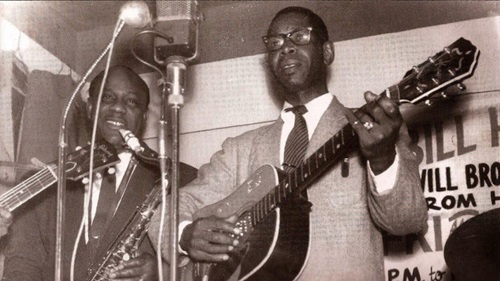

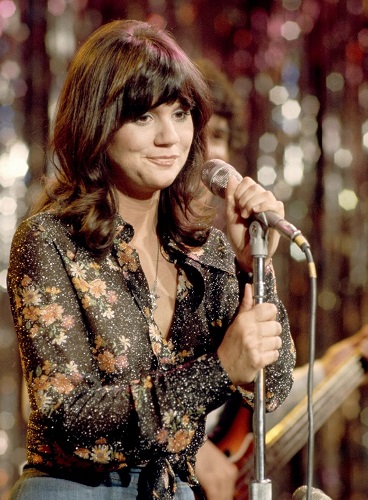
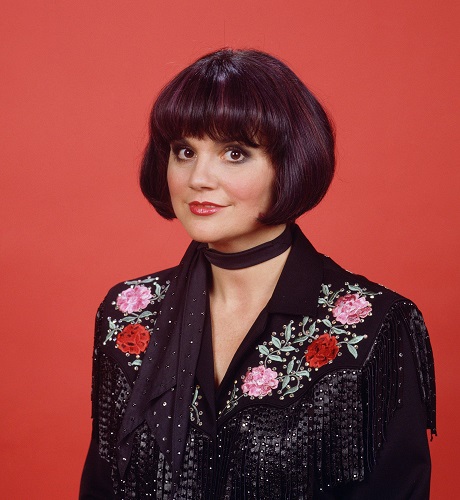


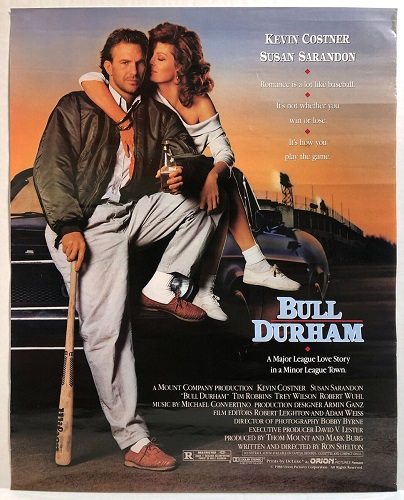




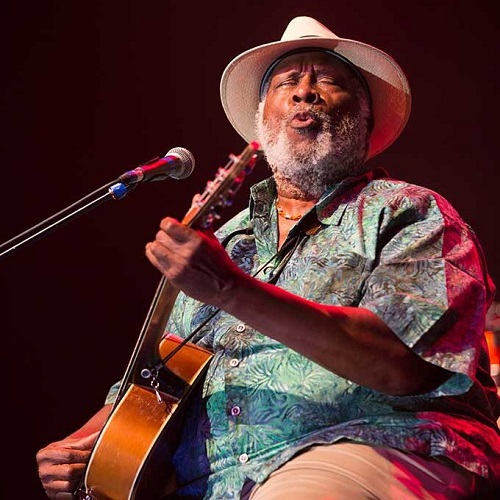
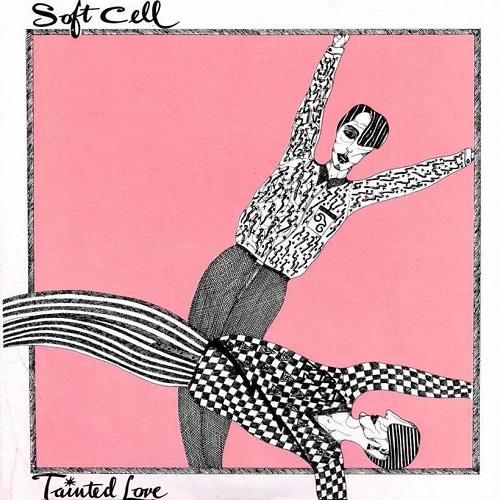
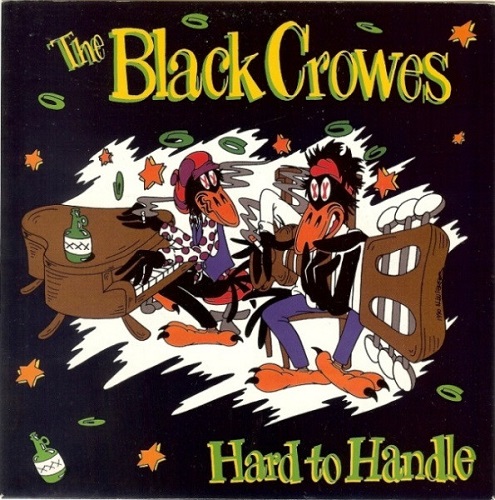


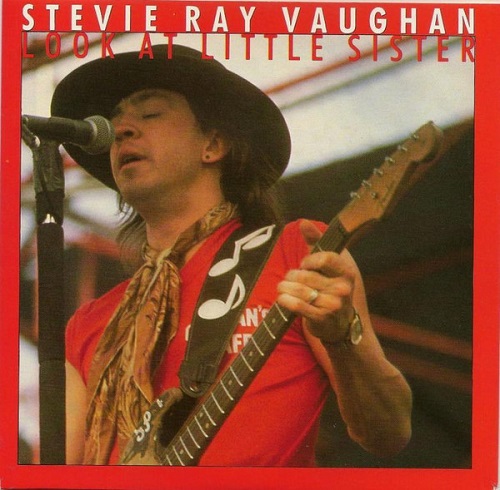

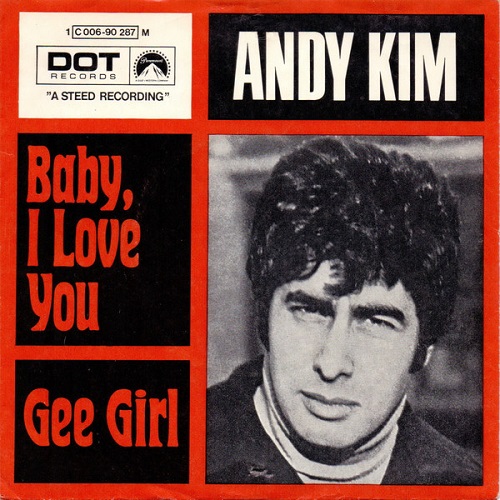
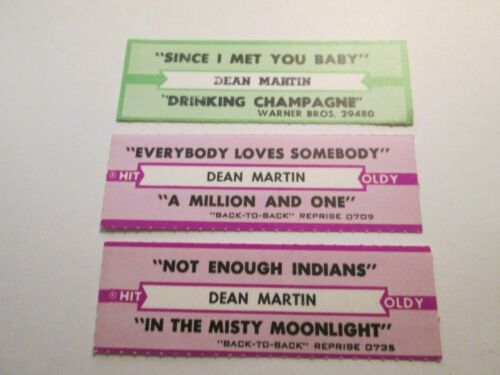
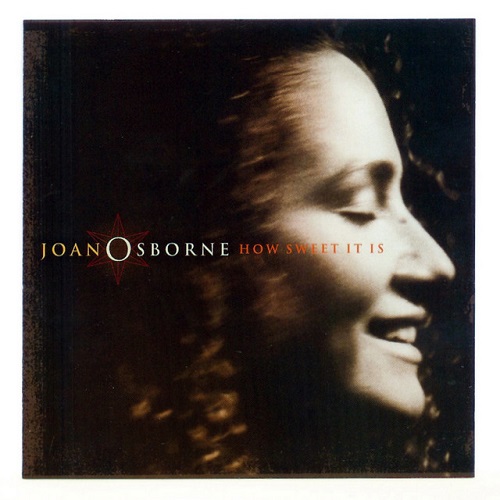

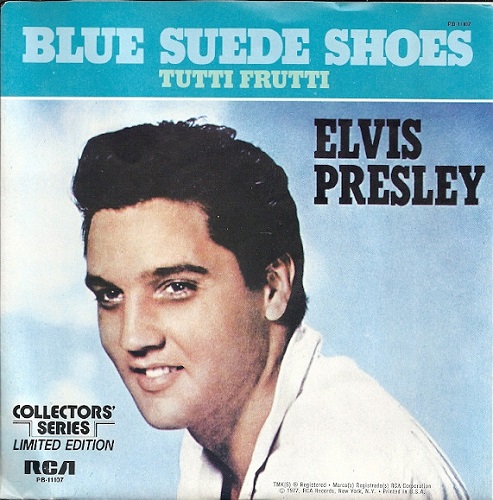


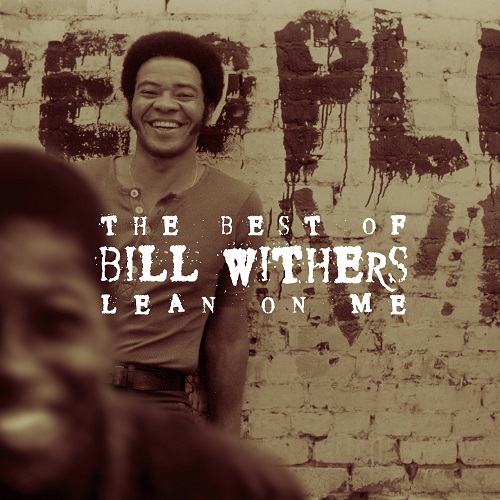


 Various Ramblings of a Nostalgic Italian