
1973’s American Graffiti is a classic film known for showcasing many young actors and actresses who who go on to very big things. Featured in the cast were Richard Dreyfuss, Ron Howard, McKenzie Phillips, Cindy Williams, Harrison Ford, and Suzanne Somers. The film is also known for its phenomenal soundtrack.
In the film, these tunes are often presented on the by the DJ, played by the legendary Wolfman Jack. On the soundtrack, there are actually some clips of Wolfman talking up some of the songs.
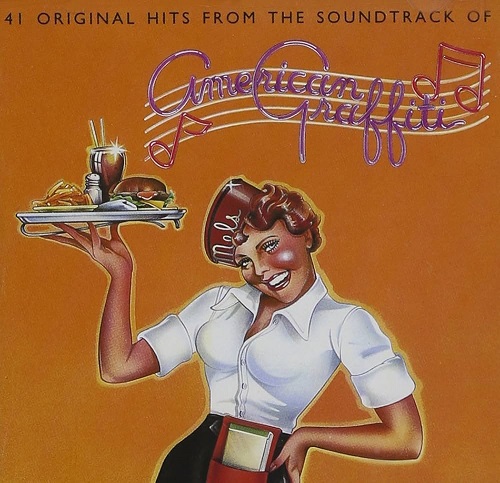
The soundtrack features 41 songs that were heard in the film. Sadly, they neglected to put Gee by The Crows on the album. It did show up, however, on a second soundtrack album. George Lucas said that each song was important to the scene of the movie it appears. His idea was that the characters are hearing the songs along with you and the music becomes part of the story.
Wiki states that “Lucas had to be realistic about the complexities of copyright clearances, though, and suggested a number of alternative tracks. Universal wanted Lucas and producer Gary Kurtz to hire an orchestra for sound-alikes. The studio eventually proposed a flat deal that offered every music publisher the same amount of money. This was acceptable to most of the companies representing Lucas’s first choices, but not to RCA—with the consequence that Elvis Presley is conspicuously absent from the soundtrack. Clearing the music licensing rights had cost approximately $90,000, and as a result, no money was left for a traditional film score.”
One of the songs that is featured on the soundtrack was first introduced to my by my dad. He and my Godfather loved some of the old blues songs and this was one of them – Fannie Mae by Buster Brown.
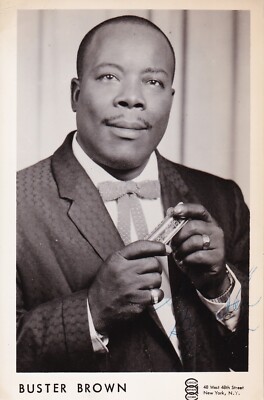
When my dad told me his name, all I could think about was Buster Brown shoes! He got his start in the 30’s and 40’s playing the harmonica in clubs and even made a few recordings. He moved from Georgia to New York in 1956. It was there that he was discovered by Fire Records.
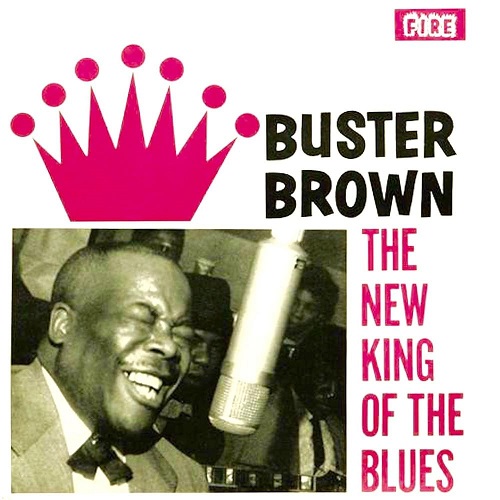
Three years later (at 50 years old), he recorded Fannie Mae. He played the harmonica and “whooped” it up on the song. It became his first hit as it went to #38 on the Billboard Hot 100 chart and #1 on the Billboard R&B chart.
Brown didn’t have a lot of success after this song. He did enjoy the renewed interest in his music in 1973 thanks to the American Graffiti soundtrack.
The song has been covered by The Rolling Stones, Jr. Walker & the All Stars, The Steve Miller Band, Canned Heat, Gary US Bonds, and Elvin Bishop. To me, no one can touch the original. I’ve been wanting to share this one for a while and Movie Music Monday gave me the perfect excuse. Give this gritty blues song a listen.
 Various Ramblings of a Nostalgic Italian