The Music of My Life – Decade Extra – The 1970’s (Part 2)

This is sort of a continuation of the Music of My Life feature. It focused on music from 1970-2025. It featured tunes that have special meaning to me, brought back a certain memory or a tune that I just really like. I found that with the first three decades, there were songs that I didn’t feature. So I sat down with my original lists and selected some songs that “bubbled under,” so to speak.

I figured a good way to present them was to focus on a decade. 10 years = 1 song per year = 10 songs. Last week we looked at the 70’s, and I thought we’d stay there one more week before moving on to the 80’s. So, let’s check out a few “Decade Extras.”

A hat tip to songfacts.com for much of the information.

1970

I suppose it wouldn’t be right to leave out the number one song for the entire year I was born, so we start off with Simon and Garfunkel’s Bridge Over Troubled Water. Paul Simon wrote this about providing comfort to a person in need. It started as a modest gospel hymn but became more dramatic as he put it together.

He wrote the song with just two verses, considering the song “a little hymn.” Art Garfunkel and producer Roy Halee heard it as more epic, and convinced him to write an extra section, which Paul did in the studio (the “Sail on, Silvergirl part”). This was very unusual for Simon, as he usually took a long time writing his lyrics. The song got a grand production, and after hearing it, Paul thought it was too long, too slow and too orchestral to be a hit. It was Clive Davis at Columbia Records who heard the commercial appeal of the song, and insisted they market it like crazy and use it as the album title.

In 1971, this won five Grammy Awards: Song of the Year, Record of the Year, Best Contemporary Song, Best Engineered Record, and Best Arrangement Accompanying Vocalists. The album also won Album of the Year.

My mom loved this song and I remember her singing along with it on car trips.

Bridge Over Troubled Water

1971

Many folks poked fun at Ringo Starr when he began a solo career. Of the four, people thought he was the least likely to have success as a solo artist. He proved them wrong and he still tours to this day. One of the songs that did well for him was It Don’t Come Easy.

Ringo is the only songwriter credited on this one, but he had a lot of help from George Harrison. George was very generous in giving his former band mate full writing credit. The track (less Ringo’s vocal and horn parts) was already completed when Harrison gave it to him, and it included a scratch vocal by George.

Fun Fact: Peter Ham and Tom Evans of Badfinger sang on the intro to this song (“It don’t come easy, ya know it don’t come easy”). Badfinger was signed to The Beatles’ Apple Records, and helped out George Harrison’s first solo album.

It Don’t Come Easy

1972

Growing up there were a lot of Van Morrison songs that I liked, but never knew it was him. It wasn’t until I worked at my first radio station that I discovered he sang Moondance, Domino, and Jackie Wilson Said.

Listening to Jackie Wilson Said, I would have never guessed that the recording was unorganized. However, according to guitarist Doug Messenger the session was chaos! He told “Uncut”:

“Jackie Wilson Said was totally disorganized. He didn’t know where anything went, and no one seemed to know what to do with it. Van went away and the band worked on the basic structure. When he came back we went through it a couple of times and he was real happy because all of a sudden it seemed to be making sense. He said, ‘I think it’s coming together,’ which is what he always said when he felt it was working.”

“I remember he said to the drummer, Ricky Schlosser, ‘When I sing “boom boom boom,” hit the tom and the kick drum at the same time.’ We ran through it once or twice, and the first recorded take is what’s on the album. It was all over the place, but somehow it worked. Even when he ad-libbed at the end -‘One more time’- somehow we all kept it together. At the end, Van was smiling like a Cheshire Cat. ‘I think we got it!’ We tried a second take and – of course – it all fell apart.”

Give it a listen and see if you can hear the “disorganization.”

Jackie Wilson Said

1973

The next song makes me think of my oldest son. His mother would play songs from her iPod around the house and one of those songs was Let Me Be There by Olivia Newton-John. There would be times where he would take her iPod and listen to it in headphones. I still laugh when I think about him singing loudly and off-key “Let me be there in your mornin’, let me be there in your night!” It was really more of a scream than singing.

The was Newton-John’s breakthrough single in the US, where it landed in the Top 10 on the Hot 100, the Country chart, and the Adult Contemporary chart. At the time, she was still living in Britain and didn’t travel across the pond to promote the single or the album. Turns out she didn’t need much promotion at all. When the song hit it big, people had no idea who she was. That actually was a relief to the singer. “The one great thrill I had in America was that my music was accepted before I was ever seen, before I was on television, before I did live appearances,” she told Rolling Stone. “Therefore I had to hope it was my music and not my face.”

Keep in mind that this was five years before she starred in the movie musical Grease. She would win her first Grammy Award for song. This was surprising because she was up against country veterans like Tammy Wynette and Dottie West. She won for Best Female Country Vocal Performance.

Let Me Be There

1974

I was lucky enough to have never walk in on my parents when they were being intimate. My friends who have say it was a truly traumatic experience. On the TV series That 70’s Show, that exact thing happens to Eric, the main character. As he opens the door, Tell Me Something Good by Rufus and Chaka Khan. As a running gag throughout the episode, that song pops up a few times. I think of that episode when I hear this song.

Stevie Wonder wrote the song and recorded it himself on December 13, 1973 – he copyrighted it on January 3, 1974. His version was never released because he gave the song to Rufus, since Stevie was a fan of their lead singer, Chaka Khan. 

Chaka Khan tells the story that Stevie was going to bring them a song in the studio, and when he dropped by and played her one he had written, she stunned her bandmates by telling the mighty Stevie Wonder she didn’t like it! So Wonder asked her astrological sign, and when she told him Aries, he delivered “Tell Me Something Good.” According to Chaka, she loved it and they worked out the song together in the studio, although Stevie is the only credited writer on the song.

Fun Fact: Rufus evolved from a group called The American Breed, who had the hit “Bend Me, Shape Me.” They took their name from a column in Popular Mechanics magazine called “Ask Rufus,” later shortened to Rufus when Chaka Khan joined the band in 1972.

Tell Me Something Good

1975

I remember playing Bad Blood by Neil Sedaka when I worked at the oldies station. I had no idea at the time that he had done anything other than those 60’s songs he was known for.

Sedaka wrote this song with Philip Cody.  Phil said in a Songfacts interview that it’s his least favorite song. “I went to visit my family and I spent some time with my grandmother, who is an old Sicilian lady. She was telling stories about the lady up the street who used to be a witch, a Strega. And the whole idea of people being good or evil because of what goes on in their blood was just part of the superstitious nature of my Sicilian upbringing that I tried to stay as far away from as I could. (laughing) I just thought it would be an interesting way to approach a lyric: rather than from a place of enlightenment the idea is that love makes us stupid. And that’s where I went. It wasn’t (heavy sigh – pause)… I did it, and I didn’t think I did a very good job on it, and before I had a chance to do a re-write Neil was in the studio with Elton doing the song, and that was it. So I guess the best things are left undone.”

This song turned out to be Sedaka’s biggest hit, reaching #1 on the Billboard Top 100, remaining there for three weeks. He was helped by Elton John, who sang back-up for this song which ensured airplay. In an odd coincidence, this song was knocked out of its #1 position by an Elton John song, “Island Girl.”

Bad Blood

1976

More Than a Feeling was Boston’s debut single. It turned out to be a big surprise hit. Songfacts says: The group’s rise was sudden and unexpected; when “More Than a Feeling” was released, their managers spent a lot of time pitching it to radio stations, which is a very tough sell for an unknown band, but the song is so polished and radio-friendly that many stations put it on the air. It took off, and very soon this unknown band with an album recorded mostly in a basement was a major player on the rock scene.

Boston’s Tom Scholz worked at Polaroid, which made him enough money to buy equipment to create a basement studio. He did most of the recording of the first album there. He actually took a leave of absence from his job at Polaroid to complete the album. Once the album was released, he went back to work.

Songfacts says, “disco was big, so he wasn’t sure his rock record would find an audience. He got very excited when co-workers would summon him to let him know ‘More Than A Feeling’ was playing on the radio. After that happened a few times, he was confident enough to quit his day job.

The song is a classic rock standard and appeared on the soundtrack of the film “FM,” which was the subject of this blog on Monday.

More Than a Feeling

1977

Being born and raised in Michigan, Bob Seger’s music was everywhere when I grew up. When my dad played in a wedding band Night Moves and Trying To Live My Life Without You were songs that they played at gigs.

Mainstreet was a song that was always requested at the station. The actual street Seger sings about in this song is Ann Street, which was off of Main Street in Ann Arbor. Seger told the Chicago Sun-Times: “It was a club. I can’t remember the name of the club, but the band that played there all the time was called Washboard Willie. They were a Delta and Chicago blues band. Girls would dance in the window. They were a black band, and they were very good. That’s where I would go but I was too young to get in. It wasn’t in a great part of town but college students loved to go there.”

This was the second single from the Night Moves album, following the title track. Both songs are very nostalgic and a departure from high-energy rockers his fans were used to hearing. By this time, Seger had been at it in earnest for over a decade and was just starting to break through to a national audience. Live Bullet was his first album to find a broad audience; many who bought it snatched up Night Moves when it came out, and weren’t disappointed. Both albums ended up selling over 5 million copies, making Seger a star.

Mainstreet

1978

Kiss You All Over by Exile was another one of those songs that dominated pop and country radio. It was the perfect crossover song.

In an interview with Billboard, writer Mike Chapman said:

“It’s a very unusual song and is very much about what music in the US is all about in 1978. It’s MOR (Middle Of the Road) soft rock, slightly disco though not pure disco, and has a sensuous lyric line that Americans love. Americans are big lyric listeners and listen to every word.”

It is no surprise that the song has frequently been used as backing music for TV scenes involving various degrees of smooching or similar lip-caressing activities. Songfacts notes that the most creative use of “Kiss You All Over” goes to the Canadian Broadcasting Company’s use of the song in a 2007 montage of hockey players kissing the Stanley Cup. HA!

Kiss You All Over

1979

Many DJ’s will play the song Single Ladies when they do the bouquet toss at weddings. I always love using Ladies Night by Kool and the Gang. It had a funky beat that the ladies would dance to as they waited for the bride to toss her flowers.

Songfacts notes that disco was dying when “Ladies Night” was released at the end of 1979. That didn’t stop Kool & the Gang from using a disco groove on this track and mentioning the “disco lady” and “disco lights” in the lyrics. The song mixed in enough of their funk flourishes to stand out from the pack and bring them into the ’80s – it reached its chart peak of #8 in America the second week of 1980.

Like most Kool & the Gang songs, every member of the group is credited as a writer. “Ladies Night” started with a groove their multi-instrumentalist music director Ronald Bell came up with. His brother, Robert “Kool” Bell (the bass player in the group), gave him two ideas for lyrical themes: “Ladies Night” and “Hangin’ Out.” It was no contest – Ronald knew there were ladies nights everywhere, and loved the idea.

They fleshed out the song with the group, but struggled to find a hook. Ronald Bell remembered a piece of advice from his mother. He recalled to Billboard: “My mother, Aminah, had a hand in that one. Because she would say to me, ‘Always give the people nursery rhymes. Give them something they remember.’ She liked the Dells’ song, ‘Oh What A Night,’ so I put that in. When we were finished, we were all in tune that this was it. We just didn’t know how big!”

Of course, younger folks will always think of Jon Lovitz in the Wedding Singer when they hear this one.

Ladies Night

Yes, there are plenty of great songs I missed from the 1970’s, but next week, we’ll head to the 80’s. I’ll feature ten songs, one from each year of the decade. I hope you will join me next week.

Thanks for listening and thanks for reading.

The Music of My Life – 1991

Welcome back to The Music of My Life, where I feature ten songs from each year of my life.  In most cases, the ten songs I choose will be ones I like personally (unless I explain otherwise). The songs will be selected from Billboard’s Year-end Hot 100 Chart, Acclaimed Music, and will all be released in the featured year.

1991 saw big changes for me.  In April, a former coworker called to ask if I wanted a full time radio job at his station.  It was a small market on the west side of the state (In Ludington). My girlfriend at the time and I had just had a big argument and I figured “Why not?!”

I was all by myself, in a place where I really only knew one person, at a job that decided to pay less than what I was told when I moved.  It was lonely and I struggled a lot.  The day I turned 21, I went to the store to buy beer and they never even carded me!

That summer would be one of my favorite summers.  Michigan’s West side is just beautiful.  I had never seen sunsets like those before!  They were breathtaking. 

Musically, there were some powerful tunes released in 1991.  Some of them wouldn’t play into the events of my life for a few years, but when they did …

The first pick from ’91 is a song that I have found people either love or hate.  I’m not sure why. Personally, I love the guitar sound and the harmonies in it, and I love the lyrics.

More Than Words is a song that was written by Gary Cherone and Nuno Bettencourt of Extreme.  Nuno says, “The word ‘love’ itself gets really diluted, so we just wanted to say, ‘It’s not really about saying it,’ because everybody gets really worked up when somebody says that to each other. They say, ‘I love you,’ and everybody goes, ‘Oh my God! It must be serious. It must be heavy.’ It’s like, ‘Eh… it’s easy to say that.’ It’s really about showing it constantly and continuously in a relationship. We knew that was the message.”

The song was a huge hit for them.  People who rushed out to buy their albums were quite surprised when they heard that the band primarily played Rock music.  The band has called the song “both a blessing and a curse.”

More Than Words

R.E.M. had released the very thought provoking Losing My Religion from their Out of Time album as their first single.  Their follow up was a song that could not be more different! That song was Shiny Happy People.

Michael Stipe calls this “A really fruity, kind of bubblegum song.” In an interview with The Quietus, he said that he was a bit embarrassed when it became a big hit, but it’s an important song because it shows a different side of him. Said Stipe:

Many people’s idea of R.E.M, and me in particular, is very serious, with me being a very serious kind of poet. But I’m also actually quite funny – hey, my bandmates think so, my family thinks so, my boyfriend thinks so, so I must be – but that doesn’t always come through in the music! People have this idea of who I am probably because when I talk on camera, I’m working so hard to articulate my thoughts that I come across as very intense.”

Kate Pierson from the B-52s sang backup. She was in demand for her distinctive vocals after the B-52s achieved mainstream success with Love Shack.

In 1999, R.E.M. performed this on Sesame Street as “Furry Happy Monsters.” Kate Pierson’s part was performed by a Muppet that looked like her, voiced by Stephanie D’Abruzzo, a Muppeteer who was also a huge fan of the band.

Guitarist Peter Buck has two daughters who were big fans of the show. “You just looked around,” he recalled to Mojo in 2016, “going, Man this is a weird way to make a living.”

I had heard the song on the radio but it wasn’t until I was sitting at home watching Sesame Street with my oldest that I gained an appreciation for it. 

Shiny Happy People

My next one had been on my iPod for years before the lyrics really hit me.  My ex and I were at a point where all we did was argue.  It was a very unhappy situation. 

It was after an argument that I was in the car and heard Mariah Carey’s “I Don’t Wanna Cry.” Those lyrics were something I could have wrote;

Once again we sit in silence
After all is said and done
Only emptiness inside us
Baby look what we’ve become
We can make a million promises
But we still won’t change
It isn’t right to stay together
When we only bring each other pain

It stung, but it was true.  The end was upon us.

This was Mariah’s fourth consecutive #1 hit on the Hot 100, making her the first solo artist and female artist in Billboard history to have their first four singles top the chart.

I love her vocal and the guitar work in this one

I Don’t Want to Cry

Long before I stood next to a very drunk Hank Williams Jr at a urinal in Nashville, he had put out an album in ’91 entitled Pure Hank.

One of the singles that was released was If It Will It Will.  It’s very easy for us to get caught up in worry, but worry isn’t good for us.  Hank’s simple advice is something we should all remember,

“If it will, it will.  If it won’t, it won’t.”

The weirdest thing about this song is the video.  Right at the beginning, Little Richard shows up.  To me, he’s out of place and isn’t utilized very well. Even when he does sing along, you can barely hear him. The song, however, is a favorite.  It starts off with a  bluesy vocal/introduction and then kicks.

If It Will, It Will

As I compile these lists for each year, I always seem to stumble on one that could be used for another feature. The next song would certainly work for my Movie Music Monday feature. It was a big hit from the Robin Hood: Prince of Thieves soundtrack.

(Everything I Do) I Do It For You was written to order for the movie. It was initially written by American film composer Michael Kamen. The middle eight, break, outro and arrangement added by Bryan Adams and producer Mutt Lange. Adams used a line in the movie, “I do it for you…” as the basis for the song, and they had it written in about an hour.

The song didn’t meet with Hollywood approval. The film company wanted the song to have an instrumentation that was in line with the film’s era. Can you imagine the song featuring lutes, mandolins, and the like? The film company eventually relented, but still buried the song midway through the credits. They were obviously unaware of the huge hit they had on their hands.

The reason it made my list is because of an ex-girlfriend. It is not because it was “our song” or anything like that. She asked me if I knew the song. Naturally, I did. It was a big bridal dance song. She told me to listen to it again, but to listen to it as if God was speaking the words (making changes to tense and such).

You can’t tell me it’s (your) not worth dying for
You know it’s true
Everything I do (did)
I do (did) it for you

I had never thought of it that way before. I always remember that conversation when I hear the song.

(Everything I Do) I Do It For You

I love Bonnie Raitt. I love listening to her sing and watching her play. She is blues. She is country. She is pop. She is folk. She is something!

She was no stranger to the music scene. Her first album came out in 1971! She also did some session work. She’s collaborated with artists like John Prine, Jackson Brown, The Pointer Sisters, Warren Zevon and Leon Russell. She finally had some success in 1989 with her award winning album Nick of Time.

The first time I heard Something To Talk About on the radio, it stuck out to me. It was so different. As a blues fan, I could hear that blues influence and I feel in love with the song. The song would go on to be her biggest chart hit in the United States, rising to #5.

She was never a singles act, but after her four Grammy wins for the album Nick Of Time, her songs started getting radio play. With radio play, they began showing up on the chart. “Something to Talk About” was the lead single to her next album, Luck of the Draw. Because of her prior success, the song was highly anticipated and radio jumped on it. The song won a Grammy Award for Best Female Pop Vocal Performance. Bonnie beat out Oleta Adams, Mariah Carey, Amy Grant and Whitney Houston.

Sadly, it is also a karaoke favorite that is destroyed by many a “wanna be” singer in pubs everywhere! I’ll take the original, thank you.

Something To Talk About

The next song is on the list not because of the content, but the title. “Things That Make You Go Hmmm” became a sort of catch phrase. Arsenio Hall used it on his show all the time. I still hear people using it today!

C+C Music Factory was a dance floor staple when I was DJing. “Gonna Make You Sweat” is still one that I hear when I go to weddings. “Things That Make You Go Hmmm” was a huge dance song when it came out. It had a cool dance beat and some catchy lyrics.

Songfacts says this:

In the early ’90s, before gangsta rap took hold, rap songs were often lighthearted and clever, telling self-deprecating stories over dance grooves. Examples of this would be “Bust a Move” and “Funky Cold Medina.”

I think that is why that early 90s rap is still popular today. They really were very clever. They were also light on profanity. It isn’t odd to see “MF” and other profane words right in the titles as time goes on. That always made me laugh because how can anyone like a song where 75% of the lyrics are bleeped out? I guess that’s one of those … Things That Make You Go Hmmm….

Things That Make You Go Hmmm

The next song was one that was never released as a single. I became familiar with it after my grandfather passed away in 1994. I was extremely close to my grandpa and was heart broken when he passed. I received Reba McEntire’s For My Broken Heart album from my dear friend Allyson.

We both have birthdays in May and when life wasn’t so complicated, we’d meet for coffee or lunch to celebrate. She gave me this CD as a gift. She mentioned that she knew I was still grieving the death of my grandpa. She told me she thought of me when she heard the song, If I Had Only Known.

Quick background on the album. Reba recorded this album after losing many members of her touring band in an airplane crash. In her liner notes she says the album is “a form of healing for all our broken hearts.”

When I listened to this song for the first time, I thought about my grandpa (as Allyson had suggested). It moved me to tears. A decade later, I would hear it and think of my mom, too.

The lesson of the song? If we were aware that we were experiencing the “last” of something, we’d live life a bit differently.

If I Had Only Known

I always love to hear stories about how a song almost didn’t happen. That was the case for I Can’t Dance by Genesis. It came from a mix of a Jam session and writing session.

The lyrics are made up of bits that Phil Collins improvised in the studio. When they started working on it, they decided to just write spontaneously to keep from over-thinking it. Mike Rutherford first created the main riff of the song he called “Heavy A Flat.” Which led Phil to suddenly improvise the basic concept for “I Can’t Dance”. The riff was actually inspired by a Levi Strauss & Co. television commercial.

Originally, the band did not think of it as anything more than a joke recording that would be discarded quickly. They felt this way because the song was too simple, too bluesy, and unlike Genesis’ style. Tony Banks said, “It was one of those bits you thought was going to go nowhere. It sounded fun but wasn’t really special.”

When Banks decided to add keyboard sound effects to complement Rutherford’s playing, “I Can’t Dance” took on an entirely different feeling. The band came to appreciate the sly humor inherent in the song and chose to not only record it properly, but to put it on the album as a single.

The video created a lasting image thanks to the “silly walk” the three band members did. This walk was something Phil Collins did from time to time. He got the idea for it when he attended drama school and noticed that the worst dancers would always lead with the hand and foot on the same side. The dance has become sort of iconic.

I think that I relate to this song in that I can’t really dance. I sway when slow dancing. Fast dancing? HA! Forget it. I can’t. When I try, I look like Elaine from Seinfeld.

I Can’t Dance

When I was DJing at the local VFW, line dancing was a pretty big thing. There were all kinds of country line dances. At one point I had to make a list so I knew what dances people were doing to certain songs.

“Can you play Moo Moo Land?”

That was what someone came up and asked me one day. Moo Moo Land? What in the world was that!? Naturally, my dad knew it because there was a dance they did to it. It was called “Justified and Ancient” by the KLF and featured Tammy Wynette! What a weird pairing!

But it gets weirder! According to Songfacts:

The title “Justified & Ancient” refers to the KLF’s pseudonym and earlier incarnation, “The Justified Ancients of Mu Mu” (The JAMs). The JAMs took their name from Robert Shea and Robert Anton Wilson’s sci-fi tinged, conspiracy theory-laden Illuminatus! Book series in which The Justified Ancients Of Mu Mu are a fictional subversive cult who have been around since pre-history. The song lyrics describe the Justified Ancients making their way to Mu Mu Land in an ice cream van.

Huh?!

Even Tammy was unsure about it. She originally thought the song was called “Justified and ANXIOUS.” She said, “As it was, I didn’t understand what some of the words meant. I know about ice cream vans, but I’d never heard of a 99 before,” she added. “Bill explained it to me and now it makes perfectly good sense. I’m still not sure about Justified and Ancient though.” (A 99 is an ice cream with a flake in it).

Really, it is a great dance record. It’s neat to hear Tammy Wynette on it and it really revitalized her career.

Justified and Ancient

Last week I threw in that crazy Bingo Boys song at the end of my list. This week, I have to throw in another totally ridiculous song at you. Again, it is one that my best friend Jeff and I laughed about – a lot.

The group 2nu (pronounced “two – new”) was a pop group out of Seattle, Washington. When they first hit the scene, they has yet to come up with a name. A radio DJ said that the band was still too new to have a name, and they decided that worked. They have only released three albums, the first in 1991. What makes them unique (if that is the right word) is that their songs consist of sound effects, rhythmic beats, and a spoken word lyric. Their first single was “This is Ponderous.”

The song is more bizarre than ponderous. My buddy and I used to laugh at the “language the narrator doesn’t understand.”

Feel free to file this in the “What the heck was that?” folder…

This Is Ponderous

And with that silliness, we wrap up 1991. I mentioned that I can’t dance this week. Next week, as we dive into 1992, it contains the only fast song that I will dance to. It is an interesting list. It includes three cover songs, one parody song, three movie songs, a song about a royal feud, a song for the hard workers, and a song for the poor. I think you’ll enjoy it.

Did I forget one one your favorites from 1991? Drop it in the comments. I’d love to see if it was one that was on my radar.

I truly hope you are enjoying this series. Thanks for reading!

Turntable Talk – This Song’s Going Places

Once again, Dave over at A Sound Day has offered up a new topic for his Turntable Talk feature and has asked me to contribute. His thoughts of holiday getaways and Spring Break led to this month’s topic. Our instructions:

“Tell us about a song (or album) you like that is all about going places. Trains, planes, automobiles – there’ve been scores of good songs about traveling, geographically or even mentally, not to mention songs about specific destinations…”

One song immediately popped into my head and takes me back to my childhood. In order to write about the song, we have to take a trip to Michigan’s thumb area in 1979.

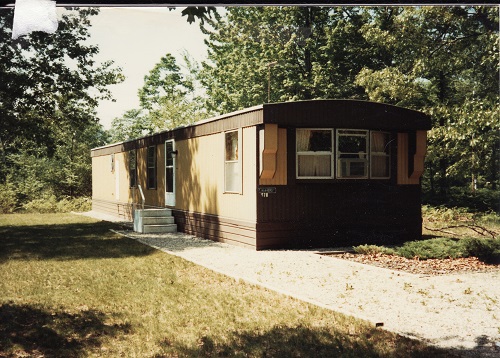
My great aunt had a trailer in Caseville, MI. My grandparents would go there on occasion, and we did too. At some point they decided that they also would like a little summer getaway and bought their own trailer. They placed in on a lot of land one street over from my great aunt’s place.

I have many fond memories of that place. Walks to the beach (which is now private), grocery shopping at the IGA, big breakfasts cooked by my dad and grandpa, riding the minibike around the neighborhood, and fishing at the back lake.

The thing I remember most about the trailer in that first couple years was that they did not have a TV. When they did, it only got one or two stations and you’d have to go outside and turn the antenna to get a good picture. The radio was our main source of entertainment. Even that wasn’t great, as there were very few stations that came in. We had this small, one speaker radio/cassette player that provided the music.

There were two cassettes that were at the trailer. The fantastic “Stardust” album from Willie Nelson and Johnny Paycheck’s Greatest Hits Volume 2. Each album contains a song about Georgia, but my pick comes from Johnny Paycheck. Georgia in a Jug originally appeared on Paycheck’s Take This Job and Shove It LP.

The song was written by Bobby Braddock, who wrote some of country music’s biggest hits (Toby Keith’s I Wanna talk About Me, Tammy Wynette’s D-I-V-O-R-C-E, and George Jones’ He Stopped Loving Her Today, to name a few). He is a member of the Nashville Songwriter’s Hall of Fame and the Country Music Hall of Fame. As a producer, he discovered Blake Shelton and got him his record deal. He also wrote Shelton’s hit “Austin,” which was a number one song. Coincidentally, Blake Shelton also covered Georgia in a Jug.

This song’s “travel” would fall into the “mental” category that Dave mentions in his instructions to us, as it all occurs on a barstool. It is relatable in that most of us have a jar or bucket where we throw spare change in hopes that one day we’ll have enough to travel or make a big purchase. The dreams of the singer are shattered by the end of a relationship. He decides to head to the bar with his money and take his own trip. The destinations include, Mexico, Puerto Rico, and Honolulu.

One reason I have always found Johnny Paycheck’s version superior to the other covers is the arrangement. After each destination, you hear a little musical bit that takes you there. “I’m going down to Mexico in a glass of tequila” is followed by the sound of a trumpet from a mariachi band. “Going down to Puerto Rico in a bottle of rum” is followed by a marimba type drum. “Going out to Honolulu in a Mai Tai mug” is followed by the sounds of Hawaiian music. Those little musical flourishes really make the song for me.

Listening to this song as a nine year old, I had no idea it was about getting drunk or drinking. I just remember it being one of those cool songs that the family listened to and sang along with as a gin rummy game was being played, while we were reading a book, or we were sitting outside eating at the picnic table. It is one of many songs that will instantly transport me in time – and isn’t that what makes a song so special?

Thanks again to Dave for allowing me to take part in this feature. As always, I look forward to reading the contributions of the other music lovers in our group. Thanks for reading!

Georgia In A Jug

Mason jars on the dresser filled with dollars and quarters
Savin’ em’ for our trip around the world
But now you’ve changed your tune, there’ll be no honeymoon
So tonight I’m going there without you girl

I’m going down to Mexico, in a glass of tequila
Going down to Puerto Rico, in a bottle of rum
Going out to Honolulu, in a Mai Tai mug
And I’m coming back home to Georgia, in a jug

We’ll never ride that bus to Mexico City, and that’s a pity
We’ll never sail our ship into old San Juan
You’ll never walk with me, on the beach at Waikiki
And we’ll never share that brick suburban home

Today I’m taking that money out of that jar
Tonight I’ll buy my ticket, at the corner bar

I’m going down to Mexico, in a glass of tequila
Going down to Puerto Rico, in a bottle of rum
Going out to Honolulu, in a Mai Tai mug
And I’m coming back home to Georgia, in a jug

Yes, I’m coming back home to Georgia, in a jug…