Here we go with another month and another Turntable Talk topic from Dave at A Sound Day. For the 46th round, Dave has picked quite a broad topic – love. Dave has called this “Love is in the Air”. He asks, “Has there been any topic that inspired more songs than “love”? I doubt it. So this time out, I just hope you can pick your favorite song with “love” in the title and write a bit about it. It can be romantic, sexy, or of course the opposite.”
When I worked in radio, we’d get requests for songs that led to interesting phone calls. “Can you please play that song by that one singer? You know, the one about love?”
I asked Google a single question, which led to some interesting facts. I asked “approximately how many songs have the word ‘love’ in the title?” The response:
While an exact total for every song ever recorded is impossible to track, it has been estimated that over 100 million “love” songs have been recorded throughout history. The word “love” and its variations appear in more No. 1 Billboard Hot 100 hits than any other, with 117 such songs reaching the top spot between the 1960s and 2022.
Did you know that Elvis Presley had 66 songs with “love” in the title? Did you know that the Beatles used the word “love 613 times across their catalogue, with 76 instances in “All You Need Is Love” alone? Google also states that studies indicate that 57% to 67% of songs generally contain themes of love. So how in the world do you pick just one with so many great ones to chose from?
I mean, with Elvis “Can’t Help Falling in Love” is a good one. If I choose the Beatles, perhaps “Can’t Buy Me Love.” I then thought about my Rat Pack standards like “Everybody Loves Somebody” from Dean Martin and “What Is This Thing Called Love?” from Frank Sinatra. How about “Crazy Little Thing Called Love” from Queen or “Baby Love” by the Supremes? There are countless possibilities to choose from!
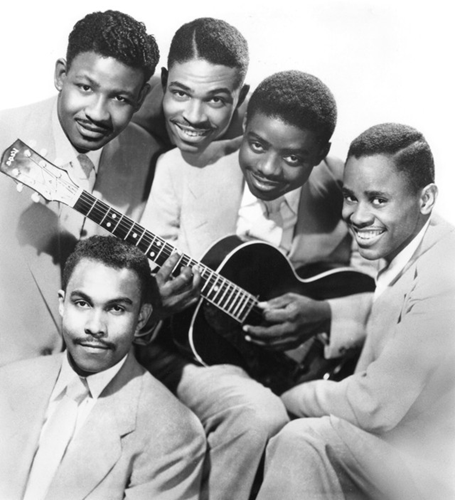
I decided to pop in a flash drive with music on my way to work in hopes that one would stand out. I was barely out of my driveway when the drive finished indexing and the first song played. It is a song that we played often when I worked at Honey Radio and it is one that may be new to you. I’ll triple Dave’s instructions and play a song with “love” in the title three times – Love, Love, Love from the Clovers.
The Clovers were formed in 1946 at Armstrong High School in Washington DC. Originally a trio, the group would add members to broaden their sound. The group recorded one song in 1950 for Rainbow Records in New York. They caught the ear of Atlantic Records and were signed to that label in 1951.
Their biggest hit would be Love Potion # 9 in 1959, but it took a few years to get there. In 1952 they had hits on the R&B charts with One Mint Julep and Ting A Ling. 1954 brought Your Cash Ain’t Nothin’ But Trash and Lovey Dovey. In 1956, they started to break out with Devil Or Angel (covered in 1960 by Bobby Vee) and Love, Love Love.
Love, Love Love was recorded in March of 1956 and was a top ten R&B hit by June. The song, however, would not crack the Top 40 chart, bubbling under it in August of that year.
The song always tested well with our oldies audience and I always loved hearing it. It has a fun bouncy sound to it with the vocals mixing with piano and baritone saxophone. It’s hard not to feel good when you hear it. The Beatles said “All You Need is Love,” and the lyrics of the song tell just how love can change the way you feel.
There ain’t nothin’ in this world for a boy and a girl but love, love, love Love, love, love: love. love, love There ain’t nothin’ in this world for a boy and a girl but love, love, love And that’s the only thing I’m thinkin’ of
Love can make you happy when you’re feelin’ blue If the one you love is in love with you
There ain’t nothin’ in this world for a boy and a girl but love, love, love Love, love, love: love. love, love There ain’t nothin’ in this world for a boy and a girl but love, love, love And that’s the only thing I’m thinkin’ of
Love can pick you up (love can pick you up) When you feel low-down (when you feel low- down) Love can make you smile when you’re wearin’ a frown
I want it, I need it, fill my cup with lo-ove, lo-ove, lo-ove Lo-ove, lo-ove, lo-ove: lo-ove, lo-ove, lo-ove Let me drink till my head goes ’round and ’round with lo-ove, lo-ove, lo-ove So come and be my, be my turtle dove
And because you know since my favorite singer cut the song on his 1965 Houston album, I have to include Dean Martin’s version. He sounds like he is having a blast singing it.
There are so many songs about love that I think I may feature a love song every week on my blog, who knows. Thanks to Dave for the invitation to participate again in this feature. It is a perfect topic for Valentine’s month. I’m sure that like past topics, there will be a nice variety of love songs from the other writers.
AJ McLean said: “Music is love, love is music, music is life, and I love my life.” I like that. As we listen to words of love set to music this month, I suggest we take it one step further. I encourage you to share the love with those you come in contact with this month – and every day.
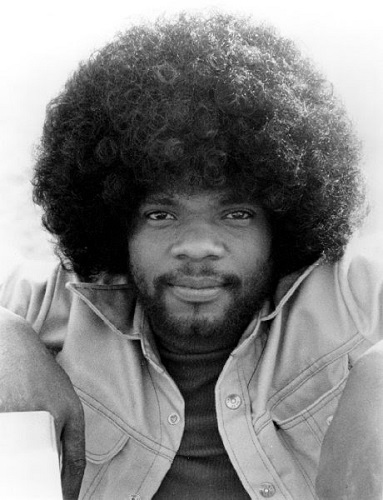
Preston was a keyboardist, singer, and songwriter whose work encompassed many genres of music. He was R&B, rock, soul, funk, and even gospel.
Preston started off at the age of 10 playing keyboards for gospel legend Mahalia Jackson. Later he joined Ray Charles’ touring band before recording with The Beatles on several of their tracks including “Get Back” and “Let It Be” (The Beatles considered him to be the fifth Beatle). He also played on a number of Sly & The Family Stone recordings and went on to have a successful solo career with five Top 10 US hits.
He was a top session keyboardist in the 1960s, backing artists like Little Richard, Sam Cooke, the Everly Brothers, the Rolling Stones! He also made a name for himself as a solo artist. Today let’s look at two of his hits.
Will It Go Round in Circles
This funky soul number was Billy Preston’s first #1 solo single. The virtuoso keyboardist, who was credited on the Beatles’ “Get Back” and joined them for their iconic 1966 rooftop concert, was briefly signed to the Fab Four’s Apple Records but found success with a switch to A&M Records. Music Is My Life was Preston’s second album on the LA-based label; his first, I Wrote A Simple Song, yielded the Grammy Award-winning instrumental “Outa-Space, which narrowly missed the #1 slot.
This was born out of a joke Preston made to his songwriting partner, Bruce Fisher, about having a song but no melody. The comment inspired the opening refrain, “I got a song that ain’t got no melody, I’m gonna sing it to my friends,” and set up similar proclamations, such as having a story with no moral and having a dance with no steps.
Nothing From Nothing
Billy Preston started writing this one night in the dressing room of an Atlanta nightclub where he was performing. He wanted to write a song based on the saying, “Nothing from nothing leaves nothing,” a variation on Bob Dylan line: “When you’ve got nothing, you’ve got nothing to lose.”
“The saloon piano gave it character,” Preston explained, “and I had a feeling it would be a hit because it was a singalong kind of thing.”
Bruce Fisher, who was Preston’s songwriting partner (he co-wrote “Will It Go Round In Circles”), added a second verse.
Fun Fact: The B-side of the single was another song Preston wrote with Fisher: “You Are So Beautiful,” which was later a hit for Joe Cocker.
Bonus Fun Fact: “Nothing From Nothing” was the first song performed on Saturday Night Live. Preston and Janis Ian were the musical guests on the October 11, 1975 debut of the show.
The later years of his life were plagued by substance abuse, health issues and legal issues. In 1997 he was sent to prison on drug charges. He suffered from kidney disease and hypertension. In 2005, he voluntarily entered a drug rehab center where pericarditis led to respiratory failure. He was in a coma from November of 2004 until he died in June of 2006 at age 59.
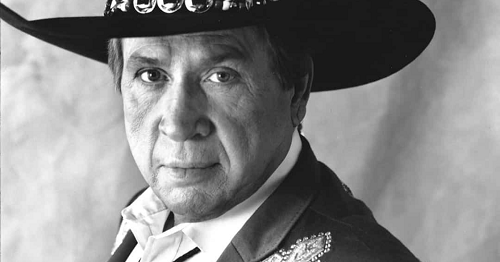
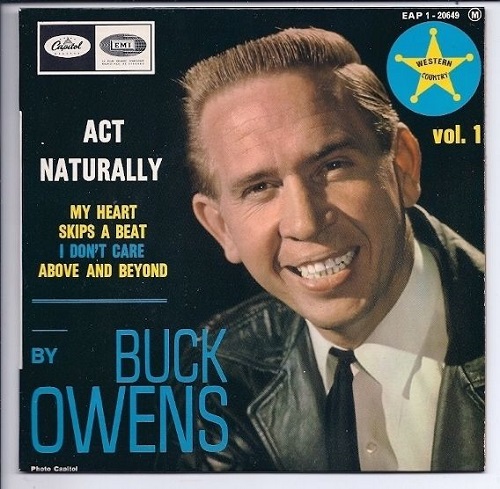
Happy Heavenly Birthday to Alvis Edgar Owens Jr. who was born on this day in 1929. You probably know him as “Buck.”
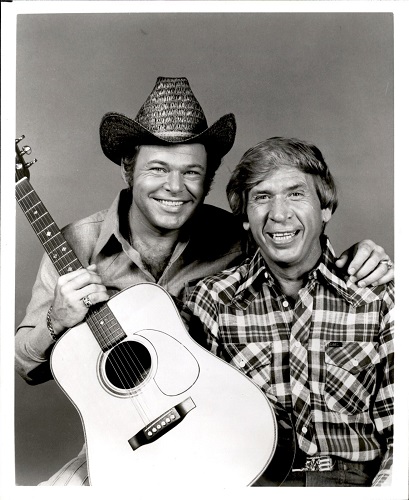
I was introduced to Buck when I saw him on Hee Haw with Roy Clark.
They co-hosted the show together from 1969-1986! Had quite a run full of hillbilly humor and corny jokes.
Buck taught himself how to play guitar, horns, mandolin, and drums. He was the frontman for The Buckaroos and together they chocked up 21 number one hits. He is best known for his Bakersfield sound, named in honor of Bakersfield, California.
In 1963, Johnny Russell pitched his song “Act Naturally” to Buck. Buck really didn’t care for it at first. His guitarist and longtime collaborator Don Rich, however, enjoyed it and convinced Owens to record it with the Buckaroos. Laid down on February 12, 1963, it was released on March 11 and entered the charts of April 13. By June 15 the single began its first of four non-consecutive weeks at the No. 1 position, Owens’s first top hit.
The song made an impact on four guys from Liverpool known as The Beatles. They covered the song in 1965 and Ringo Starr handled the lead vocals.
23 years later, Ringo and Buck would get together and perform the song as a duet.
Owens was inducted into the Country Music Hall of Fame in 1996. He passed away in March of 2006.
I mentioned yesterday that an MSN article listed some 1960’s Pop Songs that they felt needed to be retired. I didn’t say much about how I felt, as I wanted to see what my musical friends had to say. So here is a look again at the songs and why they felt they should be retired, followed by my two cents.
Let’s first talk about the word “retire.” I am guessing from the tone of the article that retire means to “go away for ever.” Isn’t that a bit harsh? I think so. Each of these songs (like it or not) may be someone’s favorite song.
While working in oldies radio, we used to have features that would pull out a song you don’t hear all the time and play it. Sometimes, we’d call it a “Forgotten Favorite” or a “song from the Music Museum.” The idea is to play a song that makes the listener go, “Wow, I remember this one,” “I haven’t heard this in forever,” or simply “Oh, wow!” One consultant I worked with used to call them “Oh Wow Songs.”
When radio “tested” songs, the audience is sat in an auditorium. They are played anywhere from 500-800 song clips. Each clip is usually 15 seconds long. They call those “hooks.” Ideally, it is the most recognizable part of the song. After they hear it, they are asked if they 1) liked the song, 2) disliked the song, 3) heard it too much, 4) didn’t hear it enough, or 5) don’t care either way.
The answers from that music test is then calculated and decisions are made about where it should be on the play list. If a song that is in a hot rotation is said to be played too much, the station would probably back off on the number of times it is played. If it was something they wanted to hear more of, they might spin it a few more times.
With all of that in mind, Let’s look at the songs again:
Sugar Sugar – The Archies
MSN: “Sugar, Sugar” by The Archies is a quintessential bubblegum pop tune that dominated the airwaves in the late ’60s. With its catchy chorus and playful melody, it quickly became a favorite among young audiences. Despite its charm, the song’s simplistic lyrics and repetitive tune can feel overly sweet, much like its title.
As a product of its time, the song was emblematic of the manufactured pop sound that appealed to a broad audience. Yet today, its perpetual presence in commercials and retro playlists has led to listener fatigue.
Keith: I’d like to know how they know that the listener is “fatigued” by this song. Was the song “tested?” Did they gather a bunch of people in an auditorium and actually let the listeners voice an opinion? I highly doubt it. It is a pretty bold statement to say people are tired of a song.
Bubblegum or not, the song is still being used in movies, commercials, and is a familiar favorite to radio listeners. Familiar is often what gets better ratings.
Green Tambourine – Lemon Pipers
MSN: The Lemon Pipers’ “Green Tambourine” captures the essence of the psychedelic era with its vivid imagery and whimsical sound. The song invites listeners into a world of colorful imagination, driven by its distinctive tambourine rhythm.
Despite its initial success, the song’s psychedelic charm feels dated, often overshadowed by more timeless tracks from the era. Its vivid imagery, once enchanting, now appears somewhat kitschy.
“Green Tambourine” was one of the first bubblegum pop songs to hit number one, symbolizing the fleeting nature of the genre’s appeal.
Keith: FYI – Kitschy means considered to be in poor taste because of excessive garishness or sentimentality, but sometimes appreciated in an ironic or knowing way. Thanks for using big words here MSN.
Does it sounded dated? Maybe, but no more dated that Magic Carpet Ride or any other “Psychedelic” song from that time. Does the “sound” of a song dictate whether or not it should be played? Let’s face it, if that was the case, we’d never hear disco or 80’s music. Talk about dated!
Personally, I don’t care for the song. That doesn’t mean that it should be retired.
In the Year 2525 – Zager and Evans
MSN: Zager and Evans’ “In the Year 2525” paints a dystopian future, capturing the anxieties of the late 1960s. The song’s lyrics take listeners on a speculative journey through time, each verse exploring the consequences of technological advancement.
While impactful during its time, its heavy-handed delivery and bleak outlook haven’t aged well. The song’s prophecy-driven narrative feels out of place in today’s music landscape, where optimism often takes center stage.
Keith: It seems to me that “today’s music landscape” is centered in drugs, sex, and profanity, so I’m not even sure that is a worthy comparison. Does “Give Peace a Chance” by John Lennon need to go away, too? “Gimme Shelter” by the Stones? Seems to me that there are plenty of songs that paint a grim future…
Cherish – The Association
MSN: “Cherish” by The Association is a ballad that epitomizes the romantic spirit of the 1960s. Its gentle melody and heartfelt lyrics made it a favorite for couples and weddings.
However, the song’s overtly sentimental tone can feel cloying to modern ears. While it speaks to eternal love, its earnestness may seem exaggerated today, overshadowing its lyrical beauty.
Keith: “Cloying” means excessively sweet, rich, or sentimental, especially to a disgusting or sickening degree. Apparently, wanting to express your love to someone in song is annoying to “modern ears.”
Maybe that is what’s wrong with the world today. Maybe people feel that this kind of feeling is impossible to experience? Perhaps there is more lust in the world than love? I go back to another “cloying” song – What the world needs now – is love!
Little Children – Billy J Kramer
MSN: “Little Children” by Billy J. Kramer & The Dakotas tells a playful yet subtly unsettling story through its lyrics. The song’s narrative involves coaxing children to keep secrets, wrapped in a catchy melody that belies its unusual theme.
While musically engaging, the lyrics raise eyebrows today, as the playful intent can be misinterpreted. Its charm lies in its ability to create vivid imagery, though its content doesn’t resonate well with contemporary audiences.
Keith: In the past, I have been guilty of buying something and telling the kids, “Don’t tell mom.” I know that the article is trying to take this to an entirely new (and all to common today) level. I’m sure that was not the intention. It was like the “Baby It’s Cold Outside” fiasco a few years ago. “Let’s make the song say something that it wasn’t intended to say!”
I don’t hear the song enough for it to be a big deal. Honestly, in today’s music, there are far more disgusting and immoral things being sung about.
MacArthur Park – Richard Harris
MSN: Richard Harris’s “MacArthur Park” is an epic ballad known for its abstract lyrics and grand orchestration. The song’s vivid, though puzzling, imagery of a cake left in the rain has intrigued listeners for decades.
Despite its ambitious nature, the song’s dramatic delivery and length can feel overwhelming, often sparking debate among music enthusiasts. Its metaphorical complexity leaves some listeners puzzled rather than enchanted.
Keith: I never cared for this song. To me, it was a long song that I could play when I needed to use the restroom. Incidentally, I’d like to flush this song down a toilet. But, that is MY subjective opinion.
Ob-La-Di, Ob-La-Da – The Beatles
MSN: The Beatles’ “Ob-La-Di, Ob-La-Da” is a track that divides fans and critics alike. Its upbeat rhythm and catchy lyrics tell the simple story of Desmond and Molly Jones, painting a picture of everyday life.
Despite its playful nature, even within The Beatles, the song has drawn mixed reactions. Some band members themselves were not fond of it, and its repetitive chorus can feel tiresome.
Keith: Proof that music is subjective. Some of the Beatles themselves didn’t care for it. Does that mean retire it? Oh, and as far as the “repetitive chorus,” do they even know what a chorus is? It is literally defined: a part of a song that is repeated after each verse, typically by more than one singer.
I can think of countless songs where the chorus is repeated over and over. Many times, the chorus of the song is all the listeners know!
You’ve Lost That Lovin’ Feelin’ – Righteous Brothers
MSN: The Righteous Brothers’ “You’ve Lost That Lovin’ Feelin’” is a soulful anthem of love and longing. Its powerful vocals and lush orchestration have made it a staple in romantic playlists.
However, the song has been covered so extensively that its impact can feel diluted. While its emotional depth remains intact, listener fatigue is inevitable due to its pervasive presence across media.
Keith: I divert to Turntable Talker, Randy here. I don’t know how many covers there have been, but they aren’t all being played on the radio. Certainly not enough to cause “listener fatigue.”
The song is a classic.
Eve of Destruction – Barry McGuire
MSN: Barry McGuire’s “Eve of Destruction” is a protest song that captures the tumultuous spirit of the 1960s. Its urgent lyrics and raw delivery reflect the era’s social and political unrest.
While it resonated with audiences during its release, the song’s heavy-handed approach can feel outdated today. Its message, though powerful, lacks the nuance appreciated in contemporary protest music.
Keith: What exactly is the “nuance” that is appreciated in contemporary protest music? To me, this is a BS line to diss on the song.
Personally, it is one of the songs I hated to play. I never liked it, but I understood the message and how important it was for the time that is was released.
Build Me Up Buttercup – The Foundations
MSN: The Foundations’ “Build Me Up Buttercup” is a buoyant track that has become synonymous with feel-good nostalgia. Its upbeat tempo and catchy chorus have made it a perennial favorite at parties and karaoke nights.
While undeniably infectious, the song’s constant rotation can lead to listener fatigue. Its simplistic lyrics, once endearing, may now seem repetitive.
Keith: Thanks to the movie, There’s Something About Mary, this song gained more popularity in 1998. I believe that there was an earlier movie that also featured the song in the early 90’s that did as well, but I cannot think of what it was. Anyway, I can tell you that I played the snot out of this at parties and people danced!
It is not my favorite song, and yes it is repetitive. I wouldn’t mind hearing it every so often, not every day though.
Brown Eyed Girl – Van Morrison
MSN: Van Morrison’s “Brown Eyed Girl” is a timeless classic that captures the essence of youthful romance. Its infectious melody and lively beat have made it a favorite across generations.
However, its overplay has led some listeners to seek fresh alternatives, despite its enduring charm. The song’s universal appeal is both a blessing and a curse, contributing to its overexposure.
Keith: Again, if music testing was done, and it truly was played too much, there is a way to fix it. Play it less. A lighter rotation on the radio will make it sound even better when you DO hear it. Imagine not hearing it for a month and then finally hearing it – it will have that “Oh Wow” factor.
I don’t feel that this should ever go away forever.
The Ballad of the Green Berets – Sgt. Barry Sadler
MSN: Staff Sgt. Barry Sadler’s “The Ballad of the Green Berets” is a patriotic anthem that reflects the valor and sacrifice of soldiers. Its martial beat and stirring lyrics resonated deeply during the Vietnam War era.
Yet, in today’s context, the song’s straightforward patriotism may not strike the same chord. While honoring bravery, its style feels dated to modern sensibilities.
Keith: My dad is a veteran. I have many veteran friends. I constantly walk up to people with Veteran hats and thank them for their service. I love veterans and all that they have done for our country. They are heroes. I say all of that, because I don’t want you to take this the wrong way. I never liked this song. I’m not sure why.
I think that it could be appropriate to play around Veteran’s Day or Memorial Day, but that is it. It is just not a song that I feel should be in a regular rotation. There are plenty of other patriotic songs, most of which only come out for those special days mentioned above. Those songs may or may not feel out of place when heard on a normal day.
I’m trying not to let my personal feelings for the song sway me and my thoughts. I hope that it came across that way.
Yummy Yummy Yummy – Ohio Express
MSN: Ohio Express’s “Yummy Yummy Yummy” epitomizes the bubblegum pop genre with its sugary-sweet lyrics and catchy melody. The song’s playful repetition of “I got love in my tummy” made it an instant hit among teens.
However, its simplistic nature can feel overly kitsch, thus losing its novelty over time. The song’s enduring presence in retro playlists might not appeal to those seeking depth.
Keith: To me, this is a novelty song. Novelty songs are rarely on a regular playlist. I don’t think I ever played this when it wasn’t part of a themed weekend or a countdown show. I also don’t think I have ever seen it on a “retro playlist.” I also highly doubt that anyone “seeking depth” is going to grab an Ohio Express album.
Conclusion
Much of MSN’s “reasoning” for retiring these songs is flimsy. Honestly, the piece sounded like it was written by a guy who just hates these songs. Despite trying hard to make the reasons sound grounded in facts, they are not.
Music, like many other things, is subjective. What I like may not be what you like. How many times a song is played is based on your perception. I could play a song you love and a song you hate the same amount of times in a day. The song you love you are not hearing enough, while the song you hate you are hearing too much.
I realize that all of these types of lists are subjective, and I will take it that way. I appreciate your thoughts!
I post this for all of my readers, but for my musical readers especially. Let me have your honest opinion.
While surfing MSN the other day, I came across an article entitled “1960’s Pop Songs That Should Be Permanently Retired.” I agree with some of these, and I’m sure you can guess which ones. On the other hand there are a couple I actually like.
So here is the list. No commentary. What are your thoughts? I will post my own comments in an upcoming blog.
1960’s Pop Songs That Should Be Permanently Retired (From MSN.com)
Sugar, Sugar – The Archies
Green Tambourine – Lemon Pipers
In The Year 2525 – Zager and Evans
Cherish – The Association
Little Children – Billy J. Kramer
MacArthur Park – Richard Harris
Ob-La-Di, Ob-La Da – The Beatles
You’ve Lost That Lovin’ Feelin’ – Righteous Brothers
Eve of Destruction – Barry McGuire
Build Me Up Buttercup – The Foundations
Brown Eyed Girl – Van Morrison
The Ballad of the Green Berets – Sgt. Barry Sadler
Yummy, Yummy, Yummy – Ohio Express
There were a couple others on the list that were more late 1950’s, so I opted to not share those.
So, what do you think? Do you agree? Are there songs that should be on this list that aren’t? I’d love to hear your comments.
I noticed that I accidentally scheduled this to post at 8pm instead of 8am. Sorry I am late.
This is sort of a continuation of the Music of My Life feature. It focused on music from 1970-2025. It featured tunes that have special meaning to me, brought back a certain memory or a tune that I just really like. I found that with the first three decades, there were songs that I didn’t feature. So I sat down with my original lists and selected some songs that “bubbled under,” so to speak.
I figured a good way to present them was to focus on a decade. 10 years = 1 song per year = 10 songs. Last week I wrapped up the 80’s. This week we move on to the 90’s. So, let’s check out a few “Decade Extras.”
1990
My first song this week is one from a group that has music in their bloodline – Wilson Phillips. Chynna Phillips is the daughter of John Phillips and Michelle Phillips of The Mamas & The Papas, while Carnie Wilson and Wendy Wilson are the daughters of Brian Wilson of The Beach Boys and Marilyn Rovell of The Honeys.
Around this time I was really going through some depression. There were so many things coming at me at home, at work, and life in general. Hold On, cheesy as this may sound, really helped me get through some of those times. The song was the breakout hit for the group, and it was a huge one, peaking at #1 on June 9, 1990.
According to Songfacts.com, Chynna Phillips wrote the lyrics about her drug and alcohol addiction.
Producer Glen Ballard had been working with Wilson Phillips when he handed Chynna a cassette tape with some music that needed words. Phillips took it home to work on the lyrics, but inspiration struck before she even got to the front door.
She wrote about the pain of a lost love and the substance that surrounded it while sitting in her driveway. “I thought to myself, ‘Well, AA tells me, just hold on, just one day at a time. I thought, ‘OK, if I can just hold on for one more day, then I can do this.'”
Hold On
1991
The plea for racial tolerance had been going on long before 1991 (and remains to this day). Michael Jackson offered up his plea in the song Black or White. The song was the fastest-rising single in 22 years (since The Beatles’ “Get Back”), jumping from #35 to #3 in its second week, and landing at #1 in its third week.
The video was originally 11 minutes long, but eventually edited down for airplay on channels like MTV. It featured a morphing technique that was very innovative at the time. We see this kind of thing all the time today, but in 1991, it was one of the coolest things I had ever seen.
The video features Macaulay Culkin and George Wendt (Norm from the sitcom Cheers, who passed away yesterday) appeared in it, as well as Tyra Banks before she gained supermodel status.
Black or White
1992
Tears in Heaven by Eric Clapton is just a beautiful (albeit sad) song. Clapton wrote this about his four-year-old son Conor, who died on March 20, 1991 when he fell out of a 53rd floor window in the apartment where his mother was staying in New York City. He wrote it with Will Jennings. Jennings told Songfacts:
“Eric and I were engaged to write a song for a movie called Rush. We wrote a song called ‘Help Me Up’ for the end of the movie… then Eric saw another place in the movie for a song and he said to me, ‘I want to write a song about my boy.’ Eric had the first verse of the song written, which, to me, is all the song, but he wanted me to write the rest of the verse lines and the release (‘Time can bring you down, time can bend your knees…’), even though I told him that it was so personal he should write everything himself. He told me that he had admired the work I did with Steve Winwood and finally there was nothing else but do to as he requested, despite the sensitivity of the subject. This is a song so personal and so sad that it is unique in my experience of writing songs.”
Clapton wasn’t sure he wanted this song to be released at all, but the director of Rush, Lili Zanuck, convinced him to use it in the film. “Her argument was that it might in some way help somebody, and that got my vote,” Clapton said.
The song was a huge hit. It won Grammys in 1993 for Record of the Year, Song of the Year, and Best Male Pop Vocal. Clapton was nominated for nine Grammys that year and won six.
Tears in Heaven
Clapton played an acoustic version on his 1992 MTV Unplugged special. Personally, I love this version best.
1993
There are some songs that will be forever associated with television or movies. The next song is one of those. If I say “What is Love” by Haddaway, you know what you think of …. SNL.
According to Songfacts, this song gained popularity when it was used in a recurring Saturday Night Live sketch about three guys who go clubbing. They dress alike – in outdated fashion – and torment women at the clubs by forcing their dancing upon them. There is very little dialogue in the sketches, and this song plays throughout, with the three men bobbing their heads in unison. In 1998, the skit was extended to a full-length movie called A Night At The Roxbury.
The two regular performers in the skit (and movie) were SNL cast members Will Ferrell and Chris Kattan. The host of the show would often be their third man in the bits – Jim Carrey and Sylvester Stallone each did a turn as the head-bobbing swingers.
Although the song is an upbeat dance track, the lyrics are rather gut-wrenching, as Haddaway sings about trying to love a girl who won’t love him back.
What is Love
1994
1994 features a cover song. The original was done by Vicki Sue Robinson in 1976, and it was her only hit. That song was Turn the Beat Around.
Gloria Estefan’s nearly identical cover version in 1994 was used in the Sharon Stone movie The Specialist. Her version was a #1 Dance hit and went to #13 on the Hot 100. The song reminds me of many of the dances that I DJ’d over the years where it was a big dance tune.
Turn the Beat Around
1995
The next song was meant to be a tribute to Bob Dylan. Apparently, Dylan felt the “tribute” infringed too closely on original work, and he sued the group who recorded it for unauthorized use of his lyrics. Bob wound up receiving a large, out-of-court settlement in 1995. The song? Only Wanna Be With You. The group? Hootie and the Blowfish.
When singer Darius Rucker recorded a country album, he stopped by our station. It was in the late afternoon and I was the morning guy. I honestly didn’t think his country stuff would go anywhere, so I skipped the visit. For what it is worth, that first country album had some great tunes on it and I regret not stopping in.
I Only Wanna Be With You
1996
One of the biggest slow dance songs of 1996 came from a movie that featured – Cartoon characters! R. Kelly wrote I Believe I Can Fly for Space Jam, a movie starring Michael Jordan and other NBA stars in a world of cartoons (including Bugs Bunny). The song plays in the opening scene where a young Jordan is practicing late at night. When his father comes to bring him inside, they talk about Michael’s aspirations: to play at North Carolina; to play in the NBA; to fly.
The movie was big at the box office, but this song was even bigger, becoming an inspirational anthem often played at weddings and used in video tributes. Kelly got an early copy of the movie to view for inspiration. According to Rolling Stone magazine, Kelly said, “I studied it and I prayed over it because I wanted the best thing to come out of it.”
Fun Fact: Kelly may claim that he believes he can fly in this song, but in reality the R&B superstar has a chronic fear of air travel. Kelly is so scared of planes that he even takes boats when he tours Europe.
I Believe I Can Fly
1997
I was still working at the mailroom at EDS when Tonic released If You Could Only See. It played a lot on Planet 96.3 in Detroit when I was doing deliveries. I had no idea how the song came about, but it is a neat story.
Songfacts says, Tonic frontman Emerson Hart wrote this song after a tense phone call with his mother. Hart was 21 years old and planning to get married – not what his mother had in mind. She tried to talk him out of it, but you can’t argue with love. Emerson told her: “If you could only see the way she loves me, then maybe you would understand,” and then he hung up.
With his fire sparked, Hart started writing the song, and it came very quickly, with him taking aim at his mother’s “manipulations” and “lies” during the strident verses, then slowing it down to present his side of the story in the chorus. The song was very cathartic and helped him work out his feelings, but in the end his mother was right: it didn’t work out with the girl and they never got married.
This was Tonic’s first single, but it almost didn’t make the album. The band got a deal with Polydor Records after playing clubs for a few years in the Los Angeles area. When it came time to record their debut album, Emerson Hart wasn’t sure if they should use “If You Could Only See,” since it was a very vulnerable song and he wasn’t sure how it would be received. Polydor, however, loved it and made sure it was the debut single.
If You Could Only See
1998
I’ve said before, Jewel was one of the greatest interviews I ever did. She was such a wonderful and delightful person. The story that proceeds her success is inspiring.
At a February 2008 concert in Las Vegas, Jewel explained that when she was 18, she was living in a van and did some shoplifting. She was going to take a dress when she looked at her hands and realized that she controlled them. Said Jewel, “I realized I was cheating myself. No matter how you work with your hands your own dignity is up to you.”
She played mostly new tracks from her country album when she was with us. I did get her to play Hands for us while we not on the air. She also did a Christmas version on her Christmas album.
Jewel performed this on Late Night with David Letterman a week after the 9/11 terrorist attacks. The song was a popular choice on the radio when a DJ remixed the track after the tragedy.
Hands
1999
American Woman by the Guess Who was the song that was number one on the day I was born. It was featured in the first installment of this feature. It’s interesting that it shows up again in 1999, but this time by Lenny Kravitz.
This was used in the movie Austin Powers 2, The Spy Who Shagged Me. The video featured Heather Graham, who was in the movie, as the American Woman. Kravitz told how he came to record the song in an interview:
“I was called by the people making Austin Powers and they simple asked me to cover ‘American Woman,’ which I thought was odd but I accepted thinking it was an interesting challenge and did my best to change it as much as possible while still respecting the original. I was pleased when Burton Cummings called me to tell me how much he loved it.”
Lenny’s version is actually pretty good. I think he did a great job making it his own. People liked it, too, as it won a Grammy in 1999 for Best Male Rock Vocal Performance.
American Woman
There’s Round 1 of the 90’s. We’ll revisit the decade again next week before moving on into the 2000’s and wrapping up the feature.
This was first posted on the A Sound Day blog hosted by Dave Ruch:
Once again, Dave from A Sound Day has invited me to participate in his month Turntable Talk feature. I truly appreciate the fact that he always comes up with great topics. Some of those topics are a bit more difficult to write (like last month), and some are quite easy. This month’s topic falls into the latter category.
Dave is calling this month’s round –Turn it on Again! His instructions are very easy: “tell us about your favorite music video, or the one which impresses you most, and why you love it.” As a child who grew up with MTV, I had many that came to mind.
At this writing, I don’t know what the other contributors have chosen to write about. Has someone picked Michael Jackson’s Thriller? What about Take on Me from A-Ha or Buddy Holly by Weezer? I also wonder about Fatboy Slim’s Weapon of Choice, Peter Gabriel’s Sledgehammer and Nirvana’s Smells Like Teen Spirit. Each and every one of them stands out and have appeared on many “Best Music Video” lists.
I’m not sure that my pick would be considered my “favorite.” I also wouldn’t say it “impresses” me most, but I do enjoy watching the craziness of it. I suppose readers may be surprised at my choice, as I don’t really write about many “rock” songs. I suppose that this song wouldn’t fit into that category, but the singer qualifies as a rocker (at least most people think so).
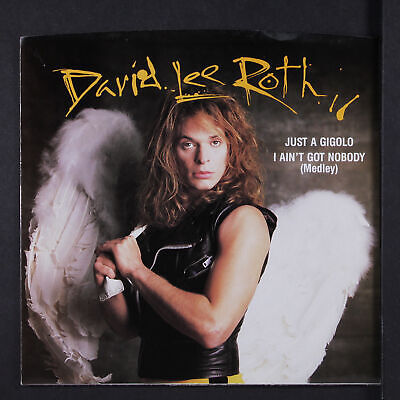
“The band as you know it is over!” That is what Eddie Van Halen told Rolling Stone in mid-August 1985. This confirmed the rumors of division in the band with David Lee Roth. Eddie also made sure to add that “Dave left to be a movie star.” With that, Dave went on to explore a solo career. In late 1984, Dave released a cover of the Beach Boy’s California Girls. He followed that with another cover song (medley actually) from the great Louis Prima.
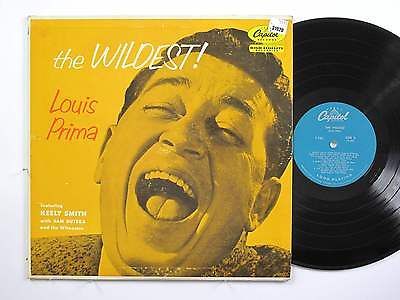
In 1956, Prima took the song Just a Gigolo and paired it up with I Ain’t Got Nobody. He used the song in his 1950’s Las Vegas act with Sam Butera and Keely Smith. The success of that act gained Prima a recording deal with Capitol Record, which hoped to capture on record the atmosphere of his shows. The first album, titled The Wildest! was released in November 1956, and opened with “Just a Gigolo”/”I Ain’t Got Nobody.” It became Prima’s signature number and helped relaunch his career.
Roth’s version is really almost a note for not copy of Prima’s record. By itself, it’s just an ok cover song. However, with an entertaining video that features celebrity look-alikes, beautiful women, and Dave being … Dave, it becomes something much much more.
The video for the song begins with Dave asleep at a news desk as his video for “California Girls” plays behind him on the monitor. The crew calls his name and he wakes up. After his talk, the freaky crew members begin to speak to him. They are right in the camera, so the viewer sees this from Dave’s perspective in this sequence. It’s actually kind of disturbing. The intro to the video is almost two minutes long before the song actually begins.
When it does, Dave is off dancing through the studio. We see him showing up at a talk show, walking through the backstage area among Vegas showgirls, astronauts, pimps, pirates, monsters, cheerleaders, hula dancers, and the police. All of this happens before you really get to the “meat and potatoes” of the video.
It is there that Dave begins parodying videos from Michael Jackson, Cyndi Lauper, Billy Idol, Richard Simmons’s “Sweatin’ to the Oldies” videos (Davercize!), Willie Nelson, and Boy George. As he appears in each of the videos, he winds up wrecking them. It is almost like watching a cartoon. It’s utter chaos, but a fun chaos (unless you count the priest who has a heart attack because of Dave’s dancing.)
The video is like a snapshot of the 80’s. It’s funny to imagine Dave crashing into a Willie Nelson or Cyndi Lauper video. As the “Nostalgic Italian,” I appreciate the nostalgia that the video presents. It is more powerful now than it was in 1985.
Eventually, MTV edited the 2 minute intro out, and just played the song portion of the video in rotation. I think that is how I first saw the video. When I searched for it to post in this blog, I found the full video. I honestly had forgotten all about the intro, but seeing it again was a hoot. Watching Dave do his “over the top” announcer made me think of so many of those DJ’s on the radio who literally puke every thing they say.
Back in one of our first rounds of Turntable Talk, we discussed music videos and whether they hurt radio. To me, I love the fact that a music video can convey the story of a sad song or add a whole lot of fun to another. With this video, Dave pokes fun at other videos, which only makes his more enjoyable to see.
I could be wrong, but it is possible that Weird Al Yankovic looked back to this video as inspiration for his UFH video. In Al’s Video, (in between clips from the movie) he pokes fun at Guns and Roses, Prince, George Michael, Peter Gabriel, ZZ Top, Billy Idol, The Beatles, INXS and the Talking Heads!
Thanks again, Dave for asking me to take part in this feature. I know that I really look forward to your topics and enjoy writing my response to them. I am already looking forward to next month.
This is sort of a continuation of the Music of My Life feature. It focused on music from 1970-2025. It featured tunes that have special meaning to me, brought back a certain memory or a tune that I just really like. I found that with the first three decades, there were songs that I didn’t feature. So I sat down with my original lists and selected some songs that “bubbled under,” so to speak.
I figured a good way to present them was to focus on a decade. 10 years = 1 song per year = 10 songs. Last week we looked at the 70’s, and I thought we’d stay there one more week before moving on to the 80’s. So, let’s check out a few “Decade Extras.”
A hat tip to songfacts.com for much of the information.
1970
I suppose it wouldn’t be right to leave out the number one song for the entire year I was born, so we start off with Simon and Garfunkel’s Bridge Over Troubled Water. Paul Simon wrote this about providing comfort to a person in need. It started as a modest gospel hymn but became more dramatic as he put it together.
He wrote the song with just two verses, considering the song “a little hymn.” Art Garfunkel and producer Roy Halee heard it as more epic, and convinced him to write an extra section, which Paul did in the studio (the “Sail on, Silvergirl part”). This was very unusual for Simon, as he usually took a long time writing his lyrics. The song got a grand production, and after hearing it, Paul thought it was too long, too slow and too orchestral to be a hit. It was Clive Davis at Columbia Records who heard the commercial appeal of the song, and insisted they market it like crazy and use it as the album title.
In 1971, this won five Grammy Awards: Song of the Year, Record of the Year, Best Contemporary Song, Best Engineered Record, and Best Arrangement Accompanying Vocalists. The album also won Album of the Year.
My mom loved this song and I remember her singing along with it on car trips.
Bridge Over Troubled Water
1971
Many folks poked fun at Ringo Starr when he began a solo career. Of the four, people thought he was the least likely to have success as a solo artist. He proved them wrong and he still tours to this day. One of the songs that did well for him was It Don’t Come Easy.
Ringo is the only songwriter credited on this one, but he had a lot of help from George Harrison. George was very generous in giving his former band mate full writing credit. The track (less Ringo’s vocal and horn parts) was already completed when Harrison gave it to him, and it included a scratch vocal by George.
Fun Fact: Peter Ham and Tom Evans of Badfinger sang on the intro to this song (“It don’t come easy, ya know it don’t come easy”). Badfinger was signed to The Beatles’ Apple Records, and helped out George Harrison’s first solo album.
It Don’t Come Easy
1972
Growing up there were a lot of Van Morrison songs that I liked, but never knew it was him. It wasn’t until I worked at my first radio station that I discovered he sang Moondance, Domino, and Jackie Wilson Said.
Listening to Jackie Wilson Said, I would have never guessed that the recording was unorganized. However, according to guitarist Doug Messenger the session was chaos! He told “Uncut”:
“Jackie Wilson Said was totally disorganized. He didn’t know where anything went, and no one seemed to know what to do with it. Van went away and the band worked on the basic structure. When he came back we went through it a couple of times and he was real happy because all of a sudden it seemed to be making sense. He said, ‘I think it’s coming together,’ which is what he always said when he felt it was working.”
“I remember he said to the drummer, Ricky Schlosser, ‘When I sing “boom boom boom,” hit the tom and the kick drum at the same time.’ We ran through it once or twice, and the first recorded take is what’s on the album. It was all over the place, but somehow it worked. Even when he ad-libbed at the end -‘One more time’- somehow we all kept it together. At the end, Van was smiling like a Cheshire Cat. ‘I think we got it!’ We tried a second take and – of course – it all fell apart.”
Give it a listen and see if you can hear the “disorganization.”
Jackie Wilson Said
1973
The next song makes me think of my oldest son. His mother would play songs from her iPod around the house and one of those songs was Let Me Be There by Olivia Newton-John. There would be times where he would take her iPod and listen to it in headphones. I still laugh when I think about him singing loudly and off-key “Let me be there in your mornin’, let me be there in your night!” It was really more of a scream than singing.
The was Newton-John’s breakthrough single in the US, where it landed in the Top 10 on the Hot 100, the Country chart, and the Adult Contemporary chart. At the time, she was still living in Britain and didn’t travel across the pond to promote the single or the album. Turns out she didn’t need much promotion at all. When the song hit it big, people had no idea who she was. That actually was a relief to the singer. “The one great thrill I had in America was that my music was accepted before I was ever seen, before I was on television, before I did live appearances,” she told Rolling Stone. “Therefore I had to hope it was my music and not my face.”
Keep in mind that this was five years before she starred in the movie musical Grease. She would win her first Grammy Award for song. This was surprising because she was up against country veterans like Tammy Wynette and Dottie West. She won for Best Female Country Vocal Performance.
Let Me Be There
1974
I was lucky enough to have never walk in on my parents when they were being intimate. My friends who have say it was a truly traumatic experience. On the TV series That 70’s Show, that exact thing happens to Eric, the main character. As he opens the door, Tell Me Something Good by Rufus and Chaka Khan. As a running gag throughout the episode, that song pops up a few times. I think of that episode when I hear this song.
Stevie Wonder wrote the song and recorded it himself on December 13, 1973 – he copyrighted it on January 3, 1974. His version was never released because he gave the song to Rufus, since Stevie was a fan of their lead singer, Chaka Khan.
Chaka Khan tells the story that Stevie was going to bring them a song in the studio, and when he dropped by and played her one he had written, she stunned her bandmates by telling the mighty Stevie Wonder she didn’t like it! So Wonder asked her astrological sign, and when she told him Aries, he delivered “Tell Me Something Good.” According to Chaka, she loved it and they worked out the song together in the studio, although Stevie is the only credited writer on the song.
Fun Fact: Rufus evolved from a group called The American Breed, who had the hit “Bend Me, Shape Me.” They took their name from a column in Popular Mechanics magazine called “Ask Rufus,” later shortened to Rufus when Chaka Khan joined the band in 1972.
Tell Me Something Good
1975
I remember playing Bad Blood by Neil Sedaka when I worked at the oldies station. I had no idea at the time that he had done anything other than those 60’s songs he was known for.
Sedaka wrote this song with Philip Cody. Phil said in a Songfacts interview that it’s his least favorite song. “I went to visit my family and I spent some time with my grandmother, who is an old Sicilian lady. She was telling stories about the lady up the street who used to be a witch, a Strega. And the whole idea of people being good or evil because of what goes on in their blood was just part of the superstitious nature of my Sicilian upbringing that I tried to stay as far away from as I could. (laughing) I just thought it would be an interesting way to approach a lyric: rather than from a place of enlightenment the idea is that love makes us stupid. And that’s where I went. It wasn’t (heavy sigh – pause)… I did it, and I didn’t think I did a very good job on it, and before I had a chance to do a re-write Neil was in the studio with Elton doing the song, and that was it. So I guess the best things are left undone.”
This song turned out to be Sedaka’s biggest hit, reaching #1 on the Billboard Top 100, remaining there for three weeks. He was helped by Elton John, who sang back-up for this song which ensured airplay. In an odd coincidence, this song was knocked out of its #1 position by an Elton John song, “Island Girl.”
Bad Blood
1976
More Than a Feeling was Boston’s debut single. It turned out to be a big surprise hit. Songfacts says: The group’s rise was sudden and unexpected; when “More Than a Feeling” was released, their managers spent a lot of time pitching it to radio stations, which is a very tough sell for an unknown band, but the song is so polished and radio-friendly that many stations put it on the air. It took off, and very soon this unknown band with an album recorded mostly in a basement was a major player on the rock scene.
Boston’s Tom Scholz worked at Polaroid, which made him enough money to buy equipment to create a basement studio. He did most of the recording of the first album there. He actually took a leave of absence from his job at Polaroid to complete the album. Once the album was released, he went back to work.
Songfacts says, “disco was big, so he wasn’t sure his rock record would find an audience. He got very excited when co-workers would summon him to let him know ‘More Than A Feeling’ was playing on the radio. After that happened a few times, he was confident enough to quit his day job.
The song is a classic rock standard and appeared on the soundtrack of the film “FM,” which was the subject of this blog on Monday.
More Than a Feeling
1977
Being born and raised in Michigan, Bob Seger’s music was everywhere when I grew up. When my dad played in a wedding band Night Moves and Trying To Live My Life Without You were songs that they played at gigs.
Mainstreet was a song that was always requested at the station. The actual street Seger sings about in this song is Ann Street, which was off of Main Street in Ann Arbor. Seger told the Chicago Sun-Times: “It was a club. I can’t remember the name of the club, but the band that played there all the time was called Washboard Willie. They were a Delta and Chicago blues band. Girls would dance in the window. They were a black band, and they were very good. That’s where I would go but I was too young to get in. It wasn’t in a great part of town but college students loved to go there.”
This was the second single from the Night Moves album, following the title track. Both songs are very nostalgic and a departure from high-energy rockers his fans were used to hearing. By this time, Seger had been at it in earnest for over a decade and was just starting to break through to a national audience. Live Bullet was his first album to find a broad audience; many who bought it snatched up Night Moves when it came out, and weren’t disappointed. Both albums ended up selling over 5 million copies, making Seger a star.
Mainstreet
1978
Kiss You All Over by Exile was another one of those songs that dominated pop and country radio. It was the perfect crossover song.
In an interview with Billboard, writer Mike Chapman said:
“It’s a very unusual song and is very much about what music in the US is all about in 1978. It’s MOR (Middle Of the Road) soft rock, slightly disco though not pure disco, and has a sensuous lyric line that Americans love. Americans are big lyric listeners and listen to every word.”
It is no surprise that the song has frequently been used as backing music for TV scenes involving various degrees of smooching or similar lip-caressing activities. Songfacts notes that the most creative use of “Kiss You All Over” goes to the Canadian Broadcasting Company’s use of the song in a 2007 montage of hockey players kissing the Stanley Cup. HA!
Kiss You All Over
1979
Many DJ’s will play the song Single Ladies when they do the bouquet toss at weddings. I always love using Ladies Night by Kool and the Gang. It had a funky beat that the ladies would dance to as they waited for the bride to toss her flowers.
Songfacts notes that disco was dying when “Ladies Night” was released at the end of 1979. That didn’t stop Kool & the Gang from using a disco groove on this track and mentioning the “disco lady” and “disco lights” in the lyrics. The song mixed in enough of their funk flourishes to stand out from the pack and bring them into the ’80s – it reached its chart peak of #8 in America the second week of 1980.
Like most Kool & the Gang songs, every member of the group is credited as a writer. “Ladies Night” started with a groove their multi-instrumentalist music director Ronald Bell came up with. His brother, Robert “Kool” Bell (the bass player in the group), gave him two ideas for lyrical themes: “Ladies Night” and “Hangin’ Out.” It was no contest – Ronald knew there were ladies nights everywhere, and loved the idea.
They fleshed out the song with the group, but struggled to find a hook. Ronald Bell remembered a piece of advice from his mother. He recalled to Billboard: “My mother, Aminah, had a hand in that one. Because she would say to me, ‘Always give the people nursery rhymes. Give them something they remember.’ She liked the Dells’ song, ‘Oh What A Night,’ so I put that in. When we were finished, we were all in tune that this was it. We just didn’t know how big!”
Of course, younger folks will always think of Jon Lovitz in the Wedding Singer when they hear this one.
Ladies Night
Yes, there are plenty of great songs I missed from the 1970’s, but next week, we’ll head to the 80’s. I’ll feature ten songs, one from each year of the decade. I hope you will join me next week.
Last week I wrapped up my Music of My Life feature. It focused on music from 1970-2025. I admit that it was fun to look back at the tunes that have special meaning to me, bring back a certain memory or a tune that I just really like.
When I got into the 2000’s it became more difficult for me to find songs. With the earlier years, however, I found it difficult to narrow my list down to just ten songs. So I sat down with my original lists and selected some songs that “bubbled under,” so to speak.
I figured a good way to present them was to focus on a decade. 10 years = 1 song per year = 10 songs. Let’s head back to the 70’s and check out a few “Decade Extras.”
1970
I wish I could find the recording of this so I could set it up better. My co-host, Steph, and I were in conversation with our newsman, Hal. Something came up about knocking and Hal says, “Knock three times on the ceiling if you want me.” This led to me asking why we were discussing Tony Orlando on a country station.
Steph walks out of the studio during commercials and I went on the hunt for the song. I found it and cued it up to the chorus. When she comes back to the studio, and she has to read a sponsorship for the weather forecast. I let her begin and out of nowhere I play the chorus of Knock Three Times. She was so thrown by this, she can’t stop laughing. She’s trying to do the sponsorship, but every 6th or 7th word, I’d fire the chorus again. She is down for the count in laughter (which was my intention), so I wound up reading it and apologizing to our listeners.
I think of Steph every time I hear it.
Knock Three Times
1971
I’ve always love the Jonathan Edwards song “Sunshine.” It was always one that I loved singing along with. Had it not been for a mistake, it may never have gotten recorded. According to songfacts.com, he recorded this out of necessity when one of the tracks he put down was accidentally erased. Instead of redoing that song, he did “Sunshine.” Pleased with the results, he and the engineer overdubbed bass and added the drums the next day.
Edwards was signed to Atco Records. They released “Sunshine” as his first single early in 1971, but it flopped. The song got some traction thanks to disc jockeys in New England who started playing it off the album. Six months after the Atco single was released, it was re-issued on the independent Capricorn label with a demo version on the B-side. This time, the song was a hit, shooting to #4 in the US.
He would often end live shows with the song, and Edwards said, “I often say, and it’s true, that if I had never done another song in my life, I’ll be happy to have come and gone with that.”
Sunshine
1972
For the longest time, I thought that Neil Diamond was singing Nice To Be With You. When I started working at my first radio gig, I found out I was wrong.
The song was actually one that had a local connection. Jim Gold formed the group Gallery in Detroit. They recorded quite a few songs, but none were as big as Nice To Be With You. It was also the title track of their debut album.
Nice to Be With You
1973
There was no shortage of Jim Croce songs in my original feature. My mom and dad listened to his music a lot. He was one of many artists who were a part of my childhood.
I love when songs have some basis or inspiration in real life. Bad, Bad Leroy Brown is one of them.
“Leroy Brown is a guy that he actually met,” said his widow Ingrid. “When he was in the service – The National Guard – this guy had gone AWOL. He was a guy that Jim kind of related to, he liked to sing with him. This guy had gone AWOL but he came back to get his paycheck, and he got caught. Jim just thought he was such a funny guy that he thought he’d include his name in the song, and it just worked. There really was a Leroy Brown, and sometimes having a name helps you to build a song around it.”
It’s one of the few songs I can sing at karaoke.
Bad, Bad Leroy Brown
1974
I was a big Beatles fan growing up. As a kid, I didn’t really understand why Paul McCartney was in another group (Wings) or why John Lennon was doing solo stuff. I do remember hearing Band on the Run, though, and liking it.
McCartney recorded the album in Lagos, Nigeria along with his wife Linda and guitarist Denny Laine. The other Wings decided not to make the trip, which worked out fine in the end: McCartney considers the album his best post-Beatles work. He told Word in 2005:
“I was on drums and guitar a lot, mainly because the drummer decided to leave the group the night before and one of the guitar players decided not to come! So we got that solo element into an otherwise ‘produced’ album.”
Band On the Run
1975
It’s a Long Way to the Top is an autobiographical song for AC/DC. It describes their struggles as they tried to make it big. Right from the start, they delivered a top notch live show night after night. Songfacts says: It was genuine: At the time, they were just getting started and playing some seedy venues with even seedier business associates. The hard work eventually paid off, and several years later the band was selling out arenas.
“It’s A Long Way To The Top” really summed us up as a band,” Angus Young told Rolling Stone. “It was the audience that really allowed us to even get near a studio.”
The song is a bit unusual because instead of a lengthy guitar solo it features Angus Young on lead and Bon Scott on the bagpipes in a Dueling Banjos sort of way. I remember the first time I heard the song. “Are those bagpipes?!” Yes. Yes, they are!
It’s a Long Way to the Top
1976
Turn the Page by Bob Seger is also a song about being out on the road and performing. This one focuses on the effects of touring on a performer. There is a lot of loneliness that they feel.
Bob says, “Our first headline shows ever in a large (twelve thousand seat) hall were the two shows at Detroit’s Cobo Arena, September 4th and 5th, 1975. I remember while I was singing this how nice it was to have such good on-stage monitors. I had never heard my voice so well while performing.” The version on Seger’s greatest hits album was taken from these shows.
The song is a classic rock staple here in Michigan. I got to see Bob perform one of his last shows and it was electrifying. I can’t even begin to explain the feel of the room when he performed this one.
Turn the Page
1977
“What’s Your Name” by Lynyrd Skynyrd is another song that is based on a true story. One night while they were on tour, the band was drinking at their hotel bar when one of the roadies got in a fight. They all got kicked out. So they went to a room, ordered champagne and continued the party.
Songfacts says: The incident in this song did not happen in Boise, Idaho. The first line was originally, “It’s 8 o’clock and boys it’s time to go,” but lead singer Ronnie Van Zant changed it when he found out his brother, Donnie, was opening his first national tour with his band .38 Special in Boise. The first line became “It’s 8 o’clock in Boise, Idaho.”
Three days after the album was released, Ronnie Van Zant, Steve Gaines, and Cassie Gaines died in a plane crash. The cover of the album was redone because the original cover had the band surrounded by flames.
What’s Your Name
1978
Hold the Line by Toto caught my ear the first time I heard it because of the piano open with the guitar riff intermingling with it. It was the debut single for the group who was made up primarily of session musicians.
From songfacts: “Hold the line” is an expression meaning to maintain your existing position, which in this case is the singer telling a girl to be patient and stay with their relationship.
The saying also has a more literal meaning, however, which is how David Paich came up with the title. “Hold the line” is what you tell someone on the phone if you want to put them on hold while you’re taking another call. This is typical in workplaces, but in the days before cell phones, some households (especially ones with teenagers) also had multiple phone lines coming in and could put callers on hold. Paich lived in one such household.
Paich said: “When I was in high school, all of a sudden the phone started ringing off the hook, and I had a situation where I was at the dinner table and I had three girls all call at the same time, so all the lights were flashing. I was kind of juggling girlfriends, and that’s how that came about.”
Toto’s video was a bit ahead of it’s time. MTV hadn’t even gone on the air yet when the song was released.
Hold the Line
1979
Don’t Stop Me Now by Queen is such a fun song to play at weddings and parties, especially after the audience has loosened up. So often I’d come out of a slow song and segue right into the smooth intro of Freddie Mercury. People would raise their hands and sway while singing along. Then, when the tempo changes, the dance floor was insane.
It’s a catchy song that has you singing along, even if you are just hearing it for the first time. In 2011, Queen fans voted the chorus of “Don’t Stop Me Now” as the band’s best ever lyric.
In an Absolute Radio interview, Brian May says, “I thought it was a lot of fun, but I did have an undercurrent feeling of, ‘aren’t we talking about danger here,’ because we were worried about Freddie at this point. That feeling lingers, but it’s become almost the most successful Queen track as regards to what people play in their car or at their weddings. It’s become a massive, massive track and an anthem to people who want to be hedonistic. It was kind of a stroke of genius from Freddie.”
Don’t Stop Me Now
So what do you think? I like this idea. A quick look back at a decade. There are plenty of songs to choose from that did not make the original run of this feature. Join me next week for more!
Last May I began this feature. Today, I will finish it off by looking at 2020 through the present. As I got closer to the end, it became difficult for me to pick ten songs from each year. Proof of this will be evident from this post.
The songs that I featured each year had to connect with me in some way. It was attached to a core memory. Maybe it reminded me of one of my kids or a friend. Maybe it was a song from my years DJing. Maybe it was just a song that I liked a lot. The only real rule was that it had to be released in the year featured. With that in mind, let’s see how the last five years of music connects with me….
2020
There were no songs that really hit me in 2020. Thank you, Covid
2021
The world was still reeling from the pandemic. There was so much uncertainty. Many folks reconnected with their faith, as I did. I went back and watched the Bible classes I had taken. There I found comfort and the strength to get through things.
I want to say that a friend of mine asked if I had ever heard the song “My Jesus” before. I hadn’t and I found it online. It hit me immediately and I shared it with my wife. It is a powerful song, but even more powerful when you hear the story behind it.
Anne Wilson’s life changed in more ways than one when her older brother, Jacob, died in a car accident at 23. She told songfacts.com: “It was so tragic. He was my best friend. That’s actually how I started singing and how I got into music and that’s why I wrote the song ‘My Jesus.'”
After losing her brother, Wilson processed her emotions through journal entries. As she flicked through her entries before a writing session with Matthew West and Jeff Pardo, the young singer had an idea for a song. She told Billboard: “I walked through a really tough season of grief. I remember having this moment where I wanted to give up on life. When I looked back at my journals, I saw how God pulled me through. I also realized I never referred to God as anything else, except ‘My Jesus.'”
When she brought the title into the writing room, it turned out that the two others had that same exact title as an idea. None of the three had spoken about it, so it must have been “a total God thing.”
My Jesus
2022
No songs
2023
When I heard that they were releasing a new Beatles song, I hoped it would be better than Free As a Bird. When they released that for the Anthology stuff, the technology wasn’t as good as it was in 2023. Because of this, Lennon’s vocal sounds tinty.
Songfacts tells the story:
“Now and Then” was originally written and recorded by John Lennon around 1977 as a solo piano track. After his death in 1980, the unfinished demo floated in limbo until 1994 when his widow, Yoko Ono Lennon, gave the recording to the three surviving Beatles, along with Lennon’s demos for “Free as a Bird” and “Real Love.”
Paul McCartney, George Harrison and Ringo Starr considered “Now and Then” as the third Beatles reunion single for their 1995–1996 retrospective project The Beatles Anthology, following “Free as a Bird” and “Real Love.” After two days of recording, it was scrapped, largely because Harrison’s didn’t like it.
In 2022, using advanced technology and a curatorial touch, Paul McCartney and Ringo Starr completed the track. The same AI restoration technology Peter Jackson used on the Beatles documentary Get Back was applied to Lennon’s vocal take.
“Back in 1995, after several days in the studio working on the track, George felt the technical issues with the demo were insurmountable and concluded that it was not possible to finish the track to a high enough standard,” Harrison’s widow, Olivia, said. “If he were here today, Dhani and I know he would have whole-heartedly joined Paul and Ringo in completing the recording of ‘Now And Then.'”
Besides Lennon’s John’s vocals, “Now And Then” includes electric and acoustic guitar recorded from the scrapped 1995 sessions by Harrison, a new drum part by Starr, and bass, guitar and piano from McCartney that matches Lennon’s original playing. McCartney added a slide guitar solo in Harrison’s style “as a tribute to George.”
“Now And Then” became the first AI-assisted song to earn a Grammy nomination, and the first to win, when it took the award for Best Rock Performance at the 2025 ceremony.
As a life long Beatles fan, I was impressed with just how good this one turned out.
Now and Then
2024
My wife will often listen to Pandora as she gets ready for work. The next song seemed to play on there at lot. It also seemed to play on her Sirius XM station when we went anywhere. It sort of had a catchy hook, but it wasn’t so good that I’d buy it.
One day I was driving with the kids in the back of the car and my daughter started singing “Excuse me, you look like you love me…” over and over again. It made me chuckle.
You Look Like You Love Me
2025
There has not been any songs from this year that connect with me. I tend to listen to audio books or songs from my iPod when I drive, so I don’t really get to hear anything new anyway. I’m ok with that.
Wow. Five years and only three songs. What a way to wrap up a feature, huh? Well, technically, I had wanted to wrap this up in May. So I have an idea on how to fill a couple Wednesdays and still keep it musical. Tune in next week to find out more….




 Various Ramblings of a Nostalgic Italian