Tune Tuesday

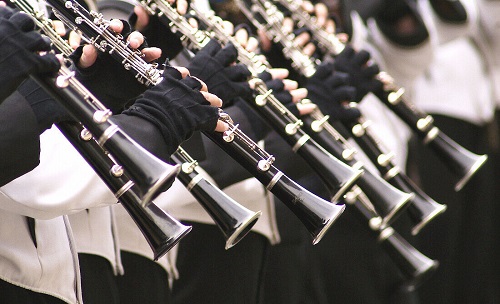
The clarinet celebrates birthday 335 today, and in honor of that, it is Clarinet Day!

January 14th is the day the clarinet was invented in Nuremberg, Germany in 1690. The instrument was created by German instrument maker Johann Christoph Denner, or possibly his son Jacob.

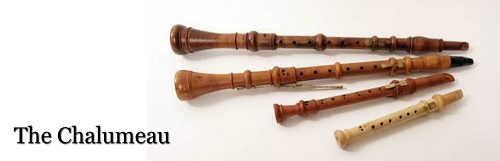
It had developed from much earlier reed instruments, going right back to Ancient Greece and Egypt. The chalumeau was a Baroque single reed woodwind instrument originating in France where its use spread to Germany.

Denner developed the instrument. He equipped a chalumeau in the alto register with two keys, one of which enabled access to a higher register. This second register did not begin an octave above the first, as with other woodwind instruments. Instead, it started an octave and a perfect fifth higher than the first. A second key, at the top, extended the range of the first register to A4 and, together with the register key, to B♭4. Later, Denner lengthened the bell and provided it with a third key to extend the pitch range down to E3.

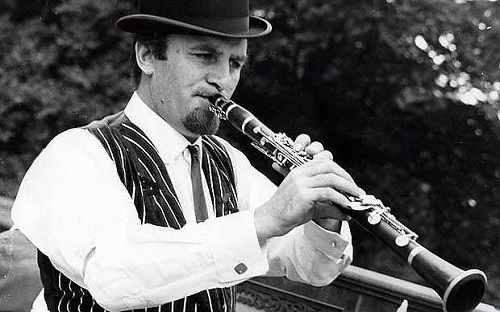
In the days of the Big Bands, there were plenty of well known clarinetists. Benny Goodman, Artie Shaw, and Woody Herman all played clarinet and had their own big bands. They also had hits that featured clarinet solos (Let’s Dance, Begin the Beguine, Woodchopper’s Ball).

As far as pop hits, there are a couple that spring to mind that feature the clarinet. The first was from Mr. Acker Bilk.

Bilk wrote Stranger on the Shore for his young daughter and originally named the song “Jenny” after her. The tune was written on a single scrap of paper by Bilk and handed over to arranger Leon Young. Young crafted the string arrangement, including the characteristic harmonic shifts at the very end.

The song was a number one in the UK and the biggest selling English single of 1962. In May of 1962 it became the first British recording to reach number one on the U.S Billboard Hot 100 Chart.

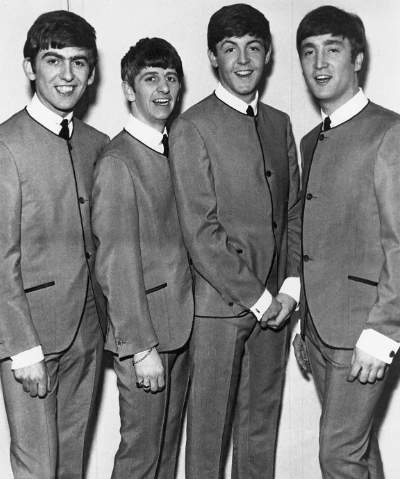
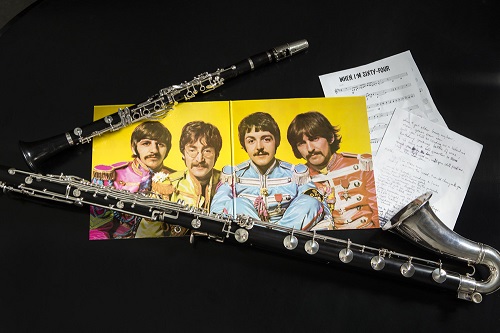
The other pop clarinet hit comes from the Fab Four. Paul McCartney wrote the melody for When I’m 64 when he was just 14 years old. It was one of the first songs he ever wrote.

The song features a clarinet trio – 2 B flat clarinets and a bass clarinet. The song was scored by George Martin, who said the clarinets were added at McCartney’s request. The reason for this was to “get around the lurking schmaltz factor” by using the clarinets “in a classical way.”

Paul McCartney suggested speeding up the track to raise the key by what musicians call a semitone. A semitone is about a half step. So speeding up the track took it from C major to D flat major. George Martin remembers that McCartney suggested this change to make his voice sound younger.

Musicologist Michael Hannon had this to say about the completed track:

“The rich timbres of the clarinets give the mix a fuller, fatter sound than many of the other tracks on the album.”

Happy 335th Birthday to the clarinet!

The Music of My Life – 2000

Welcome back to The Music of My Life, where I feature ten songs from each year of my life.  In most cases, the ten songs I choose will be ones I like personally (unless I explain otherwise). The songs will be selected from Billboard’s Year-end Hot 100 Chart, Acclaimed Music, and will all be released in the featured year.

In 2000, I turned 30. It was one of those big milestone birthdays that people joke about. “You start to fall apart at 30,” I was told. I was lucky. Right around my 30th birthday I achieved my 30 pound weight loss. I was on my way to better health and actually felt good. I was married, had a steady full time job, was doing radio part time, and still DJing on the side.

It has been interesting to look back year by year to see the changes in music. It’s funny to see how certain things come and go. For example, “Boy Bands.” When the New Kids on the Block faded away in the early 90’s, many folks thought the boy bands were done. However, in 1999, two new boy bands brought the genre back into the spotlight.

When the Backstreet Boys stormed on the scene in 1999, they helped pave the way for ‘N Sync. ‘N Sync’s No Strings Attached album would go on to be the best selling album of the 2000’s according to Billboard magazine. Bye Bye Bye was one of the songs from it that helped the sales of the album.

The song is on my list because it was one of my “go to” songs at parties. It never failed to get all of the younger females out on the dance floor. It always made me laugh because when it started to play, you’d hear a bunch of high pitched screams. I liked it to the girls you’d see watching the Beatles or Elvis!

Bye Bye Bye

Next, it’s a one hit wonder that really stuck out on the radio. The group Nine Days took Absolutely (The Story of a Girl) to the top ten on the charts, but wound up being a “one and done” group.

The song was written by lead singer Josh Hampson. The song is actually an autobiographical song about him and his wife. In an interview with Impose magazine, he says, “I exaggerated things and used tons of figurative language to express something, but it’s about me, and it’s about my wife – who was then my girlfriend – and her wanting to get engaged. I just wasn’t ready. I was basically stalling her and making her cry. I was good at that.”

Their first album didn’t produce any further hits. They recorded a second album, but their label dropped them and said that the album would not be released. They said that there were “no hits” on it.

John left the music business and became a teacher.

When a song opens cold (with no musical intro), that first line really has to grab you. The first time I heard this on the radio, it grabbed me. I thought, “Okay, tell me more about the girl who cried a river and tried to drown the whole world…”

Absolutely (The Story of a Girl)

We’ve seen throughout this series how tough times can often lead to amazing songs. That is the case for the country cross-over hit, I Hope You Dance.

The was written by Tia Sillers and Mark Sanders. Sillers told Songwriter Universe magazine:

“For ‘I Hope You Dance,’ I had written the opening line, ‘I hope you never lose your sense of wonder.’ I had just broken up with someone, going through a brutal divorce. I needed to get away, so I went to a beach on the Florida Gulf Coast. Sitting on the beach and reflecting about the breakup, I felt so small and inconsequential. But out of this difficult time came the inspiration to write ‘I Hope You Dance.’ As I was leaving the beach, I remember thinking that things weren’t really so bad, that I would get through it. That’s when I came up with the line, ‘I hope you still feel small when you stand beside the ocean.'”

In a Song facts interview, Bill Withers talked about this song. He stated that this is a song that says something that everyone can understand and remember: “There are lines that are so profound… ‘And when the time comes for you to sit it out or dance, I hope you dance.’ Come on man, you can’t say that any better.”

This was a song that became big for Daddy/Daughter and Mother/Son dances at weddings. It wasn’t odd for it to be the bridal dance either. I think Lee Ann Womack’s voice is perfect for this song and I was thrilled to see it get pop airplay.

It really is one of those songs that is a “wisdom song.” It could easily be something someone would tell a loved one if they knew it was the last time they’d see each other in my opinion. It’s just a really great song.

I Hope You Dance

it would be two years before my first child would be born. I won’t lie, the thought of being a dad scared me. The next song is one that was still being played on the radio when my son was born. It struck a chord and I know now, why.

According to Song facts, Creed’s lead singer, Scott Stapp was due to be a father. Once he found out that he was going to have a son, Stapp wrote this song because he didn’t want his child facing the same problems he faced while growing up. He was from a very strict, very devout Christian household and he didn’t want his son to grow up questioning himself and his faith like Scott did. Stapp told us: “Don’t we always want our kids to be better than us? Don’t we always want them to have a better experience in this life and this journey than we did? So I think that from my point of view I’m beginning to see why that song struck a chord with multiple generations: because it touches on a feeling and sentiments that are universal for fathers, and for parents in general.”

Scott says that he still connects with the song when he performs it. He says he remembers the fear of being a father, but also knows with time, the fear has gone and he loves being a dad.

The song would be Creed’s only #1 on the Pop chart.

With Arms Wide Open

Next is a song that I hated to include. I never really cared for the song, but it was a part of my life. Heck, it was a part of everyone’s life. It seemed like you couldn’t go anywhere without hear it or a reference to it. It may surprise you to know that despite this, it barely did anything on the charts.

Songfacts says, “Considering what a sensation this song was in America, it had a surprisingly low chart position, peaking at just #40. While the song seemed to be everywhere, its omnipresence was due more to cultural references than to record sales or airplay. Few radio stations put the song in rotation, and in this pre-download era, consumers had little interest in owning the single.”

So just how did it get so popular??

Songfacts answers that, too. “Knowing most radio stations would have no interest in this song, it was marketed through sports, with the single sent to various baseball, basketball, football, hockey and soccer teams in hopes that they would play it at games.

Most of the music played during sporting events is during lulls in the action – after a foul ball in a baseball game or when a football team is in the huddle – which is only room for about 12 seconds of a song. Songs with quick, high energy, easily understood hooks work well, and “Who Let The Dogs Out” fit the bill for these jock jams.”

Who Let The Dogs Out?

I was working in Country Radio when Tim McGraw released “My Next Thirty Years.” Talk about a song that hit home at the time. I think when you hit any milestone birthday you think about the past and the future. The lyrics conveyed things that I was feeling at the same time.

The song mentions focusing on “where I go from here,” and forgetting about “the crazy things I’ve done.” He says he is going to “cry less” and “laugh more!” He’s going to “eat more salads” and watch his weight. Then he says he’ll try “not to stay up too late.” Can you relate? I know at the time I did.

Actually, I found myself pondering those exact same things when I hit forty and fifty. You look back and hope that you’ve learned from your past experiences. You look forward with a plan to make what lies ahead the best yet. I know so many people who connected with this song. Rightfully so, it went to number one for Tim McGraw.

My Next 30 Years

How can a song that starts with the lines, “Hey, Mr. DJ, put a record on! I wanna dance with my baby!” not make my list? Music from Madonna was a song that a lot of people asked for when I was DJing. It was almost like the song was doing the talking for the crowd.

Madonna has always been a complex sort of person. This album brought back the “fun” Madonna, if you will. She told Billboard magazine, “Everything in life moves in cycles… there’s a period where you’re quiet, and there’s a period where you explode. In the time leading up to Ray of Light, I was in a quiet space – making lots of discoveries and going through lots of changes. It was an introspective, questioning time. Then, almost without warning, I felt like I needed to explode. I didn’t feel the need to be so introspective. I felt like dancing. And that’s reflected in these songs.”

When Madonna shot the video for this song, she was expecting her son. She hides it by wearing a lot of coats and such. There is one section of the video that was difficult for her to shoot due to her pregnancy, so it was animated.

Music

My next song was one that I heard first from my ex-wife. She had Beth Hart’s CD and listened to it often. I was very familiar with LA song and my pick, Delicious Surprise because of her. When I heard it on the radio, it struck me a bit differently. I can’t explain why. Maybe it was because it was just her singing (and not my ex joining in).

We all like to dream. Many of us dream big. “What if I won the lottery?” “What if I was the President?” “What if I was a movie star?” Those are questions pondered by the singer in this song. Then she offers up the advice to “see and believe” those dreams.

Jo Dee Messina did a country version of the song in 2005.

Shortly after the song was released, Beth was dropped from her record label. While it was never given as a reason, many believe it was because of her drug addiction. She battled this and bi-polar disorder for some time yet continued to make music. Today, she has been long sober and lives in California.

Her last album was a Led Zeppelin tribute album in 2022.

Delicious Surprise

The world can always use a bit more gratitude. Don’t we spend the first few years of their lives teaching our children to say “please” and “thank you?” Sadly, we don’t say it enough.

I love Dido’s song, Thank You. I love the simplicity and complexity of it. The song features all of the troubles and and stress of life in general. It also features how that all goes away when that special someone is there.

According to Songfacts:

Dido wrote “Thank You” after meeting her boyfriend, a lawyer named Bob Page, in 1995 and falling for him hard. She thanks Page for giving her the “best day of her life,” which is when they met in a club and had their first encounter. Page sparked a creative fire in Dido, who also wrote the song “Here With Me” about him. They got engaged in 2001, but broke up a year later, inspiring another Dido song: ” White Flag.”

Dido owes a lot of thanks to Eminem. He sampled the song for his song, “Stan.” He did not ask permission to use this on “Stan” until after the song was produced. However, Dido loved it agreed to let him use it. She recalled to Billboard magazine in a 2013 interview: “I just got a letter saying, ‘We heard your track. We love it. We’d like to use it for this track ‘Stan.’ Can you take a listen? I hope you like it and can we use your song?’ It was completely out of the blue. I put it on like, ‘I wonder what he could have done.’ You just don’t know. And I was a big Eminem fan, so it was pretty cool. And then I heard it. I remember because I had some friends staying in the same hotel. They were literally running down the hall, like ‘You gotta listen to this; it’s just brilliant!'”

Thank You

The final song for this week’s list is one that never cracked the Hot 100. It was the second single and title track from Green Day’s Warning album. Songfacts says, “by this time they were mellowing out a bit, with lead singer Billie Joe Armstrong playing more acoustic guitar. This was a product both of the band getting older and the pop-punk sound they ushered in falling out of fashion. The album sold poorly, but the band was well established by this point and wasn’t watching the charts.”

Billy Joe Armstrong has said that the original concept was to create a song whose lyrics were made up of all of the everyday warning signs and labels and the idea grew from there. I love his description of the content.

“The world is being filled with warnings and instructions of what not to do. The song states that it’s important to trust your instinct and do what you believe is right, but also to not be stupid enough to be the cause of another warning sign to be established. Take risks and question your surroundings, but don’t fall victim to your own stupidity.”

Well, alrighty then….

It wasn’t the words that made me like the song. It was actually the guitar and bass licks. It was so simple, but I loved the chord progressions. Someone compared it to the Kink’s Picture Book. I can hear that …

Warning

Well, that wraps up Y2K! I’m sure your list looks different than mine. What were your favorite songs from 2000? Let me know in the comments.

Next week, I may play the theme from 2001, just because, ha ha! My list only includes 2 cover songs, a must have party song, movie and TV music, a song that moves me and a song that moved the entire country.

Thanks for listening and reading! See you next week.

The Music of My Life – 1999

Welcome back to The Music of My Life, where I feature ten songs from each year of my life.  In most cases, the ten songs I choose will be ones I like personally (unless I explain otherwise). The songs will be selected from Billboard’s Year-end Hot 100 Chart, Acclaimed Music, and will all be released in the featured year.

In 1999, I turned 29 years old. In September of that year, I would venture into a marriage that would fail years later. Two great sons came out of it though, and that was a great thing.

1999 was also the year that I began receiving monthly CDs with new music on them. It was a great was to always be sure to have clean edits of songs and be current. I received my first CD in May of that year and thankfully so!

I had been hired to DJ a prom. It was the first one I had ever done. I had been able to scrounge up some of the “newer” songs thanks to friends. However, a lot of the brand new stuff not in stores yet. (This is probably before I got my iPod and iTunes). Two days before the prom, that CD had the hottest song on the radio at the time. The song was Ricky Martin’s Livin’ La Vida Loca.

That night, I had requests for it and was surprised (and thankful) it was on the CD! I played it at least three times that night and knew my investment was a good one. Those CDs saved me plenty of times.

Frank Sinatra died on May 14, 1998, which was around the time this song was conceived. Co-writer Desmond Child told Songfacts that Sinatra’s music was a strong influence on this song. He said, “Frank Sinatra’s music was coming out of the airwaves, and we were all of a sudden into this Rat Pack idea, and also the Latin Elvis concept that we had for him. So we put that into the songs, as well – there was a swing aspect to it. So the verses were more like that, and then the choruses were all out rock anthems, with horns. Because horns had fallen out of favor, we brought horns back.”

Paul McCartney’s guitarist, Rusty Anderson, played on the song. Co-writer Robi Rosa asked him to put some guitar on some sections that were blank slates. He remembers: “I was thinking more of a James Bond vibe actually. But I kinda liked the way it counter-balanced the song.”

Anderson recorded his guitar work at his studio intending it to just be a demo. “I didn’t have a reverb to print that I was happy with so I figured the mixer would have the perfect reverb in mixdown,” he explained. “That recording turned into the single. When I heard it on the radio, I was shocked that they left it dry!”

Many years later, the song re-entered my life when I took my son to the movies. In Shrek 2, Puss in Boots (Antonio Banderas) and Donkey (Eddie Murphy) sing it as the credits roll.

Livin’ La Vida Loca

Next is a song that I always felt should have been a bigger hit. I Know How The River Feels was a song that was recorded first by country singer Ty Herndon in 1996. His version was never released. Diamond Rio recorded it for their Unbelievable album and it was their third single from it.

I liked it because it gave Diamond Rio a different sound. This was the first song of theirs to feature outside instruments as they added a string section to the arrangement. The song, however, was met with some negative reviews from critics. It only went to #33 on the Country charts.

I love the way the song uses a river with its twists and turns to describe the search for love. Finally, when it reaches the sea – the search, the twists, and the turns – you reach the final destination.

Now I know how the river feels
When it reaches the sea
And finally finds the place
It was always meant to be
Holding fast, home at last
Knowing the journey’s through
Lying here with you
I know how the river feels

I Know How The River Feels

Hey Leonardo by Blessid Union of Souls is a song that I liked for a few reasons. First, the parenthetical title is “She likes me for me.” Isn’t that what love is about? It’s not about the physical things, the status and such. It is about loving a person because they are that person. Next, I like when a song tosses in some pop culture references.

Songfacts says: This song is written in the form of a letter to someone named Leonardo – a reference to actor Leonardo DiCaprio. In the song, the singer lists many celebrities and the qualities they possess making them attractive to women. He emphasizes that while he does not have the same qualities, his girlfriend loves him just the way he is.

The celebrities that are referenced include: Tyson Beckford, Robert Redford, Steve Buscemi and the movie Fargo. It also references opera singer Pavarotti, model Cindy Crawford, Clint Eastwood’s characterization of Dirty Harry, and Jim Carrey in the movie The Cable Guy.

Hey Leonardo

For the longest time I had only ever heard the clean edit of the next song. When I downloaded “Why Don’t You Get a Job” by the Offspring, it was the album version. It certainly was not edited. As I think of the words that are edited from it, I chuckle. They seem tame compared to what words are allowed on the radio today.

Offspring’s Americana album was a concept album. It examined the unpleasant side of life in America. Songfacts says, The song fits the concept by examining how so many people get by in the country without being productive and contributing to society.

If you listen closely, the melody might sound familiar. That is because it is based on The Beatles song “Ob-La-Di, Ob-La-Da,” with some elements of Simon & Garfunkel’s “Cecilia.”

Why Don’t You Get A Job

I’ve told this story before. When the Dixie Chicks first hit the radio, I did not think they would last. I felt that they had too much of a traditional sound and that listeners would not like it. I was wrong and I am glad that they went on to have radio success.

Their album Wide Open Spaces was full of hits. I came to really love the harmonies of the Dixie Chicks, especially on the last single from the album.

The Chicks’ version of “Tonight the Heartache’s on Me” was released in April of 1999. It had been recorded in 1994 by singer/songwriter Joy Lynn White, whose version was much slower. The Chicks version has a tempo and attitude that conveys all the feelings of the lyrics.

I love the play on words in the title. “The next round’s on me” is something you might hear in bars all over the country. The story of the song takes place in a bar. A gal sees her ex walk in with another woman and “Boom” – the hurt is there. “Bartender, pour the wine, ’cause the hurtin’s all mine. Tonight, the heartache’s on me!”

The song is a guilty pleasure, I suppose.

Tonight The Heartache’s On Me

I hate to say that Sheryl Crow is a cover artist, because she is not. However, her cover songs are really good! Take for example, her cover of 1987’s Sweet Child ‘O Mine.

It was originally done, of course, by Guns N’ Roses. The lyrics came from a poem Axl Rose was working on. Songfacts says that “he wrote the song about his girlfriend, Erin Everly, the daughter of Don Everly of the Everly Brothers. After dating for four years, they got married at a quickie wedding in Las Vegas on April 28, 1990, but just nine months later, the marriage was annulled, with Everly claiming abuse.

The Sheryl Crow version appeared in the Adam Sandler movie Big Daddy. It earned her the Grammy Award for Best Female Rock Vocal Performance in 2000. Her version appears near the middle of the movie right after they take the kid away. The Guns N’ Roses original is also played in the movie (at the end with the credits.)

I think her voice compliments this song very well. Her voice is much better than some of the folks who attempted to sing this when I hosted karaoke!

Sweet Child O’ Mine

The aforementioned green ogre, Shrek, ties in with my next song. I think this is the one that most people associate with the Shrek films. I’m talking, of course, about All Star by Smash Mouth.

Like most Smash Mouth originals, it was written by their guitarist, Greg Camp. He said in a Songfacts interview:

“When we were on tour for the first record, it’s still when people were writing fan mail, like, in the form of paper and pencils and typewriters and stuff,” said Camp. “We would get these big bags of fan mail and we would take them to the Laundromat and do our laundry and read all this mail while we were sitting around waiting for our clothes to get dry. And about 85-90 percent of the mail was from these kids who were being bullied or their brothers or older siblings were giving them s–t for liking Smash Mouth or liking whatever they’re doing or the way they dressed and stuff. So we were, like, ‘We should write a song for fans.’

Before I stopped DJing a couple years ago, this song was still being requested at high school dances.

All Star

It is always great to see an artist from the past make a come back. 1999 was a great year for Carlos Santana!

Most music people are aware of Clive Davis. He is a legendary record executive who has worked with many artists and even appeared on American Idol. He was the mastermind behind Santana’s Supernatural album.

Santana hadn’t had a hit since “Hold On” in 1982, so Davis teamed him with contemporary musicians like Wyclef Jean, Everlast and Lauryn Hill to make sure the younger generation took notice. The result was a wildly successful album that went over well with Santana’s old fans and created a legion of new ones. “Smooth” was the first single; it spent 12 weeks at #1 in the US.

Rob Thomas sang lead on “Smooth,” but that wasn’t the plan. He had never written a song for someone else before, so he jumped at the chance to write a song for Santana. When he finished it, Thomas suggested George Michael, one of his musical heroes, as the vocalist. Arista Records ended up asking Thomas to do the vocals, and when he did, it was in Michael’s style. “If you listen to the melody and the cadence, it’s an attempt to emulate his style in so many ways,” Rob said.

Smooth” won Song Of The Year and Record Of The Year at the 2000 Grammy Awards. Supernatural also won for Best Rock Album and Album Of The Year. Santana picked up a total of eight awards that night.

Fun fact: Santana has the distinction of waiting the longest between his first charting single and first #1 hit. In 1969, “Tango” hit #56 in the US, and 30 years later, “Smooth” was #1.

Smooth

The next song was probably THE ear worm of 1999. It was certainly one of those songs that got into your head. Believe it or not, Lou Bega’s “Mambo No 5” was a cover song! The song was originally done in 1952 by the Cuban-Mexican bandleader Perez Prado. Known as the “King of the Mambo,” Prado recorded numerous mambos. When he ran out of inspiration, he would simply number them. “Mambo No 5” was one of a series of eight.

The difference between the two versions? Perez Prado’s version was instrumental. In 1999, Lou Bega added lyrics to it. By doing so, he transformed it into a love song for several women. Those women: Angela, Pamela, Sandra, Rita, Monica, Erica, Tina, Mary and Jessica. It was reported that the girls he mentioned were all Lou’s former girlfriends. It is probably beyond coincidence that eight of the girls in the song have names that end in “A,” making them quite singable.

Why is it on my list? Because I will forever link it to Barbara Eden. Let me explain. My buddy Steve said to me one day, “Hey. Did you know that you can sing the I Dream of Jeannie Theme song to Mambo No 5 and it fits perfectly?” I looked at him like he was nuts…until I heard it.

So, when you give it a listen, when Lou says, “A little bit of (Girl’s name)…” when he says the girls name, start singing the theme song and watch how it fits. It’s uncanny and it is ridiculous! Now, every time I hear it, that is ALL I hear!

If you’d like me to punch my friend for you, I will.

Mambo #5

Finally, this week a song that I literally just mentioned because of a birth anniversary. Last Tuesday, I featured this for Tune Tuesday and Robert Goulet’s birthday. I didn’t realize that it would coincide with this week’s list. You can read about that here:

…or you can just listen to it here.

You’ve Got A Friend In Me

Alright, which one of your favorites did I miss from 1999? Tell me about it in the comments.

Next week, we enter a new decade with the year 2000. It was a year that seemed SO far away for many of us. We all breathed a sigh of relief when the world didn’t shut down at midnight on January 1st (the Y2K fiasco!). Remember that?

My list next week is straight forward, and has no cover songs on it (I may have to double check to be sure). There are a few songs that strike a chord with me, especially as I celebrated birthday #30. Another good mix comes your way in 7 days.

Thanks for reading.

The Music of My Life – 1995

Welcome back to The Music of My Life, where I feature ten songs from each year of my life.  In most cases, the ten songs I choose will be ones I like personally (unless I explain otherwise). The songs will be selected from Billboard’s Year-end Hot 100 Chart, Acclaimed Music, and will all be released in the featured year.

In 1995 a new form of media was invented – The DVD. 1995 was also the year I hit the quarter century mark, turning 25.

30 years ago this month, in 1994, my partner, Rob, and I lost our jobs at Honey Radio. We searched for other radio work, but no one was looking for a morning team. I kept searching and eventually found some part time radio work. I also ventured out and began to host Karaoke at a few places every now and then.

My full time gig was working in the mail room at EDS. I spent a lot of time in the car and listened to a lot of radio. Many of these songs accompanied me on my deliveries.

After seven years of touring and three previous albums, Blues Traveler finally broke through with the song Run-Around. John Popper had a crush on the band’s original bass player Felicia Lewis. She was actually classically trained as a violinist. She was just playing bass for fun.

Guitar player Chan Kinchla says that Felicia was a great student and eventually became a doctor. “Her calling was medicine, not music” . When Bobby Sheehan was ready to take over on bass, Felicia stepped aside. Kinchla says, “It’s a very amicable situation. John always had kind of a crush on her, but they were friends, as well. So that song’s from that whole affair. They’re still very close. It’s just an unrequited love song.”

The song won a Grammy for Best Rock Performance By A Duo Or Group With Vocal in 1995.

John Hopper could really blow the harp! His harmonica stuff is just fantastic. It is hard to to hear this one and not feel happy. I often found myself having to set the cruise control, as this one often made me want to drive fast.

If you are a fan of the Wizard of Oz, you’ll appreciate the nod to the classic film in the video.

Run-Around

Until researching for this blog, I had no idea the story behind the next song. I Believe was a top ten record for Blessid Union of Souls. The song is about the power of love and the belief that it can impact life for the better. It is a powerful message.

The song came about because of the end of a relationship. Eliot Sloan recalls writing this song after his girlfriend’s father coerced her into breaking up with him. Many sources say that it was because of his race. Her dad went as far as threatening to cut off her college tuition, if she didn’t leave him.

They did break up, but she obviously meant a lot to him. He placed a message in the liner notes of the Home album. It says, “Lisa, give me a call sometime just to say hello, my number is still the same.”

Sloan says, “I always tell people, and it’s the truth, ‘I Believe’ was written in the middle of the night at about three in the morning. I always used to live in downtown Cincinnati, a really cool spiral staircase up to my bedroom, which kind of ended up as my studio. I kept a piano there that my mother got me when I was nine. In the middle of the night I was hearing the melody and I thought, ‘this is pretty.’ I just had to get up and play it.”

That piano line is really beautiful, and I love the way it intermingles with the strings. I love the message, too:

‘Cause I believe, that love is the answer
I believe, love will find the way

I Believe

There are many stories about how Better Than Ezra came up with their name. As far as I can tell, they’ve never really said. The one that I love is that they were playing at some event that featured many bands. The story goes that they followed a band called Ezra, and when asked what their name was they said, “Better Than Ezra.” I hope that is the real story, because I think that is hilarious!

We just heard I Believe about a break up. Better Than Ezra’s, Good, looks at a break up in a different way. As a matter of fact, I tend to look at my past break ups like this.

BTE’s Kevin Griffin wrote the song. In an interview with songfacts.com he said:

I wanted to talk about the positive things that come from the end of a relationship. There’s always the hurt feelings and everyone’s guarded and it can be traumatic, but when the dust settles, it was about looking at the good things – no pun intended – that you got from that relationship. How did you grow? What did you learn emotionally? And to experience some stuff. And in this case it was just kind of reflecting on how this person changed.

That isn’t always easy to do. I have to remind myself, for example, that while things with my ex-wife weren’t great, I have two amazing sons from that relationship.

As much as I heard this song, I find it hard to believe that it only reached #30 on the charts.

Good

A new Beatles song in 1995?! How can that even happen!? John Lennon had been dead for 15 years by then. Believe it or not, you can thank Yoko Ono for it. Yoko agreed to release a demo tape of John’s to the other Beatles the day after he was inducted into the Rock and Roll Hall of Fame.

In 1994 the three remaining Beatles recorded around his demo track to complete the song Free As a Bird. It was released as a single in 1995. Before their breakup, The Beatles won just four Grammy Awards. They picked up three more in 1997 when “Free As A Bird” won for Best Pop Performance By A Duo Or Group With Vocal and Best Music Video, Short Form.

It was Jeff Lynne of ELO who would produce the single. He The Daily Mail that of all the songs he’s produced, “Free as a Bird” is the one he’s most proud of. “I just had to improvise and come up with a few things to make it work,” Lynne recalled. “I did it late at night, 3 a.m. in the studio, just me and the engineer, because I didn’t want to do it in front of Paul and George. But I came in the next day and Paul gave me a hug and he said, ‘You’ve done it, well done!'”

My first records were Beatles songs. So it was so neat to hear all four of them together again for the first time in years!

Free As A Bird

Next is another song that I heard a lot while driving. It stood out for a few reasons. First, it was uptempo. I seem to remember a lot of ballads being played at the time. Driving while tired, uptempo is always good!

Second, it was short. It was very rare to have any song be under 3 and a half minutes on the radio. Many of them were 4 and 5 minutes. This one clocks in at just under 2 and a half minutes.

Finally, it reminds me of Run-Around by Blues Traveler. Ok, maybe it was Blues Traveler that reminds me of this one. I really don’t know.

The first time I saw the video, I laughed out loud. In it the guys from Del Amitri are being wheeled about in strollers by beautiful women. The band members’ heads were superimposed (badly) on the babies to create the effect. 

Roll To Me

When I worked at W4 Country in Detroit, they used to host a huge summer festival. It was downtown in Hart Plaza and all kinds of country artists came to play. It was called the Downtown Hoedown. At this time in my career, I had really never done a lot of backstage stuff.

Looking back now, I could kick myself. So many of the singers were just walking around backstage and in the area that was reserved for our staff. I took my ex wife with me and we were just sitting at a table drinking water. This guy walked by with a cowboy hat on and he looked familiar. I couldn’t place him to save my life.

As he walked by, he nodded and said hello to us. I didn’t know if it was an artist, a manager, a roadie, or someone else. We said hello and he continued walking. What was weird was that as he approached us, he kind of slowed down like he expected us to start chatting him up. I know now that this was David Lee Murphy.

Dust on the Bottle was a big hit for him, but it almost didn’t make his album. He tells the story:

“I had the idea for that song, but I hadn’t ever done anything with it. I just remember being at my house the second day [of recording]. We started recording on Monday, and Tuesday morning, I was drinking coffee at my kitchen table. I started playing the opening chords on my guitar for ‘Dust on the Bottle.’ It just came out of nowhere. The song just fell out in like 15 minutes.

I called Tony Brown, who was producing my record, and I told him, ‘Man, I just wrote this new song!'” Murphy continued. “We had all the songs picked out already for the album. He told me to bring it in and play it for him that day. When he heard the song, he said, ‘Man, we’ve got to cut this.’ So we cut it, and what’s on the record is the first take of the song. A lot of the vocals on it were the first time I sang it. It was really a special song, and it still is to this day.”

Dust On The Bottle

I will apologize for the next song right now. I had to include it because it was such a big song when I was DJing. In the US, the Macarena was the biggest dance craze of the 1990s. It was played at weddings, office parties, cruise ships, and just about anywhere there was dancing. Like the earlier dance craze, the “Electric Slide,” it was easy to learn and was done in a group. This made it perfect for Americans who lacked rhythm. It would spawn other dance crazes in the years ahead.

The song was one that had many “mixes.” The meaning of the song changes depending on what mix you are listening to. In the original version, Macarena is upset because her boyfriend, Vitorino, has joined the army. She retaliates by going out on the town and carousing with other men. In the Bayside Boys mix, Macarena gets mad at her boyfriend and goes out to shake it while he’s out of town. In this version, she seems to be more promiscuous. The Bayside Boys also made it a first-person account, with the lyrics being the voice of Macarena.

Macarena

I never cared for the song that much, however two years later, there was a country mix. It sounded ridiculous. I went out and bought one of those hillbilly hats with the feather on it and a corn cob pipe. I would get out and dance with it on. It only made it more silly.

The next song was one that got played a lot on the radio with dedications to someone who passed away. It was played at weddings in remembrance of a loved one, too. When my mom passed away, this was another of those songs that made me think of her.

Mariah Carey wrote One Sweet Day with Boyz II Men. She said she wrote a song that was identical to a song Boyz II Men had written, so they combined the two.

Mariah was in the middle of writing the poignant ballad with her longtime collaborator Walter Afanasieff when she had the idea to bring in the R&B group.“I just thought the chorus was crying out for the vocals that they do,” she recalled in a 1999 interview. “We contacted them, we went through all the channels, this and that, and we finally got together, sang them the song and Nate had written a song that was basically identical to my song in the theme and melodically – he could actually sing it over my song and it was really bizarro, it was like fate, so we put the two songs together and came up with ‘One Sweet Day.'”

This was #1 on the US Billboard charts for 16 weeks! That is longer than any other song up to that time. It held that record until 2019 when Lil Nas X’s Old Town Road was #1 for 17 weeks.

One Sweet Day

Despite being a 1995 release, Give Me One Reason was a song that Tracy Chapman had been performing since 1988. She also performed it on a 1989 episode of Saturday Night Live.

The song would wind up on her fourth studio album, New Beginnings in 1995. In 2005, she said “This is autobiographical,” before performing the song. “I left it on someone’s answering machine, and it worked. I wrote it late one night hanging out with my dog, a mini dachshund.”

The song would be her first hit since 1988’s Fast Car. The charts had changed a bit in 1995. Songfacts.com explains: The mid-’90s were a tougher time for female singer-songwriters with stories to tell, but Melissa Etheridge, Alanis Morissette, Sheryl Crow and Jewel all got their piece of the pie even as the airwaves were dominated by R&B and dance singers, mostly guys. “Give Me One Reason” fell into this bucket, skewing to an older audience averse to hip-hop and modern rock.

I love this song because of the bluesy feel to it. That opening guitar lick and her voice are just so good!

Gimme One Reason

My final pick for 1995 comes from a gang member. Yes, you read that right. Lead singer Pauly Fuemana was a gang member in Auckland, New Zealand before achieving pop immortality with this song. He received his musical training in a New Zealand juvenile prison.

How Bizarre by OMC reached #1 in eight different countries, the first of which was New Zealand in early 1996. Others include Australia, Canada, and the US (on the Mainstream Top 40 chart). What is Bizarre is that it never entered the Billboard Hot 100 Chart. Why? It was released as a radio-only promo single. Therefore it was ineligible to chart on the Hot 100 according to rules in place at the time.

According to songfacts.com: OMC stands for Otara Millionaires Club, after the neighborhood in Auckland where Fuemana grew up. It’s a somewhat fanciful name, as the Auckland suburb of Otara is a ghetto/slum.

This was another one of those songs I would hear driving at work. Many of the drivers would come in to the mail room and if something unexpected happened they’d say “How Bizarre!” Some of my ex wife’s sisters would also say this a lot, but usually they’d say, “How Bizzaaaah.”

The song has a fun sound to it and it brings back some great memories.

How Bizarre

So that’s all for 1995. Did I miss one of your favorites? Let me know in the comments.

Next week, we move forward to 1996. My list includes movie music, a cover song or two, a couple artists I have had the chance to hang out with, and a few I’d like to hang out with. It also includes a song that was given to me by a girlfriend to express how she felt about us. Was it good or bad? Tune in next week!

Movie Music Monday – Bee Movie

It was on this day in 2007 that Jerry Seinfeld’s Bee Movie premiered. I was working at B-95 at the time and it was a natural tie-in.  We had a special advanced screening and we gave away tickets to see it. 

My oldest son was 5 when it came out and  I remember him loving the movie.  We watched it on DVD a lot.  There were some great voice talents in the movie, too.  Matthew Broderick, John Goodman, Rip Torn, Chris Rock, Renee Zellweger, and many others leant their voices to the film. The film also raised awareness on the importance of bees on the environment.

The soundtrack of the film consists mainly of score pieces by Rupert Gregson-Williams, but does include two pop songs. The first is Sugar, Sugar by the Archies, which was a number one song in 1969. The second was a song that was also released in 1969 – Here Comes The Sun.

It wasn’t the Beatles’ version that appeared on the soundtrack, but a cover by Sheryl Crow. The song is almost a carbon copy of the Beatles’ version. Sheryl does a great job on the song and it is a perfect song for the scene in the movie that accompanies it. No disrespect to George Harrison, because I love his vocal, but Sheryl’s voice almost works better for me.

Turntable Talk #30 – The Most Fab of Them All

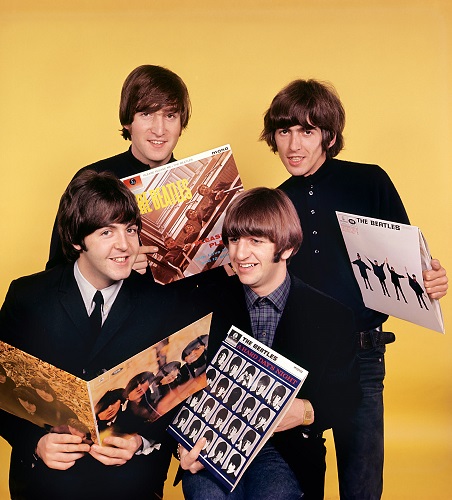
It’s time again for my contribution to Dave from A Sound Day’s monthly feature Turntable Talk. If you are keeping track, this is round #30! Way back when we started this, he asked us if the Beatles were still relevant. This time we circle back to the Fab Four and Dave wants us to write about our favorite Beatle. He is calling this round The Most Fab of Them All.

I have struggled in the past to narrow down what song or artist I am going to write about, but never like this. It shouldn’t be hard to pick one guy out of four, right? For me it is, believe it or not. Frankly, and I mean no disrespect to Dave, the topic is unfair. To me, a musical group or band is the coming together of people, each contributing something unique. Like a puzzle, when all the pieces come together, you have something amazing. To have to choose one is a daunting task.

Let me start by saying that if you had asked me as a kid, without a pause, I would have chose Ringo. This may be because I was so familiar with the Beatles cartoon and Ringo always made me laugh. I also really enjoyed the almost all of the songs that he sang lead on. He went on to have some solo hits post-Beatles, too.

There are times I might have picked George Harrison, but probably not because of his Beatles stuff. Don’t get me wrong, he wrote the amazing song “Something,” which even Sinatra said was a beautiful love song. I also loved a lot of the early songs he sang on. Everybody’s Trying to Be My Baby is one of my favorites. George really gained my respect as a musician and songwriter post-Beatles.

John was a quick wit and always made me laugh when I saw him in those early interviews. You cannot deny the songwriting power that he had both solo and with Paul McCartney. He really wrote some deep songs. To me, it is interesting to look back and see how he put much of his hurt, suffering and confusion into a song.

John was also a guy who wasn’t afraid to take a stand for something. Many of his solo songs are still as relevant today as they were when they were released. If only the people would listen to the lyrics of Imagine, maybe we’d see a change? Every Christmas I hear War is Over, yet every day when I go to MSN, there is some new story about Putin and World War III. Obviously, Give Peace a Chance is not something any of the world powers wants to do.

Then, there is Paul. I don’t have to really say much about his songwriting abilities. As a matter of fact, if you look at the output of the Lennon-McCartney machine, you cannot help but be in awe of the volume of work they put out. As a musician, he really was the greatest talent of the group. Before you get up in arms, let me prove it to you.

We know that he was best known for playing bass guitar for the Beatles. Growing up, his first instrument was the trumpet (given to him by his dad). He also knew how to play the piano, and did so on Beatles songs like Slow Down and Ob La Di Ob La Da. While it is a simple tune, you can hear Paul’s drumming skills on The Ballad of John and Yoko. As a matter of fact, he can play over 40 instruments including mandolin, cello, harmonica, harpsichord, and the ukulele. Watch his video from 2020 for Find My Way and you will see him playing many (FYI – it’s not my favorite McCartney song, but it is a good illustration).

While many songs had both John and Paul listed as writers, many were “all Paul.” Yesterday, Hey Jude, Blackbird, and Here There and Everywhere, just to name a few. Paul said once that the last one was the only one that John had ever complimented him on. John said in an interview that it “was all his” and was “one of my favorite Beatles songs.”

So why am I picking Paul? Honestly, if it wasn’t Paul it would be Ringo for the simple fact that they are still around. Both are still touring and in the public eye. I love watching Paul do interviews. He is fun to watch, tells great stories and isn’t afraid to be a part of something a bit silly.

One of my favorite McCartney moments was when Chris Farley interviewed him on SNL for the Chris Farley Show bit. How Paul kept a straight face through that still amazes me. Farley asks him, “Remember when they said you were dead? That was a hoax, right?” and Paul simply says, “I wasn’t really dead!” That always makes me laugh. How Paul keeps a straight face through the bit is beyond me. I wish there was a better quality clip…

There’s another great SNL bit where he and Martin Short and doing something for a Christmas Pageant. Martin says that he and Paul are a team but he is the only singer because Paul “cannot sing.” Paul plays the triangle in the bit. He misses cues and Martin screams at him through the whole bit. Paul is hilarious. The bit ends with Martin leaving and Paul asking, “Can I sing now?” Walls move and Paul walks onto the stage to sing Wonderful Christmastime, as himself.

Paul was fantastic on the Letterman show reminiscing about being there on the Ed Sullivan show. During the interview Dave says that they have been trying to get him on the show for years. He asks why it took so long to get him there, to which Paul says with a straight face, “I don’t like the show, David.” But THE highlight for me was to watch him do a rooftop performance of Get Back. I want to say that he wound up doing about a 40 minute concert from up there that night.

Another great Paul bit is when he shows up on James Corden’s show and does his Carpool Karaoke. The first song they sing together is Drive My Car and he’s having a blast doing it. The conversation between the two of them as they drive around is moving at times. Paul and James stop at Paul’s boyhood home and shares some great stories. The kicker is that they go to a pub that McCartney used to play at and he and his band surprise the patrons of it with a concert. It is worth a watch on Youtube –

As I write this, I have no idea what Beatle the other contributors have chosen. I am guessing that many of the pieces will be very music related. While I feel mine is also a bit music related, I also feel that what made Paul stand out to me was Paul being Paul. Paul, years away from the Beatles, talking about those days, the music, the memories, and the rest of the band. Paul, looking back at those early days that influenced and brought him to where he is today.

Not too long ago, country singer George Strait said he was done touring. George is 72. Sir Paul is 82 and still out there playing for sold out crowds for hours at a time. He is an artist who is always trying something new, while never forgetting his roots. He has a passion for the music and for his fans. He just seems to be that guy who’d be fun to hang out with.

Thanks to Dave for asking me to be a part of Turntable Talk. Thanks for another great topic. I love writing for it and love to see the responses from the other music lovers. Until next month … Thanks for reading.

The Music of My Life – 1983

Welcome back to The Music of My Life, where I feature ten songs from each year of my life.  In most cases, the ten songs I choose will be ones I like personally (unless I explain otherwise). The songs will be selected from Billboard’s Year-end Hot 100 Chart, Acclaimed Music, and will all be released in the featured year.

I turned 13 in 1983. I had a paper route and a weekly income because of it. I spent my money on toys, books and music. I loved going into Harmony House and buying 45’s or albums. As I get deeper into the 80’s, I’m seeing more and more songs that I “had” to have.

I am noticing something about a lot of the songs on my lists. There have been some that have not necessarily been meaningful to me the year they were released, but wound up being important later on in my life. That is the case of a few of them from this year. That being said, let’s check out my list….

When Lionel Richie left the Commodores, he had a number one song with “Truly.” The follow up song has always been one of my favorites. I can still see and hear my mother singing along the the chorus of “You Are.”

What I love about this is the fact that while it is a love song, it has some tempo to it. It also has a horn section. Future hit maker Richard Marx sang backup on this track. His first job in music was singing on the Lionel Richie album, and he proved himself on this track, which required some deft background vocals. Richard told songfacts.com: “Every session I ever did with Lionel, or for him, was a very fun atmosphere. I’ve been on so many sessions where it’s a downer, and you just try to get through it and nobody is having fun. Lionel is always having fun – no matter what.”

You Are

When I worked in country radio, I used to go to the Country Radio Seminar. It was a place where you got to hear various panels discussing programming, promotions and more. There were plenty of artists there (both old and new) to entertain. We’d often bring stuff for artists to sign so we could auction them off for St. Jude.

Every night there was always a show somewhere. Everyone had always talked about “the boat.” One record label would bring folks about the General Jackson Showboat and provide dinner and drinks. While us radio people would sit and eat, they would bring artists out on the stage to play for us. Many times it was familiar artists featuring their new songs or new artists that the label wanted to showcase.

One of the things about the boat was that there were always one or two surprise guests. You never knew who might show up. The year before my first boat ride, Huey Lewis had mad an appearance. The first time I was on the boat, they wheeled out this piano on the stage. Next, they brought out Ronnie Milsap and I was thrilled. I had always loved his music and he did not disappoint.

He came out laughing and joking and cranked out a few songs, including Stranger In My House. It was written by Mike Reid, who was a defensive tackle for the Cincinnati Bengals for five seasons and had a couple country hits of his own. The song was a country hit and also crossed over to the AC and Hot 100 charts.

The song is done in a minor key and from the opening chords, I was hooked.

Stranger In My House

Anyone who goes through a divorce or a break up knows that what follows can be a rough road. The next song is an example of a song that meant nothing to me at the time, but years later it did.

The fighting, the bickering, the pettiness, the blame, the suffering, the accusations and all the things that comes with a divorce is difficult enough. Once they hand you the final decree, it is important to start anew. I had a wonderful support system in place for me and as time passed, I looked back to see that I was making it. I had been through the war and I had made it to the victory.

Elton John’s I’m Still Standing was used in an animated movie called “Sing.” It was while watching that with the kids that I really heard and felt the lyrics. I can look in the mirror and know that I’m Still Standing and life is GOOD!

I’m Still Standing

Remember ELO’s song “Motor Factory?” Of course, you don’t. That’s because as the group was recording the song, it went through a bunch of changes. They lyrics were completely changed and it became Rock and Roll Is King. The song was released as a single from their Secret Messages album.

ELO’s Dave Morgan said in an interview, “I sang on quite a few tracks, I sang on ‘Rock ‘N’ Roll Is King’. I played on that one, but it wasn’t called that, it was something about something about working at Austin Longbridge! It was full of car plant sounds, you could hear it going clank, clank, clank, like somebody hitting a lathe with a hammer, and Jeff went away and made it into ‘Rock ‘n’ Roll Is King’, wiped off everything we’d done, no, there was still some backing left in there, It was much better how he finished it off than it was before.”

I remember recording this off the radio as a kid. I didn’t realize that there was (what we radio guys call) a “fake cold” ending. That’s where the song stops, you think it’s over, and they come back and sing again. The first time I recorded it off the radio I hit pause on the fake cold, only for ELO to start singing again. Urgh! I got smart after that and went and bought the single.

Rock and Roll Is King

Fleetwood Mac’s Lindsey Buckingham released a few solo albums in the 80’s. Despite some songs that were Top 40 hits, not many folks can recall them. There is, however, one song that folks know thanks to the misadventures of a family named Griswold.

Thanks to National Lampoon’s Vacation, Buckingham’s song Holiday Road had become his best known song. That’s really saying something for a song that never cracked the Top 40 and peaked at #82 when it was released. The song almost didn’t happen.

Actor/director Harold Ramis asked Buckingham to create two songs for his film National Lampoon’s Vacation. He was initially reluctant, believing that soundtrack work “wasn’t part of his discipline.” Thankfully, he decided to grant Ramis’s request, and wrote. Buckingham recorded “Holiday Road” without seeing the entire film. He figured that the movie “had to be somewhat uplifting and a little bit funny”. To keep in line with that, he added dog barks near the end of the song, unaware that the movie featured a scene where a dog is accidentally dragged to death from the bumper of a car.

It is one of those songs that makes you unconsciously press down a bit too much on the gas pedal if your driving while it is playing. I’m not sure I ever “got” the video for the song, though.

Holiday Road

ZZ Top’s Eliminator album was one of few albums that have sold over 10 million copies in America, earning Diamond certification. I helped it get there! This was an album that I remember buying and dropping the needle on for the first time. It had such a neat sound.

Billy Gibbons says that he got the idea for Sharp Dressed man when he saw a movie and a character was listed in the credits as “Sharp-Eyed Man.” According to songfacts.com, the song attracted a slew of new fans to ZZ Top when the video ran constantly on MTV. Their long beards made them instantly recognizable and the babes certainly helped, but the car was the real star.

Prior ZZ Top albums had a Tex-Mex vibe, but when it came time to sort out visuals for the album, the hot rod was finally ready – Gibbons had been working on it for years. It was good timing, giving them an MTV-friendly focal point just when they needed it. They had never made videos before and had no acting experience, but their videos provided everything MTV’s target audience craved: girls, rock and roll, and a really sweet ride.

The music video was the first that was a sequel. It picked up the story from the “Gimme All Your Loving” video of the down-on-his-luck gas station worker who is swept away by three beautiful women. In “Sharp Dressed Man,” he’s a valet, and he encounters the same three girls and is once again given the keys to the Eliminator, Billy Gibbons’ 1933 Ford Hot Rod.

Sharp Dressed Man

I had no idea in 1983 that I would be working as a sleep technologist. The next song is one that is based on a real sleep disorder – somniloquy (Sleep talking). “Talking In Your Sleep” is the biggest hit of The Romantics’ career. In fact, it’s their only Top 10 hit, and only one other song by them (“One in a Million”) even made it to the Top 40. Contrast that with the number of times you’ve heard their song, “What I Like About You,” which only made it to #49.

I love this story about the song: As usual, MTV helped boost The Romantics’ success right around this time with videos of their songs. In Greg Prato’s book MTV Ruled the World, Romantics’ lead singer Jimmy Marinos talks about this song: “That was the last song recorded for the album In Heat. All we had was a backtrack, the instrumental part of the song. And we realized it was too good a track to leave unfinished. So everybody put their heads together, and in a couple of days, we finished up the song melodically and lyrically.” Ha also mentions that the video was filmed at 8:00 in the morning in Detroit, surrounded by girls in their jammies, at what was deemed “not really rock ‘n’ roll hours.” So if they look like they just woke up, that’s because they did – and it works great!

Check out their hair in this video!!

Talking In Your Sleep

Two years ago, Dave Ruch invited a bunch of us to write a column for his Turntable Talk feature. The first topic was about why the Beatles are still relevant, the next song is an example of their influence.

When Genesis began to write That’s All, it was intended as an attempt to write a simple pop song with a melody in the style of The Beatles. Phil Collins even acknowledged in a subsequent interview that the song also features one of his attempts at a “Ringo Starr drum part.”

Genesis keyboard player Tony Banks was one of the first to use an Emulator, which was one of the first digital samplers (it was introduced in 1981). Banks would record his bandmate Mike Rutherford as he noodled around on his instruments, then play around with those samples to craft a track, which is how this song developed.

That’s All was the band’s first Top 10 hit in the US, setting the stage for their tremendous success the rest of the decade as they adapted their sound from progressive rock to tighter pop songs. The video certainly played a part in the success of the song, too. It depicts the band as homeless men taking shelter outside a disused factory. They perform the song, eat soup, play cards, and keep warm around an open fire. It was the first time Genesis used director Jim Yukich, who would direct the majority of their next videos as well as many of Collins’s solo videos.

That’s All

Remember the group Blue Angel? Me either. It was the group that Cyndi Lauper was in in 1981. It was her solo career and her first single, however, that made her famous. It is interesting to note that Girls Just Wanna Have Fun didn’t start out as the female anthem that Cyndi made it.

A Philadelphia singer/songwriter named Robert Hazard, who had a band called Robert Hazard and the Heroes, wrote it. He recorded a demo of it in 1979. Speaking with Rolling Stone, Lauper said that she had to alter the lyrics from Hazard’s original. “It was originally about how fortunate he was ’cause he was a guy around these girls that wanted to have ‘fun’ – with him”

Believe it or not, Cyndi didn’t want to record this song, but her producer, Rick Chertoff, was convinced it could become her anthem. The challenge for her was figuring out how to sing it. She ended up doing her vocal in the style of the ’50s hit “Let the Good Times Roll” by Shirley & Lee, which Shirley Goodman sings in a high-pitched voice. It obviously worked as the song went to number 2 on the Billboard Hot 100 chart.

MTV again played into the success of the song, as this was a very fun video to watch. The video, which ran constantly on MTV, features the wrestler Captain Lou Albano as Lauper’s father, and also Lauper’s real-life mother, who had no acting experience but did just fine. It won the first ever award for Best Female Video at the 1984 MTV Video Music Awards.

The song had a huge influence on how girls dressed in the 80’s. When I think of it, I can picture so many of my gal friends who dressed like Cyndi.

Girl’s Just Want To Have Fun

Everyone I grew up with had the 1984 album from Van Halen. The song actually was a bigger hit in 84, but it is on this list because it was released in December of 1983. Jump is just one of many songs that used synthesizers in the 80’s. The synthesizer intro for Van Halen’s Jump is iconic, but not everyone in the band wanted to use it.

The synthesizer was a point of contention in the band. Eddie wanted to use it, but lead singer David Lee Roth thought it would look like they were selling out to get more radio play. Eddie was classically trained on piano growing up – he didn’t start playing guitar until he was a teenager – so it wasn’t that far a stretch for him. Had the band brought in an outside keyboard player they probably would have gotten a lot of flak, but Eddie was held in such high esteem that fans were happy to hear him on another instrument.

Songfacts.com says: 1984 was David Lee Roth’s last album with Van Halen before he left the band in 1985; the video for “Jump” inflamed the tensions that led to his departure. The video was produced by Robert Lombard, who wanted to show the personal side of the band on stage. Roth, however, wanted the performance intercut with footage of him doing other things, so they shot him doing things like riding a motorcycle and getting arrested while wearing nothing but a towel. Lombard edited the video and used none of the extra Roth footage, taking it to Eddie and Alex for approval. Two days later, the band’s manager fired him for bypassing Roth. Lombard says he never received the award the video won from MTV.

Jump

Next week, we’ll look at songs from 1984. 1984 was a big year for me in a lot of ways. Musically, it was a big year for ballads. With a mix of country, R&B, and a song that led to me embarrassing myself on the air years later, it will be an interesting list!

Tell me about your favorite from 1983 that I may have missed in the comments and I will see you next week.

Movie Music Monday – NUJV?

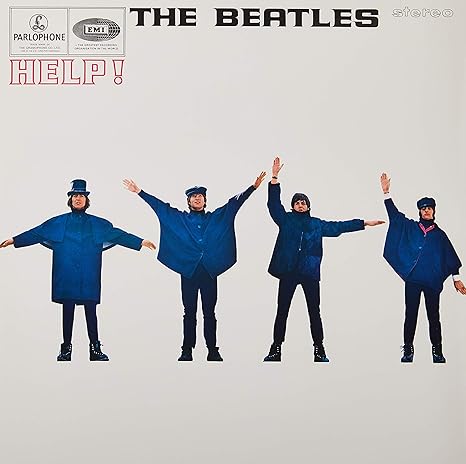
In 1965, The Beatles’ second feature film, Help! premiered at the London Pavilion Theatre in the West End of London. The musical comedy, which followed the success of A Hard Day’s Night, was a much larger production than its predecessor, finding the band and director Richard Lester shooting in a variety of international locations. The film’s soundtrack doubled as The Beatles’ fifth studio album.

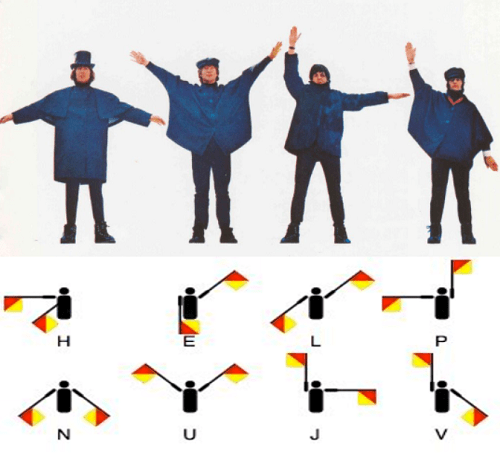
Ok, before I go on, I need to clarify the title of this blog. Just what in the world is NUJV? Originally, the album cover showed The Beatles spelling out the word “Help” using the semaphore system of communicating with flags, which was usually used by ships. The photographer, Robert Freeman, didn’t like the pose because it looked unbalanced. Instead, he had them pose in a more “balanced” way – that in semaphore spells the letters NUJV.

Apparently, only those who knew semaphore saw the issue.

This movie played a big part in the way another group portrayed themselves. Help! was used by The Monkees to prepare for their TV series. The Beatles showed off their individual personalities in their movies, which The Monkees made sure to emulate. By not presenting all members of the band as identical, it made the Beatles even more popular, as many of their fans picked a favorite.

There certainly are some great tracks on the album: Ticket to Ride, Yesterday, The Night Before, Act Naturally, Dizzy Miss Lizzie, You’ve Got To Hide Your Love Away, I’ve Just Seen a Face, and the title track – Help! (Which is what I want to feature today.)

According to Lennon’s cousin and boyhood friend Stanley Parkes, “Help!” was written after Lennon “came in from the studio one night. ‘God,’ he said, ‘they’ve changed the title of the film: it’s going to be called ‘Help!’ now. So I’ve had to write a new song with the title called ‘Help!’.”

Fun Fact: The original title to the title song and the movie was “Eight Arms To Hold You,” and the first copies of the single said it was from the movie “Eight Arms to Hold You.”

Originally, John Lennon wanted this to be a much slower song. He was convinced, however, that by speeding it up, it would sound “more commercial” and would naturally sell more albums.

The song itself runs just 2:18, but packs in 267 words! This makes it one of the most lyrically dense hits of the era. It starts and ends on a vocal, and there are two vocal lines running throughout the song, as John Lennon sings lead while George Harrison and Paul McCartney do backgrounds, singing some of the same phrases either before or after Lennon. There are only a few seconds in the song where somebody isn’t singing.

Lennon admitted that the song truly was a “cry for help!” He has described this time of his life as his “fat Elvis period.” In a 1971 interview with Rolling Stone, Lennon said this is one of his favorite Beatles records, because, “I meant it – it’s real.” He added: “The lyric is as good now as it was then. It is no different, and it makes me feel secure to know that I was that aware of myself then. It was just me singing ‘Help’ and I meant it.” Paul McCartney helped Lennon write the song, but did not realize it was actually John calling for help until years later.

Writer Ian MacDonald describes the song as the first crack in the protective shell Lennon had built around his emotions during the Beatles’ rise to fame, and an important milestone in his songwriting style. In January of 1980, John told Playboy magazine, “The whole Beatles thing was just beyond comprehension. I was subconsciously crying out for help”.

As a bonus, here is the trailer for the film:

The Music of My Life – 1980

Welcome back to The Music of My Life, where I feature ten songs from each year of my life.  In most cases, the ten songs I choose will be ones I like personally (unless I explain otherwise). The songs will be selected from Billboard’s Year-end Hot 100 Chart, Acclaimed Music, and will all be released in the featured year.

This week we enter a new decade – the 80’s! As the final years of the 70’s ticked away, you could already start to hear the “eighties sound” creeping in. As we move through the decade that sound will change even more. What is also interesting is the amount of crossover hits in the years ahead.  40% of my list for 1980 has roots in country music.

So what was my 10 year old self listening to in 1980? 

I did not know that the first song would perhaps unknowingly influence my career choice at 10 years old, but it may have. Released in February in the US, Charlie Dore reached number 13 on the Hot 100 charts with her ode to the radio DJ, Pilot of the Airwaves.

The lyrics are from the point of view of a woman who frequently listens, late at night, to a radio disc jockey whom she calls a “pilot of the airwaves”, keeping what has often been called the “dawn patrol”. She admits that she has few real-life friends and that the DJ keeps her as much company as she believes she needs, describing her life and the feelings she has2 surrounding the fact that she considers the radio DJ her only true friend. The DJ does not need to play the selection she has requested; she does hope the DJ will do his best along those lines, adding:

I’ve been listening to your show on the radio,
And you seem like a friend to me.

Looking back on this song now, I can tell you that the one thing I learned was most important about being on the air was to have the listener feel as though they were just hanging out with a friend. That was always my goal – speaking one on one and keeping my listener company.

The song played a role in an early relationship, too. Two gals used to call the station all the time and one of them always wanted to hear this song. They decided to bring me coffee one night and I hit really hit it off with one of them. We dated for a while, and when an ex of mine called to ask me to take her back, I did. Ah, young love …. it really gets messy

Pilot of the Airwaves

A songwriter and producer named Steven Greenburg wrote a song when he became bored with Minneapolis and wanted to move to New York, which he called “Funkytown.” Lipps Inc. (pronounced “Lip Synch”) was formed especially for this song. The vocals were done by Cynthia Johnson, who was Miss Black Minnesota 1976. The song reached number one on the charts and stayed there for four weeks!

The group continued to record until 1985 with a changing lineup, but they failed to see the success they’d had with their first hit. Steven Greenburg, however, went on to have great success. He became A&R Vice President for Mercury Records, signing Hanson, among other acts. Later he headed the S-Curve Records label, signing the Baha Men and Joss Stone.

This song shows up in a lot of movies (Shrek 2, History of the World Part 1, Selena) and TV shows (Everybody Loves Raymond, Will and Grace, Malcolm in the Middle, and Friends) and VH1 ranked the song at #37 in the Top 100 One Hit Wonders.

Funkytown

It’s Still Rock and Roll to Me from Billy Joel’s Glass Houses album was one of Joel’s most popular songs and was his first #1 hit on the Hot 100, spending two weeks at the top spot in July 1980. The song spent 11 weeks in the top 10 and was the 7th biggest hit of 1980. It was released on May 12, 1980 – 3 days before my 10th birthday.

In this song, Billy Joel was making a comment on musical styles and trends. At the end of the disco era, the music press began touting the “New Wave” sound, which included bands like The Police and The Cars. Joel thought that this new sound was just a variation on power-pop that had been around since the ’60s. He didn’t have a problem with the music, just the way it was being categorized. “I like it, but it’s not particularly new,” he said.

He said in a Rolling Stone interview that “new wave songs, it seems, can only be about two and a half minutes long… only a certain number of instruments can be played on the record – usually a very few… only a certain amount of production is allowed or can be heard… the sound has to be limited to what you can hear in a garage… a return to that sound is all that’s going on now.”

It’s Still Rock and Roll To Me

Despite the next song being a huge hit in 1980, it is interesting that it goes all the way back to 1959 and has ties to Buddy Holly and the Beatles.

More Than I Can Say was originally written and recorded by Sonny Curtis and Jerry Allison in 1959. Curtis and Allison were both members of Buddy Holly’s band, the Crickets. They recorded it in 1959 soon after Holly’s death and released it in 1960 on their album In Style With The Crickets. The hook was left unfinished at the time, and at the time of recording, the hook was left this way with no lyrics, only the “wo-wo yay-yay,” which became a memorable part of the song. The single went on to become a minor hit in the UK. Curtis considers this song to be one of his most enduring, looking back at the success subsequent artists have had performing it.

It was also covered by Bobby Vee in 1961. Bobby, you may recall, was one of the artists who was chosen to play the remainder of the tour that Buddy Holly, The Big Bopper, and Richie Valens were doing when they died. Bobby’s version never cracked the Top 40 in the US, but was a Top 5 song in the UK.

From Wiki: According to author Mark Lewisohn in The Complete Beatles Chronicle, The Beatles performed “More Than I Can Say” live in 1961 and 1962 (in Hamburg and Liverpool and elsewhere). Author Allen J. Weiner in The Beatles: The Ultimate Recording Guide confirms this, noting that it came from a setlist made at the time by George Harrison. It is unclear who sang the lead vocals and no recording is known to survive.

The best known version of the song was by Leo Sayer. Sayer was looking for an “oldie” for his 1980 album Living in a Fantasy. He saw a television commercial for a greatest hits collection by Bobby Vee and chose the song on the spot: “We went into a record store that afternoon, bought the record and had the song recorded that night.” It spent five weeks at #2 on the Billboard pop chart in December 1980 and January 1981.

What I remember most about this song is that my dad’s wedding band used to play this in the set. My brother and I often heard it over and over as they rehearsed it.

More Than I Can Say

I will always see a dancing gopher whenever I hear the next song. “I’m Alright” is the theme to the movie Caddyshack, and plays at the beginning and end of the film. Kenny Loggins saw a rough cut of the movie before he wrote the song. He used the character Danny Noonan, who was a caddy with hopes for a brighter future, as inspiration.

Loggins told the St. Petersburg Times: “The character was trying to figure out where he fit. But at the same time he wanted people to leave him alone and let him find his own way. So I wanted to grab him and summarize that character, and that’s what ‘I’m Alright’ is doing.”

Do you recognize a familiar voice in the song? Eddie Money was recording in a nearby studio, and Loggins convinced him to sing a line on this song. That’s him in the background singing, “You make me feel good!” Money was unhappy that he never got credit for his contribution. “I’m not a fan of Kenny Loggins to tell you the truth,” he told Cincinnati morning show host Kidd Chris of WEBN in 2014. “I sang the bridge in that. We were label mates, you know.”

Fun Fact: When Loggins launches back into the chorus partway through the song, he stutters on the lyric, singing, “I- I’m Alright,” which was a happy accident. “I actually misjudged the entrance. In the arrangement, I delayed that entrance but I forgot when I was doing the lead vocal.” They decided to leave it in the song.

I’m Alright

Urban Cowboy was released in 1980 and country music was big. There were many country songs that crossed over to the pop charts. The next song, however, makes my list because I loved watching the Dukes of Hazzard every week. The first autograph I ever received was a postcard from James Best ( Sheriff Roscoe P. Coltrane)!

Waylon Jennings was the narrator in the 1975 movie Moonrunners, where he was credited as “The Balladeer.” When CBS created a TV show based on the movie, they asked Jennings to reprise his role as narrator (again credited as “The Balladeer”) and write the theme song. He came up with an outlaw-Country theme that fit the story of Bo and Luke Duke, who were good-hearted rebels from the fictional Hazzard county in The Dukes of Hazzard. Jennings appeared in all 121 episodes of the show until it ended in 1985.

Waylon recorded two versions of the song. The commercially available version receiving radio airplay contains a musical bridge which follows the first verse and chorus. Also, following the commercial version’s second chorus, Jennings makes a tongue-in-cheek reference to his faceless appearance in the credits by singing, “I’m a good ol’ boy, you know my mama loves me, but she don’t understand, they keep-a showin’ my hands and not my face on TV” (a statement referring to the opening shot in the television theme version where Jennings is only shown below the neck playing guitar). This version was a #1 Country hit.

Personally, I think the TV version is the superior version. One of the reasons is that it features Larry McNeely’s banjo work which the commercially available version does not. That banjo really makes a difference! Additionally, the television version’s third verse contains the lyric, “Fightin’ the system like two modern-day Robin Hoods”, which is accompanied by a “Yee-haw!” said by characters, Bo & Luke Duke (John Schneider and Tom Wopat. Fun Fact: The “Yee-haw is Schneider’s vocal used twice.

Here are both versions.

Theme from The Dukes of Hazzard

Another country themed movie from 1980 starred Willie Nelson, Honeysuckle Rose.

On The Road Again was written on the spur of the moment on an air sickness bag when Nelson was on a plane with Jerry Schatzberg, the director of the movie Honeysuckle Rose and its executive producer Sydney Pollack. He recalled to Uncut magazine: “They were looking for songs for the movie and they asked me if I had any idea. I said, ‘What do you want the song to say?’ and Sydney said, ‘Can it be something about being on the road?’ It just started to click. I said ‘You mean like, On the road again, I can’t wait to get on the road again?; They said, ‘That’s great. What’s the melody?’ I said, ‘I don’t know yet.'”

Willie put off writing the melody for months until the day before he went to the studio to cut the song. “I saw no reason to put a melody to something I wasn’t ready to record,” he explained in his 1988 autobiography, Willie. “I knew I wouldn’t have any problem pulling the melody out of the air.”

This was a #1 Country hit for Willie Nelson, and also one of his biggest crossovers, reaching #20 on the Hot 100, his highest placing at the time. It also won him a Grammy Award for Best Country Song in 1981.

On The Road Again

Hit Me With Your Best Shot was the first Top 10 record for Pat Benatar. It was the second single from her Crimes of Passion album. The song was written by guitarist Eddie Schwartz. His inspiration? A pillow.

Eddie says, “I was in a kind of weird therapy when I was in my mid-20s, it was called bio-energetics, I believe. One of the things we did was punch pillows, I guess it had something to do with getting out hostility. I went to a session where we punched the pillows for a while. It all seemed kind of strange, but I remember walking outside of this therapy session and standing on the doorstep of the building I’d been in, this small house in Toronto, and the title just came to me, ‘Hit Me With Your Best Shot.’ I haven’t been to therapy before or since. Maybe I should go back.”

The song can be interpreted as a song about a one-night-stand, but that’s not what its writer had in mind. Schwartz says, “The song is laden with sexual innuendo, but at the core is a song about self confidence. It’s a song saying ‘no matter what you throw at me, I can handle it, I can play in your league.'”

Pat Benatar retired “Hit Me With Your Best Shot” from her live sets in 2022 when she deemed the lyrics inappropriate in the light of a spate of mass shootings in the United States. “We’re not doing ‘Hit Me With Your Best Shot’ and fans are having a heart attack and I’m like, ‘I’m sorry, in deference to the victims of the families of these mass shootings, I’m not singing it.’ I tell them, if you want to hear the song, go home and listen to it,” she told USA Today.

Benatar added that though the title is tongue-in-cheek, she had to draw the line. “I can’t say those words out loud with a smile on my face, I just can’t,” she said. “I’m not going to go on stage and soapbox – I go to my legislators – but that’s my small contribution to protesting. I’m not going to sing it. Tough.”

Hit Me With Your Best Shot

I guess I would call the next song one of my forgotten favorites. You don’t hear it too often anymore, and it was really Terri Gibbs only bonified hit. I’ve always loved the sound of it and remember hearing it a lot on the radio growing up. Somebody’s Knockin’ was released in October of 1980.

When Terri was only six months old, she was diagnosed with retrolental fibroplasia and declared blind. She began playing the piano when she was three. When she was seventeen, she opened up for country legend Bill Anderson. It was another country legend who told her to move to Nashville and pursue a music career – Chet Atkins. She did just that when she was eighteen, but had no luck getting a record deal.

She moved back to Georgia and toured with a trio. She made a demo tape and sent it to record producer Ed Penney of MCA Records who signed her to the label in 1980. Penney was a former Boston disc jockey and a long-time songwriter. He liked her voice on her demo, but he felt she needed stronger material. So he co-wrote “Somebody’s Knockin'” for her and also produced the song. He also became her manager.

This song was a crossover hit upon its 1980 release, reaching No. 8 on the U.S. country charts, No. 13 on the Billboard Hot 100 and No. 3 on the Adult Contemporary charts. Her debut album won her the Academy of Country Music’s Top New Female Vocalist award. She was also the first winner of the Country Music Association’s Horizon Award (which is awarded to emerging artists), and was nominated for a Grammy Award for Best Country Song and Best Female Country Vocal Performance for the song.

In 1987, after struggling to have another country hit, she switched her focus to Contemporary Christian music. Her last album was released in 2017.

Somebody’s Knockin’

It is probably just a coincidence that I am writing this during a Michigan thunderstorm, but it is the appropriate background noise to accompany my last entry of 1980. Eddie Rabbitt was a country singer and songwriter who had a fair share of country and crossover hits. Here is another example of real life inspiring a song.

Eddie first got the idea for the song I Love a Rainy Night in the ’60s when he was sitting in his small apartment on a rainy night. He sang, “I love a rainy night, I love a rainy night” into a tape recorder, but didn’t complete the song until 1980, when he discovered the tape in his basement. He finished the song with the help of fellow songwriters Even Stevens and David Malloy.

The one thing I truly remember about this song was the intro. The song has a very distinctive feature – its rhythmic pattern of alternating finger snaps and hand claps. The snaps and claps were included with the help of percussionist Farrell Morris, who, according to The Billboard Book of Number One Country Hits, mixed two tracks of each to complete the record. I am sure this is what they intended, but I always picture the windshield wipers going back and forth in that rhythm (just like Eddie sings).

This song was a huge crossover hit! Eddie had great success with the song going to #1 on the Pop, Adult Contemporary and Country charts.

I Love A Rainy Night

So that brings my list for 1980 to an end. As I continue to listen to the thunder, I’ll ponder a bit on what is to come next week as we look at 1981. That was another important year for me and the influence of radio in my future. Why? Because I discovered a show that featured one of the best on air personalities to ever grace the airwaves …..

See you next week – in 1981.

The Music of My Life – 1970

As I celebrate birthday 54, I am borrowing (ok, stealing) an idea from another blogger. I have altered the idea a bit, and may decide to change it up after a few posts …

I am calling the feature “The Music of My Life.” I plan on starting with the year I was born and picking 10 favorites from that year. I will move on through the years one by one. I doubt I will go too deep in the more modern years, so I’m not sure how long this will go on.

Right now, I am hoping to do this once a week. That’s a bit adventurous of me, but I am really hoping to be able to work ahead on these.

So what sources am I using to choose my songs? First, I am looking at the Billboard Year-End Top 100. This can be a problem as some of the songs from the list may have been released the year before. Next, I am looking a lists from various sources with all the songs released as singles for each year. Finally, my buddy Max (who may or may not be the blogger I stole this idea from), gave me a cool website to check out. It is acclaimedmusic.net

With that being said, let’s take a look at some of my favorites from the year I was born…

1970

I may as well start with the song that was number one on my birthday – American Woman by The Guess Who. It was released in January of 1970 and was the third biggest song of the year. A cool thing about this song – the whole thing was improvised on stage during a concert after Randy Bachman was tuning his guitar after breaking a string!

American Woman – The Guess Who

Next, a group that never had a number one song. That has always baffled me. CCR had a few hits in 1970. Travelin’ Band was released in January of 1970 and has a very 1950’s sort of sound to it. John Fogerty has been said to have channeled a bit of Little Richard in the vocal delivery of this song. Coincidentally, CCR was sued by the publishing company that had the rights to Little Richard’s “Good Golly Miss Molly,” because they sounded so much alike. The case was settled out of court.

Travelin’ Band – CCR

I always loved the sound of Dave Edmunds I Hear You Knocking. In 1970, he was getting ready to cut a version of Wilbert Harrison’s Let’s Work Together, when he heard that the group Canned Heat had just cut it. As he was driving in his car, a radio station played the Smiley Lewis’ 1955 version of I Hear You Knocking. He realized just how similar it was to Let’s Work Together and knew he wouldn’t have to change much and recorded it. He played all the instruments on the song (except maybe the bass guitar).

I Hear You Knockin’ – Dave Edmunds

Another group I have always liked is Badfinger. The song was recorded in May of 1970 and released in October. The band loved this song, but some of the folks at Apple records had no interest in releasing it. In August, the American director at Apple in New York heard the tape and liked it. The song was remixed and released as a single. It was a Top 10 single.

No Matter What – Badfinger

Released in January of 1970, Norman Greenbaum had a Top 5 Hit with Spirit in the Sky. Jesus is mentioned many times throughout the song, so I remember being surprised to read that Norman was Jewish! In a 2006 interview, he said that he was inspired to write the song after watching country singer Porter Wagoner singing a gospel song on TV. He said that he thought, “I can do that,” and wrote “my own gospel song.”

As far as the unique sound of the opening guitar lick? Normal used a Fender Telecaster with a fuzz-tone circuit built into the body to generate the song’s characteristic guitar sound. Because of the song’s length and religious tone of the lyrics, the record company was initially reluctant to issue the song. They came to their senses and finally released as a single after two other singles from the album had poor sales. The rest … is history.

Spirit in the Sky – Norman Greenbaum

Edwin Starr is one of my favorite Motown singers. In 1970, he released a song co-written by another Motown artist, Barrett Strong. The song is basically a protest song as the Vietnam War was still going on. The song was recorded originally with the Temptations singing it, however, the label decided to withhold the Temptations’ version from single release so as not to alienate that group’s more conservative fans, and had Edwin Starr record and release it.

War – Edwin Starr

By the time I was born, the Beatles were getting ready to call it quits. However, in March of 1970, they released Let It Be. At the time, the song became the highest debut ever on the Billboard Hot 100 chart. It entered the chart at number 6 and went straight to the top. This was the final single released before Paul announced he was leaving the band.

Let It Be – The Beatles

One of the great song intros in classic rock belongs to All Right Now by Free. The song was recorded in January of 1970 and released on my birthday in the UK (May 15). Drummer Simon Kirke said: “‘All Right Now’ was created after a bad gig in Durham. We finished our show and walked off the stage to the sound of our own footsteps. The applause had died before I had even left the drum riser. It was obvious that we needed a rocker to close our shows. All of a sudden the inspiration struck (Bass Player Andy) Fraser and he started bopping around singing ‘All Right Now’. He sat down and wrote it right there in the dressing room. It couldn’t have taken more than ten minutes.” It’s a great jam!

All Right Now – Free

This song fits exactly what many blogger friends and I do often – Turn Back the Hands of Time through music, movies, and nostalgia. One of R&B’s greatest was released in February of 1970 by Tyrone Davis. The song was Davis’ second big hit. It went to number one on the Billboard R&B Chart and went to number three on the Pop Singles Chart.

I’ve always loved the way the intro starts with drum and bass, then adds guitar and keyboard (xylophone?) and finally the strings before Tyrone’s smooth vocal. And who doesn’t sing along with the background singers when they come in? I know I do.

Turn Back the Hands of Time – Tyrone Davis

Finally, we grab a cut from Van Morrison’s 1970 album, Moondance. Into the Mystic is just such a cool song. I guess this would fall into the category of “Yacht Rock” today. It has a spiritual feel to it. One article compared it to Yesterday by the Beatles describing it as “another song where the music and the words seem to have been born together, at the same time, to make one perfectly formed, complete artistic element.”

Van said the use of homophones really lent the song to have alternate meanings. He states: “Originally I wrote it as ‘Into the Misty’. But later I thought that it had something of an ethereal feeling to it so I called it ‘Into the Mystic’. That song is kind of funny because when it came time to send the lyrics in WB Music, I couldn’t figure out what to send them. Because really the song has two sets of lyrics. For example, there’s ‘I was born before the wind’ and ‘I was borne before the wind’, and also ‘Also younger than the sun, Ere the bonny boat was one’ and ‘All so younger than the son, Ere the bonny boat was won’ … I guess the song is just about being part of the universe.”

Into the Mystic – Van Morrison

I hope you enjoyed giving these songs a listen. Picking just 10 was harder than I thought. What about your favorites from 1970??

Up next – 1971….