Dave at A Sound Day just wrapped up his monthly feature Turntable Talk. It was an interesting topic this time around and there were a lot of surprises as to who everyone chose to write about. This was my entry to the feature, which originally posted on Dave’s site on Monday:
It is time once again for Dave’s feature Turntable Talk. Dave features this every month on his site A Sound Day. This is the 39th edition, and he continues to come up with fantastic topics. This month is a fun one: Bands? We Don’t Need No Stinkin’ Bands! Dave’s instructions were simple: This time around, we’re looking for artists who left popular bands to go solo and did well (either commercially or else in your own critical assessment.)
I am sure that I did exactly what the other participants did when the topic was presented – I Googled. I was actually surprised at just how many artists moved from a group to become a solo artist. Off the top of my head I can list Diana Ross, Sting, Lionel Richie, Eric Clapton, Gwen Stefani, Ricky Martin, Peter Gabriel, Rob Thomas, Steve Perry, Lou Gramm, and Justin Timberlake. There are SO many.
In all honesty, I had my choice almost immediately. However, as I began to write about him, there was another artist connected with him that became more interesting to me. It was an artist who had solo success for a short time, and then a sad ending.
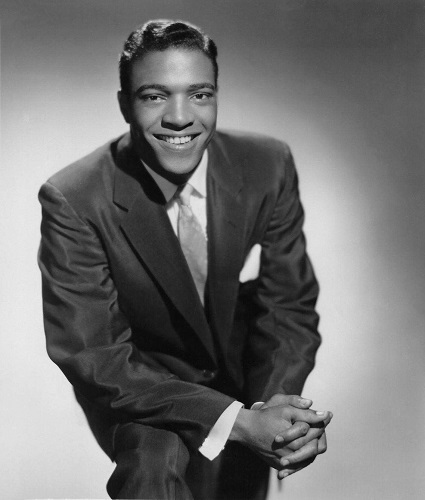
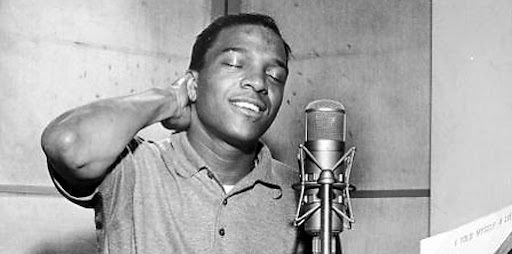
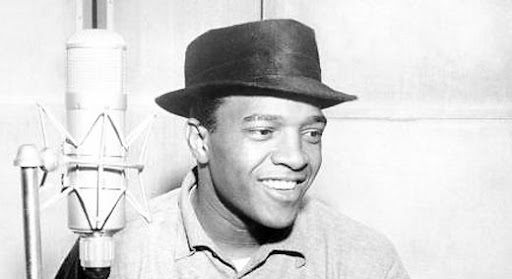
If I mention The Drifters I am sure you can name a few of their big hits. Under The Boardwalk, This Magic Moment, and Up On The Roof are just some of them. The Drifters were formed by my choice artist in 1953. His name was Clyde McPhatter. Let’s go back a couple years to see how it all came together.
Like many artists, Clyde McPhatter began singing in the church choir at his father’s church. In 1950, he was working at a grocery store. He entered the Amateur Night contest at Harlem’s Apollo Theater – and won! Afterward, he went back to working in the store.
One Sunday, Billy Ward of Billy Ward and the Dominoes heard Clyde singing in the choir of Holiness Baptist Church of New York City. He was immediately recruited to join the group. Clyde was there for the recording of their hit “Sixty Minute Man,” which was a number one song on the R&B chart for 14 weeks in 1951.
My original pick for this round was Jackie Wilson. Jackie was hired by Billy Ward in 1953 to join The Dominoes. That same year, Clyde left the group. He coached Wilson while they were out touring together. Wilson would leave in 1957. Apparently, Ward was not pleasant to work with. Wilson said, “Billy Ward was not an easy man to work for. He played piano and organ, could arrange, and he was a fine director and coach. He knew what he wanted, and you had to give it to him. And he was a strict disciplinarian. You better believe it! You paid a fine if you stepped out of line.”
Atlantic Records saw a Dominoes show and noticed that Clyde was not with the group, so they searched for him, found him and wanted to sign him to a record deal. Clyde agreed to sign on one condition – they allow him to form his own group. That group was the Drifters. While known as Clyde McPhatter and the Drifters, they released songs like Money Honey.
Elvis Presley covered Money Honey in 1956. In researching for this piece I was surprised to find that McPhatter and the Drifters did the original of another Elvis hit – Such a Night.
In late 1954, McPhatter was inducted into the U.S. Army. He assigned to Special Services in the continental United States. This allowed him to continue recording. After his tour of duty, he left the Drifters and launched a solo career. The Drifters continued as a successful group, but with many changes in personnel, and the group assembled by McPhatter was long gone by the time their greatest successes were released after he left the group.
It would take two years, but Clyde would finally get his first solo #1 R&B hit when he released “Treasure of Love” in 1956. It would top out at #16 on the US Pop Chart. I love his vocal on this one.
His biggest solo hit would come in 1958 when he recorded and released a song written by Brook Benton. A Lover’s Question would reach #6 on the Pop Chart. If I had to pick my favorite Clyde song, it would be this one. There is so much to love about this song. That acapella bass line being sung throughout the song is very catchy.
McPhatter would leave Atlantic Records and bounce from label to label recording many songs, but not having much success. His last top ten record would come in 1962 with a song written by Billy Swan. Lover Please was first recorded by the Rhythm Steppers in 1960. It was the title track from Clyde’s 1962 album of the same name. It would reach #7 on the Pop Chart.
Clyde did manage to have a top 30 hit in 1964 with “Crying Won’t Help You Now,” but when it fell of the chart, he turned to alcohol for comfort. He would record every so often, but nothing ever really did well on the charts. He always had a decent following in the UK, so in 1968 he moved to England.
He wouldn’t return to the US until 1970. Outside of performing on a few Rock and Roll Revival shows, he lived a very private and reclusive life. In 1972, Decca Records signed him and they were planning a a big comeback. That never materialized as Clyde passed away on June 13, 1972 of complications from liver, heart and kidney disease. This was brought on by his alcohol abuse years earlier. He was only 39 years old.
His legacy consists of over 22 years of recording history. Clyde was the first artist to be inducted twice into the Rock and Roll Hall of Fame, first as a solo artist and later as a member of the Drifters.
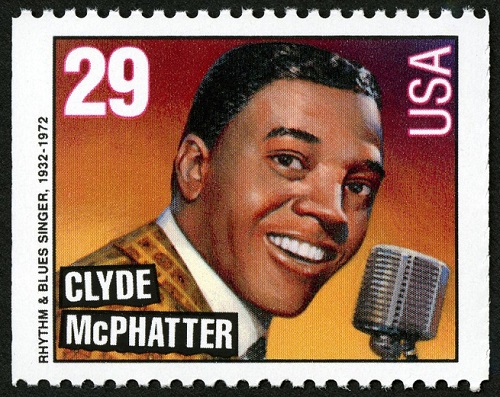
In 1993, Clyde was honored with his own stamp by the US Postal Service.
His career had ups and downs, and his hit songs were an important part of Rock and Roll history. Vocalists like Marv Johnson, Smokey Robinson and Ben E. King are all said to have patterned their vocal styles on Clyde’s. Others have cited him as a major influence as well. In the book “The Drifters” by Bill Millar, he says:
“McPhatter took hold of the Ink Spots’ simple major chord harmonies, drenched them in call-and-response patterns, and sang as if he were back in church. In doing so, he created a revolutionary musical style from which—thankfully—popular music will never recover.”
Thanks again to Dave for hosting another great round of Turntable Talk. I cannot wait to see who the other writers have picked and look forward to Round #40 next month.
Welcome back to The Music of My Life, where I feature ten songs from each year of my life. In most cases, the ten songs I choose will be ones I like personally (unless I explain otherwise). The songs will be selected from Billboard’s Year-end Hot 100 Chart, Acclaimed Music, and will all be released in the featured year.
I started this feature with 1970 and we have come to 2006. As each year progresses, it has been interesting. I have noticed that some years it is difficult to get 10 songs, while other years I have trouble narrowing my picks to 10. I have a feeling that as I get closer to the end, there may be the need to pick less than 10. We’ll see.
2006 was a year of ups and downs. It became clear that my mom’s cancer battle may be drawing to an end. There was quite a change in her. After ten years of fighting, she was tired. She passed in October.
In October, just 11 days before my mom passed, the Detroit Tigers went to the World Series for the first time since 1984. My dad and I were so excited. Of course, the high was brought low when they lost it in 5 games.
Musically, 2006 wasn’t a bad year. My list has a variety of genres and a few songs that mean more now than they did in 2006. So let’s turn on the radio …
I love the sound of a good acoustic guitar and a simple vocal. If you look back over the years I’ve covered, there are quite a few songs like that. In 2006, Hey There Delilah jumped out of the radio for me. I loved the sound.
Delilah is a real person. Her name is Delilah DiCrescenzo. She is a steeplechase runner Plain White T’s lead singer Tom Higgenson met through a friend. He thought she was the most beautiful girl he’d ever seen.
He told Songfacts:
“I was like, ‘Well, all right, I’ve got to write a song for this girl.’ I literally started playing it. The first verse just poured out exactly as it is, all the way through to the chorus. I didn’t really know the girl, you know? So, it was like, ‘What’s it like in New York City? Tonight, you look so pretty'”
He told Clickmusic that he felt this was possibly the most well-crafted song on the album:
“I think I definitely spent the most time on the lyrics with that song. It’s a lyric-driven song, so every line was important. It’s very exposed and vulnerable, but it’s very simple.”
Tom didn’t get the girl – Delilah was dating somebody and wasn’t interested – but he did get a number one song out of the encounter.
Hey There Delilah
The next song was one that I played when working in country radio. It was one of those songs that surprised me and became a country hit. I don’t know that country music would have ever been associated with Bon Jovi!
Jon Bon Jovi and Richie Sambora wrote two versions of Who Says You Can’t Go Home. Both are on their Have a Nice Day album. One version is just the band and was a hit on the Adult Contemporary charts. The other is a country version featuring Jennifer Nettles of the band Sugarland.
At first, Jon Bon Jovi wanted Keith Urban to sing with him on the country version and play the banjo. It didn’t work out since their voices were so similar and the banjo didn’t sound right, so they used Nettles. The song went to #1 on the Country charts, the first time a rock band has done that.
Jennifer was a bit anxious about singing with Bon Jovi. In an interview she said, “I had his New Jersey posters on my door when I was in the seventh or eighth grade. It made me nervous because the last thing I would want is to ruin a Bon Jovi song.” I think it is safe to say that she didn’t.
Who Says You Can’t Go Home
The next song is just one that struck a chord lyrically. When I heard the story behind the song, it took on a deeper meaning. Isaac Slade of The Frey explained to Songfacts how he came up with How To Save A Life. He explained that he wrote this song about an experience he had working at a camp for troubled youths:
“One of the kids I was paired up with was a musician. Here I was, a protected suburbanite, and he was just 17 and had all these problems. And no one could write a manual on how to save him. I got a lot of email about it. One kid died in a car accident, and I guess it had been the last song he downloaded from his computer. They played it at his funeral, and some of his friends got ‘Save A Life’ tattooed on their arms. The response has been overwhelming.”
Lead guitarist David Welsh told I Like Music the story of this song:
“The song came about very organically. Isaac had this idea on the piano of this kind of lullaby. Then he concocted this repetitious drum beat that moved the lullaby along with Ben. The lyrics came from an experience Isaac had with a teenager he was mentoring who was struggling with drugs and addiction. It was just a very natural process, the song developed and the lyrics fitted very well.”
The Fray is comprised of devout Christians, and this song certainly has some religious subtext, with specific references to God:
And I pray to God he hears you
The Christian music community embraced the song, sending it to #4 on the Christian Songs chart, but it wasn’t marketed as a religious song and was also a hit in the secular community – it made #3 on the Hot 100 and was also a #1 Adult Contemporary hit.
How To Save A Life
The first and only cover song on my 2006 list is a classic. In 1960, The Drifters recorded Save The Last Dance For Me. It was originally a B-side. The legendary Dick Clark thought Save the Last Dance For Me was the better of the two songs and started playing it on the radio. Bingo – it became a number one song.
It is a song that has been covered by many artists including Buck Owens, Dolly Parton and John Davidson! In 2006, Michael Buble’ released it as the third single from his It’s Time album. There were many remixes of the song before the single was released. After Bublé performed the album version of the song during the closing credits of the film “The Wedding Date,” that version was released to radio, peaking at No. 5 on the Billboard Adult Contemporary chart.
I love his version! I love entire feel of it. It is so different from the original and the instrumentation is SO good. Every time I hear that horn line, it gives me chills. I like that it gives a little nod to the original by going from the strong brass sound to the lone guitar with the opening vocal.
Save The Last Dance For Me
If I mention the song Chasing Cars by Snow Patrol to my wife, she will immediately remind me that it was used in an episode of Grey’s Anatomy. A friend of mine will remind me that it was used in an episode of One Tree Hill. I have seen neither one of these shows – by choice.
It was a song I heard on the radio and I remember thinking was a great love song it was. It’s a great song about just getting through day by day with just you and your significant other. Lead singer Gary Lightbody, who called it “the most pure and open love song I’ve ever written.”
It’s such an amazing song, and Lightbody was even impressed with it. He wrote it under unique circumstances. He says he wrote it in the garden of producer Garret “Jacknive” Lee’s cottage one night while in “a blur of red wine and Percocet.” He says he wrote about 10 songs that night, and when he looked at them the next day nine of them were terrible, but “Chasing Cars” stood out like “a diamond in the s–t.”
It took 35 weeks to get there, but the song did reach #1 on the Top 40 charts. It was the only Top 40 hit foe the band in the US.
Chasing Cars
Country music listeners can get offended easily. In my years working in the format I can recall the division that songs like Goodbye Earl and Honky Tonk Badonkadonk stirred up. You had people who loved them or people who were offended by them. So when Love You by Jack Ingram hit my desk, I wasn’t sure about adding it.
You ask, “Why? Why would a song called ‘Love You’ be one you didn’t want to add?” Well, the “love” in the song means anything but “love.” Wikipedia says that this is a “kiss off” song. “Its lyrics feature several phrases where the F word is replaced with the word “love.”
It’s the ultimate “radio edit!” Here is part of the chorus –
“Love you, love this town / Love this mother-lovin’ truck that keeps breakin’ lovin’ down”.
There are also more traditional replacements in the song, with “dang” (“damn”), “heck” (“hell”), and “shoot” (“sh*t”) appearing several times in the first verse.
The song took on a whole new meaning for me when I was going through my divorce. It was a song that I would often listen to after a heated interaction with my ex.
My next song is here because I have a distinct memory of my oldest song when he was about 5 singing it in the back seat. I remember thinking, “Where did he hear that?!” Nothing like hearing your 5 year old singing, “You got soul, you got class. You got style, you’re badass!” Thanks a lot, Christina Aguilera!
It had been 4 years since Aguilera had released an album. Ain’t No Other Man was the first single from her Back To Basics album. The song samples a 1968 Latin soul tune called “Hippy Skippy Moon Strut” (aka “I’ll Be a Lucky Man”) by Dave Cortez and the Moon People, and “The Cissy’s Thang” by Soul Seven.
She said of the song, “I wanted to make it light and easy for people to dance to and sing along to, so the whole song is based on feel-good elements of soul and blues and jazz. Lyrically, I just got married, so it’s about someone in particular, but it’s all about feeling good and not taking anything too seriously.”
It’s definitely a catchy tune and people still like to dance to it. I dig the horns.
Ain’t No Other Man
The next song on my list is one that many can relate to. At any workplace, you are going to have people who will stand around and tell you what would make life better or what the government needs to do. They are right there with “solutions” to the world’s problems, but all they do is talk. They are not doing anything to make a change in things, instead, they wait on the world to change.
When you hear the lyrics of Waiting on the World to Change, you can see just how deep John Mayer is. You’d think it was written by someone in their 40’s, but he was only 28 when he wrote it.
Songfacts says that this song is how most people deal with problems in the world. When Mayer sings, “Me and all my friends, we are all misunderstood, say we stand for nothing but there’s no way we ever could,” he’s talking about his generation and their lack of faith in the government – all we can do is wait, and it seems like everyone is waiting for the world to become a better place. We sit on our hands and watch as the government takes control.
In an interview with the Daily Mail December 21, 2007 Mayer explained why he wrote this song that makes a point without laboring matters: “I wanted to start a debate. Most of us are happy to wait for things to change.”
Waiting on the World to Change
The next song is another example of a song that didn’t mean much to me in 2006, but means more to me now. In 2006, I had only my one son. My second son arrived in 2007. Until 2020, I was a “boy dad.” In 2020, my daughter was born. All of a sudden, all of those Daddy/Daughter songs started to hit hard.
Working in country radio, there is no shortage of songs about kids, songs about family and songs about daughters. If I had a dollar for every time I played My Little Girl by Tim McGraw as a Bride/Bride’s father song …. I could go on a long trip!
It was featured in the film Flicka. It is one of many that I want to dance with my daughter to.
My Little Girl
My final song for this week is one that I heard while visiting a church. Many of the modern churches will sing contemporary Christian songs instead of traditional hymns. I love those hymns, I won’t lie. I get chills singing many of them.
My brother-in-law at the time invited us to their church. It was odd for me, as I felt like I was watching a play or production instead of being in church. To me, it should be about the message and not so much the “tug at your heartstrings to make you cry” production. Anyway, I heard this song there and I did like it.
Chris Tomlin has had many Christian hits. Songfacts interviewed him about the song:
Tomlin said, “I wrote that song when I was living in Austin, Texas. I remember sitting on my sofa in my little apartment. And Psalm 104 was the psalm I was looking at. It said, ‘You our lord are very great. You’re clothed with splendor and majesty, wrap yourself with light as with a garment’ – through those opening verses and just describing a little bit of God, the glory of majesty, that little chorus came out. I started singing the chorus and, man, I had no idea, I thought the chorus was just a little simple thing and it was. And I had no idea it would become such a song in the church, and a song that finds its way in so many different cultures, different languages. It’s so transferrable, so accessible. I had no idea that it would ever become that.
I remember I had the song, I thought it was finished. I didn’t have a bridge to the song, and I met Ed Cash who produced that record it was on. First time meeting him and talking to him about maybe producing my new record. And I remember he picks his guitar up and says, ‘This ‘How Great is Our God’ song, I think it’s pretty good, but it’s not finished.’ And I’m like, ‘What are you talking about? Who do you think you are?’ And I remember him grabbing his guitar. I believe it was something about, ‘What if you do something like this?’ And I remember he just started singing, ‘You’re the name above all names, you are worthy of our praise.’ And it’s really good, but when you open up and let somebody else sneak in, it just makes it better. So that’s when we knew it was taking it to another level.”
How Great Is Our God
With all I have been through, I know my faith got me through. They say that it is often played with the hymn, How Great Thou Art. I can totally see the two songs complimenting each other.
So what song from 2006 did I miss that was your favorite? Tell me in the comments.
Next week it is 2007. My list includes one of the biggest dance crazes of the 2000’s, a song about murder, a song about time flying, and a fantastic song by a classic group from the 70’s and 80’s. Join me next week …
Once again, Dave from A Sound Day has asked some of us music lovers to participate in another round of Turntable Talk. This time around was a bit of a challenge for me. Dave’s e-mail stated:
“Put your thinking caps on and go through your stacks of records (or scroll thru that I-pod) and … come up with what you think the best year for music was. A tough call of course, thankfully there have been more than a few good ones! I’m interested in what you pick and don’t worry if yours duplicates someone else’s , you still have your reasons which might be different.” He goes on to say, “I think I have a guess on a couple of years that might come up more than once, but we’ll wait and see.”
This particular blog will be one of the last ones to be featured and I do not know if my year will be or has been featured. I plan on writing this KNOWING that the year I have chosen very well may be one that comes up in another post. Before I tell you the year I picked, let me tell you that I had a very difficult time narrowing it down.
My first thought was to go with 1956/1957 because those years were always so unique. You had the birth of rock and roll mixing with pop standards. When I worked at Honey Radio, I loved doing the Top 12 at 12 show when those years popped up because there was such a big variety in what was played. You could go from Elvis or Jerry Lee Lewis to Pat Boone or Nelson Riddle. When I looked at the list of songs, however, were they really the BEST? No.
The same thing can be said for some of the years in the 70’s decades. I looked through many lists and while there were many great songs, there were also a lot of really crappy songs! I just couldn’t really come up with the conviction to pick a year in that decade as the BEST.
One year kept coming up every time I started thinking about it – 1964.
I want you to know before I continue that I was dead set AGAINST 1964 when I read Dave’s e-mail. Why? Well, I felt that it would just be too Beatle heavy and loaded with British Invasion stuff. And it is. On the Top 100 Chart, The Fab Four nabbed 9 spots. 18 spots were held by other British Invasion acts. In total 27% of the Top 100 were British acts. When I really looked at the chart, the more and more I felt like this WAS the year.
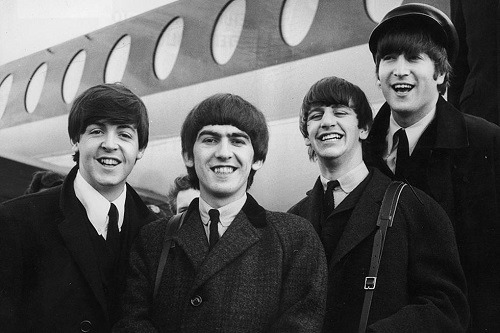
1964 really was the year of the Beatles, so let’s discuss them first. They were present almost right from the start as their “Introducing The Beatles” album was released in America on January 10th of that year.
This album preceded Capitol Records “Meet the Beatles” by 10 days and there was a lawsuit surrounding that whole issue. Capitol Records won an injunction and Vee-jay Records was not allowed to put out any more Beatles recordings.
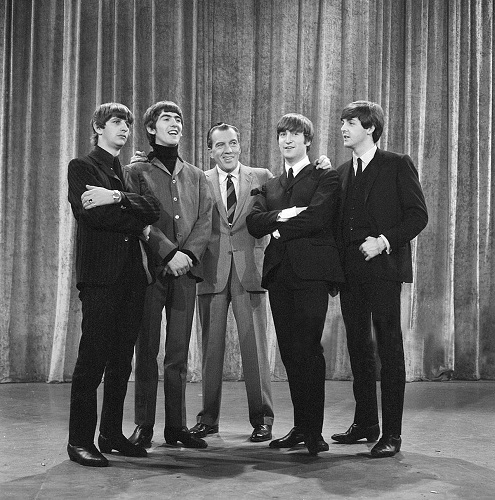
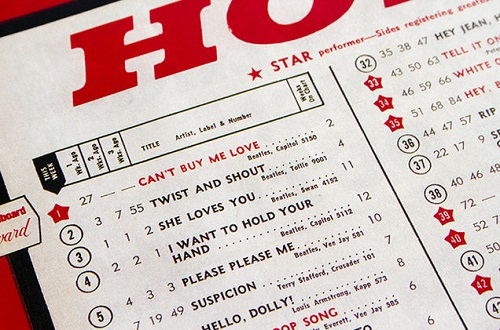
In February of 1964, the Beatles arrived in the US and appeared on Ed Sullivan’s show three times (2/9, 2/16, and 2/23). In March of 64, Billboard magazine stated that the Beatles were responsible for 60% of all single record sales! In a feat that has yet to be matched, on April 4, 1964, the Beatles held the Top 5 spots on the Billboard chart!
A week later, the boys held 14 spots on the Hot 100 Chart! That broke the previous record of 9 spots held by Elvis Presley in 1956.
In May, The Beatles Second Album was released and in July, they would release A Hard Day’s Night in theaters. “I Want to Hold Your Hand” wound up being the #1 song for the whole year of 64 (“She Loves You” was #2) To say that they played a small part in the music of 1964 would be a huge understatement.
Among the other artists that came over from “across the pond” in 64 were Manfred Mann (Do Wah Diddy Diddy), Billy J. Kramer and the Dakotas (Little Children and Bad to Me), The Dave Clark Five (Glad All Over, Because, Do You Love Me), Peter and Gordon (A World Without Love), The Animals (House of the Rising Son), The Honeycombs (Have I The Right), Dusty Springfield (Wishin’ and Hopin’), Gerry & The Pacemakers (Don’t Let the Sun Catch You Crying and How Do You Do It), Chad and Jeremy (A Summer Song), The Kinks (You Really Got Me), and the Searchers (Don’t Throw Your Love Away and Needles and Pins). It is interesting to note that the Rolling Stones debut album was released this year, but no songs appear in the Top 100 for the year.
Once you move away from the British artists, the chart has a nice variety of pop, rock, folk, country, soul, and even a few novelty songs. I think that is what made me ultimately choose this particular year.
It was nice to look over the Top 100 and see Motown represented with some classics. The Supremes hold two of the six Motown songs (Where Did Our Love Go and Baby Love), Motown was female heavy as Mary Wells (My Guy) and Martha and the Vandellas (Dancin’ In The Street) grabbed the next two spots, and the male gender was represented by The Four Tops (Baby I Need Your Loving) and The Temptations (The Way You Do The Things You Do).
While they were not “oldies” at the time, there were some classic songs that are still in hot rotation today on the oldies stations across the country. Roy Orbison had a smash with Pretty Woman in 64, and also had a hit with It’s Over. Frankie Valli and the Four Seasons grabbed three of the Top 100 with Rag Doll, Dawn and Ronnie. The Beach Boys only entry in the Top 100 was I Get Around.
1964 brought us classics like The Drifters Under The Boardwalk, Chapel of Love by the Dixie Cups, Suspicion by Terry Stafford, It Hurts to Be In Love from gene Pitney and Come A Little Bit Closer by Jay and the Americans. Johnny Rivers had a hit with Chuck Berry’s Memphis, Bobby Freeman invited us to C’mon and Swim, Detroit’s Reflections offered up Just Like Romeo and Juliet and the Shangri-Las told us the story of the Leader of the Pack.
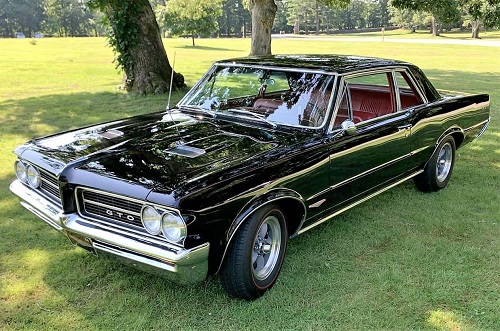
Car songs were well represented in 64! Ronny and the Daytonas had GTO, while the Rip Chords sang Hey Little Cobra, and the Hondells had Little Honda. Jan and Dean told us the stories of The Little Old Lady from Pasadena and Dead Man’s Curve, while J. Frank Wilson and the Cavaliers told us the tragic story of a Last Kiss.
Soul music is represented by The Impressions (I’m So Proud and Keep on Pushing), Joe Hinton (Funny How Time Slips Away), The Tams (What Kind of Fool Do You Think I Am), Jimmy Hughes (Steal Away) and Nancy Wilson (How Glad Am I). If you throw Blues into the “Soul” mix, the great Tommy Tucker song “Hi Heel Sneakers” was out in 1964.
Instrumentally, Al Hirt had a monster hit with Java, The Ventures had Walk Don’t Run 1964, The Marketts had The Outer Limits, and Robert Maxwell had the incredibly cheesy lounge version of Shangri-la. While novelty songs included Jumpin’ Gene Simmons (Haunted House), The Trashmen (Surfin’ Bird) and Roger Miller (Chug-a-Lug).
While Rock was dominant in 1964, there were still some pop (and even folk) songs that made the Top 100 – one of them, doing the “impossible.” Two of the biggest pop hits of the year couldn’t be more different from each other. The third biggest hit of the year belonged to Louis “Satchmo” Armstrong and his Dixieland hit “Hello, Dolly!” Barbra Streisand (who won Album of the year at the 1964 Grammy Awards) had the 11th biggest hit of the year with “People.”
Pop/Folk was also represented by Gale Garnett (We’ll Sing in the Sunshine), The Ray Charles Singers (Love Me With All Your Heart), Dionne Warwick (Walk On By), Al Martino (I Love You More and More Every Day), and Andy Williams (A Fool Never Learns). But the biggest surprise came from an artist who hadn’t had a top 40 record since 1958!
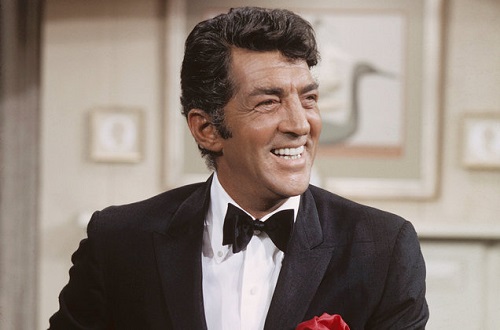
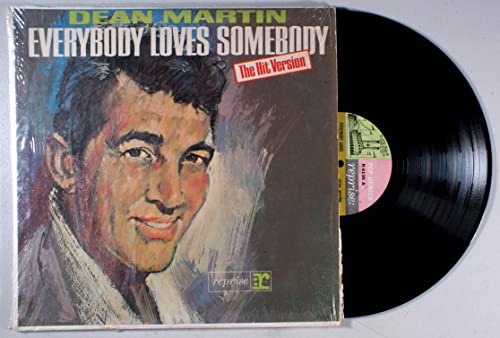
Dean Martin didn’t care for Rock and Roll. With the British Invasion in full swing, there was very little chance of him ever having another hit. His kids loved the new artists. His son, Dean Paul, loved the Beatles. Dean told his boy, “I’m gonna knock your pallies off the charts!” On August 15, 1964 – he did just that with a song that became his NEW theme song, “Everybody Loves Somebody.” (It replaced That’s Amore as his theme song)
The song knocked the beloved Beatles A Hard Day’s Night out of the number 1 spot! It went on to stay at #1 on the Pop Standards Singles Chart for 8 weeks. It also became the theme to his weekly television show in 1965.
I picked 1964 for a few reasons. Despite my initial worry about it being British act heavy, it was the year that introduced us to the Beatles (who changed the music scene forever!). It is also the year that one act held the top 5 spots on the charts (a record that remains in place). It is also the year that my favorite singer of all time bumped the biggest group in music out of the top spot.
It is also a year that encompasses such a vast variety of music. While there may be better songs that appeared before and after 1964, it truly represents a unique time in history. America was still recovering from the loss of a beloved president, there were still Civil Rights issues, and a war in Vietnam. The music of 1964 was a welcome escape from so many things.
Was it all good? No, and that is true of every year. However, as I look at the 100 biggest songs of the year, there are a lot of great songs that have gone on to become classics. There are so many songs that are still looked at as pivotal in the music scene. The fact that many of these songs are still getting airplay today is a statement to just how good they are.
Thanks again to Dave at a Sound Day for allowing me to be a part of this feature. I can only hope that my contribution is worthy of an invite to participate in the next round.
I mentioned to my friend Max that I had hoped to post a Christmas song every day from December 1st through Christmas Day. When it comes to holiday tunes, I could probably post a favorite Christmas song for every day of the year …
At any rate, rather than spend the time to do that, I was asked by a friend to pick my Top 10 favorite Christmas Albums. How can I do that? I have so many! I could easily pick my Top 10 Christmas albums for each genre – pop, country, classical, jazz, etc… So here is what I decided to do. I took a piece of paper and jotted down the 10 albums I felt were “must have” albums for me every year. I couldn’t narrow it down to just 10, so I made it 12.
In no particular order, here is the Holiday Dozen I came up with:
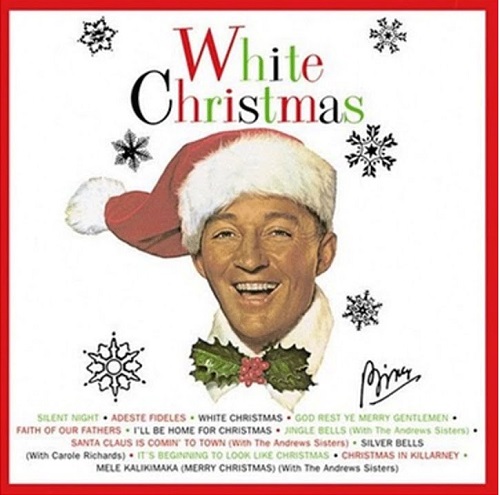
Ok, you gotta have Bing! He was often referred to as “The Voice of Christmas,” and for good reason! It was an album that often accompanied us while we opened gifts.
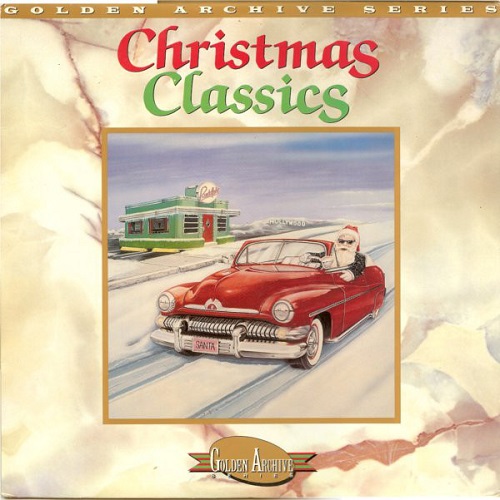
A great album of great songs – Brenda Lee, Bobby Helms, Stevie Wonder, Roy Orbison, The Drifters, James Brown, and Aretha Franklin are all represented in this amazing collection!
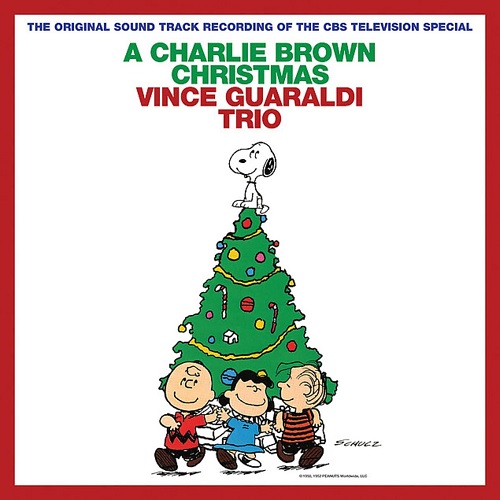
When Charles Schulz was asked to write a Christmas Special, he said he would on one condition – it had to include the story of Christ’s birth. When he chose the soundtrack for the special, he wanted something that he felt could relate to everyone – so he picked Jazz. Vince Guaraldi’s songs are synonymous with Christmas for me.
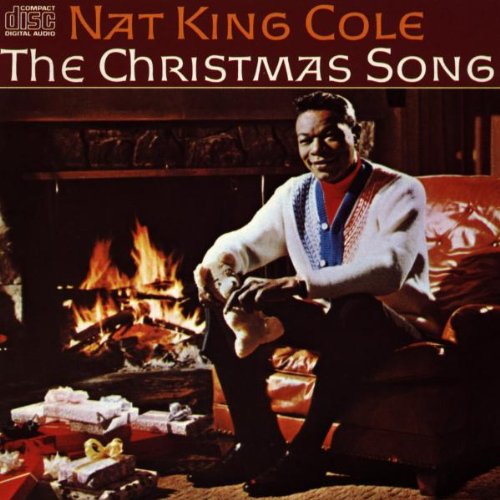
Growing up, I always disliked The Christmas Song. I guess I couldn’t relate to it as a kid. As I grew up, it became more and more meaningful to me. This album is full of many other fantastic cuts that never get played on the radio.
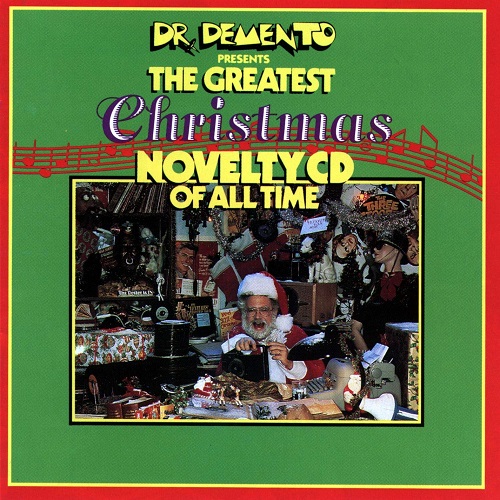
This one represents the “novelty” side of Christmas! Yes, it includes the Chipmunks, but it also includes some classic novelty songs from Allan Sherman, Bob & Doug McKenzie, Cheech & Chong, and Weird Al Yankovic. It is also one of the few places you can find Stan Freberg’s Christmas Dragnet. Oh, yeah, and that dumb Hippopotamus song is on here, too (but I skip that one).
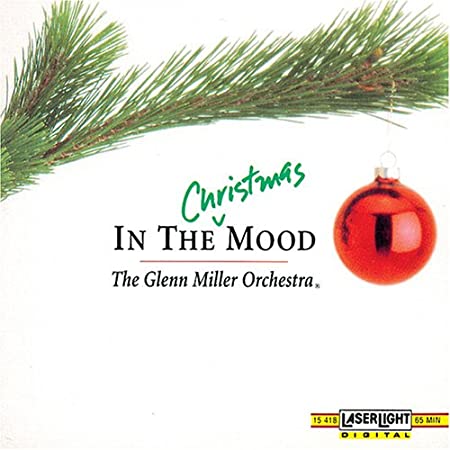
This is one that a friend told me about. The story goes that a couple of members of the Glenn Miller Orchestra were sitting around talking one day. They asked each other what they thought Glenn would be doing if he were still around. One of them said “Probably working on a Christmas album.” The idea was born. They contacted former members of the Glenn Miller Orchestra and they recorded this one. It is truly a great album and tribute to Miller.
Bing Crosby may have been called the “Voice of Christmas,” but Frank Sinatra was THE VOICE. This collection includes one of my favorites: Whatever Happened to Christmas. You also get his amazing version of Have Yourself a Marry Little Christmas and other classics.
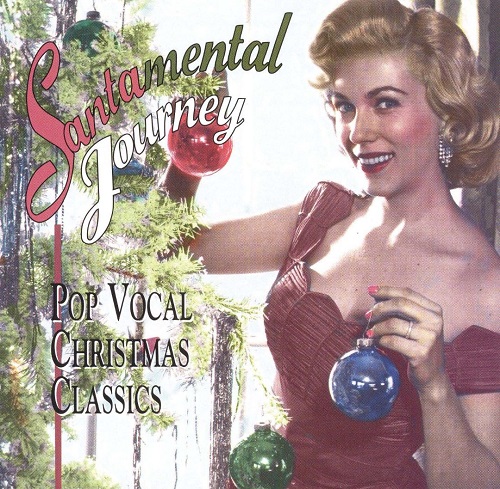
Some great songs from Al Martino, Jo Stafford, Doris Day, Rosemary Clooney, and other pop singers of the 40’s and 50’s.
I have talked about this one before. It is just an amazing album with something for everyone. I love listening to Doc and the Tonight Show Band jamming on songs like Winter Wonderland, Let It Snow, and my favorite version of Jingle Bells! You’ll also love the Children’s Choir and Bell Choir on other numbers.
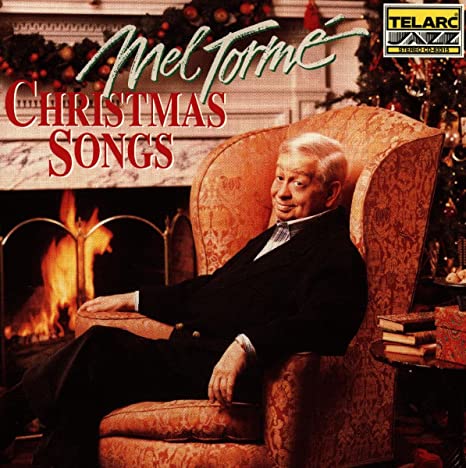
Mel, of course, wrote The Christmas Song, and I just love to hear his version of it. Nat King Cole’s version doesn’t include Mel’s extra lyric: “Love and joy come to you, and a Merry Christmas, too. And God bless you and send you a Happy New Year.” Known as “The Velvet Fog,” Mel’s voice is perfect on Christmas Time Is Here, The Christmas Medley, Sleigh Ride, and a Christmas version of The Glow Worm.
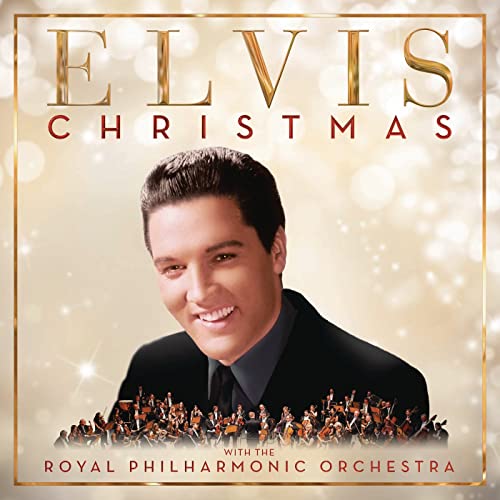
I have so many favorite Elvis Christmas songs that aren’t on this album, but I love how they have added the orchestra to his classics on this album. Santa Claus is Back in Town sounds so much fuller with them. I only wish that they had done If Every Day Was Like Christmas for this album.
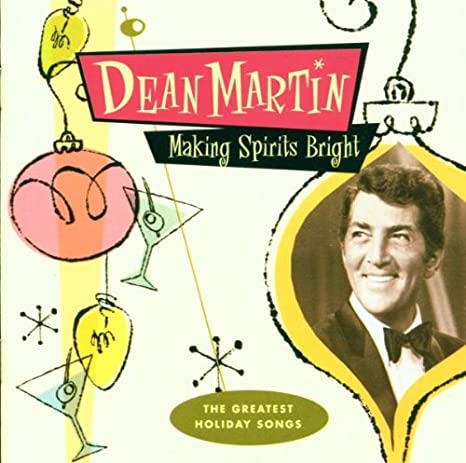
Before both of his Christmas albums were made available, they took tracks from both his “Winter Romance” album and “The Dean Martin Christmas Album” and combined them for this collection. I have both of those albums now, but for one collection – I pick this one. Marshmallow World is one of my favorite cuts!










 Various Ramblings of a Nostalgic Italian