The Monday Blues – The Sky Is Crying

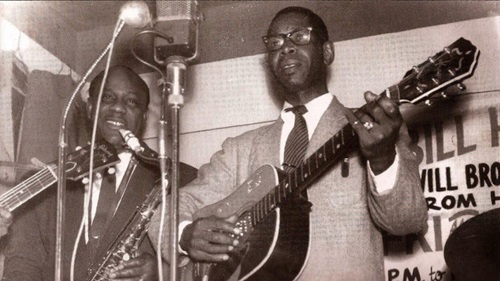
While many attribute today’s song to Stevie Ray Vaughn (who does a fantastic cover), it was originally done by the great Elmore James. James wrote the song and recorded it in 1959.

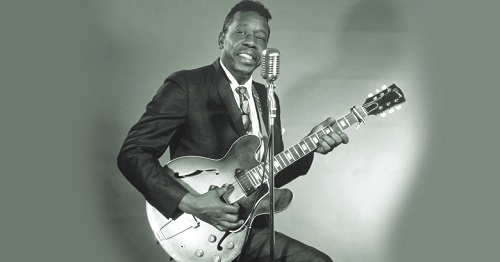
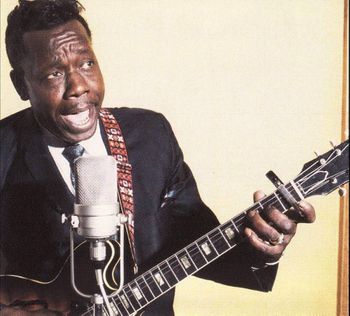
Elmore James was an American blues guitarist, singer, songwriter, and bandleader. He was noted for his use of loud amplification and his stirring voice. His slide guitar technique earned him the nickname “King of the Slide Guitar”. 

The song was written in Chicago after a downpour inspired him during a recording session. The songs features James’ prominent slide guitar and his vocals, accompanied by his longtime backing band, the Broomdusters.

The song itself brings about some questions. James’ unique slide guitar sound on the recording has generated great debate. Bass player, Homesick James, attributed it to a recording studio technique, while others have suggested a different amplifier or guitar setup. Songwriter and musician Ry Cooder felt that it was an altogether different guitar than James’ usual Kay acoustic with an attached pickup.

Artists who have covered the song include Albert King, Eric Clapton and George Thorogood. Elmore’s version reached #15 on the Billboard Hot R&B Sides chart in 1960. The song would be his last charted hit before his death in 1963.

James was inducted into the Rock and Roll Hall of Fame in 1992.

The Monday Blues – Jelly Roll Blues

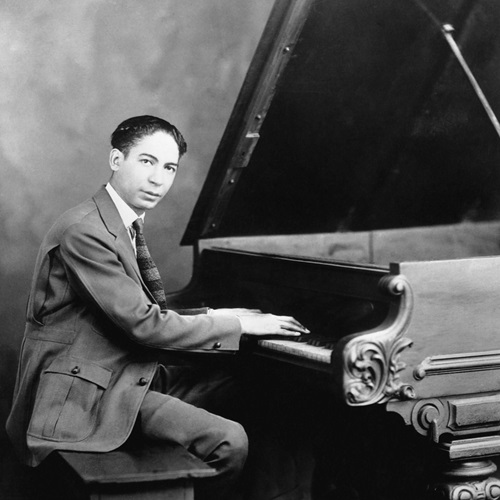
Today (in 1890) is one of a few dates that are said to be the birthday of Jelly Roll Morton. Another is September 13, 1884 and another is said to be September 30, 1890. So I really can’t even tell you how old he would be today. It just so happens that one of his birthdays fell on this Monday and it’s a perfect tie in to The Monday Blues.

Morton was known apparently for “bending the truth” a bit. His claim to have invented jazz in 1902 was often criticized. The music critic Scott Yanow once said, “Jelly Roll Morton did himself a lot of harm posthumously by exaggerating his worth … Morton’s accomplishments as an early innovator are so vast that he did not really need to stretch the truth.”

At the age of fourteen, Morton began as a piano player in a brothel. He often sang smutty lyrics and used the nickname “Jelly Roll”, which was slang for female genitalia. At the time, he was living with his grandmother who was quite religous. When she found out what he was doing she literally disowned him. Morton said, “When my grandmother found out that I was playing jazz in one of the sporting houses in the District, she told me that I had disgraced the family and forbade me to live at the house. She told me that devil music would surely bring about my downfall…

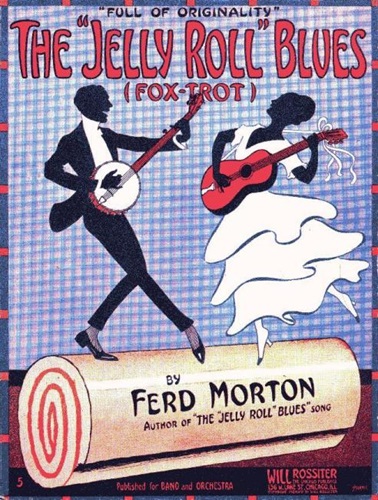
The Jelly Roll Blues (or The Original Jelly Roll Blues as it is sometimes called) is an early jazz fox-trot composed by Morton. He recorded it first as a piano solo in Richmond, Indiana, in 1924. Take a listen to this …

In 1938, Morton was stabbed and suffered wounds to the head and chest. A nearby hospital refused to treat him, as the city had racially segregated facilities. So he was transported to a black hospital farther away. When he was in the hospital, doctors left ice on his wounds for several hours before attending to the injury. His recovery from his wounds was incomplete, and thereafter he was often ill and became short of breath easily.

His asthma would get so bad that he stayed at a hospital in New York for three months. He continued to suffer from respiratory problems when he travelled to Los Angeles hoping to restart his career. It was not to be, however, as he spent eleven days in an LA hospital before passing away on July 10, 1941.

The Monday Blues – Born Under a Bad Sign

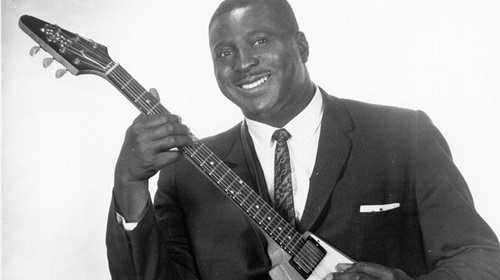
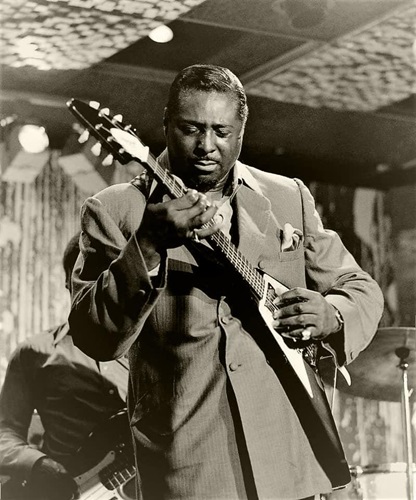
I heard this song while driving into work this week. When I am not listening to a book on tape or a sermon from a pastor friend, I am surfing through the channels on Sirius XM. Albert King’s tune, Born Under a Bad Sign was playing on BB King’s Bluesville. I had forgotten how much I liked it.

The song is considered a blues standard. Albert recorded it in 1967. In his book, Deep Blues, Robert Palmer said “the song also had strong crossover appeal to the rock audience with its synchronous bass and guitar lines and topical astrology reference.” It was recorded at Stax Records.

The song was written by Stax singer William Bell and Booker T. Jones. Bell said, “We needed a blues song for Albert King … I had this idea in the back of my mind that I was gonna do myself. Astrology and all that stuff was pretty big then. I got this idea that [it] might work.” Booker’s arrangement was unique in that it was dominated by an R&B-style bass/rhythm guitar line, which Bell claimed that he came up with “while fooling around on the guitar.”

The song was backed by Booker T and the MG’s and the Memphis Horns. Albert would jump in with vocals and guitar fills. Released in May of 1967, it would reach number 49 on the Billboard Top Selling R&B Singles chart.

Describing the song in an interview, Jones said, “At that time, my writing partner was William Bell. He came over to my house the night before the session. William wrote the words and I wrote the music in my den that night. That was one of my greatest moments in the studio as far as being thrilled with a piece of music. The feeling of it, it’s the real blues done by the real people. It was Albert King from East St. Louis, the left-handed guitar player who was just one of a kind and so electric and so intense and so serious about his music. He just lost himself in the music. He’s such a one of a kind character. I was there in the middle of it and it was exhilarating.”

The song is included on The Rock and Roll Hall of Fame’s list “500 Songs That Shaped Rock and Roll.” Rightfully so.

The Monday Blues – Boom Boom

Another Monday is upon us and if you are feeling “blue” today, this song will having you tapping your feet. I first heard it in The Blues Brothers movie.

John Lee Hooker will forever be associated with the song “Boom Boom.” It became his signature song. Do a search on the internet for it and you will find that there are many versions of the song – all recorded by John Lee himself.

John said he wrote the song in the 50’s, but it wasn’t recorded until 1961. John’s telling of the story of the song’s origin can be found on Songfacts.com:

“I used to play at this place called the Apex Bar in Detroit. There was a young lady there named Luilla. She was a bartender there. I would come in there at night and I’d never be on time. Every night the band would beat me there. Sometimes they’d be on the bandstand playing by the time I got there. I’d always be late and whenever I’d come in she’d point at me and say, ‘Boom Boom, you’re late again.’ And she kept saying that. It dawned on me that that was a good name for a song. Then one night she said, ‘Boom boom, I’m gonna shoot you down.’ She gave me a song but she didn’t know it.

I took that thing and I hummed it all the way home from the bar. At night I went to bed and I was still thinking of it. I got up the next day and put one and one together, two and two together, trying to piece it out – taking things out, putting things in. I finally got it down right, got it together, got it down in my head. Then I went and sang it, and everybody went, Wow! Then I didn’t do it no more, not in the bar. I figured somebody would grab it before I got it copyrighted. So I sent it to Washington, D.C., the Library of Congress, and I got it copyrighted. After I got it copyrighted I could do it in the bar. So then if anybody got the idea to do it I had them by the neck, because I had it copyrighted. About two months later I recorded it. I was on Vee-Jay then. And the record shot straight to the top. Then, after I did it, the Animals turned around and did it. That barmaid felt pretty good. She went around telling everybody I got John Lee to write that song. I gave her some bread for it, too, so she was pretty happy.”

On the original recording, he had a great group of musicians with him. Members of Motown’s house band (known as The Funk Brothers) played on this. The Funk Brothers were outstanding musicians and played on hundreds of hit records, but Motown didn’t pay them very well, so they would take gigs at other labels in the Detroit area to make extra cash.

The song has many accolades. In 1995, “Boom Boom” was included in the Rock and Roll Hall of Fame’s list of “The Songs That Shaped Rock and Roll.” It was also inducted into the Blues Foundation Hall of Fame in 2009 in the “Classics of Blues Recording” category. A Detroit Free Press poll in 2016 ranked the song at number 37 in “Detroit’s 100 Greatest Songs.”

Here are just a couple versions that John recorded. Version 1:

Version 2:

Version #3 – from the Blues Brothers

The Monday Blues

I thought we’d head to the swamp today.

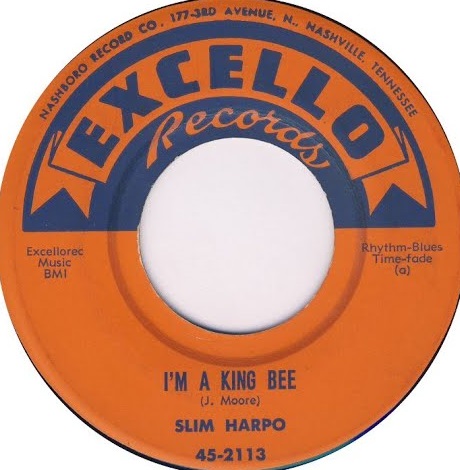
“I’m a King Bee” is what they call a “swamp blues” song.  It was written and first recorded by Slim Harpo in 1957. It has been performed and recorded by numerous blues and other artists since, but Slim’s version is paramount.

Harpo’s legal name was James Moore. He played guitar and was a master of the blues harmonica, known in blues circles as a “harp”. Influenced in style by Jimmy Reed, he began performing in Baton Rouge bars using the name “Harmonica Slim”

He started his recording career in March 1957, working with the A&R man and record producer J. D. “Jay” Miller in Crowley, Louisiana. To differentiate himself from another performer called Harmonica Slim he took his wife’s suggestion and adopted the name Slim Harpo.

His most successful and influential recordings included today’s song “I’m a King Bee” (1957), “Rainin’ in My Heart” (1961), and “Baby Scratch My Back” (1966), which reached number one on Billboard’s R&B chart and number 16 on its broader Hot 100 singles chart.

The recording features an arrangement and instrumentation that was typical of J.D. Miller’s production approach. Accompanying Slim Harpo were Gabriel “Guitar Gable” Perrodin on guitar, John “Fats” Perrodin on bass, and Clarence “Jockey” Etienne on drums.

The song has an interesting feel to it in that it has an irregular number of bars (as opposed to the standard 12 bars.) According to the well known blues historian Gerard Herzhaft, it is derived from songs by Memphis Minnie, Bo Carter and the great Muddy Waters. Herhaft states that the song uses the rhythm figure from “Rockin’ and Rollin” by Lil’ Son Jackson.

Baton Rouge, Louisiana-based Excello Records originally released it in 1957 as the B-Side to his debut solo single, “I Got Love if You Want It”

Music critic Cub Koda wrote of Slim’s appeal:

Harpo was more adaptable than [Jimmy] Reed or most other bluesmen. His material not only made the national charts, but also proved to be quite adaptable for white artists on both sides of the Atlantic … A people-pleasing club entertainer, he certainly wasn’t above working rock & roll rhythms into his music, along with hard-stressed, country & western vocal inflections … By the time his first single became a Southern jukebox favorite, his songs were being adapted and played by white musicians left and right. Here was good-time Saturday-night blues that could be sung by elements of the Caucasian persuasion with a straight face.

In 2008, “I’m a King Bee” received a Grammy Hall Of Fame Award which “honors recordings of lasting qualitative or historical significance”

Let’s buzz around the hive…..

The Monday Blues

Here we are at the beginning of another week.  Today Facebook and social media will be flooded with “I hate Monday” memes.

It was Fats Domino who sang, “Blue Monday, I hate Blue Monday! Gotta work like a slave all day….” It was that song that gave me the idea to occasionally serve up a blues song for Blue Monday.

There is a long list of blues “classics” and plenty of blues artists to choose from. I thought I’d feature a few favorites.

Today, let’s listen to one of Elmore James’s  most popular tunes – Shake Your Money Maker.

The song is said to be a mix of a few earlier blues songs dating all the way back to the 1920’s.  The songs were “Shake It Break It,” “Shake ‘Em On Down,” and “Roll Your Money Maker.” This very well may be the case, but it may be speculation.

Elmore James recorded the song in the summer of 1961. His backing band was the Broomdusters (a reference to his song Dust My Broom). It features “Big Moose” Walker on piano, Sam Myers on drums, Sammy Lee Bully on bass, and James on slide guitar.

The song was recorded in just two takes. There was a bit of a miscue on the first take, and the second was the one that they used as the master for the single.  It would be Elmore ‘s last single before his passing in 1963.

The song is among those on the Rock and Roll Hall of Fame’s list of the “500 Songs that Shaped Rock and Roll” and in 2019, the Blues Foundation inducted it into the Blues Hall of Fame as a “Classic of Blues Recording”.