The Music of My Life – 1984

Welcome back to The Music of My Life, where I feature ten songs from each year of my life.  In most cases, the ten songs I choose will be ones I like personally (unless I explain otherwise). The songs will be selected from Billboard’s Year-end Hot 100 Chart, Acclaimed Music, and will all be released in the featured year.

1984 was a big year for me. It was a year of change as I started high school that year. It was also the year that the Detroit Tigers won the World Series! What an amazing year!
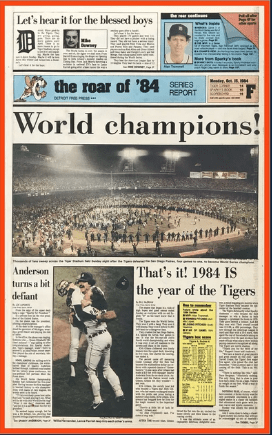
Musically, it was the year of Michael Jackson’s Thriller, Weird Al’s Eat It, and Prince had a few hits, too. As I looked over the list from ’84, there are a lot of “staple” 80’s hits from this year. Alas, not too many of those made my list. I apologize to fans of A-ha.

My first pick is one of a few songs that I could feature on my Music Movie Monday feature because it comes from a great soundtrack. Beverly Hills Cop was huge here in Michigan because Eddie Murphy plays a Detroit cop. But there is another Detroit connection as well…

According to songfacts.com: “The Heat Is On” was written for the film by Harold Faltermeyer (who also wrote Axel F for the film) and Keith Forsey, and they needed a popular artist to sing it. The Beverly Hills Cop soundtrack album was on MCA Records, which Glenn Frey recently signed with. MCA asked several of their male rock singers to audition for the lead vocal for the song. At first Frey thought this wasn’t something “rock stars” did, but he decided to go along, just for fun, never thinking they’d pick him. Harold Faltermeyer was impressed by Frey’s vocal (the instrumental tracks were already recorded) and shocked Frey by using his version. It was Frey’s biggest solo hit, reaching #2 in the US.

The other Detroit connection? Glenn Frey was born and raised in Detroit where he played in bands with names like The Mushrooms and Subterraneans before heading to Los Angeles and joining the Eagles.

The Heat Is On

I have already mentioned Thriller by Michael Jackson. Spoiler Alert: It isn’t on my list. However, you gotta admit that the video was pretty darn good, right? I mean it was all over MTV and people still copy the dance for it at weddings and such. But would you believe that it did NOT win the first-ever Video of the Year award at MTV’s Video Music Awards? So what video did?

That honor went to You Might Think by The Cars! Today a video like this would be pretty easy to make, however, the video was very advanced for the time and was one of the first to use computerized effects. Singer/guitarist Ric Ocasek’s image appeared in various animated scenes – he would show up as a fly, climbing the Empire State Building, just about anywhere to get the attention of the girl. (The object of his affection was played by model Susan Gallagher.) When the video was first aired, it was done so without the fly – because technically, the video’s effects were not done.

The song was released in February 1984, as the first single from their Heartbeat City album. “You Might Think” peaked at number seven in the United States. This is one of those videos that I always got a laugh out of. It seemed so silly to me. It was directed by Jeff Stein (who was famous for other videos). He thought The Cars were a boring live band so he used digital trickery to get around that. I think it worked.

You Might Think

The next song is the “love theme” from the movie Footloose. You may remember in one of my past posts about Footloose that Dean Pitchford not only wrote the screenplay for the movie, but he wrote all the lyrics to all the songs (some with co-writers). He wrote Almost Paradise with Eric Carmen.

The Footloose producers wanted it to be a duet. They knew that they wanted Heart’s Ann Wilson for their female voice. They contacted Wilson, and asked her for a list of preferred duet partners. Her list included Paul Rodgers and Lou Gramm, but it was Mike Reno (the lead singer for Loverboy) – not on the list – who was chosen.

They recorded the song together at a session in Chicago with Keith Olsen, who had worked on Heart’s Passionworks album and also the 1975 Fleetwood Mac album, producing. At the time, Ann was nursing a broken wrist, but stayed off her painkillers so she wouldn’t be compromised during the session. They put their vocals down over the track that had already been recorded, then went their separate ways. She thought it was a great song, but was still surprised it was released as a single. She was even more surprised when it became a staple of proms and weddings.

That is the reason the song is on my list. I was a junior in high school and was dating a senior. She asked me to go to her prom, which was titled “Almost Paradise.” I think it was their class song, I don’t know for sure. I remember this would have been in 1987, so the song was a few years old by then. With every ticket, the student received a wine glass with the Almost Paradise logo on it. LOL – it didn’t take long for the school to stop giving away wine glasses!

Almost Paradise

Huey Lewis was a big part of my high school days! My buddy Steve and I loved cruising around and listening to Huey’s albums. This was one I loved the minute I heard it. As a lover of oldies and the Rock and Roll greats, I heard it as a “hat tip” to them and their influence on music.

In a 2013 Billboard interview, Huey said they song found its roots in Cleveland. “‘The Heart of Rock & Roll’ was written driving out of Cleveland. We’d heard that Cleveland was this great rock and roll town, and we’re from San Francisco – how can Cleveland be anything? We went to play the Agora Ballroom and had this amazing gig. On the bus out of town I was looking at the skyline of Cleveland and I said, ‘You know what boys? The heart of rock and roll really is in Cleveland. Hey, that’s a pretty good song title. Later I thought it through and went, ‘The heart of rock and roll is still beating’. The idea is that, although the music business is in New York and LA, good rock and roll is where you find it.”

Sports was one of my favorite albums back then. I had it on vinyl to play at home and on cassette to play in the car. The Heart of Rock and Roll the third of five singles from Sports, the third Huey Lewis & the News album. All of the singles were hits, and the album went on to sell over 7 million copies in America, putting the band of firm financial footing for the first time, which was very important to them – these guys were all in their 30s and had been working in music since the early ’70s.

The Heart of Rock and Roll

My dad was really involved in the local Vietnam Veteran’s chapter when I was in high school. As we got older, me and some of the guys would go up to their events. They often had cook outs, holiday dances, and fund raisers. I met so many great people at these events and came to love hanging out with them. My dad would spin records for the group.

Along with many oldies he would play songs like “Some Gave All,” “Goodnight, Saigon,” and “The Ballad of the Green Berets.” But it was always at the end of the night that my dad would play God Bless the USA. The first time I witnessed this, I choked up. Everyone in the building gathered on the dance floor and held hands. They would sing this song at the top of their lungs and raise their hands in the air. It was truly moving.

This song holds a special place in my heart for those friends.

God Bless The U.S.A.

The videos of many songs will forever be what I think of when I hear them. We’re Not Gonna Take It is a great example. I remember thinking it was cool that “the guy who played Niedermeyer in Animal House” was the dad in this video!

According to Dee Snider, he started writing this song in 1980, two years before Twisted Sister released their first album, Under the Blade. He had the hook, but couldn’t come up with a verse melody. After Def Leppard released their Pyromania album in 1983, Snider came up with a plan. “In studying some of Mutt Lange’s work with Def Leppard, I saw that a number of their songs were using variations on the chorus as a verse. That gave me the information I needed to come up with the rest of ‘We’re Not Gonna Take It.'”

Songfacts.com perfectly describes the song this way: “This is the mighty anthem for anyone lashing out at an authority figure and ready to put up a fight. The song is short on specifics, so it can apply to just about any situation where “we” are battling “the powers that be.” This all-purpose approach was intentional and gave the song a timeless quality.

We’re Not Gonna Take It

When I first moved to Mid-Michigan, I discovered that there was a local hockey team. The Flint Generals played in a sports arena that held like 3000 people. There wasn’t a bad seat in the place. I loved being able to see these guys slam up against the glass. It was great!!

When the Generals disbanded, the public hoped for hockey to continue. They would up bringing in a hockey team that was made up of college aged kids and the team was called The Michigan Warriors.

The hockey was a bit less violent, but it was still hockey. I always loved a night out at the games. When they would introduce the members of the team (and at the end of each game) they always played Scandal’s The Warrior.

The Warrior

The next song is one that I always liked because the hook is catchy and it had a cool sax part. Sadly, it is also the subject of one of the biggest flubs I ever did on the air.

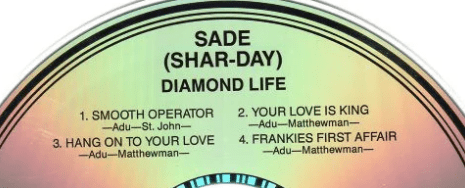
Released in August of 1984, “Smooth Operator” was the breakout hit in America for Sade, who were based in England. Their debut album, Diamond Life, was first issued in 1984 in the UK, where “Smooth Operator” was the third charting single. In the US, the album was released in 1985, with “Hang On To Your Love” as the first single. It went nowhere, but the next single, “Smooth Operator,” rose to #5 and earned the group a reputation as an exotic soulful act with a captivating frontwoman.

One night I was working at WMXD and I came out of the song and realized that I had never known who sang it. I looked at the music log and read, “Sade.” So that’s what I called her – “Sade” (Say-d). The phones lit up and people were either making fun of me or asking why I was playing songs when I couldn’t even pronounce the name of the artist! I was embarrassed. I had no idea until I pulled the CD out of the player and saw the writing ….
What a dope!!

Smooth Operator

Sea of Love was a song that I heard often on the oldies station. Phil Phillips had recorded it in 1959 and it was a top 5 hit. The song was covered by Robert Plant’s Honeydrippers in 1984. They truly were a rock and roll supergroup – Robert Plant, Jeff Beck, Jimmy Page, Paul Schaffer, Nile Rogers and other greats appeared in the group.

They only released one EP, The Honeydrippers: Volume One. Sea of Love took their remake all the way up to number 3 on the Billboard Hot 100 Chart. I love the orchestration of this version so much. The EP is worth a listen – Rockin’ At Midnight would go to #25. The success of the songs led Plant to say that a full album would be released, but it never came to be.

Sea of Love

My final pick is one that is really embarrassing. So why is it here? Because the minute I saw it as a released single, the chorus became an ear worm and stuck in my head. If I have to walk around singing it over and over, you may as well, too!

My 14 year old self loved novelty records. I had Spike Jones, Weird Al, and many more in my collection. When I first heard this “rap” song, I laughed like hell. When I ran to the store to get the single, I remember thinking how cool it was that I got the 12 inch vinyl record. It had the single, an extended mix, and on the B-side an instrumental.

As I listened to this before adding it officially to my list, I thought, “What in the world did I like about this song?! It really is kinda dumb.” At the same time, all these years later, there are still people I know who will break into a chorus of “Duh Ha, Duh Ha! Duh Ha Ha Ha Ha Ha..”

Yep, that gives it away. I was a fan of the Rappin’ Duke by Shawn Brown. Do I really need to go into any history on this one? Probably not. Forgive me for the earworm….

Rappin’ Duke

Next week I’ll take a look at 1985 and how some of those songs connect to my life. Movie music will be in there for sure, a tribute to some legends, the first slow song I remember dancing to, and maybe a song I have featured once before on this blog. See you next week!

The Music of My Life – 1983

Welcome back to The Music of My Life, where I feature ten songs from each year of my life.  In most cases, the ten songs I choose will be ones I like personally (unless I explain otherwise). The songs will be selected from Billboard’s Year-end Hot 100 Chart, Acclaimed Music, and will all be released in the featured year.

I turned 13 in 1983. I had a paper route and a weekly income because of it. I spent my money on toys, books and music. I loved going into Harmony House and buying 45’s or albums. As I get deeper into the 80’s, I’m seeing more and more songs that I “had” to have.

I am noticing something about a lot of the songs on my lists. There have been some that have not necessarily been meaningful to me the year they were released, but wound up being important later on in my life. That is the case of a few of them from this year. That being said, let’s check out my list….

When Lionel Richie left the Commodores, he had a number one song with “Truly.” The follow up song has always been one of my favorites. I can still see and hear my mother singing along the the chorus of “You Are.”

What I love about this is the fact that while it is a love song, it has some tempo to it. It also has a horn section. Future hit maker Richard Marx sang backup on this track. His first job in music was singing on the Lionel Richie album, and he proved himself on this track, which required some deft background vocals. Richard told songfacts.com: “Every session I ever did with Lionel, or for him, was a very fun atmosphere. I’ve been on so many sessions where it’s a downer, and you just try to get through it and nobody is having fun. Lionel is always having fun – no matter what.”

You Are

When I worked in country radio, I used to go to the Country Radio Seminar. It was a place where you got to hear various panels discussing programming, promotions and more. There were plenty of artists there (both old and new) to entertain. We’d often bring stuff for artists to sign so we could auction them off for St. Jude.

Every night there was always a show somewhere. Everyone had always talked about “the boat.” One record label would bring folks about the General Jackson Showboat and provide dinner and drinks. While us radio people would sit and eat, they would bring artists out on the stage to play for us. Many times it was familiar artists featuring their new songs or new artists that the label wanted to showcase.

One of the things about the boat was that there were always one or two surprise guests. You never knew who might show up. The year before my first boat ride, Huey Lewis had mad an appearance. The first time I was on the boat, they wheeled out this piano on the stage. Next, they brought out Ronnie Milsap and I was thrilled. I had always loved his music and he did not disappoint.

He came out laughing and joking and cranked out a few songs, including Stranger In My House. It was written by Mike Reid, who was a defensive tackle for the Cincinnati Bengals for five seasons and had a couple country hits of his own. The song was a country hit and also crossed over to the AC and Hot 100 charts.

The song is done in a minor key and from the opening chords, I was hooked.

Stranger In My House

Anyone who goes through a divorce or a break up knows that what follows can be a rough road. The next song is an example of a song that meant nothing to me at the time, but years later it did.

The fighting, the bickering, the pettiness, the blame, the suffering, the accusations and all the things that comes with a divorce is difficult enough. Once they hand you the final decree, it is important to start anew. I had a wonderful support system in place for me and as time passed, I looked back to see that I was making it. I had been through the war and I had made it to the victory.

Elton John’s I’m Still Standing was used in an animated movie called “Sing.” It was while watching that with the kids that I really heard and felt the lyrics. I can look in the mirror and know that I’m Still Standing and life is GOOD!

I’m Still Standing

Remember ELO’s song “Motor Factory?” Of course, you don’t. That’s because as the group was recording the song, it went through a bunch of changes. They lyrics were completely changed and it became Rock and Roll Is King. The song was released as a single from their Secret Messages album.

ELO’s Dave Morgan said in an interview, “I sang on quite a few tracks, I sang on ‘Rock ‘N’ Roll Is King’. I played on that one, but it wasn’t called that, it was something about something about working at Austin Longbridge! It was full of car plant sounds, you could hear it going clank, clank, clank, like somebody hitting a lathe with a hammer, and Jeff went away and made it into ‘Rock ‘n’ Roll Is King’, wiped off everything we’d done, no, there was still some backing left in there, It was much better how he finished it off than it was before.”

I remember recording this off the radio as a kid. I didn’t realize that there was (what we radio guys call) a “fake cold” ending. That’s where the song stops, you think it’s over, and they come back and sing again. The first time I recorded it off the radio I hit pause on the fake cold, only for ELO to start singing again. Urgh! I got smart after that and went and bought the single.

Rock and Roll Is King

Fleetwood Mac’s Lindsey Buckingham released a few solo albums in the 80’s. Despite some songs that were Top 40 hits, not many folks can recall them. There is, however, one song that folks know thanks to the misadventures of a family named Griswold.

Thanks to National Lampoon’s Vacation, Buckingham’s song Holiday Road had become his best known song. That’s really saying something for a song that never cracked the Top 40 and peaked at #82 when it was released. The song almost didn’t happen.

Actor/director Harold Ramis asked Buckingham to create two songs for his film National Lampoon’s Vacation. He was initially reluctant, believing that soundtrack work “wasn’t part of his discipline.” Thankfully, he decided to grant Ramis’s request, and wrote. Buckingham recorded “Holiday Road” without seeing the entire film. He figured that the movie “had to be somewhat uplifting and a little bit funny”. To keep in line with that, he added dog barks near the end of the song, unaware that the movie featured a scene where a dog is accidentally dragged to death from the bumper of a car.

It is one of those songs that makes you unconsciously press down a bit too much on the gas pedal if your driving while it is playing. I’m not sure I ever “got” the video for the song, though.

Holiday Road

ZZ Top’s Eliminator album was one of few albums that have sold over 10 million copies in America, earning Diamond certification. I helped it get there! This was an album that I remember buying and dropping the needle on for the first time. It had such a neat sound.

Billy Gibbons says that he got the idea for Sharp Dressed man when he saw a movie and a character was listed in the credits as “Sharp-Eyed Man.” According to songfacts.com, the song attracted a slew of new fans to ZZ Top when the video ran constantly on MTV. Their long beards made them instantly recognizable and the babes certainly helped, but the car was the real star.

Prior ZZ Top albums had a Tex-Mex vibe, but when it came time to sort out visuals for the album, the hot rod was finally ready – Gibbons had been working on it for years. It was good timing, giving them an MTV-friendly focal point just when they needed it. They had never made videos before and had no acting experience, but their videos provided everything MTV’s target audience craved: girls, rock and roll, and a really sweet ride.

The music video was the first that was a sequel. It picked up the story from the “Gimme All Your Loving” video of the down-on-his-luck gas station worker who is swept away by three beautiful women. In “Sharp Dressed Man,” he’s a valet, and he encounters the same three girls and is once again given the keys to the Eliminator, Billy Gibbons’ 1933 Ford Hot Rod.

Sharp Dressed Man

I had no idea in 1983 that I would be working as a sleep technologist. The next song is one that is based on a real sleep disorder – somniloquy (Sleep talking). “Talking In Your Sleep” is the biggest hit of The Romantics’ career. In fact, it’s their only Top 10 hit, and only one other song by them (“One in a Million”) even made it to the Top 40. Contrast that with the number of times you’ve heard their song, “What I Like About You,” which only made it to #49.

I love this story about the song: As usual, MTV helped boost The Romantics’ success right around this time with videos of their songs. In Greg Prato’s book MTV Ruled the World, Romantics’ lead singer Jimmy Marinos talks about this song: “That was the last song recorded for the album In Heat. All we had was a backtrack, the instrumental part of the song. And we realized it was too good a track to leave unfinished. So everybody put their heads together, and in a couple of days, we finished up the song melodically and lyrically.” Ha also mentions that the video was filmed at 8:00 in the morning in Detroit, surrounded by girls in their jammies, at what was deemed “not really rock ‘n’ roll hours.” So if they look like they just woke up, that’s because they did – and it works great!

Check out their hair in this video!!

Talking In Your Sleep

Two years ago, Dave Ruch invited a bunch of us to write a column for his Turntable Talk feature. The first topic was about why the Beatles are still relevant, the next song is an example of their influence.

When Genesis began to write That’s All, it was intended as an attempt to write a simple pop song with a melody in the style of The Beatles. Phil Collins even acknowledged in a subsequent interview that the song also features one of his attempts at a “Ringo Starr drum part.”

Genesis keyboard player Tony Banks was one of the first to use an Emulator, which was one of the first digital samplers (it was introduced in 1981). Banks would record his bandmate Mike Rutherford as he noodled around on his instruments, then play around with those samples to craft a track, which is how this song developed.

That’s All was the band’s first Top 10 hit in the US, setting the stage for their tremendous success the rest of the decade as they adapted their sound from progressive rock to tighter pop songs. The video certainly played a part in the success of the song, too. It depicts the band as homeless men taking shelter outside a disused factory. They perform the song, eat soup, play cards, and keep warm around an open fire. It was the first time Genesis used director Jim Yukich, who would direct the majority of their next videos as well as many of Collins’s solo videos.

That’s All

Remember the group Blue Angel? Me either. It was the group that Cyndi Lauper was in in 1981. It was her solo career and her first single, however, that made her famous. It is interesting to note that Girls Just Wanna Have Fun didn’t start out as the female anthem that Cyndi made it.

A Philadelphia singer/songwriter named Robert Hazard, who had a band called Robert Hazard and the Heroes, wrote it. He recorded a demo of it in 1979. Speaking with Rolling Stone, Lauper said that she had to alter the lyrics from Hazard’s original. “It was originally about how fortunate he was ’cause he was a guy around these girls that wanted to have ‘fun’ – with him”

Believe it or not, Cyndi didn’t want to record this song, but her producer, Rick Chertoff, was convinced it could become her anthem. The challenge for her was figuring out how to sing it. She ended up doing her vocal in the style of the ’50s hit “Let the Good Times Roll” by Shirley & Lee, which Shirley Goodman sings in a high-pitched voice. It obviously worked as the song went to number 2 on the Billboard Hot 100 chart.

MTV again played into the success of the song, as this was a very fun video to watch. The video, which ran constantly on MTV, features the wrestler Captain Lou Albano as Lauper’s father, and also Lauper’s real-life mother, who had no acting experience but did just fine. It won the first ever award for Best Female Video at the 1984 MTV Video Music Awards.

The song had a huge influence on how girls dressed in the 80’s. When I think of it, I can picture so many of my gal friends who dressed like Cyndi.

Girl’s Just Want To Have Fun

Everyone I grew up with had the 1984 album from Van Halen. The song actually was a bigger hit in 84, but it is on this list because it was released in December of 1983. Jump is just one of many songs that used synthesizers in the 80’s. The synthesizer intro for Van Halen’s Jump is iconic, but not everyone in the band wanted to use it.

The synthesizer was a point of contention in the band. Eddie wanted to use it, but lead singer David Lee Roth thought it would look like they were selling out to get more radio play. Eddie was classically trained on piano growing up – he didn’t start playing guitar until he was a teenager – so it wasn’t that far a stretch for him. Had the band brought in an outside keyboard player they probably would have gotten a lot of flak, but Eddie was held in such high esteem that fans were happy to hear him on another instrument.

Songfacts.com says: 1984 was David Lee Roth’s last album with Van Halen before he left the band in 1985; the video for “Jump” inflamed the tensions that led to his departure. The video was produced by Robert Lombard, who wanted to show the personal side of the band on stage. Roth, however, wanted the performance intercut with footage of him doing other things, so they shot him doing things like riding a motorcycle and getting arrested while wearing nothing but a towel. Lombard edited the video and used none of the extra Roth footage, taking it to Eddie and Alex for approval. Two days later, the band’s manager fired him for bypassing Roth. Lombard says he never received the award the video won from MTV.

Jump

Next week, we’ll look at songs from 1984. 1984 was a big year for me in a lot of ways. Musically, it was a big year for ballads. With a mix of country, R&B, and a song that led to me embarrassing myself on the air years later, it will be an interesting list!

Tell me about your favorite from 1983 that I may have missed in the comments and I will see you next week.

The Music of My Life – 1982

Welcome back to The Music of My Life, where I feature ten songs from each year of my life.  In most cases, the ten songs I choose will be ones I like personally (unless I explain otherwise). The songs will be selected from Billboard’s Year-end Hot 100 Chart, Acclaimed Music, and will all be released in the featured year.

Let’s jump right into 1982. We start with a song that was released in January of ’82 in the United States. Believe it or not, this song would go on to have a special meaning for me and many others from my high school. More on that in a minute.

The Go-Go’s were one of those bands who wrote most of their own songs. “We Got The Beat” was written by guitarist Charlotte Caffey, who drew inspiration from some Motown beats, specifically one that mentioned the name of her group. She explains, “I thought it would be very clever to do ‘Going to a Go Go’ (by the Miracles). I thought, Well, let’s try working this out as a cover song. Which is really funny when I think about it. I was listening to it a lot one day, and later that night, the song came to me within five minutes. I don’t even know if it has anything to do with listening to that song, but this whole idea came to me. It was one of those things that just went right through me and came out my hand; I wrote it down, recorded it a little bit, and then brought it into rehearsal a few days later.”

The Go-Go’s released an early version of “We Got The Beat” in the UK as their first single. It was issued on Stiff Records, which was home to The Specials and Madness, both groups The Go-Go’s toured with in England to promote it. Sadly, it flopped, but the group fared far better in America, where they were signed to IRS Records by Miles Copeland, who managed The Police.  In the US, “Our Lips Are Sealed” was released as their first single in the summer of 1981, followed by a new version of “We Got The Beat” in January 1982. This release was The Go-Go’s biggest hit, spending three weeks at #2. (I’ll include both versions below)

Band Camp – Summer 1985. We Got the Beat was a favorite of my high school marching band. I have no idea how long they had been playing it prior to my first year, but it was always played at pep assemblies and when our team won. It was a staple in the marching band music folder. It was the one song that we could play and just have fun. We danced, we jumped, we acted the fool while playing it. It was a celebratory song.

Our band director would say, “Let’s do the little Italian number” during rehearsals. We all knew what he was talking about because he’d often call it, “We Gotta Da Beat.” I want to say our alumni band was around for at least 10 or 12 years after I graduated and they were still playing it. We always joined it because we all had it memorized. I haven’t played my trumpet in years, but I can assure you that if I were to pick it up today, I could still play this song!

We Got the Beat

Real life once again inspired another big hit. Songwriter Wayne Carson, who wrote The Box Tops’ 1967 #1 hit “The Letter,” came up with “Always On My Mind” when he was working at a recording studio in Memphis. He lived with his wife in Springfield, Missouri, and the trip to Memphis had gone 10 days longer than expected.

When he called the missus to tell her he would be there even longer, she let him have it. He tried to assuage her by telling her that was thinking about her all the time – she was “always on my mind.” “It just struck me like someone had hit me with a hammer,” he told the LA Times, “I told her real fast I had to hang up because I had to put that into a song.”

Willie had never heard the song before the song’s co-writer, Johnny Christopher, brought it to him and Merle Haggard, who were busy recording the album Pancho & Lefty (Christopher was playing guitar on the session). “‘Always On My Mind,’ bowled me over the moment I heard it, which is one of the ways I pick songs to record,” Nelson recalled in his 1988 autobiography, Willie. “There are beautifully sad songs that bowl me over… haunting melodies you can’t get out of your mind, with lines that really stick.”

Nelson figured he and Haggard would do the song together, but Haggard didn’t care for it. After they finished recording their album, Nelson stayed in the studio and recorded the ballad solo, just to see what it would sound like. Of course, it sounded like a hit, but Nelson wondered, “We’ll never know what would have happened if Merle had really heard the song right.”

You may remember that Willie Nelson played a big part in my childhood. His Stardust album was played all the time by my grandfather. My grandfather passed away in 1981. Any song by Willie reminded me of my grandpa. My mom really struggled with his passing and I remember being in the car with her when Always on My Mind came on the radio. She had to pull over because it really hit her hard.

It hit me the same way. I know that it is far fetched to believe that grandpa sent a message from beyond the grave, but it felt that way. From Stardust to Always on My Mind and every Willie album that followed, there always seemed to be one song that fit into something that was going on in my life. This one helped me cope with the first death I ever experienced, even though it was more of a love/apology song.

Always on My Mind

One of the things that I noticed as I scanned over the list of singles released in the early eighties was the prominent use of the synthesizer. Rock bands like ZZ Top, Van Halen, and Yes added synthesizers to their mix in the ’80s and scored huge hits by adapting what songfacts.com called “the sound of the decade.” The Steve Miller Band started out as a blues band in the ’60s, evolving into a rock outfit in the ’70s. They often sprinkled electronic effects into their songs, so the keyboards and synth stabs in this song weren’t out of character.

“Abracadabra” was the last US Top 40 hit for the Steve Miller Band, and their third #1. The song was written by Miller and the lyrics were inspired by Diana Ross and the Supremes, whom he had met while performing together on NBC’s Hullabaloo in 1966. “‘Abracadabra’ started off as a great piece of music with really atrocious lyrics,” Miller explained to The Dallas Morning News. “One day I was out skiing in Sun Valley and, lo and behold, who did I see on the mountain but Diana Ross. I skied down off the mountain to go have lunch. I started thinking about the Supremes and I wrote the lyrics to ‘Abracadabra’ in 15 minutes.”

Honestly, I’m really not sure how the Supremes led to the song, but I remember it being a song that really stood out to me on the radio. I rushed out to buy the 45 and it was always a song that wound up on my “driving music” tapes.

Abracadabra

1981 was the year that many were introduced to Men at Work. Their debut single, “Who Can It Be Now” shot straight to #1 on the charts. The group started as an acoustic duo with singer Colin Hay and guitarist Ron Strykert. After a few years playing pubs in Australia, they were discovered by an American who worked for CBS records and signed them.

Colin Hay wrote the song and explained how it came about:

“I was up in the bush in Southern New South Wales with my girlfriend, just sitting outside at night. We had this little tree hut in the middle of the bush. It was a great place to kill the time, mess around with ideas. It was just an idea that popped out, it took about half and hour to write that song. I was living in St. Kilda in Melbourne, which is a great part of Melbourne. At that particular time it was a very interesting area, it was frequented by everybody from the high Jewish population, punks, drug movers, all kinds of different people. It was about six or seven hours drive away, sitting in the middle of the bush in New South Wales and that song just popped out. My girlfriend at the time said, ‘that will be your first hit, that song,’ and she was right.”

Their Business as Usual album was one that I played often.

Fun Fact: The famous saxophone part originally didn’t come in until the middle of the song, which suited when the band played it in bars. When they recorded it, producer Peter McIan identified the sax as a hook and moved it to the beginning of the song, also making it more prominent throughout. This opening sax riff made the song instantly identifiable.

Who Can It Be Now

Juice Newton had a few big hits between Queen of Hearts and Love’s Been a Little Bit Hard On Me. The latter is one of those fun sounding songs, even though it is about the hardships of a relationship. The song was released exactly one week after my 12th birthday.

Juice reminds me of Carlene Carter who had some jumpy, fun songs like this one. Even though she channels Neil Sedaka and sings harmony with herself on the song, that’s one of the reasons I love it. It’s nothing fancy, but it is just good harmony and it blends so well.

One of the things I have enjoyed while picking songs for this year was seeing the videos that were made for certain songs. Wiki describes the music video for this one perfectly. It says that it comically plays off the emotional hurt of love by showing Juice Newton being physically injured by her lover in a series of accidents. The final shot is of Newton singing in the hospital in a full-body cast with her broken leg in the air. The video was awarded Video of the Year by the American Video Association in 1982.

Love’s Been a Little Bit Hard On Me

There is an outdoor amphitheater in the Detroit area that packs in some fantastic shows every summer. I cannot tell you how many shows I have seen at Pine Knob (For some time DTE Energy paid to have the name and even though shows were at “DTE Energy Music Theater,” everyone still called it Pine Knob!). I’ve seen rock shows, comedy shows, country shows, and more there.

For many years, Eddie Money was ALWAYS the guy who played the first show there. He kicked off the summer concert season annually and it became a tradition. One year, I had the opportunity to interview Eddie on the air. It was the easiest interview in the world! Why? You never had to ask questions after he got on the phone. “Hey, Eddie! How are you?” Then Eddie would roll – he’d promote the show, promote an album, share some funny story, talk about the venue, and more. The “Money Man” was great!

I dated in high school who loved Eddie Money’s Music. She had the No Control album on cassette and we’d listen to it in the car. Think I’m in Love was on that album and I remember the first time I saw the video on MTV. Again, these early videos are fun to watch. Eddie plays a sort of vampire character in it. It was a very popular video.

Think I’m In Love

Growing up I listened to Elvis, Bill Haley, Carl Perkins, Eddie Cochran and other artists who played some rockabilly music. So when I heard the Stray Cats in 1982, it was like hearing stuff I was already familiar with. The Built For Speed album was one I played over and over.

Brian Setzer was born in New York and was exposed to a lot of genres of music. He learned to play the guitar at a young age, and when he was a teen, he formed a trio he called the Tomcats, That group would later change their name to the Stray Cats. They were influenced by all those artists I just mentioned and their group developed a fairly large following in the underground punk scene of New York City during the late ’70s. Their fan base expanded so quickly that they found themselves being courted by no less than a half dozen record labels in 1980.

Brian Setzer opted to record and produce the Stray Cats’ debut album in the UK Rock This Town was released there over a year before it was released in the US. Rock This Town was a Top 10 hit for the band. It’s crazy to watch the video and see Brian. He looks like a baby in it. Hard to believe he was only 23 when this video was shot.

Rock This Town

My dad and my uncle used to play old blues music on records and on the guitar. At my graduation party, they played stuff from Jimmy Reed, Bo Diddley, and other blues legends. Because of that, I’ve always loved the blues. Because of that, I was naturally a fan of George Thorogood.

Bad to the Bone is based on the Bo Diddley blues song “I’m a Man.” Bo Diddley was one of George’s heroes. His “version” has a much heavier guitar sound, which replaces the harmonica in Diddley’s recording. Songfacts.com says that “both songs are full of swagger, with the singers exuding lots of testosterone.”

Songfacts.com goes on to say, “With MTV coming on the air in 1981, Thorogood picked a good time to release a memorable video. The clip shows Thorogood playing pool against Bo Diddley in a place where there is no chance of a dance sequence breaking out. Pool champion Willie Mosconi also appears in the clip, which introduced Thorogood – and to some extent, Diddley – to the younger MTV crowd. Among the British New Wave acts that dominated MTV’s playlist at the time, Thorogood certainly stood out, and he created an image of a bad man. While Thorogood is a disciple of the blues, he was raised in a Delaware suburb and by most accounts is actually a pretty nice guy, despite what he claims in this song.”

I love the fact that Diddley is in this video! The song is one that has a life of it’s own. It is used as intro music for wrestlers, it has been used during the removal of the bride’s garter at weddings, and has been used in both movies and television in seriousness and for comedic effect. It is a classic.

Bad to the Bone

I love a great intro. Sometimes a great guitar riff or a neat drum thing is all it takes to hook me. The intro to Everybody Wants You was one of those intros. It appeared as the opening track of his multi-Platinum 1982 album Emotions in Motion.

The song itself didn’t do that great on the Hot 100 chart, as it only went to number 32. However, it was around this time that one of the radio formats that was big was called AOR – Album Oriented Rock. It had great success on these and rock stations. It reached number one on Billboard’s Top Rock Tracks chart. Naturally, the video did well on MTV, too. It remained in heavy rotation for quite some time.

The minute I hear this one, I think back to those nights of shooting pool with my buddies. It was always on the jukebox.

Everybody Wants You

The next song is one that is still applicable today. Perhaps even more so. What exactly is “news” today? Turn on any local news channel or entertainment news show – it is chock full of stories like the ones referenced in Don Henley’s first Top 40 hit as a solo artist – Dirty Laundry.

Again, the intro of this really stood out for me. The lyrics take it to an entirely new level. They are so good and perhaps that is because Henley had plenty of real life to draw from. This song is about unscrupulous news people doing anything for a story. Henley values his privacy, and hates it when reporters pry into his personal life. He had to deal with increased press attention when his girlfriend at the time, Maren Jensen, came down with Epstein-Barr Syndrome. She recovered, but they broke up soon after.

Songfacts.com states: “Henley sings from the standpoint of a news anchorman who “could have been an actor, but I wound up here”. The song’s theme is that TV news coverage focuses too much on negative and sensationalist news; in particular, deaths, disasters, and scandals, with little regard to the consequences or for what is important (“We all know that crap is king”). The song was inspired by the intrusive press coverage surrounding the deaths of John Belushi and Natalie Wood. It was also inspired by Henley’s own arrest in 1980 when he was charged with contributing to the delinquency of a minor and possession of marijuana, cocaine, and Quaaludes after a 16-year-old girl overdosed at his Los Angeles home”

While Don’s version is the best, Lisa Marie Presley (who had to deal with a lot of press intrusions on her personal life) also does a really neat version of Dirty Laundry.

Dirty Laundry

There were plenty of great songs in 1982, I’m sorry if I missed one of your favorites. Next week, we’ll move ahead to 1983 where there will be a good mix of rock, country, pop, soul and a movie song that will forever be associated with summer vacations ….

See you then!

The Music of My Life – 1978

Welcome back to The Music of My Life, where I feature ten songs from each year of my life.  In most cases, the ten songs I choose will be ones I like personally (unless I explain otherwise). The songs will be selected from Billboard’s Year-end Hot 100 Chart, Acclaimed Music, and will all be released in the featured year. I turned 8 years old in ’78 and much like in ’77, there is an interesting mix of tunes.

In January of 1978, Kansas released a song that was what Steve Walsh said, “defies the basic formulas that most (rock) groups try to follow,” and it paid off in spades! Dust in the Wind has one of the greatest guitar intros! The story of how it came to be is fantastic.

Kerry Livgren devised what would be the guitar line for “Dust in the Wind” as a finger exercise for learning “fingerpicking.” His wife, Vicci, heard what he was doing, remarked that the melody was nice, and encouraged him to write lyrics for it. Livgren was unsure whether his fellow band members would like it, after all, it was a departure from their signature style. After Kansas had rehearsed all the songs intended for the band’s recording sessions of June and July 1976, Livgren played “Dust in the Wind” for his bandmates, who after a moment’s “stunned silence” asked: “Kerry, where has this been? That is our next single!”

Dust in the Wind

In February of 1978, a song that will forever be associated with a geriatric sitcom was released. Even though Andrew Gold’s version was not the version used as the Theme to the Golden Girls, the song was (A jingle singer named Cynthia Fee sang the TV version). It is one of my ten picks because there are so many female friends that love the show. My wife is a big fan of the show as well, so here it is.

Andrew Gold says that the song was “just this little throwaway thing” that took him “about an hour to write.” Writing is was obviously a breeze, however, recording it was a different story. They recorded 40 different takes of the song, finally releasing take number 40!

If you listen closely, you can hear sleigh bells in the instrumentation of the song.

Thank You For Being a Friend

In March of 1978, the great Warren Zevon released what some call a Halloween classic, even though it was intended to inspire a dance craze. Phil Everly of the Everly Brothers had seen the 1935 film, Werewolf of London on TV and joked to Zevon that he should adapt the title for a song and new dance. He played with the idea with his band members, who wrote the song together in about 15 minutes, all contributing lyrics that were transcribed by Zevon’s wife Crystal. However, none of them took the song seriously.

The song had been written long before it was recorded. It finally appeared on Warren’s third album, Excitable Boy, which was produced by Jackson Browne (who had already been performing the song at shows.) Although 59 takes were recorded, Browne and Zevon selected the second take for the final mix. The record label really pushed for Werewolves to be a single, but Zevon liked a couple other songs. The label released it and it became Warren’s only top 40 hit.

Werewolves of London

Three of my picks from 1978, all were released in my birthday month of May. The first one is by a group that was lucky enough to get a radio station to play a demo of one of their songs on air – and have it lead to a record deal. As a former radio guy, let me tell you, that just does not happen! It did, however, for the Cars.

Just What I Needed was written by Ric Ocasek. The band recorded a two track demo of the song and My Best Friend’s Girl. In Boston, in 1977, DJ Maxanne Sartori, who was given the tapes of these songs by Ocasek, recalled, “I began playing the demos of ‘Just What I Needed’ and ‘My Best Friend’s Girl’ in March during my weekday slot, from 2 to 6 p.m. Calls poured in with positive comments.” With a song on the radio in a major market, The Cars were a surefire success and had their pick of record labels. They went with Elektra, who had them re-record the song and released it as their first single.

Benjamin Orr sang lead on the song and it was a top 30 hit for the band.

Just What I Needed

The next May release is a song that will always remind me of shooting pool with my best friend, Jeff. He always picked songs for the jukebox and Life’s Been Good by Joe Walsh was always a pick. We always laughed at the lyrics. Even Walsh says the song was meant to be a humorous look at fame and fortune.

In a 1981 interview with the BBC, Walsh explained: “I wanted to make a statement involving satire and humor, kind of poking fun at the incredibly silly lifestyle that someone in my position is faced with – in other words, I do have a really nice house, but I’m on the road so much that when I come home from a tour, it’s really hard to feel that I even live here. It’s not necessarily me, I think it paraphrases anyone in my position, and I think that’s why a lot of people related to it, but basically, that’s the story of any rock star – I say that humbly – anyone in my position. I thought that was a valid statement, because it is a strange lifestyle – I’ve been around the world in concerts, and people say ‘What was Japan like?’, but I don’t know. It’s got a nice airport, you know… so it was kind of an overall statement.”

The song first appeared on the soundtrack to the movie FM and later on Walsh’s But Seriously, Folks album. The album version is over 8 minutes long, but the radio single clocked in at about 4 and a half minutes. Made after Walsh had joined the Eagles, “Life’s Been Good” was incorporated into that group’s concert repertoire, appearing in shows at the time as well as reunion tours.

Life’s Been Good

The last May 1978 song on my list was one that three years later would hit me a bit more personally – not because of the content of the song, but because of the title. Only the Good Die Young was a top 30 hit for Billy Joel, and as controversial as it was, the attempts to censor the song (or have it banned from radio) only helped it to gain spins and popularity.

Virginia, as mentioned in the first line is a real person. Virginia Callaghan was a girl Billy had a crush on when he first started playing in a band. She didn’t even know he existed until she saw him at a gig, but 13 years later he used her as the main character in this song about a Catholic girl who won’t have premarital sex. In a 2008 interview, Joel also pointed out one part of the lyrics that virtually all the song’s critics missed – the boy in the song failed to get anywhere with the girl, and she kept her chastity.

In 2023, Joel said of the song “It’s occurred to me recently that I’m trying to talk some poor innocent woman into losing her virginity because of my lust. It’s kind of a selfish song – like, who cares what happens to you? What about what I want?… But on the other hand, it was of its time.

In 1981, my grandfather died suddenly of a heart attack. He was only 58. It was the first time I ever experienced death. At the funeral, I would hear people saying nice thing about him, and I often heard, “He was too young,” or “He was a good man.” Yes, he was, and only the good die young …

Only the Good Die Young

Earlier I mentioned how Dust in the Wind was a totally different sound for Kansas, and my next song also was very different for the artist who recorded it. The Commodores were really known for being a funk band, but when Lionel Richie brought them Three Times a Lady, they knew it was going to be a hit.

This was a breakthrough song for the Commodores and for Lionel Richie as a songwriter. It crossed over to pop, easy listening and even country formats, setting the stage for further Commodores hits and Richie’s massive solo success. In a Blues & Soul interview, Richie said: “The song has given me so much personal satisfaction. I think it is every songwriter’s dream to be totally accepted. And from the masses of awards that the song has won, it seems that the whole world really does love that song. It’s a great feeling.”

It entered the Billboard Hot 100 chart on June 18, 1978, at number 73. Eight weeks later, it reached number 1, where it remained for two weeks. It became the Commodores first number one on this chart.

There are two reasons I have this on my list. First, it was one of those songs that was on my mother’s famous red 8-track tape. Lastly, it always reminds me of the first time I saw Eddie Murphy on SNL. He was doing a phony commercial for an album called “Buckwheat Sings” as Buckwheat from the Little Rascals. “Unce. Tice. Fee Tines a Mady!”

Three Times a Lady

For readers of this blog, you know that I have blogged about Willie Nelson’s Stardust album many times. Making a long story short, my grandparent’s place didn’t have a TV at first, so we listened to the radio and two cassette tapes. One of those was Stardust.

In July of 1978, released the song Blue Skies from that album. The song was written by Irving Berlin way back in 1926 and has been covered by many great singers. Those singers include Bobby Darin, Al Jolson, Bing Crosby and Danny Kaye, Johnny Rivers and the great Ella Fitzgerald. Willie Nelson took the song to the top of the Billboard Country Chart and crossed over to the Adult Contemporary chart, too (where it peaked at 32).

Blue Skies

In October of 1978, a group of guys released a song that would go on to be named the 7th Greatest Dance Song of the 20th Century by VH1. It is a song that was inducted into the Grammy Hall of Fame in 2020 and was selected by the Library of Congress for preservation in the National Recording Registry for being “culturally, historically, or aesthetically significant.” Believe it or not, that song was Y.M.C.A. by the Village People.

There is only one reason why it is on my Music of My Life list. If I had a dollar for every time I have played this at a wedding or DJ event, I could probably retire! I am probably on about 100 Facebook pages where videos of me, a groom and his groomsmen are dressed up as the Village People leading the crowd in the dance. It is totally ridiculous, but true.

The song went to number one in countries all over the world, but it only reached number 2 here in the US. It continues to be played at parties and sporting events throughout the world.

Y. M. C. A.

I certainly do not want to wrap the year on that song, so instead, I will end with another party classic. I’ll also end with a “feel good song.” How can you NOT love September by Earth, Wind and Fire? The song has a tendency to make people happy when they hear it. Allee Willis, who wrote the song with Maurice White and Al McKay from Earth, Wind & Fire, describes it as “Joyful Music.”

Every year, on September 21st, you will hear this song all over the radio! There are many theories as to the significance of the “21st night of September” in the opening lyrics, and until 2018, even the song’s co-writer was in the dark – Maurice White told her it had no real significance and was chosen because it sang well phonetically. White died in 2016; two years later, Willis was having lunch with his widow, Marilyn, who told her that September 21 was the due date for their son, Kahbran, and that Maurice put that specific date into the song as a secret message. Kahbran ended up being born early on August 1, which definitely wouldn’t have the same ring to it as a lyric.

Although many people hear the first words in the chorus as “Party On,” it’s really “Bah-dee-Ya.” Allee Willis explained in a Songfacts interview: “I absolutely could not deal with lyrics that were nonsensical, or lines that weren’t complete sentences. And I’m exceedingly happy that I lost that attitude. I went, ‘You cannot leave bada-ya in the chorus, that has to mean something.’ Maurice said, ‘No, that feels great. That’s what people are going to remember. We’re leaving it.’ We did try other stuff, and it always sounded clunky – thank God.” She went on to say, “The main lesson I learned from Earth, Wind & Fire, especially Maurice White, was never let a lyric get in the way of a groove,” she added. “Ultimately it’s the feel that is the most important, and someone will feel what you’re saying if those words fit in there right.”

The first appearance of the song was on The Best of Earth, Wind and Fire – Volume 1. It is a great groove that still fills the dance floor!

Next week, we’ll take a look at the final year of the 70’s. 1979 promises to be a good mixture of genres and will feature one of my first television heroes, who starred in a couple TV shows, many movies, and is still popular today.

See you next time in 1979!

The Music of My Life – 1977

Welcome back to The Music of My Life, where I feature ten songs from each year of my life.  In most cases, the ten songs I choose will be ones I like personally (unless I explain otherwise). The songs will be selected from Billboard’s Year-end Hot 100 Chart, Acclaimed Music, and will all be released in the featured year. May 15, 1977, I turned a whopping 7 years old. I have some really great memories of 1977 and I think you’ll get to read about them and how they tie into some of these songs.

I love stories where a radio DJ plays a significant role in the creation of a song. Released in January of ’77, I’m Your Boogie Man is one of those songs.

Written by KC & The Sunshine Band bassist-producer Richard Finch and frontman Harry Wayne Casey, The “boogie” of the title is in the sense of dancing, shaking your booty, and getting down, not with the scary kind of “boogie man.” Harry Wayne Casey tells the story:

“‘I’m Your Boogie Man,’ in the initial writing of it I called it ‘I’ll Be A Son Of A Gun’:

I’ll be a son of a gun
Look what you’ve done

Then I went back and ‘I’m Your Boogie Man’ came into my head because I was thinking about how disc jockeys were always there on the radio. Like it says:

Early morning
Late afternoon
Or at midnight
It’s never too soon
I’m your Boogie Man

It’s taking the theme of the disc jockey being the one that’s there for you all the time, no matter when. So it was as if I was a disc jockey, I’m the Boogie Man. Like if you call in and want to hear a certain song, or talk about what was going on in your life, I’m your Boogie Man. And of course I put in ‘turn me on,’ but that could also mean turned on the radio.”

A specific DJ who influenced this song was Robert W. Walker at Y-100 in Miami, Florida, who was the first to give the group’s hit single “Get Down Tonight” airplay. So Walker “was the Boogie Man that brought all the funk and the good feeling and the vibes to the people every morning,” according to Richard Finch.

I’m Your Boogie Man

Bob Seger had a couple big songs in 1977. Mainstreet was released in April of that year, while an anthem was released in June – Rock and Roll Never Forgets.

According to Seger, he wrote this song after attending a high school reunion. “I wanted to just write an honest appraisal of where I was at that moment in time,” he said. “I was 31 years old and I was damn glad to be here.” He goes on, “A song like “Rock ‘n’ Roll Never Forgets” is just slammin’. When we play that song live people go nuts. At that point in my life I was 31 years old. And the first 10 or 11 years in my career I was making six, eight grand a year and just doin’ it because I loved the music. So I’m writing for Night Moves and I just felt grateful; here I am and I’m starting to make it. You know, rock ’n’ roll never forgets. You build up goodwill over 10 years and you set the stage. “Rock ‘n’ Roll Never Forgets” is a grateful song. I’m grateful to all the people I played for in those small clubs, on the top of cafeteria tables, in gymnasiums and in hockey rinks. Suddenly all those people came out and bought my records and said: “I remember him. I saw him at the high school or hockey rink.”

The song is about aging and the ongoing power of rock music. The song advises the 31 year old listener to return to the rock ‘n’ roll she loved when he/she was 16. The line, “All Chuck’s children are out there playing his licks” is a reference (and tribute) to Chuck Berry, the rock pioneer whose sound is in the DNA of many musicians how followed.

Rock and Roll Never Forgets

The very last single that Elvis ever released before his death was Way Down in June of 1977. It was recorded in the famous Jungle Room at Graceland. It was also a song that had a very interesting chart performance. The song peaked at number 31 on the Billboard Hot 100 Chart at the beginning of August, fell to number 52 by the end of August, and after his death, it climbed back up to number 18 before falling again.

Way Down

In July of 1977, Foreigner released Cold As Ice. It was one of the many songs I remember buying on 45 and spinning on my little record player. It was written by Lou Gramm and Mick Jones.

According to Wiki, “Cold as Ice” was a replacement for a song that was intended for Foreigner but which producer Gary Lyons didn’t feel fit the album. According to Mick Jones “I went home after Gary said this, sat down at my piano and out came the riff for Cold As Ice. And the rest of the song flowed from there.” Lyons said that “When I got back, they played me Cold As Ice and it worked for me. So we went into Atlantic Studios one night to cut it.” According to Ian McDonald, “Gary and I were in there all night working on the vocals. And when we got out of the studio we discovered that a blizzard had been raging. Everywhere was covered in snow, and we heard on the radio that it had been coldest night in New York on record! Somehow that seemed to be a good omen for the song.”

Cold As Ice

One of the biggest movies of 1977 was Star Wars. It comes as no surprise to me that the main title theme was a Top 10 hit!

What can you say about composer John Williams? He conducted this score with the London Symphony Orchestra, but his main orchestra was the Boston Pops Orchestra, with which he conducted other famous film themes. This theme won him a simultaneous Oscar, Golden Globe, BAFTA, Saturn, and Grammy award. THAT is amazing!!

Star Wars Main Title

The next song was released in August of 1977 and people STILL dance to it today! Brick House epitomizes the funky side of the Commodores, who could switch between uptempo R&B and easy listening by swapping singers. “Brick House” was sung by their drummer Walter Orange, with Lionel Richie on saxophone.

In a way, the Commodores recorded it as a “radio edit.” This disco classic is about a woman with a great body. She is “Built like a Brick House.” Lionel Richie says that this is a play on the original phrase, “She’s built like a brick s–thouse.” That’s the reason for the pause with the horn fill between the words “brick” and “house.”

Brick House

A few songs ago, I mentioned the last single Elvis released before his death. For those who have been following this blog a while, you know where I was the night Elvis died. My family was at a drive-in movie theater waiting for the sun to go down when the radio broke the news that he had passed away. The movie we were there to see? Smokey and the Bandit.

The song’s lyrics tell the basic plot of the movie (leaving out the runaway bride element) of making a 28-hour round-trip run from Atlanta, Georgia, to Texarkana, Texas and back to illegally transport 400 cases of Coors beer for an after-race celebration put on by Big and Little Enos.

Back when Max from the PowerPop Blog was hosting a song draft, East Bound and Down was my pick. Here is that blog if you would like to read it:

East Bound and Down

In October of 1977, Johnny Paycheck released a David Allen Coe song that expressed what many a worker felt about their employer/employment. Take This Job and Shove It was a number one country hit for Paycheck and the phrase took on a life of its own in pop culture.

This was one of the songs that was on Paycheck’s Greatest Hits Volume 2 that my grandfather and dad always played up north.

Take This Job and Shove It

The next song makes the list because I became familiar with it not by Billy Joel, but by the wedding band my dad played in. I can’t tell you how many times my brother and I sat and watched TV while the band practiced new songs. Just The Way You Are was one of them.

According to Joel, some listeners missed the point and thought the song was misogynistic because he was telling a woman she wasn’t “allowed” to change. “No, no, no. Don’t go changing to try and please me,” he told SiriusXM in 2016. “People forget these things. If they don’t like what I do, they’ll go, ‘Oh yeah, he hates women. Look at this. Don’t change, stay the way you are, the same old someone that he knew. Wow, he really doesn’t like her. ‘Don’t change for me. You wanna change for yourself, fine. But you don’t have to change for me because I’m happy exactly the way you are. That’s why I love you in the first place.”

Billy wrote this song about his first wife, Elizabeth. A pure expression of unconditional love, he gave it to her as a birthday present. Sadly, after nine years of marriage, Joel and Elizabeth divorced in 1982. Joel’s next two marriages didn’t work out either: he was married to Christie Brinkley from 1985-1994, and to Katie Lee from 2004-2010. “Every time I wrote a song for a person I was in a relationship with, it didn’t last,” Joel said. “It was kind of like the curse. Here’s your song – we might as well say goodbye now.”

Just The Way You Are

The last song was bigger in 1978 because it was released in December of 1977. It is simply an amazing song. Lovely Day was written for Bill Withers’ Menagerie album.

Skip Scarborough was a songwriter and producer who worked with Earth, Wind & Fire, Patti Labelle, LTD, and many other R&B stars before his death in 2003. He wrote the music for this song, and was also the inspiration for the lyrics Withers came up with. In a Songfacts interview, Bill explained: “Skip was a very nice, gentle man. The way Skip was, every day was just a lovely day. He was an optimist. We’re all sponges in a sense. You put us around very nice people, and the nice things come out in us. You put us around some jerks, and we practice being jerks. We all adjust. Did you ever notice the difference in the way you speak to your grandmother or your best contemporary friend? If I had sat down with the same music and my collaborator had been somebody else with a different personality, it probably would have caused something else to cross my mind lyrically. It was a combination of the music and the person and the ambiance in the room.”

One of the highlights of the song is Bill holding a note for about 18 seconds at the end of the song! It may be one of the longest notes held by a singer on a pop song.

Lovely Day

So there you have it – 10 great songs from 1977. I’m sure there are plenty others I’ve missed. Can you name any? Next week, I will age another year and we’ll visit 1978. The sound of music will start to sound a bit different as we get closer and closer to the 1980’s.

See you then!

The Music of My Life – 1976

Welcome back to The Music of My Life, where I feature ten songs from each year of my life.  In most cases, the ten songs I choose will be ones I like personally (unless I explain otherwise). The songs will be selected from Billboard’s Year-end Hot 100 Chart, Acclaimed Music, and will all be released in the featured year.  In 1976, America celebrated her 200th birthday, while I celebrated my 6th. Let’s go back there together …

My first song actually goes back to 1969, Waylon Jennings saw an advertisement for Tina Turner in a newspaper, It called her a “good hearted woman loving two-timing men”, a reference to Ike Turner. Waylon went to Willie Nelson who was in a middle of a poker game, about writing a song based on that phrase. Joining the game, he and Nelson expanded the lyrics as Nelson’s wife Connie Koepke wrote them down.

Waylon released it as a solo single in 1971. Later, he recorded a concert version for his Waylon- Live album. This served as a basis for the duet with Nelson. “I just took my voice off and put Willie’s on in different places,” he explained. “Willie wasn’t within 10,000 miles when I recorded it.” When it was released as a single in 1976, it became the first of three number ones on the country chart for the duo.

Good Hearted Woman

In March of 1976, the Doobie Brothers introduced the public to their new lead singer, Michael McDonald. He wrote the song that would become the title track of the album, Takin’ It To the Streets. Industry folks were impressed.

Cash Box magazine said, “both instrumentally and vocally this is the best thing the Doobie Brothers have done to date,” adding that “the melody is based around a strong chordal structure.” Record World magazine said that the song “has all the essential qualities that have contributed to making this group a dominating chart force” and that “all these ingredients are wrapped together in an appealing package.” Ultimate Classic Rock critic Michael Gallucci rated “Takin’ It to the Streets” as the Doobie Brothers’ 6th greatest song, praising McDonald’s “soulful rasp” on the vocal. Billboard magazine rated it as the Doobie Brothers’ 3rd best song, saying that it “hits an elemental theme and drives it home with soulful urgency.”

From songfacts.com: The chorus is almost a chant, with the group singing “takin’ it to the streets” as Michael McDonald ad-libs underneath. This gives the song a church feel, which was intentional: McDonald thought the melody evoked gospel music, and wanted it to sound like a gospel song. This meant delivering a powerful message in the lyric and having lots of people sing on the chorus as the spirit moved them.

Takin’ It To the Streets

The next song is here because it is yet another ballad from my mom’s red 8 track tape that we were forced to listen to on our way up north as kids. I remember thinking “Who the heck names their kid, “England?” England Dan is Dan Seals, who had a series of country hits after he stopped performing with John Ford Coley in 1980. His older brother Jim was the Seals of Seals & Crofts, who had the hit “Summer Breeze.”

The duo’s biggest hit reached number 2 on the charts – “I’d Really Love To See You Tonight.” Seals and Coley met in high school. This was their first single, but it almost never made the radio. Songfacts.com says, “When “I’d Really Love To See You Tonight” was played to an executive at Atlantic Records, he turned it down. However Doug Morris of Big Tree Records heard the song through the wall of his over-joining office and offered the duo a contract.

Listen carefully – One of the great misheard lyrics appears in this song: “I’m not talking about movin’ in” is often heard as “I’m not talking about the linen.”

I’d Really Love to See You Tonight

The next song on my list was written by Ann Orson and Carte Blanche. “Who?” you ask! I’m am sure that you are well aware of their real names – Elton John and Bernie Taupin! They wrote Don’t Go Breaking My Heart under those silly pseudonyms!

The song was originally supposed to be Elton and Dusty Springfield, but the offer was rejected because she was ill at the time. It was written to mimic some of the great Motown duets like those of Marvin Gaye and Tammy Terrell. Kiki Dee, who sings the duet with Elton, coincidentally was the first female artist from the UK to sign with Motown’s Tamla Label.

Songfacts.com shares this great story: Elton recorded his part in Toronto, then the tape was sent to London where Kiki Dee recorded her vocal. Producer Gus Dudgeon recalls, “I was with Elton in Canada and he actually sang about three quarters of the song and gave Kiki about four lines. I said, “Hang on a minute, is this supposed to be a duet or a guest appearance? Elton replied, ‘A duet.’ Then you’ve got to give her at least 50% of the song.”

After Elton recorded his part in Toronto, the tapes were sent to London and when Kiki got them she remembered, “Elton had recorded the song abroad and also did my vocals in a high-pitched voice which was quite funny, so I knew which lines to sing.”

Don’t Go Breaking My Heart

The next song is one that I had heard on the radio a million times before seeing the 2000 Saturday Night Live Sketch that will forever be associated with it.

“(Don’t Fear) The Reaper” was written and sung by Blue Öyster Cult’s lead guitarist, Donald Roeser, also known as Buck Dharma. It was rumored to be about suicide, but it actually deals with the inevitability of death and the belief that we should not fear it. When Dharma wrote it, he was thinking about what would happen if he died at a young age and if he would be reunited with loved ones in the afterlife.

Dharma was diagnosed with an irregular heartbeat, which got him thinking about his mortality and inspired the song. “I thought I was going to maybe not live that long,” he said wen interviewed by songfacts.com, “I had been diagnosed with a heart condition, and your mind starts running away with you – especially when you’re young-ish. So, that’s why I wrote the story. It’s imagining you can survive death in terms of your spirit. Your spirit will prevail.”

New life was given to the song on April 8, 2000. Saturday Night Live aired a skit with Christopher Walken that made fun of the overreaching cowbell in this song. In the sketch, the band would get upset when Will Ferrell would play the bell too loud, but Walken kept calling for “more cowbell.”

From songfacts.com: In the skit, Walken plays a super-producer named Bruce Dickinson, whom the band respects enough to put up with his cowbell antics. There really is a Bruce Dickinson , but he didn’t produce “(Don’t Fear) The Reaper” – that was David Lucas, who also brought us the General Electric “we bring good things to life” and the AT&T “reach out and touch someone” jingles. Dickinson is an archivist who works on album reissues, which means gathering master tapes to ensure the best sound quality. He is credited as the reissue producer on a later version of the album, which apparently is how he was named in the sketch.

When Lucas and Dickinson both appeared on the Just My Show podcast, Lucas explained that the cowbell was his idea, as the song “needed some momentum.” He grabbed a cowbell from a nearby recording studio and “just played four on the floor… not hard to do.” He found out about the SNL skit when a friend instant messaged him as it was airing.

Fun fact: Is the cowbell in this song really that loud? It depends on how you’re listening to the song. On a home stereo system, it’s pretty unobtrusive, but radio stations compress their signals, and when cowbell gets compressed, it pops out in the mix.

Don’t Fear the Reaper

The next song was actually performed three years before it was released to radio. The Steve Miller Band joined Buddy Guy, Junior Wells and the Marshall Tucker Band at a New York show and played a “more bluesy and less funky” version of Fly Like an Eagle. The lyrics were a bit different, too. It was re-recorded for the 1976 album with the same name.

This introspective and inspirational song reminds us that time is always ticking away, so we’d better make the most of it. The message of freedom through revolution is one Steve Miller picked up when he formed his Steve Miller band in San Francisco in 1966, a time and place that centered him in the counterculture as America was ramping up the Vietnam War.

A lot of the SMB songs from this time were story songs or songs about having fun, but this one had a pretty serious message to it.

Fly Like an Eagle

With a name like Arnold George Dorsey, you’d just have to change your name to be a singer, right? Sure. Why not change it to something simple … like… Engelbert Humperdinck!? Yeah, there ya go!

Say what you will about Engelbert, but you have to give him credit, he was certainly very well liked by fans! He first was noticed by audiences with his 1967 hit, “Release Me.” He followed that with “The Last Waltz,” “There Goes My Everything,” and ” A Man Without Love.”

When Epic Records released “After the Lovin'” in 1976, it became a huge hit for him. It hit number 8 on the Billboard Hot 100 chart and went to number 1 on the Adult Contemporary chart. It also won the “most played juke box record of the year” award. The album of the same name reached the top 20 on the US charts, was nominated for a Grammy Award, and was a Double Platinum hit for the singer. The song is one that I have played for countless brides and grooms to dance their first dance to.

Today, Engelbert is 88 years old and he is still performing! One of the bloggers I follow just saw him perform and said that he was terrific! God bless him!

After the Lovin’

The next song is one that I will always remember because the album we had was on blue vinyl! Elvis Presley’s Moody Blue was written by a guy named Mark James. Mark actually recorded the song first and also wrote Suspicious Minds for Elvis. The song was recorded in February 1976 in the Jungle Room at Graceland. “Moody Blue” was Presley’s last No. 1 hit in his lifetime, topping the Billboard Hot Country singles chart in February 1977. Elvis died six months after it hit number one.

Moody Blue

The next song technically was a hit in 1977, but it was released in November of 1976 on the Kansas album Leftoverture. Carry on Wayward Son has since become a classic rock staple!

It was written by guitarist Kerry Livgren. According to Livgren, the song was not written to express anything specifically religious, though it certainly expresses spiritual searching and other ideas.

Livgren became an evangelical Christian in 1980, and has said that his songwriting to that point was all about “searching.” Regarding this song, he explained: “I felt a profound urge to ‘Carry On’ and continue the search. I saw myself as the ‘Wayward Son,’ alienated from the ultimate reality, and yet striving to know it or him. The positive note at the end (‘surely heaven waits for you’) seemed strange and premature, but I felt impelled to include it in the lyrics. It proved to be prophetic.”

I have always loved the cold a cappella vocals that kick off the song!

Carry On Wayward Son

As we come to my final song from 1976, I realize that this year really has a wide range of songs. In a way that really fits who I am, as I like many different genres of music. That really comes across with this list. Ok, moving on…

Bob Seger only wrote two songs while on the road – Turn the Page and Night Moves. “Night Moves” was a breakthrough hit for Seger, introducing the heartland rocker to a much wider audience. He had been Michigan famous ever since his first album in 1969, which had the solid hit “Ramblin’ Gamblin’ Man.” That song went to #17 on the Hot 100, but over the next few years, he struggled to make a national impact. A big break came in April 1976 when his label, Capitol, seeing the success of Peter Frampton’s Frampton Comes Alive, issued a Seger live album, Live Bullet, recorded at two of his Detroit concerts in 1975. It quickly found a following and outsold every other Seger album. The song would reach number 4 on the Billboard Hot 100 chart.

Seger says the song is autobiographical, but he took some liberties, as their tryst was after high school. The girl he was with had a boyfriend away in the military, and when he came back, she married him, breaking Seger’s heart. Seger says the song represents the freedom and possibility of the high school years.

In an interview, Bob describes writing the song: It was inspired by the movie American Graffiti. It was all about cars and peg pants and rolled-up T-shirts with a cigarette pack up here and stiletto pointed shoes. That’s how I grew up, that was my high-school years. It was the easiest song in the world to write but the hardest song to finish. It took me six months to finish it. I had the first two verses. Then I’m listening to Born To Run and I notice in “Jungleland” Bruce had a double bridge. I never thought of two bridges in one song. So I have two bridges in “Night Moves.” People at Capitol Records told me after they heard the song “Night Moves” that I had a ‘career record”. They said: “This is a song that you’re gonna have to play for the rest of your life.”

The famous bridge in this song, where Seger strips it down and sings “I woke last night to the sound of thunder,” is something he and producer Jack Richardson came up with on the fly in the studio.

Night Moves

And that’s a wrap on 1976 for me. What were your favorites from ’76?

Disco continued to rise into the mainstream from 1974-1979. As we head into 1977 next time, I’m wondering how many disco songs may or may not be a part of my list …

Thanks for reading (and listening).

The Music of My Life – 1974

Welcome back to The Music of My Life, where I feature ten songs from each year of my life.  In most cases, the ten songs I choose will be ones I like personally (unless I explain otherwise). The songs will be selected from Billboard’s Year-end Hot 100 Chart, Acclaimed Music, and will all be released in the featured year.  I turned four in ’74, so let’s venture back there and give a listen….

Bob Marley wrote I Shot the Sheriff and recorded it in 1973.  Eric Clapton covered in for his 461 Ocean Boulevard album.  Billboard magazine called his version a “catchy goof of a winner.” Clapton softens up the reggae a bit and it went straight to the top spot on the Hot 100 Chart.

I Shot the Sheriff

June of 1974 was a hot month for music releases as the next five songs all hit the radio in that month.  First, we have a soul hit from the Three Degrees – When Will I See You Again.

Before I go on, let me explain why it is on my list.  I was dating my prom date, Karen, and we often spent evenings driving around and listening to the radio.  There was a “love song” show called Pillow Talk that aired at night.  It always seemed to play on that show and throughout the day on the Adult Contemporary stations.

I think we both thought the name of the song was “Precious Moments” for some reason.  All I can recall is that we both laughed at the “Hoo” and “Hah” at the beginning.  I don’t know about her, but every time I hear it, I think of her and us laughing at that song.

The lead singer on the song, Sheila Ferguson, hated it the first time she heard the demo. She said she’d never sing it because she felt it was insulting to be given a song that “took no talent to sing.” Her thoughts obviously changed after the song’s success, and the group had a #2 hit!

When Will I See You Again

Canadian singer Andy Kim hadn’t had a hit record since 1971 and has lost his record deal in 1973.  He never gave up and created his own label (Ice Records) and used his own money to record Rock Me Gently. 

The song was released in June and hit #1 in September of 1974.  The B-side was an instrumental version of the song and some stations played that, too.  Rock Me Gently was the last Top Ten hit for him.

Rock Me Gently

Long before I was a radio DJ, I was introduced to Wolfman Jack by the Guess Who.  The Guess Who’s Burton Cummings explained that the song began as a jam and was originally called “Clap For Napoleon.” As they were appearing on NBC’s Midnight Special a few times in 1973 (they hosted the show in ’74), they changed the lyric as a tribute to the show’s host, the late Wolfman Jack. The Wolfman can be heard throughout the song.

In his autobiography Have Mercy!: Confessions of the Original Rock ‘n Roll Animal, Wolfman Jack singles out Burton Cummings for adding his name to the song and taking him on tour to promote it. According to the Toronto Sun, the Wolfman quit his job at WNBC (where he enjoyed “$350,000 – plus a secretary, a chauffeured limousine, a bodyguard, and a well-ventilated private room at Rockefeller Center for the smoking of dope in”) to go on tour with The Guess Who.

Clap For The Wolfman

You would think that if someone wrote a song called Sweet Home Alabama, they’d be from there, right?  Nope.  None of the writers hailed from that state. Ronnie Van Zant and Gary Rossington were from Florida and Ed King was from California.

Lynyrd Skynyrd enjoyed a top 10 Hit with the song that will forever be recognized by that wonderful guitar intro.  Gary Rossington explained the writing process: “I had this little riff. It’s the little picking part and I kept playing it over and over when we were waiting on everyone to arrive for rehearsal. Ronnie and I were sitting there, and he kept saying, ‘play that again’. Then Ronnie wrote the lyrics and Ed and I wrote the music.”

Sweet Home Alabama

You can blame my mother for the next entry on the list.  She loved listening to “easy listening” stuff and this was one that she always sang along with (when she remembered the words).

Annie’s Song was written by John Denver for his wife, Annie.  She explained, “It was written after John and I had gone through a pretty intense time together and things were pretty good for us. He left to go skiing and he got on the Ajax chair on Aspen mountain and the song just came to him. He skied down and came home and wrote it down… “

The song was on his album Back Home Again and was his second number-one song in the US, occupying that spot for two weeks in July 1974.

Annie’s Song

Everlasting Love was originally a hit in 1967  by Robert Knight and there are plenty of cover versions.  My favorite version has to be by Carl Carlton.

Carl himself chose to record the song as he liked David Ruffin’s version from 1969.  It was originally released as a B-side in 1973, but it was remixed with a disco beat and released as a single in 1974.  It was a disco staple at discotheques all across the country.

Everlasting Love

In 1964, Chuck Berry wrote Promised Land basing it on the melody for Wabash Cannonball.  He wrote the song while he was in prison.  He borrowed an atlas from the prison library and he plotted out all the stops from Norfolk to California.

In 1974, it was Elvis who recorded a version of this great story song that is faster and makes even the hardships experienced by the “poor boy” sound fun. It became the title track for Elvis’ 1975 album.

Promised Land

I certainly cannot imagine the next song as a country song, but believe it or not, that was the intention.  In 1953 Peter Radcliffe wrote You’re the First, My Last, My In-Between but it was never recorded. That is until Barry White rewrote the lyrics in 1974 and recorded it with a disco beat as You’re the First, My Last, My Everything.

Most of the lyrical changes came to Barry during a rough recording session when it didn’t seem like the song was going to pan out. “I went into the studio and made up my own melody all the way through. Half of the words in it I changed right in front of the microphone.” When Peter Radcliffe heard the final result, he cried.  The song went to #2 on the charts.

I always loved how Barry always seemed to have some sort of seductive talk before he sang.  One morning we discussed this on our radio show.  My partner dismissed it by saying, “Hey, there ain’t nothing better than two minutes and forty two seconds of Barry White saying cool things!”

You’re the First, My Last, My Everything

My final song from 1974 comes from  Michigan’s own Grand Funk Railroad.  This would be a bigger hit in 1975 because it wasn’t released until December of 1974. It actually went on to become the sixth biggest hit of 1975.

Some Kind of Wonderful was originally recorded by the Soul Brother Six in 1967, but it barely cracked the Top 100, only reaching 91.  Grand Funk recorded it for their album All the Girls in the World, Beware!  It would reach #3 on the charts.

Grand Funk drummer Don Brewer explained, “We used to listen to a station called WAMM, which was a black station in Flint (Michigan). We all grew up on R&B, gospel and soul music, and they used to play the Soul Brothers Six version of that song all the time on WAMM radio in the ’60s. When we were traveling around the country, I used to start singing that song in the back of the car a cappella, and everybody would just kind of jump in and sing along with me – ‘I don’t need a whole lots of money, I don’t need a big fine car.’ We’d kind of shear off on the choruses and stuff, and our manager said, ‘That’s a great song, why don’t you record it,’ so we recorded the song and it became a huge hit.”

I love stories like that!

Some Kind of Wonderful

That wraps it up for 1974.  Did I miss one of your favorites?  Tell me about it in the comments.

See you next week in 1975.

The Music of My Life – 1973

Welcome back to The Music of My Life, where I feature ten songs from each year of my life.  In most cases, the ten songs I choose will be ones I like personally (unless I explain otherwise). The songs will be selected from Billboard’s Year-end Hot 100 Chart, Acclaimed Music, and will all be released in the featured year.  I turned three in 1973, so let’s see what music had some influence on me ….

In January of 1973, The Four Tops released their second song on the ABC label.  They had left Motown the year before and this song became their biggest post-Motown hit.  Ain’t No Woman (Like The One I’ve Got) was originally recorded by Hamilton, Joe Frank, and Reynolds in 1972. It’s hard for me to hear anyone else but Levi Stubbs on the vocal.  It reached #4 on the Billboard Hot 100.

Ain’t No Woman (Like The One I’ve Got)

In March of 1973, Elvis released one of my favorite live cuts – Steamroller Blues.  I did a piece on the song for Tune Tuesday a few months back.  You can read that here:

https://nostalgicitalian.com/2024/03/12/tune-tuesday-steamroller/

Elvis added the song to his concert set list and this recording was from his Aloha From Hawaii show. It reached #17 on the charts.

Steamroller Blues

In April of 1973, Gerry Rafferty and Joe Egan’s song about a music industry party was released by their band The Stealer’s Wheel. “Well, I don’t know why I came here tonight” is the opening line of Stuck in the Middle and it makes you want to hear the rest of the story. 

It was a top ten hit for the group, reaching #6 on the charts.  The band was surprised at the success of the song, especially since Gerry’s vocal was meant to sound like a funny Bob Dylan. Many people thought it actually was Bob Dylan singing!

Stuck in the Middle

Also released in April of 1973, the last Top 40 hit for a singing barber.  This song actually seems out of place on my list, but I have a reason it’s here.

Don McLean wrote And I Love You So for his debut album in 1970.  It was the B-side of his single Castles in the Air. Crooner Perry Como used it as the title song for his 1973 album. It would peak at #29 on the charts.

I include it here because when my old morning show partner and I would go out and sing karaoke, he used to sing this one.  I had never heard it before then and I loved the lyrics and melody.

And I Love You So

Another great opening line for a song was from Paul Simon.  “When I think back on all the crap I learned in high school….” Kodachrome was released in May of 1973.  The song was originally written as “Going Home,” but he didn’t think it worked.  Kodachrome sounded similar and he went with that.

It has been said that the song is a sort of admiration for all the things that brighten the world.  After his lamenting about high school,  his world becomes alive with memories.

Kodachrome

Also released in May of 1973, a song that is based on real events and has one of the greatest opening riffs of all time. Smoke on the Water is the story of how Deep Purple was getting to record in a mobile studio they rented from the Rolling Stones.  The night before they were set to record, someone fired a flare gun during Frank Zappa’s song King Kong and set the casino venue on fire that destroyed it.  Deep Purple watched the fire from their hotel room and the smoke from the fire across the water led to the song’s title.

The opening riff which was written by guitarist Richie Blackmore, was inspired by “an interpretation of inversion” of Beethoven’s Fifth Symphony.  That intro remains something I love hearing, especially in headphones.  The guitar riff by itself, then the hi-hat cymbal, snare drum kicks, bass guitar and finally the vocal.  SO cool.

Smoke on the Water

The next song has an interesting story. It has it’s origins in a song that I almost picked for my list. From Songfacts.com: In February 1973, Stevenson released the song “Shambala” which was written by the composer Daniel Moore. Two weeks later, Three Dog Night released their version of the song, which became the much bigger hit, charting at US #3 while Stevenson’s version stalled at #66. Stevenson and Moore then got together and re-wrote “Shambala” as “My Maria,” changing the lyrics so the song became an ode to a beautiful woman. The ploy worked, and Stevenson had by far his biggest hit. (It went to #9 on the Billboard Hot 100.)

Brooks and Dunn enjoyed a number one country song with their cover of the song in 1996.

My Maria

Another song that was inspired by real events was from Jim Croce. In 1970, Jim Croce wrote Time in a Bottle the night that he found out his wife, Ingrid, was pregnant. Songfacts.com says: The couple had been married for five years, and Ingrid found out she was pregnant when she went to a fertility specialist. She recalls a mix of terror and delight in Jim’s reaction when she told him the news. The child was a boy named Adrian, who grew up to become the singer-songwriter A.J. Croce.

The song was released in November of 1973, and it hit #1 in America 14 weeks after Croce was killed in a plane crash in September.

For the record, I have never been to a whorehouse. The next song is a classic rock standard about the aforementioned establishment. The boys of ZZ Top based La Grange on John Lee Hooker’s Boogie Chillin’, and there is even a vocal tribute to Hooker as Billy Gibbons sings “Ho Ho Ho Ho!”

Again from Songfacts.com: The place in this song is the subject of the 1982 movie The Best Little Whorehouse In Texas, starring Dolly Parton and Burt Reynolds, which was adapted from a 1978 Broadway play. In a 1985 interview with Spin magazine, ZZ Top bass player Dusty Hill explained: “Did you ever see the movie, The Best Little Whorehouse in Texas? That’s what it’s about. I went there when I was 13. A lot of boys in Texas, when it’s time to be a guy, went there and had it done. Fathers took their sons there.

La Grange

We wrap 1973 with another great classic rock song. “I was cutting a rug down at a place called the Jug with a girl named Linda Lou…” the story begins and right from the get go trouble is brewing!  Lynyrd Skynyrd released Gimme Three Steps in November of 1973.

From Songfacts.com: This song is based on a true story. As Skynyrd guitarist Gary Rossington tells it, lead singer Ronnie Van Zant, who was about 18 at the time, used a fake ID to get in a bar while his younger bandmates Rossington and Allen Collins waited for him in a truck. Van Zant danced with a girl named Linda, whose boyfriend, who was not too happy about it, came up to Ronnie and reached for something in his boot. Figuring he was going for a gun, Van Zant told him: “If you’re going to shoot me it’s going to be in the ass or the elbows… just gimme a few steps and I’ll be gone.” He ran to the truck, and he, Rossington, and Collins wrote this song that night.

This was one of the few songs Skynyrd released as a single. It was their first major-label release, and it didn’t chart, which simply amazes me. It is a song that has truly become a party classic. I think I got more requests for this one than Sweet Home Alabama at weddings. Maybe it wasn’t a hit, but I have certainly heard this a lot throughout my life, and I always sing along!

Gimme Three Steps

That wraps up 1973 for me. Did you have any favorites from that year? Next week, we move on to 1974. See you there!