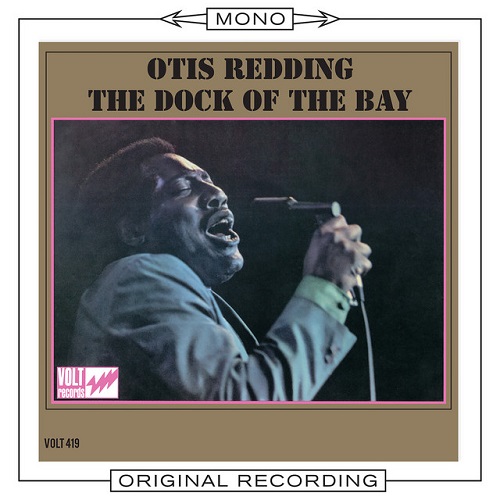
Music history was made on this day in 1968. Otis Redding’s Dock of the Bay reached #1 on the charts, making it the first ever posthumous single in the United States. Redding died in a plane crash just 3 months earlier in December of 1967. It was released on January 8, 1968.
The song was written by Otis and guitarist Steve Cropper (of Booker T & The MG’s). Otis started writing the lyrics in August 1967 while staying on a rented houseboat in California. It was there where Redding started writing the lines, “Sittin’ in the morning sun, I’ll be sittin’ when the evening comes” and the song’s first verse, under the abbreviated title “Dock of the Bay.” In November of 1967, he completed the song in Memphis with Cropper and recorded it.
Allmusic states: Redding’s restrained yet emotive delivery is backed by Cropper’s succinct guitar playing. The song is somewhat different in style from most of Redding’s recordings. While discussing it with his wife, Redding said that he wanted it to “be a little different”, to “change his style”.
There were concerns that the song had too much of a pop feel. There were discussions of contracting the Stax gospel group the Staple Singers to do some background vocals. This never did happen. Otis considered the song “unfinished” and planned to finish it, but he died before he could do so.
After Redding’s death, Cropper mixed “Dock of the Bay” at Stax Studios. He added the sound of seagulls and crashing waves. This was was Otis had requested. He did so because those were the sounds he had heard staying on the houseboat.
The first sequel to National Lampoon’s vacation was a disappointment. National Lampoon’s European Vacation lacked a lot of what the first movie had. Honestly, it is hard to believe that a second sequel was given the green light. Thankfully, it was.
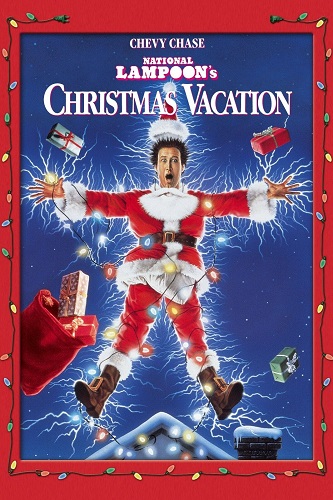
National Lampoon’s Christmas Vacation opened in theaters on December 1, 1989. It opened at #2 at the box office (behind Back To the Future Part II). At the time of the film’s release, the film received mixed reviews. Over time, many have deemed it a Christmas classic.
The movie is based on John Hughes’ short story, “Christmas ’59”, published in National Lampoon. It tells the story of Clark Griswold’s efforts to have a good old-fashioned family Christmas. As with almost anything that happens to the Griswold’s, they take a hilarious turn for the worse. The movie was panned by critics when it was released, but over time it has reached Christmas “Classic” status.
Despite several popular songs being present in the film, no official soundtrack album was released. The musical Score for National Lampoon’s Christmas Vacation was composed by Angelo Badalamenti. It is the only installment of the Vacation film series not to include Lindsey Buckingham’s “Holiday Road.” In its place is a song entitled “Christmas Vacation.”
The title song and opening credits are accompanied by an animated Santa Claus having various issues. This foreshadows the insanity that is part of the movie itself. The song’s music was written by Barry Mann (of Who Put the Bomp fame). The lyrics were written by Cynthia Weil. The song is performed by Mavis Staples, the last surviving member of the Staple Singers.
I asked some friends and asked them about Christmas Vacation. Each of them agreed that they would love to hear it on the radio. I couldn’t agree more. In the latest addition of Turntable Talk, there were a few songs picked that were never played on the radio. Each of those songs could easily be in a rotation. Maybe terrestrial radio would have issues, but it would work on many Sirius XM holiday channels.
Personally, I love it. It sounds festive and happy. I love Mavis’ vocal and the “Jing a ling” background singers. It is one of two songs from the movie I want to feature.
The other song that I love from the movie dates back to 1950. It is used in the scene where Clark is staring out the kitchen window daydreaming. He is envisioning all of the fun that will happen when he puts in a swimming pool.
The song, is Mele Kalikimaka by Bing Crosby and the Andrews Sisters. It was written in 1949 by R. Alex Anderson. Anderson recalled the inspiration for writing the song:
“Well, I’ll tell ya, a stenographer in our office, this was just before Christmas, and we are all leaving (5 o’clock), and she was next to me and she said, “Mr. Anderson, how come there’s no Hawaiian Christmas songs?” She said, “they take all the hymns and they put Hawaiian words to the hymns, but there’s no original melody.” Well, that spurred me right away – I thought, “what a good idea!” I thought this over, and over a period of a few days this came into my head, put it down on paper, and I’ve been singing it ever since.”
Bing Crosby was a frequent visitor and golf partner of Anderson. Anderson played the song for Crosby, who liked it so much that he surprised him with the 1950 recording.



 Various Ramblings of a Nostalgic Italian