
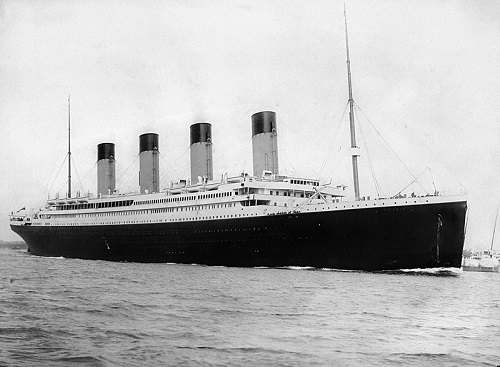
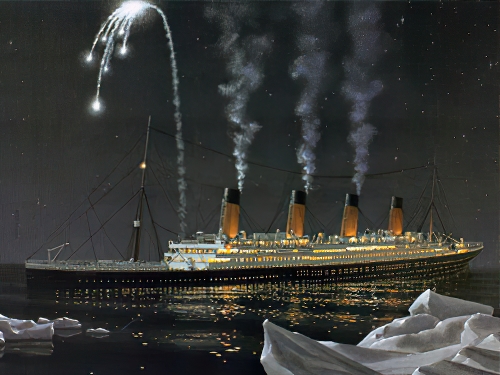
I do not remember how I first heard the story of Titanic, but it has been one that has fascinated me almost all of my life. The world’s most luxurious (and “unsinkable”) ocean liner strikes an iceberg on her maiden voyage and sinks taking with it the lives of over 1500 people. The story has led me and millions of others with questions.
Why were there not enough lifeboats? How could a ship built to be unsinkable, sink? Why didn’t more ships hear their distress calls? The list of questions goes on and on. For many years, one question went unanswered – Where is the final resting place of Titanic? That question was answered 39 years ago today.
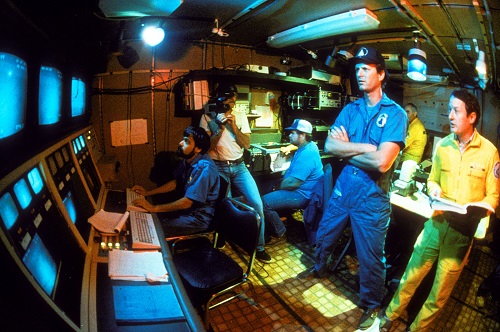
In 1985, aboard the R/V Knoll, a joint French–American expedition led by Jean-Louis Michel of IFREMER and Robert Ballard of the Woods Hole Oceanographic Institution, found the first evidence of the wreck on the ocean floor with this photo:
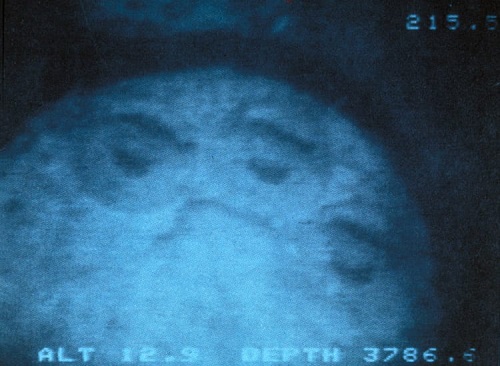
This mundane-looking photo of what turned out to be one of the ship’s boilers is what the crew first noticed. Excitement over the discovery among the crew and scientists was tempered by the knowledge that they floated above the final resting place of more than 1,500 people who were lost at sea 73 years earlier. (Photo ©Woods Hole Oceanographic Institution)
I remember when the news broke that the wreckage had been found. I couldn’t believe it. I remember watching the news, seeing the above photo. I can only imagine what must have been going through the minds of the people on board. One video showed their joy when they found it, and how everything went silent as the reality of what they had found set in. That was powerful to watch.
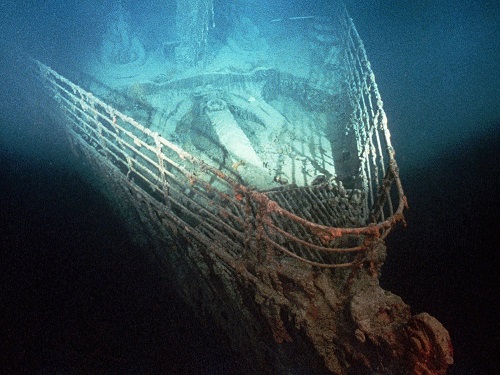
In the weeks and months ahead, more and more photos were shown on TV and eventually in many magazines. I remember picking up National Geographic, Time, and other magazines that I would not normally read, just to see the photos and read the story.
To this day, one of the most amazing photos for me was the one of the crow’s nest.
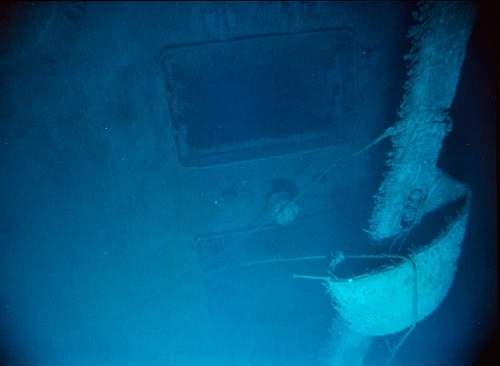
By this time I was well aware of the story, having read “A Night to Remember” by Walter Lord and other books about the tragedy. As I looked at this photo, I could see Frederick Fleet there in the crow’s nest and calling the bridge with the warning, “Iceberg! Right ahead!” (Photo ©Woods Hole Oceanographic Institution)
The debris field photos showed some interesting things, too. Wine bottles, deck chairs, coal, and dishes were strewn all over the ocean floor. (Photos ©Woods Hole Oceanographic Institution)
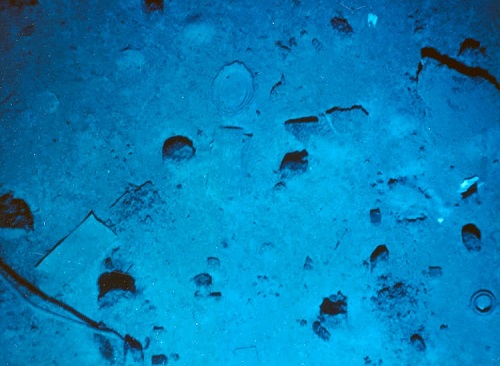
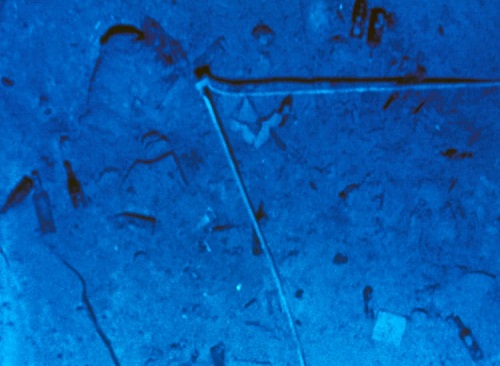
The photo that really took my breath away and made the tragedy all the more real was this one:
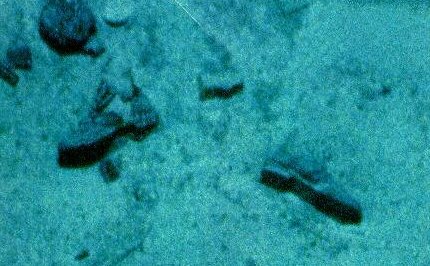
The position of these shoes tell a very tragic story. While they cannot say for certain whether these came from a passenger’s cabin or luggage, at the same time, they cannot say whether these were on the feet of a passenger as they came to rest on the ocean floor. The photo is just chilling and moves me every time I see it.
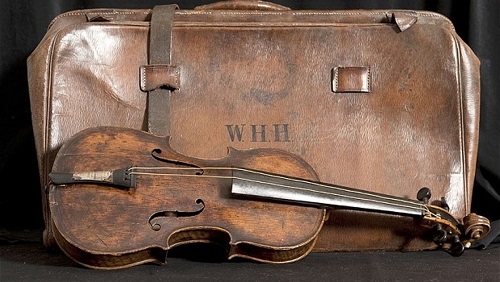
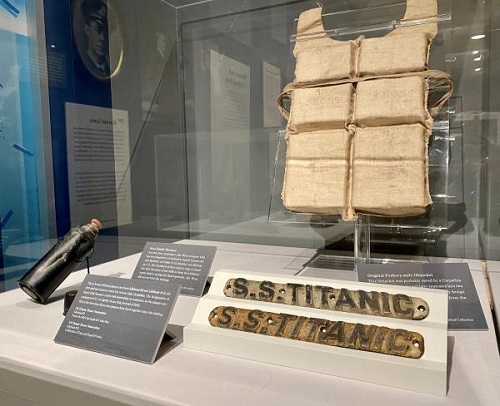
Since 1985, there have been many expeditions and dives to the ship. Many of them have brought up artifacts that are on display in Titanic exhibits around the world. One of the local museums had some Titanic artifacts on display a few years back and Sam and I went to it. I was awestruck. I hope to get to Tennessee to see the museum there and a trip to Belfast is on my bucket list.
The story of Titanic will forever be of interest to me. In 1985, her discovery has led to answers to many questions while also raising others.

 Various Ramblings of a Nostalgic Italian