It was on this day in 1966 that Canadian and American talents combined in Los Angeles. The result was a band that would enjoy a Top Ten song and give us two Classic Rock Legends.
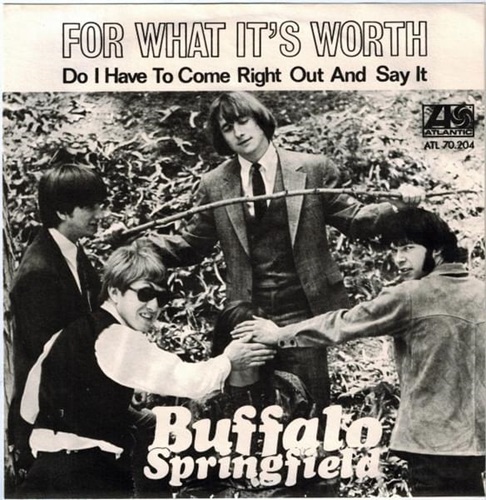
The Buffalo Springfield brought Canadians Neil Young, Bruce Palmer and Dewey Palmer together with Americans Stephen Stills and Richie Furay. They were signed to the Atlantic Record label and their debut single was “Nowadays Clancy Can’t Even Sing.” The song was a hit in Los Angeles, but didn’t go too far elsewhere in the country. It was their next single that would shoot right into the Top 10.
For What It’s Worth written by Buffalo Springfield guitarist Stephen Stills. According to songfacts.com:
“this song was not about anti-war gatherings, but rather youth gatherings protesting anti-loitering laws, and the closing of the West Hollywood nightclub Pandora’s Box. Stills was not there when they closed the club, but had heard about it from his bandmates.“
This song helped launch the band to stardom and has remained one of the era’s most enduring protest songs, but Stephen Stills, who authored the tune, had very different feelings than many might expect. He said, “We didn’t want to do another song like ‘For What It’s Worth.’ We didn’t want to be a protest group. That’s really a cop-out and I hate that. To sit there and say, ‘I don’t like this and I don’t like that’ is just stupid.”
The band released three albums and several singles from 1966 to 1968. It went through quite a few personnel changes and a few reunion attempts and in 2012 Furay announced that the band was on indefinite hiatus.
I have always loved the opening intro to this song. The combination of the drums and guitar is so cool.
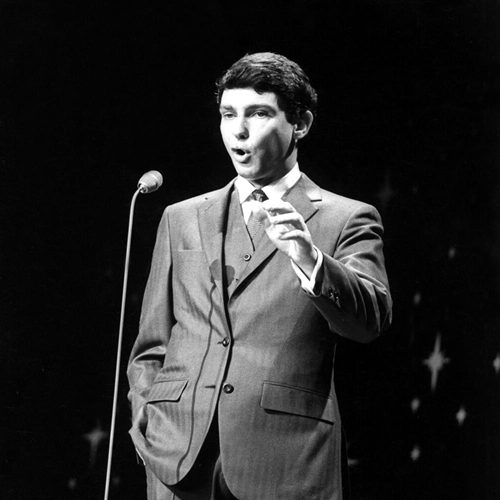
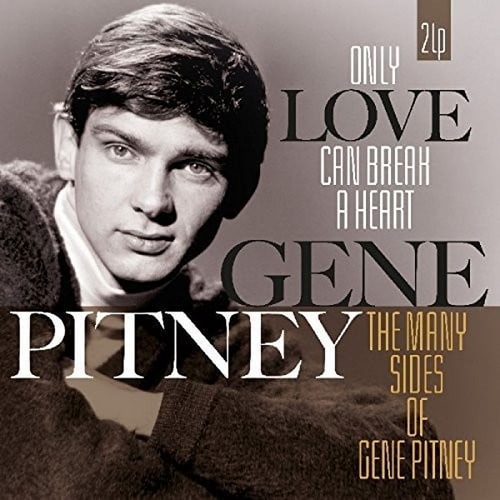
The great Gene Pitney was born on this day in 1940. In total, he charted 16 Top 40 hits in the US. His hits include, “Love My Life Away”, “Only Love Can Break a Heart”, “It Hurts To Be In Love”, “24 Hours from Tulsa”, “Mecca”, and my favorite, “Town Without Pity”.
“Town Without Pity” was Gene Pitney’s first hit. Its success was partly due to it being from the movie of the same name. It starred Kirk Douglas. The song won the very first Golden Globe award for best original song, and was nominated for an Academy Award for Best Song. Because of the nomination, Gene Pitney became the first pop singer to perform at the Oscars in 1962.
Author Al Kooper (who was also with the group Blood, Sweat and Tears) reminisces his first encounter with Pitney in his book, Backstage Passes and Backstabbing Bastards: “…this guy walks in wearing a salt and pepper jacket, heavily greased-down DA (“duck’s ass”) hairdo, and white bucks. Three dressing schools tied together; very strange. The creature was quickly ushered in, sat down at the piano, and proceeded to mesmerize us for two uninterrupted hours with his incredible songs and bizarre voice.” Kooper heartily recommended signing him when producer Aaron Schroeder asked for his opinion.
Kooper goes on to say of Pitney that he was strongly influenced by him, assimilating aspects of his style into his own work. Randy Newman’s song “Just One Smile,” included on the first Blood, Sweat & Tears album, was originally done by Pitney; Kooper cites this as an example of the longevity of Pitney’s inspiration.
In the US, Town Without Pity went to #13 on the Hot 100.
Town Without Pity would be the final song he performed at his final show at Cardiff’s St. David’s Hall in April of 2006, before his death from heart disease.
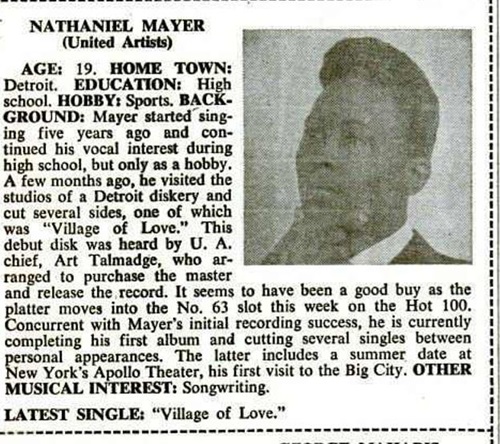
For Tune Tuesday, I have to feature one of the artists that was introduced to me by my dad. He and my Godfather grew up together and loved listening to music together. They listened to blues stuff from Jimmy Reed, Motown, and plenty of R&B artists. Back in the day, local artists actually got airplay and did very well in their hometowns. If they were lucky enough, they’d nab a national hit. One of those artists was Nathaniel Mayer.
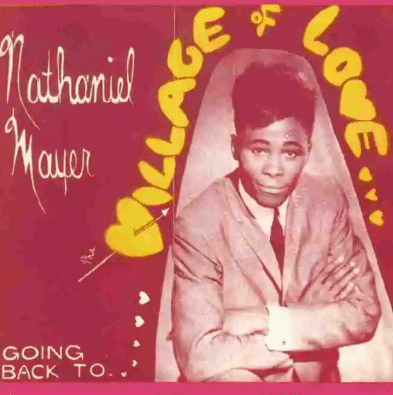
Nathaniel Mayer was born on this day in 1944. He was born in Detroit and found fame on the Fortune record label owned by Jack and Devora Brown. At Fortune, he was a label mate of another favorite of my father’s – Nolan Strong. Nathaniel stayed with the label for about 6 years. In 1962, at the young age of 18, he had his first Top 40 Record – Village of Love.
Nathan would record and release other songs for Fortune, but none of them achieved what Village of Love did. He left the music business before returning in 2002 and recording with a couple different labels. He would go out and tour in support of his music, but after a return from Europe he had numerous strokes which left him hospitalized. He passed away on November 1 (coincidentally, my dad’s birthday) in 2008.
In 2014, he was inducted into the Michigan Rock and Roll Legends Hall of Fame.
Happy Birthday to a hometown hero – Nathaniel Mayer.
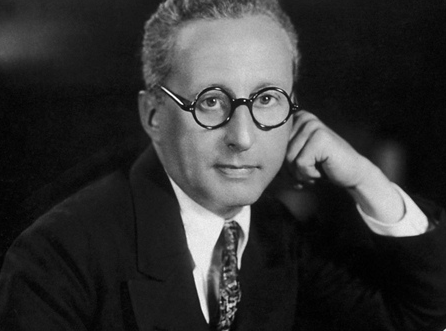
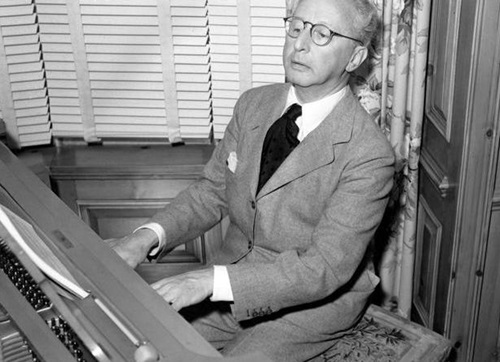
Born on this day 141 years ago, one of the great contributors to the Great American Songbook – Jerome Kern. He was born January 27, 1885.
Jerome Kern was one of the most important American theatre composers of the early 20th century. He wrote more than 700 songs that were used in over 100 stage works.
Wikipedia states:
A native New Yorker, Kern created dozens of Broadway musicals and Hollywood films in a career that lasted for more than four decades. His musical innovations, such as 4/4 dance rhythms and the employment of syncopation and jazz progressions, built on, rather than rejected, earlier musical theatre tradition. He and his collaborators also employed his melodies to further the action or develop characterization to a greater extent than in the other musicals of his day, creating the model for later musicals. Although dozens of Kern’s musicals and musical films were hits, only Show Boat is now regularly revived. Songs from his other shows, however, are still frequently performed and adapted. Many of Kern’s songs have been adapted by jazz musicians to become standard tunes.
Among the songs he wrote were: Look For the Silver Lining, Ol’ Man River, The Last Time I Saw Paris, I Won’t Dance, and All The Things You Are. To celebrate his birthday, I’d like to present some of my favorite Jerome Kern compositions and my favorite versions of them.
First, written for the 1933 musical comedy “Roberta,” here are The Platters with Smoke Gets In Your Eyes:
From the 1936 film Swing Time, here is Frank Sinatra with The Way You Look Tonight:
Again from the 1933 musical comedy Roberta, here are Jane Monheit and Michael Buble’ with I Won’t Dance:
You cannot go wrong with Ella Fitzgerald. Here is Can’t Help Lovin’ Dat Man:
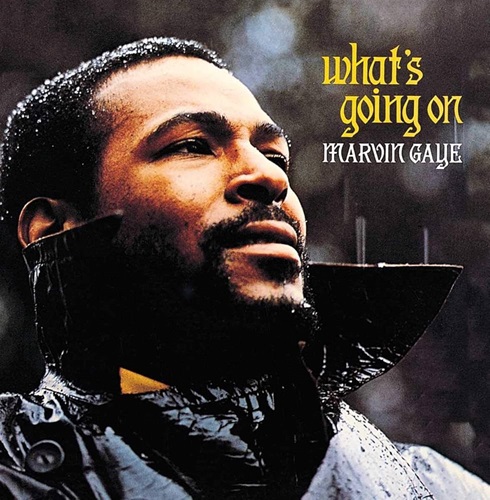
It was on this day in 1971 that Tamla Records (a division of Motown) released Marvin Gaye’s What’s Going On. According to many stories, it almost wasn’t released.
From songfacts.com:
According to the book Mercy, Mercy Me: The Art, Loves & Demons of Marvin Gaye, Motown head Berry Gordy initially refused to release this song, calling it the “worst record I ever heard in my life.” The song was slipped out by the man in charge while Gordy was on vacation and, of course, he was furious… until he found out the single sold 100,000 copies in the US upon its release. Needless to say, he soon changed his mind about this song.
Although Berry Gordy admits he had reservations about “What’s Going On,” he claims all of the stories surrounding his refusal to release the song are false. He explained to the Wall Street Journal: “For years, people have written that I stood in the way of this song’s release and that Marvin had threatened never to record for me again if I didn’t put it out,” he said. “That must make for great reading, but none of it is true.”
He went on to explain the potential ramifications of the song: “My reason for pushing back on Marvin wasn’t to stop the single, just to determine whether or not this was another one of his wild ideas,” Gordy said. “Motown was about music for all people – white and black, blue and green, cops and the robbers. I was reluctant to have our music alienate anyone. This was a big risk for his image.”
The song was written by songwriter Al Cleveland, Four Tops member Renaldo “Obie” Benson and Marvin Gaye. It was Marvin who added lyrics and worked on the arrangement. Marvin did not want to record the song, he wanted the Originals to record it. However, Benson and Cleveland persuaded Gaye to do it himself.
Songfacts.com says,
Until this song, Gaye rarely participated in the songwriting process. For this album, he took control of the production so he could make a statement as an artist. Motown management was skeptical, but Gaye was an established star and had enough power to pull it off, going so far as to use an orchestra on this track.
The song is one of Motown legend. James Jamerson, the bass player for the Funk Brothers, was apparently drunk when he arrived at the studio. Jamerson could not sit properly in his seat and, according to one of the members of the group, lay on the floor playing his bass riffs.
Fun Fact: At the beginning of the song, there are people chatting. Marvin wanted to give the song a laid back feel, so he, the Funk Brothers and Mel Farr and Lem Barney of the Detroit Lions are the ones having conversation as the song begins.
The song was one of the first Motown songs to make a political statement. Jackson Browne said in a 2008 interview with Rolling Stone: “No one was expecting an anti-war song from him. But it was a moment in time when people were willing to hear it from anybody, if it was heartfelt. And who better than the person who has talked to you about love and desire?”
It was nominated for two Grammy Awards in 1972, but did not win either category. It peaked at #2 on the Billboard Hot 100 chart and was ranked the fourth greatest song of all time by a 2004 Rolling Stone poll. It was also ranked the 2nd on the Detroit’s 100 Greatest Songs List by the Detroit Free Press.
There was no shortage of possibilities to feature today on Tune Tuesday. Musical birthdays include Bo Diddley (1928), Skeeter Davis (1931), Paul Stookey (1937), Mike Nesmith (1942), Davy Jones (1945), Jeff Lynne (1947), and Ellie Goulding (1986). However, I have decided to focus today on a Hometown Hero.
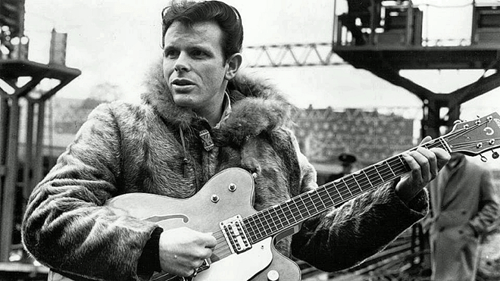
Born today in 1934 in Coopersville, Michigan – Del Shannon.
Del had hits with Runaway, Keep Searchin’, Little Town Flirt, and in 1963 he actually released the Lennon/McCartney song Love Me Do! After his success with Runaway, he released his second single Hats Off To Larry.
The story goes that while on tour with Dion, Del wrote “Hats Off To Larry” in the dressing room that night. Dion and fellow rock ‘n’ roller Bobby Vee were present at the time.
Songfacts.com says:
The slow intro features Shannon woefully explaining the details of his breakup before he launches into an upbeat rock and roll number, reflecting his joy over his ex’s comeuppance. His label, Bigtop, thought a fast-paced intro would be better to hook listeners, but Shannon was adamant. He recalled to interviewer Ted Yates: “I had to fight for about two hours to get that the way I wanted it. They didn’t want to listen to me. I was just the singer.”
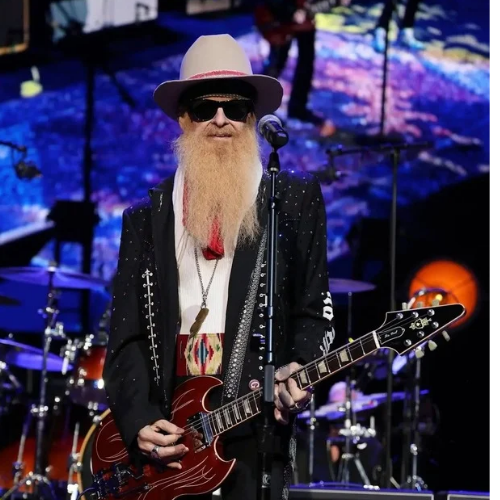
Billy was born outside of Houston, Texas. Music was a part of his life right from the start. His father was an orchestra leader and concert pianist.
When he was five, his mom took him to see Elvis Presley. Two years later, his dad took him to see BB King. Can you imagine the influence those two shows had on him?
In the late 60’s he formed the band Moving Sidewalks. In 1969, he formed ZZ Top by snagging two guys from the band American Blues (Dusty Hill and Frank Beard). They played together for a couple of years and they mastered their “sound,” a sort of bluesy Rock before recording their first album in 1971.
In 2015, he set off on a solo career with the album “Perfectamundo.” He followed that in 2018 with “The Big Bad Blues.” In 2021 he released his third album, “Hardware.”. He has also collaborated with artists like BB King, Jeff Beck, Brooks and Dunn, Kid Rock, and Sammy Hagar.
For Tune Tuesday, I could have picked from so many great ZZ Top songs. However, with Christmas right around the corner, how about a Christmas song from him?
Dig this. Here is Jingle Bell Blues. I just stumbled on it and I thought it was cool!!
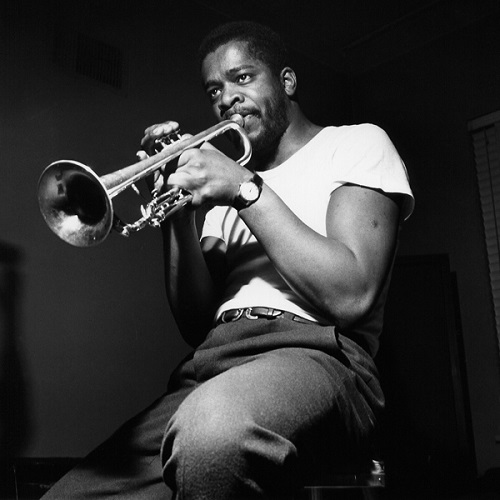
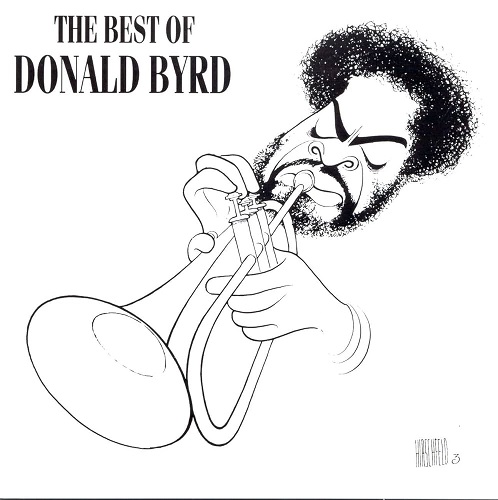
Today, we shine the light on another hometown hero. Donaldson Toussaint L’Ouverture Byrd II, better known to the music world as Donald Byrd, was born on this day in 1932.
He was born in Detroit, Michigan. His mother introduced him to jazz music, and his uncle gave him his first trumpet. He attended Cass technical high school. Byrd played in a military band while in the US air force, took a music degree at Wayne State University in Michigan and then studied music education at the Manhattan School of Music in New York. He joined the Jazz Messengers in the mid-1950s. Byrd’s trumpet predecessors in Blakey’s company had already included the graceful, glossy-toned Clifford Brown and the Dizzy Gillespie-influenced Kenny Dorham, but the newcomer with his polished phrasing and luxurious tone was recognised as a technical master equal to both. He was even heralded as the new guiding light in jazz trumpet.
He was prolifically active in the late 1950s, in demand for sessions on the Savoy, Riverside, Fortune, and Blue Note labels. At the end of the decade he was also leading or co-leading his own ensembles. He was mostly operating in the laconically pyrotechnical, blues-inflected hard-bop style.
He formed the Blackbyrds, a soul and funk band, from a pool of his Howard University student. In the early 70’s his music ventured into dancefloor jazz and fusion. In 1973, his album Black Byrd was a million seller and brought Blue Note label more income than it had ever generated from any release before.
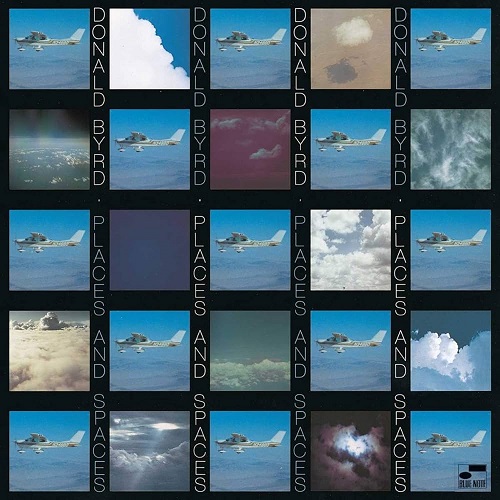
In 1975, he released the album Places and Spaces. Allmusic awarded the album with 4 stars and its review by Stephen Thomas Erlewine states: “Boasting sweeping string arrangements, sultry rhythm guitars, rubbery bass, murmuring flügelhorns, and punchy horn charts, the music falls halfway between the cinematic neo-funk of Street Lady and the proto-disco soul of Earth, Wind & Fire.”
In the late 80’s, when I worked at WKSG, Kiss-FM, we had a regular listener who would call and ask for Donald Byrd, even though we were an oldies station. He called every station in town and it wasn’t odd to be listening to another station and hearing him on the air. His name was Joe. He always asked for the same song, “Wind Parade.”
On one occasion, my pal Johnny Molson and I were talking with Joe, and he has some funky jazz playing in the background. We asked him what he was listening to and found out it was Byrd. So we did to him what he did to us, we requested he play Wind Parade. Neither of us had ever heard the song before. I think we were both genuinely interested to hear it.
As the song begins, there is a piano and syncopated cymbal beat. The a guitar riff plays along with the established beat. What Johnny and I did not expect was Joe belting out the words and singing along to the song. I cannot even describe what it sounded like, but John and I immediately collapsed in laughter.
As we laughed at this unexpected solo, the music continued. At some point he stopped singing and asked, “How do you like it, Johnny?” He had barely caught his breath long enough to say, “That’s great, Joe” only to continue laughing more.
And that is how I discovered Donald Byrd. One day, while shopping at a local record store, I couldn’t believe it when I found his greatest hits CD. I picked it up without hesitation and gave it a listen. There is no doubt, he could play the trumpet well, and there were some neat tracks on the CD. It was “Wind Parade” that got the most play. Every time the vocal hit in the song, I could hear Joe singing along!
He passed away in 2013. One obituary said, “Byrd’s real legacy is his contribution to music education in a culture that spawned jazz but then neglected it – a role he pursued from the unique vantage point of having been a leading player in the idiom. His work has been sampled by pop and hip-hop artists including Public Enemy and Ice Cube, and many young musicians at work today owe their education, and the widespread acceptance of their art, to his tireless pursuit of stature and respect for jazz.”
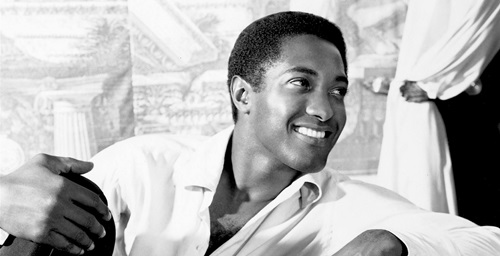
Sam Cooke recorded the song “You Send Me” in June of 1957. It was released in September of that year and would go all the way to #1. The song topped the charts for the first time on this day in 1957. Not bad for a debut single.
Cooke wrote “You Send Me” but gave the writing credit to his younger brother L.C. (who used the original family spelling “Cook”) because he did not want his own publisher to profit from the song. The B-side of the single was a cover of “Summertime.” That was supposed to be the A-side, but radio DJs favored You Send Me and played it instead.
The song almost didn’t get released. Songfacts.com says: Cooke was signed to Specialty Records, which was a gospel label. Cooke’s producer, Bumps Blackwell, brought this to Art Rupe, who owned the label. Rupe objected to the use of the choir on this track and was afraid it was too secular and would alienate the label’s gospel fans. He offered Cooke a release from his contract in exchange for outstanding royalties. The song was passed to the Keen label where it sold over 2 million copies.
Fun Fact: Aretha Franklin recorded a version of the song and it was the B-side to her hit “Think” in 1968.
The song was named as one of the 500 most important rock and roll songs by the Rock and Roll Hall of Fame. In 1998, it was inducted into the Grammy Hall of Fame.
Let’s give a listen to Sam’s only #1 song on the Hot 100:
Normally, I would steer clear of this song, but because it is his birthday, I will feature it today.
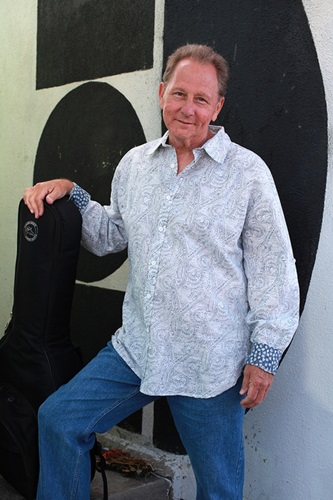
Happy 83rd Birthday to Bob Lind!
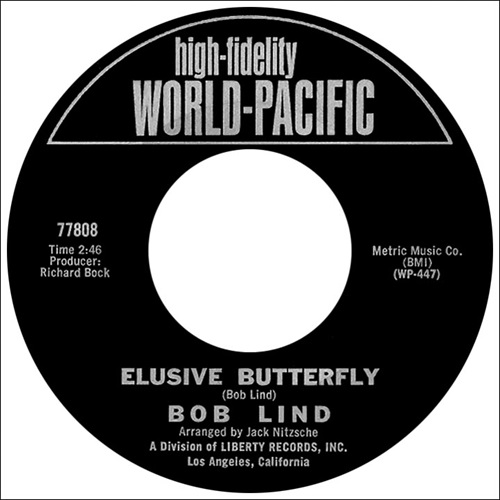
In 1965, Bob Lind signed a contract with World Pacific Records, which was a division of Liberty Records. It was there that he recorded his composition (and only hit) Elusive Butterfly.
From songfacts.com:
Bob Lind wrote this song, where he sees himself as a butterfly hunter. He is looking for romance, but he finds it as elusive as butterflies are to capture. It turned out to be the only hit for Lind, who did a lot of traveling as a kid and ended up playing folk music around Denver when he flunked out of Western State College. He wrote “Elusive Butterfly” as the sun was coming up after staying up all night. He says the song is about “The magic of the quest, the thrill of searching, even when that which is sought is hard to see.”
One of music’s greatest bass players, Carol Kaye, played on the song. She told songfacts.com:
“It was at Sunset Sound. It was kind of a boring tune. I think it was D-flat or something, and it stays a long time in that chord and then it moves in a funny way to the next chord, it’s like a sidebar phrase or something like that. I missed it and I went to go up to the G-flat or whatever and I missed it and I came right back down. I did a slide up and down. And they stopped and I thought, ‘Uh oh, he caught me.’ He said, ‘Do more of those!’ (laughing) So the slide was born, then. I’d stick that slide in here and there on the records I cut.”
I chuckled when I read her quote calling the song “boring.” When I was at WKSG in Detroit, this song would come up on the play list from time to time. Johnny Molson, who did the evening show before I came on the air, had the best description of the song. He told me that the song “sounds like someone ate a Hallmark card … and threw up.”
Happy Birthday to Johnny, by the way. Who knew he and Bob shared a birthday?
Plagued by drug and alcohol problems, Lind gained a reputation in the business for being “hard to work with.” He eventually left the music business for some time, but his music was recorded by over 200 artists. Those artists include: Cher, Glen Campbell, Dolly Parton, Eric Clapton, The Turtles, Johnny Mathis, Nancy Sinatra, The Four Tops, and Petula Clark!
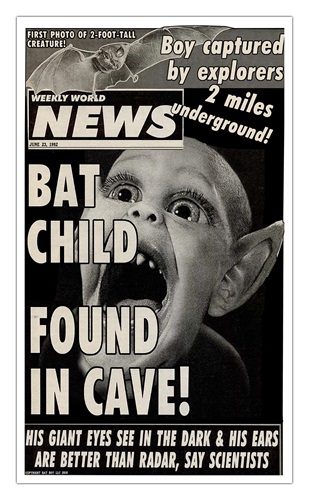
In 1988, he moved to Florida. He wrote five novels, an award-winning play, and a screenplay, Refuge, which won the Florida Screenwriters’ Competition in 1991. He also worked briefly for the Weekly World News and is credited with co-writing their famous “Bat Boy” story.
I’d say that he should stick to singing, but I’m not really keen on that either… So, Happy Birthday, Bob.




 Various Ramblings of a Nostalgic Italian