Tune Tuesday

Happy 56th birthday to country music’s Clay Walker!
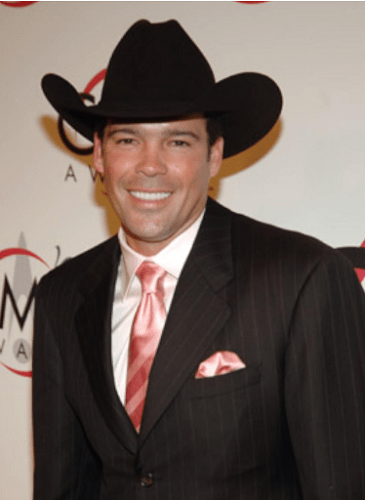
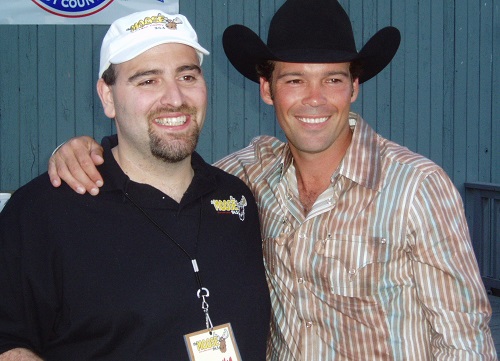
Clay was one of the nicest guys in the business.  I never felt rushed when he was doing a Meet and Greet.  He was always happy to sign something or record a line for me.  He was the same way with listeners.  Someone would come out and tell folks “One picture and one signature per person,” and Clay would sign everything a listener brought back for him. 

Clay had his share of ballads over the years, but A Few Questions is one that really struck a chord with people.
It was released in April 2003 as the lead-off single and title track from his album of the same name. It peaked at #9 on the Billboard Hit Country Singles & Tracks Charts.

When the song was just hitting radio, Clay said, “‘A Few Questions’ is touching people the way it touched me the first time I heard it. The choruses come right out of the Book of Job. When I was diagnosed with multiple sclerosis back in 1996, the Book of Job is part of the Bible I read over and over, trying to understand what I needed to do. And every time I sing the song, it lifts up my own spirits as much as it lifts those of others. My favorite line in the song is “When you look down on me, can you see the good through all the bad.” That’s a powerful thought.”  He told Country Weekly “It’s a very deep song to me. It really relates to me in a lot of ways, because I think everybody has questions in life.”

During an interview with CMT, Clay revealed that philosophical songs like “A Few Questions”, “The Chain of Love” and “It Ain’t Pretty”, are not his favorite form of songs when he said, “Those kinds of story songs are the ones that choke you up. I’m not a person that tends to listen to those songs a whole lot because they are deep. I like something with a little more vocal range in it. But those three songs really do make me think. It takes great songwriters to write them because they’re totally lyric-based. They’re not standing on production. They’re standing on the story and the words.”

As a man of faith, I can tell you there is a lot of stuff that I don’t understand.  All I know is that while I don’t know the answer, God does.  When people come to me and tell me of their struggles, I will often tell them that.  It’s not in the easy times that people question God, it’s during the tribulations we go through. 

I remember when my Grandpa died.  I was 11 and standing on the driveway crying.  I looked up and asked, “Why did you have to take him?  Why do good people have to die?” I had no idea, but He did.  If you have ever found yourself questioning “Why?” then you will be able to relate to this one.

Happy Birthday, Hoss!
Tune Tuesday

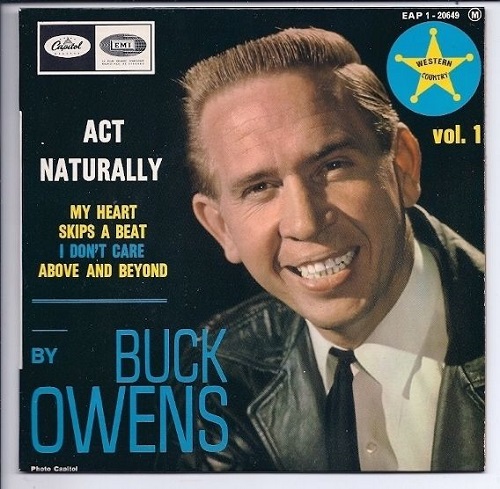
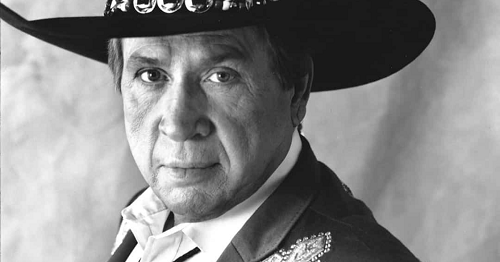
Happy Heavenly Birthday to Alvis Edgar Owens Jr. who was born on this day in 1929. You probably know him as “Buck.”

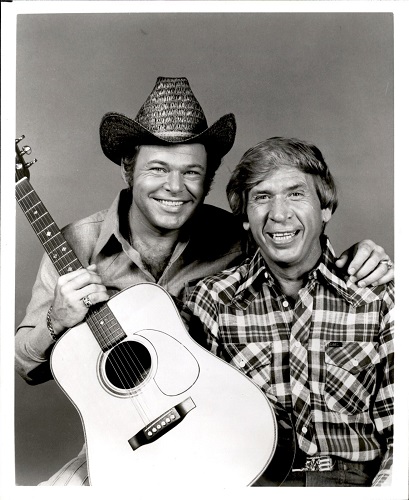
I was introduced to Buck when I saw him on Hee Haw with Roy Clark.

They co-hosted the show together from 1969-1986! Had quite a run full of hillbilly humor and corny jokes.

Buck taught himself how to play guitar, horns, mandolin, and drums. He was the frontman for The Buckaroos and together they chocked up 21 number one hits. He is best known for his Bakersfield sound, named in honor of Bakersfield, California.

In 1963, Johnny Russell pitched his song “Act Naturally” to Buck. Buck really didn’t care for it at first. His guitarist and longtime collaborator Don Rich, however, enjoyed it and convinced Owens to record it with the Buckaroos. Laid down on February 12, 1963, it was released on March 11 and entered the charts of April 13. By June 15 the single began its first of four non-consecutive weeks at the No. 1 position, Owens’s first top hit.

The song made an impact on four guys from Liverpool known as The Beatles. They covered the song in 1965 and Ringo Starr handled the lead vocals.

23 years later, Ringo and Buck would get together and perform the song as a duet.

Owens was inducted into the Country Music Hall of Fame in 1996. He passed away in March of 2006.

Tune Tuesday

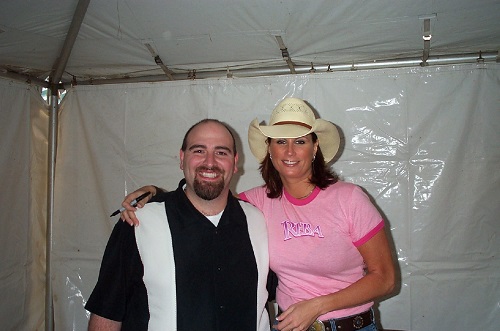
Happy 57th birthday to Terri Clark.

I have always loved her music. I’ve had the chance to meet her on a couple occasions as well as interview her on the air.  She is witty and has a great sense of humor.  She was a lot of fun to talk to.

I decided to go with a song that would probably be familiar to you.  One of Terri’s early hits was a remake of “Poor Poor Pitiful Me”

Written and originally recorded by Warren Zevon, it first appeared on his self-titled album in 1976. It became a hit when Linda Ronstadt covered it the next year. 

Ronstadt shared her thoughts on this song in a 1978 interview with Sounds: “To me that song seemed like the purest expression of male vanity. Step on you, be insensitive, be unkind and give you a hard time, saying can’t ya take it, can’t ya take it. Then if you tease men in the slightest bit, they’ll just walk off with their feelings hurt, stomp off in a corner and pout. I mean that’s the way men are, I swear. I thought the verse turned around to a female point of view was just perfect. The gender change works perfectly.”

Terri’s version was released in September 1996 as the lead single from her second album, 1996’s Just the Same. Clark told Billboard magazine that she heard Linda Ronstadt’s version of the song in a local gymnasium while she was exercising. She said “and I thought, what a cool song. What a great country record that could make. I started doing it live, and it worked.”

“Poor Poor Pitiful Me” debuted at number 47 on the U.S. Billboard Hot Country Singles & Tracks for the week of October 12, 1996. Clark’s version was a number one hit on the Canadian RPM country charts, and a number five hit on the country charts in the U.S.

The video comprises black-and-white tour footage interspersed with Clark being approached by a series of men while her car is being fixed at a full service gas station. Eventually, she realizes the man fixing her car is the one for her. She starts to drive off, before calling him over to get in. The two drive off together, leaving the other two co-workers at the shop surprised.

Happy Birthday, Terri!

Sources: Songfacts, Wiki

Tune Tuesday

Linda Ronstadt turns 79 today!

I have written about Linda a couple times on this blog. Both times were in connection with Dave Ruch’s music feature, Turntable Talk. The first one can be found here. The second one is here.

I have always loved her voice and was devastated when I heard she could no longer sing. It seems like her music has always ben a part of my life. Until I looked at a list of her songs, I didn’t realize just how many covers she did. Blue Bayou, When Will I Be Loved, It’s So Easy, Just One Look, Tracks of My Tears, Poor Poor Pitiful Me, That’ll Be The Day, Desperado, and so many others were all cover songs!

Her albums with Nelson Riddle are among my favorites. She had hoped to do one more album with him, but he passed away. So she took those songs and made the album, Hummin’ To Myself. One of my favorite cuts from that album is, I’ll Be Seeing You. It’s a beautiful song by a beautiful lady.

Happy Birthday, Linda!

Tune Tuesday

There are plenty of “musical” birthdays that I could have tied into Tune Tuesday today. Billy Eckstine (1914), Jerry Vale (1931), Steve Lawrence (1935), Toby Keith (1961) and Joan Osborne (1962) were all born on this day. However, I decided not to pick any of them.

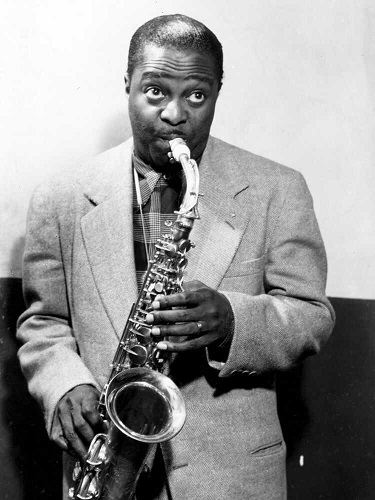
Instead, I wanted to feature one of the early influencers of Rock and Roll. As a matter of fact, he is in the Rock and Roll Hall of Fame. His music would not be considered Rock and Roll, but his “jump blues” and “rhythm and blues” sound certainly influenced many of those rock pioneers. I am talking about the amazing Louis Jordan.

Louis Jordan was born on this day in 1908. He was a saxophonist, multi-instrumentalist, songwriter and bandleader who was popular from the late 1930s to the early 1950s.  Among his nicknames were “The King of the Jukebox,” “The Father of Rhythm and Blues,” and “The Grandfather of Rock and Roll.”

According to Wiki, “Jordan began his career in big band swing jazz in the 1930s.” He came to the public’s attention while he played in Chick Webb’s hard swinging band. As his career continued, he became better known as an “innovative popularizer of jump blues—a swinging, up-tempo, dance-oriented hybrid of jazz, blues, and boogie-woogie. Typically performed by smaller bands consisting of five or six players, jump music “featured shouted, highly syncopated vocals and earthy, comedic lyrics on contemporary urban themes. It strongly emphasized the rhythm section of piano, bass and drums; after the mid-1940s, this mix was often augmented by electric guitar.”

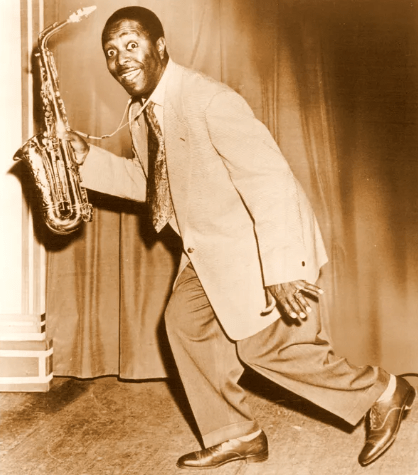
Louis Jordan, ca. 1950.

From 1942 to 1951, Jordan had 59 songs that charted! On the R&B charts, of those 59 songs the lowest charting song rose to #14. According to Joel Whitburn’s analysis of the Billboard  magazine charts, Jordan ranks fifth among the most successful musicians of the period 1942–1995!

I’m staring at a list of his songs and it is hard to choose just one to feature. Memorable songs from Louis include: Five Guys Named Moe, Let the Good Times Roll, Is You Is or Is You Ain’t My Baby, Knock Me a Kiss, Beware, Caldonia, Open the Door Richard, and G.I. Jive. His songs were even referenced in cartoons. One example is Tom the Cat singing Is You Is or Is You Ain’t My Baby in a Tom & Jerry cartoon. Another is from a Bugs Bunny/Yosemite Sam cartoon where Sam is banging on a door and says, “Open the door!” He pauses, breaks the fourth wall by looking at the viewer and says, “Notice I didn’t say, ‘Richard?'”

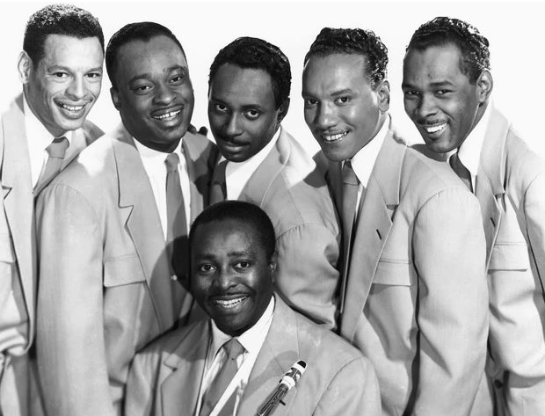
Louis Jordan and His Tympani Five

Here are a couple of my top Louis Jordan songs. First, a little boogie-woogie with Choo Choo Ch’Boogie:

My buddy used the chorus of this song as his answering machine outgoing message. There Ain’t Nobody Here But Us Chickens:

My best friend, Jeff, and I always laugh at this next one. Give it a listen all the way through once, and then go back and listen to it again and focus on the vocals by the Tympany Five in the back ground. Here is Beans and Cornbread:

The Rock and Roll Hall of Fame say that my final Louis Jordan pick is an “early example of rap.” I can totally see where they might thing that. It is one of those great “story” songs. From 1950, here is a Saturday Night Fish Fry:

Happy Birthday Louis Jordan!!!

Tune Tuesday

For Tune Tuesday today, I want to play both sides of the record. The A-side was a hit for the recording artist, while the B-side was a hit for another artist a few years later.

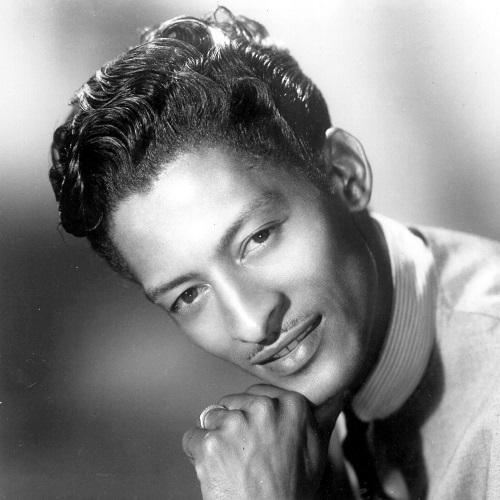
Robert Byrd was born on this day in 1930.  He is best known by his stage name – Bobby Day.  It’s interesting that a guy named Byrd would have a hit song about a bird – Rockin’ Robin.

He was part of many groups, including the Crescendos, the Jets, the Voices, the Sounds, and The Hollywood Flames.  He actually helped write the Flames biggest hit, “Buzz Buzz Buzz.”

Rockin’ Robin was a solo hit for Bobby.  It went #1 on the R&B chart and #2 on the Hot 100.  The Hollies, Gene Vincent and Michael Jackson all covered the song. In 1980, the song was also featured on The Muppet Show, with their house band The Electric Mayhem performing it in a tree with some feathered friends.

Fun Fact: That famous piccolo part was played by Plas Johnson, who was better known as a saxophone player – he did the Pink Panther theme.

The B-side of this single was a song called “Over And Over,” which was written by Day.  In 1965 became a US #1 hit for The Dave Clark Five when they covered it. It was their only US #1.

Bobby Day and Thurston Harris released the song the same week.  Both entered the Hot 100.  Harris’s version topped out at #96, while Bobby’s bubbled under the top 40, reaching #41.

Personally, I like Bobby’s version the best.

Bobby Day died of prostate cancer on July 27, 1990, at age 60. 

Tune Tuesday

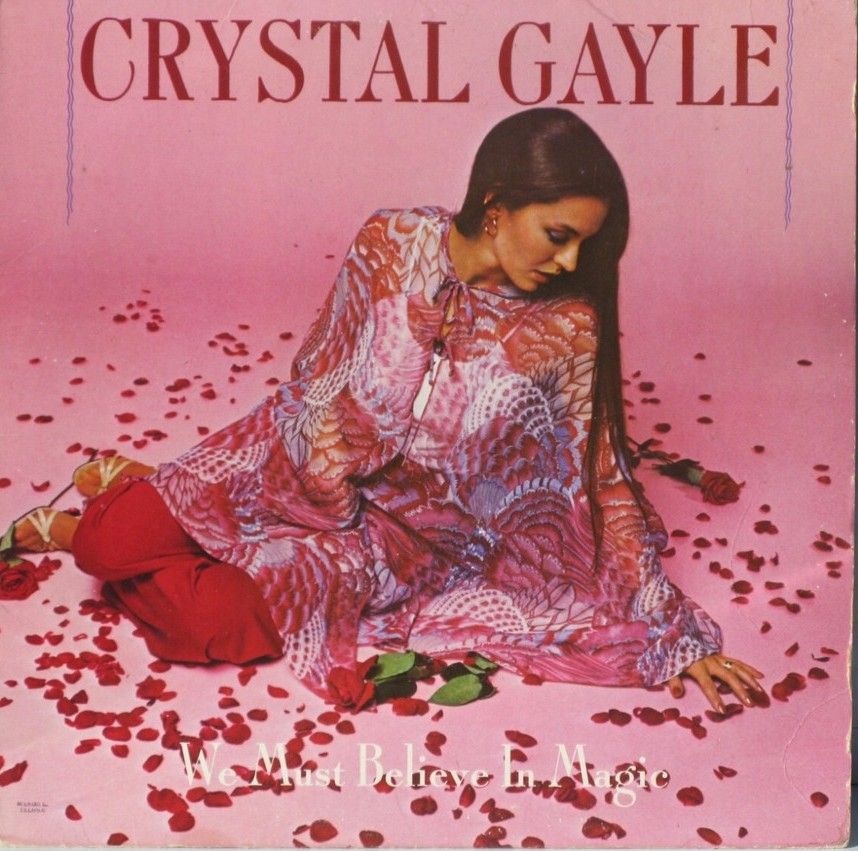
It was on this day in 1977 that Crystal Gayle released her album “We Must Believe in Magic.”

The album featured one of her best known songs – “Don’t It Make My Brown Eyes Blue.”

From Songfacts.com:

Don’t It Make My Brown Eyes Blue” was a huge crossover hit for Crystal Gayle, going to #1 on the Country chart and climbing to #2 on the Hot 100, held off for three weeks in 1977 by a much more hopeful ballad, “You Light Up My Life” by Debby Boone.

Gayle nailed her vocal on the first try. “That was a first take,” she recalled to Billboard magazine. “I did not re-sing it. It just fell into place beginning with Pig Robbins’ opening work on the piano. It was magic in the studio that day.”

“Don’t It Make My Brown Eyes Blue” won the 1977 Grammy Award for Best Country Vocal plus Best Country Song for writer Richard Leigh. Leigh said the song was inspired by looking into his dog’s brown eyes.

Fun Fact: Loretta Lynn is Crystal Gayle’s sister.

Gayle made a lot of TV appearances when this song became a hit. For many viewers, it was their first look at Gayle, who had hair down to her feet.

The song is a ’70’s staple?

Tune Tuesday

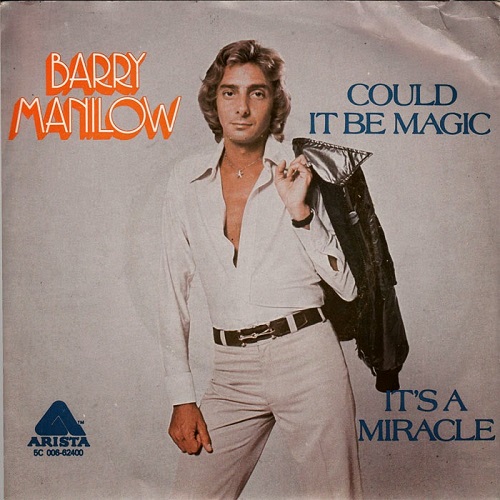
Happy 82nd birthday to Barry Manilow. Over his 60 year career, many folks have made fun of Barry. A buddy of my dad’s called him “Barely Man-enough,” while a radio DJ friend called him “Barry Banana Nose.” Despite the jokes and such, you cannot deny that the guy was a musical success!

Manilow has recorded and released 51 Top 40 singles on the Adult Contemporary Chart, including 13 that hit number one, 28 that appeared within the top ten, and 36 that reached the top twenty. He has also released 13 platinum and six multi-platinum albums. He came a long way from creating jingles.

Fun Fact: Barry wrote the jingles for State Farm Insurance (“Like a good neighbor, State Farm is there”), McDonald’s (“you deserve a break today”), and Band-Aid (“I am stuck on Band-Aid, ’cause Band-Aid’s stuck on me!”) along with many others!

My mom loved Barry’s music and it was often on the radio or a tape that my dad had made for her. She loved Even Now, I Can’t Smile Without You, Mandy, and a ton of others. One of Barry’s songs that I remember hearing for the first time on a drive with mom was Could It Be Magic. At the time I had no idea why, but I remember thinking that the piano intro sounded familiar.

It sounded familiar because Barry basically stole the intro from one of the greatest piano players of all time – Chopin. It all started one evening in 1971 when Manilow was playing Chopin’s “Prelude Op. 28, No. 20 in C Minor” at his Manhattan studio apartment. After taking a dinner break, he sat down at his spinet piano and wrote “Could It Be Magic,” unaware he’d lifted the chord changes from the classic piece’s chorus until he played back the recording.

He said, “Thank goodness the melody and verses were my own.”

Barry wasn’t surprised when the song finally became a hit because he’d consistently wowed huge audiences with the tune before it ever landed on the radio. At the time, he was Bette Midler’s music director and piano player, so when Bell Records wanted him to hit the road to promote his debut album, he felt guilty at the thought of abandoning Midler. Instead, he asked if she’d be willing to let him perform some songs during her own shows – to audiences of thousands of people. She agreed, and he brought down the house every time he sang the ballad.

Barry thinks the best songs are the ones the come the quickest, like this one. He says,

“I knew I was onto something. Sometimes you just know it. It came so fast – the ones that come fast I know that I have something going. The ones that I struggle with never work. But the ones that come fast, something’s in it. All I could tell you was that I loved this song.”

Happy Birthday, Barry!

Tune Tuesday

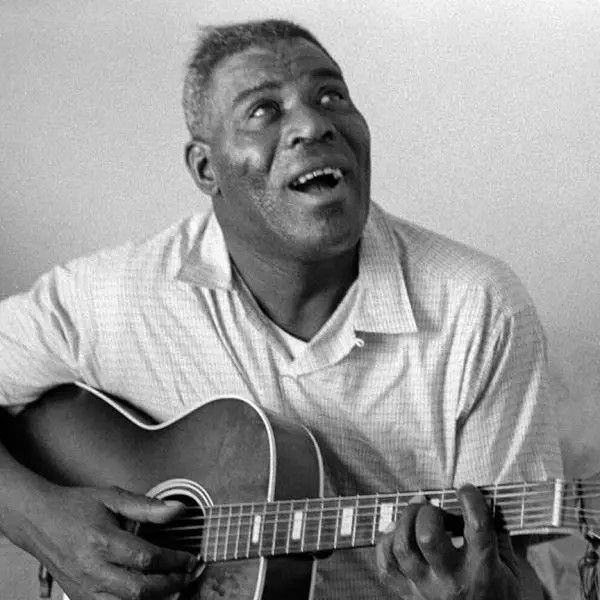
I am surprised that as much as I love blues music, I haven’t featured it more.  Today, I can do just that as I wish Happy birthday to blues legend Howling Wolf.

He was born Chester Arthur Burnett on this day in 1910. He was one of a few blues singers who took the acoustic Delta Blues and helped turn it into the electric Chicago Blues. His name is right up there with Muddy Waters, Elmore James and John Lee Hooker as one who was a major influence on the blues and blues musicians.

The folks at AllMusic said that he was “a primal, ferocious blues belter with a roster of classics rivaling anyone else, and a sandpaper growl of a voice that has been widely imitated”. Rolling Stone magazine listed him on their 100 Greatest Artists of All Time at #54.

His hits include Smokestack Lightning, Spoonful, Wang Dang Doodle, and The Red Rooster. In 1964 he released a song that has been called “one of the defining classics of Chicago electric blues,” Killing Floor.  The song was big enough that Led Zeppelin adapted the song into their hit “The Lemon Song.”. They named Howlin’ Wolf as a co-author on the tune.

One of Wolf’s friends and guitar player, Hubert Sumlin,  says that the song uses the killing floor “as a metaphor or allegory for male-female relationships: “Down on the killing floor – that means a woman has you down, she went out of her way to try to kill you. She at the peak of doing it, and you got away now … You know people have wished they was dead – you been treated so bad that sometimes you just say, ‘Oh Lord have mercy.’ You’d rather be six feet in the ground.

Check out this one….

Happy 115th birthday to Howlin’ Wolf!!

Tune Tuesday

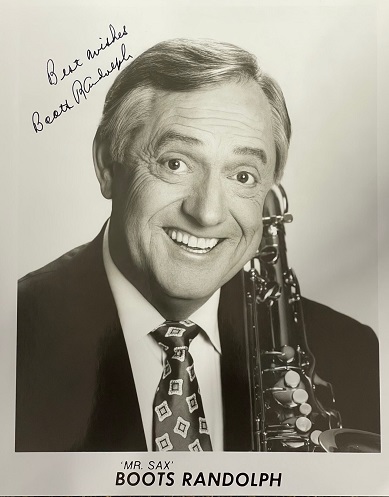
Homer “Boots” Randolph was born on this day in 1927. Boots Randolph was a Nashville sax player who performed solos on Roy Orbison’s “Mean Woman Blues” and Brenda Lee’s “Rockin’ Around The Christmas Tree.” He also played on many of Elvis Presley’s songs. He was often called Mr. Sax.

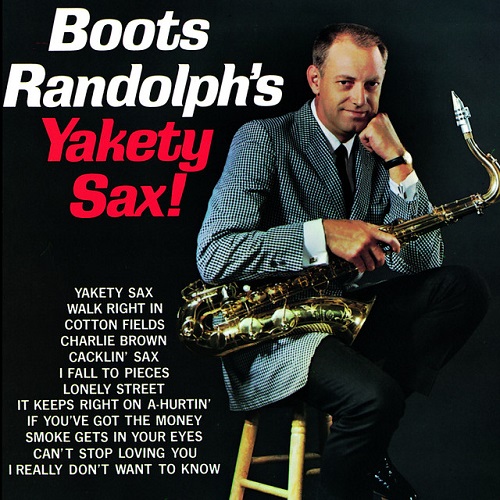
As a solo recording artist he placed four singles in the Top-100 between 1963 and 1967. The most successful of these was “Yakety Sax”, which reached #35 in 1963 and stayed on the charts for nine weeks.

The song had some influence by the Coaster’s hit, Yakety Yak, however, it will forever be connected to a British comedian. The song was popularized on The Benny Hill Show, where it played when Hill was being chased around by policemen and angry women. Because of its use on the show, it has appeared in many comedic skits on other shows over the years.

Happy Birthday, Boots!