Tune Tuesday

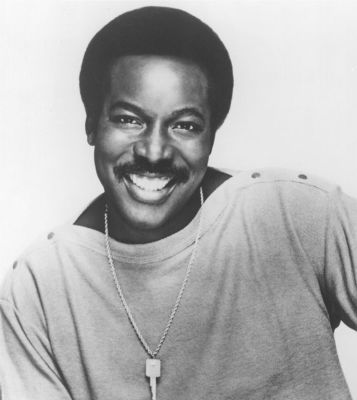
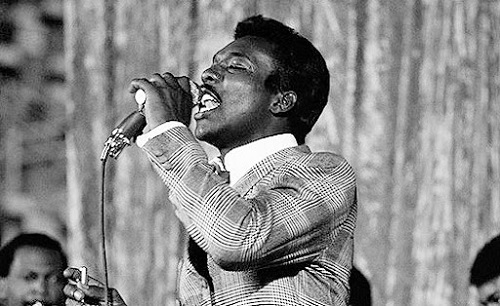
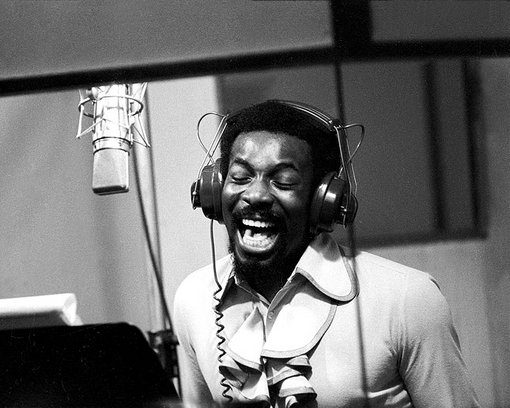
Happy Birthday to The Wicked Mr. (Wilson) Pickett who was born on this day in 1941.

He was born in Prattville, Alabama where he began singing in the Baptist church choir. He was the fourth of 11 children and eventually left to live with his father in Detroit in 1955. It was there that he joined a gospel group called The Violinaires. He toured with them for four years. He was lured by the success of gospel singers who had moved to the lucrative secular music market, joined the Falcons in 1959.

His work with the Falcons helped him to embark on a solo career. In 1965, he had his first hit “In the Midnight Hour,” which featured Steve Cropper and Donald “Duck” Dunn from Booker T & the MGs. Many hits followed including Land of 1000 Dances, Funky Broadway, and 634-5789.

It is hard for me to pick a favorite Wilson Pickett song, because they are all SO good. There is one song, however, that always sounds fresh to me. It is still a song that people dance to at parties and weddings. It always seems to be on the Top 200 list of songs that DJ’s get requests for, as well. That song? Mustang Sally!

According to Rolling Stone magazine’s Top 500 Songs, “Mustang Sally nearly ended up on the studio floor – literally. After Pickett finished his final take at FAME Studios in Muscle Shoals, Alabama, the tape suddenly flew off the reel and broke into pieces. But the session engineer, the legendary Tom Dowd, calmly cleared the room and told everyone to come back in half an hour. Dowd pieced the tape back together and saved what became one of the funkiest soul anthems of the ’60s.”

Happy Birthday, Mr. Pickett!!

Tune Tuesday

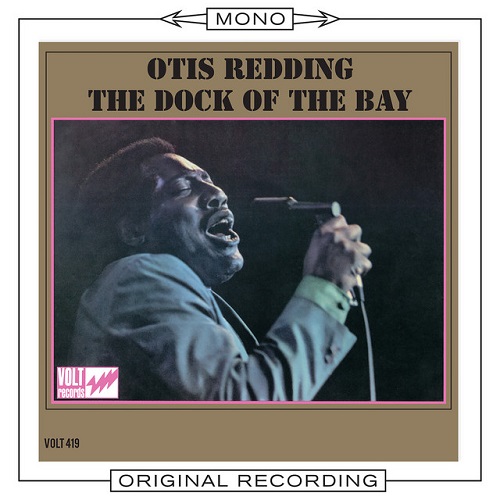
Music history was made on this day in 1968. Otis Redding’s Dock of the Bay reached #1 on the charts, making it the first ever posthumous single in the United States. Redding died in a plane crash just 3 months earlier in December of 1967. It was released on January 8, 1968.

The song was written by Otis and guitarist Steve Cropper (of Booker T & The MG’s).  Otis started writing the lyrics in August 1967 while staying on a rented houseboat in California. It was there where Redding started writing the lines, “Sittin’ in the morning sun, I’ll be sittin’ when the evening comes” and the song’s first verse, under the abbreviated title “Dock of the Bay.” In November of 1967, he completed the song in Memphis with Cropper and recorded it.

Allmusic states: Redding’s restrained yet emotive delivery is backed by Cropper’s succinct guitar playing. The song is somewhat different in style from most of Redding’s recordings. While discussing it with his wife, Redding said that he wanted it to “be a little different”, to “change his style”.

There were concerns that the song had too much of a pop feel. There were discussions of contracting the Stax gospel group the Staple Singers to do some background vocals. This never did happen. Otis considered the song “unfinished” and planned to finish it, but he died before he could do so.

After Redding’s death, Cropper mixed “Dock of the Bay” at Stax Studios. He added the sound of seagulls and crashing waves. This was was Otis had requested. He did so because those were the sounds he had heard staying on the houseboat.

Tune Tuesday

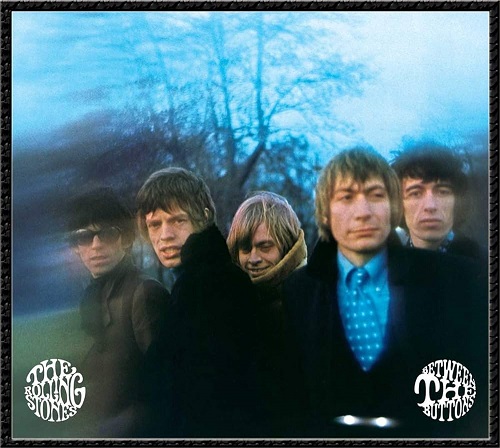
Today’s tune comes from the Between The Button’s album from the Rolling Stones.

It was on this day in 1967 that the Stones took Ruby Tuesday to #1. It was their fourth chart topper in the US.

Songfacts.com says that Keith Richards said of “Ruby Tuesday”:

“That’s one of those things – some chick you’ve broken up with. And all you’ve got left is the piano and the guitar and a pair of panties. And it’s goodbye you know. And so it just comes out of that. And after that you just build on it. It’s one of those songs that are easiest to write because you’re really right there and you really sort of mean it. And for a songwriter, hey break his heart and he’ll come up with a good song.”

Mick Jagger told Rolling Stone in 1995:

“‘Ruby Tuesday’ is good. I think that’s a wonderful song. It’s just a nice melody, really. And a lovely lyric. Neither of which I wrote, but I always enjoy singing it.”

This was supposed to be the B-side of “Let’s Spend The Night Together” but many radio stations shied away from that one due to the sexual implications, so they played “Ruby Tuesday” instead, helping make it a hit. It’s funny how pale in comparison the sexual implications of this song is compared to what actually gets played on the radio today!

Tune Tuesday

Today’s Tune Tuesday feature some silliness.

It was on this day in 1950 that the face of television changed forever and a blueprint for shows like Saturday Night Live was born. The first broadcast of Your Show of Shows happened 75 years ago.

The show starred Sid Caesar and Imogene Coca. It featured Carl Reiner and the talented Howard Morris. It was a 90 minute show that was broadcast live every week. The show’s writers included Mel Brooks, Selma Diamond, Neil Simon, and Mel Tolkin (just to name a few).

The show has been featured in several lists of the greatest television series. Carl Reiner has stated that the time he spent on Your Show of Shows was the inspiration for The Dick Van Dyke Show. Most of the series has been preserved to some extent, but only some sketches have been released on home video.

The show featured several regular musical sketches. In 1955, Rock and Roll was hitting the radio. One of the musical sketches was the mock rock group The Three Haircuts (Caesar, Reiner, and Morris). They were a vocal trio who always sang in unison and usually bellowed the lyrics. After this bit aired on TV, RCA rushed the guys into the studio to record a studio version of You Are So Rare To Me and released it.

This clip is the first time You Are So Rare to Me aired. They follow it with an even crazier song called Flippin’ Over You. Sit back and enjoy the lunacy that was Your Show of Shows with The Three Haircuts.

Tune Tuesday

Today We wish Juice Newton a Happy 73rd Birthday. She is one of those artists/songwriters who was very big in the 80’s and sort of disappeared. The truth is, she’s always been around, we just don’t hear her stuff thanks to a variety of things. One of those things is the mindset of corporate radio.

I have featured uptempo stuff from Juice before, but I wanted to feature her voice today. Her ballads really showcase her singing voice and one of my favorites is The Sweetest Thing. This song was written for Juice Newton by her music partner Otha Young (Robert O. Young) for her 1975 debut album Juice Newton and Silver Spur. She re-recorded it in 1981 for her groundbreaking album Juice.

Country singer Jamie O’Neal covered the song for her album of cover songs. She told songfacts.com:

“I think there’s songs, like ‘The Sweetest Thing,’ that’ll live on forever, and when you hear it, it takes you right back to where you were when that was a big hit for Juice Newton … I think that song stands the test of time and that’s what makes it a classic to me is the fact that everybody knows it. Not just in one little area of music, but across the board, everybody knows that song.”

The song was a Top 10 hit on three different Billboard charts: #1 on Adult Contemporary, #1 on Country and #7 on the Hot 100.

Happy Birthday, Juice!

Tune Tuesday

He began his career playing serious roles, but wound up being a comedy legend. Leslie Nielsen was born today in 1926. Most folks who are familiar with him know him going serious to funny. It was the opposite for me, as I first saw him in Airplane!, Police Squad, and the Naked Gun films first.

When I saw him in those early roles, I was blown away. He was a great actor! His performance in Forbidden Planet was amazing! Then I saw him pop up on TV shows like Alfred Hitchcock Presents, Gunsmoke, Voyage to the Bottom of the Sea, and even Columbo! Each time I saw him I was more and more impressed with him. He was also good as the captain in the movie The Poseidon Adventure. He could be funny, serious, mean, nasty, romantic and more!

In Airplane! he was hilarious. His deadpan delivery is exactly what the directors wanted and it worked. It worked so well, they had him play Lt. Frank Drebin in a short lived show called Police Squad.

The show only lasted 6 episodes, but it laid the groundwork for the Naked Gun films, which featured him again as Drebin.

In his honor today, here is the Theme from Police Squad (and Naked Gun).

Happy Birthday, Leslie!

Tune Tuesday

Charles Edwin Hatcher was born on this day in 1942. You and I know him better as Edwin Starr.  He was born in Nashville, moved to Cleveland and eventually to Detroit. 

In 1957, he formed the Doo Woo group, the Future Tones.  Soon after, he was called to serve in the US Army.  He spent most of his time in Europe.  When he was discharged, he decided that he wanted his career to be in music.

He joined up with Bill Doggett’s group.  Bill was known for his hit Honky Tonk Part  2. Starr’s stage name was suggested to him by Doggett’s manager, as he didn’t think Charles Hatcher would catch on.

In 1965, Edwin made his solo debut with his first single for Ric-Tic Records.  The James Bond series was quite popular at the time.  Starr’s first single was a play on that entitled Agent Double-O-Soul.

Songfacts says that instead of being a spy, Edwin is “a sophisticated cat that brings soul music to the masses. He doesn’t have to go undercover!” I think that is a perfect description!

When I first started in radio back in 1988, it was at an oldies station.  My dad gave me a list of songs that he asked me to look for.  Most of them were songs he grew up loving.  Many were also big hits by local artists in Detroit.  Agent Double-O-Soul was on that list.

Thanks to that list, I was introduced to songs that I was unfamiliar with.  Those songs have since become some of my favorites. 

When Ric-Tic Records went out of business, they sold Starr’s contract to their much larger rival, Motown. His first few singles there flopped.   But in 1969 he scored with “Twenty-Five Miles” and in 1970 he had a #1 hit with”War.” He ended up leaving Motown in the mid-’70s. In 1983 he moved to the UK, where he performed until 2003, when he died of a heart attack at 61.

Tune Tuesday – Fame

It was on this day in 1982 that the TV adaptation of Fame first aired on NBC. The TV series was based on the 1980 hit movie, which started Irene Cara as Coco Hernandez. 

The movie is about students at Fiorello LaGuardia High, also known as the New York City High School for the Performing Arts. It’s a real school whose alumni include Robert De Niro, Jennifer Aniston, Liza Minnelli and Nicki Minaj.

Irene Cara had a top five hit in the US with “Fame,” while it went to number one in the UK.  Did you know another familiar voice is on the track?  That familiar voice contributed quite a bit to the song.

From Song facts:

A very distinctive feature of this song is the background vocals that trail out the word “remember” after the line “baby, remember my name.” It was Luther Vandross who came up with that part and sang it with backup singers Vivian Cherry and Vicki Sue Robinson.  Vandross was not yet a solo star, but was in demand as a backup vocalist. He was the contractor on this session, meaning he was in charge of the backup vocals.

Songwriter Dean Pitchford explained in his Songfacts interview: “He came in, listened down to the track. We got to the end of the chorus and he said, ‘Back it up, back it up! Check this out.’ And Irene Cara sang, ‘Baby remember my name,’ and he went, ‘Remember, remember, remember…’ and we all went, ‘Oh! That’s terrific!’ Luther Vandross is the one who not only came up with ‘remember, remember, remember…’ but he also stacked the voices on top of, ‘I’m going to learn how to fly high.’ He did that. He made a couple of other contributions around the edges, but the ‘remember’ was the major one.”

Here is the movie version:

The TV series starred many of the films stars, including Debbie Allen.  For television Erica Gimple played Coco and also sang the theme song in the first four seasons.

In Seasons 5 and 6, Gimple left the show.  The theme was then performed by Loretta Chandler, who played Dusty.

Usually, there is a big difference in cover versions, but honestly, to me there is very little difference between these versions. What do you think?

Tune Tuesday

Donna Adrian Gaines was born today in 1948. You probably know her better by her stage name – Donna Summer. She was affectionately called the “Queen of Disco.”

She gained success in 1976 with Love To Love You, Baby. In 1978 she acted in the film, Thank God, It’s Friday where she sang, “Last Dance.” She had her first #1 song with MacArthur Park and 5 hits in 1979.  Among them were Hot Stuff, Bad Girls, and No More Tears (with Barbra Streisand.

Her label (Casablanca) wanted her to record nothing but Disco.  She wanted to do other types of songs.  They wouldn’t budge and she parted ways with the label in 1980.

In 1983, she released the album, She Works Hard For The Money. The title track would go to #3 on the Billboard Hot 100 chart and hit #1 on the R&B chart.

With many Summer songs to pick from, I chose She Works Hard For the Money because there’s a great story behind it.  From Songfacts.com:

This song was based on a true-to-life experience. After the Grammy Awards in 1983, Donna Summer was at an afterparty at Chasen’s restaurant, a Hollywood hotspot (it closed in 1995). She went to the bathroom and saw the attendant, Onetta Johnson, taking a nap with a small TV on. Summer startled her from her nap, and Onetta told Donna she worked two jobs and was really tired. Summer thought to herself, “Wow, she really works hard for her money.

Knowing she had the makings of a hit, she grabbed some toilet paper and started writing her ideas. Later that night while at home thinking about Onetta, Summer wrote the song in about 20 minutes. The song became a tribute to hard-working women everywhere.

Onetta Johnson, the bathroom attendant from Chasen’s, appears on the back cover of the album. The first line of the song says her name: “Onetta there in the corner stands…”

Donna died of lung cancer on May 17, 2012. She was 63. She had an apartment near Ground Zero the day of the 9/11 attacks.  She had quit smoking long before and many say the cancer was from the fumes in the area after the attacks. 

Happy Heavenly birthday, Donna Summer.

Tune Tuesday

Today, I want to recognize the birthday of a man who is synonymous with holiday music and my childhood.  He stood on the podium and conducted many of the holiday songs that played on the radio and over the mall PA systems every year. 

Today would be the 130th birthday of Arthur Fiedler, the man who made the Boston Pops Orchestra known throughout the country.  He took the helm of the BPO in 1930 (He was the 19th conductor) and held that position for 50 years.

Arthur Fiedler

Believe it or not, under the direction of Fiedler, they say the Boston Pops Orchestra recorded more than any other orchestra in the world!  They recorded most of their material for RCA Victor and had sales of over $50 million!

The first recording was done in Boston Symphony Hall in 1935.  Recordings included the first complete recording of Gershwin’s Rhapsody in Blue, the music of Leroy Anderson, Tchaikovsky, Beethoven, Bach, and even the Beatles!

Fiedler and the Pops recorded three Christmas albums.  Today, you can probably find all three in one CD collection.  As I said earlier, many of those songs are familiar to people just because they played in stores during the holidays.  The ones that stick out to me are:

Santa Claus is Coming to Town

Rudolph, The Red Nosed Reindeer

…and Sleigh Ride

Those are just three songs that are instantly recognizable as Fiedler and the Pops for me.  Sleigh Ride was a piece composed by Leroy Anderson.  It is another Anderson piece I want to spotlight today.

As a senior in high school, I had the opportunity to play A Christmas Festival by Leroy Anderson.  The version we played was arranged for band instead of orchestra.  It was a thrill for me, as I had loved the song long before we played it.

We had one of the Boston Pops Christmas albums and I would listen to it with headphones on.  (Now, I will embarrass myself) I used to “conduct” A Christmas Festival with a stick in my room.  That piece really stuck out to me.

I found out that in 1950 Arthur Fiedler asked Leroy Anderson to write a special concert piece for a Christmas recording he and the Pops were doing. Anderson chose eight popular Christmas Carols and Jingle Bells and created an amazing Christmas overture.

See if you can name them all…

Happy birthday, Arthur Fiedler!!