Having been able to get out and help with my daughter’s T-ball games over the past couple weeks has me in a baseball mood. My Detroit Tigers are not doing as well as I had hoped, but there is a lot of baseball left in the season.
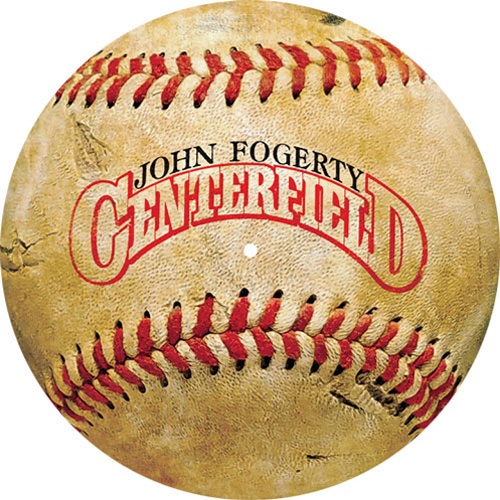
For Tune Tuesday, I picked a great baseball song that is played in stadiums all over the country. “Centerfield” by John Fogerty, who coincidentally turns 79 today.
Fogerty took quite a bit of time off after leaving CCR and two solo albums. When it was time for his comeback, he called the album Centerfield before he’d even written the song. He says the song basically wrote itself. “I was practicing a song, and I came up with that guitar riff that starts the song,” he said. “I went into the studio, playing the guitar with a drumbeat and it just came out.”
The song was the B-side of “Rock and Roll Girls,” and only reached #44 on the charts. However, because of the play it gets at ball games, it certainly has become well known!
In 2010, John Fogerty became the only musician to be celebrated at the Hall of Fame Induction Ceremony when “Centerfield” was honored by the National Baseball Hall of Fame. It is a baseball classic.
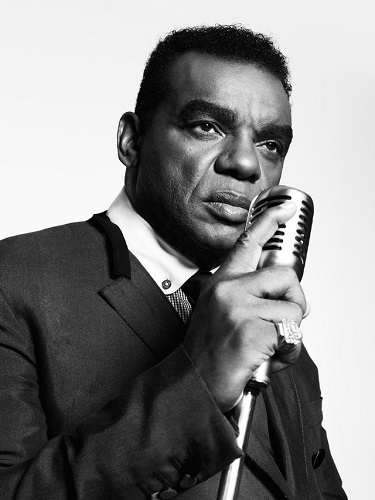
Today the great singer, songwriter, and producer Ronald Isley celebrates his 83rd birthday. He was born in Cincinnati, Ohio and like many singers, started singing in the church choir. After he appeared on a TV amateur hour show, he and his brothers decided to move to New York to continue their musical careers.
The Isley Brothers had some success recording some doo-wop songs, but in 1959 they signed with RCA records and released their smash hit “Shout!” They would eventually sign with Motown records, but always felt as though they never got the attention or promotion that other groups on the label received, so the split from Motown and returned to their own label – T-Neck Records, which they started in 1964. This allowed them a lot more control over what they recorded.
In one interview, Ronald Isley says he wrote this song while dropping his daughter off at school one day. He didn’t want to forget the lyrics so he hummed it in his head and rushed straight to his mother’s house to write it out. He sang it for his eldest brother O’Kelly, who thought it to be a hit, so they set up studio time to record it. They were right – it was a hit. It shot straight up to number 2 on the charts (prevented by The Age of Aquarius from hitting number 1).
The song’s success led to some really nasty legal battles. Berry Gordy of Motown Records filed a lawsuit claiming The Isleys were still under contract when they recorded It’s Your Thing. The court case went on for 18 years before a federal judge ruled that The Isley Brothers had recorded it after the Motown contract had lapsed. I have to wonder if Gordy pursued the lawsuit for so long because of the salt that the Isleys rubbed in his open wound. You see, in February of 1970 the Isley Brothers became the first former Motown act to win a Grammy Award for Best R&B Vocal Performance by a Duo or Group.
To me, this song remains one of the “funkiest” songs in history! There are so many great things happening instrumentally in the song, and Ronald’s vocal is fantastic!
Happy Birthday, Mr. Isley!
It’s Your Thing
It’s your thing, do what you wanna do I can’t tell you, who to sock it to It’s your thing, do what you wanna do I can’t tell you, who to sock it to
If you want me to love you, maybe I will Believe me woman, it ain’t no big deal You need love now, just as bad as I do Make’s me no difference now, who you give your thing to
It’s your thing, do what you wanna do I can’t tell you, who to sock it to It’s your thing, do what you wanna do I can’t tell you, who to sock it to
It’s your thing, do what you wanna do I can’t tell you, who to sock it to It’s your thing, do what you wanna do I can’t tell you, who to sock it to
I’m not trying to run your life, I know you wanna do what’s right Give your love now, to whoever you choose How can you lose, with the stuff you use now
It’s your thing, do what you wanna do I can’t tell you, who to sock it to It’s your thing, do what you wanna do Don’t let me tell you, who to sock it to
It’s your thing, I do what I wanna do I can’t tell you, who to sock it to
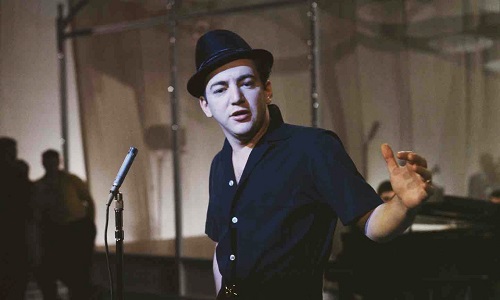
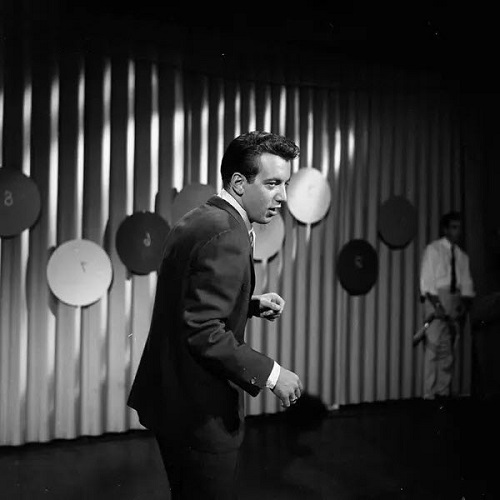
The amazing Bobby Darin was born May 14, 1936. Bobby was a phenomenal talent. He was a lot like Sammy Davis Jr. in that he was a songwriter, a singer, an actor, and played multiple instruments. He caught the attention of many, including George Burns, with whom he was good friends.
He began his career writing songs for Connie Francis, and eventually recorded his first song, “Splish Splash,” which was a hit in 1958. He followed it with many other hits including “Dream Lover,” “Beyond the Sea,” “If I Were a Carpenter”, “Clementine,” “Things,” and “Mack the Knife.” His music was such a big part of that early rock and roll, however, thanks to Mack the Knife, he also had great success with some pop standards.
With so many great songs to pick from, I decided on one that I just love. The song was not exclusive to Bobby Darin, but his version is one of the best. I am talking about “More.”
“More” was the Theme to a movie called Mondo Cane, which is a documentary. According to Wikipedia, the film “uses a variety of music to accompany various segments. Some melodies are used repeatedly, in different styles, each named for the part of the movie where the music is used. Of the 15 music tracks on the soundtrack album, one melody is presented 6 times, another melody 2 times. The melody which became known as ‘More’ is presented 4 times.”
The song was first heard in the US as a pop instrumental hit by jazz trombone player Kai Winding in 1963. The instrumental version went to #8 on Billboard’s Hot 100 Chart. Bobby cut his version of the song for his album “From Hello Dolly to Goodbye Charlie.”
The song works so well as a ballad, but Bobby’s take on it swings and is so good! I love the lyrics and dedicate this one to my wife …
More
More than the greatest love the world has known This is the love that I give to you alone More than the simple words I try to say I only live to love you more each day
More than you’ll ever know My arms long to hold you so My life will be in your keeping Waking sleeping laughing weeping
Longer than always is a long long time But far beyond forever you’ll be mine I know I’ve never lived before And my heart is very sure, no-one else could love you more
More than the greatest love the world has known This is the love that I give to you alone More than the simple words I try to say I only live to love you more each day
More than you’ll ever know My arms long to hold you so My life will be in your keeping Waking sleeping laughing weeping
Longer than always is a long long long time But far beyond forever you’ll be mine I know I’ve never lived before And my heart is very sure, no-one else could love you more
There are many biographies available about the life of Bobby Darin. His son, Dodd, wrote one entitled Dream Lovers which talks much about his dad and his mom (Sandra Dee). It’s an honest read.
Bobby had health issues throughout his life and his heart already had issues. In 1973, he neglected to take the antibiotics he was prescribed for his heart before a dentist visit. He ended up developing sepsis which spread throughout his body. This made him weak and affected one of the valves in his heart. He checked himself into the hospital for another open heart surgery (he had two heart valves replaced in 1971). After a six hour surgery, he died in the recovery room on December 20, 1973. He never regained consciousness. Bobby Darin was 37 years old.
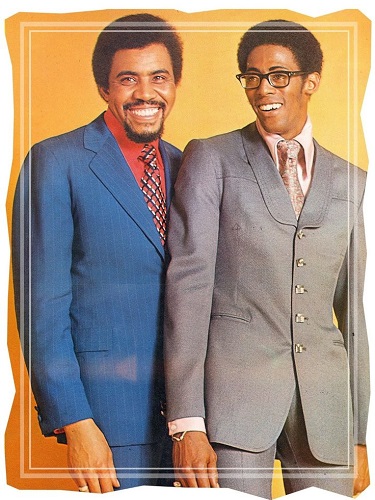
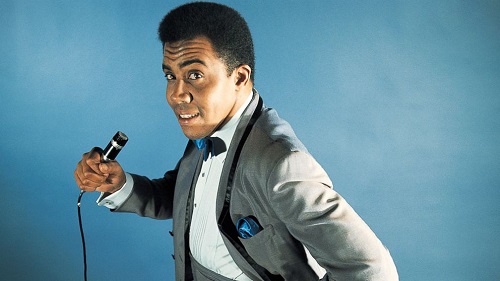
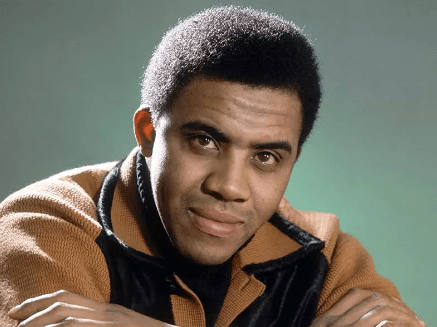
I’ve played a lot of Motown records in my radio career, and today I want to feature someone who should have been bigger than he was. The great Jimmy Ruffin was born on this day in 1936. I always felt that Jimmy was overshadowed by his younger brother, David Ruffin, who of course was the lead singer for the Temptations.
Jimmy actually sang at Motown records as a session singer in 1961. He was drafted into the army and upon his return to Motown he was offered the chance to join the Temptations to replace singer Elbridge Bryant. As luck would have it, they heard his brother Davis sing and offered him the gig instead.
Jimmy returned to his solo career and didn’t have much success. In 1966, he heard the song “What Becomes of the Brokenhearted.” The song was written by William Weatherspoon, Paul Riser, and James Dean (not the actor), who were Motown writers. They had originally intended the song for The Spinners, another Motown group, but Jimmy persuaded them to let him record it instead. It would go on to become his biggest hit!
Some say that the writers wanted to create a song that expressed the pain and sorrow of losing a loved one. However, they said that they were influenced by the soul music of the time, especially by singers like Otis Redding and Sam Cooke. The song also reflects the social and political turmoil of the 1960s. At the time the US was involved in the Vietnam War and the civil rights movement was facing a lot of resistance.
The song was recorded in Motown’s Studio A and Jimmy was accompanied by the instrumentation of Motown’s in-house studio band, the Funk Brothers, and the joint backing vocals of Motown session singers the Originals and the Andantes. The Originals were a quartet who backed other Motown singers like Marvin Gaye, Stevie Wonder, and Diana Ross. The Andantes were a trio of women who often backed The Four Tops, The Supremes and the Temptations.
The song was released on June 3, 1966 as a single on the Soul label, a subsidiary of Motown. It was also included on Jimmy Ruffin’s album Jimmy Ruffin Sings Top Ten, which was released in 1967. It was a hit in both the US and the UK, reaching No. 7 on the Billboard Hot 100, No. 6 on the Billboard R&B Singles chart, and No. 8 on the UK Singles Chart in 1966.
Jimmy Ruffin continued to record for Motown and had several more hits, but “What Becomes of the Brokenhearted” remains forever connected to him and his biggest hit. Jimmy passed away on November 17, 2014, after a long illness at the age of 78. He is remembered as one of the most soulful singers of Motown.
“What Becomes Of The Brokenhearted”
As I walk this land of broken dreams I have visions of many things But happiness is just an illusion Filled with sadness and confusion
What becomes of the broken hearted Who had love that’s now departed I know I’ve got to find Some kind of peace of mind Maybe
The roots of love grow all around But for me they come a tumblin’ down Every day heartaches grow a little stronger I can’t stand this pain much longer
I walk in shadows searching for light Cold and alone, no comfort in sight Hoping and praying for someone to care Always moving and going nowhere
What becomes of the broken hearted Who had love that’s now departed I know I’ve got to find Some kind of peace of mind Help me
I’m searching though I don’t succeed But someone look, there’s a growing need All is lost, there’s no place for beginning All that’s left is an unhappy ending
Now what becomes of the broken hearted Who had love that’s now departed I know I’ve got to find Some kind of peace of mind
I’ll be searching everywhere Just to find someone to care I’ll be looking everyday I know I’m gonna find a way Nothing’s gonna stop me now I’ll find a way somehow I’ll be searching everywhere…
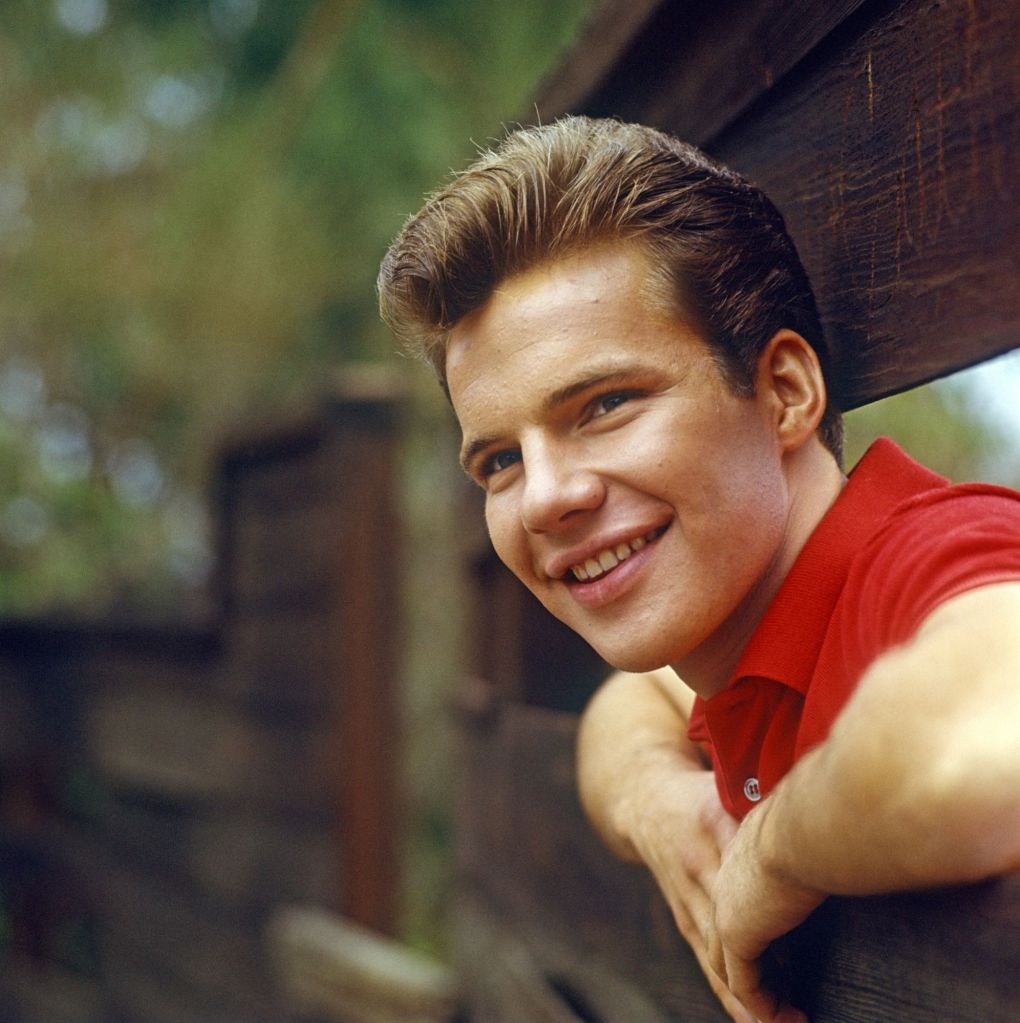
Bobby Vee was born on this day in 1943. In his career he had quite a few hits under his belt, but had it not been for a tragedy, the world may never have known him.
Anyone familiar with “The Day the Music Died,” remembers that on February 3, 1959, three of the four main headliners of the touring “Winter Dance Party” were killed in an airplane crash. Those three singers were Buddy Holly, Richie Valens, and The Big Bopper. Dion, the fourth headliner, chose not to travel by plane to the next city on the tour. That city was Moorhead, Minnesota.
The show in Moorhead went on as scheduled, but organizers searched for a musical act to fill in for Buddy Holly. Bobby Vee (who was 15 at the time) gathered up some musicians from Fargo (which includes his brother) and they performed that night. This was the jumpstart of his career.
A couple years later, Bobby recorded a tribute album to Buddy. In the liner notes, he recalled Holly’s influence on him and the events surrounding Holly’s death, describing how he had looked forward to attending the concert, how the local radio station put out a call for local talent to fill in after the disaster, and how Vee’s recently organized group, modeled on Holly’s style, had to make up a name (the Shadows) on the spot.
In 1963 Bobby was signed by American Bandstand to headline a tour called Dick Clark’s Caravan of Stars national U.S. tour, scheduled to perform its 15th show on the night of November 22, 1963, at the Memorial Auditorium in Dallas, Texas. The event, however, was cancelled after U.S. President John F. Kennedy was assassinated that afternoon while riding in his motorcade through downtown Dallas.
In 2012, Bobby announced publicly that he had been diagnosed with Alzheimer’s and sadly would have to withdraw from the music business. Four years later, on October 24, 2016, Vee died from complications of the disease at the age of 73.
He had hits with Devil or Angel, Run to Him, Rubber Ball, and hit #1 with Take Good Care of My Baby. My favorite Bobby Vee song is The Night Has a Thousand Eyes. The song came out in December of 1962 and went to #3 on the charts.
I have always liked this song melodically and for all of the little musical things that are happening in the background. Those little string licks that play off his vocal, the drummer’s cymbal rhythm during the chorus, and the syncopated lines at the end of the chorus always sound so good to me!
The Night Has a Thousand Eyes
They say that you’re a runaround lover Though you say it isn’t so But if you put me down for another I’ll know, believe me, I’ll know
Cause the night has a thousand eyes And a thousand eyes can’t help but see if you are true to me So remember when you tell those little white lies That the night has a thousand eyes
You say that you’re at home when you phone me And how much you really care Though you keep telling me that you’re lonely I’ll know if someone is there
Cause the night has a thousand eyes And a thousand eyes can’t help but see if you are true to me So remember when you tell those little white lies That the night has a thousand eyes
One of these days you’re gonna be sorry Cause your game I’m gonna play And you’ll find out without really tryin’ Each time that my kisses stray
Cause the night has a thousand eyes And a thousand eyes will see me too And no matter what I do I could never disguise all my little white lies Cause the night has a thousand eyes
So remember when you tell those little white lies That the night has a thousand eyes
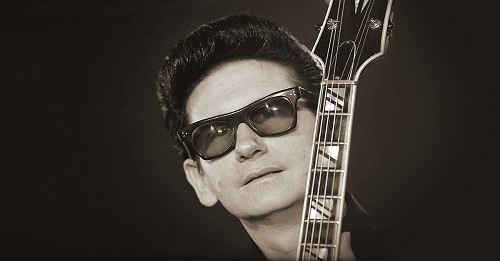
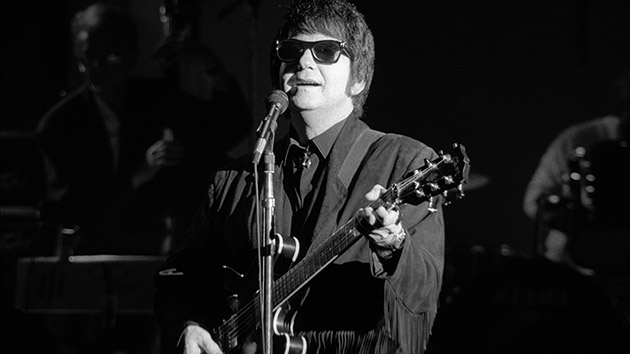
For Tune Tuesday today, we celebrate the birthday of one of the greatest singers of all time. Roy Orbison was born on this day in 1936. A few years ago, I wrote a blog about him and this may or may not be a bit of a rehashing of that.
Roy Orbison is a rock and roll legend. I refuse to debate this. It is a fact. The Beatles and Elvis Presley (both legends in their own right) have stated on record that Roy was a major influence on their music. Roy’s music was different – it had it’s own style and a certain darkness to it. My first exposure to Roy Orbison was when I was about 4 or 5 years old.
I remember my dad had an album of Roy’s Greatest Hits. My favorite song as a kid was Dream Baby. I didn’t know that was the name of it. I know this because when I asked him to play it, I would ask for it by singing the opening bass line: “Daddy, play ‘boom boom boom, bum bum boom.’” I remember the first song on the album was Candy Man, which started with a harmonica. That is the instrument Roy asked for as a kid.
When asked hey wanted for his sixth birthday, Roy told his parents he wanted a harmonica. Luckily for the music industry, his father bought him a guitar instead. While some stories differ, most biographies claim that Roy learned how to play from his father Orbie Lee Orbison. Some sources say that he learned from his Uncle Charlie, Orbie’s brother.
He formed a band while in Wink, Texas called the Wink Westerners and that band played some high school dances. While in college, two friends of his had written a song called “Ooby Dooby.” They began playing that in their shows and because of their success, they got their own radio show on station KMID. In 1955, the band got their own TV show and artists came to play and sing on it. Among them, Elvis Presley and Johnny Cash.
Roy pulled Johnny aside and asked for advice. He wanted to know how to get a record released on the radio. Johnny suggested that he call Sam Phillips over at Sun Records in Memphis. Johnny gave Roy the number and sure enough Roy called. I am sure he was not expecting what happened. Sam Phillips answered the phone and after a brief conversation, Sam hung up on him, but not before telling Roy, “Johnny Cash doesn’t run my record company!”
Roy eventually found a place to record and recorded “Ooby Dooby” with his band, now called the Teen Kings. The song was released in 1956 and Roy took it to a well known record dealer named Cecil “Poppa” Hollifield. He heard the song and immediately called a “connection” he had in Memphis and played him the record over the phone. His connection asked for a copy of the record, and three days later he called Poppa up to tell him he wanted the Teen Kings in Memphis in three days to record in his studio. That connection was none other than Sam Phillips of Sun Records!
That deal got him out on tour with Johnny Cash, Faron Young, Carl Perkins, and Johnny Horton among others. In 1958, Roy was asked to tour with the Everly Brothers. During the tour, the Everly Brothers told Roy they needed a new single and asked if he had any songs. He picked up his guitar and sang the song Claudette. They liked it, and asked him to write down the words and chords. The song was the B-side of All I Have To Do Is Dream. Roy had some of his other songs recorded by artists like Jerry Lee Lewis, Buddy Holly, and even Ricky Nelson.
In 1959, Roy was signed to an independent label called Monument. It was at this label that so many of Roy’s big hits came, starting with Uptown. That was followed by Only The Lonely (which reached #2), Blue Angel, and I’m Hurtin’. What followed was Roy’s first #1 song, Running Scared.
Roy had hoped to change up the “pop” sound and try something different. They recorded the song twice and he was disappointed with the two takes, so they cut it again. Instead of using a falsetto voice, Roy sang the high natural A and nailed it. The accompanying musicians were awestruck and had never heard anything like it. Producer Fred Foster said “Nobody had ever hear anything like it before!”
What followed was four solid years of top 40 hits. Those hits included Crying, Candy Man, Dream Baby, Working for the Man, In Dreams, Pretty Paper, Leah, Blue Bayou, Mean Woman Blues, and Its Over. His success got him a spot opening up for some concerts in England. He was the opening act for a few guys who were known as The Beatles (they had yet to become a big thing in the US). The tour sold out in minutes, and on the first night of the show, they say that Roy played 14 encores before the Beatles ever got on stage!
In 1964, Roy recorded what is probably his biggest hit, Oh Pretty Woman. It would be his last big hit while at Monument records. Touring hurt his personal life, and his wife Claudette began having an affair. One day while writing with songwriter Bill Dees, Claudette entered the room and said that she was going to Nashville. Roy asked her if she had any money, and Dee’s replied, “A pretty woman never needs any money.” With that phrase, and about 40 minutes, they wrote Oh, Pretty Woman, which went to number 1 in almost every country in the world.
In 1966, Claudette was killed when a pickup truck pulled out in front of her and she hit the door. She died instantly. Two years later, Roy was on a tour in England and he received a call that his home had burned down. As if that wasn’t enough bad news, he was also told that his two oldest sons were killed in the fire. He tried to cope by keeping himself busy with work. He starred in the film The Fastest Guitar Alive, which ended up being his only lead role.
Roy changed labels a few times after this and eventually re-signed with Monument. In 1987, Roy Orbison was inducted into the Rock and Roll Hall of Fame. Bruce Springsteen was there to do the honors. A TV special followed. Roy had always wanted to do one and this special included some powerful special guests: Elvis Costello, k.d.Lang, Tom Waits, Bonny Raitt, Jennifer Warrens, Jackson Brown, and Bruce Springsteen. The special was called Roy Orbison and Friends – A Black and White Night Live. It was aired on cable and released on video and became one of Roy’s great concerts.
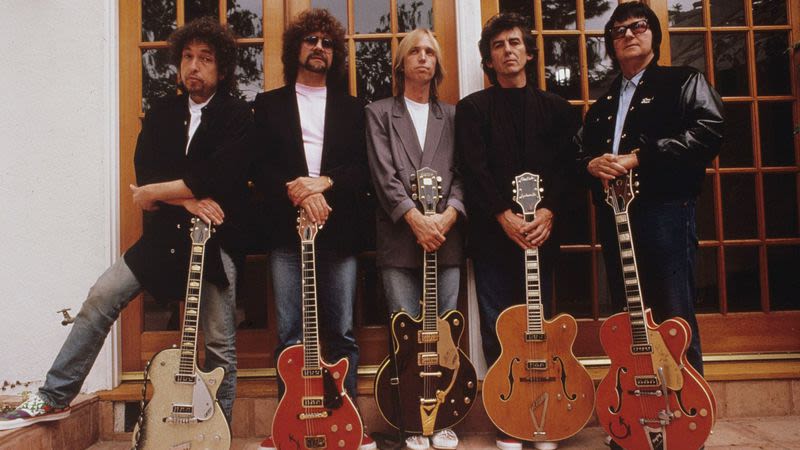
Jeff Lynne of ELO was busy producing George Harrison’s Cloud Nine album, and was working on Tom Petty’s and Roy’s albums at the same time. This led to them all getting together with Bob Dylan for the Traveling Wilburys project which was a huge success! Handle With Care was a big hit from the album.
In late 1988, Roy put the finishing touches on the Mystery Girl album. It was set for release in 1989. There would be a world tour to support the project. The album would include the smash hit “You Got It”. On December 6, 1988, Roy was complaining of chest pains. Just before midnight, he had a heart attack and collapsed at his mother’s home. Roy Orbison died at the young age of 52.
I was still a senior in high school and I was going to WKSG to rip news and type up stories for the news director. I would stay till 6am and then head to school. I remember going to the AP wire and seeing the “URGENT” breaking news that Roy had died. We were an oldies station and this was big news. I remember when we broke the news. It is one of those moments I will never forget.
You Got It was released after Roy’s death and reached the top 10. One of the coolest tributes to Roy was when the Traveling Wilburys released the song End of the Line. In the video, the group is on a train singing. When Roy’s vocal comes on, the camera is on a rocking chair in which Roy’s guitar is sitting. Next to it, is a framed photo of Roy. Powerful!
Back to the Wilburys for my song choice for this blog. A song that was supposed to be a group song on the album was You’re Not Alone Anymore. After rehearsing it a bit and trying a few things, it was decided that there was really only one voice that could do the song justice, and that was Roy. It is an amazing vocal and an amazing song!
Roy Orbison is a legend. His music was like no one else. His style was like no one else. His vocals were indescribably beautiful, haunting, and amazing. Heaven’s choir is blessed to have him in their baritone section. Happy Birthday, Roy!
I am a computer dummy. I can type and print things, but when it comes to certain things, I am clueless. Therefore, I am writing this in hopes that one of my amazing readers/followers might be able to help me.
As many of you know, I have a few features here on my blog (Tune Tuesday, Book Recommendations, on occasion Friday Photo Flashback, and a few others I may bring back). I have been thinking about creating a couple other weekly features, but I’d like to create some kind of logo for them.
Do you know what I’m talking about? Many bloggers have a picture with the title of their feature on it that they designed. It is the picture that will be at the top of that particular blog post. The Daily Dose of Scripture might have a Bible on it with those words. Manic Monday Moaning might have a guy pulling out his hair and spilling coffee. Some bloggers are doing the 2024 April A to Z challenge and that has it’s on graphic.
I was hoping that (if it is easy enough) one of my readers might want to help me out with creating some. (If you want to suggest a free app or cheap way to do it myself, you can, but I’m still not sure I’d be able to figure it out.) I would certainly make sure that you are mentioned/thanked in the blogs that I use the graphic, if you choose to give me a hand.
If you are interested or want to offer some thoughts on how to do it, you can comment here or drop an email to: nostalgicitalian@yahoo.com
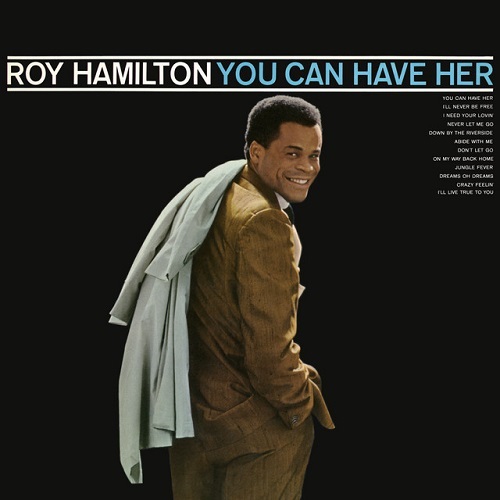
Today’s Tune Tuesday song is by a guy who should have been bigger than he was – Roy Hamilton.
Roy was born in Georgia on this day in 1929. He found success in 1953 with the song You’ll Never Walk Alone from the movie Carousel. It went to number 1 on the R&B chart and stayed there for 8 weeks. When he performed the song on the Ed Sullivan show, it got him more attention. His record label rushed him in to record other songs including Unchained Melody (which was a hit for Al Hibbler). In 1955, his version held the top spot on the R&B chart while, on the pop chart, it had reached the number six spot. It was the second number-one R&B hit of his career as well as the first, and only, top-ten US pop hit of his career.
In 1956, Roy developed a lung condition that was compared to tuberculosis and announced an indefinite retirement from show business. A year later, when he was in better health, he resumed his career, but pop standards weren’t so hot anymore. By this time, Rock and Roll had made the scene. So, in late 1957, Epic coaxed Hamilton into recording “Don’t Let Go”, an R&B rocker produced by Otis Blackwell (who wrote Don’t Be Cruel and All Shook Up for Elvis). By early 1958, “Don’t Let Go” had become the second US top-15 pop hit of Hamilton’s career and the first top-40 hit ever recorded in stereo.
By the mid 1960’s, sadly, Roy’s career was on the down side. In 1969, he made his last recordings at the same studio where Elvis was recording. About 6 months later, he suffered a cerebral hemorrhage while at home and was in a coma for a week before he was taken off life support. Roy was 40 years old when he died.
In a 2017 documentary for the BBC, Hamilton’s son Roy Hamilton Jr. revealed that Elvis sent Roy’s wife, Myrna, a rose every day Hamilton was in the hospital. When Roy passed away from complications of his stroke, Presley sent Myrna flowers for the following six months.
Today, I wanted to share his last hit record – You Can Have Her. In 1961, the song spent 10 weeks on the Billboard Hot 100, reaching No. 12, while reaching No. 6 on Billboard’s Hot R&B Sides chart. The lyrics tell the story of a man who’s love has left him for someone else. It is a song that at one time hit home for me and led to a moment I still am not very proud of.
I once had to DJ a wedding for the sister of my ex-girlfriend. It was an incredibly awkward time for me. By the time of this wedding, my ex had remarried and had a child. Throughout that evening, I avoided looking at her as much as I could. I remember all of the emotions and they got the best of me. During a set of uptempo oldies, I snuck You Can Have Her into the mix. This would certainly be a song that no one at this party would know. Oh sure, they danced to it, but it was literally played for … my own satisfaction. Not one of my best moments.
Anyway, I digress. Roy Hamilton had SO many great songs that have long been forgotten. If you get the chance to listen to more of his stuff, I encourage it. Here is You Can Have Her:
You Can Have Her
Well, you can have her, I don’t want her, She didn’t love me anyway. She only wanted someone to play with But all I wanted was love to stay.
Well, you get stuck with the wrong woman There’s only one thing that you can do: Just dig a hole and jump right in it, And pull the ground right over you.
[Chorus:] Well, you can have her (you can have her) I don’t want her ( I don’t want her), She didn’t love me (didn’t love me ) anyway (anyway). She only wanted (only wanted) someone to play with (one to lay with) But all I wanted (all I wanted) was love to stay (was love to stay).
The girl I love, she, up and left me, She ran away with my best friend. Comes home at night just for an hour When day light comes she’s gone again.
[Chorus]
Life without love is mighty empty, But confession’s good for the soul. I’d rather have love that I can cling to Than have the world and all of it’s gold.
(You can have her) you can have her, (I don’t want her) I don’t want her, (She didn’t love you) She didn’t love me, (anyway) anyway. (She only wanted) she only wanted (someone to play with) someone to play with (But all I wanted) Ohh! (Was love to stay) Ohh!
You can have her (you can have her) I don’t want her (I don’t want her) She didn’t love me (didn’t love me) anyway (anyway) She only wanted (only wanted) someone to play with (someone to play with) But all I want (all I want) All I want (all I want) All I want (all I want) All I want (all I want)…
Yesterday a New Orleans R&B legend passed away. Clarence “Frogman” Henry passed away at age 87. The New Orleans Jazz & Heritage Foundation announced his death but provided no other details. He was scheduled to perform at the New Orleans Jazz & Heritage Festival later this month.
Clarence’s biggest hit was one that I remember playing over and over as a kid. He recorded “Ain’t Got No Home” when he was only 19 years old. In the song he sings as a boy, a girl, and frog. You read that right – a frog. He croaks a verse as a frog which, of course, led to the “Frogman” nickname. In 1956 the song hit No. 20 on the U.S. pop charts and No. 3 on the R&B charts.
He toured and continued to record, but only had two other minor hits. One was a cover of the Bobby Charles song “(I Don’t Know Why I Love You) But I Do” from 1961.
The other minor hit was also from 1961 and also a cover, “You Always Hurt The One You Love.”
His success was enough to land him quite a gig – opening for the Beatles!!
Frogman opened for the Fab Four in 1964 on eighteen dates across the US and Canada. That’s not a bad bill to be on!
He remained a popular entertainer at New Orleans clubs along Bourbon Street until 1981, when he retired from the grueling club circuit. He continued to be a crowd-pleaser at the Jazz & Heritage Festival. Even though he hadn’t had a hit in years, his name still drew big crowds.
In April 2007, Henry was honored for his contributions to Louisiana music with induction into the Louisiana Music Hall of Fame.
This is probably SO wrong, but I have to wonder how many headlines about his passing will read, “Frogman Croaks at 87.”
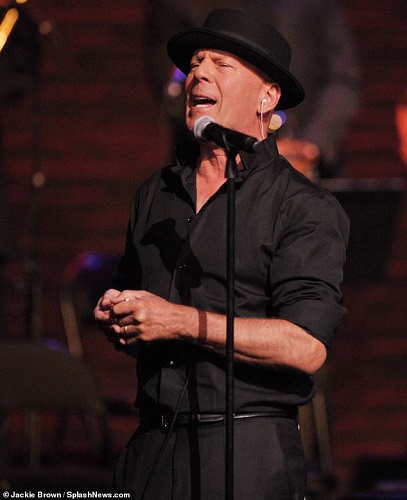
For Tune Tuesday, I thought I would celebrate the 69th birthday of Actor/Singer Bruce Willis. I don’t recall just how I stumbled upon this album, but if I had to guess, it was probably playing in my local record store and it caught my ear.
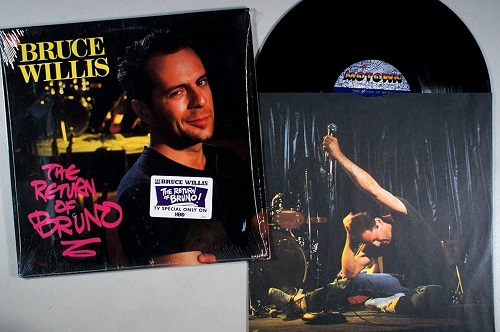
Despite the album being called the “Return” of Bruno, this is actually Bruce Willis’ debut album. It was released in 1987 on the Motown Label, and it featured some R&B, Blues, and Soul music. It also featured some powerful musical guests like The Temptations, Booker T Jones, and The Pointer Sisters!
The album was released to coincide with an HBO “mockumentary” that followed the career of Bruno Radolini (Bruce Willis). The special was nominated for a CableACE Award for writing. The album received mixed reviews.
The first single from the album was Respect Yourself. Bruce did a duet with June Pointer (and the rest of the Pointer Sisters on background vocals) and the song was a hit. The song peaked at #5 on the Billboard Hot 100 chart. The other singles that followed never broke the Top 40.
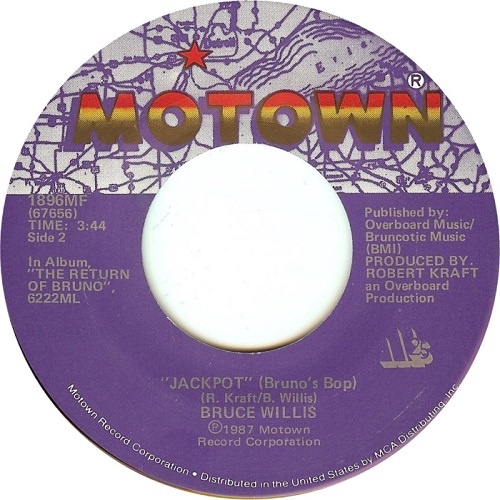
The song that always stuck out for me was one called Jackpot (Bruno’s Bop). It begins with Willis toying with the band and doing a little question and answer between band and harmonica. When the song finally kicks in, it just takes off running. It’s a driving jump blues tune with cool sax and harmonica interplay and a gravelling vocal by Willis. If anything, the band and Bruce are sure having fun!
Happy Birthday, Bruno … er, Bruce!
Jackpot (Bruno’s Bop)
Grampa always gave me good advice A fine lookin’ woman is like a pair of dice When she flashes her snake eyes You gotta pay the price I’m all grown up, the game is goin’ my way Grampa’s good advice still holds today Hey, when I get frisky I gotta play
Why not? I’m hot Jackpot-tonight!
When you gamble with love, you spin the wheel Cross your fingers, make your best deal What you can’t beg or borrow you gotta steal
Now a gamblin’ man’s gotta make ends meet When the odds get even, they’re tough to beat But tonight I feel it, I’m on a winning streak








 Various Ramblings of a Nostalgic Italian