I want to thank Dave from A Sound Day once again for the invitation to participate in Turntable Talk. He continues to come up with great monthly topics for this feature. This round brings us to the three year mark for this feature. It continues to be one of the features that I love to write for.
This time around, Dave found inspiration for our topic from the reunion tour that Oasis announced recently. Our instructions were to “pick an inactive act, solo or group, that you’d like to see back. Tell us who, why and what…one last tour? New album? Both?” There were some limitations – you could not resurrect someone who passed away for example. I wanted a bit more clarification and asked it health issues would rule out a choice. In other words, if an artist is not active because of some health problem, are they available? He said that would be ok.
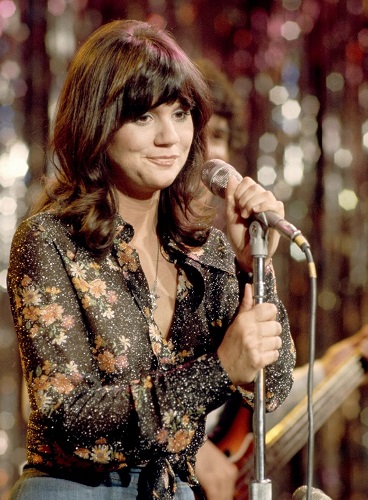
That was important to my choice, as they currently are unable to sing. However, I would love for her to be able to do one more thing. I am talking about Linda Ronstadt.
It was 2011 when Linda announced her retirement. Two year’s later, she announced that she had Parkinson’s and could “no longer sing a note.” According to the Washington Post, her diagnosis was subsequently re-evaluated as progressive supranuclear palsy. The illness brought about the end of her singing career.
Linda was one of those artists who could do almost any genre. She made her mark in rock, country, Latin, pop, adult contemporary, and even opera! Her music is not limited to a specific genre and she has had great success with all of them.
She has won eleven Grammy Awards, three American Music Awards, two Academy of Country Music Awards, an ALMA Award and an Emmy Award. In 2014, Linda was inducted into the Rock and Roll Hall of Fame. That same year, she she was awarded the National Medal of Arts and Humanities. She also won the Grammy Lifetime Achievement Award in 2016.
So to answer Dave’s question, I would love to hear another new album from her. At 78, I doubt a tour would be feasible. If I am allowed to ignore her voice issues and allow her the ability to sing again, I think an album that is a combination of all of her different styles would be an amazing send off.
The album could contain cover songs or originals. There have been some amazing songs that I could easily hear her singing. She could record some sweet ballads or songs with a little country flavor. I would love to hear a couple more from the Great American Songbook or a nice jazz piece. And if her voice is up to it, a few pop/rock songs.
If you have a problem with me healing her voice, I still think an album would be possible. She’s recorded over 30 albums. There has got to be some songs that she recorded that didn’t make the cut for them. I can only imagine the songs that are locked away in a vault somewhere just itching to be heard. The album could be like the one they did of Stevie Ray Vaughn’s “vault” music after he passed away.
When I listen to Linda’s recordings, I find myself getting lost in that voice. It could be angelic, sultry, fun, seductive, gentle, hypnotic and mellow. That voice remains one that forever captivates me. It saddens me that her voice has been silenced and I would love to hear just one more album from her.
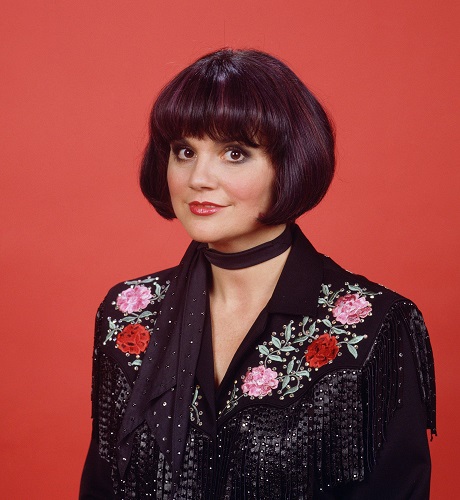
Singer Linda Ronstadt.
Thanks again, Dave, for asking me to participate. I look forward to reading the other writer’s contributions. Until next month, I will quote Linda from her Cry Like a Rainstorm, Howl Like the Wind Album – “Adios.”
It is time for another edition of Turntable Talk hosted by Dave from A Sound Day. This is round #35, which means next month I’ll have been contributing to this feature for 3 years! Wow. As long as Dave keeps coming up with interesting topics, I’ll keep writing.
This time around, Dave says that “we’re going Sans Sophomore Slump. We all remember the triumphant debuts to the scene by The Knack, Meat Loaf, the Ramones…but how many recall, let alone listen to ‘But the Little Girls Understand’, ‘Dead Ringer’s or ‘Leave Home’… the follow-ups for them? This month, pick a SECOND album by a group or singer you thought was a standout and at least as good as the first.
When I worked in country radio we often referred to the “Class of ’89.” This was a group of four guys who all stormed onto the scene in 1989. Those guys were Clint Black, Travis Tritt, Alan Jackson, and Garth Brooks.
The four of them were so popular that the brought an entire new group of listeners to the genre. Much of their music focused on storytelling, which also made for some amazing music videos. They helped to make Country music more popular than ever.
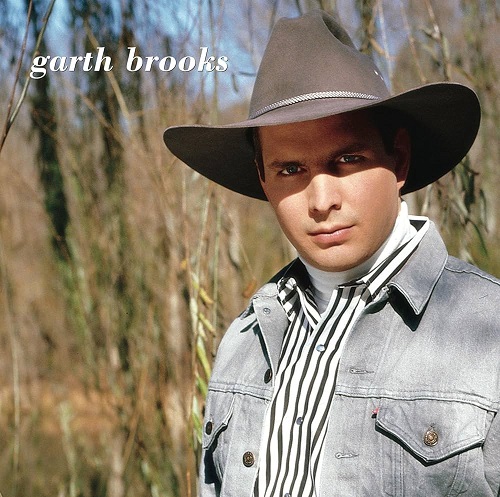
Garth Brooks’ self titled album was released in April of 1989. It peaked at #13 on the Billboard 200 and went to #2 on the Top Country Albums chart. From the album, there were four singles, two of them went on to become number 1 hits.
Much To Young (To Feel This Damn Old) went to #8 on the charts for Garth. Not Counting You also went top 10, and was the first hit that Garth completely wrote himself. The Dance and If Tomorrow Never Comes were both #1 smashes! Today, they have reached “classic” status. If Tomorrow Never Comes was so big that it won the Academy of Country Music’s Song of the Year in 1990.
So how do you follow that kind of success? If you are Garth Brooks, you release your sophomore album and watch in amazement.
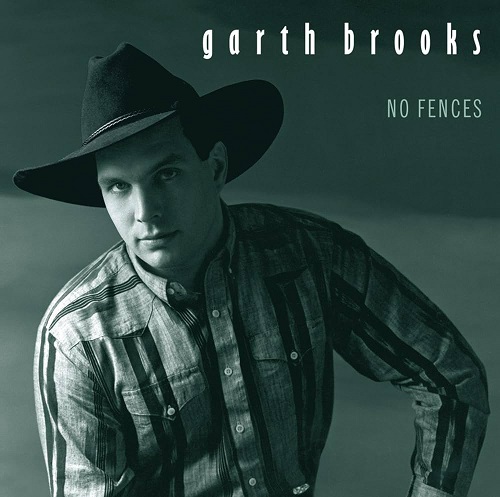
Like the other members of the class of 1989, fans wanted more of their music! Garth released No Fences in August of 1990 and it was just HUGE! It went to #1 on the Billboard Top Country Albums chart. It went to #3 on the Billboard 200 and stayed in the top 40 on that chart for a whopping 126 weeks!
As for the singles from the album, they have gone on to become Garth classics (just like the ones from album #1). All four singles from the album went to #1 on the Country chart!
The Thunder Rolls not only went to #1, but won the CMA Video of the Year for 1991. The video is a powerful one. When Garth plays the song at live shows he adds another verse where the cheater gets what’s coming to him.
Two of a Kind, Working On a Full House, Unanswered Prayers, and Friends in Low Places also all reached #1. Friends in Low Places also won the Academy of Country Music’s Single of the Year for 1990.
That song is familiar to country music fans and non-fans alike. It still plays everywhere. It was always on the Mobile Beat Top 200 songs for mobile DJs. It plays at parties, weddings and even sporting events. I’d love to see the money that this one song alone makes for Garth Brooks.
Garth’s Sophomore album, No Fences, helped to pave the way into super stardom for him. A simple search of “Awards won by Garth Brooks” will show you just how popular and successful Garth went on to be. One has to wonder what might have happened if No Fences bombed.
Thanks again to Dave for hosting this edition of Turntable Talk. I appreciate him reaching out and including me in such an amazing feature. As always, I look forward to the next topic.
Welcome to the first Turntable Talk of 2025, hosted by Dave of A Sound Day. This is the 34th round, if you are keeping track. If you are a new follower, let me fill you in on how it works. Dave Ruch offers up a musical topic to a group of us music fans each month. Each of the writers come up with a response to the topic and Dave runs each piece on his website.
We have had some fun and interesting topics, and this one is no exception. This time around, Dave asks, “What’s my scene?” Our instructions: Pick a sort of music “Scene” that either you would have liked to have been a part of or one that you think really created a lot of the music you love. Pick a general place and time and have fun….
My fellow music bloggers know my musical tastes pretty well by now. So, let’s see a show of hands – How many thought I’d pick The Rat Pack in Vegas? I almost did, but I know I have written on a live Rat Pack show in the past. Honestly, as awesome as that would be, the more I thought about it the more I leaned another way.
My scene certainly influenced the Rat Pack. Dean Martin cut an album called Swingin’ Down Yonder. Frank Sinatra recorded albums titled: Sinatra Swings, Songs for Swingin’ Lovers, Swing Easy, Sinatra’s Swingin’ Session, Sinatra and Swingin’ Brass, and A Swingin’ Affair! You know what the song says, “It don’t mean a thing, if it ain’t got that swing!”
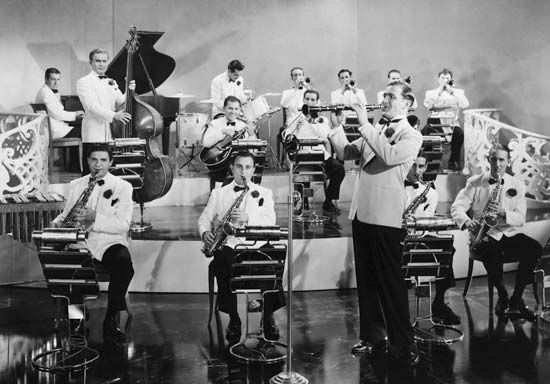
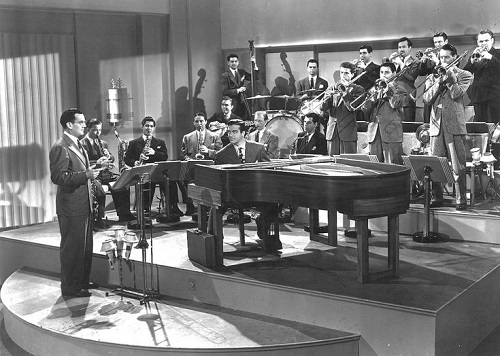
As a mediocre trumpet player, I have always loved Big Band/Swing music. Most folks would consider the Swing Era to be from the early 1930’s to around the mid 1940’s. Even though swing music was prominent in the early 1930’s, it was often ridiculed for its style and feel. Some went as far as to call it a menace (much like Rock and Roll when it gained popularity). After 1935, big bands rose to prominence playing swing music. They held a major role in defining swing as a distinctive style.
There were many big bands on the scene at this time. Each had a very distinct sound and feel to it. For example, Glenn Miller’s orchestra often used a clarinet lead. Count Basie’s sound has a relaxed feel to it. Benny Goodman used a driving and hard swing sound. Duke Ellington’s songs has a sophisticated sound to them.
The band leaders often took the spotlight. They were amazing instrumentalists. Harry James and his trumpet, Benny Goodman and Artie Shaw on their clarinets, Gene Krupa on his drums, the trombones of Tommy Dorsey and Glenn Miller, and Lionel Hampton’s vibes. Along with those great leaders, there were plenty of talented musicians within those bands who went on to make a name for themselves.
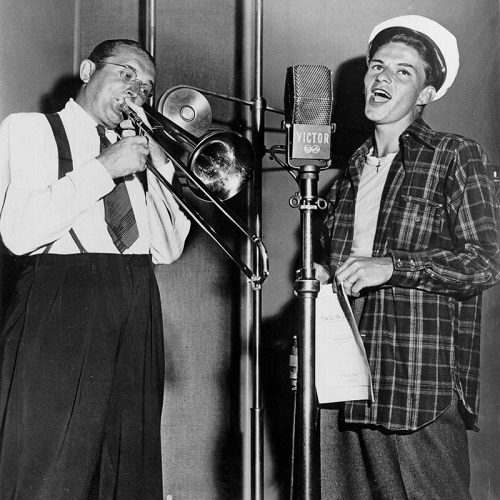
Perhaps Sinatra recorded his many swing songs because he rose to fame alongside Tommy Dorsey. He was one of many singers who sang with those big bands. Others included the voices of Ella Fitzgerald, Billie Holiday, Kay Starr, Peggy Lee, Doris Day, Kitty Kallen, and Dick Haymes. While they all started with the big swing bands, they also went on to have prolific careers.
During the swing era, the big bands would often play at dance halls across the country. They appeared on the radio playing dance music. Some appeared in movies, and all of them made records. Their music had teenagers and young adults dancing until their feet hurt.
As years went on, the taste of music listeners changed. Swing began to fade away to make way for music that was less “danceable” like bebop. Many of the swing bands broke up, while other continued without their original leaders. The Glenn Miller Orchestra still tours today, for example.
When I put on headphones and listen to old big band recordings, I picture myself there listening. I picture myself in one of those great 1930’s suits with a stylish fedora.
Maybe it is in a dance hall or at a live concert. Maybe I am in the audience of a radio program where the band is playing. Wherever the music is being played, I am zoned in on it. I am listening to the drum beat of Sing, Sing, Sing and Benny Goodman. I can hear the vibrato of Tommy Dorsey’s trombone solo on I’m Getting Sentimental Over You. I marvel as I watch and listen to Harry James play his theme song, Ciribiribin.
Throughout the evening, I will study those great instrumentalists who improvise solos off the top of their head. Looking at nothing but chords and making up their own melodies. This is something I wish I could do as a trumpet player.
In all honesty, in my “scene,” I would be happy as a clam to just be in the audience. It would be the bees knees just watching those guys swing! Yeah, I can totally see myself swinging, singing, and dancing to the sounds of swing.
Thanks again, Dave for inviting me to take part in this feature. It is always fun to contribute and to read the other submissions. I’m already looking forward to next month’s topic!
Once again, it is time for Turntable Talk, our monthly musical topic hosted by Dave from A Sound Day. Most readers are familiar with this feature. Dave gives some of us musical bloggers a topic and we write about it. This month, he asked for our help in creating a holiday playlist.
Per his instructions: “Because of the time of the year, we’ll keep it simple – One More For Under The Tree. Just pick a favorite Christmas / holiday season song of yours and tell us a wee bit about it and maybe why you love it. If it’s a ‘standard’, old or new, pick the favorite version of yours and we’ll make a nice little Christmas playlist of sorts.”
A couple years ago, we did something similar. As someone who loves Christmas music, it is difficult for me to chose just one. I will try to keep it to no more than two. Maybe three. Surely, not four….
The song I want to feature is one that has never really been classified as a “Christmas” song. It is not one that you will hear often (if at all) on the radio in December. You will find it on a few 1970’s Holiday compilation albums, though. It was first released as a B-side of a single and released again as a posthumous single.
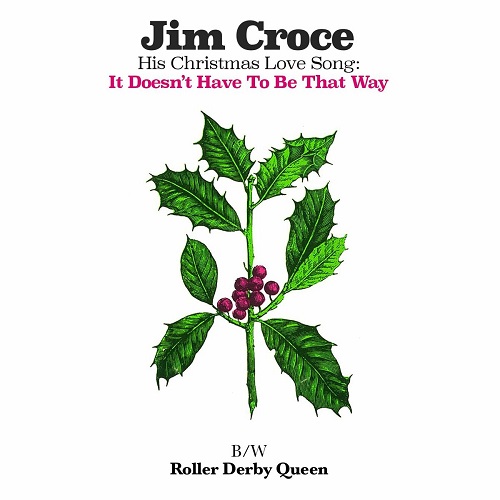
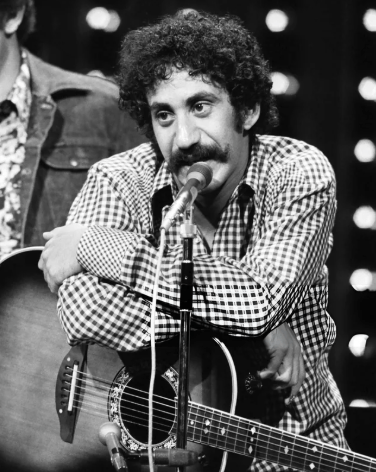
It Doesn’t Have To Be That Way
Jim Croce’s It Doesn’t Have to Be That Way was on his 1973 Life and Times Album. It was the B-side of One Less Set of Footsteps. He died in a plane crash in September of that year. It was in December that his label rereleased the song as the final single from the album. The song paints some wonderful images of winter and Christmas for the listener. Perhaps this is what the label was hoping to take advantage of when it was released again.
I was introduced to this song by a gal I was dating in the late 1980’s. I had never heard the song before and she had told me it was one of her favorites. From the opening guitar work and Jim’s vocal, I was hooked. The song is melodically beautiful. As beautiful as it is, however, it is a sad song.
Anyone who has ever gone through a break-up around the holidays will tell you how difficult it is. The festive decorations, the warmth and happiness of the season, and the overall feeling of love can really cause depression. No one wants to be alone at Christmas time.
The singer reveals himself to be a man who has recently ended a relationship. As the holiday season approaches, the Christmas atmosphere in his town is evident nearly everywhere. The lyrics attest to that. As he experiences his surroundings, he begins to wish that he and his lover could reunite. He professes that it was a mistake to end their relationship and that it can easily be rekindled.
The song ends in mystery. In a bold move, the man says he will be stopping by his old lover’s place to “get it together.” “It’s only right” for them to start the relationship again according to the song. We never do find out what happens. Perhaps the “happy” chimes at the end of the song elude to a happy ending.
The songwriting team of Jerry Leiber and Mike Stoller wrote over 70 hit songs together. They wrote songs in the 1950’s for The Coasters, Wilbert Harrision, Big Mama, Thorton, and Elvis Presley. One of those Elvis songs was the one that opened his first Christmas album…
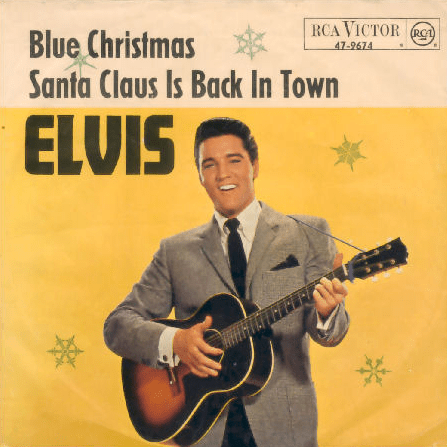
Santa Claus is Back In Town
Elvis’ Christmas Album was released in 1957. It contained twelve songs – six on each side. Side A contained the more contemporary cuts like Blue Christmas, White Christmas and Santa Claus is Back in Town. Side B contained the more religious and sacred songs like Silent Night and O Little Town of Bethlehem.
For years, I was only familiar with his versions of Blue Christmas and Here Comes Santa Claus. You know, the ones that played on the radio. In 1994, I picked up the compilation “If Every Day Was Like Christmas.” It included early Christmas songs as well as his later songs. I first heard Santa Claus is Back in Town on this album.
The song is a basic twelve-bar blues song with three verses. I have always wished that Elvis would have recorded an album of all blues songs. The genre (and the mixing of blues and rock) is one that allows him to shine. This song is a prime example of this. It is a raunchy, raw, and dirty blues song that is misleading from the beginning.
The song begins a group singing the word “Christmas” three times. You get the feeling that you are about to hear this beautiful holiday song. Suddenly the drum kicks, Elvis growls his first lyric and the blues begin!
Elvis howls his was through the verses as “Santa Claus,” who has no sleigh, but a black Cadillac instead. He also tells his pretty baby to expect him to come down her chimney later that night. The chorus begs her to be a good little girl because Santa is back in town. Naturally, the lyrics and the song itself are meant to have that “double entendre” and “innuendo” to it.
Many people have covered this song, including Dwight Yoakam, Foghat, Billy Idol, and Joe Perry. Even Kurt Russell performed it in the Netflix special, “The Christmas Chronicles.” These versions never seem to live up to the energy and the grittiness that the Elvis version has. None of them have ever given me goosebumps when I hear it either. The Elvis version does. His version is the best!
The question I pose now is a simple one. Is it possible to make this song sound even better? Personally, I think so. When the Royal Philharmonic Orchestra accompanied Elvis on a Christmas album in 2017, it brought it to an entire new level! It is still gritty. It is still bluesy. It is still raunchy. But now, you’ve got this fantastic horn line that takes it up a notch. Mix the orchestra parts with the original arrangement and you have a much fuller and fresh sound. Now, there is a raunchy “sparkle” to it.
Dave, thank you for again asking me to be a part of this feature. To my fellow music bloggers and you, I wish you and your family a Happy Holiday season. May you and yours have a blessed and Merry Christmas! Here’s to an amazing 2025!!
Welcome back to The Music of My Life, where I feature ten songs from each year of my life. In most cases, the ten songs I choose will be ones I like personally (unless I explain otherwise). The songs will be selected from Billboard’s Year-end Hot 100 Chart, Acclaimed Music, and will all be released in the featured year.
I have found it interesting to do this feature every week. First, I am reminded about the things that were going on in my life at the time. Second, I find it funny how an old song can apply to my future life events. This feature has been like therapy for me. I don’t always write down everything that these songs bring to mind, but I am made aware of them. I appreciate you letting me indulge myself by sharing these songs.
I would turn 27 in 1997. I had gone through a break up that hurt me bad. I was spending a lot of time at the karaoke bars and drinking much more than I should. I felt lost and alone. Alcohol numbed a lot of the pain. It was a very dark time.
When I wasn’t singing karaoke, I was hosting it or DJing a wedding or party. I enjoyed doing that because it was almost like being in radio again. There was interaction with people and that was something that I desperately needed.
1997 was a decent year for music. Many of the songs on my list were first heard while I was driving for EDS. I would play many of these songs while DJing. Some of them bring back memories of bad times, but most of them have a good memory attached to them.
I will stop rambling now and jump right into 1997 –
I like the next song because it was so different from what people were used to hearing from them. Green Day was known for some pretty heavy sounding songs that were “in your face.” So an acoustic song from them comes from out of left field. Believe it or not, the song could have been on their first album, but wasn’t.
Songfacts.com explains: “Billie Joe Armstrong wrote this song in 1993 and submitted it for the band’s first major-label album, Dookie, which was released in 1994. Both the band and their label felt it was a great song but didn’t fit on the album, which was loaded with punk blasters. The song was held back and didn’t make their next album, Insomniac (1995) either. It was finally included on the Nimrod album in 1997.
In 2010, Armstrong told Spin Magazine, “That was really the first time we attempted a ballad. The first time we ever played that song was during an encore in New Jersey – I had to pound a beer backstage to get up the courage. I knew we were gonna take a tomato to the face.” A very poignant song, this is quite popular at graduations and weddings despite the kiss-off title “Good Riddance.” Billie Joe Armstrong wrote it about a very specific event in his life, but he’s thrilled when others relate it to their own experience.
This song was played over a montage of clips in a “look back” Seinfeld special. The special aired before the finale of the show. I would have never expected that this song would work for something like that. But it certainly did.
This song is very poignant and gives me chills when I hear it. The blending of the guitar, the strings, and his voice is just beautiful to me.
Good Riddance
In Good Riddance, Green Day sings about the “photographs and still frames in your mind.” Believe it or not, that kind of fits how the next song was described by one of the members.
You either like or dislike Hanson. That like or dislike probably comes from the song MMMbop. Why? It is one of those songs that sticks in your head forever after you hear it. It is very catchy and the lyrics make you think. But just what in the world is this song all about?
Drummer Zac Hanson says, “What that song talks about is, you’ve got to hold on to the things that really matter. MMMBop represents a frame of time or the futility of life. Things are going to be gone, whether it’s your age and your youth, or maybe the money you have, and all that’s going to be left are the people you’ve nurtured and have really built to be your backbone and your support system.”
Zac tells the story of how the song happened, “That song started out as the background part for another song,” he said. “We were making our first independent album and we were trying to come up with a background part. We started singing a slightly different incarnation of what is now the chorus of ‘MMMBop.’ That sort of stuck in our heads but never really worked as a background part. Over a couple of years, we really crafted the rest of the song – the verses and bridge and so on. It was something we almost stumbled upon.”
Zac made me laugh when I read that because the song even got stuck in THEIR heads!
What is truly amazing to me is that the song was released as their first single in 1997. At the time, Isaac Hanson was 16 years old, Taylor was 13, and Zac was 11. The song quickly became a huge worldwide hit. It was getting constant airplay on radio stations and MTV, and going to #1 in 27 countries.
It is on my list because I was DJing a high school dance once and a student asked for it. He was very shy and didn’t dance much. He may have had autism, I am not sure. When I played it, this boy came out of his shell and danced like crazy! The students formed a circle around him as he danced. It was one of those things I will always remember.
Mmmbop
Before you listen to the next song, I need you to hear this. I had no idea that this song was sampled for the 1997 hit.
I had never heard of the Andrew Oldham Orchestra. I had no idea that there was an instrumental album of Rolling Stones songs. The Verve did, however, and sampled it for the song Bittersweet Symphony.
The Verve took the sample and added vocals, strings, guitar and percussion. This led to trouble. After a lawsuit by the Rolling Stones’ former manager, Allen Klein, the Verve had to relinquish all royalties from the song. Rolling Stones members Mick Jagger and Keith Richards were added to the songwriting credits. Things worked out in 2019. After Klein died, Jagger, Richards, and Klein’s son ceded the rights to the Verve songwriter, Richard Ashcroft.
If I had to put why I like this song into words, I would find it hard to do. There is something about it. It is mesmerizing to me. MTV’s Gil Kaufman wrote “Bitter Sweet Symphony” was “built on a slow-rolling fat beat, a pomp and circumstance violin loop. And (was like an) … elliptical, snake-swallowing-its-tail lyrics” Rolling Stone magazine wrote that it “intertwines baroque strings worthy of Pachelbel with sedated vocals and shimmering guitar lines”.
The song is built around one simple chord.
Bittersweet Symphony
Much like Bittersweet Symphony, I was hooked on the next song as soon as I heard the intro. Again, the intro was “borrowed” from another song. This time it was from Perrey and Kingley. They were considered pioneers of electronic music. They were together from 1965-1967. Smash Mouth interpolates the keyboard line from their 1966 single, Swan’s Splashdown. You don’t need to listen to but 15 seconds of the song to know the Smash Mouth song …
Smash Mouth’s guitar player Greg Camp wrote Walkin’ on the Sun. He said, “The song was basically a social and racial battle cry. It was a sort of ‘Can’t we all get along?’ song for the time when I wrote it. It was just about all the things that were going on around me as a young person. And I’m, like, God, what is going on? I don’t understand why this is happening. It’s like we might as well be walking around a planet on fire.”
The songs has a 1960’s sound to it, which made the song stick out on the radio. It was their first hit song. The song itself was never sold in stores as a single, so it never made the Hot 100 chart. However, it went to #1 on the Modern Rock chart and #2 on the Airplay chart. Because it was not released as a single, the album Fush Yu Mang sold over 2 million copies. The album was the only way to get it.
I was one of those 2 million people who bought the album.
Walking On the Sun
Kevin Sharp’s story is a moving one. He was born in 1970, the same year as me. In school, her performed in musicals and was an active musician. When he was 19, he started to feel tired and dizzy. This led to a diagnosis of a rare form of bone cancer. His chance of recovering was not good.
Through the Make-A-Wish Foundation, which grants wishes to children with life-threatening illnesses, Kevin met the record producer David Foster. They became friends fast. He went through two years of chemo and radiation therapy, which caused him to lose his hair permanently.
While in remission, he recorded a demo that wound up in the hands of his friend David Foster. Thanks to him, Kevin was signed to a record deal in 1996. His first album was Measure of a Man. The first single was a cover of Tony Rich’s Nobody Knows, which went to #1 on the Country Charts. His next two singles were both top ten hits for him.
He would go on to became a motivational speaker and spokesperson for the Make-A-Wish Foundation. He was awarded the foundation’s Wish Granter of the Year award, in 1997. Sharp wrote a book, Tragedy’s Gift, and published it in 2004. Despite releasing two more albums, he never ever matched the success of his first album. He died at age 43 of complications from stomach surgeries and digestive issues in 2014.
If You Love Somebody is one of his three top 10 songs. Deborah Evans Price, of Billboard magazine reviewed the song favorably. She said that the record grabs the listener immediately and doesn’t let go thanks to the “energetic percussion that opens this track and gives way to a spree of sassy fiddle lines.” She goes on to say that the song is a fine example of the “vibrancy and passion he can bring to a great uptempo cut.”
The song is a fun love song that speaks of all the things you would do because you love someone.
If You Love Somebody
In 1997, there were still music videos being made – and played on MTV. While I love the next song, it is the video that really stands out. More on that in a second.
The Backstreet Boys were very big in Europe. When they returned to the US, no one really knew them. In 1997, they released their first album in the states. Everybody (Backstreet’s Back) was the band’s choice for a single. However, because they had been in Europe, the record label felt that the song wouldn’t make sense to audiences and it wasn’t even on the US release.
The song was the first single from the international release. It started gaining steam on Canadian and nearby US stations. The label finally added the song to the US album after a million units had already been produced. It was released as the fourth single.
Joseph Kahn was approached to do the music video for the song. When he met with BSB and saw their smooth dance moves, he thought they were more like “little Michael Jacksons.” This led to him thinking about the Thriller video which had the singer leading a choreographed dance with zombies. Kahn developed a similar concept for the Backstreet Boys.
In the video, the boy band’s tour bus breaks down near a spooky mansion. It is where they’re forced to spend a harrowing night. The haunted manor has a transformative effect on the boys, and each one changes. (Brian Littrell changes into a werewolf; AJ McLean into Erik, The Phantom Of The Opera recluse; Kevin Richardson into the two-faced Dr. Jekyll & Hyde; Howie D into Dracula; and Nick Carter into a mummy.) They converge in the ballroom and bust out “Thriller”-esque moves with a group of dancers. At the end, they’re relieved to discover the whole experience was just a nightmare – that is until their driver turns out to be a monster. The driver? Antonio Fargas, who was known for his role as Huggy Bear on the ’70s cop show Starsky & Hutch.
Everybody (Backstreet’s Back)
Up next, a group who got its name from a story created by one of the members. In the story, the men were Chumbas and the women were Wambas. Tubthumping was the first single from Chumbawamba’s eighth album – Tubthumper.
I suppose it is important to point out a few “vocabulary” words here. In England, a tubthumper is a politician. Here in the US, tubthumping is like “campaigning.” “Pissing” has a very different meaning in the UK. “Pissing the night away” would translate to “Drinking alcoholic beverages all night.” To be pissed in England is to be drunk, while in the US it is to be angry.
Whenever we played this song DJing, we’d go out on the floor and do a dance that we made up. It was basically an easy thing that matched the lyrics. “I get knocked down (crouch down), but I get up again (jump up) you’re never gonna keep me down (stand shaking our heads and wagging our finger side to side). Easy and no instruction needed because of the lyrics.
We had empty booze bottles that we’d pretend to swig when the band said, “He takes a whiskey drink, he takes a vodka drink”. It was silly and stupid, but it always got a laugh from the crowd.
At 54, I doubt that I could crouch down and jump up again like I did when I was 27!
Tubthumping
The next song was the debut single for the group Everclear. Everything to Everyone is true of many of us. I remember when I was with my ex, that I would do things that I didn’t necessarily want to do because I wanted to please her. I spent a lot of time in my life trying to please people and never really standing up for myself. It’s like the Sheryl Crow song – “If it makes you happy….”
In an interview with Songfacts, lead singer Art Alexakis says:
“It’s kind of an angry song. That person is within everybody, I think everybody has this ability to try and be everything to everyone, to try to please. I think there are 2 aspects of it – there’s the pleaser, who doesn’t always show his true self, always plays nice and as time goes on shows more and more of himself, but there’s also the people who are everything to everyone who are manipulators and users.”
When asked if the song had “anything to do with the record business”, Alexakis replied, “Oh yeah. Anything in the entertainment business you’ll find people who are slimy.”
I believe that you will not only find them in the entertainment business, but in much more than that!
Everything to Everyone
You cannot say that country music doesn’t have some great song titles! Take the next song on my list. Did I Shave My Legs For This?
Deana Carter’s father was a songwriter. The legendary Dean Martin recorded one of his songs, and perhaps as a thank you, named her Deana. Another legend, Willie Nelson, heard one of her demo tapes and invited her to play Farm Aid in 1994. That same tape, led to her being signed to Capitol Records.
Did I Shave My Legs For This is also the title track of the album. The album gave Deana three #1 songs (Strawberry Wine, We Danced Anyway and How Do I Get There?). The title track was the fourth single released from the album. It didn’t fair as well as the previous songs as it only went to #25 on the Country Charts.
I have learned from DJing and hosting karaoke that just because a song wasn’t a hit, doesn’t mean it isn’t liked. I always got requests for this song and people were always singing it. At weddings or parties, groups of women would sing along at the top of their lungs to it. It reminded me of what people did when Friends in Low Places would play.
Back in the day, we used to play Karaoke Roulette. This was where a friend would pick a song for you to sing. You wouldn’t know what song until you got to the microphone. My friends always made me sing songs like “I Am Woman,” “I Touch Myself,” and such. This was one they gave me one night and I nailed it! I knew the song and hammed it up all the way through it.
Did I Shave My Legs For This?
My final song is one that brought back a genre of music that overtook the nation in the 1930’s and 1940’s. I grew up listening to Benny Goodman, Harry James, and other swing bands. It was almost mind blowing to hear swing music on the radio in 1997.
The 1996 movie Swingers and t he Cherry Poppin’ Daddies are credited with the “Swing Revival.” Other groups like Big Bad Voodoo Daddy and The Brian Setzer Orchestra had success in the genre, too. The BSO’s version of Jump, Jive and Wail turned the revival into what songfacts called “a full-fledged craze!”
Zoot Suit Riot was a song that was inspired by real events. Songfacts explains:
The Zoot Suit Riots began in Los Angeles in 1943, triggered by conflict between the American servicemen stationed in Southern California and the Los Angeles Mexican-American community. Tensions had been building since the 1942 murder of a Latino man named Jose Diaz, a case referred to as the Sleepy Lagoon murder case.
The riots took place when swing music was the hot sound and everyone was doing the jitterbug. Lead singer Steve Perry says, “I wrote it inspired by the Zoot Suit Riots. I guess it seemed like a Pachuco rallying cry that could double as a dance anthem for those of us interested in swing music and culture at a time when nobody else was. It was an expression of a proud marginalism. That’s not that deep, but there you go.”
It wasn’t odd around this time to have a bride and groom request a swing song as their first dance. Most had taken a dance class and had a routine for that dance. It was always cool to watch that.
One day, I hope to get around to seeing Setzer, Big Bad Voodoo Daddy, or any swing band live. I love the energy that they put out as they play.
Zoot Suit Riot
That’s it for 1997. There were many songs that didn’t make my cut, maybe your favorite is one of them? Let me know what your picks are in the comments.
1998 is on the horizon and we’ll check out my tunes from that year next week. They include a song that I almost picked for this month’s Turntable Talk Topic (songs based on historical events or people), a song that is often played as the last song of the night at DJ gigs, a song I mentioned in this week’s post, and a great song I can barely listen to anymore. Find out why next week
It is time for another edition of Turntable Talk, hosted by Dave from A Sound Day. There seems to be no shortage of music topics for him to present. This month the topic is a bit different. Here are his instructions:
It’s time to Hit the Road, Jack … you’re invited to take part in a sort of magical road trip… but with a few restrictions. You can go to any music location you’d like to see, and if it is long gone, we can assume it was still there for you to see (or that you could go back in time to see it). Studio, concert venue, house, record store, you name it! Wanna see Graceland (or see it again if you’ve been) – boom! You’re there.
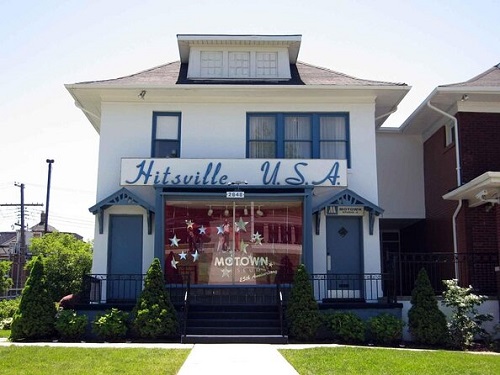
As I began to think on my musical place, I became depressed. This is because there are so many places that I have never been to. Yes, I have been to the Rock and Roll Hall of Fame. Yes I have been to Graceland. Sadly, despite the 90 minute drive from where I live, I have never visited the Motown Museum!
Next I began to think about concert venues. I looked up “Greatest Concert Venues” and it is quite a list. Surprisingly, Pine Knob Music Theater (in Clarkston, MI) is one I have been to numerous times! It’s a great place to see a show. I couldn’t believe that it was counted as one of the “greatest” among some of the others.
In the cartoons, it meant you had made it if you played The Hollywood Bowl in Los Angeles. It was always a big deal if an artist is playing Carnegie Hall, Radio City Music Hall or Madison Square Garden in New York. As many times as I have been to Nashville, I have never seen a show at the Ryman Auditorium. Outside of the US, it is big to play the Syndey Opera House in Australia or Royal Albert Hall in London.
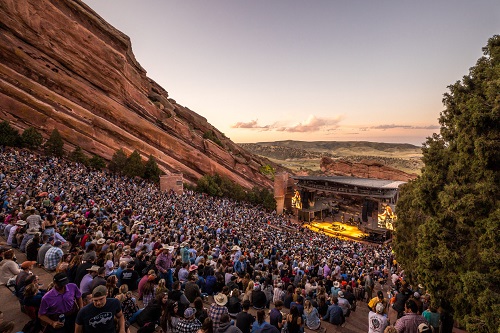
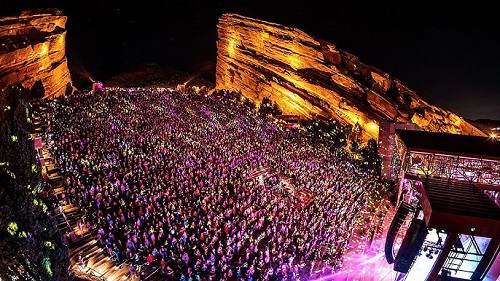
There are so many great places on the list, but one stood out. It is a venue that I truly hope to see a show at some day. Many artists have recorded albums or videos there. They include, the Grateful Dead, Joe Bonamassa, U2, Barenaked Ladies, Stevie Nicks, The Dave Matthews Band, and even John Tesh! That place is the Red Rocks Amphitheater in Morrison Colorado.
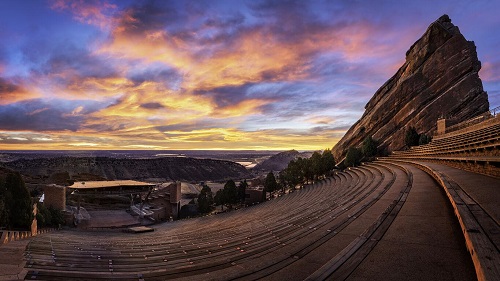
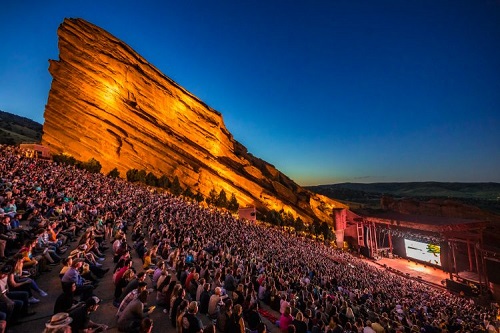
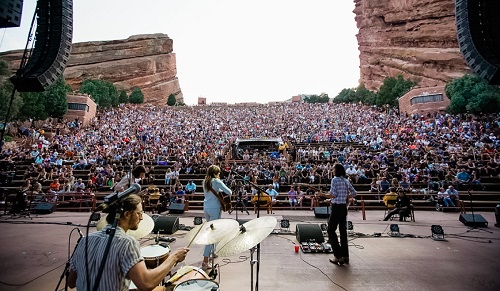
I am in awe of this truly amazing place. The venue is approximately ten miles southwest of Denver. The venue is best recognized by its two massive monoliths. They are named “Ship Rock” and “Creation Rock”. There is also the smaller “Stage Rock”. All of them together flank its 9,525 capacity seating area and naturally form the amphitheater.
Imagine seeing your favorite band on stage, while enjoying the breathtaking scenery! It is on my bucket list!
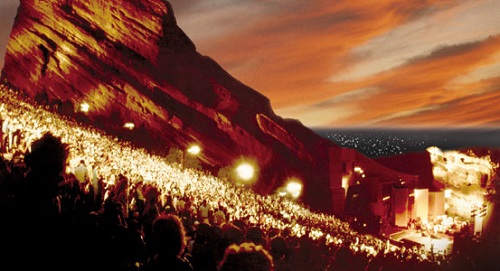
The experience that a concert viewer would have is incomprehensible to me. Go back to the first photo and scroll down. Think about the various changes in light, the beauty of the setting sun, the lights up on the rocks, and finally night fall. Wow!
I would think that this has to be an extraordinary experience for the artists, too. While their view is a bit different than the audience, it still is pretty amazing.
I believe that I am the last contribution before Dave wraps up this topic. I can’t help but wonder what the other bloggers have chosen. Did they chose a venue? A recording studio? A musical museum? By the time you read this, you will already know – and so will I. Right now, however, I am excited to find out what they chose.
Thanks again to Dave for asking me to participate in this feature. I would also like to thank him for his understanding. I chose to run my Share Your Nostalgia Feature right around the same time as Turntable Talk. He did some shuffling and made it work for all of the writers involved. Should I do another topic, I will check with Dave and make sure the schedules are good for everyone.
This week I’ve been featuring guest bloggers in the series, “Share Your Nostalgia.” The idea was one that was proposed to me be some of my blogger friends. Many of them contributed to this series. The topic for this feature is “The Toy of Your Life.” Was there one toy that you considered the “best?” When you think of yourself as a child, what is the toy that immediately pops into your mind? What was the toy that you brought to Show and Tell or took with you everywhere?
The idea of having guest bloggers is not a new one. As a matter of fact, my next writer has been doing something similar for a couple years now. I am talking about my good friend Dave Ruch. Dave’s name should sound familiar if you visit my page often. Dave is the host of Turntable Talk, a monthly music feature that appears on his blog, A Sound Day. You can find his site here: https://soundday.wordpress.com/
Dave is another one of those great people I met through music and music bloggers. Dave’s blog features musical writings on many genres of music, music history, and artist info. Dave has also authored a couple books. The Mockingbird Speaks was published in 2014 and deals with two things of importance to him. First, appreciating wildlife (and in particular birds) and second, looking at things in a positive light. Another book is Thank Goodness! 101 Things to Be Grateful For Today. It is a collection of personal accounts of good things that often go unnoticed that can bring happiness.
Admittedly, this feature is a blatant rip off of Dave’s Turntable Talk. The only difference is that his topic is musical and mine is nostalgic. Although, now that I think about it, those two things can easily be the same thing. I need to apologize to Dave here. When I decided when this would run, I didn’t think about my feature and his bumping into each other. My bad. It won’t happen again, I promise.
I can’t help but wonder what Dave’s favorite toy was. I know he’s a big baseball fan. Is is sport related? Let’s find out, shall we?
Don’t Walk Barefoot
Thanks Keith, for inviting me to take part in this forum and relive a few fine childhood memories in the process! “The Toy Of Your Life” is a great topic and it seems most of us have at least one that pops into our head and calls up moments of fond reminiscing.
Growing up in the ’70s, I see I had some things in common with people who’ve already contributed. I think most of us grew up in decent homes, but weren’t Richie Rich clones nor spoiled. I had a good number of toys to play with when young, but my closet wasn’t busting at the seams and I sure was taught young that I couldn’t get anything I wanted just by throwing a tantrum. Typically, outside of a few small dollar-store style toys, if I wanted something major, I’d ask for it and if lucky, it might appear on my birthday or under the Christmas tree. That helped teach me patience, and to save up my little allowance to buy things I really wanted months away from those times. For me, that was largely records, but at times it might be a special toy.
Paul’s Soccer (Football) game was new to me, but reminded me of a table hockey game I had for years – about a yard-long hockey “rink” with little players who slid around when you moved the metal pulls they attached to and would “shoot” the little puck, or try to block it. Like Paul’s game, it came with players in two uniforms (Toronto and Montreal I believe) but you could interchange them and there were other sets of players in other team uniforms available. Eventually I think I had 12 teams, which if memory serves, might have been the entire NHL back then. I liked it, and would sometimes play my older brother (who liked to win – a lot) or even my mother, but it wasn’t my favorite by any means nor something I could do by myself to keep me occupied when alone. The same goes for the several board games like “Monopoly” and “Careers” I had… I liked the latter one more, it seemed more creative and interesting and gave your player choices as to what they wanted to do – go to college? Get into environmentalism? Try to become famous? It was up to you.
Christian already wrote about small cars like Hot Wheels and Matchoxes, and I had quite a few of those and really liked them… in fact I wrote about the Hot Wheels once before! You can read that piece here: https://everydavelife.home.blog/2024/07/26/flashback-foto-friday-fun
They were something that I had a lot of fun with and valued for years, but they still wouldn’t necessarily take my “favorite” title. When I thought about it, there was only one real option for me – Lego.
I imagine nowadays everyone is familiar with Lego. It’s a multi-million dollar industry across varoius ends of commerce, including of course movies. You can now buy Lego kits to build realistic-looking flowers and much of their product line is now branded – Star Wars for example. It actually dates back to 1949, when a Danish carpenter came up with the idea of interlocking blocks (with the little “studs” on top that lock into the “tubes” underneath to make them sturdy when connected. He called it “Leg godt”, or “play good” which got shortened to the familiar brand name when patented in 1958. It was inducted into the Toy Hall of Fame (yes, there is such a thing – part of the Museum of Play in Rochester, which sounds a fun place to visit – in 1998. But back when I was a kid, it was a rather different kind of thing, and I dare say, better.
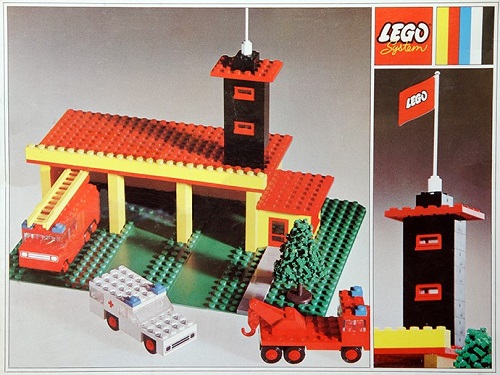
That’s because while you could get some actual “kits” to build specific things (I seem to remember having this little firehouse kit, or at least the vehicles shown):
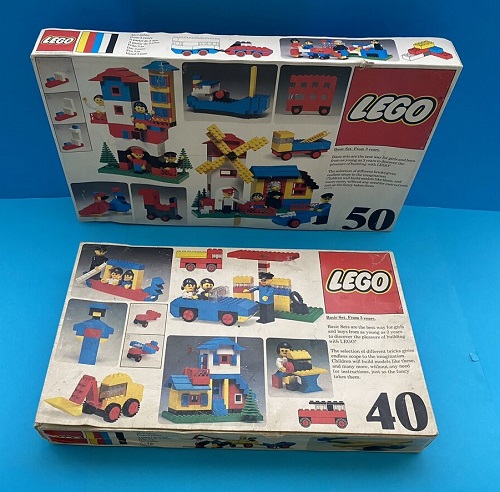
Mostly, it was just sold in big boxes of mixed blocks. There were white ones, red ones, probably some black ones too. Some were rounded so you could build a turret or cylindrical building if you wanted. Plus there were little doors, windows, blue ceiling shingles… all still connected with the blocks, plus a few less 3-d interlocking features like little trees, or wheel sets. Instead of following an Ikea furniture-like instruction sheet to build the kit to specification, we just used our imaginations and build what we felt like. To me that is a much more creative and ultimately satisfying toy, as much as I did like building a few scale models of real trucks in later years and have them look like the picture on the box.
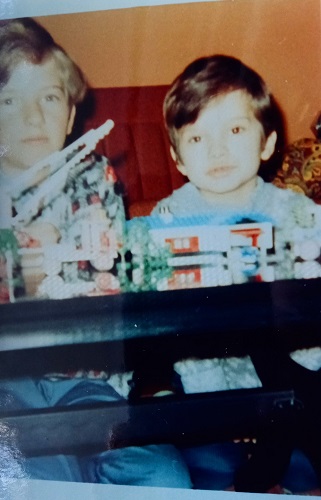
I had a very large box of mixed blocks and house accessories like windows, and a case that had extra ones from smaller kits I’d been given. I mostly loved building little houses with it. The blurry picture at the top shows me (on right) at probably three or four years old, with my older brother and some of our Lego creations. You can vaguely make out a little white house with blue roof I’d built, in front of me. And as an added bonus, don’t miss that early-’70s orange wall color! I had hours of fun building the houses, making each one look a little different. Sometimes I’d even draw a sort of floorplan for a house – bedroom here, living room there, door here – on paper and try to build one with Lego. When done, I’d maybe keep it on my desk or a table for awhile, then carefully take it apart and build something new. Every once in awhile, for a change, I’d take the base board that I usually built the individual house on and would stack up blocks into little skyscrapers and create a sort of city skyline, viewed from afar. And the wheels allowed me to change it up and build little cars or vans from my imagination too.
It was a great way to spend a rainy or snowy afternoon, building houses, or little castles or whatever I fancied, having something to show for it and then, best of all, it was reusable. Of course, I guess any really incredible creations could have been preserved, but the basis of the toy snapping together and coming apart meant you could use the same set endlessly…which perhaps was why they turned to more specialized kits later. From a commercial standpoint, a toy you only have to buy the child once and they keep using perhaps limits the market potential a little.
It’s a cliché but it’s also true – it was a simpler time. And, I say, for a kid growing up, a better time. I look back on those Lego creations, and Hot Wheels and model trucks with a lot of affection. I can hardly imagine today’s six year old in 50 years looking back fondly on playing a video game for hours or texting the kid next door all night. Thanks Keith for reminding us of this!
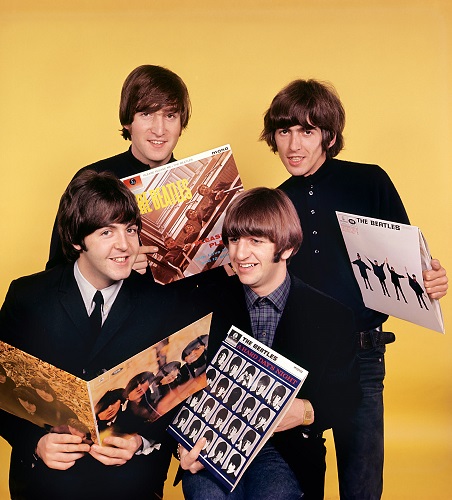
It’s time again for my contribution to Dave from A Sound Day’s monthly feature Turntable Talk. If you are keeping track, this is round #30! Way back when we started this, he asked us if the Beatles were still relevant. This time we circle back to the Fab Four and Dave wants us to write about our favorite Beatle. He is calling this round The Most Fab of Them All.
I have struggled in the past to narrow down what song or artist I am going to write about, but never like this. It shouldn’t be hard to pick one guy out of four, right? For me it is, believe it or not. Frankly, and I mean no disrespect to Dave, the topic is unfair. To me, a musical group or band is the coming together of people, each contributing something unique. Like a puzzle, when all the pieces come together, you have something amazing. To have to choose one is a daunting task.
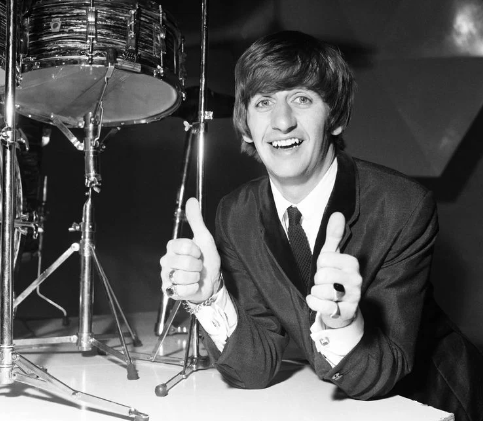
Let me start by saying that if you had asked me as a kid, without a pause, I would have chose Ringo. This may be because I was so familiar with the Beatles cartoon and Ringo always made me laugh. I also really enjoyed the almost all of the songs that he sang lead on. He went on to have some solo hits post-Beatles, too.
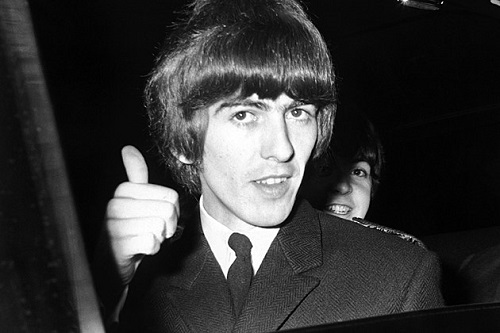
There are times I might have picked George Harrison, but probably not because of his Beatles stuff. Don’t get me wrong, he wrote the amazing song “Something,” which even Sinatra said was a beautiful love song. I also loved a lot of the early songs he sang on. Everybody’s Trying to Be My Baby is one of my favorites. George really gained my respect as a musician and songwriter post-Beatles.
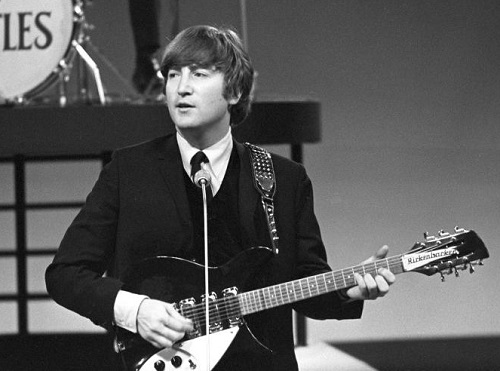
John was a quick wit and always made me laugh when I saw him in those early interviews. You cannot deny the songwriting power that he had both solo and with Paul McCartney. He really wrote some deep songs. To me, it is interesting to look back and see how he put much of his hurt, suffering and confusion into a song.
John was also a guy who wasn’t afraid to take a stand for something. Many of his solo songs are still as relevant today as they were when they were released. If only the people would listen to the lyrics of Imagine, maybe we’d see a change? Every Christmas I hear War is Over, yet every day when I go to MSN, there is some new story about Putin and World War III. Obviously, Give Peace a Chance is not something any of the world powers wants to do.
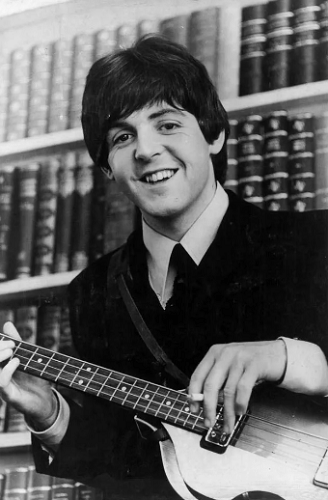
Then, there is Paul. I don’t have to really say much about his songwriting abilities. As a matter of fact, if you look at the output of the Lennon-McCartney machine, you cannot help but be in awe of the volume of work they put out. As a musician, he really was the greatest talent of the group. Before you get up in arms, let me prove it to you.
We know that he was best known for playing bass guitar for the Beatles. Growing up, his first instrument was the trumpet (given to him by his dad). He also knew how to play the piano, and did so on Beatles songs like Slow Down and Ob La Di Ob La Da. While it is a simple tune, you can hear Paul’s drumming skills on The Ballad of John and Yoko. As a matter of fact, he can play over 40 instruments including mandolin, cello, harmonica, harpsichord, and the ukulele. Watch his video from 2020 for Find My Way and you will see him playing many (FYI – it’s not my favorite McCartney song, but it is a good illustration).
While many songs had both John and Paul listed as writers, many were “all Paul.” Yesterday, Hey Jude, Blackbird, and Here There and Everywhere, just to name a few. Paul said once that the last one was the only one that John had ever complimented him on. John said in an interview that it “was all his” and was “one of my favorite Beatles songs.”
So why am I picking Paul? Honestly, if it wasn’t Paul it would be Ringo for the simple fact that they are still around. Both are still touring and in the public eye. I love watching Paul do interviews. He is fun to watch, tells great stories and isn’t afraid to be a part of something a bit silly.
One of my favorite McCartney moments was when Chris Farley interviewed him on SNL for the Chris Farley Show bit. How Paul kept a straight face through that still amazes me. Farley asks him, “Remember when they said you were dead? That was a hoax, right?” and Paul simply says, “I wasn’t really dead!” That always makes me laugh. How Paul keeps a straight face through the bit is beyond me. I wish there was a better quality clip…
There’s another great SNL bit where he and Martin Short and doing something for a Christmas Pageant. Martin says that he and Paul are a team but he is the only singer because Paul “cannot sing.” Paul plays the triangle in the bit. He misses cues and Martin screams at him through the whole bit. Paul is hilarious. The bit ends with Martin leaving and Paul asking, “Can I sing now?” Walls move and Paul walks onto the stage to sing Wonderful Christmastime, as himself.
Paul was fantastic on the Letterman show reminiscing about being there on the Ed Sullivan show. During the interview Dave says that they have been trying to get him on the show for years. He asks why it took so long to get him there, to which Paul says with a straight face, “I don’t like the show, David.” But THE highlight for me was to watch him do a rooftop performance of Get Back. I want to say that he wound up doing about a 40 minute concert from up there that night.
Another great Paul bit is when he shows up on James Corden’s show and does his Carpool Karaoke. The first song they sing together is Drive My Car and he’s having a blast doing it. The conversation between the two of them as they drive around is moving at times. Paul and James stop at Paul’s boyhood home and shares some great stories. The kicker is that they go to a pub that McCartney used to play at and he and his band surprise the patrons of it with a concert. It is worth a watch on Youtube –
As I write this, I have no idea what Beatle the other contributors have chosen. I am guessing that many of the pieces will be very music related. While I feel mine is also a bit music related, I also feel that what made Paul stand out to me was Paul being Paul. Paul, years away from the Beatles, talking about those days, the music, the memories, and the rest of the band. Paul, looking back at those early days that influenced and brought him to where he is today.
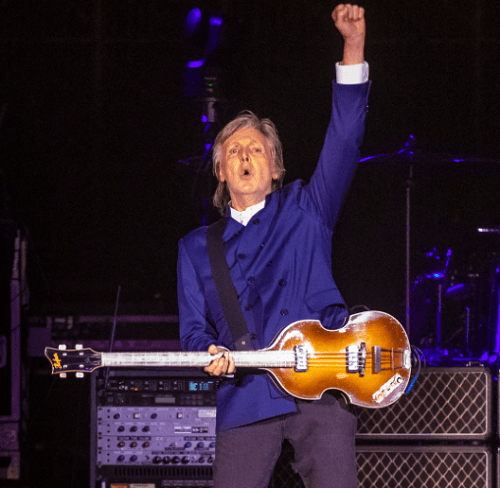
Not too long ago, country singer George Strait said he was done touring. George is 72. Sir Paul is 82 and still out there playing for sold out crowds for hours at a time. He is an artist who is always trying something new, while never forgetting his roots. He has a passion for the music and for his fans. He just seems to be that guy who’d be fun to hang out with.
Thanks to Dave for asking me to be a part of Turntable Talk. Thanks for another great topic. I love writing for it and love to see the responses from the other music lovers. Until next month … Thanks for reading.
I have been honored to take part in many features that are hosted by other bloggers and their sites. Honestly, writing for those features is really a lot of fun for me. Not to mention that you get some exposure for your blog on another site.
Themed blog-a-thons about movies are always fun to write for. Dave Ruch’s musical Turntable Talk feature is one of my favorites to participate in. Recently, Max at the PowerPop Blog did a week or two feature on the Kinks and their music. He said that he got a lot of positive feedback from that. Then, of course, we had our Song and TV Show Drafts which was a wonderful stroll down memory lane.
With that in mind, some of my blogger friends have said that I should host some sort of feature where my followers could join in and contribute a piece to be posted here. I have gone back and forth on whether or not this would be something that anyone might be interested in doing. Before making the decision, I thought I would ask for your opinion.
I called my site the Nostalgic Italian, because that’s who I am. I love the things of the past. I have no doubt that every reader of this blog has some sort of nostalgic memory that they could share. Let me say, without spoiling it for anyone, that I have a topic in mind. I randomly asked the question at work last week and was amazed at how passionate some of my coworkers were about it and how it led to about an hour long conversation.
So, if you think that you might be interest in taking part, I’d like to you comment here. Better yet, drop me an e-mail at: nostalgicitalian@yahoo.com. If you’d like to know the topic before deciding, I will e-mail it to you. I was thinking that this could be something that runs for a week or two (with every blogger getting a day devoted to their piece) in mid to late October.
If there is enough interest, I will compose an email with the topic and instructions. I’ll give a dead line to get your piece to me and then send out a schedule of when each piece will post. This works well with Dave and his Turntable Talk, so I see no need to do it any differently.
I’m not sure what to expect, but I really hope you will consider taking part. Why? Because I am truly interested in your answer to the question and it will let you explore your childhood a bit while coming up with that answer. If it turns out like I think it will, YOUR piece will not only bring back memories for you, but it will stir up memories for the other readers, too.
If you need more info – don’t hesitate to reach out.
Welcome back to The Music of My Life, where I feature ten songs from each year of my life. In most cases, the ten songs I choose will be ones I like personally (unless I explain otherwise). The songs will be selected from Billboard’s Year-end Hot 100 Chart, Acclaimed Music, and will all be released in the featured year.
I turned 15 in 1985. It was sophomore year and I had moved up from the Freshman band to the Concert/Marching band. It is the year that consisted of many of my favorite songs that I recently posted about in this week’s Turntable Talk blog. It was also the year that I went on my first date and my first dance. How did the music of 1985 play into my life? Let’s find out…
My first pick is a soulful tribute to two amazing singers who passed away in 1984. It is also the only hit that the Commodores had after Lionel Richie left the group. I am talking, of course, about Nightshift.
The song is a tribute to singers Marvin Gaye and Jackie Wilson. Marvin was 44 when he passed away, while Jackie was only 49. In 1974 the Righteous Brothers had a hit with Rock and Roll Heaven, where they picture fallen stars like Jimi Hendrix and Janis Joplin forming a band in heaven. This was supposed to be a soul version where Marvin Gaye and Jackie Wilson are on heaven’s nightshift, playing some sweet sounds.
I love how the intro starts with that percussion lick and the smooth bass line that works its way to the vocal. It is such a funky, soulful and loving tribute to Marvin and Jackie – two legends!
Nightshift
As a sophomore, I ventured out of my comfort zone a bit and decided it was ok to go to high school dances. Mostly, the guys just hung out at a table and talked. However, after my first official date, I began actually wanting to go to dances with a female date. While I cannot remember for certain, I am pretty sure that one of my first dances ever with a girl was to Crazy For You by Madonna.
Admittedly, I am not a huge fan of hers. My brother, on the other hand, loved her! There are a few songs that I do like by her, and this is one of them. What I remember most about dancing to this song was that she was singing “crazy for you” and I wasn’t sure what kind of message that may or may not have been sending to my date. I was also thinking about making sure I was swaying the same way she was and NOT stepping on her toes. It had to be a very uncomfortable dance for her.
Fun Fact: Madonna reportedly only took one take to record this song.
This was recorded for the soundtrack to the wrestling film Vision Quest, which also featured a guest appearance by Madonna herself, who played a singer at a local restaurant. After the success of this song, the film was renamed Crazy For You in some European countries to capitalize on the song’s popularity.
Crazy For You
How does that saying go? Everything old is new again? I don’t know. What I do know is that Netflix is currently airing the 4th installment of the Beverly Hills Cop Franchise and I hear it is doing well. It was back in 1984 that Eddie Murphy first played Detroit Cop Axel Foley. The character’s name is what led to the title of my next song, Axel F.
Before the title was settled on, it went by a different name. During production of the movie, it known as the “Banana Theme,” as it was slated for a scene where Axel Foley shoves a banana in the tailpipe of police officers intending to pursue him. The composer was German musician Harold Faltermeyer and truly, this song was all him.
According to Wikipedia, he recorded the tune using five instruments: a Roland Jupite-8 provided the distinctive saw lead, a Moog modular synthesizer 15 provided the bass, a Roland JX-3P provided chord stab brasses, a Yamaha DX7 was used for the marimba sound, and a LinnDrum was used for drum programming. Faltermeyer played every single instrument.
He was also the musical director on Beverly Hills Cop and did the score for the film. The soundtrack went to #1 in the US and won a Grammy for Best Album Of Original Score Written For A Motion Picture Or A Television Special. The song topped out at #3.
We played this at a concert one year in band, and though it sounds pretty easy, it was a bit tougher than I anticipated. It may have been in a weird key. It was one of many fun numbers we played.
Axel F
There are some songs that when you hear them, you cannot help but feel happy. My next pick is one of those songs. I have rarely played this at a party or wedding where it didn’t cause people to just get up and dance.
Remember the feeling you got when you first found out that someone truly loved you? There was that feeling of joy that just overflows from you! You can feel that joy and excitement in the vocals by Katrina Leskanich in Walking on Sunshine. It just makes you feel good!
The wife of one of my second cousins threw him a birthday party I DJ’d. The song was on the “must play” list. I remember having a conversation about the song and she said that it was the kid of song that you should play the minute you wake up in the morning. She said that it would just set the mood for the day. She always seemed to be in good mood when I saw her, so maybe she did just that!
Songfacts says, The video got a lot of airplay on MTV. It shows the band hanging around London, with Katrina very colorful and bouncy, and her bandmates more subdued. She had to make her own sunshine, as there was none in London – it was a typically cloudy and cold day.
Katrina’s look was anti-glam, with tennis shoes and the kind of fashions you’d find at the mall. In interviews from this time, she often took shots at singers like Madonna and Pat Benatar for adopting more suggestive looks.
Teen boys didn’t seem to mind….
Take four major country superstars, all who are friends with each other, pitch them an old song and tell them they should record it together and you get one really neat song. That’s the basic story of how Willie Nelson, Waylon Jennings, Kris Kristofferson, and Johnny Cash became The Highwaymen.
Country legend Jimmy Webb wrote the song about a soul with incarnations in four different places in time and history: as a highwayman, a sailor, a construction worker on the Hoover Dam, and finally as a captain of a starship. Webb released his version in 1977, it was covered in 1979 by Glen Campbell, who took the song to Johnny Cash, who was recording with Nelson, Jennings and Kristofferson.
The story goes that the four were all together in Switzerland doing a television special and decided that they should do a project together. While the four were recording their first album, Johnny’s friend Marty Stuart played the song for Cash, saying it would be perfect for them. It had four verses, four souls, and four of them.
The song led to the name of their supergroup, their album, and of course, their first single. Each of the four verses was sung by a different performer: first Nelson as the highwayman, then Kristofferson as the sailor, then Jennings as the dam builder, and finally Cash as the starship captain. Webb later observed, “I don’t know how they decided who would take which verse, but having Johnny last was like having God singing your song.”
No personal story to go with this one, I just like it!
I am embarrassed to say that up until 1985, I had never seen a James Bond movie. I was familiar with the fact that Roger Moore played Bond. My mom would rent Bond films on occasion and also watch them on cable. Moore played a Bond-like version of himself in Cannonball Run in 1981, but I had never really seen him AS Bond.
So when a friend of mine asked if I wanted to go to the show with him we saw A View to a Kill. It was actually neat to see this in the theaters. I had often seen the Bond movie intro being parodied, but to see it kick off the film and to hear the song was all new to me. I was grateful to be able to see it.
Knowing Duran Duran and some of their songs, I was surprised that they did the theme song. The story of how they got it is interesting. Songfacts says: “according to the bassist John Taylor, was that he approached the longtime Bond producer, Albert R. ‘Cubby’ Broccoli, while extremely intoxicated when they were both at a party. He stated that he was a long time fan (Major Bond geek would be more accurate. An Aston Martin was said to be one of his first “rock star” purchases, and he frequently mentioned his Bond video collection in interviews) of the series, but the music for the last few movies had been mediocre. He then offered to have his band fix the problem and Broccoli took the idea under advisement.Being asked to perform the theme song for a James Bond movie is a great honor, but the requirement to include its title in the lyrics can be challenging. Just ask John Taylor. “To this day we are forever grateful that we didn’t get Quantum Of Solace,” he said.
It is the only theme from a Bond movie to hit #1 in America.
A View To A Kill
I’ve made it all the way to 1985 and have yet to feature a Prince song. Not that I don’t like him, he was a musical genius. I am still blown away by his Rock and Roll Hall of Fame performance and his Superbowl Halftime Show. He was a talent, no doubt. My only real connection to him was that we play Let’s Go Crazy in Marching Band one year.
However, I can connect this one to me because it was on my 15th birthday that Prince released Raspberry Beret. Prince originally recorded “Raspberry Beret” in 1982, but re-worked it with his newly re-formed Revolution backing band.
At the time this was released, Prince was under fire from Tipper Gore during the notorious PMRC witch hunt, which placed two of his songs on the list of the “filthy 15.” So this is one of the songs where Prince started making his lyrics more family friendly. But if you really listen closely, you know that Prince still slipped in a “filthy” reference.
Raspberry Beret
1985 was the year that one of my favorite movies was released – Back to the Future. If you’ve read this blog for any length of time, I reference the movie a lot and have read my fair share of time travel novels. It is a masterpiece and I will always watch it when it is on.
When Marty realizes he’s going to be late for school and he leave’s Doc’s place on his skateboard, Huey Lewis and The News’ The Power of Love makes the perfect song to accompany the scene. How did Huey become involved?
The film’s director Robert Zemeckis wanted Lewis to do the song – Huey Lewis & the News were rising stars with a modern sound that worked well in the movie, which takes place in both 1955 and 1985. Lewis had never done film work and hesitated at first, since he didn’t want to write a song called “Back to the Future.” When Zemeckis told him that the song didn’t have to be about the movie, Lewis accepted the challenge.
All Back to the Future fans know that Lewis has an uncredited cameo in this movie. Lewis has an uncredited cameo in this scene, where he plays a teacher who is judging the auditions. An early scene in the film has Marty McFly and his band The Pinheads auditioning for the high school dance. Huey plays a teacher who is judging the auditions. The group plays the beginning of “The Power of Love,” but before Marty can sing a note, Lewis cuts them off, telling them, “I’m afraid you’re just too darn loud.”
The music video doesn’t contain scenes from the film, but does feature an appearance by Christopher Lloyd in character as Doc Brown. We see him pull up in the DeLorean outside of a club where Huey Lewis & the News are performing.
The Power of Love
Yesterday marked the 34th anniversary of the passing of Stevie Ray Vaughn. I debated posting one of his songs for Tune Tuesday, but opted for a more uplifting post.
I was late to the SRV party. I was introduced to him after he passed away. I marveled at his playing and his vocal abilities. I really fell in love with his music.
I wrote about this song before, probably for one of the Song Drafts we were doing. It is Stevie’s cover of the old Hank Ballard song, “Look at Little Sister.”
Look At Little Sister
My final pick is another fun song. It reminds me a lot of the Kinks Come Dancing (which I just wrote about for Max’s PowerPop blog) because of the sound of the opening keyboards.
The Dire Straits were coming off the success of Money For Nothing which really established the band on MTV and on Top 40 radio in America. The fourth single from their Brothers In Arms Album was Walk of Life.
Mark Knopfler wrote this song to celebrate the street buskers of London, hence the references to “Be-Bop-a-Lula” and “What’d I Say,” which were two standards that might be part of a singer’s repertoire in the mid-’80s. Before the lyrics kick in, Knopfler does a few “who-hoo”s, which help create a whimsical vibe. When he spoke with the BBC in 1989, he expressed some “woo-hoo” remorse. “There’s too many ‘woos’ at the beginning of ‘Walk of Life,'” he said. “I heard it on the radio the other day and thought, Oh my God! What was I doing that for?”
Walk of Life (US)
Walk of Life (UK)
What song defined 1985 for you?
Next week we’ll share some songs from 1986. As I look at the music from that year, there were some great music videos! The year will feature my high school class song, my first attempt at Karaoke – before there was Karaoke, and two fantastic cover songs!








 Various Ramblings of a Nostalgic Italian