The Big Chill was released to movie theaters this week back in 1983. The Lawrence Kasdan film featured an amazing ensemble cast that included Kevin Kline, Tom Berenger, Glenn Close, William Hurt, Jeff Goldblum, Mary Kay Place, JoBeth Williams and Meg Tilly. he plot focuses on a group of Baby Boomers who attended the University of Michigan, who reunite after 15 years when their friend Alex dies by suicide.
The soundtrack for the film featured some fantastic soul, R&B, and pop music from the 1960’s and 1970’s. Ten of the songs from the film were released on the soundtrack album; four additional songs not from the film were added to the original CD release as “additional classics from the era.” The rest of the film’s songs, as well as the “additional classics” from the original soundtrack CD were released in 1984 on a second soundtrack album, titled More Songs from the Big Chill.
One of the songs was the first big hit for a group called The Young Rascals. That song was Good Lovin’. Believe it or not, the group weren’t too happy with the song after the recorded it. According to songfacts.com:
Felix Cavaliere of The Young Rascals was listening to a New York soul station when he heard The Olympics’ version (from 1965). The Rascals liked it and played a sped-up version at their live performances with Cavaliere on lead vocals. They recorded the song for Atlantic Records, and although the group did not like the outcome, famed producer Tom Dowd loved the rawness of it and that version was released, becoming a huge hit. It went to #1 in April 1966.
Was it a surprise to the group? You bet! Felix Cavaliere admitted, “We weren’t too pleased with our performance. It was a shock to us when it went to the top of the charts.”
Felix says that the famous “One – Two – Three” countdown was each of the members saying one of the numbers. He told songfacts that the order was: Eddie Brigati (one), Gene Cornish (two), then Felix (three).
The song had a great false ending where there is about 1-2 seconds of nothing. Many DJ’s often played some silly movie drop in that space.
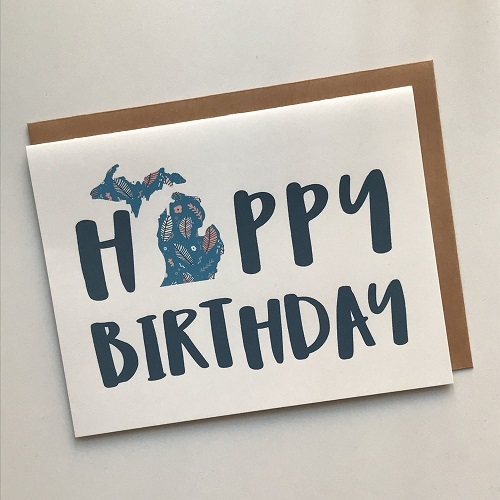
My home state of Michigan became the 26th state on this day in 1837. Happy 186th Birthday!!
Here are some cool facts:
Pledge
Did you know that there is a pledge of allegiance to the Michigan flag?? Next time you glance up at the dark blue banner with its shield, elk, moose and eagle, you’re welcome to utter these words written by Harold G. Coburn and officially adopted by the Legislature in 1972: “I pledge allegiance to the flag of Michigan, and to the state for which it stands, two beautiful peninsulas united by a bridge of steel, where equal opportunity and justice to all is our ideal.”
Michigander or Michiganian
The term many of use and love today was coined by none other than Abraham Lincoln in 1848. Then an Illinois congressman, Lincoln referred to Michigan governor Lewis Cass, who was running for president as a Democrat, as a “Michigander”, meaning he was as silly as a goose. Lincoln was mad at the Democrats for making more than they should have of Cass’ military experience, and the term was meant as an insult. “There is one entire article of the sort I have not discussed yet;” Lincoln said, “I mean the military tale you Democrats are now engaged in dovetailing onto the great Michigander.” Many prefer “Michiganian.” Neither is official.
Mining Precious Metals
Before anybody ever trekked to California to seek all that glitters in 1849, speculators flocked to the Upper Peninsula for copper in 1843, spurred by reports from the state’s first geologist, Douglass Houghton. Michigan copper was pure and plentiful, and the population of the remote Keewenaw Peninsula exploded as miners flocked from around the world, living in tent cities because houses hadn’t yet been built. Over the next 130 years, more than 5 million tons of copper would be mined. These days, the mines generate money in a different way: The Keewenaw National Historical Park draws visitors who want to learn about the area’s rich mining history.
The Lines Were First Drawn Here
We have Edward Hines to thank, who came up with the idea in 1911. He lobbied the state Legislature to give responsibility for roads to counties instead of townships and cities, a measure that was eventually adopted. As a Wayne County road commissioner, he lobbied for long-lasting concrete roads instead of gravel or asphalt. His brilliant idea came to him as he watched a leaky milk wagon drip a strip of milk down a dusty road and thought something like, “Hey! If we painted lines on our good concrete roads, drivers would know where the middle is!” It’s hard to imagine navigating Michigan road without help from Hines.
Other Random Things
In 1817 the University of Michigan was the first university established by any of the states. Originally named Cathelepistemian and located in Detroit the name was changed in 1821. The university moved to Ann Arbor in 1841.
Michigan State University was founded in 1855 as the nation’s first land-grant university and served as the prototype for 69 land-grant institutions later established under the Morrill Act of 1862. It was the first institution of higher learning in the nation to teach scientific agriculture.
Although Michigan is often called the “Wolverine State” there are no longer any wolverines in Michigan.
The Mackinac Bridge is one of the longest suspension bridges in the world. Connecting the upper and lower peninsulas of Michigan, it spans 5 miles over the Straits of Mackinac, which is where Lake Michigan and Lake Huron meet. The Mighty Mac took 3 years to complete and was opened to traffic in 1957.
Indian River is the home of the largest crucifix in the world. It is called the Cross in the Woods.
The Kellogg Company has made Battle Creek the Cereal Capital of the World. The Kellogg brothers accidentally discovered the process for producing flaked cereal products and sparked the beginning of the dry cereal industry.
Vernors ginger ale was created in Detroit and became the first soda pop made in the United States. In 1862, pharmacist James Vernor was trying to create a new beverage when he was called away to serve our country in the Civil War. When he returned, 4 years later, the drink he had stored in an oak case had acquired a delicious gingery flavor.
Michigan was the first state to provide in its Constitution for the establishment of public libraries.
The first auto traffic tunnel built between two nations was the mile-long Detroit-Windsor tunnel under the Detroit River.



 Various Ramblings of a Nostalgic Italian