
Turntable Talk #42 – Going Out on a High Note

It is time once again for a new Turntable Talk topic from Dave at A Sound Day. Each month he offers up a musical topic for us to write about. This month we are Going out on a High Note. Dave’s instructions to us:

We all have seen artists (not to mention athletes, politicians…) who stick around long after they should have exited gracefully. For this round, pick a musical artist who you think ended their career on a high note, a great final album, or triumphant concert tour before they grew stale.

I had a difficult time with this one. As I began to think of artists, I kept coming up with artists who are still recording and touring. Willie Nelson, for example, is still making music and hitting the stage. Has he stayed around “too long?” Some say yes, while other say no. So my search continued. Then I remembered Bill Withers.
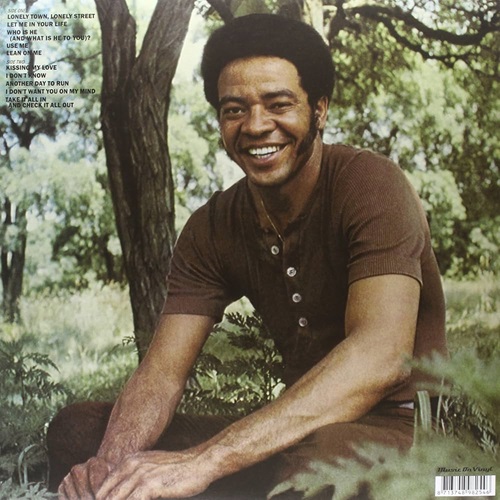
Bill served in the US Navy for almost 10 years. It was while he served our country that he began writing songs and became interested in singing. After he left the Navy, he decided to relocate to California in hopes of starting a career in music.

He found work as a mechanical assembler for several different companies including IBM, Ford, and the Douglas Aircraft Corporation. He used the money from his job to record demo tracks that he could take to record companies. He also began to play his songs in nightclubs in the area, hoping someone might discover him.

In 1967, he had his first official release – “Three Nights and a Morning.” It was a song that got little recognition. Three years later, he was signed to Sussex Records and Booker T Jones was assigned to produce Bill’s first album. That album, Just As I Am, included his first hit – “Ain’t No Sunshine.”
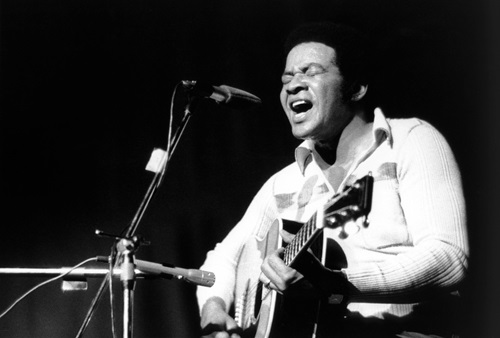
The album was a huge success and Withers rounded up a band and went out on tour. “Ain’t No Sunshine” was a Top 10 song and went on to win the Grammy for Best R&B Song in 1972. It also got him noticed by Johnny Carson’s Tonight Show, who sent him a letter inviting him to appear on the show.

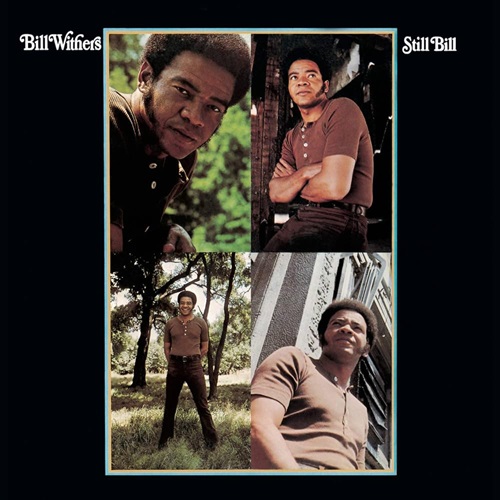
When his tour wrapped up, he used the time off to write and record songs for his second album entitled Still Bill. This album included Bill’s first #1 song – “Lean On Me,” which hit the top of the charts in July of 1972. This was followed up with his third million selling record – “Use Me.”
Bill’s relationship with Sussex record eventually went sour. He said of Sussex Records “They weren’t paying me.” He claims to have erased an entire album that he had recorded for the label in a fit of pique. “I could probably have handled that differently,” he said. There was an ongoing legal dispute with the Sussex company, and because of that Withers was unable to record for some time thereafter.

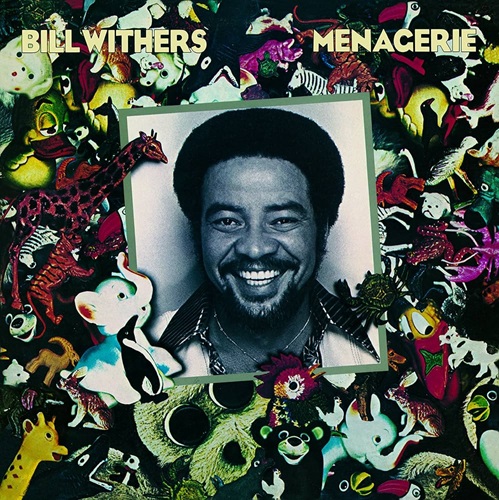
Sussex Records eventually went out of business and Bill had to find a new label. He wound up at Columbia Records in 1975. His first album on Columbia included the song “She’s Lonely,” which was featured in the movie Looking For Mr. Goodbar (which starred Richard Gere and Diane Keaton). He released an album every year afterward, including the 1977 album Menagerie which contained the hit “Lovely Day.”
Bill began to have trouble with Columbia. Apparently he was unable to get songs approved for his album. The label kept passing on the songs he wanted to record. Because of this, he decided to focus on joint projects beginning in 1977. He worked with the Crusaders, percussionist Ralph MacDonald, and jazz saxophonist Grover Washington Jr.

“Just The Two of Us” appeared on Washington’s 1980 album Winelight. It was released as a single in February of 1981 and went on to win a Grammy for Best R&B Song. In 1985, Withers released his final studio album, Watching You, Watching me. It was at this point that Bill decided to “go out on a high note.”

Withers was quoted in interviews that “a lot of the songs approved for the album—in particular, two of the first three singles released—were the same songs that had been rejected in 1982.” This played a big part in the eight-year hiatus between albums. Bill also stated how frustrating it was to see his record label release an album by actor Mr. T, when they were preventing him, an actual songwriter, from releasing his own.

With Columbia trying to exert control over his sound to sell more albums played a part in his decision to not record or re-sign with a record label after 1985. I would imagine the Mr. T thing played a part, too. This effectively ended his performing career, though remixes of his previously recorded music were released well after his “retirement.”

Withers was an artist who found musical success later in life. He was in his early 30’s when he began his career. Now at 47, he said he was socialized as a “regular guy” who had “a life before the music, so he did not feel an inherent need to keep recording once he fell out of love with the industry.” Bill felt he made the right decision. After leaving the music industry, he said that he did not miss touring and performing live and did not regret leaving music behind.

Accolades continued after his “retirement.” In 1988, he won another Grammy, this time as a songwriter for the cover of his “Lean on Me” by Club Nouveau. It won the Grammy for Best Rhythm and Blues Song. In 2005 he was inducted into the Songwriters Hall of Fame, followed in 2015 with his induction into the Rock and Roll Hall of Fame. He said:

“What few songs I wrote during my brief career, there ain’t a genre that somebody didn’t record them in. I’m not a virtuoso, but I was able to write songs that people could identify with. I don’t think I’ve done bad for a guy from Slab Fork, West Virginia.”

Bill passed away in March of 2020 in a Los Angeles hospital due to cardiac complications.

He is still receiving accolades in 2025. Last month, he was selected to be inducted into the National Rhythm and Blues Hall of Fame. The induction ceremony usually takes place in October.

Thanks to Dave for once again hosting Turntable Talk. I am already looking forward to what next month’s topic will be.

The Music of My Life – 1972

Welcome back to The Music of My Life, where I feature ten songs from each year of my life.  In most cases, the ten songs I choose will be ones I like personally (unless I explain otherwise). The songs will be selected from Billboard’s Year-end Hot 100 Chart, Acclaimed Music, and will all be released in the featured year.   I turned two in 1972, so what songs were influencing my tiny ears? Let’s find out.

By March of 1972, Badfinger was enjoying the success of their fourth album, Straight Up. Baby Blue was their last top 20 single. It reached number 14 on the charts. Todd Rundgren produced the song. Younger folks remember this song from the 2013 series finale of Breaking Bad.

Baby Blue

In April of 1972, the Hollies had a hit that was a film noir story set to music. Long Cool Woman in a Black Dress features an FBI agent, a bar filled with criminals and a 5’9″ beauty. Songfacts.com says: This tale of a government agent and a femme fatale contains one of the classic indecipherable lyrics in rock history. The part after “she was a long cool woman in a black dress” is “just a 5′ 9″ beautiful tall.”

The song should have been a number one, but Alone Again Naturally by Gilbert O’Sullivan prevented it from grabbing the top spot.

Long Cool Woman in a Black Dress

One of the biggest films of the year was The Godfather. The Love Theme from The Godfather is instantly recognizable. The music was composed by Nino Rota and most folks are familiar with the instrumental version. A lyricist named Larry Kusik actually wrote words to the song and it was recorded by Andy Williams under the title Speak Softly Love.

While it only reached number 34 on the charts, personally, I found the arrangement of this simply beautiful. Andy’s vocal is great, but give it a listen and just focus on the instrumentation of the orchestra.

Speak Softly Love

Three days after my second birthday, The Looking Glass released Brandy (You’re a Fine Girl). The story of the barmaid who serves the many sailors was from the band’s debut album and the song went to number one. The song was so popular that the US Social Security Administration saw a large increase in baby girls with that name in 1973.

This was not typical of the band’s sound, which caused a problem at concerts. While audiences expected pop songs like this one, the Looking Glass played rock, which left the crowds disappointed. The band broke up less than two years later.

Brandy (You’re a Fine Girl)

Also in May of 1972, the world was introduced to a little band known as The Eagles. The story behind their debut single Take it Easy is a great one. Here is the short version from Songfacts.com:

Jackson Browne started writing “Take It Easy” for his first album, but he didn’t know how to finish it. At the time, he was living in an apartment in the Echo Park section of Los Angeles, and his upstairs neighbor was Glenn Frey, who needed songs for his new band – the Eagles.

Frey heard Browne working on the song (he says that he learned a lot about songwriting by listening to his downstairs neighbor work), and told Jackson he thought it was great. Browne said he was having trouble completing the track, and played what he had of it. When he got to the second verse, Frey came up with a key lyric: “It’s a girl, my lord, in a flatbed Ford, slowing down to take a look at me.”

Browne turned the song over to Frey, who finished writing it and recorded it with the Eagles, who used it as the first song on their first album, and also their first single. Frey says Browne did most of the work on the song and was very generous in sharing the writing credit. He described the unfinished version of the song as a “package without the ribbon.”

Take It Easy

1972 introduced us to another new artist – Jim Croce. “You Don’t Mess Around With Jim” was his first single. After several years struggling for success and battling music industry politics, the song got the promotion it deserved when a rep at ABC/Dunhill named Matty Singer visited radio stations in the Philadelphia area to promote the song. It got solid airplay and national attention, which was followed by lots of positive press for the album. You Don’t Mess Around With Jim wasn’t released until nine months after it had been recorded, so Croce and his musical partner Maury Muehleisen had perfected the songs in performance, earning rave reviews.

You Don’t Mess Around With Jim

Here’s a story for you – The King of Rock and Roll was actually prevented from hitting the number one spot in 1972 by the Granddaddy of Rock and Roll. Yep, Burning Love reached number two on the charts while Chuck Berry held the number one spot with “My Ding-A-Ling!” Urgh!

Burning Love was the final Top 10 hit in the American Hot 100 or pop charts for Elvis. The electric guitar opening and riffs were overdubbed and played by Dennis Linde, the writer of the song. He performed the song in the concert movie Elvis on Tour, and because the song was still new to him, you can see him holding a sheet of paper with the lyrics on it.

Burning Love

In October of 1972, Motown’s of Stevie Wonder released on of my all time favorite songs. When some music bloggers were doing a “Song Draft” I actually picked Superstition as one of my songs. You can read that blog here:

Superstition

In September of 1972, Johnny Rivers released a cover of Huey “Piano” Smith’s 1957 song, Rockin’ Pneumonia and the Boogie Woogie Flu. In the late 50’s the country was hit with the Asian Flu, also called the “walking pneumonia.” The title of the song is a play on this. Johnny’s version did much better than Huey’s version. Huey didn’t even get into the top 40 (it peaked at 52), while Johnny had a top ten (peaking at 6). Playing piano on Johnny’s version was none other than the Wrecking Crew’s Larry Knechtel.

Rockin’ Pneumonia and the Boogie Woogie Flu

My final song from 1972 is a funky jam. There is so much that I love about Use Me by Bill Withers. The song was released on his Still Bill album. It has such a neat syncopated percussion line that interplays with the rest of the instruments and Bill’s vocal. Again, there is a great story about the writing of the song. It seems a lot of women were telling him he was just “too nice” and he wanted to change that. Bill said in an interview:

That’s fun stuff. That’s just talkin’ trash. That’s just a song about being a little playful, a little arrogant and a little cool. Unless you were one of those people that were born popular, I was a chronic stutterer until I was twenty-eight. I avoided the phone. So I wasn’t this popular guy. I remember being young and I would have girls tell me, “You’re too nice.” I didn’t understand that.

What kind of twisted world are we in? Women like bad boys, I guess. There is no more confusing form of rejection than for somebody to tell you that you’re not interesting to them because you’re too nice.

So over the course of time, you say okay, you wanna play, okay, let’s play? Use Me taps into that. I tried to be nice, now let’s get nasty. That song came quick. I was working in McDonnell Douglas out in Long Beach and the noise of the factory, they had some women working there. I crossed that line there thinking, “You all want a nasty boy? Well here I come.” [laughs]

Use Me

I hope you enjoyed my picks. What 1972 tunes were your favorites?

Next week – 1973! See you then