A huge piece of my childhood premiered 56 years ago today.
Long before Elmo and all of the newer cast members, I sat in front of the TV watching Ernie and Bert, Kermit, Grover, the Count, and Big Bird.
In 1985, Big Bird and the rest of the cast starred in the theatrical movie “Follow That Bird.” Along with the cast, there were some big name cameos: Chevy Chase, Joe Flaherty, Dave Thomas, John Candy, Sandra Bernhard, Eddie Deezen, Sally Kellerman, and Waylon Jennings!
When my oldest son was about 4 or 5, he used to watch this movie all the time. One of his favorite parts was when Waylon Jennings shows up. Jennings is a farmer who gives Big Bird a lift in his truck. On the drive he sings Ain’t No Road Too Long. My boy used to sing along.
This is sort of a continuation of the Music of My Life feature. It focused on music from 1970-2025. It featured tunes that have special meaning to me, brought back a certain memory or a tune that I just really like. I found that with the first three decades, there were songs that I didn’t feature. So I sat down with my original lists and selected some songs that “bubbled under,” so to speak.
I figured a good way to present them was to focus on a decade. 10 years = 1 song per year = 10 songs. Last week we looked at the 90’s. This week I have 10 more from the 90’s. Next week we’ll move to the 2000’s. So, let’s check out a few “Decade Extras.”
1990
To kick off the decade, I chose a song that is still played today and remains one of the most requested songs at parties and weddings. When Vanilla Ice hit the scene, many people mocked him, but all these years later, his song Ice Ice Baby remains a favorite.
In a 2016 interview, he explained that the song was based on a real life scenario. “The song tells you the story. It’s me, with my top down, in my 5.0 Mustang, cruising down A1A Beachfront Avenue. It’s a weekend experience that turned into an amazing song. It’s timeless. I still love singing it, and it never gets old.”
The song samples “Under Pressure” from Queen and David Bowie. Songfacts.com says: Vanilla Ice never got permission to use it. No lawsuit was filed, but it is likely that Vanilla Ice agreed to pay Queen and Bowie a settlement. According to industry insider Hans Ebert, Brian May of Queen first heard this song in a disco in Germany. He asked the DJ what it was, and learned that it was #1 in the US.
Ice Ice Baby
1991
In 1991, I was working at my first country station. I was familiar with many of the legends that were mixed into the playlist like Willie Nelson, Waylon Jennings and Johnny Cash. My dad listened to many of them, so I heard them, too.
The song Get Rhythm was a Johnny Cash song from 1956 as the B-side to I Walk The Line. Johnny’s music has influenced many an up and coming country singer. In 1991, Martin Delray decided to cover the song for his debut album. It had to be a thrill for Delray to have Johnny sing with him on the track AND appear in the music video.
I’ve always loved this song.
Get Rhythm
1992
Annie Lennox is best known for being in the 1980’s group the Eurythmics. It was her extremely successful and inventive duo with Dave Stewart. In early 1990, the group split and Lennox took time off to work on charitable endeavors and focus on her home life. In 1992 she released her first solo album, Diva.
The third single from the album was Walking on Broken Glass. Pop Matters Magazine described the song as a “gloriously weird pop song with one of the oddest intros: prancing strings, strutting keyboards, and the enigmatic line”. It went on to claim that “all of that make the track sound like nothing else on pop radio in 1992.” Honestly, I think that is why I like the song – it stood out.
The video was based on the 1988 movie Dangerous Liaisons, with elaborate costumes inspired by film, which was set in France during the 1700s. Annie Lennox recalled the song’s video in a blog promoting her 2009 greatest hits album:
“This was a wonderful video to create. There were some wonderful people involved – John Malkovich and Hugh Laurie (before he had an American accent)! That was tremendous fun. The idea of it being a period piece, like Les Liaisons Dangereux. The alternative title for ‘Broken Glass’ could easily have been ‘Hell hath no more fury than a woman scorned.’ The video is very wry and tongue-in-cheek. People can take me a little seriously sometimes, but I do actually have a rather radical sense of humor.”
Walking on Broken Glass
1993
Karaoke introduced me to the Gin Blossoms. I was going out the the bars a lot around this time and every once in a while someone would sing one of their songs. When I started driving for EDS and listening to the radio, I heard them much more.
Found Out About You was written by Doug Hopkins for the group’s first album, 1989’s Dusted. The album, however, was on a small label and really didn’t get noticed. When the band signed to A&M, they rerecorded the song for their New Miserable Experience album and it was released as the fourth single.
Singer Robin Wilson says, “The first time we ever demo’d “Found Out About You” we knew it was a hit song. I remember that being a significant event in my mind, when we were in the studio doing that song. I was sitting out on my car and what I imagined to be a hit song was a bunch of kids dancing to it at the Devil House. We were listening to it and Bill [Leen, the bassist] looked over at me and said, “Hey, wow, this song is going to get you a lot of women, isn’t it?” I was just like “Yeah, whatever.”
I was hooked from the opening guitar…
Found Out About You
1994
I heard Round Here by Counting Crows long after it had been released. This was one of the albums that my ex loved to listen to, so I hear it on long drives a lot.
Adam Duritz wrote the song and says it is sort of autobiographical. He wrote the song when he was in college and part of a band called the Himalayans. Members of that group helped with some lyrics and the music. When he formed Counting Crows, he brought the song with him and they reworked it a bit. Wanting to give everyone their due, Adam made sure to credit everyone in both bands with writing the song, so “Round Here” has eight different writers listed on the composer credits.
Songfacts.com says, The theme of childhood promises not panning out is one that shows up a lot in Duritz’ lyrics. In the chorus of this song, he lists some sayings that our parents often say: “Around here we always stand up straight,” “Around here we’re carving out our names.”
Adam says, “You’re told as a kid that if you do these things, it will add up to something: you’ll have a job, you life. And for me, and for the character in the song, they don’t add up to anything, it’s all a bunch of crap. Your life comes to you or doesn’t come to you, but those things didn’t really mean anything. By the end of the song, he’s so dismayed that he’s screaming out that he gets to stay up as late as he wants and nobody makes him wait; the things that are important to a kid – you don’t have to go to bed, you don’t have to do anything. But they’re the sort of things that don’t make any difference at all when you’re an adult. They’re nothing.”
Round Here
1995
When You Say Nothing At All was originally a hit for country singer Keith Whitley in 1988. It was co-written by Paul Overstreet. I had played it when I was at that first country station. I thought it was a great song lyrically, but wasn’t a fan of his voice. He died in 1989 of alcohol poisoning.
When some of Whitley’s friends decided to put together a tribute album to Whitley, they had other singers recording his songs. It was Alison Krauss who chose to cover “When You Say Nothing At All.
When I heard her version of the song, it stopped me in my tracks. Her voice is so beautiful and perfectly fit the song. Her voice took the song to an entirely different level. She knocked it out of the park!
When asked by Songfacts what he thought of the Krauss version, Overstreet said when he first heard it, “All the hair stood up all over my body. I was like, ‘Are you kidding me!?’ She sang it great.” It still gives me goosebumps!
When You Say Nothing At All
1996
I think whenever guys have a “guy’s night” or gals have a “gal’s night” they begin to talk and tell stories. “My wife/girlfriend does that, too!” or “Why is it that all men keep shirts or socks with holes in them?” You know, that kind of thing.
I have been guilty of asking male friends, “How come they can do that and we can’t?” It all falls into that “Battle of the Sexes” thing. Music has focused on those male/female differences for years, but I hadn’t heard it put the way Mindy McCready did in 1996.
It was at my second country station that I heard “Guys Do It All The Time.” It is the ultimate switcheroo song from the woman’s point of view. The song itself does a great job in conveying this, but the video only enhances it with gal’s doing guy things.
I saw Mindy in passing at a Radio Seminar, and she was even more beautiful in person. It was sad to see her life spiral out of control before her passing.
Guys Do It All The Time
1997
Picture it – you are getting ready to go on a trip or maybe you are being shipped off for the military. This is the last night you will be with your special someone for a while. You’d want it to last forever and make it special right? That’s the premise of Save Tonight by Eagle Eye Cherry. He wants to cherish this one last night spent with his love. He explains that you can’t fight changes, all you can do is accept them.
This was the last song Cherry wrote for his debut album and he wanted it to be special, “something that would stand the test of time.” He achieved his goal – two decades later, the song is still in rotation on throwback radio stations and is a fixture on the setlists of countless cover bands.
Songfacts says that the black-and-white music video was filmed in Sweden and follows Cherry in the roles of several different characters whose lives intersect, including an amiable young man, a bespectacled butcher, a robber, a truck driver, a busker, and a homeless man.
Cherry is actually a trained actor, having attended New York City’s School of Performing Arts, with credits that include a bit part on The Cosby Show and a stint as an ex-con on the short-lived TV drama South Beach.
Save Tonight
1998
Another song that really stood out to me on the radio was Iris by the Goo Goo Dolls. That opening guitar always seemed to cut through whatever was going on. It was almost hypnotic.
Songfacts says that lead Goo Johnny Rzeznik wrote this song for the movie City Of Angels, where it is sung from the perspective of Nicolas Cage’s character. In the film, Cage plays an angel sent to help humans make their transition to the afterlife. When he falls in love with a human (played by Meg Ryan), he must choose between love and eternal life.
Johnny explained how the film influenced the song: “I was thinking about the situation of the Nicolas Cage character in the movie,” he said. “This guy is completely willing to give up his own immortality, just to be able to feel something very human. And I think, ‘Wow! What an amazing thing it must be like to love someone so much that you give up everything to be with them.’ That’s a pretty heavy thought.”
Iris was nominated for Grammys in the categories Song of the Year, Record of the Year, and Best Pop Performance By Duo Or Group. It didn’t win any of them.
Iris
1999
It was around 1998-1999 that I took a leap of faith after deciding to give up on radio. I had received a call from a station in the Flint area. They had called the Detroit country station that I had just resigned from asking if they knew anyone who wanted full time work. The boss talked me up and gave them my number. It was from there that I would spend the next 10-12 years working full time in Country radio.
LeAnn Rimes was making quite a name for herself around this time. She had burst on the scene in 1996 with her debut single “Blue.” She was only 13 years old at the time!
In 1999, she recorded an album of country cover songs. It included Patsy Cline’s Crazy and She’s Got You, Hank Williams Your Cheating Heart and Lovesick Blues, and other classics. The album was entitled “LeAnn Rimes” and was her fourth studio album.
If you have ever been in a situation where your lover broke up with you, only to begin dating one of your closest friends, you know how much that hurts. How do you handle that situation? In country radio, you write a hit song about it. That song was only original song on the album – Big Deal.
What I loved about the song is the slow and deliberate opening verse. It almost has a gospel song feel to it. She is lamenting about letting her man get away and eventually winding up with her friend. Then the tempo kicks in and she let’s her rival have it. She’s tired of her bragging …
Big Deal
And that is a wrap on the 1990’s. You may remember that the further along I got in the original series the less songs I was able to come up with. I think I have enough to look at the early 2000’s and officially put this feature to bed. Next week we’ll glace at 2000-2009. I hope you’ll come back then.
Welcome back to The Music of My Life, where I feature ten songs from each year of my life. In most cases, the ten songs I choose will be ones I like personally (unless I explain otherwise). The songs will be selected from Billboard’s Year-end Hot 100 Chart, Acclaimed Music, and will all be released in the featured year.
I turned 15 in 1985. It was sophomore year and I had moved up from the Freshman band to the Concert/Marching band. It is the year that consisted of many of my favorite songs that I recently posted about in this week’s Turntable Talk blog. It was also the year that I went on my first date and my first dance. How did the music of 1985 play into my life? Let’s find out…
My first pick is a soulful tribute to two amazing singers who passed away in 1984. It is also the only hit that the Commodores had after Lionel Richie left the group. I am talking, of course, about Nightshift.
The song is a tribute to singers Marvin Gaye and Jackie Wilson. Marvin was 44 when he passed away, while Jackie was only 49. In 1974 the Righteous Brothers had a hit with Rock and Roll Heaven, where they picture fallen stars like Jimi Hendrix and Janis Joplin forming a band in heaven. This was supposed to be a soul version where Marvin Gaye and Jackie Wilson are on heaven’s nightshift, playing some sweet sounds.
I love how the intro starts with that percussion lick and the smooth bass line that works its way to the vocal. It is such a funky, soulful and loving tribute to Marvin and Jackie – two legends!
Nightshift
As a sophomore, I ventured out of my comfort zone a bit and decided it was ok to go to high school dances. Mostly, the guys just hung out at a table and talked. However, after my first official date, I began actually wanting to go to dances with a female date. While I cannot remember for certain, I am pretty sure that one of my first dances ever with a girl was to Crazy For You by Madonna.
Admittedly, I am not a huge fan of hers. My brother, on the other hand, loved her! There are a few songs that I do like by her, and this is one of them. What I remember most about dancing to this song was that she was singing “crazy for you” and I wasn’t sure what kind of message that may or may not have been sending to my date. I was also thinking about making sure I was swaying the same way she was and NOT stepping on her toes. It had to be a very uncomfortable dance for her.
Fun Fact: Madonna reportedly only took one take to record this song.
This was recorded for the soundtrack to the wrestling film Vision Quest, which also featured a guest appearance by Madonna herself, who played a singer at a local restaurant. After the success of this song, the film was renamed Crazy For You in some European countries to capitalize on the song’s popularity.
Crazy For You
How does that saying go? Everything old is new again? I don’t know. What I do know is that Netflix is currently airing the 4th installment of the Beverly Hills Cop Franchise and I hear it is doing well. It was back in 1984 that Eddie Murphy first played Detroit Cop Axel Foley. The character’s name is what led to the title of my next song, Axel F.
Before the title was settled on, it went by a different name. During production of the movie, it known as the “Banana Theme,” as it was slated for a scene where Axel Foley shoves a banana in the tailpipe of police officers intending to pursue him. The composer was German musician Harold Faltermeyer and truly, this song was all him.
According to Wikipedia, he recorded the tune using five instruments: a Roland Jupite-8 provided the distinctive saw lead, a Moog modular synthesizer 15 provided the bass, a Roland JX-3P provided chord stab brasses, a Yamaha DX7 was used for the marimba sound, and a LinnDrum was used for drum programming. Faltermeyer played every single instrument.
He was also the musical director on Beverly Hills Cop and did the score for the film. The soundtrack went to #1 in the US and won a Grammy for Best Album Of Original Score Written For A Motion Picture Or A Television Special. The song topped out at #3.
We played this at a concert one year in band, and though it sounds pretty easy, it was a bit tougher than I anticipated. It may have been in a weird key. It was one of many fun numbers we played.
Axel F
There are some songs that when you hear them, you cannot help but feel happy. My next pick is one of those songs. I have rarely played this at a party or wedding where it didn’t cause people to just get up and dance.
Remember the feeling you got when you first found out that someone truly loved you? There was that feeling of joy that just overflows from you! You can feel that joy and excitement in the vocals by Katrina Leskanich in Walking on Sunshine. It just makes you feel good!
The wife of one of my second cousins threw him a birthday party I DJ’d. The song was on the “must play” list. I remember having a conversation about the song and she said that it was the kid of song that you should play the minute you wake up in the morning. She said that it would just set the mood for the day. She always seemed to be in good mood when I saw her, so maybe she did just that!
Songfacts says, The video got a lot of airplay on MTV. It shows the band hanging around London, with Katrina very colorful and bouncy, and her bandmates more subdued. She had to make her own sunshine, as there was none in London – it was a typically cloudy and cold day.
Katrina’s look was anti-glam, with tennis shoes and the kind of fashions you’d find at the mall. In interviews from this time, she often took shots at singers like Madonna and Pat Benatar for adopting more suggestive looks.
Teen boys didn’t seem to mind….
Take four major country superstars, all who are friends with each other, pitch them an old song and tell them they should record it together and you get one really neat song. That’s the basic story of how Willie Nelson, Waylon Jennings, Kris Kristofferson, and Johnny Cash became The Highwaymen.
Country legend Jimmy Webb wrote the song about a soul with incarnations in four different places in time and history: as a highwayman, a sailor, a construction worker on the Hoover Dam, and finally as a captain of a starship. Webb released his version in 1977, it was covered in 1979 by Glen Campbell, who took the song to Johnny Cash, who was recording with Nelson, Jennings and Kristofferson.
The story goes that the four were all together in Switzerland doing a television special and decided that they should do a project together. While the four were recording their first album, Johnny’s friend Marty Stuart played the song for Cash, saying it would be perfect for them. It had four verses, four souls, and four of them.
The song led to the name of their supergroup, their album, and of course, their first single. Each of the four verses was sung by a different performer: first Nelson as the highwayman, then Kristofferson as the sailor, then Jennings as the dam builder, and finally Cash as the starship captain. Webb later observed, “I don’t know how they decided who would take which verse, but having Johnny last was like having God singing your song.”
No personal story to go with this one, I just like it!
I am embarrassed to say that up until 1985, I had never seen a James Bond movie. I was familiar with the fact that Roger Moore played Bond. My mom would rent Bond films on occasion and also watch them on cable. Moore played a Bond-like version of himself in Cannonball Run in 1981, but I had never really seen him AS Bond.
So when a friend of mine asked if I wanted to go to the show with him we saw A View to a Kill. It was actually neat to see this in the theaters. I had often seen the Bond movie intro being parodied, but to see it kick off the film and to hear the song was all new to me. I was grateful to be able to see it.
Knowing Duran Duran and some of their songs, I was surprised that they did the theme song. The story of how they got it is interesting. Songfacts says: “according to the bassist John Taylor, was that he approached the longtime Bond producer, Albert R. ‘Cubby’ Broccoli, while extremely intoxicated when they were both at a party. He stated that he was a long time fan (Major Bond geek would be more accurate. An Aston Martin was said to be one of his first “rock star” purchases, and he frequently mentioned his Bond video collection in interviews) of the series, but the music for the last few movies had been mediocre. He then offered to have his band fix the problem and Broccoli took the idea under advisement.Being asked to perform the theme song for a James Bond movie is a great honor, but the requirement to include its title in the lyrics can be challenging. Just ask John Taylor. “To this day we are forever grateful that we didn’t get Quantum Of Solace,” he said.
It is the only theme from a Bond movie to hit #1 in America.
A View To A Kill
I’ve made it all the way to 1985 and have yet to feature a Prince song. Not that I don’t like him, he was a musical genius. I am still blown away by his Rock and Roll Hall of Fame performance and his Superbowl Halftime Show. He was a talent, no doubt. My only real connection to him was that we play Let’s Go Crazy in Marching Band one year.
However, I can connect this one to me because it was on my 15th birthday that Prince released Raspberry Beret. Prince originally recorded “Raspberry Beret” in 1982, but re-worked it with his newly re-formed Revolution backing band.
At the time this was released, Prince was under fire from Tipper Gore during the notorious PMRC witch hunt, which placed two of his songs on the list of the “filthy 15.” So this is one of the songs where Prince started making his lyrics more family friendly. But if you really listen closely, you know that Prince still slipped in a “filthy” reference.
Raspberry Beret
1985 was the year that one of my favorite movies was released – Back to the Future. If you’ve read this blog for any length of time, I reference the movie a lot and have read my fair share of time travel novels. It is a masterpiece and I will always watch it when it is on.
When Marty realizes he’s going to be late for school and he leave’s Doc’s place on his skateboard, Huey Lewis and The News’ The Power of Love makes the perfect song to accompany the scene. How did Huey become involved?
The film’s director Robert Zemeckis wanted Lewis to do the song – Huey Lewis & the News were rising stars with a modern sound that worked well in the movie, which takes place in both 1955 and 1985. Lewis had never done film work and hesitated at first, since he didn’t want to write a song called “Back to the Future.” When Zemeckis told him that the song didn’t have to be about the movie, Lewis accepted the challenge.
All Back to the Future fans know that Lewis has an uncredited cameo in this movie. Lewis has an uncredited cameo in this scene, where he plays a teacher who is judging the auditions. An early scene in the film has Marty McFly and his band The Pinheads auditioning for the high school dance. Huey plays a teacher who is judging the auditions. The group plays the beginning of “The Power of Love,” but before Marty can sing a note, Lewis cuts them off, telling them, “I’m afraid you’re just too darn loud.”
The music video doesn’t contain scenes from the film, but does feature an appearance by Christopher Lloyd in character as Doc Brown. We see him pull up in the DeLorean outside of a club where Huey Lewis & the News are performing.
The Power of Love
Yesterday marked the 34th anniversary of the passing of Stevie Ray Vaughn. I debated posting one of his songs for Tune Tuesday, but opted for a more uplifting post.
I was late to the SRV party. I was introduced to him after he passed away. I marveled at his playing and his vocal abilities. I really fell in love with his music.
I wrote about this song before, probably for one of the Song Drafts we were doing. It is Stevie’s cover of the old Hank Ballard song, “Look at Little Sister.”
Look At Little Sister
My final pick is another fun song. It reminds me a lot of the Kinks Come Dancing (which I just wrote about for Max’s PowerPop blog) because of the sound of the opening keyboards.
The Dire Straits were coming off the success of Money For Nothing which really established the band on MTV and on Top 40 radio in America. The fourth single from their Brothers In Arms Album was Walk of Life.
Mark Knopfler wrote this song to celebrate the street buskers of London, hence the references to “Be-Bop-a-Lula” and “What’d I Say,” which were two standards that might be part of a singer’s repertoire in the mid-’80s. Before the lyrics kick in, Knopfler does a few “who-hoo”s, which help create a whimsical vibe. When he spoke with the BBC in 1989, he expressed some “woo-hoo” remorse. “There’s too many ‘woos’ at the beginning of ‘Walk of Life,'” he said. “I heard it on the radio the other day and thought, Oh my God! What was I doing that for?”
Walk of Life (US)
Walk of Life (UK)
What song defined 1985 for you?
Next week we’ll share some songs from 1986. As I look at the music from that year, there were some great music videos! The year will feature my high school class song, my first attempt at Karaoke – before there was Karaoke, and two fantastic cover songs!
Welcome back to The Music of My Life, where I feature ten songs from each year of my life. In most cases, the ten songs I choose will be ones I like personally (unless I explain otherwise). The songs will be selected from Billboard’s Year-end Hot 100 Chart, Acclaimed Music, and will all be released in the featured year.
This week we enter a new decade – the 80’s! As the final years of the 70’s ticked away, you could already start to hear the “eighties sound” creeping in. As we move through the decade that sound will change even more. What is also interesting is the amount of crossover hits in the years ahead. 40% of my list for 1980 has roots in country music.
So what was my 10 year old self listening to in 1980?
I did not know that the first song would perhaps unknowingly influence my career choice at 10 years old, but it may have. Released in February in the US, Charlie Dore reached number 13 on the Hot 100 charts with her ode to the radio DJ, Pilot of the Airwaves.
The lyrics are from the point of view of a woman who frequently listens, late at night, to a radio disc jockey whom she calls a “pilot of the airwaves”, keeping what has often been called the “dawn patrol”. She admits that she has few real-life friends and that the DJ keeps her as much company as she believes she needs, describing her life and the feelings she has2 surrounding the fact that she considers the radio DJ her only true friend. The DJ does not need to play the selection she has requested; she does hope the DJ will do his best along those lines, adding:
I’ve been listening to your show on the radio, And you seem like a friend to me.
Looking back on this song now, I can tell you that the one thing I learned was most important about being on the air was to have the listener feel as though they were just hanging out with a friend. That was always my goal – speaking one on one and keeping my listener company.
The song played a role in an early relationship, too. Two gals used to call the station all the time and one of them always wanted to hear this song. They decided to bring me coffee one night and I hit really hit it off with one of them. We dated for a while, and when an ex of mine called to ask me to take her back, I did. Ah, young love …. it really gets messy
Pilot of the Airwaves
A songwriter and producer named Steven Greenburg wrote a song when he became bored with Minneapolis and wanted to move to New York, which he called “Funkytown.” Lipps Inc. (pronounced “Lip Synch”) was formed especially for this song. The vocals were done by Cynthia Johnson, who was Miss Black Minnesota 1976. The song reached number one on the charts and stayed there for four weeks!
The group continued to record until 1985 with a changing lineup, but they failed to see the success they’d had with their first hit. Steven Greenburg, however, went on to have great success. He became A&R Vice President for Mercury Records, signing Hanson, among other acts. Later he headed the S-Curve Records label, signing the Baha Men and Joss Stone.
This song shows up in a lot of movies (Shrek 2, History of the World Part 1, Selena) and TV shows (Everybody Loves Raymond, Will and Grace, Malcolm in the Middle, and Friends) and VH1 ranked the song at #37 in the Top 100 One Hit Wonders.
Funkytown
It’s Still Rock and Roll to Me from Billy Joel’s Glass Houses album was one of Joel’s most popular songs and was his first #1 hit on the Hot 100, spending two weeks at the top spot in July 1980. The song spent 11 weeks in the top 10 and was the 7th biggest hit of 1980. It was released on May 12, 1980 – 3 days before my 10th birthday.
In this song, Billy Joel was making a comment on musical styles and trends. At the end of the disco era, the music press began touting the “New Wave” sound, which included bands like The Police and The Cars. Joel thought that this new sound was just a variation on power-pop that had been around since the ’60s. He didn’t have a problem with the music, just the way it was being categorized. “I like it, but it’s not particularly new,” he said.
He said in a Rolling Stone interview that “new wave songs, it seems, can only be about two and a half minutes long… only a certain number of instruments can be played on the record – usually a very few… only a certain amount of production is allowed or can be heard… the sound has to be limited to what you can hear in a garage… a return to that sound is all that’s going on now.”
It’s Still Rock and Roll To Me
Despite the next song being a huge hit in 1980, it is interesting that it goes all the way back to 1959 and has ties to Buddy Holly and the Beatles.
More Than I Can Say was originally written and recorded by Sonny Curtis and Jerry Allison in 1959. Curtis and Allison were both members of Buddy Holly’s band, the Crickets. They recorded it in 1959 soon after Holly’s death and released it in 1960 on their album In Style With The Crickets. The hook was left unfinished at the time, and at the time of recording, the hook was left this way with no lyrics, only the “wo-wo yay-yay,” which became a memorable part of the song. The single went on to become a minor hit in the UK. Curtis considers this song to be one of his most enduring, looking back at the success subsequent artists have had performing it.
It was also covered by Bobby Vee in 1961. Bobby, you may recall, was one of the artists who was chosen to play the remainder of the tour that Buddy Holly, The Big Bopper, and Richie Valens were doing when they died. Bobby’s version never cracked the Top 40 in the US, but was a Top 5 song in the UK.
From Wiki: According to author Mark Lewisohn in The Complete Beatles Chronicle, The Beatles performed “More Than I Can Say” live in 1961 and 1962 (in Hamburg and Liverpool and elsewhere). Author Allen J. Weiner in The Beatles: The Ultimate Recording Guide confirms this, noting that it came from a setlist made at the time by George Harrison. It is unclear who sang the lead vocals and no recording is known to survive.
The best known version of the song was by Leo Sayer. Sayer was looking for an “oldie” for his 1980 album Living in a Fantasy. He saw a television commercial for a greatest hits collection by Bobby Vee and chose the song on the spot: “We went into a record store that afternoon, bought the record and had the song recorded that night.” It spent five weeks at #2 on the Billboard pop chart in December 1980 and January 1981.
What I remember most about this song is that my dad’s wedding band used to play this in the set. My brother and I often heard it over and over as they rehearsed it.
More Than I Can Say
I will always see a dancing gopher whenever I hear the next song. “I’m Alright” is the theme to the movie Caddyshack, and plays at the beginning and end of the film. Kenny Loggins saw a rough cut of the movie before he wrote the song. He used the character Danny Noonan, who was a caddy with hopes for a brighter future, as inspiration.
Loggins told the St. Petersburg Times: “The character was trying to figure out where he fit. But at the same time he wanted people to leave him alone and let him find his own way. So I wanted to grab him and summarize that character, and that’s what ‘I’m Alright’ is doing.”
Do you recognize a familiar voice in the song? Eddie Money was recording in a nearby studio, and Loggins convinced him to sing a line on this song. That’s him in the background singing, “You make me feel good!” Money was unhappy that he never got credit for his contribution. “I’m not a fan of Kenny Loggins to tell you the truth,” he told Cincinnati morning show host Kidd Chris of WEBN in 2014. “I sang the bridge in that. We were label mates, you know.”
Fun Fact: When Loggins launches back into the chorus partway through the song, he stutters on the lyric, singing, “I- I’m Alright,” which was a happy accident. “I actually misjudged the entrance. In the arrangement, I delayed that entrance but I forgot when I was doing the lead vocal.” They decided to leave it in the song.
I’m Alright
Urban Cowboy was released in 1980 and country music was big. There were many country songs that crossed over to the pop charts. The next song, however, makes my list because I loved watching the Dukes of Hazzard every week. The first autograph I ever received was a postcard from James Best ( Sheriff Roscoe P. Coltrane)!
Waylon Jennings was the narrator in the 1975 movie Moonrunners, where he was credited as “The Balladeer.” When CBS created a TV show based on the movie, they asked Jennings to reprise his role as narrator (again credited as “The Balladeer”) and write the theme song. He came up with an outlaw-Country theme that fit the story of Bo and Luke Duke, who were good-hearted rebels from the fictional Hazzard county in The Dukes of Hazzard. Jennings appeared in all 121 episodes of the show until it ended in 1985.
Waylon recorded two versions of the song. The commercially available version receiving radio airplay contains a musical bridge which follows the first verse and chorus. Also, following the commercial version’s second chorus, Jennings makes a tongue-in-cheek reference to his faceless appearance in the credits by singing, “I’m a good ol’ boy, you know my mama loves me, but she don’t understand, they keep-a showin’ my hands and not my face on TV” (a statement referring to the opening shot in the television theme version where Jennings is only shown below the neck playing guitar). This version was a #1 Country hit.
Personally, I think the TV version is the superior version. One of the reasons is that it features Larry McNeely’s banjo work which the commercially available version does not. That banjo really makes a difference! Additionally, the television version’s third verse contains the lyric, “Fightin’ the system like two modern-day Robin Hoods”, which is accompanied by a “Yee-haw!” said by characters, Bo & Luke Duke (John Schneider and Tom Wopat. Fun Fact: The “Yee-haw is Schneider’s vocal used twice.
Here are both versions.
Theme from The Dukes of Hazzard
Another country themed movie from 1980 starred Willie Nelson, Honeysuckle Rose.
On The Road Again was written on the spur of the moment on an air sickness bag when Nelson was on a plane with Jerry Schatzberg, the director of the movie Honeysuckle Rose and its executive producer Sydney Pollack. He recalled to Uncut magazine: “They were looking for songs for the movie and they asked me if I had any idea. I said, ‘What do you want the song to say?’ and Sydney said, ‘Can it be something about being on the road?’ It just started to click. I said ‘You mean like, On the road again, I can’t wait to get on the road again?; They said, ‘That’s great. What’s the melody?’ I said, ‘I don’t know yet.'”
Willie put off writing the melody for months until the day before he went to the studio to cut the song. “I saw no reason to put a melody to something I wasn’t ready to record,” he explained in his 1988 autobiography, Willie. “I knew I wouldn’t have any problem pulling the melody out of the air.”
This was a #1 Country hit for Willie Nelson, and also one of his biggest crossovers, reaching #20 on the Hot 100, his highest placing at the time. It also won him a Grammy Award for Best Country Song in 1981.
On The Road Again
Hit Me With Your Best Shot was the first Top 10 record for Pat Benatar. It was the second single from her Crimes of Passion album. The song was written by guitarist Eddie Schwartz. His inspiration? A pillow.
Eddie says, “I was in a kind of weird therapy when I was in my mid-20s, it was called bio-energetics, I believe. One of the things we did was punch pillows, I guess it had something to do with getting out hostility. I went to a session where we punched the pillows for a while. It all seemed kind of strange, but I remember walking outside of this therapy session and standing on the doorstep of the building I’d been in, this small house in Toronto, and the title just came to me, ‘Hit Me With Your Best Shot.’ I haven’t been to therapy before or since. Maybe I should go back.”
The song can be interpreted as a song about a one-night-stand, but that’s not what its writer had in mind. Schwartz says, “The song is laden with sexual innuendo, but at the core is a song about self confidence. It’s a song saying ‘no matter what you throw at me, I can handle it, I can play in your league.'”
Pat Benatar retired “Hit Me With Your Best Shot” from her live sets in 2022 when she deemed the lyrics inappropriate in the light of a spate of mass shootings in the United States. “We’re not doing ‘Hit Me With Your Best Shot’ and fans are having a heart attack and I’m like, ‘I’m sorry, in deference to the victims of the families of these mass shootings, I’m not singing it.’ I tell them, if you want to hear the song, go home and listen to it,” she told USA Today.
Benatar added that though the title is tongue-in-cheek, she had to draw the line. “I can’t say those words out loud with a smile on my face, I just can’t,” she said. “I’m not going to go on stage and soapbox – I go to my legislators – but that’s my small contribution to protesting. I’m not going to sing it. Tough.”
Hit Me With Your Best Shot
I guess I would call the next song one of my forgotten favorites. You don’t hear it too often anymore, and it was really Terri Gibbs only bonified hit. I’ve always loved the sound of it and remember hearing it a lot on the radio growing up. Somebody’s Knockin’ was released in October of 1980.
When Terri was only six months old, she was diagnosed with retrolental fibroplasia and declared blind. She began playing the piano when she was three. When she was seventeen, she opened up for country legend Bill Anderson. It was another country legend who told her to move to Nashville and pursue a music career – Chet Atkins. She did just that when she was eighteen, but had no luck getting a record deal.
She moved back to Georgia and toured with a trio. She made a demo tape and sent it to record producer Ed Penney of MCA Records who signed her to the label in 1980. Penney was a former Boston disc jockey and a long-time songwriter. He liked her voice on her demo, but he felt she needed stronger material. So he co-wrote “Somebody’s Knockin'” for her and also produced the song. He also became her manager.
This song was a crossover hit upon its 1980 release, reaching No. 8 on the U.S. country charts, No. 13 on the Billboard Hot 100 and No. 3 on the Adult Contemporary charts. Her debut album won her the Academy of Country Music’s Top New Female Vocalist award. She was also the first winner of the Country Music Association’s Horizon Award (which is awarded to emerging artists), and was nominated for a Grammy Award for Best Country Song and Best Female Country Vocal Performance for the song.
In 1987, after struggling to have another country hit, she switched her focus to Contemporary Christian music. Her last album was released in 2017.
Somebody’s Knockin’
It is probably just a coincidence that I am writing this during a Michigan thunderstorm, but it is the appropriate background noise to accompany my last entry of 1980. Eddie Rabbitt was a country singer and songwriter who had a fair share of country and crossover hits. Here is another example of real life inspiring a song.
Eddie first got the idea for the song I Love a Rainy Night in the ’60s when he was sitting in his small apartment on a rainy night. He sang, “I love a rainy night, I love a rainy night” into a tape recorder, but didn’t complete the song until 1980, when he discovered the tape in his basement. He finished the song with the help of fellow songwriters Even Stevens and David Malloy.
The one thing I truly remember about this song was the intro. The song has a very distinctive feature – its rhythmic pattern of alternating finger snaps and hand claps. The snaps and claps were included with the help of percussionist Farrell Morris, who, according to The Billboard Book of Number One Country Hits, mixed two tracks of each to complete the record. I am sure this is what they intended, but I always picture the windshield wipers going back and forth in that rhythm (just like Eddie sings).
This song was a huge crossover hit! Eddie had great success with the song going to #1 on the Pop, Adult Contemporary and Country charts.
I Love A Rainy Night
So that brings my list for 1980 to an end. As I continue to listen to the thunder, I’ll ponder a bit on what is to come next week as we look at 1981. That was another important year for me and the influence of radio in my future. Why? Because I discovered a show that featured one of the best on air personalities to ever grace the airwaves …..
Welcome back to The Music of My Life, where I feature ten songs from each year of my life. In most cases, the ten songs I choose will be ones I like personally (unless I explain otherwise). The songs will be selected from Billboard’s Year-end Hot 100 Chart, Acclaimed Music, and will all be released in the featured year. In 1976, America celebrated her 200th birthday, while I celebrated my 6th. Let’s go back there together …
My first song actually goes back to 1969, Waylon Jennings saw an advertisement for Tina Turner in a newspaper, It called her a “good hearted woman loving two-timing men”, a reference to Ike Turner. Waylon went to Willie Nelson who was in a middle of a poker game, about writing a song based on that phrase. Joining the game, he and Nelson expanded the lyrics as Nelson’s wife Connie Koepke wrote them down.
Waylon released it as a solo single in 1971. Later, he recorded a concert version for his Waylon- Live album. This served as a basis for the duet with Nelson. “I just took my voice off and put Willie’s on in different places,” he explained. “Willie wasn’t within 10,000 miles when I recorded it.” When it was released as a single in 1976, it became the first of three number ones on the country chart for the duo.
Good Hearted Woman
In March of 1976, the Doobie Brothers introduced the public to their new lead singer, Michael McDonald. He wrote the song that would become the title track of the album, Takin’ It To the Streets. Industry folks were impressed.
Cash Box magazine said, “both instrumentally and vocally this is the best thing the Doobie Brothers have done to date,” adding that “the melody is based around a strong chordal structure.” Record World magazine said that the song “has all the essential qualities that have contributed to making this group a dominating chart force” and that “all these ingredients are wrapped together in an appealing package.” Ultimate Classic Rock critic Michael Gallucci rated “Takin’ It to the Streets” as the Doobie Brothers’ 6th greatest song, praising McDonald’s “soulful rasp” on the vocal. Billboard magazine rated it as the Doobie Brothers’ 3rd best song, saying that it “hits an elemental theme and drives it home with soulful urgency.”
From songfacts.com: The chorus is almost a chant, with the group singing “takin’ it to the streets” as Michael McDonald ad-libs underneath. This gives the song a church feel, which was intentional: McDonald thought the melody evoked gospel music, and wanted it to sound like a gospel song. This meant delivering a powerful message in the lyric and having lots of people sing on the chorus as the spirit moved them.
Takin’ It To the Streets
The next song is here because it is yet another ballad from my mom’s red 8 track tape that we were forced to listen to on our way up north as kids. I remember thinking “Who the heck names their kid, “England?” England Dan is Dan Seals, who had a series of country hits after he stopped performing with John Ford Coley in 1980. His older brother Jim was the Seals of Seals & Crofts, who had the hit “Summer Breeze.”
The duo’s biggest hit reached number 2 on the charts – “I’d Really Love To See You Tonight.” Seals and Coley met in high school. This was their first single, but it almost never made the radio. Songfacts.com says, “When “I’d Really Love To See You Tonight” was played to an executive at Atlantic Records, he turned it down. However Doug Morris of Big Tree Records heard the song through the wall of his over-joining office and offered the duo a contract.“
Listen carefully – One of the great misheard lyrics appears in this song: “I’m not talking about movin’ in” is often heard as “I’m not talking about the linen.”
I’d Really Love to See You Tonight
The next song on my list was written by Ann Orson and Carte Blanche. “Who?” you ask! I’m am sure that you are well aware of their real names – Elton John and Bernie Taupin! They wrote Don’t Go Breaking My Heart under those silly pseudonyms!
The song was originally supposed to be Elton and Dusty Springfield, but the offer was rejected because she was ill at the time. It was written to mimic some of the great Motown duets like those of Marvin Gaye and Tammy Terrell. Kiki Dee, who sings the duet with Elton, coincidentally was the first female artist from the UK to sign with Motown’s Tamla Label.
Songfacts.com shares this great story: Elton recorded his part in Toronto, then the tape was sent to London where Kiki Dee recorded her vocal. Producer Gus Dudgeon recalls, “I was with Elton in Canada and he actually sang about three quarters of the song and gave Kiki about four lines. I said, “Hang on a minute, is this supposed to be a duet or a guest appearance? Elton replied, ‘A duet.’ Then you’ve got to give her at least 50% of the song.”
After Elton recorded his part in Toronto, the tapes were sent to London and when Kiki got them she remembered, “Elton had recorded the song abroad and also did my vocals in a high-pitched voice which was quite funny, so I knew which lines to sing.”
Don’t Go Breaking My Heart
The next song is one that I had heard on the radio a million times before seeing the 2000 Saturday Night Live Sketch that will forever be associated with it.
“(Don’t Fear) The Reaper” was written and sung by Blue Öyster Cult’s lead guitarist, Donald Roeser, also known as Buck Dharma. It was rumored to be about suicide, but it actually deals with the inevitability of death and the belief that we should not fear it. When Dharma wrote it, he was thinking about what would happen if he died at a young age and if he would be reunited with loved ones in the afterlife.
Dharma was diagnosed with an irregular heartbeat, which got him thinking about his mortality and inspired the song. “I thought I was going to maybe not live that long,” he said wen interviewed by songfacts.com, “I had been diagnosed with a heart condition, and your mind starts running away with you – especially when you’re young-ish. So, that’s why I wrote the story. It’s imagining you can survive death in terms of your spirit. Your spirit will prevail.”
New life was given to the song on April 8, 2000. Saturday Night Live aired a skit with Christopher Walken that made fun of the overreaching cowbell in this song. In the sketch, the band would get upset when Will Ferrell would play the bell too loud, but Walken kept calling for “more cowbell.”
From songfacts.com: In the skit, Walken plays a super-producer named Bruce Dickinson, whom the band respects enough to put up with his cowbell antics. There really is a Bruce Dickinson , but he didn’t produce “(Don’t Fear) The Reaper” – that was David Lucas, who also brought us the General Electric “we bring good things to life” and the AT&T “reach out and touch someone” jingles. Dickinson is an archivist who works on album reissues, which means gathering master tapes to ensure the best sound quality. He is credited as the reissue producer on a later version of the album, which apparently is how he was named in the sketch.
When Lucas and Dickinson both appeared on the Just My Show podcast, Lucas explained that the cowbell was his idea, as the song “needed some momentum.” He grabbed a cowbell from a nearby recording studio and “just played four on the floor… not hard to do.” He found out about the SNL skit when a friend instant messaged him as it was airing.
Fun fact: Is the cowbell in this song really that loud? It depends on how you’re listening to the song. On a home stereo system, it’s pretty unobtrusive, but radio stations compress their signals, and when cowbell gets compressed, it pops out in the mix.
Don’t Fear the Reaper
The next song was actually performed three years before it was released to radio. The Steve Miller Band joined Buddy Guy, Junior Wells and the Marshall Tucker Band at a New York show and played a “more bluesy and less funky” version of Fly Like an Eagle. The lyrics were a bit different, too. It was re-recorded for the 1976 album with the same name.
This introspective and inspirational song reminds us that time is always ticking away, so we’d better make the most of it. The message of freedom through revolution is one Steve Miller picked up when he formed his Steve Miller band in San Francisco in 1966, a time and place that centered him in the counterculture as America was ramping up the Vietnam War.
A lot of the SMB songs from this time were story songs or songs about having fun, but this one had a pretty serious message to it.
Fly Like an Eagle
With a name like Arnold George Dorsey, you’d just have to change your name to be a singer, right? Sure. Why not change it to something simple … like… Engelbert Humperdinck!? Yeah, there ya go!
Say what you will about Engelbert, but you have to give him credit, he was certainly very well liked by fans! He first was noticed by audiences with his 1967 hit, “Release Me.” He followed that with “The Last Waltz,” “There Goes My Everything,” and ” A Man Without Love.”
When Epic Records released “After the Lovin'” in 1976, it became a huge hit for him. It hit number 8 on the Billboard Hot 100 chart and went to number 1 on the Adult Contemporary chart. It also won the “most played juke box record of the year” award. The album of the same name reached the top 20 on the US charts, was nominated for a Grammy Award, and was a Double Platinum hit for the singer. The song is one that I have played for countless brides and grooms to dance their first dance to.
Today, Engelbert is 88 years old and he is still performing! One of the bloggers I follow just saw him perform and said that he was terrific! God bless him!
After the Lovin’
The next song is one that I will always remember because the album we had was on blue vinyl! Elvis Presley’s Moody Blue was written by a guy named Mark James. Mark actually recorded the song first and also wrote Suspicious Minds for Elvis. The song was recorded in February 1976 in the Jungle Room at Graceland. “Moody Blue” was Presley’s last No. 1 hit in his lifetime, topping the Billboard Hot Country singles chart in February 1977. Elvis died six months after it hit number one.
Moody Blue
The next song technically was a hit in 1977, but it was released in November of 1976 on the Kansas album Leftoverture. Carry on Wayward Son has since become a classic rock staple!
It was written by guitarist Kerry Livgren. According to Livgren, the song was not written to express anything specifically religious, though it certainly expresses spiritual searching and other ideas.
Livgren became an evangelical Christian in 1980, and has said that his songwriting to that point was all about “searching.” Regarding this song, he explained: “I felt a profound urge to ‘Carry On’ and continue the search. I saw myself as the ‘Wayward Son,’ alienated from the ultimate reality, and yet striving to know it or him. The positive note at the end (‘surely heaven waits for you’) seemed strange and premature, but I felt impelled to include it in the lyrics. It proved to be prophetic.”
I have always loved the cold a cappella vocals that kick off the song!
Carry On Wayward Son
As we come to my final song from 1976, I realize that this year really has a wide range of songs. In a way that really fits who I am, as I like many different genres of music. That really comes across with this list. Ok, moving on…
Bob Seger only wrote two songs while on the road – Turn the Page and Night Moves. “Night Moves” was a breakthrough hit for Seger, introducing the heartland rocker to a much wider audience. He had been Michigan famous ever since his first album in 1969, which had the solid hit “Ramblin’ Gamblin’ Man.” That song went to #17 on the Hot 100, but over the next few years, he struggled to make a national impact. A big break came in April 1976 when his label, Capitol, seeing the success of Peter Frampton’s Frampton Comes Alive, issued a Seger live album, Live Bullet, recorded at two of his Detroit concerts in 1975. It quickly found a following and outsold every other Seger album. The song would reach number 4 on the Billboard Hot 100 chart.
Seger says the song is autobiographical, but he took some liberties, as their tryst was after high school. The girl he was with had a boyfriend away in the military, and when he came back, she married him, breaking Seger’s heart. Seger says the song represents the freedom and possibility of the high school years.
In an interview, Bob describes writing the song: It was inspired by the movie American Graffiti. It was all about cars and peg pants and rolled-up T-shirts with a cigarette pack up here and stiletto pointed shoes. That’s how I grew up, that was my high-school years. It was the easiest song in the world to write but the hardest song to finish. It took me six months to finish it. I had the first two verses. Then I’m listening to Born To Run and I notice in “Jungleland” Bruce had a double bridge. I never thought of two bridges in one song. So I have two bridges in “Night Moves.” People at Capitol Records told me after they heard the song “Night Moves” that I had a ‘career record”. They said: “This is a song that you’re gonna have to play for the rest of your life.”
The famous bridge in this song, where Seger strips it down and sings “I woke last night to the sound of thunder,” is something he and producer Jack Richardson came up with on the fly in the studio.
Night Moves
And that’s a wrap on 1976 for me. What were your favorites from ’76?
Disco continued to rise into the mainstream from 1974-1979. As we head into 1977 next time, I’m wondering how many disco songs may or may not be a part of my list …
There are some days I sit down and wonder what I am going to write about, today is not one of those days. Today is the “day the music died” – 60 years ago. The phrase comes from the classic Don McLean song “American Pie.”
The Winter Dance Party Tour
In January of 1959, Buddy Holly, Richie Valens, The Big Bopper, and Dion and the Belmonts set out to do a tour of 24 Mid-West cities in 24 days. The first problem was that no one had really thought out the tour stops and instead of circling from town to town, the tour was zig-zagging from state to state and sometimes the travel between cities was over 400 miles!
What made this even more difficult was that almost all of the travel was done on buses and there were break downs, and some didn’t have heat. The artists and band members were the ones loading and unloading the buses. Due to the cold, The Big Bopper and Richie Valens were starting to feel ill, complaining of flu-like symptoms. After driving 350+ miles from Green Bay, Wisconsin, the tour arrived at Clear Lake, Iowa on February 2 to play the Surf Ballroom.
When they arrived it became clear that Buddy Holly was over all of the bus issues. After the Surf Ballroom show, the next stop was over 350 miles away in Minnesota. Because of the poor planning of tour stops, this meant that the buses would have to pass through towns they had already played. Buddy decided that he needed some rest and so he chartered a plane to take him and his band (which included Waylon Jennings, Tommy Allsup, and Carl Bunch) to Fargo, North Dakota. They would rest there and get picked up by the buses when they came through town on their way to the gig.
There are a few versions of what happened next, but the widely accepted story is this: The Big Bopper, who was feeling the effects of the flu, asked Waylon Jennings for his seat on the plane. Waylon agreed to let him have the seat. (Some say that Waylon gave him his seat voluntarily.) One story says that when Buddy found out that Waylon was taking the bus instead of flying, he said “I hope your old bus freezes up” to which Waylon replied, “Well, I hope your old plane crashes”. In an interview later, Waylon said that even though the response was meant as a joke, his words still haunted him.
Richie Valens asked guitar player Tommy Allsup if he could have his seat aboard the plane. (There is some question as to whether Valens or the Big Bopper was the one with the flu.) It was decided that they would flip a coin to see who would get to go on the plane. A radio DJ who was working the show that night flipped a coin in a room off the stage and Richie Valens won the coin toss – and the seat. Ironically, Richie, at one time had a fear of flying.
The Flight
After the show, the manager from the Surf Ballroom drove Holly, Valens, and the Big Bopper to the airport. At the time the plane took off, there was light snow falling. The weather was supposed to get worse along the planned flight path. At 12:55 am, the plane took off from the airport. At 1:00, pilot Roger Peterson was supposed to radio to the airport to check in, but didn’t. The airport continued to try to reach him, but there was no answer.
In the morning, Hubert Dwyer, the owner of the flying service and the plane, took off in his own plane to retrace the path of the plane carrying Holly and the others. At about 9:30, less than 6 miles from the airport, he spotted the wreckage of the plane carrying the singers and pilot. The sheriff’s office was immediately dispatched to the cornfield where the plane had crashed, in Clear Lake, Iowa.
It is estimated that the plane hit the ground at almost 200 mph and did cartwheels before coming to a stop. The bodies of Buddy Holly and Richie Valens were thrown from the plane and were close to the crash site. The Big Bopper was ejected and thrown over a fence into a cornfield. The pilot’s body was wrapped up in the wreckage of the plane.
Afterward
When this happened, there was no protocol for withholding names of victims before notifying their family. Because of this, Buddy Holly’s widow found out about her husband’s death from a TV news story about the crash. They had only been married 6 months at the time of his death, and she was pregnant. She suffered a miscarriage shortly after because of “psychological trauma”. She did not attend her husband’s funeral and has never visited his gravesite. She blames herself for him getting on the plane, stating that if she had been with him, he would not have got on the plane.
An investigation into the crash found that despite the fact that the pilot had passed his written flight test, and had flown many hours, he was not prepared to fly in situations where he must rely solely on instruments (Which he would have had to do on this flight because of weather conditions). Another possible factor is the older equipment on the plane may have cause the pilot to believe he was ascending, but instead was descending. He was also not properly briefed on the weather conditions that he was flying into.
The tour continued for a couple weeks afterward with Waylon Jennings taking on the role of lead singer. Bobby Vee came to national attention due to the crash, because he was brought onto the tour because he basically knew all the words to the songs.
The Legends
22-year-old Buddy Holly left behind some songs that, despite his short career, have become rock and roll classics. Peggy Sue, Every Day, That’ll Be the Day, Rave On, True Love Ways, Raining In My Heart, and “I Guess It Doesn’t Matter Any More” remain on the play lists of oldies stations across the country. The Royal Philharmonic Orchestra has released an album of his music with his original vocals with a more orchestral background (they have done this with Elvis, Aretha Franklin, and Roy Orbison), giving the songs a fresh new sound.
The Big Boppper, AKA JP Richardson, will forever be remembered for his classic hits Chantilly Lace and The Big Bopper’s Wedding. He had a career as a radio DJ and also had great success as a songwriter. He wrote George Jones number one song “White Lightening” and Johnny Preston’s “Running Bear.” He was only 28 at the time of his death
Richie Valens was a mere 17 years old when he perished in the crash. His career was only just beginning, having begun just eight months earlier. He left behind three songs that remain fixtures in the first decade of rock and roll: Come One Let’s Go, Oh Donna, and, of course, La Bamba.
Like Elvis Presley, Otis Redding, Sam Cooke, Marvin Gaye, Jim Croce, John Lennon, and Stevie Ray Vaughn – all who left this world too young – we can only sit back and ponder how the face of music would have changed if they hadn’t died so young. Each of their careers cut short by a tragedy. Three voices silenced by fate.
Remembering Them
Every year, there is a memorial concert held at the Surf Ballroom to honor the memory of these three rock and roll icons. Outside the venue is a four-foot tall monument that had the names of the pilot and the three singing legends. This was placed there in 1988. At the crash site, there is a large steel structure which looks like a pair of glasses (much like the ones Holly wore), which stands as a memorial.
The most popular tribute is Don McLean’s 1971 American Pie. The song refers to the date of the crash as “the day the music died”. While some take this song to be about Buddy Holly, McLean insists that while the crash is referenced in the song, it is not really about Holly – it’s “about America.” He states, “Buddy Holly’s death is what I used to try to write the biggest possible song I could write about America. And not a ‘This Land Is Your Land’ or America, the Beautiful” or something like that. I wanted to write a song that was completely brand new in its perspective.”
The song will no doubt be played many times on radio stations across the country today.
Final thoughts
60 years later, artists such as The Beatles, Elton John, and Bob Dylan have all cited Buddy Holly as a musical influence. His songs have been covered by numerous artists including Linda Ronstadt, James Taylor, Bruce Springsteen and Martina McBride. There have been movies made surrounding the lives of Buddy Holly and Richie Valens. And the Royal Philharmonic Orchestra album with Holly’s original vocals is available now, too.
So has the music really died? I don’t think so. Today, as we remember the 60th anniversary of their tragic deaths, we must also look back and remember their music and the mark that they left on musical history. Their voices may now be silent, but their influence continues to trickle down through music today. Rave On!
This is an impromptu blog that comes about as a result of scrolling Facebook. I was reminded that it was 40 years ago today that “The Dukes of Hazzard” premiered on TV. This show was such a HUGE part of my childhood! I remember sitting in front of the TV faithfully every Friday night to see how Bo & Luke got out of trouble and avoid getting “cuffed and stuffed” by Sheriff Rosco P. Coltrane.
What kid didn’t watch in awe as the General Lee made yet another jump over something?! I remember loving it each time the General, Dixie, or a cop car fishtailed as it made a turn on the dirt roads of Hazzard County. Many of the kids in the neighborhood played “Dukes” during the summer. Our bikes served as the General Lee, Boss Hogg’s convertible, Cooter’s tow truck, or Rosco’s police cruiser. Of course, when we’d “jump” a curb, in our imagination, we’d be jumping over a cop car, jumping over a bridge that was out, or a ravine.
When the Dukes came out, I watched James Best as the bumbling sheriff and loved every minute of it. I learned how to do the “Rosco laugh” and when we played outside, I often assumed the role of Mr. Coltrane. My dad had bought be a cowboy hat, and on a trip to Mackinaw I bought a silver sheriff’s badge. I “was” Rosco – writing tickets and chasing Duke boys.
To this day, I feel that Rosco and Boss Hogg are often overlooked as one of TV’s great comedy teams! They played so well off each other. I remember how much I used to crack up when Boss Hogg called Rosco a “do-do” or “dipstick”. While not full blown slapstick, it still made me laugh.
The show had a great cast of characters, too. The good ole boys were, of course, Bo & Luke. As a kid, I thought bow and arrows were cool – but Bo & Luke made them cooler! They had sticks of dynamite on the arrows!! Uncle Jesse was the patriarch who kept everyone in line and always had a lesson to teach. Cooter was crazy, just like his CB handle. Enos and Cletus were the idiot deputies who were sometimes dumber and sometimes smarter than Rosco. And then there was Daisy….
Catherine Bach is one of my childhood crushes. I always thought she was beautiful. Every week, you’d see her in her bikini during the opening credits and then throughout the show, she’d be wearing her Daisy Duke shorts … yep, that’s where they got their name! There were three posters that boys in the 70’s had … Wonder Woman, Farrah Fawcett, and Catherine Bach! I had them all.
Everyone knew the theme song, too! Waylon Jennings sang it. He was also the narrator of the show. He had a hit with the song, which had an additional verse that poked fun of the fact that the only showed his hands and not his face on TV.
I remember I stopped watching the show a couple times. When Bo & Luke left and their cousins Coy and Vance (literally carbon copies of Bo & Luke) came to visit – even a kid knew that these two guys were nowhere close to Bo and Luke and we were glad to see them go. I also stopped watching when Rosco was replaced by Sheriff Grady (played by Darren #2 from Bewitched – Dick Sargent) for a short time. I haven’t watched the show in a long time, but I have been meaning to grab the DVD’s.
I remember when I was 9 or 10, I found a book of celebrity addresses (I think it was in one of the school book club order forms) and I wrote to James Best. I told him how much I liked watching the show and stuff. He sent me an autographed picture of him as Rosco with Flash the dog. I wish I still had that picture. It hung on my bedroom door for a very long time. It was my first celebrity autograph.
I feel bad for the kids of today. They have so many electronic distractions (tablets, cell phones, and video games) that they rarely “play” anymore. In this day and age, they seem to have trouble carrying on a conversation, grasping the concept of imagination, or being creative. For us, our imaginations ran wild when we were outside playing. We created the stories as we went along. We’d pick up wherever we left off the following day if it got too dark to play. As I reread this, it makes me smile and wish I still had that bike and cowboy hat! I am thankful that I was a child of the 70’s … we used to have a lot of fun!
Over the years I have been influenced musically by many people, but I would have to say that it is my father who has had the biggest influence. This blog is sort of a continuation of the “series” I have been doing based on “songs from my iPod”.
My dad introduced me to almost every genre of music. My love for oldies music comes from some of my earliest memories of songs he played. I was also introduced to classic country and country music in general by him. He played in a wedding band for years – the first being Now & Then, and the second was Foxfire. I recall him sitting in front of the stereo playing along with 45 records of songs that they were learning for gigs. I remember long nights when my brother and I had to go to “band practice” as well.
Rock and Roll music was a staple in our house, probably because it was the stuff he grew up listening to. The first song that comes to mind is Dream Baby by Roy Orbison. As a kid, I would ask, “Daddy please play ‘boom boom boom….bum bum boom'”. This was a reference to the bass notes that open the song. I loved that song. While so many other folks always connect Roy to Pretty Woman (a classic, no doubt), I remember Candy Man, In Dreams, and Crying. Roy was awesome – and dad introduced me to him.
He also introduced me to Elvis. Man, Elvis was cool! Sure, every one knows Hound Dog, All Shook Up, and the biggies….but dad played me songs like Steamroller Blues, Moody Blue, and Way Down! He had the Moody Blue album (which was on Blue Vinyl) and Elvis In Concert and I remember playing them on the stereo many times. I remember the look on my dad’s face when the news came on the radio that Elvis had died. We were at the drive in movie getting ready to watch Smokey and the Bandit, when Honey Radio announced it. Dad was shocked. We listened to Elvis music until dark and the movie started.
I have to include another person in this section about music – my Godfather, my Uncle Tom. He and my dad grew up together and their exploits can be an entirely separate blog. For now, let me talk about R&B and “local” music. When I first started working at WKSG (Kiss-FM) in Detroit, my dad asked if I could find him some songs. I told him I would look and if they were at the station, I’d throw them on tape for him. These were songs that he and my Uncle Tom grew up listening to.
As I looked over the list, I remember thinking, “What the hell are these songs? Were these even hits? Who are these people?’ The result was me getting a taste of some really amazing music. I cannot listen to any of these songs without thinking of them. This is music that was stripped down, funky, and amazing.
Mind Over Matter by Nolan Strong jumps out at first. This song is classic! Backing Nolan on this is the group the Diablos. Simple instrumentation and a powerful vocal makes this one of my favorites. This was not a song that would play on the radio much in the late 80’s, and I recall watching my uncle and my dad listening to the tape I made and loving every damn second of it. I watched them become transported back to when they were teens and jamming to these songs for the first time – it was magical!
Village of Love by Nathaniel Mayer is another one that is worth a listen just for the bass singer – it is R&B gold!. Two songs that were on his list (and now on my iPod) that were local hits that I absolutely love were by the band The Dynamics. I’m The Man and Misery are two very different songs, but they capture the sound of Motown prior to the Motown sound emerging.
A couple oldies that were on the list which we actually played in a regular rotation at WHND Honey Radio were Don’t Let Go by Roy Hamilton, You Can Have Her by Roy Hamiliton, So Fine by the Fiestas, Let’s Go Let’s Go Let’s Go by Hank Ballard and the Midnighters, What In the World’s Come Over You by Jack Scott, and Agent Double O Soul by Edwin Star. I loved when these songs would come up on the play list.
Another one that would come up was the song You’re So Fine by the Falcons. Wanna talk about stripped down? This one was as simple as they come. It was recorded in a garage with probably one or two microphones. You can totally tell that they it recorded all at once on one track and it was one take. You can even hear a little guitar feedback at the end. GREAT song! I love it!
My dad was instrumental in introducing me to blues music too. One of those songs that he and my uncle asked for was Baby, What You Want Me To Do by Jimmy Reed. Wow. It is one of those songs that DEFINES the blues in my opinion. Other songs he had me listen to were Fannie Mae by Buster Brown, which we played at WHND, Baby, Scratch My Back by Slim Harpo, Shake Your Money Maker by Elmore James, and The Thrill is Gone by BB King. The blues and R&B music helped shape Rock and Roll and these songs are a must for my iPod.
I grew up in the Urban Cowboy era when country music got a lot of attention and a lot of radio airplay. I don’t know that I would say country music is my dad’s favorite genre, but he sure introduced me to some great artists and songs. He, of course was responsible for me hearing Willie Nelson & Johnny Paycheck (who are mentioned in other blogs), but he also introduced me to Hank Williams Sr. and Jr. I recall him playing the two of them singing a duet on Tear in My Beer. This was high tech at the time, they took Hank Sr’s vocal and isolated it and then Hank Jr. sang with him, It was a great song with just Hank Sr., but adding Hank Jr. was excellent.
Another song he played for me was Okie from Muskogee. The opening line is “We don’t smoke marijuana in Muskogee”…not exactly the best song for a 10 year old to hear, but I had no idea what it meant and I liked Merle Haggard’s voice. I also recall him playing Amanda by Waylon Jennings. It is probably one of my favorite Waylon songs. Such a simple ballad, but I could listen to it over and over. I also loved when he bought the soundtrack to Smokey and the Bandit II because it was the only place you could find a great song by Don Williams called To Be Your Man. Among other acts he played were the great Ronnie Milsap, George Jones, Juice Newton, and Charlie Pride.
Two country albums I remember him calling me in to hear were from Dwight Yoakam and The Kentucky Headhunters. The Headhunters album had a great cover of Oh Lonesome Me on there, but the song he played for me was Dumas Walker. It sounded fresh and almost a little rockish. I remember immediately getting this on cassette for the car. The other album was If There Was a Way from Dwight. In my opinion, this is one of his best. My favorite cut from the album was never released as a single – The Distance Between You and Me. The instrumentation is perfect and the lyric is classic – almost Brad Paisley-ish. I crank it up ALWAYS.
On the “pop” side of things, a few songs stand out, most of which because they were songs he learned and played for his wedding band gigs. The first one I think of is the Breakup Song by Greg Kihn. I remember him putting the 45 on the stereo, and playing that intro over and over. The first time I heard him play it note for note, I was blown away! I loved watching him work out licks and chords and stuff by simply listening to it on the stereo! America by Neil Diamond was another. By the time this one came out, he was in Foxfire and playing bass guitar, not lead guitar. These guys were good. Not that the other band wasn’t, I just know that they sounded amazing. Dennis, the lead singer, (and at one time my boss at my first job) NAILED his vocals. I could swear he was Neil Diamond! Every song he sang was dead on. Man, I miss that group of guys!
Probably the craziest musical incident involving my dad was when he introduced me to the music of Red Prysock. My grandmother always wanted to go to garage sales. I think my dad hated it. There was a familiar look of disgust on his face one day when she asked to go. While at one garage sale, he was going through old 45’s. His face lit up with boyish excitement as he stopped at one 45 with a black label on it. I heard him so, “I can’t believe it…” He bought the 45 and couldn’t wait to play it for me … and to be able to hear it for the first time in years. Hand Clappin’ was the song. It was a jazzy sax number that caused to you tap your toes. It was GREAT. It was like nothing I had ever heard. My dad said that DJ’s used to use it for their “theme song” back in the day. Still remains a favorite for me. Who says garage sales are bad?!
Over the years, my dad has called me over to the turntable, the cassette deck, the CD player, the mini-disc player, and his computer with the words, “Hey son, listen to this …” Very rarely was I ever disappointed. Today, I listen to almost every type of music and have always kept an open mind to genres because of dad. I am so lucky that he was such an instrumental (pun intended) part of my musical influence. Thanks, Pop!
Today, Quincy Jones turns 85. He is a legend in the music business. He is a record producer, actor, conductor, composer, musician, TV & film producer, instrumentalist, magazine founder, entertainment company executive and humanitarian. He’s worked with some of the best musicians and produced some of the biggest albums in history. He has worked with everyone from Frank Sinatra to Michael Jackson. Call my crazy, but despite all of the things Quincy Jones is known for – I remember him for one thing – he recorded the Sanford and Son Theme song!
There was just something cool about this theme song. The opening bass line followed by the catchy melody. To this day, I laugh when I see a beat up truck driving around, I will sing the Sanford theme out loud! In an episode of Scrubs, JD and Turk are having a serious discussion, that eventually ends up with them singing and dancing to the Sanford theme! Recently someone did a “mash up” with Robin Thicke’s Blurred Lines and, you guessed it, the theme to Sanford and Son.
Today, many shows don’t even bother with a theme song. You see the credits scroll on the screen while the show is in progress. This is sad. A TV theme song kind of sets the mood for the show. It will be a song with catchy lyrics or a melody that you can hum along with. Today, lets go back and look at some of my favorite theme songs from TV’s past. When we’re done – tell me your favorites that I may have missed.
The 50’s
Two of the earliest themes on my list come from shows considered classics. First, The Andy Griffith Show. This catchy tune is one that you can whistle along with. Even without looking at a screen, whistling it makes you picture Andy and Opie walking with their fishing poles to the lake. Second, The Dick Van Dyke Show. What’s not to like about this one? You only have to wonder whether or not he’s gonna trip over the ottoman when he walks in the house.
Then there is the Twilight Zone. The haunting guitar part that plays those same four notes over and over is scary as hell! As a kid, I remember freaking out when it was on. Today, as I listen to it, it is perfect for the show. It was the perfect music to play while Rod Serling explained that we were entering another dimension. I can’t tell you how many times something obscure happens and I start humming the theme song!
Another one of my favorites was the theme to Perry Mason. It was written by Fred Steiner who said he wanted to capture Perry’s sophistication and toughness. The song is actually called Park Avenue Beat and it is a bluesy “piece of symphonic R&B”. The song was re-recorded for the Perry Mason TV movies and was used by the Blues Brothers band while out touring.
Another theme song that I absolutely love, has a Blues Brothers tie in, too. Peter Gunn is a private eye. The initial base line accompanied by low brass instruments screams sleazy private eye. It’s a great piece. The song actually plays in the first Blues Brothers movie as the brothers are driving through Illinois. They do a fine cover of it.
The 60’s
The shows of the 60’s and 70’s had some of the best theme songs!
The theme to Mission: Impossible is instantly recognizable. It was composed by the great Lalo Schifrin. What’s neat about the song is that it is in 5/4 time. From the opening note – you can see the fuse light up and begin to burn. It’s such a cool piece of music. I was glad that they used it in the movies with Tom Cruise (even though I disliked them).
Wanna sing along with the theme to Batman? You only need to sing the word “Batman” and you got it! Neil Hefti, who was a composer and arranger, composed the theme with it’s simple guitar lick and vocal. It was a hit for Hefti, The Ventures, and the The Marketts.
William Dozier, creator of Batman, also created the Green Hornet. Even though the show didn’t last long, the theme song is memorable for a few reasons. First, it is based on the classical piece, The Flight of the Bumblebee. Second, playing the trumpet on the song is the great Al Hirt! Classic! One that you will hum for days.
Who can forget the theme to the Monkees? “Here we come, walking down the street. We get the funniest looks from, everyone we meet….” Hey! Hey! They’re the Monkees! For this show, they gathered 4 guys with little or no musical experience and made them a band. The show appealed to kids and adults alike. It was fast paced with quick jokes and 4 lovable characters who featured many of their hit songs on the show.
In the 60’s the guitar played a big part in theme songs. Think about this, The Munsters theme had such a catchy lick that was sampled for the song Uma Thurman by Fall Out Boy. It was cool enough to sample for one of today’s hit songs.
One of those great guitar theme songs was to Get Smart. The opening sequence changed a little from season to season, but it always included Don Adams walking through a corridor with sets of doors one right after another until he finally makes it to the payphone that gets him into CONTROL headquarters. Love this song and it never fails, if I am ever walking down a long hallway – I will almost always start to hum this song.
I mentioned the Ventures earlier, and they have one of the coolest theme songs – Hawaii 5-0. It was a huge instrumental hit for the band. It’s a great balance of guitar and horns. The use of the tympani drum and the pyramid effect by the horns in this song is masterful! It’s one of those theme songs you instantly crank up.
The 70’s
Disco was in and some theme songs were just “funky”. Two examples of this are Barney Miller and it’s spin-off, Fish. The funky bass in the two theme songs is prominent and sets the tone for the them. The guitar melodies blend in and make them two themes that you could listen to over and over. The horns in Barney Miller continue to crescendo to the end of the song itself. It started slow and funky and ends in such a way that when it’s over you are disappointed cause you want more.
Norman Lear was a staple of 70’s TV. He created All In The Family, Maude, The Jeffersons, Sanford and Son, Good Times, and the list of his credits goes on and on. The Jeffersons was a spin-off of All In The Family. George Jefferson is “moving on up” to a bigger and better life and that’s where the theme song sets you up. It tells you the story. The theme song was written by Ja’net Dubois (of Good Times) and Jeff Berry and sung by Dubois and a gospel choir. Her vocal is amazing and so is the song.
How do I describe the theme song from What’s Happening!!? As the show opens, the main characters are running down a sidewalk bouncing a ball. The music kinda sounds like a ball is bouncing and then the soprano sax jumps in. It’s odd, but it’s catchy. It’s also written and composed by one of the most respected men in music – Henry Mancini!
The 70’s introduced us to the superhero Wonder Woman. I do not know a boy alive who did not have a crush on Lynda Carter. Much like the Batman theme, this theme repeats the character’s name a few times, but then expands on how wonderful she is. There is a funky little bass line that drives the song and I can’t really remember much more because I was watching Lynda Carter run ….
Welcome Back, Kotter was the show that introduced us to John Travolta. It was a comedy about a guy (Gabe Kaplan) who goes back to his old neighborhood to teach. The show was originally going to be called Kotter. The title was changed, however, because of the theme song. It was written and recorded by former lead singer of the Lovin’ Spoonful, John Sebastian. The song hit the charts and went all the way up to #1. This song give you the feel of the “folksy” 70’s.
The 80’s
There are so many great theme songs from the 80’s! Let’s start with Night Court. Night Court’s theme song throws me back to the 70’s because of that funky bass open. You also have that soprano sax melody. It’s not a long theme, and when it’s done, you wish that you could find somewhere an “extended club mix”.
Police Squad only produced 6 episodes and it was cancelled. It starred Leslie Nielson as Lt. Frank Drebin. At the time, the network didn’t think that a show like Police Squad would be something an audience would want to watch (so they could catch all the jokes – remember, this was done by the guys who gave us the movie Airplane!). The theme song was accompanied by a voice over announcer reading the credits. He would also announce tonight’s guest star (who would always die during the credits) and give the name of the episode (which never matched with the title read on the screen). Thankfully, when the Naked Gun movies were made, the kept the theme song.
In 1980, Urban Cowboy hit theaters and country music was all the rage. It only made sense that we’d have a country comedy show on TV. That show was the Dukes of Hazzard. Talk about big name singers – Waylon Jennings sings the theme song, and he was also the show’s narrator. The song was released as a single in August of 1980, and it went to #1 on the Billboard Country Charts! Yee-haw!
The 90’s
It is here that we begin to see the decline in the use of the TV theme song. As a matter of fact, it became a habit to edit them down to 10-30 seconds from the already short 60 seconds. There are some that stand out for me though from this decade.
Tim Allen’s Home Improvement was a show based on his comedy act. His grunts and vocalizations intermingle through the theme song, almost as if they are a part of the musical score. The theme song almost sounds like a “work” song, both in sound and in tempo.
Seinfeld was one of those shows who used a theme song for a while, and used it at the end of the show, but often times especially in the show’s later seasons, it was shortened. The bubbly, poppy, twangy bass, and silly feel will forever be associated with the show about nothing and it’s silly characters.
From the opening guitar of “I’ll Be There for You” by the Rembrandts, you are in New York with Ross, Rachel, Chandler, Joey, Phoebe and Monica. The theme to the show Friends was an international hit. It was a song that was requested on radio and used at wedding receptions to introduce bridal parties. The song is heavily influenced by the Beatles (I Feel Fine) and the Monkees (Pleasant Valley Sunday). It was originally just one minute long, but the band went in an recorded an extended version, which became a radio hit.
Who could forget It’s Garry Shandling’s Show? The show, in itself, was silly. Garry interacts with the cast, but often will interact with the studio audience as well. It was just so weird. The theme song is just as weird. It’s a bouncy song that basically references itself (this is the theme to Garry’s show) and tells you how it came to be (Garry called me up and asked if I would write his theme song) and then asks how you like it (we’re almost halfway finished how do you like it so far?). The melody is so catchy, you can’t help but want to sing (or whistle) along with it.
Wrapping up
With the TV theme song becoming more and more absent from TV…what are your thoughts? Which ones did you love growing up? Which ones do you still sing? Which ones did you hate?
Now it’s your turn – I look forward to seeing your comments.

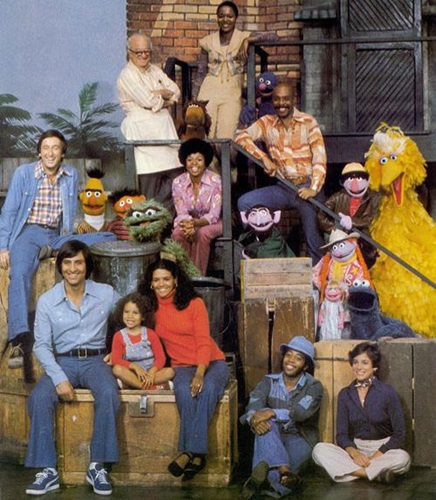

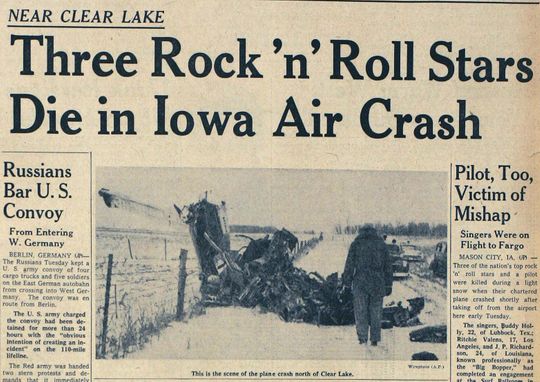

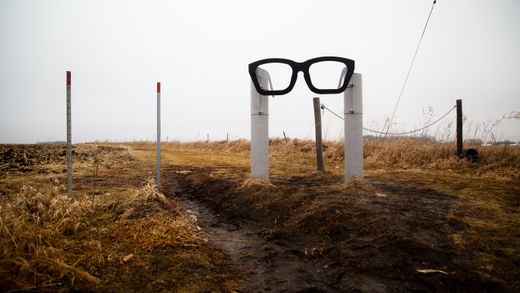
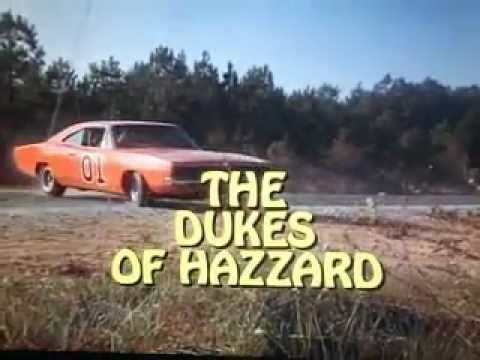
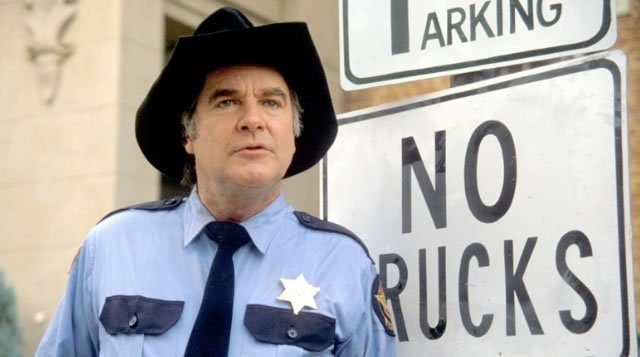
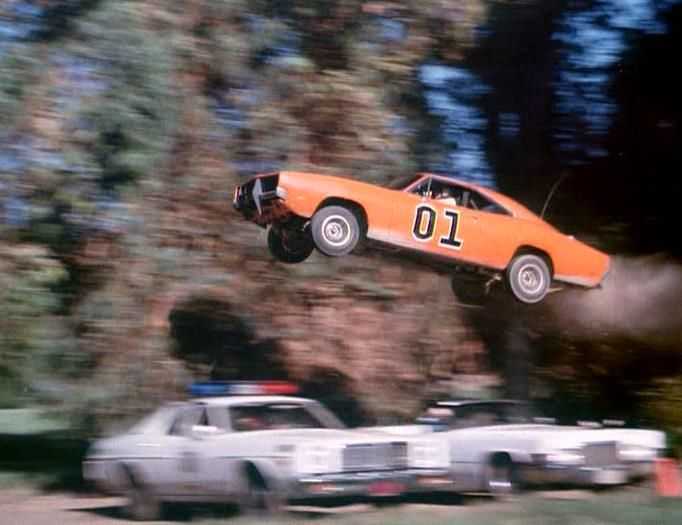
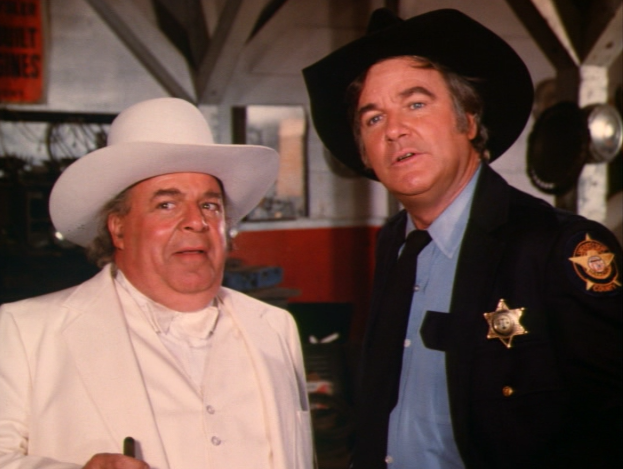
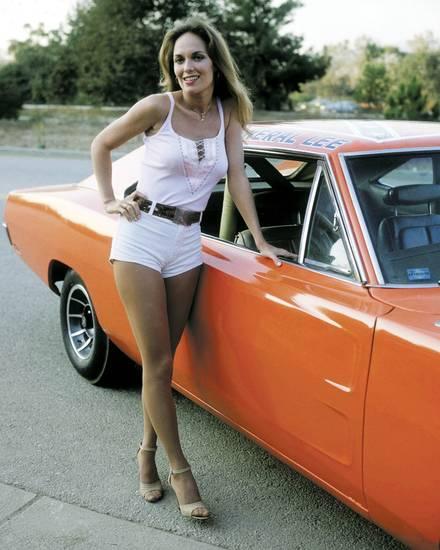
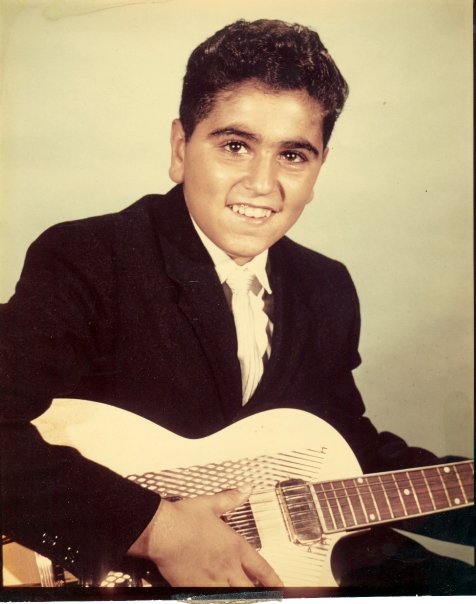
 Various Ramblings of a Nostalgic Italian