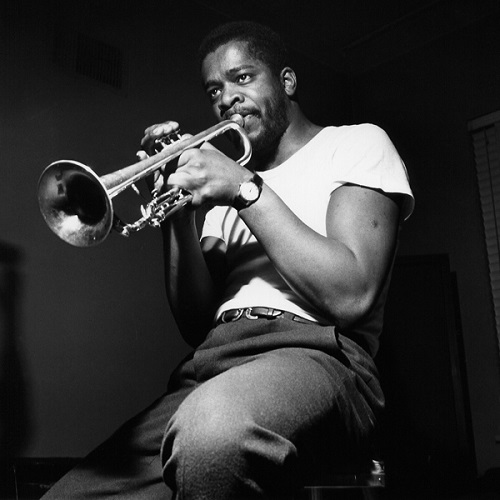
Today, we shine the light on another hometown hero. Donaldson Toussaint L’Ouverture Byrd II, better known to the music world as Donald Byrd, was born on this day in 1932.
He was born in Detroit, Michigan. His mother introduced him to jazz music, and his uncle gave him his first trumpet. He attended Cass technical high school. Byrd played in a military band while in the US air force, took a music degree at Wayne State University in Michigan and then studied music education at the Manhattan School of Music in New York. He joined the Jazz Messengers in the mid-1950s. Byrd’s trumpet predecessors in Blakey’s company had already included the graceful, glossy-toned Clifford Brown and the Dizzy Gillespie-influenced Kenny Dorham, but the newcomer with his polished phrasing and luxurious tone was recognised as a technical master equal to both. He was even heralded as the new guiding light in jazz trumpet.
He was prolifically active in the late 1950s, in demand for sessions on the Savoy, Riverside, Fortune, and Blue Note labels. At the end of the decade he was also leading or co-leading his own ensembles. He was mostly operating in the laconically pyrotechnical, blues-inflected hard-bop style.
He formed the Blackbyrds, a soul and funk band, from a pool of his Howard University student. In the early 70’s his music ventured into dancefloor jazz and fusion. In 1973, his album Black Byrd was a million seller and brought Blue Note label more income than it had ever generated from any release before.
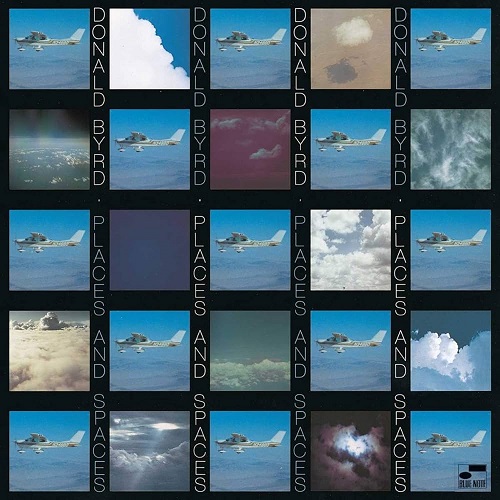
In 1975, he released the album Places and Spaces. Allmusic awarded the album with 4 stars and its review by Stephen Thomas Erlewine states: “Boasting sweeping string arrangements, sultry rhythm guitars, rubbery bass, murmuring flügelhorns, and punchy horn charts, the music falls halfway between the cinematic neo-funk of Street Lady and the proto-disco soul of Earth, Wind & Fire.”
In the late 80’s, when I worked at WKSG, Kiss-FM, we had a regular listener who would call and ask for Donald Byrd, even though we were an oldies station. He called every station in town and it wasn’t odd to be listening to another station and hearing him on the air. His name was Joe. He always asked for the same song, “Wind Parade.”
On one occasion, my pal Johnny Molson and I were talking with Joe, and he has some funky jazz playing in the background. We asked him what he was listening to and found out it was Byrd. So we did to him what he did to us, we requested he play Wind Parade. Neither of us had ever heard the song before. I think we were both genuinely interested to hear it.
As the song begins, there is a piano and syncopated cymbal beat. The a guitar riff plays along with the established beat. What Johnny and I did not expect was Joe belting out the words and singing along to the song. I cannot even describe what it sounded like, but John and I immediately collapsed in laughter.
As we laughed at this unexpected solo, the music continued. At some point he stopped singing and asked, “How do you like it, Johnny?” He had barely caught his breath long enough to say, “That’s great, Joe” only to continue laughing more.
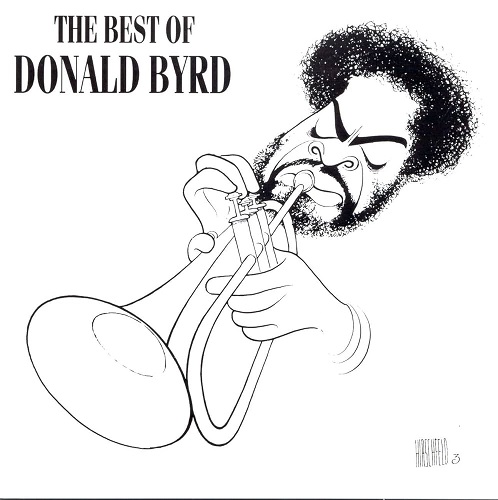
And that is how I discovered Donald Byrd. One day, while shopping at a local record store, I couldn’t believe it when I found his greatest hits CD. I picked it up without hesitation and gave it a listen. There is no doubt, he could play the trumpet well, and there were some neat tracks on the CD. It was “Wind Parade” that got the most play. Every time the vocal hit in the song, I could hear Joe singing along!
He passed away in 2013. One obituary said, “Byrd’s real legacy is his contribution to music education in a culture that spawned jazz but then neglected it – a role he pursued from the unique vantage point of having been a leading player in the idiom. His work has been sampled by pop and hip-hop artists including Public Enemy and Ice Cube, and many young musicians at work today owe their education, and the widespread acceptance of their art, to his tireless pursuit of stature and respect for jazz.”
It is time once again for another edition of Turntable Talk. This is a feature created by my friend Dave Ruch from the A Sound Day Blog. This is my 18th submission for this feature and it is something I look forward to writing each month.
This time around, Dave took us to the Land of Oz for inspiration. His instructions:
“Pay No Attention to That Man (Or Woman) Behind The Curtain” . Yep the famous phrase about the Wizard of Oz.
We’ve looked at a number of great artists – singers, groups, musicians – and their records. This time we’re switching it up just a little and are going to salute someone “behind the scenes” that was significant to music. All too often people do pay no attention to the people behind the curtain in music that are so important to the albums and groups we love. There are record producers, the record company bosses and talent scouts, the people on radio who used to make the hits happen, even unsung heroes like concert roadies. Pick one you feel is important and maybe a little un-noticed and tell us why!
As a former radio guy, I immediately thought I should write about a well known DJ. There are many of them who played a big part in the music industry. Dick Clark, Casey Kasem, Wolfman Jack and Alan Freed come to mind. However, I decided that I would feature a man who played on some of the biggest hits on the radio, yet until recently was relatively unknown.
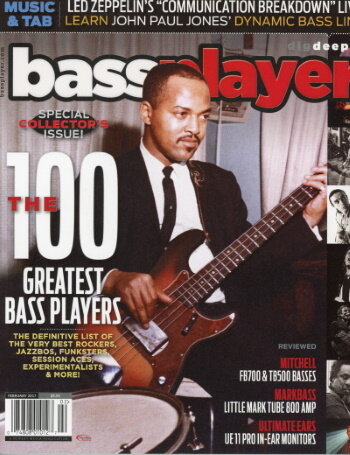
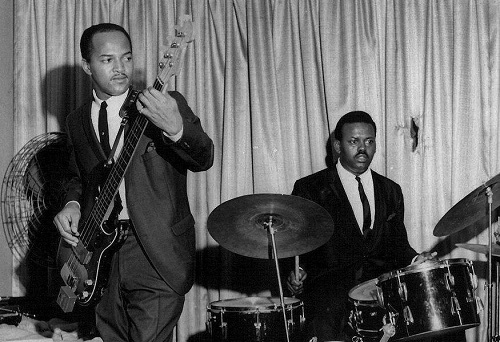
40 years ago, James Jamerson passed away at the young age of 47. At the time he passed away, no one really knew who he was, despite being one of the best (if not THE best) bass player of all time! As a matter of fact, he often tops the list of Best Bass Players of all time by numerous publications. It has been said that he single-handedly revolutionized bass playing. I agree. His creative contributions to music certainly makes him a good pick for a “man behind the curtain.”
James Jamerson was born on January 29, 1936 in Charleston, SC. When his parents divorced, his mother moved to Detroit to find work. He would spend time with his aunt, grandmother and cousin. His aunt sung at church while his grandmother and cousin played piano. He spent time listening to gospel, Jazz, and blues music and that influenced his own musical abilities.
In 1954, his mother sent for him and he attended Northwestern High School. In the music room of the high school, he saw a stand up bass lying on the floor. He picked it up and began to play with it. He had “found” his instrument. He began to play at many of the Detroit area blues and jazz clubs.
He began to get noticed and he began playing for dances, weddings, frat parties, and other events. He was quite a local celebrity. It was hard to miss him driving through town with his bass sticking out the window of his car! Because he was still a minor, the good folks at the Detroit Police Dept. gave him a permit so that he could play in clubs that served alcohol. This allowed him to get more work.
Believe it or not, Wayne State University offered him a full ride music scholarship which he turned down! He was playing so often, he figured he was already in the music field, so why would he need to go to college? Instead, after he graduated high school, he joined up with Washboard Willie and the Super Suds of Rhythm (How’s that for a group name?!). It was during this time that he began to drink alcohol (which would eventually lead to his death).
In 1958, someone from the Northern Records label heard him play and asked him to sit in on the session recordings for the label. The unique way he played caught the ear of other labels. He began to work for Fortune, Tri-Phi, Anna Records, and eventually Motown.
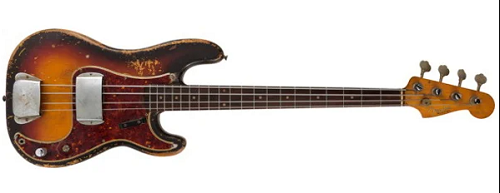
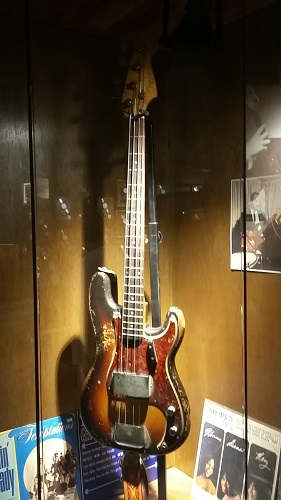
He and the Funk Brothers (pianist Earl Van Dyke, drummer Benny Benjamin, and guitarists Robert White and Joe Messina) spent the days recording in the “Snake Pit” (the Basement of Motown Records) and playing at Jazz clubs in the evenings. Jamerson had switched from an upright bass to a brand new creation – the electric Fender Precision Bass.
The switch really made his work stand out. On some songs, he’d play the stand up bass and then double it with the electric. What made his work on the electric so awesome is that he played the electric just like he played the stand up bass – with one finger (which many folks called “the claw”).
While he is known for playing on many of the Motown songs, he also played on Boom Boom by John Lee Hooker, Whispers Getting Louder and Higher and Higher by Jackie Wilson, Agent Double-O-Soul by Edwin Starr, Cool Jerk by the Capitols, Show and Tell by Al Wilson, Boogie Fever by the Sylvers, and so many other hits! What made the Motown stuff so good was he had some free reign to be “James Jamerson.”
Musician magazine interviewed him in 1983 and he stated that the Motown songwriting and productions teams “would give me the chord sheet, but they couldn’t write for me. When they did, it didn’t sound right. When they gave me that chord sheet, I’d look at it, but then start doing what I thought would fit. I’d hear the melody line from the lyrics and build the bass line around that.”
One of the coolest examples of how he listened and did his thing was on two separate recordings of the same song. To help illustrate this, I found some isolated bass lines on YouTube that are fascinating! Jamerson played on Marvin Gaye’s I Heard It Through the Grapevine – a Motown classic! Check out the soulful line here:
Now check out the same song – and a funkier bass line – on the Gladys Knight Version:
I find it amazing that the same man can take the same song and make them so different.
Speaking of Marvin Gaye, the Funk Brothers shared a story about how Marvin wanted Jamerson to play on What’s Going On. James was out drinking and Marvin went out looking for him. When he found him, he brought him back to the studio. Jamerson was so drunk that he couldn’t even stand up! It was no problem for him, though, he just laid on his back on the floor and played on the track!
Trivia Bit: What’s Going On is the first track that Jamerson is credited on a recording.
It is said that James Jamerson played on almost every Motown song between 1963 and 1968. That would include over 60 songs that hit #15 or better on the charts. He also performed on 23 # 1 songs on the pop charts and 56 #1 songs on the R&B charts! Berry Gordy called him an “incredible improvisor” and said “I, like the other producers, would not do a session unless at least two of the Funk Brothers were present, namely Benny Benjamin and James Jamerson.”
Some of the other Motown songs that feature Jamerson:
Ain’t No Mountain High Enough – Diana Ross and the Supremes
Ain’t That Peculiar – Marvin Gaye
Ain’t to Proud to Beg – The Temptations
Baby, I Need Your Loving – The Four Tops
Baby Love – The Supremes
Bernadette _ The Four Tops
Can I Get a Witness – Marvin Gaye
Dancing in the Streets – Martha and the Vandellas
Don’t Mess With Bill – The Marvelettes
Going to a Go Go – Smokey Robinson and the Miracles
Home Cooking – Jr. Walker and the All Stars
It Takes Two – Marvin Gaye and Tammy Terrell
My Cherie Amour – Stevie Wonder
My Girl – The Temptations
Pride and Joy – Marvin Gaye
Reach Out, I’ll Be There – The Four Tops
Shotgun – Jr. Walker and the All Stars
This Old Heart of Mine – The Isley Brothers
Two Lovers – Mary Wells
What Becomes of the Broken Hearted – Jimmy Ruffin
You can also hear him on :
The Theme from S.W.A.T. – Rhythm Heritage
The Theme from Starsky and Hutch
Just Like Romeo and Juliet – The Reflections
Rock the Boat – Hues Corporation
The list of people who were influenced by Jamerson’s playing is almost as long as the list of songs he played on! Saxophone and bass player Wilton Felder called him “The Godfather of the electric bass.”
Suzi Quatro says, “I grew up in Detroit, so I was weaned on James Jamerson and Motown music. It’s in my DNA. He is still the best and I took my style from him. It’s hard to improve on what he did, because you are talking perfection.”
Sir Paul McCartney says, “Jamerson was where I picked up a lot of my bass style. Because bass players normally have to follow: we follow chords, follow the drummer, follow the vocalist, we have a following role. Suddenly the bass had power! We could dictate the direction of the music and add excitement. James Jamerson became just my hero, really.”
James Jamerson Jr. says, “As for his sense of syncopation, that was his God-given gift. I couldn’t even explain that one. I put it like this: My dad liked to dance, so he just danced on the bass. He would occasionally polish his bass, but he’d never touch the gunk that built up on that fingerboard. he told me the ‘dirt keeps the funk’.”
Years of drinking finally caught up with Jamerson. On August 2, 1983, he died of complications from cirrhosis of the liver, heart failure and pneumonia.
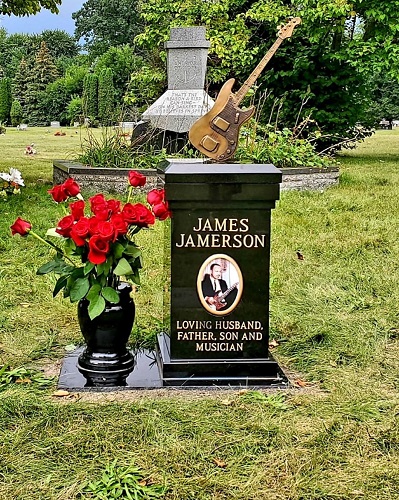
He was buried in Detroit’s Woodlawn Cemetery. A few years ago, Jamerson’s cousin saw a picture of his grave site. There was no headstone, only a grass marker. Eventually, the funds were raised and a proper headstone was set in place on August 27, 2021.
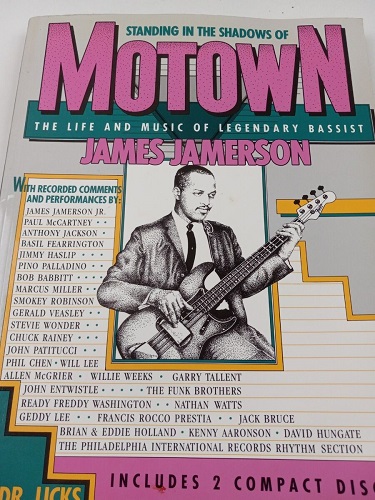
In 1989, Jamerson was the subject of a book loaded with great stuff – Standing in the Shadows of Motown. I think you can still get this on Amazon. A documentary of the same name was produced in 2002
He was posthumously inducted into the Rock and Roll Hall of Fame in 2000, received a Grammy Lifetime Achievement Award in 2004, and inducted into the Musicians Hall of Fame in 2007. Last month, in South Carolina, he was honored when a street was named for him.
It is a shame that it took so long for Jamerson and the Funk Brothers to get the recognition that they deserve.
As I prepared for this piece I found myself on YouTube listening to track after track of Motown stuff and listening with different ears. I focused on that bass line and really was blown away. These are songs I have heard countless times, yet focusing on that bass made them so fresh! As I said, the isolated tracks are an entirely different thing – it is so awesome to hear Jamerson “feel” and “drive” the tunes. It is no wonder that he is ranked the #1 bass player in the business by so many different sources, including Rolling Stone magazine.
Thanks again to Dave for allowing me to be a part of such a cool feature. I have already been impressed by the other blogger’s submissions. I am sure that they love taking part in this feature as much as I do.








 Various Ramblings of a Nostalgic Italian