43 years ago today, I experienced the loss of a loved one for the first time. I was 11 years old when my maternal grandfather passed away after having a heart attack while on a business trip.
Grandpa and me
My grandparents had a trailer that they purchased up in Caseville, Michigan and we spent a lot of time up there in the summer. In September, we’d go up and they’d get ready to lock it up for the winter. I remember those days as being very chilly. When I would come back inside, my glasses would fog up.
Grandpa and Grandma
At the trailer the first year they had it, they didn’t have a TV right away. So we had a radio to listen to. I don’t remember there being many stations, and that was probably the reason they had many albums on cassette.
The two that seemed to get the most play were Johnny Paycheck’s Greatest Hits Volume 2 and Willie Nelson’s Stardust. My grandpa loved that Willie album and once said that September Song was his favorite on the album.
When he passed away in September, the song and the album began to mean a whole lot more to me. I’d like to think that him and my grandma share heavenly dances to September Song today. I sure do miss them both.
Dancing in our basement at my first communion party.
The Stardust album is in my top five albums of all time. In honor of my Grandpa, here is Willie Nelson’s version …
Welcome back to The Music of My Life, where I feature ten songs from each year of my life. In most cases, the ten songs I choose will be ones I like personally (unless I explain otherwise). The songs will be selected from Billboard’s Year-end Hot 100 Chart, Acclaimed Music, and will all be released in the featured year.
I turned 15 in 1985. It was sophomore year and I had moved up from the Freshman band to the Concert/Marching band. It is the year that consisted of many of my favorite songs that I recently posted about in this week’s Turntable Talk blog. It was also the year that I went on my first date and my first dance. How did the music of 1985 play into my life? Let’s find out…
My first pick is a soulful tribute to two amazing singers who passed away in 1984. It is also the only hit that the Commodores had after Lionel Richie left the group. I am talking, of course, about Nightshift.
The song is a tribute to singers Marvin Gaye and Jackie Wilson. Marvin was 44 when he passed away, while Jackie was only 49. In 1974 the Righteous Brothers had a hit with Rock and Roll Heaven, where they picture fallen stars like Jimi Hendrix and Janis Joplin forming a band in heaven. This was supposed to be a soul version where Marvin Gaye and Jackie Wilson are on heaven’s nightshift, playing some sweet sounds.
I love how the intro starts with that percussion lick and the smooth bass line that works its way to the vocal. It is such a funky, soulful and loving tribute to Marvin and Jackie – two legends!
Nightshift
As a sophomore, I ventured out of my comfort zone a bit and decided it was ok to go to high school dances. Mostly, the guys just hung out at a table and talked. However, after my first official date, I began actually wanting to go to dances with a female date. While I cannot remember for certain, I am pretty sure that one of my first dances ever with a girl was to Crazy For You by Madonna.
Admittedly, I am not a huge fan of hers. My brother, on the other hand, loved her! There are a few songs that I do like by her, and this is one of them. What I remember most about dancing to this song was that she was singing “crazy for you” and I wasn’t sure what kind of message that may or may not have been sending to my date. I was also thinking about making sure I was swaying the same way she was and NOT stepping on her toes. It had to be a very uncomfortable dance for her.
Fun Fact: Madonna reportedly only took one take to record this song.
This was recorded for the soundtrack to the wrestling film Vision Quest, which also featured a guest appearance by Madonna herself, who played a singer at a local restaurant. After the success of this song, the film was renamed Crazy For You in some European countries to capitalize on the song’s popularity.
Crazy For You
How does that saying go? Everything old is new again? I don’t know. What I do know is that Netflix is currently airing the 4th installment of the Beverly Hills Cop Franchise and I hear it is doing well. It was back in 1984 that Eddie Murphy first played Detroit Cop Axel Foley. The character’s name is what led to the title of my next song, Axel F.
Before the title was settled on, it went by a different name. During production of the movie, it known as the “Banana Theme,” as it was slated for a scene where Axel Foley shoves a banana in the tailpipe of police officers intending to pursue him. The composer was German musician Harold Faltermeyer and truly, this song was all him.
According to Wikipedia, he recorded the tune using five instruments: a Roland Jupite-8 provided the distinctive saw lead, a Moog modular synthesizer 15 provided the bass, a Roland JX-3P provided chord stab brasses, a Yamaha DX7 was used for the marimba sound, and a LinnDrum was used for drum programming. Faltermeyer played every single instrument.
He was also the musical director on Beverly Hills Cop and did the score for the film. The soundtrack went to #1 in the US and won a Grammy for Best Album Of Original Score Written For A Motion Picture Or A Television Special. The song topped out at #3.
We played this at a concert one year in band, and though it sounds pretty easy, it was a bit tougher than I anticipated. It may have been in a weird key. It was one of many fun numbers we played.
Axel F
There are some songs that when you hear them, you cannot help but feel happy. My next pick is one of those songs. I have rarely played this at a party or wedding where it didn’t cause people to just get up and dance.
Remember the feeling you got when you first found out that someone truly loved you? There was that feeling of joy that just overflows from you! You can feel that joy and excitement in the vocals by Katrina Leskanich in Walking on Sunshine. It just makes you feel good!
The wife of one of my second cousins threw him a birthday party I DJ’d. The song was on the “must play” list. I remember having a conversation about the song and she said that it was the kid of song that you should play the minute you wake up in the morning. She said that it would just set the mood for the day. She always seemed to be in good mood when I saw her, so maybe she did just that!
Songfacts says, The video got a lot of airplay on MTV. It shows the band hanging around London, with Katrina very colorful and bouncy, and her bandmates more subdued. She had to make her own sunshine, as there was none in London – it was a typically cloudy and cold day.
Katrina’s look was anti-glam, with tennis shoes and the kind of fashions you’d find at the mall. In interviews from this time, she often took shots at singers like Madonna and Pat Benatar for adopting more suggestive looks.
Teen boys didn’t seem to mind….
Take four major country superstars, all who are friends with each other, pitch them an old song and tell them they should record it together and you get one really neat song. That’s the basic story of how Willie Nelson, Waylon Jennings, Kris Kristofferson, and Johnny Cash became The Highwaymen.
Country legend Jimmy Webb wrote the song about a soul with incarnations in four different places in time and history: as a highwayman, a sailor, a construction worker on the Hoover Dam, and finally as a captain of a starship. Webb released his version in 1977, it was covered in 1979 by Glen Campbell, who took the song to Johnny Cash, who was recording with Nelson, Jennings and Kristofferson.
The story goes that the four were all together in Switzerland doing a television special and decided that they should do a project together. While the four were recording their first album, Johnny’s friend Marty Stuart played the song for Cash, saying it would be perfect for them. It had four verses, four souls, and four of them.
The song led to the name of their supergroup, their album, and of course, their first single. Each of the four verses was sung by a different performer: first Nelson as the highwayman, then Kristofferson as the sailor, then Jennings as the dam builder, and finally Cash as the starship captain. Webb later observed, “I don’t know how they decided who would take which verse, but having Johnny last was like having God singing your song.”
No personal story to go with this one, I just like it!
I am embarrassed to say that up until 1985, I had never seen a James Bond movie. I was familiar with the fact that Roger Moore played Bond. My mom would rent Bond films on occasion and also watch them on cable. Moore played a Bond-like version of himself in Cannonball Run in 1981, but I had never really seen him AS Bond.
So when a friend of mine asked if I wanted to go to the show with him we saw A View to a Kill. It was actually neat to see this in the theaters. I had often seen the Bond movie intro being parodied, but to see it kick off the film and to hear the song was all new to me. I was grateful to be able to see it.
Knowing Duran Duran and some of their songs, I was surprised that they did the theme song. The story of how they got it is interesting. Songfacts says: “according to the bassist John Taylor, was that he approached the longtime Bond producer, Albert R. ‘Cubby’ Broccoli, while extremely intoxicated when they were both at a party. He stated that he was a long time fan (Major Bond geek would be more accurate. An Aston Martin was said to be one of his first “rock star” purchases, and he frequently mentioned his Bond video collection in interviews) of the series, but the music for the last few movies had been mediocre. He then offered to have his band fix the problem and Broccoli took the idea under advisement.Being asked to perform the theme song for a James Bond movie is a great honor, but the requirement to include its title in the lyrics can be challenging. Just ask John Taylor. “To this day we are forever grateful that we didn’t get Quantum Of Solace,” he said.
It is the only theme from a Bond movie to hit #1 in America.
A View To A Kill
I’ve made it all the way to 1985 and have yet to feature a Prince song. Not that I don’t like him, he was a musical genius. I am still blown away by his Rock and Roll Hall of Fame performance and his Superbowl Halftime Show. He was a talent, no doubt. My only real connection to him was that we play Let’s Go Crazy in Marching Band one year.
However, I can connect this one to me because it was on my 15th birthday that Prince released Raspberry Beret. Prince originally recorded “Raspberry Beret” in 1982, but re-worked it with his newly re-formed Revolution backing band.
At the time this was released, Prince was under fire from Tipper Gore during the notorious PMRC witch hunt, which placed two of his songs on the list of the “filthy 15.” So this is one of the songs where Prince started making his lyrics more family friendly. But if you really listen closely, you know that Prince still slipped in a “filthy” reference.
Raspberry Beret
1985 was the year that one of my favorite movies was released – Back to the Future. If you’ve read this blog for any length of time, I reference the movie a lot and have read my fair share of time travel novels. It is a masterpiece and I will always watch it when it is on.
When Marty realizes he’s going to be late for school and he leave’s Doc’s place on his skateboard, Huey Lewis and The News’ The Power of Love makes the perfect song to accompany the scene. How did Huey become involved?
The film’s director Robert Zemeckis wanted Lewis to do the song – Huey Lewis & the News were rising stars with a modern sound that worked well in the movie, which takes place in both 1955 and 1985. Lewis had never done film work and hesitated at first, since he didn’t want to write a song called “Back to the Future.” When Zemeckis told him that the song didn’t have to be about the movie, Lewis accepted the challenge.
All Back to the Future fans know that Lewis has an uncredited cameo in this movie. Lewis has an uncredited cameo in this scene, where he plays a teacher who is judging the auditions. An early scene in the film has Marty McFly and his band The Pinheads auditioning for the high school dance. Huey plays a teacher who is judging the auditions. The group plays the beginning of “The Power of Love,” but before Marty can sing a note, Lewis cuts them off, telling them, “I’m afraid you’re just too darn loud.”
The music video doesn’t contain scenes from the film, but does feature an appearance by Christopher Lloyd in character as Doc Brown. We see him pull up in the DeLorean outside of a club where Huey Lewis & the News are performing.
The Power of Love
Yesterday marked the 34th anniversary of the passing of Stevie Ray Vaughn. I debated posting one of his songs for Tune Tuesday, but opted for a more uplifting post.
I was late to the SRV party. I was introduced to him after he passed away. I marveled at his playing and his vocal abilities. I really fell in love with his music.
I wrote about this song before, probably for one of the Song Drafts we were doing. It is Stevie’s cover of the old Hank Ballard song, “Look at Little Sister.”
Look At Little Sister
My final pick is another fun song. It reminds me a lot of the Kinks Come Dancing (which I just wrote about for Max’s PowerPop blog) because of the sound of the opening keyboards.
The Dire Straits were coming off the success of Money For Nothing which really established the band on MTV and on Top 40 radio in America. The fourth single from their Brothers In Arms Album was Walk of Life.
Mark Knopfler wrote this song to celebrate the street buskers of London, hence the references to “Be-Bop-a-Lula” and “What’d I Say,” which were two standards that might be part of a singer’s repertoire in the mid-’80s. Before the lyrics kick in, Knopfler does a few “who-hoo”s, which help create a whimsical vibe. When he spoke with the BBC in 1989, he expressed some “woo-hoo” remorse. “There’s too many ‘woos’ at the beginning of ‘Walk of Life,'” he said. “I heard it on the radio the other day and thought, Oh my God! What was I doing that for?”
Walk of Life (US)
Walk of Life (UK)
What song defined 1985 for you?
Next week we’ll share some songs from 1986. As I look at the music from that year, there were some great music videos! The year will feature my high school class song, my first attempt at Karaoke – before there was Karaoke, and two fantastic cover songs!
Welcome back to The Music of My Life, where I feature ten songs from each year of my life. In most cases, the ten songs I choose will be ones I like personally (unless I explain otherwise). The songs will be selected from Billboard’s Year-end Hot 100 Chart, Acclaimed Music, and will all be released in the featured year.
Let’s jump right into 1982. We start with a song that was released in January of ’82 in the United States. Believe it or not, this song would go on to have a special meaning for me and many others from my high school. More on that in a minute.
The Go-Go’s were one of those bands who wrote most of their own songs. “We Got The Beat” was written by guitarist Charlotte Caffey, who drew inspiration from some Motown beats, specifically one that mentioned the name of her group. She explains, “I thought it would be very clever to do ‘Going to a Go Go’ (by the Miracles). I thought, Well, let’s try working this out as a cover song. Which is really funny when I think about it. I was listening to it a lot one day, and later that night, the song came to me within five minutes. I don’t even know if it has anything to do with listening to that song, but this whole idea came to me. It was one of those things that just went right through me and came out my hand; I wrote it down, recorded it a little bit, and then brought it into rehearsal a few days later.”
The Go-Go’s released an early version of “We Got The Beat” in the UK as their first single. It was issued on Stiff Records, which was home to The Specials and Madness, both groups The Go-Go’s toured with in England to promote it. Sadly, it flopped, but the group fared far better in America, where they were signed to IRS Records by Miles Copeland, who managed The Police. In the US, “Our Lips Are Sealed” was released as their first single in the summer of 1981, followed by a new version of “We Got The Beat” in January 1982. This release was The Go-Go’s biggest hit, spending three weeks at #2. (I’ll include both versions below)
Band Camp – Summer 1985. We Got the Beat was a favorite of my high school marching band. I have no idea how long they had been playing it prior to my first year, but it was always played at pep assemblies and when our team won. It was a staple in the marching band music folder. It was the one song that we could play and just have fun. We danced, we jumped, we acted the fool while playing it. It was a celebratory song.
Our band director would say, “Let’s do the little Italian number” during rehearsals. We all knew what he was talking about because he’d often call it, “We Gotta Da Beat.” I want to say our alumni band was around for at least 10 or 12 years after I graduated and they were still playing it. We always joined it because we all had it memorized. I haven’t played my trumpet in years, but I can assure you that if I were to pick it up today, I could still play this song!
We Got the Beat
Real life once again inspired another big hit. Songwriter Wayne Carson, who wrote The Box Tops’ 1967 #1 hit “The Letter,” came up with “Always On My Mind” when he was working at a recording studio in Memphis. He lived with his wife in Springfield, Missouri, and the trip to Memphis had gone 10 days longer than expected.
When he called the missus to tell her he would be there even longer, she let him have it. He tried to assuage her by telling her that was thinking about her all the time – she was “always on my mind.” “It just struck me like someone had hit me with a hammer,” he told the LA Times, “I told her real fast I had to hang up because I had to put that into a song.”
Willie had never heard the song before the song’s co-writer, Johnny Christopher, brought it to him and Merle Haggard, who were busy recording the album Pancho & Lefty (Christopher was playing guitar on the session). “‘Always On My Mind,’ bowled me over the moment I heard it, which is one of the ways I pick songs to record,” Nelson recalled in his 1988 autobiography, Willie. “There are beautifully sad songs that bowl me over… haunting melodies you can’t get out of your mind, with lines that really stick.”
Nelson figured he and Haggard would do the song together, but Haggard didn’t care for it. After they finished recording their album, Nelson stayed in the studio and recorded the ballad solo, just to see what it would sound like. Of course, it sounded like a hit, but Nelson wondered, “We’ll never know what would have happened if Merle had really heard the song right.”
You may remember that Willie Nelson played a big part in my childhood. His Stardust album was played all the time by my grandfather. My grandfather passed away in 1981. Any song by Willie reminded me of my grandpa. My mom really struggled with his passing and I remember being in the car with her when Always on My Mind came on the radio. She had to pull over because it really hit her hard.
It hit me the same way. I know that it is far fetched to believe that grandpa sent a message from beyond the grave, but it felt that way. From Stardust to Always on My Mind and every Willie album that followed, there always seemed to be one song that fit into something that was going on in my life. This one helped me cope with the first death I ever experienced, even though it was more of a love/apology song.
Always on My Mind
One of the things that I noticed as I scanned over the list of singles released in the early eighties was the prominent use of the synthesizer. Rock bands like ZZ Top, Van Halen, and Yes added synthesizers to their mix in the ’80s and scored huge hits by adapting what songfacts.com called “the sound of the decade.” The Steve Miller Band started out as a blues band in the ’60s, evolving into a rock outfit in the ’70s. They often sprinkled electronic effects into their songs, so the keyboards and synth stabs in this song weren’t out of character.
“Abracadabra” was the last US Top 40 hit for the Steve Miller Band, and their third #1. The song was written by Miller and the lyrics were inspired by Diana Ross and the Supremes, whom he had met while performing together on NBC’s Hullabaloo in 1966. “‘Abracadabra’ started off as a great piece of music with really atrocious lyrics,” Miller explained to The Dallas Morning News. “One day I was out skiing in Sun Valley and, lo and behold, who did I see on the mountain but Diana Ross. I skied down off the mountain to go have lunch. I started thinking about the Supremes and I wrote the lyrics to ‘Abracadabra’ in 15 minutes.”
Honestly, I’m really not sure how the Supremes led to the song, but I remember it being a song that really stood out to me on the radio. I rushed out to buy the 45 and it was always a song that wound up on my “driving music” tapes.
Abracadabra
1981 was the year that many were introduced to Men at Work. Their debut single, “Who Can It Be Now” shot straight to #1 on the charts. The group started as an acoustic duo with singer Colin Hay and guitarist Ron Strykert. After a few years playing pubs in Australia, they were discovered by an American who worked for CBS records and signed them.
Colin Hay wrote the song and explained how it came about:
“I was up in the bush in Southern New South Wales with my girlfriend, just sitting outside at night. We had this little tree hut in the middle of the bush. It was a great place to kill the time, mess around with ideas. It was just an idea that popped out, it took about half and hour to write that song. I was living in St. Kilda in Melbourne, which is a great part of Melbourne. At that particular time it was a very interesting area, it was frequented by everybody from the high Jewish population, punks, drug movers, all kinds of different people. It was about six or seven hours drive away, sitting in the middle of the bush in New South Wales and that song just popped out. My girlfriend at the time said, ‘that will be your first hit, that song,’ and she was right.”
Their Business as Usual album was one that I played often.
Fun Fact: The famous saxophone part originally didn’t come in until the middle of the song, which suited when the band played it in bars. When they recorded it, producer Peter McIan identified the sax as a hook and moved it to the beginning of the song, also making it more prominent throughout. This opening sax riff made the song instantly identifiable.
Who Can It Be Now
Juice Newton had a few big hits between Queen of Hearts and Love’s Been a Little Bit Hard On Me. The latter is one of those fun sounding songs, even though it is about the hardships of a relationship. The song was released exactly one week after my 12th birthday.
Juice reminds me of Carlene Carter who had some jumpy, fun songs like this one. Even though she channels Neil Sedaka and sings harmony with herself on the song, that’s one of the reasons I love it. It’s nothing fancy, but it is just good harmony and it blends so well.
One of the things I have enjoyed while picking songs for this year was seeing the videos that were made for certain songs. Wiki describes the music video for this one perfectly. It says that it comically plays off the emotional hurt of love by showing Juice Newton being physically injured by her lover in a series of accidents. The final shot is of Newton singing in the hospital in a full-body cast with her broken leg in the air. The video was awarded Video of the Year by the American Video Association in 1982.
Love’s Been a Little Bit Hard On Me
There is an outdoor amphitheater in the Detroit area that packs in some fantastic shows every summer. I cannot tell you how many shows I have seen at Pine Knob (For some time DTE Energy paid to have the name and even though shows were at “DTE Energy Music Theater,” everyone still called it Pine Knob!). I’ve seen rock shows, comedy shows, country shows, and more there.
For many years, Eddie Money was ALWAYS the guy who played the first show there. He kicked off the summer concert season annually and it became a tradition. One year, I had the opportunity to interview Eddie on the air. It was the easiest interview in the world! Why? You never had to ask questions after he got on the phone. “Hey, Eddie! How are you?” Then Eddie would roll – he’d promote the show, promote an album, share some funny story, talk about the venue, and more. The “Money Man” was great!
I dated in high school who loved Eddie Money’s Music. She had the No Control album on cassette and we’d listen to it in the car. Think I’m in Love was on that album and I remember the first time I saw the video on MTV. Again, these early videos are fun to watch. Eddie plays a sort of vampire character in it. It was a very popular video.
Think I’m In Love
Growing up I listened to Elvis, Bill Haley, Carl Perkins, Eddie Cochran and other artists who played some rockabilly music. So when I heard the Stray Cats in 1982, it was like hearing stuff I was already familiar with. The Built For Speed album was one I played over and over.
Brian Setzer was born in New York and was exposed to a lot of genres of music. He learned to play the guitar at a young age, and when he was a teen, he formed a trio he called the Tomcats, That group would later change their name to the Stray Cats. They were influenced by all those artists I just mentioned and their group developed a fairly large following in the underground punk scene of New York City during the late ’70s. Their fan base expanded so quickly that they found themselves being courted by no less than a half dozen record labels in 1980.
Brian Setzer opted to record and produce the Stray Cats’ debut album in the UK Rock This Town was released there over a year before it was released in the US. Rock This Town was a Top 10 hit for the band. It’s crazy to watch the video and see Brian. He looks like a baby in it. Hard to believe he was only 23 when this video was shot.
Rock This Town
My dad and my uncle used to play old blues music on records and on the guitar. At my graduation party, they played stuff from Jimmy Reed, Bo Diddley, and other blues legends. Because of that, I’ve always loved the blues. Because of that, I was naturally a fan of George Thorogood.
Bad to the Bone is based on the Bo Diddley blues song “I’m a Man.” Bo Diddley was one of George’s heroes. His “version” has a much heavier guitar sound, which replaces the harmonica in Diddley’s recording. Songfacts.com says that “both songs are full of swagger, with the singers exuding lots of testosterone.”
Songfacts.com goes on to say, “With MTV coming on the air in 1981, Thorogood picked a good time to release a memorable video. The clip shows Thorogood playing pool against Bo Diddley in a place where there is no chance of a dance sequence breaking out. Pool champion Willie Mosconi also appears in the clip, which introduced Thorogood – and to some extent, Diddley – to the younger MTV crowd. Among the British New Wave acts that dominated MTV’s playlist at the time, Thorogood certainly stood out, and he created an image of a bad man. While Thorogood is a disciple of the blues, he was raised in a Delaware suburb and by most accounts is actually a pretty nice guy, despite what he claims in this song.”
I love the fact that Diddley is in this video! The song is one that has a life of it’s own. It is used as intro music for wrestlers, it has been used during the removal of the bride’s garter at weddings, and has been used in both movies and television in seriousness and for comedic effect. It is a classic.
Bad to the Bone
I love a great intro. Sometimes a great guitar riff or a neat drum thing is all it takes to hook me. The intro to Everybody Wants You was one of those intros. It appeared as the opening track of his multi-Platinum 1982 album Emotions in Motion.
The song itself didn’t do that great on the Hot 100 chart, as it only went to number 32. However, it was around this time that one of the radio formats that was big was called AOR – Album Oriented Rock. It had great success on these and rock stations. It reached number one on Billboard’s Top Rock Tracks chart. Naturally, the video did well on MTV, too. It remained in heavy rotation for quite some time.
The minute I hear this one, I think back to those nights of shooting pool with my buddies. It was always on the jukebox.
Everybody Wants You
The next song is one that is still applicable today. Perhaps even more so. What exactly is “news” today? Turn on any local news channel or entertainment news show – it is chock full of stories like the ones referenced in Don Henley’s first Top 40 hit as a solo artist – Dirty Laundry.
Again, the intro of this really stood out for me. The lyrics take it to an entirely new level. They are so good and perhaps that is because Henley had plenty of real life to draw from. This song is about unscrupulous news people doing anything for a story. Henley values his privacy, and hates it when reporters pry into his personal life. He had to deal with increased press attention when his girlfriend at the time, Maren Jensen, came down with Epstein-Barr Syndrome. She recovered, but they broke up soon after.
Songfacts.com states: “Henley sings from the standpoint of a news anchorman who “could have been an actor, but I wound up here”. The song’s theme is that TV news coverage focuses too much on negative and sensationalist news; in particular, deaths, disasters, and scandals, with little regard to the consequences or for what is important (“We all know that crap is king”). The song was inspired by the intrusive press coverage surrounding the deaths of John Belushi and Natalie Wood. It was also inspired by Henley’s own arrest in 1980 when he was charged with contributing to the delinquency of a minor and possession of marijuana, cocaine, and Quaaludes after a 16-year-old girl overdosed at his Los Angeles home”
While Don’s version is the best, Lisa Marie Presley (who had to deal with a lot of press intrusions on her personal life) also does a really neat version of Dirty Laundry.
Dirty Laundry
There were plenty of great songs in 1982, I’m sorry if I missed one of your favorites. Next week, we’ll move ahead to 1983 where there will be a good mix of rock, country, pop, soul and a movie song that will forever be associated with summer vacations ….
Welcome back to The Music of My Life, where I feature ten songs from each year of my life. In most cases, the ten songs I choose will be ones I like personally (unless I explain otherwise). The songs will be selected from Billboard’s Year-end Hot 100 Chart, Acclaimed Music, and will all be released in the featured year.
This week we enter a new decade – the 80’s! As the final years of the 70’s ticked away, you could already start to hear the “eighties sound” creeping in. As we move through the decade that sound will change even more. What is also interesting is the amount of crossover hits in the years ahead. 40% of my list for 1980 has roots in country music.
So what was my 10 year old self listening to in 1980?
I did not know that the first song would perhaps unknowingly influence my career choice at 10 years old, but it may have. Released in February in the US, Charlie Dore reached number 13 on the Hot 100 charts with her ode to the radio DJ, Pilot of the Airwaves.
The lyrics are from the point of view of a woman who frequently listens, late at night, to a radio disc jockey whom she calls a “pilot of the airwaves”, keeping what has often been called the “dawn patrol”. She admits that she has few real-life friends and that the DJ keeps her as much company as she believes she needs, describing her life and the feelings she has2 surrounding the fact that she considers the radio DJ her only true friend. The DJ does not need to play the selection she has requested; she does hope the DJ will do his best along those lines, adding:
I’ve been listening to your show on the radio, And you seem like a friend to me.
Looking back on this song now, I can tell you that the one thing I learned was most important about being on the air was to have the listener feel as though they were just hanging out with a friend. That was always my goal – speaking one on one and keeping my listener company.
The song played a role in an early relationship, too. Two gals used to call the station all the time and one of them always wanted to hear this song. They decided to bring me coffee one night and I hit really hit it off with one of them. We dated for a while, and when an ex of mine called to ask me to take her back, I did. Ah, young love …. it really gets messy
Pilot of the Airwaves
A songwriter and producer named Steven Greenburg wrote a song when he became bored with Minneapolis and wanted to move to New York, which he called “Funkytown.” Lipps Inc. (pronounced “Lip Synch”) was formed especially for this song. The vocals were done by Cynthia Johnson, who was Miss Black Minnesota 1976. The song reached number one on the charts and stayed there for four weeks!
The group continued to record until 1985 with a changing lineup, but they failed to see the success they’d had with their first hit. Steven Greenburg, however, went on to have great success. He became A&R Vice President for Mercury Records, signing Hanson, among other acts. Later he headed the S-Curve Records label, signing the Baha Men and Joss Stone.
This song shows up in a lot of movies (Shrek 2, History of the World Part 1, Selena) and TV shows (Everybody Loves Raymond, Will and Grace, Malcolm in the Middle, and Friends) and VH1 ranked the song at #37 in the Top 100 One Hit Wonders.
Funkytown
It’s Still Rock and Roll to Me from Billy Joel’s Glass Houses album was one of Joel’s most popular songs and was his first #1 hit on the Hot 100, spending two weeks at the top spot in July 1980. The song spent 11 weeks in the top 10 and was the 7th biggest hit of 1980. It was released on May 12, 1980 – 3 days before my 10th birthday.
In this song, Billy Joel was making a comment on musical styles and trends. At the end of the disco era, the music press began touting the “New Wave” sound, which included bands like The Police and The Cars. Joel thought that this new sound was just a variation on power-pop that had been around since the ’60s. He didn’t have a problem with the music, just the way it was being categorized. “I like it, but it’s not particularly new,” he said.
He said in a Rolling Stone interview that “new wave songs, it seems, can only be about two and a half minutes long… only a certain number of instruments can be played on the record – usually a very few… only a certain amount of production is allowed or can be heard… the sound has to be limited to what you can hear in a garage… a return to that sound is all that’s going on now.”
It’s Still Rock and Roll To Me
Despite the next song being a huge hit in 1980, it is interesting that it goes all the way back to 1959 and has ties to Buddy Holly and the Beatles.
More Than I Can Say was originally written and recorded by Sonny Curtis and Jerry Allison in 1959. Curtis and Allison were both members of Buddy Holly’s band, the Crickets. They recorded it in 1959 soon after Holly’s death and released it in 1960 on their album In Style With The Crickets. The hook was left unfinished at the time, and at the time of recording, the hook was left this way with no lyrics, only the “wo-wo yay-yay,” which became a memorable part of the song. The single went on to become a minor hit in the UK. Curtis considers this song to be one of his most enduring, looking back at the success subsequent artists have had performing it.
It was also covered by Bobby Vee in 1961. Bobby, you may recall, was one of the artists who was chosen to play the remainder of the tour that Buddy Holly, The Big Bopper, and Richie Valens were doing when they died. Bobby’s version never cracked the Top 40 in the US, but was a Top 5 song in the UK.
From Wiki: According to author Mark Lewisohn in The Complete Beatles Chronicle, The Beatles performed “More Than I Can Say” live in 1961 and 1962 (in Hamburg and Liverpool and elsewhere). Author Allen J. Weiner in The Beatles: The Ultimate Recording Guide confirms this, noting that it came from a setlist made at the time by George Harrison. It is unclear who sang the lead vocals and no recording is known to survive.
The best known version of the song was by Leo Sayer. Sayer was looking for an “oldie” for his 1980 album Living in a Fantasy. He saw a television commercial for a greatest hits collection by Bobby Vee and chose the song on the spot: “We went into a record store that afternoon, bought the record and had the song recorded that night.” It spent five weeks at #2 on the Billboard pop chart in December 1980 and January 1981.
What I remember most about this song is that my dad’s wedding band used to play this in the set. My brother and I often heard it over and over as they rehearsed it.
More Than I Can Say
I will always see a dancing gopher whenever I hear the next song. “I’m Alright” is the theme to the movie Caddyshack, and plays at the beginning and end of the film. Kenny Loggins saw a rough cut of the movie before he wrote the song. He used the character Danny Noonan, who was a caddy with hopes for a brighter future, as inspiration.
Loggins told the St. Petersburg Times: “The character was trying to figure out where he fit. But at the same time he wanted people to leave him alone and let him find his own way. So I wanted to grab him and summarize that character, and that’s what ‘I’m Alright’ is doing.”
Do you recognize a familiar voice in the song? Eddie Money was recording in a nearby studio, and Loggins convinced him to sing a line on this song. That’s him in the background singing, “You make me feel good!” Money was unhappy that he never got credit for his contribution. “I’m not a fan of Kenny Loggins to tell you the truth,” he told Cincinnati morning show host Kidd Chris of WEBN in 2014. “I sang the bridge in that. We were label mates, you know.”
Fun Fact: When Loggins launches back into the chorus partway through the song, he stutters on the lyric, singing, “I- I’m Alright,” which was a happy accident. “I actually misjudged the entrance. In the arrangement, I delayed that entrance but I forgot when I was doing the lead vocal.” They decided to leave it in the song.
I’m Alright
Urban Cowboy was released in 1980 and country music was big. There were many country songs that crossed over to the pop charts. The next song, however, makes my list because I loved watching the Dukes of Hazzard every week. The first autograph I ever received was a postcard from James Best ( Sheriff Roscoe P. Coltrane)!
Waylon Jennings was the narrator in the 1975 movie Moonrunners, where he was credited as “The Balladeer.” When CBS created a TV show based on the movie, they asked Jennings to reprise his role as narrator (again credited as “The Balladeer”) and write the theme song. He came up with an outlaw-Country theme that fit the story of Bo and Luke Duke, who were good-hearted rebels from the fictional Hazzard county in The Dukes of Hazzard. Jennings appeared in all 121 episodes of the show until it ended in 1985.
Waylon recorded two versions of the song. The commercially available version receiving radio airplay contains a musical bridge which follows the first verse and chorus. Also, following the commercial version’s second chorus, Jennings makes a tongue-in-cheek reference to his faceless appearance in the credits by singing, “I’m a good ol’ boy, you know my mama loves me, but she don’t understand, they keep-a showin’ my hands and not my face on TV” (a statement referring to the opening shot in the television theme version where Jennings is only shown below the neck playing guitar). This version was a #1 Country hit.
Personally, I think the TV version is the superior version. One of the reasons is that it features Larry McNeely’s banjo work which the commercially available version does not. That banjo really makes a difference! Additionally, the television version’s third verse contains the lyric, “Fightin’ the system like two modern-day Robin Hoods”, which is accompanied by a “Yee-haw!” said by characters, Bo & Luke Duke (John Schneider and Tom Wopat. Fun Fact: The “Yee-haw is Schneider’s vocal used twice.
Here are both versions.
Theme from The Dukes of Hazzard
Another country themed movie from 1980 starred Willie Nelson, Honeysuckle Rose.
On The Road Again was written on the spur of the moment on an air sickness bag when Nelson was on a plane with Jerry Schatzberg, the director of the movie Honeysuckle Rose and its executive producer Sydney Pollack. He recalled to Uncut magazine: “They were looking for songs for the movie and they asked me if I had any idea. I said, ‘What do you want the song to say?’ and Sydney said, ‘Can it be something about being on the road?’ It just started to click. I said ‘You mean like, On the road again, I can’t wait to get on the road again?; They said, ‘That’s great. What’s the melody?’ I said, ‘I don’t know yet.'”
Willie put off writing the melody for months until the day before he went to the studio to cut the song. “I saw no reason to put a melody to something I wasn’t ready to record,” he explained in his 1988 autobiography, Willie. “I knew I wouldn’t have any problem pulling the melody out of the air.”
This was a #1 Country hit for Willie Nelson, and also one of his biggest crossovers, reaching #20 on the Hot 100, his highest placing at the time. It also won him a Grammy Award for Best Country Song in 1981.
On The Road Again
Hit Me With Your Best Shot was the first Top 10 record for Pat Benatar. It was the second single from her Crimes of Passion album. The song was written by guitarist Eddie Schwartz. His inspiration? A pillow.
Eddie says, “I was in a kind of weird therapy when I was in my mid-20s, it was called bio-energetics, I believe. One of the things we did was punch pillows, I guess it had something to do with getting out hostility. I went to a session where we punched the pillows for a while. It all seemed kind of strange, but I remember walking outside of this therapy session and standing on the doorstep of the building I’d been in, this small house in Toronto, and the title just came to me, ‘Hit Me With Your Best Shot.’ I haven’t been to therapy before or since. Maybe I should go back.”
The song can be interpreted as a song about a one-night-stand, but that’s not what its writer had in mind. Schwartz says, “The song is laden with sexual innuendo, but at the core is a song about self confidence. It’s a song saying ‘no matter what you throw at me, I can handle it, I can play in your league.'”
Pat Benatar retired “Hit Me With Your Best Shot” from her live sets in 2022 when she deemed the lyrics inappropriate in the light of a spate of mass shootings in the United States. “We’re not doing ‘Hit Me With Your Best Shot’ and fans are having a heart attack and I’m like, ‘I’m sorry, in deference to the victims of the families of these mass shootings, I’m not singing it.’ I tell them, if you want to hear the song, go home and listen to it,” she told USA Today.
Benatar added that though the title is tongue-in-cheek, she had to draw the line. “I can’t say those words out loud with a smile on my face, I just can’t,” she said. “I’m not going to go on stage and soapbox – I go to my legislators – but that’s my small contribution to protesting. I’m not going to sing it. Tough.”
Hit Me With Your Best Shot
I guess I would call the next song one of my forgotten favorites. You don’t hear it too often anymore, and it was really Terri Gibbs only bonified hit. I’ve always loved the sound of it and remember hearing it a lot on the radio growing up. Somebody’s Knockin’ was released in October of 1980.
When Terri was only six months old, she was diagnosed with retrolental fibroplasia and declared blind. She began playing the piano when she was three. When she was seventeen, she opened up for country legend Bill Anderson. It was another country legend who told her to move to Nashville and pursue a music career – Chet Atkins. She did just that when she was eighteen, but had no luck getting a record deal.
She moved back to Georgia and toured with a trio. She made a demo tape and sent it to record producer Ed Penney of MCA Records who signed her to the label in 1980. Penney was a former Boston disc jockey and a long-time songwriter. He liked her voice on her demo, but he felt she needed stronger material. So he co-wrote “Somebody’s Knockin'” for her and also produced the song. He also became her manager.
This song was a crossover hit upon its 1980 release, reaching No. 8 on the U.S. country charts, No. 13 on the Billboard Hot 100 and No. 3 on the Adult Contemporary charts. Her debut album won her the Academy of Country Music’s Top New Female Vocalist award. She was also the first winner of the Country Music Association’s Horizon Award (which is awarded to emerging artists), and was nominated for a Grammy Award for Best Country Song and Best Female Country Vocal Performance for the song.
In 1987, after struggling to have another country hit, she switched her focus to Contemporary Christian music. Her last album was released in 2017.
Somebody’s Knockin’
It is probably just a coincidence that I am writing this during a Michigan thunderstorm, but it is the appropriate background noise to accompany my last entry of 1980. Eddie Rabbitt was a country singer and songwriter who had a fair share of country and crossover hits. Here is another example of real life inspiring a song.
Eddie first got the idea for the song I Love a Rainy Night in the ’60s when he was sitting in his small apartment on a rainy night. He sang, “I love a rainy night, I love a rainy night” into a tape recorder, but didn’t complete the song until 1980, when he discovered the tape in his basement. He finished the song with the help of fellow songwriters Even Stevens and David Malloy.
The one thing I truly remember about this song was the intro. The song has a very distinctive feature – its rhythmic pattern of alternating finger snaps and hand claps. The snaps and claps were included with the help of percussionist Farrell Morris, who, according to The Billboard Book of Number One Country Hits, mixed two tracks of each to complete the record. I am sure this is what they intended, but I always picture the windshield wipers going back and forth in that rhythm (just like Eddie sings).
This song was a huge crossover hit! Eddie had great success with the song going to #1 on the Pop, Adult Contemporary and Country charts.
I Love A Rainy Night
So that brings my list for 1980 to an end. As I continue to listen to the thunder, I’ll ponder a bit on what is to come next week as we look at 1981. That was another important year for me and the influence of radio in my future. Why? Because I discovered a show that featured one of the best on air personalities to ever grace the airwaves …..
By the title of this book, you might think that it might be some sort of self-help book, or maybe a book about mindfulness, or some sort of science/psychology book. “Energy Follows Thought” just sounds … profound. It sounds deep, right? To a degree, it can get a bit deep at times. It can be sad, happy, silly, romantic, and more. So just who wrote this interesting book? You may know him as “The Red-Headed Stranger.”
If you have read any of my music posts (and as of late, there have been many), you know that I love the stories behind songs. I love to hear how a melody came about and why certain lines were put in. I love to hear about what was going on when a guitar riff was created and the reactions of people listening to it the first time. When this song came up on one of the audio apps I have, I had to get it.
I’ve been a fan of Willie for a long time. On every Willie album, there has always been a song that I have been able to apply to whatever was going on in my life at the time. As years have gone by, I can go back to those albums and find songs that take on new meaning with whatever is happening now. The power of music is really something! Willie certainly has an amazing ability to write great songs! The stories of many of them appear in this book.
The Goodreads synopsis:
For the first time ever, and to help celebrate his 90th birthday in 2023, American icon Willie Nelson provides the stories behind the lyrics of 160 of his favorite songs, along with a dynamic assortment of never-before-seen photos and ephemera.
From his earliest work in the 1950s to today, Willie looks back at the songs that have defined his career, from his days of earning $50 each to his biggest hits, from his less well-known songs (but incredibly meaningful to him) to his concept albums. Along the way, he also shares the stories of his guitar Trigger, his family and “family,” as well as the artists he collaborated with, including Patsy Cline, Waylon Jennings, Ray Charles, Merle Haggard, Ray Price, Dolly Parton, and many others.
Willie is disarmingly honest—what do you have to lose when you’re about to turn 90? —meditating on the nature of songwriting and finding his voice, and the themes he’s explored his whole life—relationships, infidelity, love, loss, friendship, life on the road, and particularly poignant at this juncture of his mortality.
Revealing, funny, whimsical, and wise, this book is an enduring tribute to Willie Nelson’s legacy.
It was interesting to hear just how Willie puts it all together. Words first. Music later. One article stated that, “while his guitar is practically an extension of his body at this point, he has always started the writing process by thinking up words rather than strumming chords. To him, it’s doing the hard part first.”
Willie says, “The melodies are easier to write than the words.” He does not, however, write those words down, not even on a napkin. “I have a theory,” he said, “that if you can’t remember ‘em, it probably wasn’t that good.”
Whether you like country music or not, I think you will enjoy not only the stories behind the songs, but the lyrics to so many powerful songs.
Welcome back to The Music of My Life, where I feature ten songs from each year of my life. In most cases, the ten songs I choose will be ones I like personally (unless I explain otherwise). The songs will be selected from Billboard’s Year-end Hot 100 Chart, Acclaimed Music, and will all be released in the featured year. I turned 8 years old in ’78 and much like in ’77, there is an interesting mix of tunes.
In January of 1978, Kansas released a song that was what Steve Walsh said, “defies the basic formulas that most (rock) groups try to follow,” and it paid off in spades! Dust in the Wind has one of the greatest guitar intros! The story of how it came to be is fantastic.
Kerry Livgren devised what would be the guitar line for “Dust in the Wind” as a finger exercise for learning “fingerpicking.” His wife, Vicci, heard what he was doing, remarked that the melody was nice, and encouraged him to write lyrics for it. Livgren was unsure whether his fellow band members would like it, after all, it was a departure from their signature style. After Kansas had rehearsed all the songs intended for the band’s recording sessions of June and July 1976, Livgren played “Dust in the Wind” for his bandmates, who after a moment’s “stunned silence” asked: “Kerry, where has this been? That is our next single!”
Dust in the Wind
In February of 1978, a song that will forever be associated with a geriatric sitcom was released. Even though Andrew Gold’s version was not the version used as the Theme to the Golden Girls, the song was (A jingle singer named Cynthia Fee sang the TV version). It is one of my ten picks because there are so many female friends that love the show. My wife is a big fan of the show as well, so here it is.
Andrew Gold says that the song was “just this little throwaway thing” that took him “about an hour to write.” Writing is was obviously a breeze, however, recording it was a different story. They recorded 40 different takes of the song, finally releasing take number 40!
If you listen closely, you can hear sleigh bells in the instrumentation of the song.
Thank You For Being a Friend
In March of 1978, the great Warren Zevon released what some call a Halloween classic, even though it was intended to inspire a dance craze. Phil Everly of the Everly Brothers had seen the 1935 film, Werewolf of London on TV and joked to Zevon that he should adapt the title for a song and new dance. He played with the idea with his band members, who wrote the song together in about 15 minutes, all contributing lyrics that were transcribed by Zevon’s wife Crystal. However, none of them took the song seriously.
The song had been written long before it was recorded. It finally appeared on Warren’s third album, Excitable Boy, which was produced by Jackson Browne (who had already been performing the song at shows.) Although 59 takes were recorded, Browne and Zevon selected the second take for the final mix. The record label really pushed for Werewolves to be a single, but Zevon liked a couple other songs. The label released it and it became Warren’s only top 40 hit.
Werewolves of London
Three of my picks from 1978, all were released in my birthday month of May. The first one is by a group that was lucky enough to get a radio station to play a demo of one of their songs on air – and have it lead to a record deal. As a former radio guy, let me tell you, that just does not happen! It did, however, for the Cars.
Just What I Needed was written by Ric Ocasek. The band recorded a two track demo of the song and My Best Friend’s Girl. In Boston, in 1977, DJ Maxanne Sartori, who was given the tapes of these songs by Ocasek, recalled, “I began playing the demos of ‘Just What I Needed’ and ‘My Best Friend’s Girl’ in March during my weekday slot, from 2 to 6 p.m. Calls poured in with positive comments.” With a song on the radio in a major market, The Cars were a surefire success and had their pick of record labels. They went with Elektra, who had them re-record the song and released it as their first single.
Benjamin Orr sang lead on the song and it was a top 30 hit for the band.
Just What I Needed
The next May release is a song that will always remind me of shooting pool with my best friend, Jeff. He always picked songs for the jukebox and Life’s Been Good by Joe Walsh was always a pick. We always laughed at the lyrics. Even Walsh says the song was meant to be a humorous look at fame and fortune.
In a 1981 interview with the BBC, Walsh explained: “I wanted to make a statement involving satire and humor, kind of poking fun at the incredibly silly lifestyle that someone in my position is faced with – in other words, I do have a really nice house, but I’m on the road so much that when I come home from a tour, it’s really hard to feel that I even live here. It’s not necessarily me, I think it paraphrases anyone in my position, and I think that’s why a lot of people related to it, but basically, that’s the story of any rock star – I say that humbly – anyone in my position. I thought that was a valid statement, because it is a strange lifestyle – I’ve been around the world in concerts, and people say ‘What was Japan like?’, but I don’t know. It’s got a nice airport, you know… so it was kind of an overall statement.”
The song first appeared on the soundtrack to the movie FM and later on Walsh’s But Seriously, Folks album. The album version is over 8 minutes long, but the radio single clocked in at about 4 and a half minutes. Made after Walsh had joined the Eagles, “Life’s Been Good” was incorporated into that group’s concert repertoire, appearing in shows at the time as well as reunion tours.
Life’s Been Good
The last May 1978 song on my list was one that three years later would hit me a bit more personally – not because of the content of the song, but because of the title. Only the Good Die Young was a top 30 hit for Billy Joel, and as controversial as it was, the attempts to censor the song (or have it banned from radio) only helped it to gain spins and popularity.
Virginia, as mentioned in the first line is a real person. Virginia Callaghan was a girl Billy had a crush on when he first started playing in a band. She didn’t even know he existed until she saw him at a gig, but 13 years later he used her as the main character in this song about a Catholic girl who won’t have premarital sex. In a 2008 interview, Joel also pointed out one part of the lyrics that virtually all the song’s critics missed – the boy in the song failed to get anywhere with the girl, and she kept her chastity.
In 2023, Joel said of the song “It’s occurred to me recently that I’m trying to talk some poor innocent woman into losing her virginity because of my lust. It’s kind of a selfish song – like, who cares what happens to you? What about what I want?… But on the other hand, it was of its time.
In 1981, my grandfather died suddenly of a heart attack. He was only 58. It was the first time I ever experienced death. At the funeral, I would hear people saying nice thing about him, and I often heard, “He was too young,” or “He was a good man.” Yes, he was, and only the good die young …
Only the Good Die Young
Earlier I mentioned how Dust in the Wind was a totally different sound for Kansas, and my next song also was very different for the artist who recorded it. The Commodores were really known for being a funk band, but when Lionel Richie brought them Three Times a Lady, they knew it was going to be a hit.
This was a breakthrough song for the Commodores and for Lionel Richie as a songwriter. It crossed over to pop, easy listening and even country formats, setting the stage for further Commodores hits and Richie’s massive solo success. In a Blues & Soul interview, Richie said: “The song has given me so much personal satisfaction. I think it is every songwriter’s dream to be totally accepted. And from the masses of awards that the song has won, it seems that the whole world really does love that song. It’s a great feeling.”
It entered the Billboard Hot 100 chart on June 18, 1978, at number 73. Eight weeks later, it reached number 1, where it remained for two weeks. It became the Commodores first number one on this chart.
There are two reasons I have this on my list. First, it was one of those songs that was on my mother’s famous red 8-track tape. Lastly, it always reminds me of the first time I saw Eddie Murphy on SNL. He was doing a phony commercial for an album called “Buckwheat Sings” as Buckwheat from the Little Rascals. “Unce. Tice. Fee Tines a Mady!”
Three Times a Lady
For readers of this blog, you know that I have blogged about Willie Nelson’s Stardust album many times. Making a long story short, my grandparent’s place didn’t have a TV at first, so we listened to the radio and two cassette tapes. One of those was Stardust.
In July of 1978, released the song Blue Skies from that album. The song was written by Irving Berlin way back in 1926 and has been covered by many great singers. Those singers include Bobby Darin, Al Jolson, Bing Crosby and Danny Kaye, Johnny Rivers and the great Ella Fitzgerald. Willie Nelson took the song to the top of the Billboard Country Chart and crossed over to the Adult Contemporary chart, too (where it peaked at 32).
Blue Skies
In October of 1978, a group of guys released a song that would go on to be named the 7th Greatest Dance Song of the 20th Century by VH1. It is a song that was inducted into the Grammy Hall of Fame in 2020 and was selected by the Library of Congress for preservation in the National Recording Registry for being “culturally, historically, or aesthetically significant.” Believe it or not, that song was Y.M.C.A. by the Village People.
There is only one reason why it is on my Music of My Life list. If I had a dollar for every time I have played this at a wedding or DJ event, I could probably retire! I am probably on about 100 Facebook pages where videos of me, a groom and his groomsmen are dressed up as the Village People leading the crowd in the dance. It is totally ridiculous, but true.
The song went to number one in countries all over the world, but it only reached number 2 here in the US. It continues to be played at parties and sporting events throughout the world.
Y. M. C. A.
I certainly do not want to wrap the year on that song, so instead, I will end with another party classic. I’ll also end with a “feel good song.” How can you NOT love September by Earth, Wind and Fire? The song has a tendency to make people happy when they hear it. Allee Willis, who wrote the song with Maurice White and Al McKay from Earth, Wind & Fire, describes it as “Joyful Music.”
Every year, on September 21st, you will hear this song all over the radio! There are many theories as to the significance of the “21st night of September” in the opening lyrics, and until 2018, even the song’s co-writer was in the dark – Maurice White told her it had no real significance and was chosen because it sang well phonetically. White died in 2016; two years later, Willis was having lunch with his widow, Marilyn, who told her that September 21 was the due date for their son, Kahbran, and that Maurice put that specific date into the song as a secret message. Kahbran ended up being born early on August 1, which definitely wouldn’t have the same ring to it as a lyric.
Although many people hear the first words in the chorus as “Party On,” it’s really “Bah-dee-Ya.” Allee Willis explained in a Songfacts interview: “I absolutely could not deal with lyrics that were nonsensical, or lines that weren’t complete sentences. And I’m exceedingly happy that I lost that attitude. I went, ‘You cannot leave bada-ya in the chorus, that has to mean something.’ Maurice said, ‘No, that feels great. That’s what people are going to remember. We’re leaving it.’ We did try other stuff, and it always sounded clunky – thank God.” She went on to say, “The main lesson I learned from Earth, Wind & Fire, especially Maurice White, was never let a lyric get in the way of a groove,” she added. “Ultimately it’s the feel that is the most important, and someone will feel what you’re saying if those words fit in there right.”
The first appearance of the song was on The Best of Earth, Wind and Fire – Volume 1. It is a great groove that still fills the dance floor!
Next week, we’ll take a look at the final year of the 70’s. 1979 promises to be a good mixture of genres and will feature one of my first television heroes, who starred in a couple TV shows, many movies, and is still popular today.
Welcome back to The Music of My Life, where I feature ten songs from each year of my life. In most cases, the ten songs I choose will be ones I like personally (unless I explain otherwise). The songs will be selected from Billboard’s Year-end Hot 100 Chart, Acclaimed Music, and will all be released in the featured year. In 1976, America celebrated her 200th birthday, while I celebrated my 6th. Let’s go back there together …
My first song actually goes back to 1969, Waylon Jennings saw an advertisement for Tina Turner in a newspaper, It called her a “good hearted woman loving two-timing men”, a reference to Ike Turner. Waylon went to Willie Nelson who was in a middle of a poker game, about writing a song based on that phrase. Joining the game, he and Nelson expanded the lyrics as Nelson’s wife Connie Koepke wrote them down.
Waylon released it as a solo single in 1971. Later, he recorded a concert version for his Waylon- Live album. This served as a basis for the duet with Nelson. “I just took my voice off and put Willie’s on in different places,” he explained. “Willie wasn’t within 10,000 miles when I recorded it.” When it was released as a single in 1976, it became the first of three number ones on the country chart for the duo.
Good Hearted Woman
In March of 1976, the Doobie Brothers introduced the public to their new lead singer, Michael McDonald. He wrote the song that would become the title track of the album, Takin’ It To the Streets. Industry folks were impressed.
Cash Box magazine said, “both instrumentally and vocally this is the best thing the Doobie Brothers have done to date,” adding that “the melody is based around a strong chordal structure.” Record World magazine said that the song “has all the essential qualities that have contributed to making this group a dominating chart force” and that “all these ingredients are wrapped together in an appealing package.” Ultimate Classic Rock critic Michael Gallucci rated “Takin’ It to the Streets” as the Doobie Brothers’ 6th greatest song, praising McDonald’s “soulful rasp” on the vocal. Billboard magazine rated it as the Doobie Brothers’ 3rd best song, saying that it “hits an elemental theme and drives it home with soulful urgency.”
From songfacts.com: The chorus is almost a chant, with the group singing “takin’ it to the streets” as Michael McDonald ad-libs underneath. This gives the song a church feel, which was intentional: McDonald thought the melody evoked gospel music, and wanted it to sound like a gospel song. This meant delivering a powerful message in the lyric and having lots of people sing on the chorus as the spirit moved them.
Takin’ It To the Streets
The next song is here because it is yet another ballad from my mom’s red 8 track tape that we were forced to listen to on our way up north as kids. I remember thinking “Who the heck names their kid, “England?” England Dan is Dan Seals, who had a series of country hits after he stopped performing with John Ford Coley in 1980. His older brother Jim was the Seals of Seals & Crofts, who had the hit “Summer Breeze.”
The duo’s biggest hit reached number 2 on the charts – “I’d Really Love To See You Tonight.” Seals and Coley met in high school. This was their first single, but it almost never made the radio. Songfacts.com says, “When “I’d Really Love To See You Tonight” was played to an executive at Atlantic Records, he turned it down. However Doug Morris of Big Tree Records heard the song through the wall of his over-joining office and offered the duo a contract.“
Listen carefully – One of the great misheard lyrics appears in this song: “I’m not talking about movin’ in” is often heard as “I’m not talking about the linen.”
I’d Really Love to See You Tonight
The next song on my list was written by Ann Orson and Carte Blanche. “Who?” you ask! I’m am sure that you are well aware of their real names – Elton John and Bernie Taupin! They wrote Don’t Go Breaking My Heart under those silly pseudonyms!
The song was originally supposed to be Elton and Dusty Springfield, but the offer was rejected because she was ill at the time. It was written to mimic some of the great Motown duets like those of Marvin Gaye and Tammy Terrell. Kiki Dee, who sings the duet with Elton, coincidentally was the first female artist from the UK to sign with Motown’s Tamla Label.
Songfacts.com shares this great story: Elton recorded his part in Toronto, then the tape was sent to London where Kiki Dee recorded her vocal. Producer Gus Dudgeon recalls, “I was with Elton in Canada and he actually sang about three quarters of the song and gave Kiki about four lines. I said, “Hang on a minute, is this supposed to be a duet or a guest appearance? Elton replied, ‘A duet.’ Then you’ve got to give her at least 50% of the song.”
After Elton recorded his part in Toronto, the tapes were sent to London and when Kiki got them she remembered, “Elton had recorded the song abroad and also did my vocals in a high-pitched voice which was quite funny, so I knew which lines to sing.”
Don’t Go Breaking My Heart
The next song is one that I had heard on the radio a million times before seeing the 2000 Saturday Night Live Sketch that will forever be associated with it.
“(Don’t Fear) The Reaper” was written and sung by Blue Öyster Cult’s lead guitarist, Donald Roeser, also known as Buck Dharma. It was rumored to be about suicide, but it actually deals with the inevitability of death and the belief that we should not fear it. When Dharma wrote it, he was thinking about what would happen if he died at a young age and if he would be reunited with loved ones in the afterlife.
Dharma was diagnosed with an irregular heartbeat, which got him thinking about his mortality and inspired the song. “I thought I was going to maybe not live that long,” he said wen interviewed by songfacts.com, “I had been diagnosed with a heart condition, and your mind starts running away with you – especially when you’re young-ish. So, that’s why I wrote the story. It’s imagining you can survive death in terms of your spirit. Your spirit will prevail.”
New life was given to the song on April 8, 2000. Saturday Night Live aired a skit with Christopher Walken that made fun of the overreaching cowbell in this song. In the sketch, the band would get upset when Will Ferrell would play the bell too loud, but Walken kept calling for “more cowbell.”
From songfacts.com: In the skit, Walken plays a super-producer named Bruce Dickinson, whom the band respects enough to put up with his cowbell antics. There really is a Bruce Dickinson , but he didn’t produce “(Don’t Fear) The Reaper” – that was David Lucas, who also brought us the General Electric “we bring good things to life” and the AT&T “reach out and touch someone” jingles. Dickinson is an archivist who works on album reissues, which means gathering master tapes to ensure the best sound quality. He is credited as the reissue producer on a later version of the album, which apparently is how he was named in the sketch.
When Lucas and Dickinson both appeared on the Just My Show podcast, Lucas explained that the cowbell was his idea, as the song “needed some momentum.” He grabbed a cowbell from a nearby recording studio and “just played four on the floor… not hard to do.” He found out about the SNL skit when a friend instant messaged him as it was airing.
Fun fact: Is the cowbell in this song really that loud? It depends on how you’re listening to the song. On a home stereo system, it’s pretty unobtrusive, but radio stations compress their signals, and when cowbell gets compressed, it pops out in the mix.
Don’t Fear the Reaper
The next song was actually performed three years before it was released to radio. The Steve Miller Band joined Buddy Guy, Junior Wells and the Marshall Tucker Band at a New York show and played a “more bluesy and less funky” version of Fly Like an Eagle. The lyrics were a bit different, too. It was re-recorded for the 1976 album with the same name.
This introspective and inspirational song reminds us that time is always ticking away, so we’d better make the most of it. The message of freedom through revolution is one Steve Miller picked up when he formed his Steve Miller band in San Francisco in 1966, a time and place that centered him in the counterculture as America was ramping up the Vietnam War.
A lot of the SMB songs from this time were story songs or songs about having fun, but this one had a pretty serious message to it.
Fly Like an Eagle
With a name like Arnold George Dorsey, you’d just have to change your name to be a singer, right? Sure. Why not change it to something simple … like… Engelbert Humperdinck!? Yeah, there ya go!
Say what you will about Engelbert, but you have to give him credit, he was certainly very well liked by fans! He first was noticed by audiences with his 1967 hit, “Release Me.” He followed that with “The Last Waltz,” “There Goes My Everything,” and ” A Man Without Love.”
When Epic Records released “After the Lovin'” in 1976, it became a huge hit for him. It hit number 8 on the Billboard Hot 100 chart and went to number 1 on the Adult Contemporary chart. It also won the “most played juke box record of the year” award. The album of the same name reached the top 20 on the US charts, was nominated for a Grammy Award, and was a Double Platinum hit for the singer. The song is one that I have played for countless brides and grooms to dance their first dance to.
Today, Engelbert is 88 years old and he is still performing! One of the bloggers I follow just saw him perform and said that he was terrific! God bless him!
After the Lovin’
The next song is one that I will always remember because the album we had was on blue vinyl! Elvis Presley’s Moody Blue was written by a guy named Mark James. Mark actually recorded the song first and also wrote Suspicious Minds for Elvis. The song was recorded in February 1976 in the Jungle Room at Graceland. “Moody Blue” was Presley’s last No. 1 hit in his lifetime, topping the Billboard Hot Country singles chart in February 1977. Elvis died six months after it hit number one.
Moody Blue
The next song technically was a hit in 1977, but it was released in November of 1976 on the Kansas album Leftoverture. Carry on Wayward Son has since become a classic rock staple!
It was written by guitarist Kerry Livgren. According to Livgren, the song was not written to express anything specifically religious, though it certainly expresses spiritual searching and other ideas.
Livgren became an evangelical Christian in 1980, and has said that his songwriting to that point was all about “searching.” Regarding this song, he explained: “I felt a profound urge to ‘Carry On’ and continue the search. I saw myself as the ‘Wayward Son,’ alienated from the ultimate reality, and yet striving to know it or him. The positive note at the end (‘surely heaven waits for you’) seemed strange and premature, but I felt impelled to include it in the lyrics. It proved to be prophetic.”
I have always loved the cold a cappella vocals that kick off the song!
Carry On Wayward Son
As we come to my final song from 1976, I realize that this year really has a wide range of songs. In a way that really fits who I am, as I like many different genres of music. That really comes across with this list. Ok, moving on…
Bob Seger only wrote two songs while on the road – Turn the Page and Night Moves. “Night Moves” was a breakthrough hit for Seger, introducing the heartland rocker to a much wider audience. He had been Michigan famous ever since his first album in 1969, which had the solid hit “Ramblin’ Gamblin’ Man.” That song went to #17 on the Hot 100, but over the next few years, he struggled to make a national impact. A big break came in April 1976 when his label, Capitol, seeing the success of Peter Frampton’s Frampton Comes Alive, issued a Seger live album, Live Bullet, recorded at two of his Detroit concerts in 1975. It quickly found a following and outsold every other Seger album. The song would reach number 4 on the Billboard Hot 100 chart.
Seger says the song is autobiographical, but he took some liberties, as their tryst was after high school. The girl he was with had a boyfriend away in the military, and when he came back, she married him, breaking Seger’s heart. Seger says the song represents the freedom and possibility of the high school years.
In an interview, Bob describes writing the song: It was inspired by the movie American Graffiti. It was all about cars and peg pants and rolled-up T-shirts with a cigarette pack up here and stiletto pointed shoes. That’s how I grew up, that was my high-school years. It was the easiest song in the world to write but the hardest song to finish. It took me six months to finish it. I had the first two verses. Then I’m listening to Born To Run and I notice in “Jungleland” Bruce had a double bridge. I never thought of two bridges in one song. So I have two bridges in “Night Moves.” People at Capitol Records told me after they heard the song “Night Moves” that I had a ‘career record”. They said: “This is a song that you’re gonna have to play for the rest of your life.”
The famous bridge in this song, where Seger strips it down and sings “I woke last night to the sound of thunder,” is something he and producer Jack Richardson came up with on the fly in the studio.
Night Moves
And that’s a wrap on 1976 for me. What were your favorites from ’76?
Disco continued to rise into the mainstream from 1974-1979. As we head into 1977 next time, I’m wondering how many disco songs may or may not be a part of my list …
Welcome back to The Music of My Life, where I feature ten songs from each year of my life. In most cases, the ten songs I choose will be ones I like personally (unless I explain otherwise). The songs will be selected from Billboard’s Year-end Hot 100 Chart, Acclaimed Music, and will all be released in the featured year. I turned five in ’75, so let’s give a listen together…
Why not start off with a song that soared to number one? Shining Star was released by Earth, Wind and Fire in January of 1975. Maurice White was taking a late night walk while recording the album That’s the Way of the World and was inspired by the stars in the sky. He took the idea back to other members of the band and wrote the song.
The song was inducted into the Grammy Hall of Fame in 2008 and still sounds great today! One music critic called the song, “sweaty funk” … So let’s get funky!
Shining Star
Honestly, I wasn’t really into KISS when I was five. I suppose I was in my teens when I came to appreciate some of their songs. We played one or two at the first oldies station I worked at and I heard them a lot when me and my buddies would go play pool together. One that always played was Rock and Roll All Night.
Originally released on their Dresses to Kill album, the studio version only went to number 69 on the singles chart. Later, the live version would go all the way to number 12. I would guess that it has become their “theme” song. It has been the song that the group has used as a closing concert tune in almost every show since 1976.
The song was written by Paul Stanley and Gene Simmons in Los Angeles, but on January 26, 1976, Stanley told an audience at Cobo Hall in Detroit that the song was written in and for Detroit! I like that, so I’ll go with it…
Rock and Roll All Night
(Studio version)
(Live version)
Speaking of Detroit, the next song comes from hometown hero Bob Seger. Bob released his Beautiful Loser album in ’75 and Katmandu was a cut from it. Katmandu wasn’t a huge hit, but it has always been one of my favorite Seger tunes. It was later featured on his Live Bullet album.
Seger says that the song was written at a time in his life where he wasn’t sure if he was going to make it. He said, “It’s an exasperated song. It’s like: ‘I’m never gonna make it, I’m just gonna go to Katmandu.'”
He says that Glenn Frey and Don Henley pulled him aside and “told me that the Beautiful Loser album was the first little step in the right direction for me. Then the next step after that was Live Bullet, which was a huge step. And the next step was Night Moves, which was an even huger step. By 1980 both records were at six million, and they kept selling continuously. Beautiful Loser was a transitional album, and in the song “Katmandu” I still had some of that defeatist mentality and you can hear it in there.”
Katmandu
The next song was released one day before my fifth birthday. Low Rider appeared on War’s Why Can’t We Be Friends album.
From song facts.com:
The group’s sax player, Charles Miller, came up with the idea for the song. Harold Brown told Songfacts: “What happened on ‘Low Rider’ was in the studio, we were jamming, and I was supposed to have been on the downbeat. But all of the sudden I was on the upbeat. And I said, ‘Oh, boy. I got the beat turned around.’ I didn’t panic. I said, ‘Wait a minute. Stay there. Don’t change it. Stay.’ Because as long as you keep doing it over and over and over, it won’t be a mistake.
We were just messing around, you know. Then the next thing I know, Charles started just singing, ‘Low ri-der drives a little slower. The low…’ he was just pumping it. And then the next thing I know Lee’s over there putting that harmonica on, because Lee is a melody man all the time. And then – boom.
If you’d hear the original version of it, all with that jam, that would be worth a million right there. When we finished it, all of us looked at it, ‘That’s a hit.’ We didn’t know that it was going to be an icon.
Low Rider
In June of ’75, Bad Company released a classic. Did you know that Feel Like Makin’ Love is actually a combination of two separate songs?
Several years after Paul Rodgers wrote the song, he played it to Bad Company guitarist Mick Ralphs, who came up with some big chords for the chorus. Ralphs recalled:
“I came up with the riff, and I suggested we put the two together to create a song. I think that’s the feel of the song, the verses are very appealing to the ladies, probably more than the men; and then the riff comes in which is all bloody macho. It’s a big chorus and it worked out really well.”
It reached number 10 on the Hot 100 Chart.
Feel Like Makin’ Love
Despite being a song of their second album, Orleans scored their first Top 40 hit with “Dance With Me.” The song was released in July of ’75. It was written by group member John Hall and his then wife Johanna. John told Songfacts.com:
“I started playing it on acoustic guitar and developed it, just jamming by myself in the living room. The whole song – the verses, the bridge, the ending – was all complete coming out of my acoustic guitar. Johanna yelled from the other room, ‘That sounds like ‘Dance With Me.” And I went, ‘Can’t we come up with something a little bit more unusual than that?” And she said, “I don’t know, it really sounds like ‘Dance With Me.”
She couldn’t get past that and I couldn’t get past that any further, so I played the instrumental version for Larry Hoppen and he said, ‘Boy, you really need to finish that, that sounds like a hit song.’
So coming back from a show in Ithaca, New York, on the western part of the state, through the Woodstock area again, Johanna and I were riding in the car, and suddenly she says, ‘Pick the beat up and kick your feet up.’ She starts scribbling on another one of those envelopes, and by the time we got home, we had kicked the ideas back and forth and finished the lyric.
I love the guitar work and harmonies in it.
Dance With Me
I was probably about 4 years away from my introduction to Willie Nelson in 1975. When I was finally introduced to him, it was thanks to my dad and my grandfather. They had a cassette of Willie’s Stardust album and they played the heck out of it. It drove us kids crazy! After my grandfather passed away in 1981, I began to listen to more and more from Willie and came to really love his music.
Willie is a fantastic song writer, having written hits like “Crazy,” “Hello Walls,” and so many others, but he did NOT write Blue Eyes Crying in the Rain. It was written by Fred Rose in the late 1940’s. It was recorded by Roy Acuff, Hank Williams Sr., Ferlin Husky, Bill Anderson and Conway Twitty all before Willie recorded it in 1975 for his Red-Headed Stranger album.
In October 1975, the song became Willie’s first Number 1 hit as a singer, and at year’s end, was the third-biggest song of 1975 on the Billboard Hot Country Singles chart. It got Top 40 airplay, too, reaching number 21 on the Hot 100 Chart. At the 18th Annual Grammy Awards, the song won Willie a Grammy for Best Male Country Vocal Performance.
Fun (but sad) Fact: Elvis Presley recorded a version of the song in the Jungle Room at Graceland in 1976. The song would be the last one he played before he died. In the early morning of August 16, 1977, he played it on his piano in Graceland. Later that day, he died.
Blue Eyes Crying In The Rain
Earlier I mentioned playing pool with some my friends in my teens and many of the songs I mention will be ones that played on the jukebox while we were there. One of those songs was Tush by ZZ Top. Before the song’s release in 1975, they were well known in Texas, but Tush became their first nationwide hit.
According to Dusty Hill, the song was written in under ten minutes during a soundcheck in Alabama. Billy Gibbons said “We were in Florence, Alabama, playing in a rodeo arena with a dirt floor. We decided to play a bit in the afternoon. I hit that opening lick, and Dave Blayney, our lighting director, gave us the hand [twirls a finger in the air]: ‘Keep it going.’ I leaned over to Dusty and said, ‘Call it ‘Tush.’
So what does it mean? In a 1985 interview with Spin magazine, bass player Dusty Hill explained: “Tush, where I grew up, had two meanings. It meant what it means in New York. Tush is also like plush, very lavish, very luxurious. So it depended on how you used it. If somebody said, “That’s a tush car,’ you knew they weren’t talking about the rear and of the car. That’s like saying, ‘That’s a cherry short.’ But tush as in ‘That’s a nice tush on that girl,’ that’s definitely the same as the Yiddish word. I don’t know how we got it in Dallas. All it could have took was one guy moving down from New York.”
Tush
The next song is one that comes from my family’s infamous red 8 track tape. It was one of the first things I blogged about when I started this site. You can read that blog here:
Songfacts.com says: In the DVD Hell Freezes Over, the Eagles discussed this song’s origins. When they were a struggling band in Los Angeles, they saw a lot of beautiful women around Hollywood who were married to wealthy, successful men, and wondered if they were unhappy. One night they were drinking in a bar (their favorite watering hole: Dan Tana’s) when they spotted this stunning young woman; two steps behind her was a much older, fat, rich guy. As they were half laughing at them, Glenn Frey commented, “Look at her, she can’t even hide those lyin eyes!”
Realizing they had a song title, the band members began grabbing for cocktail napkins to write down lyrics to go with that great observation.
The song reached number 2 on the Hot 100 Chart.
Lyin’ Eyes
In 1975, Capitol Records couldn’t seem to make up their mind about which song to release first from Linda Ronstadt’s Heart Like a Wheel album. It was a toss up between You’re No Good and When Will I Be Loved and the prior won out. Linda’s Everly Brothers cover would be the second single, released in March of ’75.
Both the Everly’s and Linda had top ten hits with the song, but Linda’s went to number 2 while the Everly Bros peaked at number 8. Linda’s version also went to number 1 on the country chart. Singing with Linda on this single are Kenny Edwards (from her band the Stone Poneys) and Andrew Gold (Who later had success with Thank You For Being a Friend). I absolutely love the harmonies on this one.
And there are my picks for 1975! What did I miss?
Next week, I’m sure there will be a shiny disco ball hanging over the dance floor as we head to 1976! See you then.
Once again, Dave over at A Sound Day has offered up a new topic for his Turntable Talk feature and has asked me to contribute. His thoughts of holiday getaways and Spring Break led to this month’s topic. Our instructions:
“Tell us about a song (or album) you like that is all about going places. Trains, planes, automobiles – there’ve been scores of good songs about traveling, geographically or evenmentally, not to mention songs about specific destinations…”
One song immediately popped into my head and takes me back to my childhood. In order to write about the song, we have to take a trip to Michigan’s thumb area in 1979.
My great aunt had a trailer in Caseville, MI. My grandparents would go there on occasion, and we did too. At some point they decided that they also would like a little summer getaway and bought their own trailer. They placed in on a lot of land one street over from my great aunt’s place.
I have many fond memories of that place. Walks to the beach (which is now private), grocery shopping at the IGA, big breakfasts cooked by my dad and grandpa, riding the minibike around the neighborhood, and fishing at the back lake.
The thing I remember most about the trailer in that first couple years was that they did not have a TV. When they did, it only got one or two stations and you’d have to go outside and turn the antenna to get a good picture. The radio was our main source of entertainment. Even that wasn’t great, as there were very few stations that came in. We had this small, one speaker radio/cassette player that provided the music.
There were two cassettes that were at the trailer. The fantastic “Stardust” album from Willie Nelson and Johnny Paycheck’s Greatest Hits Volume 2. Each album contains a song about Georgia, but my pick comes from Johnny Paycheck. Georgia in a Jug originally appeared on Paycheck’s Take This Job and Shove It LP.
The song was written by Bobby Braddock, who wrote some of country music’s biggest hits (Toby Keith’s I Wanna talk About Me, Tammy Wynette’s D-I-V-O-R-C-E, and George Jones’ He Stopped Loving Her Today, to name a few). He is a member of the Nashville Songwriter’s Hall of Fame and the Country Music Hall of Fame. As a producer, he discovered Blake Shelton and got him his record deal. He also wrote Shelton’s hit “Austin,” which was a number one song. Coincidentally, Blake Shelton also covered Georgia in a Jug.
This song’s “travel” would fall into the “mental” category that Dave mentions in his instructions to us, as it all occurs on a barstool. It is relatable in that most of us have a jar or bucket where we throw spare change in hopes that one day we’ll have enough to travel or make a big purchase. The dreams of the singer are shattered by the end of a relationship. He decides to head to the bar with his money and take his own trip. The destinations include, Mexico, Puerto Rico, and Honolulu.
One reason I have always found Johnny Paycheck’s version superior to the other covers is the arrangement. After each destination, you hear a little musical bit that takes you there. “I’m going down to Mexico in a glass of tequila” is followed by the sound of a trumpet from a mariachi band. “Going down to Puerto Rico in a bottle of rum” is followed by a marimba type drum. “Going out to Honolulu in a Mai Tai mug” is followed by the sounds of Hawaiian music. Those little musical flourishes really make the song for me.
Listening to this song as a nine year old, I had no idea it was about getting drunk or drinking. I just remember it being one of those cool songs that the family listened to and sang along with as a gin rummy game was being played, while we were reading a book, or we were sitting outside eating at the picnic table. It is one of many songs that will instantly transport me in time – and isn’t that what makes a song so special?
Thanks again to Dave for allowing me to take part in this feature. As always, I look forward to reading the contributions of the other music lovers in our group. Thanks for reading!
Georgia In A Jug
Mason jars on the dresser filled with dollars and quarters Savin’ em’ for our trip around the world But now you’ve changed your tune, there’ll be no honeymoon So tonight I’m going there without you girl
I’m going down to Mexico, in a glass of tequila Going down to Puerto Rico, in a bottle of rum Going out to Honolulu, in a Mai Tai mug And I’m coming back home to Georgia, in a jug
We’ll never ride that bus to Mexico City, and that’s a pity We’ll never sail our ship into old San Juan You’ll never walk with me, on the beach at Waikiki And we’ll never share that brick suburban home
Today I’m taking that money out of that jar Tonight I’ll buy my ticket, at the corner bar
I’m going down to Mexico, in a glass of tequila Going down to Puerto Rico, in a bottle of rum Going out to Honolulu, in a Mai Tai mug And I’m coming back home to Georgia, in a jug
There is a thing that circulates on Facebook every so often that says, “Every thing I learned about Classical Music, I learned from Looney Tunes.” In a way, that is true for me (and a lot of people). Here is a link to an article from Classic FM:
I bring this up for a silly reason today. I was playing that crazy racing game Forza Horizon 5 the other day. In the game, there are different radio stations you can listen to. I usually have the classical music station on as I play the game. I think there are like 10 songs that rotate. Every time this one song would come on, I’d laugh because I’d think of cartoon trapeze artists. I bet without even hearing it, you know what song I am talking about!
In my 52 years, I never knew the name of it or who composed it. I know know. Forza Horizon 5 is set in Mexico, so it is only appropriate that the song was written by a Mexican composer by the name of Juventino Rosas. The waltz (in 3/4 time) is called Sobre las Olas or “Over the Waves.” It was first published in 1888!
The song has been recorded by Chet Atkins, The Beach Boys, Pete Fountain and Willie Nelson! It appeared in the 1943 Warner Brothers cartoon “An Itch in Time” and the 1950 Warner Brothers cartoon Canary Row. It appears with English lyrics (entitled “The Loveliest Night of the Year”) in the 1951 film “The Great Caruso.” It remains Rosas’ most popular piece of music.
Give it a listen here (the melody you will recognize begins 41 seconds into the song):
Please understand that this song by itself doesn’t make me laugh. I actually enjoy it. The reason it makes me laugh in the game is that it is usually playing while I am driving and crashing into mailboxes, running over gates, rear ending cars in my way, or watching my car go off a cliff or something.
Imagine that song playing while you are casually ripping up the roads at 307 miles per hour!!! Or even passing someone doing 131 miles per hour….
I’m not sure why this makes me chuckle but it does. Now, take Gustov Holst’s piece from The Planets – Mars, The Bringer of War. This piece fits into those scenarios a bit better. There is a sense of urgency and suspense involved. In some racing events, it is a perfect background piece. Even better, there is one race that you are driving up a mountain to where there is a live volcano – talk about a perfect song!
As much of a stress reliever the game is for me, I love the fact that there is some great classical music in it to accompany the various races and tasks.
So let me change what I said earlier … “Every thing I learned about Classical Music, I learned from band class, Looney Tunes … and a video racing game!”


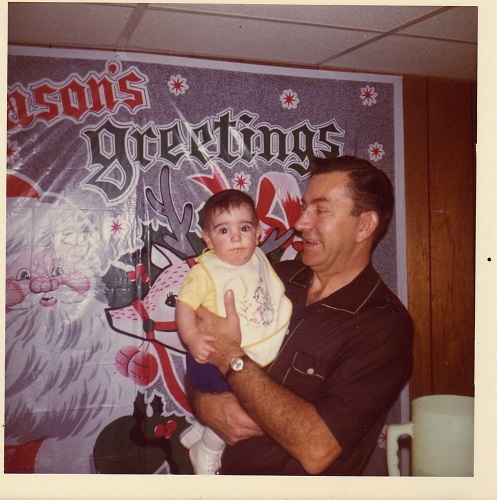
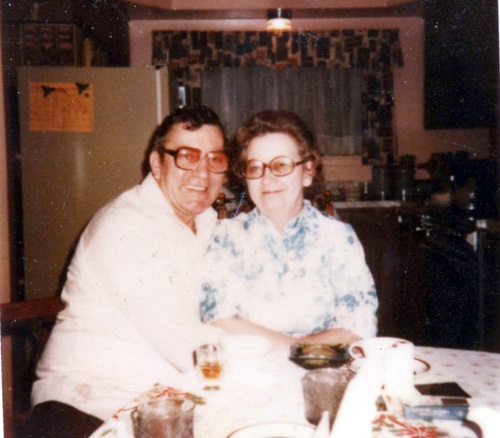
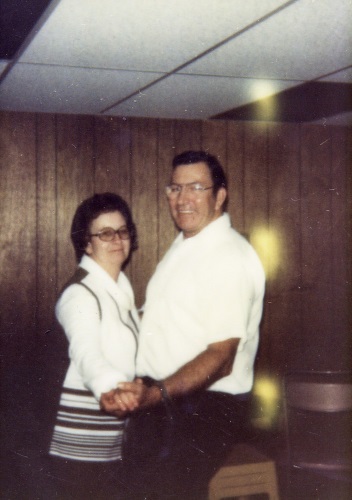


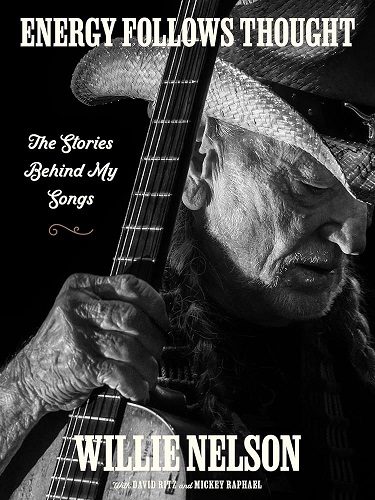
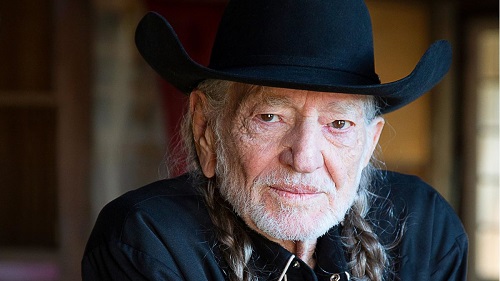

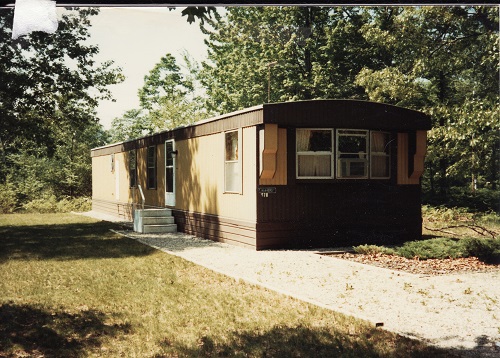


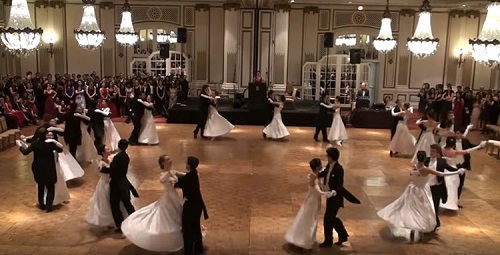


 Various Ramblings of a Nostalgic Italian