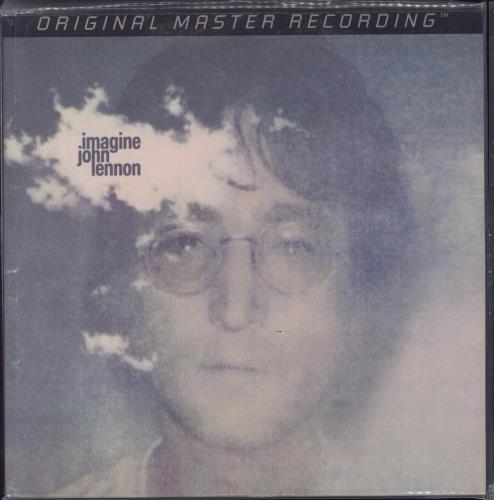
It was on this day in 1971 that John Lennon recorded his classic “Imagine.” Biography.com says: The impact of the song is unquestionable. But disguised within its message of peace and love and its flowing piano melody is a collection of edgy, “dangerous” ideas that challenge society as we know it.
John Lennon wrote and recorded this song on his white grand piano at his Tittenhurst Park estate in the English countryside (He and Yoko took up residence in the summer of 1969). In early 1971, Lennon worked up songs for a new album and “Imagine” was one of them.
When he had finished writing the song, John didn’t think that it had any potential of being a hit song. He recorded a rough demo of Imagine and wanted to know what others thought of it. He invited a few journalists and other associates over to have a listen. Ray Connolly of the London Evening Standard recalls Lennon playing him the demo and asking, “Is it any good?” Connolly and the others who heard it had to convince John he had a hit on his hands!
In May, he brought in several of his musical friends to Tittenhurst to record it, including Phil Spector, George Harrison, bass player Klaus Voormann, piano man Nicky Hopkins, and drummers Alan White and Jim Keltner. They recorded on-campus in the studio Lennon had recently built, which he called Ascot Sound Studios. Footage from the session shows Lennon and his guests enjoying each others’ company, but also getting down to business when it came time to work.
It was Phil Spector kept the sessions on track. “Imagine” was one of the first songs they recorded. Spector kept the track fairly simple. Although they did experiment a bit. At one point they had Hopkins play on the same piano as Lennon, but on a higher octave. However, the more they added, the more they ended up stripping away. The very simple arrangement was designed to spotlight the lyric, it required just Lennon’s vocals and piano, Voormann’s bass, and White’s drums. Strings were overdubbed later by John.
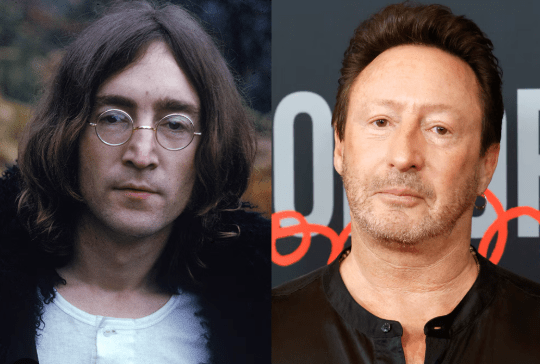
Julian Lennon shared his thoughts on the song in the 2019 documentary Above Us Only Sky: “He’s not shoving it down people’s throats. It’s not religious and it’s not political – it’s humanity and life. We all really want what he’s singing about, and I think that’s why even today the song is still so important. The sad thing is, the world is still in a bad way. Why is it impossible to move forward in these dreams and make them a reality?”
Rolling Stone described “Imagine” as Lennon’s “greatest musical gift to the world”, praising “the serene melody; the pillowy chord progression; [and] that beckoning, four-note [piano] figure”
Let’s go back 54 years and join John at his piano …
Last May I began this feature. Today, I will finish it off by looking at 2020 through the present. As I got closer to the end, it became difficult for me to pick ten songs from each year. Proof of this will be evident from this post.
The songs that I featured each year had to connect with me in some way. It was attached to a core memory. Maybe it reminded me of one of my kids or a friend. Maybe it was a song from my years DJing. Maybe it was just a song that I liked a lot. The only real rule was that it had to be released in the year featured. With that in mind, let’s see how the last five years of music connects with me….
2020
There were no songs that really hit me in 2020. Thank you, Covid
2021
The world was still reeling from the pandemic. There was so much uncertainty. Many folks reconnected with their faith, as I did. I went back and watched the Bible classes I had taken. There I found comfort and the strength to get through things.
I want to say that a friend of mine asked if I had ever heard the song “My Jesus” before. I hadn’t and I found it online. It hit me immediately and I shared it with my wife. It is a powerful song, but even more powerful when you hear the story behind it.
Anne Wilson’s life changed in more ways than one when her older brother, Jacob, died in a car accident at 23. She told songfacts.com: “It was so tragic. He was my best friend. That’s actually how I started singing and how I got into music and that’s why I wrote the song ‘My Jesus.'”
After losing her brother, Wilson processed her emotions through journal entries. As she flicked through her entries before a writing session with Matthew West and Jeff Pardo, the young singer had an idea for a song. She told Billboard: “I walked through a really tough season of grief. I remember having this moment where I wanted to give up on life. When I looked back at my journals, I saw how God pulled me through. I also realized I never referred to God as anything else, except ‘My Jesus.'”
When she brought the title into the writing room, it turned out that the two others had that same exact title as an idea. None of the three had spoken about it, so it must have been “a total God thing.”
My Jesus
2022
No songs
2023
When I heard that they were releasing a new Beatles song, I hoped it would be better than Free As a Bird. When they released that for the Anthology stuff, the technology wasn’t as good as it was in 2023. Because of this, Lennon’s vocal sounds tinty.
Songfacts tells the story:
“Now and Then” was originally written and recorded by John Lennon around 1977 as a solo piano track. After his death in 1980, the unfinished demo floated in limbo until 1994 when his widow, Yoko Ono Lennon, gave the recording to the three surviving Beatles, along with Lennon’s demos for “Free as a Bird” and “Real Love.”
Paul McCartney, George Harrison and Ringo Starr considered “Now and Then” as the third Beatles reunion single for their 1995–1996 retrospective project The Beatles Anthology, following “Free as a Bird” and “Real Love.” After two days of recording, it was scrapped, largely because Harrison’s didn’t like it.
In 2022, using advanced technology and a curatorial touch, Paul McCartney and Ringo Starr completed the track. The same AI restoration technology Peter Jackson used on the Beatles documentary Get Back was applied to Lennon’s vocal take.
“Back in 1995, after several days in the studio working on the track, George felt the technical issues with the demo were insurmountable and concluded that it was not possible to finish the track to a high enough standard,” Harrison’s widow, Olivia, said. “If he were here today, Dhani and I know he would have whole-heartedly joined Paul and Ringo in completing the recording of ‘Now And Then.'”
Besides Lennon’s John’s vocals, “Now And Then” includes electric and acoustic guitar recorded from the scrapped 1995 sessions by Harrison, a new drum part by Starr, and bass, guitar and piano from McCartney that matches Lennon’s original playing. McCartney added a slide guitar solo in Harrison’s style “as a tribute to George.”
“Now And Then” became the first AI-assisted song to earn a Grammy nomination, and the first to win, when it took the award for Best Rock Performance at the 2025 ceremony.
As a life long Beatles fan, I was impressed with just how good this one turned out.
Now and Then
2024
My wife will often listen to Pandora as she gets ready for work. The next song seemed to play on there at lot. It also seemed to play on her Sirius XM station when we went anywhere. It sort of had a catchy hook, but it wasn’t so good that I’d buy it.
One day I was driving with the kids in the back of the car and my daughter started singing “Excuse me, you look like you love me…” over and over again. It made me chuckle.
You Look Like You Love Me
2025
There has not been any songs from this year that connect with me. I tend to listen to audio books or songs from my iPod when I drive, so I don’t really get to hear anything new anyway. I’m ok with that.
Wow. Five years and only three songs. What a way to wrap up a feature, huh? Well, technically, I had wanted to wrap this up in May. So I have an idea on how to fill a couple Wednesdays and still keep it musical. Tune in next week to find out more….
Welcome back to The Music of My Life, where I feature ten songs from each year of my life. In most cases, the ten songs I choose will be ones I like personally (unless I explain otherwise). The songs will be selected from Billboard’s Year-end Hot 100 Chart, Acclaimed Music, and will all be released in the featured year.
In 1995 a new form of media was invented – The DVD. 1995 was also the year I hit the quarter century mark, turning 25.
30 years ago this month, in 1994, my partner, Rob, and I lost our jobs at Honey Radio. We searched for other radio work, but no one was looking for a morning team. I kept searching and eventually found some part time radio work. I also ventured out and began to host Karaoke at a few places every now and then.
My full time gig was working in the mail room at EDS. I spent a lot of time in the car and listened to a lot of radio. Many of these songs accompanied me on my deliveries.
After seven years of touring and three previous albums, Blues Traveler finally broke through with the song Run-Around. John Popper had a crush on the band’s original bass player Felicia Lewis. She was actually classically trained as a violinist. She was just playing bass for fun.
Guitar player Chan Kinchla says that Felicia was a great student and eventually became a doctor. “Her calling was medicine, not music” . When Bobby Sheehan was ready to take over on bass, Felicia stepped aside. Kinchla says, “It’s a very amicable situation. John always had kind of a crush on her, but they were friends, as well. So that song’s from that whole affair. They’re still very close. It’s just an unrequited love song.”
The song won a Grammy for Best Rock Performance By A Duo Or Group With Vocal in 1995.
John Hopper could really blow the harp! His harmonica stuff is just fantastic. It is hard to to hear this one and not feel happy. I often found myself having to set the cruise control, as this one often made me want to drive fast.
If you are a fan of the Wizard of Oz, you’ll appreciate the nod to the classic film in the video.
Run-Around
Until researching for this blog, I had no idea the story behind the next song. I Believe was a top ten record for Blessid Union of Souls. The song is about the power of love and the belief that it can impact life for the better. It is a powerful message.
The song came about because of the end of a relationship. Eliot Sloan recalls writing this song after his girlfriend’s father coerced her into breaking up with him. Many sources say that it was because of his race. Her dad went as far as threatening to cut off her college tuition, if she didn’t leave him.
They did break up, but she obviously meant a lot to him. He placed a message in the liner notes of the Home album. It says, “Lisa, give me a call sometime just to say hello, my number is still the same.”
Sloan says, “I always tell people, and it’s the truth, ‘I Believe’ was written in the middle of the night at about three in the morning. I always used to live in downtown Cincinnati, a really cool spiral staircase up to my bedroom, which kind of ended up as my studio. I kept a piano there that my mother got me when I was nine. In the middle of the night I was hearing the melody and I thought, ‘this is pretty.’ I just had to get up and play it.”
That piano line is really beautiful, and I love the way it intermingles with the strings. I love the message, too:
‘Cause I believe, that love is the answer I believe, love will find the way
I Believe
There are many stories about how Better Than Ezra came up with their name. As far as I can tell, they’ve never really said. The one that I love is that they were playing at some event that featured many bands. The story goes that they followed a band called Ezra, and when asked what their name was they said, “Better Than Ezra.” I hope that is the real story, because I think that is hilarious!
We just heard I Believe about a break up. Better Than Ezra’s, Good, looks at a break up in a different way. As a matter of fact, I tend to look at my past break ups like this.
BTE’s Kevin Griffin wrote the song. In an interview with songfacts.com he said:
“I wanted to talk about the positive things that come from the end of a relationship. There’s always the hurt feelings and everyone’s guarded and it can be traumatic, but when the dust settles, it was about looking at the good things – no pun intended – that you got from that relationship. How did you grow? What did you learn emotionally? And to experience some stuff. And in this case it was just kind of reflecting on how this person changed.“
That isn’t always easy to do. I have to remind myself, for example, that while things with my ex-wife weren’t great, I have two amazing sons from that relationship.
As much as I heard this song, I find it hard to believe that it only reached #30 on the charts.
Good
A new Beatles song in 1995?! How can that even happen!? John Lennon had been dead for 15 years by then. Believe it or not, you can thank Yoko Ono for it. Yoko agreed to release a demo tape of John’s to the other Beatles the day after he was inducted into the Rock and Roll Hall of Fame.
In 1994 the three remaining Beatles recorded around his demo track to complete the song Free As a Bird. It was released as a single in 1995. Before their breakup, The Beatles won just four Grammy Awards. They picked up three more in 1997 when “Free As A Bird” won for Best Pop Performance By A Duo Or Group With Vocal and Best Music Video, Short Form.
It was Jeff Lynne of ELO who would produce the single. He The Daily Mail that of all the songs he’s produced, “Free as a Bird” is the one he’s most proud of. “I just had to improvise and come up with a few things to make it work,” Lynne recalled. “I did it late at night, 3 a.m. in the studio, just me and the engineer, because I didn’t want to do it in front of Paul and George. But I came in the next day and Paul gave me a hug and he said, ‘You’ve done it, well done!'”
My first records were Beatles songs. So it was so neat to hear all four of them together again for the first time in years!
Free As A Bird
Next is another song that I heard a lot while driving. It stood out for a few reasons. First, it was uptempo. I seem to remember a lot of ballads being played at the time. Driving while tired, uptempo is always good!
Second, it was short. It was very rare to have any song be under 3 and a half minutes on the radio. Many of them were 4 and 5 minutes. This one clocks in at just under 2 and a half minutes.
Finally, it reminds me of Run-Around by Blues Traveler. Ok, maybe it was Blues Traveler that reminds me of this one. I really don’t know.
The first time I saw the video, I laughed out loud. In it the guys from Del Amitri are being wheeled about in strollers by beautiful women. The band members’ heads were superimposed (badly) on the babies to create the effect.
Roll To Me
When I worked at W4 Country in Detroit, they used to host a huge summer festival. It was downtown in Hart Plaza and all kinds of country artists came to play. It was called the Downtown Hoedown. At this time in my career, I had really never done a lot of backstage stuff.
Looking back now, I could kick myself. So many of the singers were just walking around backstage and in the area that was reserved for our staff. I took my ex wife with me and we were just sitting at a table drinking water. This guy walked by with a cowboy hat on and he looked familiar. I couldn’t place him to save my life.
As he walked by, he nodded and said hello to us. I didn’t know if it was an artist, a manager, a roadie, or someone else. We said hello and he continued walking. What was weird was that as he approached us, he kind of slowed down like he expected us to start chatting him up. I know now that this was David Lee Murphy.
Dust on the Bottle was a big hit for him, but it almost didn’t make his album. He tells the story:
“I had the idea for that song, but I hadn’t ever done anything with it. I just remember being at my house the second day [of recording]. We started recording on Monday, and Tuesday morning, I was drinking coffee at my kitchen table. I started playing the opening chords on my guitar for ‘Dust on the Bottle.’ It just came out of nowhere. The song just fell out in like 15 minutes.
I called Tony Brown, who was producing my record, and I told him, ‘Man, I just wrote this new song!'” Murphy continued. “We had all the songs picked out already for the album. He told me to bring it in and play it for him that day. When he heard the song, he said, ‘Man, we’ve got to cut this.’ So we cut it, and what’s on the record is the first take of the song. A lot of the vocals on it were the first time I sang it. It was really a special song, and it still is to this day.”
Dust On The Bottle
I will apologize for the next song right now. I had to include it because it was such a big song when I was DJing. In the US, the Macarena was the biggest dance craze of the 1990s. It was played at weddings, office parties, cruise ships, and just about anywhere there was dancing. Like the earlier dance craze, the “Electric Slide,” it was easy to learn and was done in a group. This made it perfect for Americans who lacked rhythm. It would spawn other dance crazes in the years ahead.
The song was one that had many “mixes.” The meaning of the song changes depending on what mix you are listening to. In the original version, Macarena is upset because her boyfriend, Vitorino, has joined the army. She retaliates by going out on the town and carousing with other men. In the Bayside Boys mix, Macarena gets mad at her boyfriend and goes out to shake it while he’s out of town. In this version, she seems to be more promiscuous. The Bayside Boys also made it a first-person account, with the lyrics being the voice of Macarena.
Macarena
I never cared for the song that much, however two years later, there was a country mix. It sounded ridiculous. I went out and bought one of those hillbilly hats with the feather on it and a corn cob pipe. I would get out and dance with it on. It only made it more silly.
The next song was one that got played a lot on the radio with dedications to someone who passed away. It was played at weddings in remembrance of a loved one, too. When my mom passed away, this was another of those songs that made me think of her.
Mariah Carey wrote One Sweet Day with Boyz II Men. She said she wrote a song that was identical to a song Boyz II Men had written, so they combined the two.
Mariah was in the middle of writing the poignant ballad with her longtime collaborator Walter Afanasieff when she had the idea to bring in the R&B group.“I just thought the chorus was crying out for the vocals that they do,” she recalled in a 1999 interview. “We contacted them, we went through all the channels, this and that, and we finally got together, sang them the song and Nate had written a song that was basically identical to my song in the theme and melodically – he could actually sing it over my song and it was really bizarro, it was like fate, so we put the two songs together and came up with ‘One Sweet Day.'”
This was #1 on the US Billboard charts for 16 weeks! That is longer than any other song up to that time. It held that record until 2019 when Lil Nas X’s Old Town Road was #1 for 17 weeks.
One Sweet Day
Despite being a 1995 release, Give Me One Reason was a song that Tracy Chapman had been performing since 1988. She also performed it on a 1989 episode of Saturday Night Live.
The song would wind up on her fourth studio album, New Beginnings in 1995. In 2005, she said “This is autobiographical,” before performing the song. “I left it on someone’s answering machine, and it worked. I wrote it late one night hanging out with my dog, a mini dachshund.”
The song would be her first hit since 1988’s Fast Car. The charts had changed a bit in 1995. Songfacts.com explains: The mid-’90s were a tougher time for female singer-songwriters with stories to tell, but Melissa Etheridge, Alanis Morissette, Sheryl Crow and Jewel all got their piece of the pie even as the airwaves were dominated by R&B and dance singers, mostly guys. “Give Me One Reason” fell into this bucket, skewing to an older audience averse to hip-hop and modern rock.
I love this song because of the bluesy feel to it. That opening guitar lick and her voice are just so good!
Gimme One Reason
My final pick for 1995 comes from a gang member. Yes, you read that right. Lead singer Pauly Fuemana was a gang member in Auckland, New Zealand before achieving pop immortality with this song. He received his musical training in a New Zealand juvenile prison.
How Bizarre by OMC reached #1 in eight different countries, the first of which was New Zealand in early 1996. Others include Australia, Canada, and the US (on the Mainstream Top 40 chart). What is Bizarre is that it never entered the Billboard Hot 100 Chart. Why? It was released as a radio-only promo single. Therefore it was ineligible to chart on the Hot 100 according to rules in place at the time.
According to songfacts.com: OMC stands for Otara Millionaires Club, after the neighborhood in Auckland where Fuemana grew up. It’s a somewhat fanciful name, as the Auckland suburb of Otara is a ghetto/slum.
This was another one of those songs I would hear driving at work. Many of the drivers would come in to the mail room and if something unexpected happened they’d say “How Bizarre!” Some of my ex wife’s sisters would also say this a lot, but usually they’d say, “How Bizzaaaah.”
The song has a fun sound to it and it brings back some great memories.
How Bizarre
So that’s all for 1995. Did I miss one of your favorites? Let me know in the comments.
Next week, we move forward to 1996. My list includes movie music, a cover song or two, a couple artists I have had the chance to hang out with, and a few I’d like to hang out with. It also includes a song that was given to me by a girlfriend to express how she felt about us. Was it good or bad? Tune in next week!
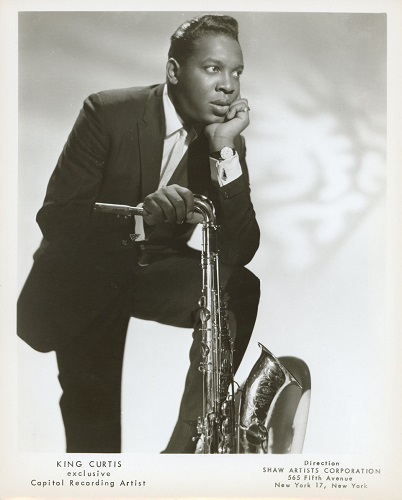
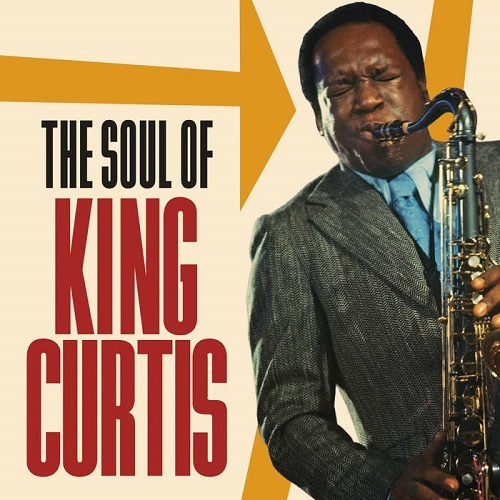
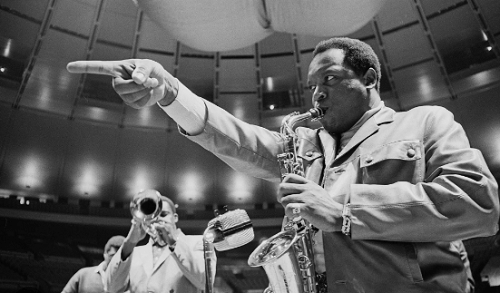
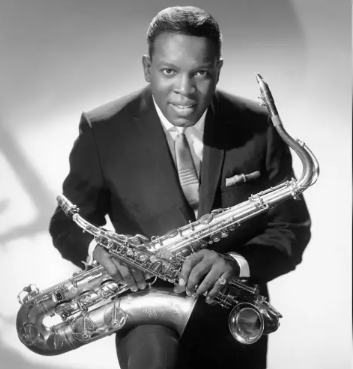
The song for today is a familiar one, despite its age. The reason I pick this one is to remember one of the greats who passed away on this day in 1971. Perhaps you don’t know him by his real name, Curtis Montgomery, or his adopted name Curtis Ousley. If you are a music lover, I would hope that you are familiar with his stage name – King Curtis. He was one of the all time great saxophonists and had quite a career.
Curtis began playing saxophone at age twelve and liked a variety of music. He turned down college scholarships to join up with the legendary Lionel Hampton band where he wrote and arranged music. In the early 1950’s he left the band to go to New York. He became an on call session musician for labels like Atco, Prestige, and Capitol Records. He recorded with Clyde McPhatter, Bobby Darin, Buddy Holly, Jimi Hendrix, Andy Williams and was on Waylon Jennings first record. He also made his own records like “Soul Twist” (with his Noble Knights) in 1962.
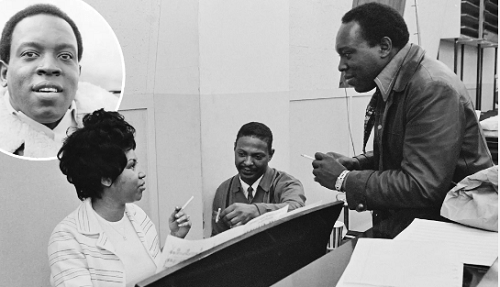
In 1967, Aretha Franklin covered Otis Redding’s Respect by flipping the gender and presenting it from the female point of view. The song featured Aretha’s sisters, Erma and Carolyn on the repeated “sock it to me” line and King Curtis on the saxophone solo.
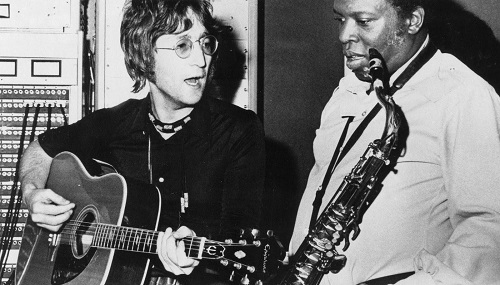
In February of 1971, John Lennon started recording tracks for his Imagine album. When Lennon, Yoko Ono and Phil Specter were mixing and finishing the album, John must have felt that he needed something more on a couple tracks. Apple’s Allen Steckler said, “John knew he wanted a sax player and it was his idea to use King Curtis. He asked me to get him. I found his agent and booked him. John played him the tracks and told him the kind of feel he wanted. He went into the studio and played his ass off. John loved it, as did Phil Spector and all of us.“
Curtis recorded his parts for the album in July of 1971. He can be heard on Lennon’s “I Don’t Want to Be a Soldier Mama” and “It’s So Hard.”
Long before all of that, Curtis decided to move towards playing rhythm and blues in part because it was a more lucrative career choice, but he also loved the music. It was in 1958 that he became widely known for his unique saxophone work when he played on The Coasters hit “Yakety Yak.” The sound that Curtis unleashed earned him some fame and influenced the sound of R&B the saxophone. He developed a strong relationship with The Coasters, becoming their go to sax man and contributing to arrangements as well on a string of hits that included “Charlie Brown,” “Along Came Jones,” “Shoppin’ For Clothes,” and more.
Saxophonist Boots Randolph was so influenced by the “Yakety Yak” solo that he altered the melody a bit and made it his own song called “Yakety Sax” (which played prominently on the Benny Hill Show). That song only further exposed the King Curtis sound.
On the night of August 12, 1971, Curtis was attempting to access the fuse box to his house (his central air conditioning system was tripping the breaker) when he confronted Juan Montanez, who was loitering on Curtis’s front steps with an unidentified female. A fight ensued and Montanez stabbed him. Curtis was found on the steps outside his apartment and was taken to New York’s Roosevelt Hospital where he died early on the morning of August 13, 1971. He was 37 years old.
So today, on the 53rd anniversary of his passing, check out the great King Curtis with the Coasters on the classic, “Yakety Yak.”




 Various Ramblings of a Nostalgic Italian