
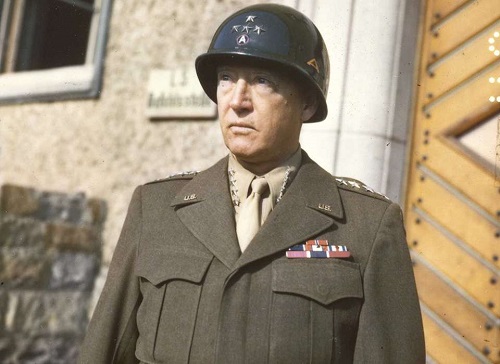
One of my favorite biographical films is Patton, which starred George C. Scott as General George Patton. It’s a great film and Scott was so good in the role that he won the Academy Award for Best Actor in 1971.
General Patton had developed a reputation in the U.S. Army as an effective, successful, and hard-driving commander, punishing subordinates for the slightest infractions but also rewarding them when they performed well. As a way to promote an image that inspired his troops, Patton created a larger-than-life personality. He became known for his flashy dress, highly polished helmet and boots, and no-nonsense demeanor. General Dwight D. Eisenhower, the commander of the 1943 Sicily operation and Patton’s friend and commanding officer, had long known of Patton’s colorful leadership style, and also knew that Patton was prone to impulsiveness and a lack of self-restraint.
The film is full of many powerful scenes. There was once scene in the film that really surprised me the first time I saw it. It is the depiction of the infamous “slapping” of a soldier. What I didn’t know, was that there were actually two slapping incidents one week apart from each other. The one in the film is the second incident.
The first one took place on this day in 1943. It involved Private Charles H. Kuhl. Patton approached Kuhl, who was sitting on a bed amongst the wounded. When Patton asked Kuhl where he was hurt, Kuhl reportedly shrugged and replied that he was “nervous” rather than wounded, adding, “I guess I can’t take it.” This set Patton off.
He slapped Kuhl across the chin with his gloves, then grabbed him by the collar and dragged him to the tent entrance. He shoved him out of the tent with a kick to his backside. Yelling “Don’t admit this son of a bitch.” The general demanded that Kuhl be sent back to the front, adding, “You hear me, you gutless bastard? You’re going back to the front.” That night, Patton recorded the incident in his diary: “[I met] the only errant coward I have ever seen in this Army. Companies should deal with such men, and if they shirk their duty, they should be tried for cowardice and shot.”
The second incident happened a week later on August 10, 1943. This time the soldier was 21 year old Private Paul G. Bennett. Records show he had no medical history until August 6, 1943, when a friend was wounded in combat. According to a report, he “could not sleep and was nervous.” A medical officer described Bennett’s condition:
“The shells going over him bothered him. The next day he was worried about his buddy and became more nervous. He was sent down to the rear echelon by a battery aid man and there the medical aid man gave him some tranquilizers that made him sleep, but still he was nervous and disturbed. On the next day the medical officer ordered him to be evacuated, although the boy begged not to be evacuated because he did not want to leave his unit.“
When the general entered the hospital tent, he saw Bennett. Patton approached him. He was huddled and shivering. Patten looked at him and asked what the trouble was. “It’s my nerves,” Bennett responded. “I can’t stand the shelling anymore.” Patton reportedly became enraged at him, slapping him across the face.
He began yelling: “Your nerves, Hell, you are just a goddamned coward. Shut up that goddamned crying. I won’t have these brave men who have been shot at seeing this yellow bastard sitting here crying.” Patton then reportedly slapped Bennett again, knocking his helmet liner off, and ordered the receiving officer not to admit him. Patton then threatened Bennett, “You’re going back to the front lines, and you may get shot and killed, but you’re going to fight. If you don’t, I’ll stand you up against a wall and have a firing squad kill you on purpose. In fact, I ought to shoot you myself, you goddamned whimpering coward.” Upon saying this, Patton pulled out his pistol threateningly, prompting the hospital’s commander, Colonel Donald E. Currier, to physically separate the two. Patton left the tent, yelling to medical officers to send Bennett back to the front lines.
Here is the scene from the film:
In August of 1943, General Eisenhower sent Patton a letter. He told him that he had been informed of the slapping incidents. He said he would not be opening a formal investigation into the matter, but his criticism of Patton was sharp. From that letter:
I clearly understand that firm and drastic measures are at times necessary in order to secure the desired objectives. But this does not excuse brutality, abuse of the sick, nor exhibition of uncontrollable temper in front of subordinates. … I feel that the personal services you have rendered the United States and the Allied cause during the past weeks are of incalculable value; but nevertheless if there is a very considerable element of truth in the allegations accompanying this letter, I must so seriously question your good judgment and your self-discipline as to raise serious doubts in my mind as to your future usefulness.
Patton apologized to the medical personnel that witnessed the events, and to each of the soldiers he slapped. Patton wrote in his diary that he loathed making the apologies, particularly when he was told by Bennett’s brigade commander, Brigadier General John A. Crane, that Bennett had gone AWOL and arrived at the hospital by “falsely representing his condition.”
If you’ve never seen the film or read a biography about Patton, I encourage you to do so. His life is full interesting things. His death was certainly not what you would expect for such a strong figure.
Sources: Wiki, Patton: A Biography, The Patton Papers
 Various Ramblings of a Nostalgic Italian
George C. Scott is great in this movie!
LikeLiked by 1 person
His performance was superb!
LikeLiked by 1 person
Stuff I never knew there for sure!
LikeLiked by 1 person
Loved this movie
LikeLiked by 1 person